EP 111: WTH ?!? Circadian Rhythms and Skin Health with Dr. Michelle Jeffries
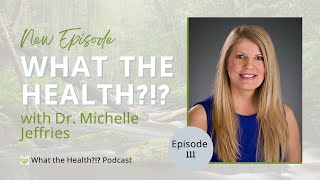
Dr. Greg Eckel and Dr. Michelle Jeffries discuss how circadian rhythms affect skin health through clock genes and the skin microbiome. They cover lunar cycles, why sleep timing matters for your skin, and practical ways to align your sleep cycle for better results.
Chapters
Welcome to what the health an independent approach to your health span. Have you noticed how our healthcare system may not have your best interest in mind? Join Dr. Eckel in this fun and sometimes disturbing exploration of the state of healthcare and what it means for you. Now, here's your host, Dr. Eckel. Welcome back everybody. Dr. Greg Eckel. And this is is what the health. It's good to be back. And this we've got a fun one. We've got longevity, circadian rhythms and you'd skin health. So those are two that you have not put together, I'm guessing in your own brain. We've got Dr. Michelle Jeffries. She's a board certified integrative dermatologist in private practice in Phoenix, Arizona and the CEO and founder of the Skin Clock method. She's triple board certified osteopathic physician in dermatology, pediatric dermatology and integrative medicine. She also has a master's degree in psychology, which is very important, I think around the skin and is an Institute for Functional Medicine certified practitioner. Her unique training and background has led her to a comprehensive inside and out approach to skin health that blends the principles of holistic beauty, the natural health cycles of your body, universal laws of nature and ancient teachings, modern dermatology, functional nutrition, and get this spiritual consciousness for truly holistic skin care. Dr. J, welcome aboard.
Well, thank you so much for the beautiful introduction. It is such an honor and I am so excited to be here on your podcast.
Thank you. And I love that spiritual consciousness for truly holistic skin care which I have never heard in a sentence before. So I thank you for that and I am really excited for our discussion today, you know, because a lot of folks, you know, we are very interested here on what the health on longevity and quality of life and more love in the world. I mean that is the premise of this platform created the podcast to help share information that they are just not getting elsewhere and this really fits in here. So I love the inside out approach. So we when we got in touch with you, let's talk about circadian rhythms and skin health and in light of that, in the big umbrella around longevity. So what are you finding in this realm? That's a huge topic.
Yeah, it just as soon as I heard circadian skin health come together, I mean my radar went up. I was so curious. Like how does that work? What do you mean? And as I dove deeper into that, I discovered through the research that all of our cells, including our skin cells, have genes in them that can tell time. So every cell in Our body has the capability to tell time, and that's based on the rhythm of the day and night cycle of the Earth. And that just absolutely blew my mind and fascinated me. To think from the hairs on the top of your head all the way through your body to the tips of your toes, trillions and trillions of little cells have clock genes and they can tell time and they know what's happening in day and night and they regulate their systems on that. So that was just the first beginning of diving into this for sure.
Wow. So the clock genes are the genes in every cell of our body that register daylight and nighttime.
Absolutely. Isn't that crazy? Like we're designed to be able to be on this planet on the day and night cycle?
It is. I know, go figure, right? We are meant to be here. So I love that on our home. So we have the sun and the moon cycles and circadian rhythm. So maybe for folks that don't know what the circadian rhythm is, what is that?
Yeah, so circadian rhythm was developed, the term itself was developed by Franz Hallberg and it's based on Latin words like most medical terminology. So it's not a logical thing unless you know a little bit of Latin. But circa means about. And then circadian, the done is about day or diaz in Spanish too. So it's about a day. So it's a rhythm that happens within a 24 hour period. So, you know, you probably notice this. The sun comes up at a certain time, it can change with the seasons. Then throughout the day it reaches high noon, and then in the evening the sun sets and then we have the nighttime. And then the nighttime also can correlate to being able to really visualize the moon. And we all know the moon has its own cycle too. That's a whole nother cosmic link to not only our planet, but to the moon and then our rhythms as well. There's links even to that too.
I love it. Yeah, that component, I mean, Nobel Prize went for looking at circadian rhythm in our health. And it drives all of the other hormones as well. So that connection to nature. As a naturopathic doctor, I love hearing this stuff because it really just re emphasizes what our ancestors knew for eons around living in concert with nature and tying ourselves into or, or at least aligning with the biorhythms of the planet, which then affect our bodies. So are there other clocks? So we've got a, you know, we have that clock. Are there other clocks that we should be tuned into?
Yeah, so the main master clock is actually located in the brain, and that is, you know, triggered by the day and night cycle. And it's through the eyes that that it gets triggered. So our eyes are going to perceive light, and then it's going to get transferred into the brain. And then there's a little. Little tiny part. It's only about 20,000 neurons in the back of the eyes in the brain. Part of the brain called the hypothalamus, called the SCN or the superchiasmic nucleus, and that's known as the master clock. Now, that one, once it receives signals of day and night, it kind of sends out little, you know, know, molecules and enzymes and different signals to the rest of the body. And it goes to all of our peripheral organs. So there's clocks in the liver, there's clocks in the skin, there's clocks in our hormonal system, there's clocks in our heart. There's clocks in our blood vessels for blood pressure. Our temperature is based on a rhythm, too. Our gut health. And then what really blew my mind is you think of that. We think of all the organ systems, and they have their own clocks. And then if you're into functional medicine or naturopathic medicine or anything in the integrative medicine space, you know about the microbiome, well, you got to think, gosh, even those microbes have their own clock. And then you think of the little fungi and the viruses and, you know, all of the things, all things living have a clock. And so it's not just us, it's not just our organ systems. It reaches out into microbes and fungus and plants and other animals and everything. So it's not just a unique thing that we recently discovered either, like you mentioned, it's something that we've known for probably since the beginning of time in ancient cultures, and it has been part of rituals and eating habits and hunting and gathering habits. And you have a background in Chinese medicine, there's Chinese medicine clocks. And, you know, all of that, that's been around for a long time. So learning about the biomechanisms and how it all works and putting into the technology and the terms and then how do we use it to realign? That's kind of the new things that we're learning now.
I love it. You know, on a bigger level, I'm wondering, you know, when you envision all of those clocks, right, I see, like, the wristwatches with all of the minuscule pieces and parts, which I'm guessing is there for these master clocks, and then all of the micro Clocks on a grand scheme, let's maybe keep it on the skin clock and on the master clock. When you say clock, I mean, I see the wristwatch. So what actually is occurring with that? Like, it's just a biorhythm with the sun, night and daytime. That's really what you're talking about?
Absolutely, yeah. So when the brain receives that signal, there's different genes in the nucleus of the cells that get turned on and off, and they are on a feedback loop as well. And so all of this discovery of this mechanism was that Nobel Peace Prize or Nobel Nobel Prize in Physiology and medicine in 2017 was just, how do those little mechanisms work? And there's different genes that get turned on or off depending on whether it's light or dark out. And our body is perceiving that by little. Little photoreceptive cells in our eyes that then transfer that light signal to a neurologic signal into a neurotransmitter, and then that sends a signal. And then that master clock says, okay, it's daytime, we got to do certain things. So in reference to the skin, the clock genes in the skin, there are certain ones that are on during the day and then are on at night. The daytime ones, you think it's going to be functional to our exposure to light, and day, they're going to be about protection, protecting from the sun, making our skin actually a little bit more hydrated. And you're going to have more oil production as well, because you're going to have more oily skin to help hydrate and protect your body. Your skin's that barrier between your inner body and your outer body in the world. And so there's that protective mechanism of it getting thicker and more hydrated when you're exposed to the elements. So that's part of the clock genes in the skin during the day. So all of those get turned on during the day. Then at night, when the signal to the brain, it's dimmer light, the eyes are noticing, okay, it's nighttime, everything's dimmer. This is assuming we're outside and not on our iPhones or getting that artificial light. Our brain signal to the rest of the body, okay, it's nighttime, so melatonin gets released. Then there's different signals that can even go to the skin. Then at nighttime, our skin repairs. So all of those little repair mechanisms start to come out. Also our blood flow to the skin to kind of go into the skin, scoop out all of those little nutrients and all of those toxins and kind of take them away and use them in the body also happen. And then there's repair mechanisms that also come there. There's also kind of instead of it being more hydrated as it was during the day, it's more leaky and more open. And so this is actually some of the theory behind why at night our skin is more itchy and more inflamed. There's obviously a lot of mechanisms going on, but when we have that open skin and we're losing a little bit water and it's open, it's going to be a little bit more raw and itchy. So it all can kind of link together of what we notice in our skin during the day versus the night according to those day and night circadian rhythms as well.
Interesting. That's super fascinating. Will you talk about the ecosystem of the skin as well? As we're talking about the clocks and the changes between day and night, most of us are just thinking, well, yeah, it's just skin, it's there, it sloughs off. But obviously there's the microbiome of the skin. There are certain levels and layers to it. Hearing here at nighttime, it opens up. So maybe whatever kind of riff off of that.
Yeah, so that was one of the reasons why I got fascinated with dermatology was just there's so much going on in the skin and you don't even realize it. You think, yeah, it's just my skin, it's just there, it's protecting me, or you know, oh, it's broken out today, or it's itchy or something like that. But there are microbes that live on the skin. And kind of like what you said, there's layers of the skin and there's actually layers to the microbes. So in our skin, we also have these little organs like the sweat glands and the oil glands. The oil glands themselves sometimes can cluster certain microorganisms around them. And then at different depths of the oil gland, that can change. Also where physically the skin is located on our body, the microbes are different. The microbes on the tip of my nose are not the same as the tip of my finger or in my armpits or on my back or in my ear. There's different microbes that like different environments. Then you can think of the skin. Another function of it is our barrier protection. There are skin cells that start in the epidermis at the bottom layer, and they get born and grow and then they slowly rise to the surface. And as they're rising to the surface, they link together with little bits Of I guess I can consider it glue or mortar in between bricks. And they kind of grow together and kind of seal the skin as they reach the surface. Then they slough off and release. And so there's those mechanisms too going on as well. So every week you're getting a different level of that skin coming up. And so the skin layer on the top, the epidermis, a new layer comes in every four weeks, sometimes up to six weeks. So every month you have another cycle. And then the immune system is in the skin too. There's actually certain types of immune cells called Langerhans cells that are in the immune system. And they're just scoping around, surveillancing like what's going on in the skin. Is there any microbe that you know, should be here, not be here? And then we have the cells that make up our skin color. It's a whole nother cell. I mean, there's just so much going on that's just that top layer.
Love it. I love it. You know, that component of. I think people don't really understand, like, how intricate. Like these are pretty magical things that we have. They're so. It's amazing that they work, right?
Yes.
With all of that complexity. And that's just the top layer of the skin. So let's thank you for that because I, I mean, we can just geek out on all of the different levels there. I want to. I'll keep steering us back here though, with regards to that day and nighttime clock in the circadian rhythm. You also, you taught there's two other kind of cycles with the. You said there's a lunar or moon clock and a life energy clock. So what, what's the story with those clocks?
Yeah, so now we're getting out a little bit, you know, outside of the body. So we're not talking about rhythms that are actually happening necessarily entirely inside the body. The rhythms that are completely outside the body that could influence the body. So the moon and your moon cycle, it's been known for ages that's been related to your hormone cycle as far as a female. So your menstrual cycle is a lot of times linked to whether or not there's a full moon or a new moon. And there's even been terminology labeled of like, okay, do you just menstruate when there's a full moon? And there's a label for that. If you only menstruate during a new moon, there's a label for that. And any females on here that menstruate know that at each week of your menstrual cycle you feel different, you eat different, your moods are different, your skin looks different. So all of that links together. So what's nice for some women that don't have a regular cycle or they're perimenopausal or postmenopausal or just never had a cycle too. There's some women that you know, have, you know, genetic issues where they just don't have a cycle. So there can be an alignment with the moon cycle and it's related to our feminine energy. So it's a slower pace. It's not the day and night 24 rhythm where it's super, super fast in a 24 hour day. It spans over weeks. So every week there's kind of a new phase of the moon and you can align even like manifesting goal setting a lot of different things just related to that lunar rhythm and the moon clock. So it's just another clock in the sky. It's another way to align with things. Now whether or not we have genes that align with that, I don't know. I don't know if we have literature on that, but they do. Look at, I did come across some of the like plankton or some of the things that live in the sea. And so they are based on tidal waves. And so we know that the moon can be related to the tide when the tide comes in and out. And so there are some things like that that are regulated by the moon cycle. But whether or not they have genes for that, we don't know. And it's kind of a little bit woo woo out there for that.
Well, you know, it makes sense. I mean when you talk to anybody that works in the ER they're seeing, I mean it might be anecdotal, they are, they are seeing more activity on full moons and the full moon is having an effect on the tides. There's higher tides with a full moon which is a higher. You know, they used to float logs in Germany on full moon days because it has creates bonds on the water that creates more buoyancy and water. Well, what are our bodies made up of? You know, 78% water. So it goes to reason that there is an influence on health now on the genetic level. We're not sure yet. But you know, we, I love tying things to lunar cycle and looking at that a little bit of a slower pace. You, you alluded to it, but I want to, I want to talk about that component on intentions and coupling those with lunar cycles. So the way that I have done that is around new moons at the darkest part of the night. You can set intentions and allow them to grow with the towards the full moon. And then look at that as a cycle or, you know, kind of a work project or spiritual project. Is that how you do you have any specific rituals that you prescribe per se?
You're 100% on it. It's. The new moon is starting fresh, starting new, starting with new intentions. It's a kind of a fresh plate. You know, you can kind of start your creation process of different things. You can set new intentions for your health, you can set new intentions for your mind, for your body, for your skin, care for everything. And being able to keep track of it throughout the month is key because a lot of times we get caught up in like, oh, I had this intention, or I'm doing this health thing, and then, you know, a couple weeks go by and like, oh, wait, what happens? I don't know if I really did anything or change. And so really, like aligning with something that's like, so obvious when you look outside as a reminder really helps. So the new moon, like you said, like, set those new intentions. Two weeks later, we come to a full moon. And a full moon is like, okay, there, you know, in between the new moon and the full moon is things are growing, things are, you know, starting to manifest. And you're kind of in that creation and implementation phase. And then at full moon, you want to see, okay, can things actually manifest in a couple of weeks? What's actually happening? What benefits am I seeing? What am I actually doing? And then as the moon goes from full moon back to new, it's in that kind of waning stage. And so then you kind of want to, like, okay, I made those goals. I need to regroup and I need to harvest a little bit, Kind of take stock of, like, what happened, what worked, what didn't, maybe regroup a little bit, maybe celebrate and honor the accomplishments so far. Sometimes we're so critical of ourselves and we don't honor, like, what we actually did. And so taking that time to take stock of everything in that phase can be very helpful. And then preparing again for that new moon to start over again. And it's just a reminder of things are in a cycle. And actually the world within us, the world around us, everything's in a cycle, from big things to little things. So it just, it helps us align energetically. And I find it really helps with stress management, too. And that kind of leads into that life energy clock too. That we mentioned. And so that's a whole other rhythm that happens in our lives.
Well, let's, and let's talk about that because the pieces that were coming up for me around that are around. You had mentioned some women have their menses on the full moon, some on the new moon, all in between there. I'm wondering in your practice because we know there is a hormonal link to skin health as well. Looking at, I mean it gets, you know, you can layer multiple, you know, events on top of our health. But I am wondering if you are seeing trends one way or the other as far as, you know, a menstrual cycle with moon or with new moon, full moon versus new moon or you know, any observations you have made through time there. I'd love that we can tie it. The component for this intention is why I wanted to highlight this in the talk here is, you know, really tying ourselves to our home is the ecosphere, it's Gaia. And, and we so often in the Western world approach it as if we're not attached at all. I mean we're going to see more and more about global warming as we go forward here or climate change in particular. And I don't want people to get overwhelmed or bummed out by that because it is, we've evolved on this planet and the planet is going to be here with or without us. Right. And so that aspect, I want it to be here with us. But I think if we can align and listen more to the natural rhythms and actually to Gaia or Earth and really take our lead there rather than pretending like, oh, it is an endless resource that we can just pillage. So tying our health as an individual to what our cycles look like, what is going on with our skin during that time, you know, and then tying it into the clock so that, that's kind of what what I was thinking was like, oh, that could be a really good, good piece of the puzzle here to bring up.
Oh, it's huge. I think, you know, before we had technology, you had to reference the cycles of the, the Earth, how the day and night cycles were the seasons, the moon, we didn't have a watch, we didn't have something to keep track of it. And, and then, you know, there's so the clocks in our body, they obviously run off of the 24 hour clock, but there's also ways that they can be modified or overridden. And that's, I think what a lot of us have done. We've, we've come to the point where like okay, we gotta stay up all night for something or we're able to travel across time zones. So, you know, we. We get mixed up in our. In our rhythm when that happens. Or people work night shift, but they're really early risers and it's really hard on them. And we force ourselves into some of these, you know, atypical rhythms, and then we end up with some of these health issues and stresses. So really, temperature is another thing too. So exercise and activity and temperature of where you live can change. And then the foods we eat. So when we eat at a, you know, a later time than we normally do, or too close, when our body's supposed to be resting, our rhythm gets adjusted too. So when we're not really living in alignment with the rhythms of the Earth and we're kind of flowing, forcing it, or kind of skipping over some of those natural things, that's when all of these clocks in your body doesn't know what to do. So really just taking those kind of practical cues that are around us all the time that maybe we've never seen, and aligning with them can be very, very helpful. And then all of our technology, with global warming and all the other, I mean, it just gets bigger and bigger the more that we misalign with things. And so when we're able to align, let's say we notice, oh, yeah, my. I always get my period on the new moon. My gosh, that's. That's really interesting. And that's one of the most common scenarios. Kind of back to that question is, you know, yeah, you kind of notice that. So then when you see the full moon, you kind of know, okay, I'm kind of mid cycle. When you see kind of the new moon coming again, like, okay, my period's coming again. And it's just kind of a way to keep track of things. Before we had, you know, apps that tracked our period. And even some of those things can shift. So, you know, women notice, like, when they're really stressed, sometimes they get their period more often or less often. And then also with the kind of the links to the skin, the patterns that I've seen with the menstrual cycles is when you have your period, your skin's a lot more oily. And so during that time, using different products on your skin that kind of help combat that oiliness are more productive. And it's usually the week of, and maybe the week before your period where you're super oily. And then when you're kind of, you know, a couple of weeks Past your period, your skin gets a little bit drier, too. And then you notice, okay, I can't tolerate some of those more aggressive things. I have to use more moisturizing, more hydration. So there's just the links go, you know, very deep and very intricate. And they're. They're flexible. I think that's one of the other points, is that they're flexible, but we don't want to flex them so much. Where we're going against the grain completely. Yeah.
And that, that's where we run into trouble. Right. We think we can push it just a little bit further, and then we go off the edge. What do you do? You know, I guess what one of the components of, like, aligning, like, there are so many clocks. So when somebody's coming in to you and they've got skin issues, how are you bringing this up to them? Exactly. Like, we started, like, did you know you have clocks in your skin?
Yeah, I don't say that. Maybe they don't know what I'm talking about. You know, it was really interesting how I stumbled upon this whole concept, too, and it was through just seeing a lot of patients, just noticing things over time. And I found myself telling a lot of my female patients with acne, hey, you know what? Your skin has a cycle. And every month you get in a new cycle. Just like your menstrual cycle, you have a new cycle every month. And so what we want to do is kind of align your. Kind of your skin treatment regimens with your hormone cycle. The other factors that can influence this is our eating cycle and our sleeping cycle and our stress, and there's different rhythms to all of these. And if we could find ways to kind of align with what naturally works for our body and all these little areas, then I started to see a lot of skin health improvements. And it was just like, it was just the biggest aha moments over and over again for patients of like, oh, okay, so it's going to take, like, a couple months for my skin to get better. Like a couple of menstrual cycles of implementing something and what I eat during that time and how I sleep and how I handle my stress. It's going to take a while to make those modifications, but in like, two, three months, wow. I'm going to come back and we'll see what happens. So I think we're in a society that just wants that quick fix and wants it now. And, like, I just want to put something on my skin and just make it better. If you have acne, you want the magic acne cream. If you have eczema, you just want the magic eraser to get rid of eczema and that itch. If you have psoriasis, you just want it miraculously gone with one pill or one injection or one cream. And it's just not how the honor not honoring the rhythms of the body. And so I think just, it's an awareness. I think it got lost. It's not something we get taught and you know, in our, you know, elementary schools or high school or any, even in medical school, I don't think we ever got taught it. And it just kind of was like a natural thing that came out of like, okay, we're, we're aligning with these natural phases in the natural cycles and when we're able to do that and recognize it and find what works for us. Because it's not the same for everybody. There's night owls and there's morning people. Like, you know, it's not going to line for everybody. It's but, but it's what works for you and finding those rhythms for you. And that's, you know, that's a whole other discussion too of how to figure that out.
I love it, I love it on the topical component and I guess I'm a total guy when it comes to this of thinking about. So there are, there are different times of your month for women that the skin is more oily, more dry. I'm assuming that is true for men as well, but maybe to a little less degree or without as much of an estrogen progesterone influence on skin. You know, I think in the US at least where basically you get a soap and a shampoo and a conditioner. But you're saying, I think maybe that you should maybe be using different products on your skin depending on where you're at or what's happening with your ecosystem. Yeah.
So men's hormone cycles are more 24 hour based. So it's kind of interesting. I don't know, you know, I'm not up on all of the kind of research in male hormones and circadian rhythms to see is if there is some data showing are there some alternative rhythms. But definitely the male cycle of hormones cycles a lot faster. And so for men, as far as you know, I get, I have a lot of men in my practice that ask, gosh, what should I use on my skin? Like I'm a guy, like, can you just keep it simple? I just want to make sure like I'm doing what I need to do. I Don't want skin cancer. I don't want my skin to look bad, but I just, I want to know what I'm supposed to do. And it does. It goes back to like, what the function of our skin is in the day and night. So during the day the function is barrier protection and, you know, protecting ourselves from the environment. So most of the time using like antioxidants or using sunscreen, if you sunscreen or sun protective clothing, those things can be very helpful. And for men in particular, they have facial hair. So they have to deal with, you know, trying to put a sunscreen on and not having white hair, facial hairs that they're going to use it. We want one that's going to blend in, that's going to be easy, that's not going to, you know, drip into their eyes and get, you know, into their eyes and get burning and stinging and, you know, and not look like they're white and pasty at the end of the day. So there's different delicacies of that. With women. We're able to like cover with makeup if we want to, but there's little things like that. And then in the evening, it's about repair. So using things on the skin like retinoids and moisturizers and things that are going to help repair the damage from the day are very helpful. So a lot of my patients are using, you know, things in the morning and things at night simply. And then the women want to add in a lot of other fluff with everything to combat things of the aging process.
Well, super fascinating. The component of just the topicals and what goes in. I know you may have a disclaimer or a caution for folks around what they actually are putting on their skin because it gets absorbed into their full body. So what do you, what do you tell people about that?
Yeah, I really like, you know, a lot of clean beauty products. If we're using, you know, sunscreens are a hot topic for sure. Our first line of protection, you know, is sun protective clothing. And not everybody needs 100% protection all the time. So there is a balance point of this. And then if you're going to use sunscreen regularly, you want to make sure it's zinc oxide based and you're getting an SPF of 30 and you're only applying it to the areas that you need and you're not reapplying, you're not using a spray that has the benzenes in it for a quick fix. And you're not using the chemical sunscreens, which you know, we know have been found in urine of people that have used them for long periods of time. So the protection with clothing is number one, with hats, sunglasses, all of that. And then sunscreen is second line. What's interesting about sun protection, this is kind of a little bit of a side note, is the next phase of sun protection is going to be about how your body repairs that damage after it's been exposed to the sun's radiation and it's using supplements. So, you know, when we're looking at the risk of cancer and skin cancer, there's a damage component to the radiation, and then there's the repair of how does your body respond to that. And so this is where, you know, integrative medicine, inside and out, really comes into play. So there's antioxidant supplements derived from fern plants that can give you antioxidant protection from the inside out. There's also a B vitamin called niacinamide that also works on our mitochondria that help balance out how our body is repairing damage. So there's a lot of new innovative things about not just putting things on your skin for sun protection, but also inside out, too.
I love that. And the repair component just, I think, because we went down that side trip on skin cancer. What are the prevalent rates? Or do you have that off the top of your head?
Oh, gosh, I don't have the actual numbers.
And that's okay. I just surprised you on that. Off topic. But on components around that is right. We know we don't want to burn, and especially it's like number of burns as a child. Is that. Is that still the prevailing thought process on that?
Yeah. So it's interesting. We think there's a cumulative risk over time. And so if you have the type of skin that doesn't tolerate sun exposure, and then you've repeated that, you know, injury of sun exposure, and your body perceives it as an injury and can't repair it, the more damage that happens over time. There's also some data showing some people tolerate chronic sun exposure, but a low level of it and do better with that. So there's kind of some mixed data on what's best because we're all different. We all have different skin tones, different responses to the sun. In skin cancer prevalence, I mean, the most common skin cancer is a basal cell skin cancer. The second is a squamous cell, and then the third is melanoma. They all just different. They start from different cell types that grew more than they should and then don't get repaired. So there's a chronic damage component and then there's our genetics and then there's epigenetics of how we've handled that, how we've nourished those cells, what we've done with them over a lifetime, our stress levels, our cortisol influences that smoking, pollution, there's so much to it. And then there's those unique genetic hereditary conditions where we are missing a piece of the DNA repair mechanism or things like that and we're going to be more prone to it. So yeah, there's a lot to that topic too.
Yeah. Thank you. Thank you. You know, you have a what can. What's the actionable item here for folks on coming back in, putting people in the right direction? Some simple steps. You talked about five simple steps that we can take to realign our sleep clock. And this goes in particular kind of near and dear to me with a brain health focus and neurodegeneration and seeing folks with sundowners or they're flipping their days and nights, which is throwing everything off. So I'm wondering, what do you do? What do you see? How do you recommend, how do you get somebody back on in balance here?
Yeah, this is a topic that comes up daily, multiple times a day in my clinic. So it happens with the teenage patients I see for acne, the moms dealing with babies with eczema that aren't sleeping well, the people that have eczema that have itchy skin. The people are just stressed out of their minds and just can't seem to get a grip on things and come in exhausted and then they inflammatory skin issues. So the main focus that I like to start with is just starting with your sleep. You know, we can, you know, I probably will prescribe some skin, you know, recommendations and things like that and they'll use those and it'll take, you know, a couple months to see an effect with that. But your sleep, you can start tonight. Like it's, it's super, you know, super easy and there's, there's, you know, a five step process and it's really easy because it correlates with the word sleep. So each letter correlates to a different implemental action. So that makes it a lot easier for you to remember what to do. So it's S, L, E, E, P and that's five letters for sleep. And the S stands for just starting to shut things down an hour or two before you know you're going to go to bed. So we all know that this artificial light from Our blue light from our screens, it's sending a signal to our eyes that it's daytime. And so that mechanism of rest repair, restore the melatonin release, all of that gets delayed and then we may wake up a lot groggier and have some issues the next day. So if we can get in the habit, just starting out with shutting down your devices at one or two hours before you go to bed, that would be one of the steps. The L is for lowering the lighting and the temperature in your bedroom and in your home. So we also know that light and temperature can impact our rhythms. So dimming the lights, maybe having them have an orangish hue instead of blue is nice. Try not to use artificial light if you can. So maybe even using candlelight or a fireplace or a fire pit can be very helpful. And then having a warmer temperature signals your body, it needs to be active. And so when we have a cooler temperature, it's going to rest. So cooling the temperature in your room and lowering that temperature is also a part of L in the sleep. The first E is about eliminating late night eating. So it has to do about eating and not eating too close to bedtime. So when we eat, our body is trying to process and metabolize all of those nutrients. Also, if we drink a lot of water before we go to bed, we're going to be up, going to the bathroom more than we would if we're drinking alcohol. It actually stimulates us when our sleep and our heart rate is up and it makes us more active. Also, if you're very active right before you go to bed, you're going to have a hard time settling down and getting into your parasympathetic or resting rhythm. So the first D is for eliminating late night eating and then all of the other activities and eating, drinking and activity.
Is there an ideal period to stop eating before you go to bed?
I think that's going to differ for everybody, but I usually recommend several hours. So at least two, maybe three that we can get in the whole topic of intermittent fasting and how that impacts the gut and the skin and the microbes. And that's, that's a whole nother. Fascinating. All that.
Yeah.
But yeah, a couple hours.
Good. Great. Okay, so second E. Second E is.
About embracing a nighttime ritual or routine. So really getting in a habit of things that you do regularly every night that signal your body, mind, body and spirit that it's time for rest. So they have to be more calming activities. And it actually doesn't have to be an activity it can be nothing. So getting in the habit of doing nothing and getting your mind clear and just sitting in that silence in that space and just embracing that ritual of, okay, it's time for rest. If you have a more active mind and you need a little help along the way, everybody's a little different about what they do. Some people want to draw, some people want to listen to music. Some people, you know, listen to meditation things some people do like a yin yoga. There's a whole bunch of. You could read a little bit, but you don't want that light when you're reading. So you have to be mindful of that. And you don't want to read something too active too. Maybe it's like a sacred text or, you know, something that has meaning or something where you read a little bit of a poem and then you meditate on it. But it's all about just embracing a nighttime ritual. Some people also add tea rituals or like a heated milk or like a chai ritual, something that's not going to give you a lot of fluid but, you know, kind of signals you that it's time for bed. So the second E is about embracing that ritual.
All right?
And then the last one, the P, is about planning. You want to plan, and I see this mistake all the time for eight hours of sleep. So when you go to bed, you want to make sure when you set your alarm in the morning, if you go by an alarm, you wake up, you've given yourself that eight hours or seven to nine, whatever it is you need, you've actually planned it where you've gone to bed in time to actually get that. That's a difficult one. And the biggest mistake that I see, oh, I'm going to go to bed at 10 or 11, but I have to get up at 4. Well, if you're okay with six hours of sleep, that's fine. But if you need eight, then maybe you need to go to bed at 8 and wake up at 4. So it's just like really thinking that through and kind of planning ahead of time for that. So that's the five step sleep algorithm.
I love it. I love it. And that's going to reset not only your sleep clock, but your gut clock and your beauty sleep clock. Along all of those lines, that planning component, it just makes me laugh because, you know, I see a patient, Mrs. Jones, and she's fatigued all the time. I'm like, well, she's like, I know I'm not getting enough sleep. I was like, well, I mean, do you Want me to give you a drug to help with that? Or you just get to bed earlier. Right. And the drugs don't work and that. And herbs don't work and acupuncture doesn't work if you're not getting adequate rest. It's basically that piece of. It is the new smoking. We wouldn't think about smoking a pack of cigarettes a day, but lack of sleep is the equivalent effect on our body, you know, but we, you know, somehow it's become okay to do that. Thankfully, we're getting the word out around that.
Yeah, absolutely. It's funny how that, you know, it's something a lot of people don't think of. And then I also feel like that goes back to one of the things we talked about earlier, about honoring your own rhythm and kind of forcing ourselves to do something that really doesn't align. So what if. What if Mrs. Jones is a night owl and then maybe she's planning activities early in the morning that maybe her friends are doing. They're going to a yoga class or doing something that's not the time for her. She's still in her sleep rest mode at 8 or 9 in the morning, or that's when she's just waking up. So it's kind of also figuring out your chronobiology, your chronotype and what aligns with you too. And we override that all the time. We think that we have to be in this fast pace and do what everybody else is doing. Society.
Boy, isn't that the truth? Right. Of listening, empowering. We kind of want it to be easy of. Just tell me what to do, Doc. And in essence, we need to reflect it back to our patients and folks that come for our professional advice around. Well, actually, we need to listen to you to know what's the right thing for you to do. Right. It's like the only path is yours.
And.
And in this individualized medicine, which is so exciting to see, there's larger and larger portions of the medical profession, doing this is actually listening to our patients and then tailoring treatments specifically for them makes it much more difficult rather than the cookie cutter approach. But I think patients are much more happy with that style of medicine. Can you share any stories of folks that you've helped with the skin or, you know, I know you also do. I mean, you're doing surgeries with people as well. And I mean, you've got the full shop down there in Phoenix, Arizona.
Yeah. So I think, you know, my most. There's just. There's so many patients That I just, I can think of right now, what I really love is, is seeing patients that go through a whole entire journey. And so in dermatology, we have the opportunity to see someone for their lifetime. And so I have patients where, you know, I've seen the grandparents, I've seen the parents, I've seen the children, I've seen the grandchildren. I have whole families that I follow. And it's just getting to know that whole dynamic is very interesting. And then, you know, there's other cases that come to mind of you know, little babies coming in and, and new moms overwhelmed, not knowing what to do and their baby has eczema and they're not sleeping, they're not taking care of themselves. They think that, you know, if they're breastfeeding, they think they're eating something wrong or doing something wrong. And there's a lot of like guilt and self blame that I see with those moms. And I think, you know, there's, there's several of them that are coming to mind of just like helping them soothe their baby, find ways to soothe their baby by using different things on the baby's skin and, and connecting them with that, you know, because it's stressful to have a baby's crying all the time and itchy. And so if they're able to put something on their skin that helps soothe them, it connects them. And then the baby also gets like a massage and it's more of a connection and then getting the baby to sleep better so that mom and dad are sleeping and they're not arguing and stressed out and having to work and you know, deal with, you know, an irritable baby too, and, and just realizing, you know, I've had some moms that stop breastfeeding because they think I'm just eating something wrong, I can't do it right, and just really kind of realigning and finding out, okay, we're going to restart breastfeeding and then we're going to figure out what the food triggers are and work through that together. And just those cases in particular just melt my heart of just getting people kind of like we talked about, more empowered with themselves, more connected, more kind of finding solutions and finding ways to work through it. The skin cancer patients, it's a lot to find out. Skin cancer, especially one that could break off and spread and could be an issue. That's a big stressful time. And a lot of times when we find a new melanoma, especially a deep one, and they have to see an oncologist or they have to go through the steps of doing scans to see if it's spread. We see them more often. We have them in the office, you know, every couple months checking their skin, answering their questions. What prevention strategies can we do? You know, the screening is definitely accelerated. They're nervous about every spot on their body. And so teaching them some of, like, breathwork and breathing techniques, stress management techniques, the life energy clock, and just like the phases of life that they're in and honoring some of those phases, knowing that, you know, some of those phases might end. And there's. There's kind of that signal of, gosh, I may not be here. What, you know, kind of dealing with all of that is a whole nother kind of aspect of the clinic, too. So there's just. There's just so much. I love it all.
Yeah, that's really. That's awesome. And I wish you were closer for our patient bases here. Yeah, but that. Yeah, that is really. I mean, to find an integrative dermatologist and somebody that is addressing the whole person is. It's rare. It sounds like you have a full practice of that, which is really unique, but it's also very special place. So, folks, listening, you're wanting to look for similar. Trained with the Institute for Functional Medicine and more integrative dermatology. This healing from the inside out of. We like to say. I mean, I think it's a great. Well, it's not ever fun to have anything on your skin, but I like those symptoms for patients, if I'm going to like symptoms. Because you can see them. Right. And so you know what's going on rather than the kind of. The bigger internal components, it doesn't make them any easier to treat or help resolve underlying imbalances, but you do get to see them. So just as a commentary from Dr. Gregg on the last piece of the show, anything else that you would like to share with our listeners and viewers today?
I think the main thing is there's a lot of information we shared on this show about your circadian rhythms and the skin. And there's science behind it, and there's all these clocks and all these things going on. And I think just kind of going back to some of the things we talked about. About really like, okay, where can I start with just aligning with my. What are my rhythms? And just, you know, really centering on. What is it that's out of sync for me and where do I start? Do. Do I start with my sleep? Is that a good fit? I mean, it may not be. Maybe you need to start with, you know, your nutrition and the timing of your meals or what you're eating. Maybe it does come down to skincare and gosh, you know what? I need to kind of get in the rhythm of my skincare and have a day and night ritual of my skin. Maybe it is like, gosh, I want to see what my menstrual cycles are like and work with that and maybe work with an integrative hormone specialist too, to figure that out. Or it's a spiritual journey that you're ready for and you want to kind of start working with someone who's aligned with you spiritually and work on that deeper level from the inside out. So I think it's just, you know, realigning with yourself and what you need and where you need to start instead of getting overwhelmed with all of the things that are out there and all of the, you know, trying to do it all at once. Just one little step can, can make a huge difference and then track it and then add layers in as you go. Don't just try to do everything all at once and just find people that support you, that love you, that are there for you, that are with you on the journey. They don't commiserate with, like, your pain and, and do that. They're there to lift you up and be joyful. And those are the people you want on your health care team, the people that you want personally around you, the colleagues, everybody. You just want people to spend time with that uplift you and are on their own journey and support you on yours too.
I love it. Thank you, Dr. Michelle Jeffries. Such a wealth of info and a new way of looking at the skin and skin health. You know, one of the things, just out of my own curiosity on screening for people, because you had mentioned on the skin cancer front, how often should people be going quarterly or like, at what age are we looking at the skin? What do you recommend?
Yeah, that's a great question. Since I do adult and pediatric dermatology, I see it all. And so there's, you know, the formal guidelines change all the time. And so my recommendations are, obviously, if there's something on your skin you're not sure about, you're worried about, schedule an appointment with your local dermatologist. Then for the screening exams, I typically recommend once a year, once we find a skin cancer. Depending on what kind of skin cancer and how many, we sometimes change that to twice a year or three times a year. The age when we start, I usually like to do A baseline of a child before puberty. The skin changes with hormones at puberty, as you can imagine. And so then again at puberty. Right. And then, you know, if there's a family history of melanoma. I have some families where both parents have had melanoma. So I'm seeing their kids a little bit more often sometimes. You know, those visits, we're not finding anything, but we're reiterating, how do we. How are we feeding our body? How are we sleeping? What's going on with our stress levels? How are we protecting our skin? Talking about skin health, talking about the ins and outs of sun protective clothing and sunscreen. And, you know, I live in Arizona. I mean, it's sunny like 300 days a year. Our sun's very powerful and we have a high rate of skin cancer. So there's different mechanisms to do that. And sometimes that's all the purpose we serve in that visit with a child is just reiterating. It's not just coming from the parents, you know, and then they also remember when they're, you know, 18 or 25, like, hey, there was a doctor that used to look at my skin and check my moles. I should probably keep doing that. So there's also those, those things too. So perfect.
Perfect. And how good are the apps? You know, you read about like, you can do these like remote telemedicine consults with the apps, looking at skin. Are they. Is that valuable?
I think some of the telemedicine with a board certified dermatologist, if you're sending in an image, they'll tell you, yes, you need an appointment or no, this is fine. Ideally, I know we're in a very highly technical world, but ideally, being able to see, see and touch and feel and visualize as a dermatologist, we actually have different lights that we look at with the skin, different magnifiers and polarized lights. So sometimes we can see, you know, a little bit more when you're in person. Also, if we need to do a sample of it, you're there, we do it. It's very quick. It takes, you know, maybe 30 seconds to a minute to do the sample. So it's a very quick and easy procedure and they walk you through that if needed. So you just kind of get everything taken care of.
Great answer, Dr. Jeffries. Thank you so much, everybody. This is what the health. I am putting her contact information in the show notes. She also has a course that is upcoming, which is drmichellejeffries.com Skinclock that will be in the notes as well. So you can sign up for that and get on the waiting list. Again, thank you so much for coming on. If you liked the show today, please give us a five star review. And and those do make a difference and share what you learned today about your skin or your skin clock or something new that is out there. People read those and they make informed decisions. So we want to get this show out. Think of two people in your life. Share the show. We love it. We get some great comments. I am doing this for you all. Much love. And we will see you next week on what the Health It.
More from Dr.

EP. 197 Brain Regen: Harnessing Essential Oils for Cellular Health and Longevity

EP 196 WTH?!? Unlocking Cognitive Health with Your Genetics with Elwin Robinson






EP 190 WTH?!?: Mind-Body Mastery: Harnessing Movement, Breath, and Sound with Jeffrey Williams

EP 189 WTH?!?: Nourishing Connections: Lynne Bowman on Family Meals and Healthy Living


EP 187 WTH?!?: Clearing the Air: Dr. Kevin Smith on Nasal Health and Migraine Relief