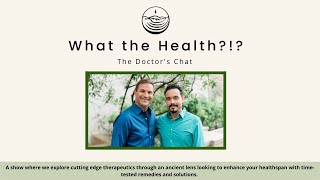
Dr. Janel Ludenia, a naturopathic doctor and occupational therapist trained at the National University of Natural Medicine, grew up on a Minnesota dairy farm before moving into clinical practice. She uses craniosacral therapy, abdominal massage, and the Bredesen protocol for cognitive decline, alongside tools like hyperbaric oxygen therapy and light therapy helmets.
Questions this video answers
National University of Natural Medicine (Portland, Oregon).
Nature Cures Clinic, Portland, Oregon.
Minnesota (on a dairy farm).
EP 119 WTH?!? The Doctor's Chat: Doc Talks with Dr. Nadal and Dr. Janel Ludenia.
Chapters
Hello, everybody. Dr. Jonathan Nadal here with Dr. Ludinia here at Nature Cures Clinic in Portland, Oregon. And we have an exciting episode today. I wanted to just have the chance to actually introduce you guys to Dr. Ludinia and all the special things that she's doing here. So. Yeah, take the floor. Dr. Ludinia, what do you do here at Nature Cures Clinic?
Yeah. Okay, well, it's nice to meet everyone. I'm a naturopathic doctor and I'm also an occupational therapist. I completed my medical training at the National University of Natural Medicine here in Portland, Oregon. And then after I graduated, I just loved it here. Loved the community, the people. And so I decided to stay and I've been here ever since.
Yeah, awesome. Yeah, I decided to stick around too. I mean, after school, you've been such a community and just like minded doctors. It's a fun city to be in and it's really good to practice this medicine here.
Yeah, yeah, yeah.
And where are you from originally?
I was born and raised in Minnesota.
Okay.
Yep. On a little dairy farm.
Nice.
Nice country. Yeah.
So pretty different out here.
Yeah.
Okay.
A little different landscape.
Yeah. Did you always imagine about being a doctor, did you always kind of think about doing that as a kid?
You know, I did. As a little kid, I remember wanting to be a pediatrician. Yep. And I remember talking to my grandpa about that.
Nice.
Yeah. Okay, so.
So it was kind of a calling even. Even in your youth.
Yeah, yeah, yeah. It morphed and shifted a little bit into, you know, who I see now. But yeah, I knew I always kind of wanted to be in the medical field.
Awesome. Okay, so. And that being said, why this type of medicine? You know, it's not every day. I mean, even naturopathic medicine or even occupational therapy, which is awesome and I think goes well with what you do. Like. Yeah. Why this type of medicine?
Yeah, that's a great question. It took me a while to get into it because honestly, I didn't even know this type of medicine existed. And I think if I had, maybe my, you know, medical career would have been a little different. But I started off in occupational therapy and what I loved about that was we looked at the whole person, like, how are people doing the things they need to do every day? So how are they taking care of themselves? Right. And that in working with clients with their families. Now I primarily worked in long term care facilities and rehabilitation centers and home health. And so a lot of my clientele was older, and so I'm working with them and their families. I started to kind of see reoccurring themes of, like, people weren't fully getting better, you know, and they were healing some, but not completely. And I just kept feeling like, gosh, there's more. There's more that we can be doing. Like, there has to be something. Some things, you know, not completely, like, complete here, I guess. And then also, like, the reoccurring, like, there's nothing else we can do. We've done everything. You just have to live with it. This is how it is. Your quality of life is going to continue to go down, and that's that. And it just never sat right with me. And so I took a pain management course, and a part of that was briefly learning about some different acupuncture points and kind of how that helps with pain. And I was like, okay, interesting, maybe. And then I started trying it with clients, and I was like, this stuff is, like, really impactful. Right. And then I started doing all my research, and I was like, what is acupuncture? How does this work? And then eventually I just found naturopathic medicine. And I was like, is this real? Does this exist?
I had the same, like, impression. Yeah. Wait, really?
Yeah, yeah. And I'm like, this is how I, you know, live my life. And it's, like, close to my philosophy. And then people actually practice medicine this way. It was. It was pretty amazing. Yeah, yeah.
Now we look at us now.
Yeah, yeah.
It's a fun journey. And then. So what would you. This is kind of a fun question. So what would you be most surprised about, like, what people think we do? You know, because, I mean, word on the street, it's already spread quite a bit, especially in Portland, California. Like a lot of states, naturopathic medicine, it's a thing. But I mean, what do you think people are most surprised about when they hear about what you do and what we do here, as opposed to, like, the common working knowledge of what naturopathic medicine would be, you know?
Yeah. I mean, honestly, I feel like a lot of people, if, you know, not in this geographic location, elsewhere, though, haven't heard of it. Like. Like, myself, I had no. No clue. And hearing the word is kind of like. Yeah, I don't know what that means. I think most commonly people think herbs, like, oh, you use plants or you. You know.
Yeah. Or homeopathy.
Yeah, yeah, those would be the two.
Yeah, that's about it.
Yeah.
And I mean, at the end of it, we love those modalities, and that's great. That's part of most of our Care plans. But. And there's so much else that we do. Right. We learn about physical medicine, nutrition, lifestyle, and then there's the whole kind of bridge to like Western allopathic medicine that we have our own approaches to. Right. Like, I mean, even in our own clinic, like some of the stuff that we work with. Right. Like different types of IVs, different machines, HBOTs, laser guided treatments, kind of where the ancient kind of all these older medicines are meeting modern western medicine. We're trying to create a bridge there. So that's what we excitedly do. So definitely above and beyond what many would think just conventional naturopathic medicine is. Right. But with that going Back to you, Dr. Ludinia, can you tell us a little bit about some of the treatment styles or modalities that, that you're passionate about that you enjoy doing?
Yeah, I use a lot of different kind of body work, energy work, types of modalities in my practice. And here one of the big ones being craniosacral therapy. And for those of you who haven't heard of that or are curious about it, it's a really gentle form of body work and it's kind of focused on the rhythms of the cerebral spinal fluid in the body. Yeah. And it, it supports different areas of the brain, the head and neck, the spine, the internal organs. I mean, it, you know, spreads systemically.
Great. That sounds amazing. I've had it done before and it's phenomenal. Very deep relaxation. It's different than sleep. Similar, but different than acupuncture. It's fascinating. It's interesting.
Yeah. It kind of puts you in a little bit of what meditation feels like sometimes to some people because it's just very soothing to the sympathetic or the, the nervous system. So it helps get you out of the parasympathetic or the sympathetic and put you into the parasympathetic.
Yes. We could all use a lot more of that.
Yes.
Yeah. Interesting. Okay. Okay. Anything else?
Yeah, I do different forms of abdominal massage. And you know, here in, in populations that we work with, constipation especially is a big. Is a big.
Yeah, it comes up a lot.
Yeah. Yeah. So different abdominal massages, different body work for pain. I'm also Bredesen protocol trained, so I see a lot of clients who are experiencing varying degrees, cognitive changes and, or just wanting to be proactive and try to prevent that as they get older.
That's awesome. And I mean, as we've discussed, there's so many elements of that protocol that just ring true for what we do. Here from all the different, more advanced functional labs that we run with patients, all the dietary considerations, lifestyles. It's like. I mean, it's brilliantly put together, and I love that. It's so similar to what we do already.
Right. Yeah, yeah. And then adding on the extra. The extra components that we do here. Like the helmet.
That's right, the Weber helmet.
Yeah, yeah, yeah. With the light therapies.
Yes. There's so much. Yeah. And somewhere out there. There, I mean, there's. There's definitely some videos on some of these things. So. So dig around and find them, because it's. It's fun stuff and it's. It's good information. Okay, well, that's amazing. Thank you for all of that. I mean, it's really nice just to kind of introduce you out to some of the people and patients that are watching this. Yeah. How can people find you? I mean, you're here, but.
Yeah, I'm here. Nature Cures Clinic.
Yeah. And so, you know, we think about even just some of the new things that we're bringing into the clinic. Like today there was this. It's called the All Core device, for instance. Right. And it's phenomenal. It's one of the best machines out there right now in helping to rebuild and strengthen all this core musculature. So whether you're trying to just kind of chisel a little bit more in the midsection or even just help with core stability, I mean, even a lot of our patients with low back pain and things like this and balance issues, they are going to be doing this. It's just part of it. So look out for more information on that. I think there's links through Calendly, or you could even call the front desk to find out more information. It's only 10 minutes a couple times a week. All right. You just sit in and you're strapped in. We're going to have a bunch of videos that'll show some of the docs doing it, I'm sure.
Yeah.
Because we like to have fun like that. But. So there's that, and of course, there's all the other usual suspects, all the different things we're doing with IVs, and there's always new and up and coming devices and programs that we're putting together. So stay tuned. All right. As she mentioned, you know, when it comes to brain health, longevity and overall wellness and just improving quality of life and thriving, we like to say that. I mean, we excel at that, and that is what we are passionate about. So for you for your caregiver or a loved one. Just keep this in mind and give us a call. We're always ready to do a consultation and chat with anybody and everybody. All right? So thanks for tuning in.