EP 124 WTH?!? The Doctor's Chat: Emerging Innovations and Implications
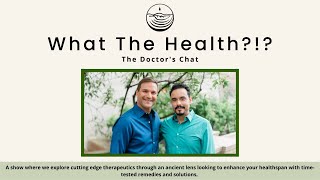
Dr. Greg Eckel and Dr. Jonathan Nadal discuss emerging wellness tools: sauna and cryotherapy for longevity, peptides like BPC-157 and CJC-1295 for targeted healing, and psychedelic-assisted therapy with ketamine and psilocybin for trauma and depression.
Questions this video answers
Four to seven times per week (claimed ~50% reduction in all-cause mortality, cited to a 2021 review discussed by Rhonda Patrick).
Over 239 therapeutic proteins and peptides approved for clinical use by the FDA (as stated in the episode).
Two courses per year (15 days, twice a year) for three years (total 30 days/year)—claimed to provide up to 15 years of benefit, a 40% reduction in cardiologic morbidity, and a 33% increase in telomere length (per hosts' statements referencing a 12-year follow-up).
The ACE study followed ~17,000 mostly middle-income Americans and found a strong relationship between childhood traumatic stress and later-life physical, mental and behavioral illness; hosts cite that one in six adults had an ACE score of 4 or greater and that preventing ACEs could reduce adult depression by ~44% (CDC figure).
Ketamine-assisted psychotherapy (clinical training at the hosts' clinic) and psilocybin (noted as becoming available in Oregon in 2023) for depression, PTSD and trauma healing.
Chapters
All right, welcome back everybody to what the Health, the Doctors chat. And I'm one of your hosts, Dr. Greg Eckel.
I'm Dr. Jonathan Nadal and we are.
Coming at you from two states of the union today, Oregon and Utah. The first two clinics in our flight of eight of these wellness and recharging centers. We're fresh off a ketamine assisted psychotherapy training. We wanted to continue our discussion in the longevity sphere around innovative and emerging technologies. So where do you want to start with this.
Boy? Yeah, I mean very as future and current up to date, I think we can, you know, we'll bring in peptides, got to talk about hydrotherapy, some of the classics. And then even getting into the more psychedelic assisted therapy. So kind of go across time, right?
I love it, I love it. There's plenty here. So let's start with the old school naturopathic approach with hot and cold therapies, right? So we've got cryotherapy and cold plunges and hot saunas and actually alternating hot and cold in the old naturopathic sanatoriums in Europe. Let's start with the saunas. I recently, within the last year, I got to interview Rhonda Patrick, who is, you know, bringing forth a lot of research on saunas and sauna therapy. And she put together a 2021 experience in, in the Journal of Experimental Gerontology. Four to seven times a week of a sauna reduces all cause mortality by 50%. And that's a pretty staggering number on just sitting in a sauna, right? A lot of the original research comes out of Norway, the Netherlands, these places where saunas are part of the culture. Everybody has one in their yard, the community saunas. It's just something that they do and they've just built it into their culture. It is really, I love saunas. You know, we have ozone saunas here at B Vital in Park City. We encourage folks for infrared saunas in Portland, Oregon. Actually around the globe. We have some connections for home saunas. What do you want to add into the sauna discussion?
It feels great. I don't mind sweating, but just the fact that you could sit down and, and detox and kind of cleanse your body, you know, it doesn't. Our bodies don't always have the chance to get rid of things that quickly. Our biggest organ is the skin, right? And so if we think about everything the liver is doing and our kidneys just to kind of detox everything from exhaling to bowel movements to urine, well, guess what? Sweat is a huge One, you know, we talk about among the reason and as far as more of a naturopathic spin, but. And it's, it's as old as time itself. I mean, we look at Roman bath houses with, I mean, hot tubs and saunas, and all these things have existed for a while. And on the flip side, you know, some more modern things like the Wim Hof and like people realizing with cryotherapy, like, yeah, guess what? Extreme hot and extreme cold it's all about. I mean, it's connecting to the immune system directly and shifting blood flow around. And our body loves that, right?
Yeah, yeah. You know, one of the things that comes to mind when we talk about saunas, you know, I was in the one here last night, it was 110 degrees. You know, the fever is the cure, right? We've been kind of trained to think that raising our temperature or having a fever is detrimental or harmful to us. And it is. It's actually in our body's natural defense mechanism is to spike a fever. Well, what does that fever do? It kills viruses, it kills bacteria, it cleanses the blood. Now you can go too high if you have a fever. And we're talking about external heat sources, you know, like in a hot tub. I love it hot. The hotter the better. 104, I think is that's a good temperature. I like it hot, Jonathan. So it is. And then in, in the sauna, ozone sauna at 110. You know, I could only do 20 minutes in there. Just buckets of sweat coming off, coupled with an E Watt exercising with oxygen therapy. So I had 100 oxygen coming into my body with a high temperature, high hot heat with the ozone circulating around. So I like to st therapeutics together and it gives you a lot of energy. So it's like you're tricking the body with that high temperature that it's actually exercising because your pulse rate increases because you're so hot. You're trying to get the blood to the surface so it gets the heat out of your core. And then you're breathing in that oxygen. So you get, you're increasing the microvasculature, your capillaries, all of the tissues. Getting oxygenated just feels really good. So I stayed up a little bit too late last night as a result of that. I was very productive, very focused, very clear. But stayed up too late. Right. So cautions for overdoing it with the sauna. But the, the component of this heat is heat shock protein. So it helps clear out senescent cells out of the Blood. And I think that's one of the big benefits for it in a longevity play. I'd love to hear anybody's comments down in the notes or comments on that, like, do you use sauna? Do you like them? Do you know where to get a good one? You know, any questions? You got around sauna, so I wanted to really bring that up. And then the cryotherapy like you mentioned, you know, we. We actually never thought that I would do the Wim hof or, you know, just felt so male. Young agro and I actually did it here in Park City region. There's a lake up here called the Jordanelle High Alpine Lake. Last January or the January before, group of 20 of us got in there and there was ice on the lake. I don't know what we were doing. We were. We were entrained. We were in a, you know, deep work. It was really brilliant. It was really cool to understand that you have the regulation of your physiology. While a lot of times we don't think that we do. But we were all able to get ourselves hot again. So we're out there after being in the cold. I don't know, felt like an eternity, was probably like four minutes, you know, and then get out and we did this really cool winged breath, which I actually have on the YouTube channel of the three breath burner breath with wings. So it felt like you were developing your wings from the scapula. And it is that hormetic stress, I think, is a piece of the conversation here of, you know, and I don't like to go so far as to say what doesn't kill you make you stronger. But that kind of is the truth. But that's not what I practice or preach.
Right. Yeah. And one thing is challenging the body with these like physiological challenges that were adapted to deal with. Another thing is like, you know, dealing with some traumatic challenge that really. It's. It's not the challenge that made you stronger, it's you suffering through it and learning from it. So, yeah, it's kind of different things, but same idea. Yeah, yeah, yeah.
Anything else on the hot and cold therapies that we want to talk about?
No, just. Just to bring it back home too, to there's even easier steps. You know, there's. You can go out on a frozen lake or do some advanced saunas, but even the little tricks, like in the morning at the end of your shower, like just flipping it to cold for 20, 30 seconds or a minute, like over your neck and your kidneys, I mean, this is Something even the Essenes, like the Dead Seas girls, like, they wrote about doing this every morning in kind of a longevity trick. You know, that cold water along the spine and the kidneys, just kind of amping everything up and bringing that vital energy back to the surface, especially in the morning.
How would they. How would they do it? How would they do it?
Any source of falling water, the colder the better, and they would kind of just stand under it. So similar to what we do, you know, I mean, we focus. I feel like I learned a lot more, like, over the kidneys. Right. You know, essentially Ming men kind of in Chinese medicine as well. But what I like about the neck, if we think about all the basal structures, like, there is, you know, this reflexive perfusion of blood flow to the whole area, it really does wake you up.
It really does. Yeah.
Especially in the winter, you feel. You feel warmer once you get out of the shower after doing that.
So, yeah, that. So that's something simple that everybody can do at the end of their shower. Start with a. Like a cold component. You know, I was talking to a group of entrepreneurs over Labor Day, and these are pretty heady folk that don't. They. Their brains are going at a speed that us mere normal folk, they don't. We don't operate at that level. And they said. One of them, it was really interesting, he said, you know, I do two minutes of cold every day. He's like, it's the only time I can get my brain to sit that it's so cold that that's it. He's just in his body and breathing, and it stops his mind from getting into whatever it's going to get into. That. Number one, Mike, you need to meditate more. But number two, that's very interesting, um, in that it is. It does do that. It really brings you into your body for embodiment, present moment, and then also realizing, like, you are more powerful than your senses, that the cold is not going to kill you. And by just doing some breath work, you can warm your body up and really enjoy the cold. So it is. I've noticed, you know, since putting that in and kind of traveling around the country, certain communities have colder water than others. And so it, you know, cold is relative, but you want it to be cold. I would say you want it uncomfortable. You know, one component for me is feel like if I can do that, I can really. I can get through anything in my day. Like, I've already done the hard part there, you know.
Yeah, I like that. All right. So that I Mean, that's hot and cold therapies, right? Yeah. There's so much more to like hydrotherapy and fun stuff like that, like wet sock treatments and even alternating hot and cold to the chest, like when you're sick and all that. But I'm sure somewhere down the road we can go down an old naturopathic.
Rabbit hole for kind of home care. Yeah, you know, hormone optimization therapy, I need to give a little shout out here. Used to be called bioidentical hormone therapy, but now the innovators have called it hot therapy, because who doesn't want to be hot? So this, this comes off of, though, one of my mentors, Jonathan Wright, Dr. Wright of the Tahoma Clinic, he was one of the pioneers of bioidentical. In fact, he's known as the father of bioidentical hormone therapy. Suzanne Summers writes about him in her books quite a bit. He's a character. I had some patients in concert with him early on in my career. Much love to Dr. Wright. He Literally, as a young naturopathic doc, some 23 years ago, I came out with a chip on my shoulder, everything natural, etc. Said, look, this, these are natural transitions for people. I'm not going to provide hormones. He literally kicked me in the tuck, is in the seat of my pants and said, look, Greg, do you promote death? That's a natural pro, that's a natural process. And you know, of course not. Of course not. We don't promote death.
Right.
The first tenet of longevity is don't die. So I took, I listened, I'm a really good listener and I'm coachable. Said, look, people are living much longer now and you're doing a disservice to your population, patient base if you aren't doing this. Because you can really, you know, increase the health span of an individual with their strength, with their brains, with their brawn, with community in that, you know, a healthy libido, that's a quality of life issue for so many people. Bone health, heart health. So it's not just about sexual performance or muscle mass, although those things do keep us well into our old age. Right. So hormone optimization therapy, I think is one that I want to put in the innovations and emerging therapeutics.
Yeah, yeah, it should be. And it's not hard, you know, with the right provider and the right labs. I mean, it's something that could be pretty simple and significant to implement. It can be, it's a game changer for a lot of people so much.
And the other component that I've seen people on bioidenticals or hormone optimization therapy for 5 years, 10 years, and they never had the metabolites tested, which I think is a mistake of a lot of providers not looking to see where the hormones are being utilized, what routes that they're getting broken down to. Because you can get into some metabolites of the hormones that are not so great and in fact harmful for our bodies, creating cell proliferation, DNA damage, things like this. So I think using a test or a lab that actually looks at the metabolites of where the hormones are getting broken down into is really an essential piece of this hot or hormone optimization therapy.
Absolutely. Yeah. And there's definitely some labs that we run, you know, even for initial screenings to check for those metabolites. And it's, it's been interesting to see how even healthy people, sometimes they're just not clearing these metabolites as well, you know, so.
Right. And we get a look at their phase one route of elimination of their liver and their cytochrome P450 cycle. We look at their methylat methylation pathways and how comt. And methylation is occurring for detoxification of the body. So these are important things to take a look at if you are on those therapeutics. One of the new darlings in which I'm excited, I know you are excited to share too, are the peptides. And I think peptides will be the new hormone optimization therapy in the next decade. As long as the regulatory bodies of the day du jour don't outlaw them because they're safe and effective. Right. So I didn't mention anybody by name there, but we'll, we'll keep it that. Peptides. What are peptides?
Yeah. So if we think of amino acids, right. Building blocks of proteins or peptides. Right. There's polypeptide chains. Really it's boiling down to just some of the biochemistry talk on how proteins are built in our body, but when we go down smaller to amino acids and peptides, this is a huge component of cell to cell communication and even system to system communication. Right. And what I mean by that, you know, for thinking of the immune system or endocrine system, I think one of the founders or pharmacists over at one of the compounding pharmacies we use, he was kind of a funny idea where it says if, you know, the wave in a stadium where like once it starts on one side, eventually it gets around the whole stadium. You know, when it comes to cell to cell communication, that's, that's how I think of peptides, you know, we're introducing them exogenously and we're reminding whatever tissue or system that hey, this is the message that we want to start implementing more. And it happens pretty quickly. And they're simple. You know, there's, there's nasal sprays, there's, there's pills, there's oral forms, there are some injectables, but yeah, it's effective. And the, the side effect profile is really nice. And it's been around for a while, Right. I mean, insulin's a peptide, right?
Yeah, insulin, the most famous peptide, insulin. People don't really think of it as a peptide, but it is a peptide. And I like how you said that. It's just like a little program that comes in and runs on the body. You know, we're looking in areas of performance, nootropics for brain health, cardiovascular health long term. There's some really compelling Data. There's over 239 therapeutic proteins and peptides approved for clinical use by the FDA. So you know, these are not new. There's over 90 years of research on some of them. You know, they, they work a little bit differently than the hormone. I think of the hormone therapy is overacting on the whole system, whereas the peptides come in and they act at the membrane level. As far as running that program that you were talking about.
Yeah, I agree, that's, that's a good comparison. And the hormones themselves are just so much bigger, you know, both, both molecularly, but also in their impact. Yeah. So I feel like we can get a deeper message with the peptides in a more gradual format, day to day and week to week as opposed to the hormones. It's a much louder message with the hormones, if you want to think of it that way.
Sure, yeah. And possibly a little bit larger side effect profile as well. What are some good examples? What have you been seeing clinically? What do you like using in the clinic?
There's a few go tos for sure. I mean even this morning talking to someone about some immune support, you know, she had some sinus issues going on and wondering if it was like more of a viral based, like sore throat. And she did the works, like all the herbs and nutrients that exist under the sun and she even knew some of the hot and cold therapies and she was curious about peptides. So I mean, something that was known to have a pretty direct hit on the immune system by working on the thymus is one called thymulin. We know it also has benefits in the lungs and Cardiovascular system overall. And then with her being sick, and I'm using her example because it was this morning and then with her being sick, she had a huge performance coming up this weekend and she was feeling a little anxious about it and the anxiety was making her stressed. Right. So it was kind of hard for her to calm down and take care of herself and find some peace. So I thought, you know what, Solank is a great one, like modulates gaba. So it actually helps calm things down, reduce anxiety. But it also has some antiviral properties and it's a nasal spray. So it's a win, win. So those are two really simple examples. Then there's a bunch of others, you know, like if you're working out or training or tissue recovery. You want to talk about some of those? Sure, yeah.
Well, so some of them, there's like the yin and yang balance of these things. There's some things that build us up and then there's some things that replenish. I'll start with the Yang. CJC, Epimor, CJC 1295. It will reduce overall body fat. It increases quicker recovery. It improves protein synthesis, promotes bone density. It's great for the skin too. Cells and internal organs. It helps you sleep better. You get better deep sleep with regards to cognitive function, muscle mass, bone density and decreased fat and a heightened sex function. I mean that is one of the first ones that gets utilized in a functional medicine clinic in that it's a, you know, it's an enhancer, it's a builder upper now that just is pushing on growth hormone pathways. You can't just push on growth hormone because you'll, you'll increase your metabolism. Well, what happens when you increase your metabolism? You increase your rate of aging and so you don't want to just do that. So there is this fine line or the art, you know, I'll again, I'll see people on CJC at the Moreland for years now. And it's like, what is going on? Nobody measured IGF1. Nobody's looking at growth hormone. That's a not a good spot of just pro growth. Both to be in all of the time, but that is a really good one for six weeks and then take some time off. Six weeks, take some time off, some even eight weeks. People will do that. That's. I'm fine with that. But that one is a darling. I started with that, so maybe that's one of my favorites. But I do think that one's really well known. People should know about that.
1. Yeah, absolutely. And then I mean we got to bring up BPC 157.
Yes, good.
One of the OGs, right. Like it was body protecting compound. That's the BPC. And then we nickname it kind of the, the wolverine peptide. Right. Because it really does help heal most cell lines, especially endothelial cells, even joint cells, ligaments, tendons. But then other cells that are constantly turning over and need some support sometimes is in the gut. So when we think about patients, whether it's ibs, leaky gut or even gerd, this could be really beneficial and helping to repair some of that.
Yeah, And I like it. There's two delivery methods, right. So there's the capsule, the oral form. That's awesome for the gut lining. And along those lines, any inflammatory bowel disorders, Crohn's colitis, etc, that's a good one to have on board. And then the injectable for musculoskeletal tendon healing, tendinitis is, etc. Along those lines. Yeah, yeah. You know one. Another one. So that would be more, that would be more of a yin. That's a more healing one. So we can go back. I, I'm going to give another yin. So the yin and the yang epitalon. This one came out. This is a longevity play. Doing two courses a year, 15 days, twice, two times a year for three years will give you 15 years of benefits. It's a 40% reduction of cardiologic morbidity. So heart attacks, dying of heart disease, 40% reduction with just 30 days a year for three years. I mean that one really should be part of the program for everybody. Just logistically what happens is, you know, there's some fires to put out with people. So you start with the biggest pain points and get those under control and then it's sometimes once those pain points are gone, people just are like I'm too busy to come in or kind of connect. And so it's, it takes a good container to hold this one in the program because it's more, it's definitely a preventative. So it definitely. So bio regulates, helps restore body function and homeostasis. It increases telomere length by 33%. The 12 year follow up study they had, the people in that study had much less risk for cardiovascular disease on just doing that 40% reduction of cardio cardiologic episodes. Let's call it that.
That's wild. I mean what, what else exists in medicine that you do for total of 30 days a year and you get those stats. That's Impressive.
Yeah, yeah, yeah. I can't think of anything really, you know, a lot of times. So let's talk about a cosmetic because a lot of folks want to look better. And so GHK Copper is one. It goes right into the DNA of the cell. It grows new hair. So you can like, it comes in a foam. You can put that right on your head. Helps gene function much better. So there's a cream. Evening wrinkles. A lot of times you'll find this in women's cosmetics. You can put it around where you have the wrinkles here. Forehead. You can rub it on the joints. It's a great one for the connective tissue of the joints. So all acl, MCL repair and small doses, you can inject this. And we have used this with V cell procedures in mesenchymal stem cells when we were using those back in the past to help aid on ligament repair. So it is, it's very versatile and very effective.
Yeah. And that's one of the things I like about a lot of these peptides. They, they're very versatile. That's. I mean, it's true. They cover a lot of different systems and they're targeted. They have like one of the main things they work on. But there's, there's a lot of benefits that come along with it beyond that one. So.
Yeah. All right, cool. Any other peptides that you want to share today?
No, those are all really important. I mean, I think one that we've shared with a lot of our patients, whether there's later stages of disease or even bodybuilding. But the sarcotropin IPA is a pretty good one just to help low muscle mass. And those that are trying to put on a little bit of healthy weight and might have a little bit of a hard time just because their metabolism is so fast. The sarcotropin IPA has worked pretty well.
Yeah. And that one also will increase deep sleep.
Mm.
And which then reminds me of the deep sleep inducing peptides. So dsip. So if you're struggling with sleep issues there, there may be a peptide for that in addition to balancing your hormones and stress level and, you know, nighttime hygiene, et cetera. So, you know, again, not. Not. I don't see any of these as standalone items. They do fit good pieces of the puzzle in programs. That's how we get the best results for people. And now. Okay, so halfway through the show, we've got on the tail end of the show the uplifting and enlivening discussion around trauma. We're fresh out of Academy Assisted psychotherapy training, basically billed as heal the healers. And also learn this therapy. And it is powerful, powerful medicine. It goes, it falls into the psychedelic assisted psychotherapy, which is happening in Oregon in 2023 with psilocybin and ketamine, is really renowned for depression, PTSD, healing, trauma. So maybe we talk about trauma at first. It's not just a loaded word and how all of us have it, whether we want to admit to it or not. It does affect us to different and varying degrees, but it is, you know, so trauma. It defined an injury such as a wound to living tissue caused by an external or extrinsic agent, a disordered psychic or behavioral state resulting from severe mental or emotional stress or physical injury, and then see an emotional upset. Would you define it any other way?
That covers a lot of the bases. You know, there's so much to each of those, right. I mean, because even, you know, I guess the source of where the trauma is coming from is, is what really distinguishes each of those. Right. And how we perceive it. It's not just what's happening to us, it's. It's how we responded to it and how our body learned to respond to it, perhaps. Right?
Yeah. One of my favorite resources on that is a book called the Body Keeps the Score. And it's a really great one. It's not for the faint of heart. I mean, it's really, you know, how to have a comprehensive program to heal trauma for folks. When we look at, you know, basically this concept, nobody gets out of here alive. It's called the ACE scores, the adverse childhood experiences. And this was a big study, 17,000 people, mostly middle income Americans. The focus was to analyze the relationship between childhood trauma and the risk for physical and mental illness in adulthood. So over the course of a decade, the results demonstrated a strong relationship between the level of traumatic stress in childhood and poor physical, physical, mental and behavioral outcomes later in life. You know, this is heart disease, lung cancer, diabetes, many autoimmune conditions, as well as depression, violence, being a victim of violence, and suicide. So that is, that's a lot. That's a lot to take in. They're showing 10 types of childhood trauma measured in the ACE study. So these aren't, you know, basically trauma can be a loaded word for folks. A lot of folks say, I don't have any trauma. I don't know what you. I had a happy childhood. Yes, indeed you did. And just remember this, that over 50% of your memories are incorrect. And if you're living in trauma and you're remembering it as trauma, you're just reinstating more trauma going forward that may or may not have occurred, but that past does no longer exist. So so many people are bringing those past thoughts back into their future and then just experiencing it over and over and over again. So I guess one this side note, I went down that rabbit hole. Dr. Nadal is, you know, if you are not enjoying your life or you have some suffering, then you have to listen in to what are you playing in this kind of goal achieving machine? What are you projecting out? What are you, what are you amplifying with your thoughts? Your thoughts do matter. Not that we're the thought police, but we want you to live in a beautiful state, in a healthy state, in a healing state that is your birthright. But here, you know, we measured. Do you want to go through the different 10 types of traumas that were measured?
Sure, yeah. I mean, I do like the direction that you are supporting. You know, it's.
Yeah.
Just to comment on it briefly, I mean, it's, it's not so much to, you know, ruminate or revisit the trauma necessarily. Even in a therapeutic setting, it's not always beneficial to bring up and out the trauma. But what will we learn from it? What will we, how will we kind of navigate the experience and how it impacted us? You know, when we think about all these maladaptive responses or even just pushing down feelings, you know, there's only so many ways we can rethink our way through our experiences. But it's true. Memory is fallible. And at the end of the day, I mean, they're not even using eyewitness testimony as much anymore in court because it just doesn't. Memory is fallible and it's not always going to pan out. However, you know, certain behaviors, you know, whether you see, you know, different people out there from narcissists even to people that are always people pleasing to, even people that are quick to anger. All these things, why are they doing it? Even the people pleasers, if they're, if they're constantly saying, okay, sure, whatever you say, yeah, I'll do whatever. Really what they're saying is, as long as you love me, as long as you love me. What, what could have been going on during their childhood or developmental years where there was just severe impacts where, where they couldn't express their feelings or their feelings wouldn't have been accepted because that would have threatened the attachments that they had. And so what do they learn? They learned to suppress their feelings. Right. And as adults we know there's plenty of fun ways to try and do that. Right? Yeah. So it's like we learn these maladaptive processes and they, and they take on all these different forms as, as we grow up. And it's important to go back to the source and understand what it was that happened and how to learn and grow from it, because transformation is possible. And I. Yeah. So I do got to thank Gabor Monte for some of those inspirations. He's got a new book out now and it's. It's pretty amazing. So just a plugin for him for sure.
I'm not familiar with him.
Wait, who. What's give.
Give us a little more.
Gabor Mate is a physician.
Oh, Gabor Mate. I do. I thought you said some other name.
I said it quickly. Sorry.
Yeah, yeah, but go ahead, share. Gabor Mate. Yes.
Yeah. Phenomenal physician. He's mostly retired now, but he's kind of. He's just been pioneering the work on like, bringing back in just awareness of childhood experiences, trauma, and then even weaving in different. Just the way society and culture is nowadays. His new book, the Myth of Normal, we, my partner, we just got it. We're going to read through it. It's already been super exciting. And he writes with, of course, a amazing amount of knowledge and insight, but he's bringing a lot of personal clinical work that he did, I think, over in Vancouver in Canada with. With a lot of addicts and people who've been through a lot, so. Wow. Yeah, I couldn't recommend them enough. Yeah, cool.
All right, so. So then let's go.
We'll.
We'll wrap that into this ACE study and the 10 types of childhood trauma. So there's some relationship to this. So five are personal. Physical abuse, verbal abuse, sexual abuse, physical neglect and emotional neglect. Five are related to other family members. So a parent who's an alcoholic, a mother who's a victim of domestic violence, a family member in jail, family member diagnosed with mental illness, the disappearance of a parent through divorce, death or abandonment, and then each type of trauma counts as one point. So a person who's been physically abused with one alcoholic parent and, and a mother who was beaten up has an ace score of 3. So trauma is a loaded word here. When most of us hear that word, we discount it like that never happened to me, though. There are questions on the ACE questionnaire around mentally ill individuals in the household, alcoholism or problem drinkers getting yelled at, etc. So how many people really, truly are affected? One in six adults had a four or greater on that assessment. And at least five of the top 10 leading causes of death are associated with elevated ACE scores. So preventing ACEs. So adverse childhood experiences could reduce the number of adults with depression by as much as 44%. That's coming from the CDC.
Numbers there. Wow. Yeah.
So the other thing that is shown with that is, you know, so depression at 44, chronic obstructive pulmonary disease 27%, asthma 24, kidney disease 16%, strokes at 15%, coronary heart disease 13%, cancer 6%, diabetes 6% and overweight obesity 2%. And then the potential reduction of negative outcomes in adulthood for current, current smoking is 33%, heavy drinking is 24. So those fall into how much we could reduce those illnesses that I just mentioned by that much by limiting or getting ahead of adverse childhood experiences.
Yeah. And that relates nicely to. Because the conditions caused by the habits, the habits being started by dealing with the pain. Right. Starting with the trauma. Right. So it kind of returns to source there somehow. So it's. These numbers are, it's amazing because these are things that we could change. Right. And just how high they are, it's incredible.
So, you know, kind of a framework to think about this as we get into the last 15 of the show. We've got mindset and meaning. Like what kind of meaning are you going to create of some event in your life? There's trauma healing. So we just went through those stats on trauma and then psychedelic assisted therapies, which I know Dr. Nadal and I are very excited to, to have this as a class of medicines to help people really get at some deep unconscious belief sets and do. Do some really proper work with. Right. Set and setting and intention and breath work. This isn't about a drug. You know, I'd love to be able to do some of these deep healing sessions with broccoli and I do feel like it's possible. Right.
Sure. That's great. That's great. Yeah, I'm a fan of broccoli, but I don't know how much it's going to help my trauma. But.
Yeah, not yet. Dr. Not yet.
Not yet. I mean, maybe there'll be a future broccoli psilocybin fusion. They share similar enough shape. One has a different haircut.
Yes. So with, you know, we talked about a bit about the mindset and the meaning and, you know, memories and what those are doing, but I think a lot of us are walking around unconscious and not embodied in these vessels that we're in. And my encouragement is we get people in the body Embodied, like in here, in our energy centers, having free mobility, no pain, feelings of happiness and joy and connection, bliss, for crying out loud.
We can.
We're capable of that. That hasn't been outlawed yet, as far as I know. Maybe in certain communities, but we won't go there. So there is that aspect of it, of the mindset and what meanings you put. Like we could all witness the same event, maybe, you know, and certain people are deeply affected. Other people's not at all. Other people don't even remember it happened.
Right?
So it is. You gotta watch what story you're creating. Is it real? Check in with the people. Don't assume, like, if you're feeling something from someone, that it means this, X, Y or Z, whether it be your kids, your spouses, your parents, community, you know, get curious. Like, hey, I'm curious. What do you mean by that? Or I'm curious, I'm feeling that you're really wound up and upset. Is that true? I think people will appreciate you for that because you're caring, you're curious, you're engaged, you're sensing something outside of your body. And so that aspect of, you know, healing traumas is bringing people back into their bodies, not in a traumatic or painful way, not in reliving what happened, but in a way of allowing the cells to release. You know, I have a. A working hypothesis of why we're seeing a rise in neurodegeneration across the board, is we've been on the planet for a lot longer as a species, and being on the planet means our ancestral lineages have been running for, you know, hundreds of years. And there's an accumulative epigenetic change that occurs with that. Maybe my great, great great grandmother had came across in the prairies and, you know, had much adverse adversity.
So.
And I don't know that she did, but if she did, that would create epigenetic changes and have my cells express themselves differently, maybe in a pathological state. So looking at trauma, unhealed trauma, unresolved trauma, and seeing a rise, I've been asking all of my patients with a neurodegenerative diagnosis about physical traumas, head traumas, emotional traumas, family lineage traumas, and then for those that know their family lineage, then we get into. Then we get into that with them as well. And it has actually made my job much harder as a clinician to take the time and really understand what's going on with this person in front of me. Sometimes the expression of the illness isn't from this Lifetime, which is a little bit hard to believe, but the egg that you were born in was, you know, carried in your great great grandmother. So it is. That's one way to think about it.
Yeah. That's profound. That's huge. I mean, and so neurodegeneration. But even. How about even our immune conditions, you know, we find, like, certain defects in DNA methylation, like turning on and off different. Different protein sequences. I mean, what is happening other than literally the DNA strand is trying to remember where it's been and where it hasn't been. Like, that's what's going on genetically when it's getting methylated or not turned off or turned on. I mean, what. What more of a representation and a more psycho spiritual model do you need than to want to remember where you've been or haven't been? Right. Because sometimes things are just too painful to remember or deal with. So whether we have a neurodegenerative component where, you know, whether it's dementia or Alzheimer's and the possibility of painful experiences or trauma contributing to that, or we have someone whose immune system is completely dysregulated and it's always attacking itself. You know, autoimmune conditions.
Yeah.
You know, in some way, fundamentally, it's. It's. They're very related like that. So it's a very, very curious phenomenon, and I think medicine is understanding that better.
Yeah. And it is such an exciting time to be practicing. One of the main themes that came up in the setting here at B Vital, where we did the ketamine training, was around creating a safe space. And that has really resonated with me. In fact, I was in tears over the weekend, which for most of our listeners and viewers, they know, oh, Dr. Eckel is in touch, and he expresses his emotions freely. It's true. I'm also a sympathetic crier, so if you're crying, I will probably cry with you. But I also feel I'm a deep feeler, and I take that as one of my superpowers and strengths. Because so many people are not willing, or I would say, courageous enough to express themselves fully in the full range. Because I don't want to put any weight on. Of course, I gravitate towards joy, bliss, fun, play. Who doesn't want those things? But as high up as you go, go, that is also means there's a. There's a. A drop that can occur from the expansion to the contraction. Where am I going with this story? So I'm going to the. The place of deep healing of and Safety and safety is creating. So many of us do not feel safe in our day to day. And when we don't feel safe, it means we are on alert and there's waiting for the other shoe to drop. And you'll hear that from a lot of folks that have experienced traumas. They never relax, they're so vigilant all of the times. Well, what does that do to the body? It creates chronic illness, creates inflammation, creates breakdown, degradation. So how do you get into the reset button? I felt like I aptly named the clinic a recharging center that people were charged, recharged, they got in touch with their source them as creator of dissolving ego dropping the thought process, which is hard to understand or believe if you haven't done it before. I'd never done it before. I never experienced that with ketamine. And to go through that in a therapeutic realm, it's really renowned. I mean there's research on CAP ketamine assisted psychotherapy, effective method for decreasing depression and anxiety in private practices, especially for older patients and those with a severe symptom burden. So with a lot of symptoms, not able to get away from pain or so much anxiety that the pain is going to return, that the pain returns because the anxiety created stress hormones which reduced the immune system response that led to inflammation and then increased this. It's like this never ending cycle that occurs for folks. So to find a potent, powerful medicine that can be utilized in clinic is phenomenal. We had tremendous breakthroughs with people with expressing grief and sadness and you know, really grokking or grappling with their concepts of what death means and how that plays out in their, in their lives. And so that it is, I'm excited. And why I brought it into the clinic and why I wanted to have it therapeutically is really around neurodegeneration. I'm seeing patterns for folks and really want to test out that hypothesis of is this truly here? So many folks, you know, men in their 60s, 70s, 80s, they were, you know, did not grow up expressing themselves. In fact it was highly discouraged. And it's like be a man, stuff your emotions, shut up and stand there, right? Muscle through it, be a man through it, all of those components. So it is, there's a changing of the guard, literally I think with the queen passing this last week that there's a new, a new dawn arising. And it's these therapies are really integral for really deep healing, resetting at that limbic and amygdala level of getting out of the fight or flight. And so many people came out of their journey just saying, I feel lighter. I, you know, I got to express grief and sadness. I've never felt safe to do that, you know, and these are healing professionals taking on a lot from. From their clients and patients. So I'm really excited about it. I'm wondering, kind of CLIFF Notes from Dr. Jonathan, what do you want to add in there?
No, it really was such a profound experience. I mean, and, you know, it was just so interesting, both journeying and then holding space and being the sitter or guide for the other person as well. They're equally profound because at any given instant, you know, you had someone on the other side of the room, you know, in tears, expressing some type of grief or struggle, release. And then front of me or the other person is blissfully reaching through whatever space, time area they're in, you know, saying how amazing they're feeling. So you're like, you're witnessing the full spectrum of human emotions and potential, experiences and potential. I mean, it was beautiful. It was profound. So, yeah, but, you know, even the way that we're going to do it, you know, whether it's four or five, six sessions, you know, and with therapy and like, it's. It's very deep work that we're going to get at. And just to think of the possibilities, you know, even what you were saying, like being in that fight or flight mode and having all the lower brain structures always firing, you know, engaging with survival mode. The beauty of substances and experiences like this, it's. It's really releasing that grip, you know, as the body can relax into that deeper calm state. It's almost like allowing our mind to roam a little more freely and process this pain and these experiences a lot more in a much more profound way. Because it's not being just held down by the physical body pain that's involved in it. Right. It's this idea of, like, dismembering to remember. Right. Like, once you get put back together again as, as you return, there's. There's further integration that happens. And so I just can't wait to. To carry it forward and see. See how we go through with it.
Awesome. Likewise. Thank you for that addition. It was. Yeah, it was really profound. We're going to be holding some groups of healing for the healers. It is being utilized now clinically across the United States for depression, recalcitrant depression that hasn't been touched by other therapeutics. I think that it shows a lot of promise. There's some great research Coming out, we've got how to change your brain by Michael Pollan, who shed some light on it bringing out the research. It's not a one pill fits all and in fact it really shouldn't be about the substance. You know, I just kind of jokingly said we should be able to do it with broccoli. But it really is around giving people the tools to breathe on how to reset their nervous system naturally on, on, you know, how to handle adversity in a safe space with someone caring for you. I mean it is, it's in fact the sitters, the folks that were kind of holding the space for those on the journey were as touched or even more moved than those that actually went through the therapy. So I'm really excited to see what the future holds with this technology, this therapeutics. Top of the hour everybody. I just want to say thank you. We would not be doing this without you, our listeners and viewers. If you like today's show, please share it with friends and family. I know a kind of very variety of topics in there with a kind of a more deep dive on trauma and psychedelics, assisted psychotherapy. If you like the show, give us a five star review and tell people what you learned and what did you like about it. If you have questions for us, please put them in the notes and you know we will have our staff and team checking those out, bringing them back to us or you can also email us at support nature singular nature cures with an sclinic.com and you know, definitely share us. This is how it the world changes is by our in community, in communication. Many blessings everybody and we will see you next week.
Yeah, until then, thank you.
More from Dr.

EP. 197 Brain Regen: Harnessing Essential Oils for Cellular Health and Longevity

EP 196 WTH?!? Unlocking Cognitive Health with Your Genetics with Elwin Robinson






EP 190 WTH?!?: Mind-Body Mastery: Harnessing Movement, Breath, and Sound with Jeffrey Williams

EP 189 WTH?!?: Nourishing Connections: Lynne Bowman on Family Meals and Healthy Living


EP 187 WTH?!?: Clearing the Air: Dr. Kevin Smith on Nasal Health and Migraine Relief