EP 126 WTH?!? The Doctors Chat: Ozone, EBOO, HBOT, and AllCore
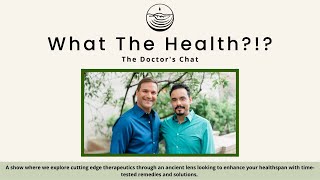
Dr. Jonathan Nadal and a co-host discuss oxygen therapies: EBOO (extracorporeal blood oxygenation), which equals 20 to 30 ozone sessions; HBOT at 1.3 to 2.2 atmospheres, typically 40 hours total; and the AllCore360 device. They cover uses for long COVID, brain fog, chronic fatigue, Lyme disease, and traumatic brain injury, with practitioner insights and patient outcomes.
Chapters
All right, welcome back everybody, to what the health the Doctors chat.
I'm Dr. Greg Eckel, Dr. Jonathan Nadal.
And we are coming at you from Portland, Oregon in Park City, Utah with our lively chat on some interesting therapies that, that we find interesting and that we think that you should too. We've got ozone and EBOO and HBOT and Allcor. I guess I should put an oh my at the end of that, huh?
Sure.
We just are coming in off of what we wanted to share some interesting therapeutics that we brought into our clinics and in particular the eboo. We had that training in Portland office. This weekend I received my first extracorporeal blood oxygenation and ozonation. It just rolls right off the tongue. So we figured we would talk about ozone, ozone therapies, eboo, what do we do with those? Then we'll move into hyperbaric oxygen, which is another oxygen therapy. And then we're going to talk about another device that we pulled in just to help with expediting the change and, and what we're seeing with our patients. So let's start out with ozone, doc. And you know, really looking at it like, what is it? How can it be beneficial for folks? You know, what are we, what are we talking about here?
Yeah, no, excellent. I mean, so ozone, right? We think of oxygen O2, and then if you get another oxygen there, it's O3. And we know that it's high up in the sky. It's also somewhat in our environment. You smell it sometimes in different machines, they emit it. But ultimately it can be very therapeutic in the right doses in the body. There's been a few different ozone machines over the last decade or so that have been used for all types of things like chronic infections and fatigue, just because it helps deal with a lot of the issues that kind of linger in the blood. But, you know, if you fast forward to today, there's so many new and enhanced ways to deliver ozone in a concentrated fashion. And I mean, yeah, we both got that treatment this past weekend. And it is very interesting and exciting to see what's going on.
Yeah. You know, sometimes when people think about ozone, they're thinking about the ozone layer. Right. Which there's a hole in the ozone layer. So is this a good thing or a bad thing for us? You know, the ozone actually is there to prevent, protect us from the sun's ultraviolet light. And it is made from the sun coming through our atmosphere. So it is creating that third molecule of oxygen. So it's instead of O2, which is oxygen, it goes to O3, which is ozone. It's kind of that smell that you smell. If you've ever been in an electrical storm or lightning. People will describe it as like fresh air smell. It's also, it's the second most powerful sterilizer in the world. So it can destroy bacteria, viruses, odors. Yeah, the lightning strikes like I mentioned and it's that fresh, clean, clean spring rain smell that people can hear or smell. And how it works is that third molecule of oxygen creates an oxidative stress or oxidation. So it'll go and clear by putting it into the bloodstream and it'll go and clear out free radicals from our blood and then it leaves an oxygen molecule. So one it's way to oxygenate the body. It can increase our circulation and it really does ramp up these NRF2 pathways. NRF2 which are potently anti inflammatory, anti cancer, highly repairing pathway that feed our mitochondria. So oxygen or ozone therapies has been, they've been around a long, long time. So much so Robert Rowan, Dr. Robert Rowan actually went into Africa to treat people of Ebola. Now when you say Ebola in the general medical care system, we get a little bit antsy because it's, it's a very dramatic viral illness that, you know, that's the one where people are like bleeding out of their orifices with no quote unquote, no known cure. Well, Dr. Rowan actually was, now don't quote me on the country, so I won't say it, but he was in a country treating with the ministry of Health in Ebola and actually treating it very effectively with ozone, which is a pretty readily available, you know, mobile treatment that you can take. Really unreal, really, that you could have that effect. Well, he was getting some research set up and then promptly got kicked out of that country. And I believe this story is on his YouTube channel. So you can check it out and do some fact checking for yourselves. But this is a therapy we've brought into our offices because of the recent pandemic that we went through. We want to have some solutions for folks, while we might not have research on the specific virus, when it comes down the pike, we do have the history of its use in viral illnesses. It's amazing. For autoimmune conditions, infections like Dr. Nadal had mentioned, we decreases inflammation, modulates and down regulates in autoimmune conditions. So for autoimmune conditions it will also, it will modulate the immune system. So if its immune system function is low, it will modulate immune system up. If it's high, it will modulate it down. So then we did kind of the next generation of ozone, which is called ebu and we have a picture on our Facebook page, you can check that out. And that's where we have. It's drawing out on one side, goes up to the ozonation and oxygenation apparatus and then comes back in the opposite arm as the return. And it goes through a filter. It's not filtering anything though. I think a lot of people are talking about it as, oh, it's like plasma pheresis or you're filtering out senescent cells or viruses or bacteria or mold. No, that's not what it's doing. It's actually exposing the blood on multiple fronts and multiple sides to ozone and oxygen. So it's hyper oxygenating blood. And then it is also going through a ubi which is ultraviolet bloody radiation, which has its own classification of benefits of creating putting light on the blood. And you know, you've heard us talk about light and frequency as being the next generation of medicine. And so they've put those together to actually have better outcomes in the therapeutics. Right.
Yeah.
How did you feel with the O. How did you feel with the ebu?
Well, you know, the day of the. I think most notable were just like fluctuations in energy. You know, during the treatment I described it as kind of a fuzzy, not lightheaded, but there was something different. You know, you're getting what, like one to two liters of blood that are going out and running through the machine and so you can tell something was happening besides being hooked up to both my arms and there's this machine next to me. But yeah, it was, it was interesting. The energy fluctuations were curious. You know, eventually just slept very deeply that night and then the next day or so also kind of just a little off with energy. But then suddenly the day after that Sunday, going to Monday. I don't know if you felt this too, but it was a certain clarity or like just there was a lightness both in my body and my brain.
Yeah.
That was kind of unique and different than how I had felt before, you know, and not attributable to any other changes really. So. And you know that some of the people we worked with, the other doctors and trainers, I mean, they were talking about experiencing some of these benefits a while after. So even in a week or two, there's still going to be some changes that are happening. So.
Yeah, and you know, this is one, one equivalent Eboo treatment is about 20 to 30 of the conventional ozone treatment. So we we're only recommending people get one of them a week. You can do a series of them 1 to 3. We think of the indications for this really long haulers Covid I think it's showing amazing progress in some of our colleagues offices of really helping clear up brain fog the fatigue focus energy. It can also be used in chronic low grade infections for chronic fatigue syndrome where Epstein Barr virus or herpes simplex virus or cytomegalovirus or the chronic viral loads in somebody Lyme disease is another one that I really. I think it shows amazing promise. All autoimmune conditions for sure in the immune modulatory front. One word that I want to. I want to put a plug in for that NRF2 pathway. You know there's all of this talk about mitochondria and mitochondria being the energy factories of all of our cells. This NRF2 pathway is really the precursors or sets the stage for your NAD pathways. Now they're showing NAD levels drop as we age. So it could be related in an aging process of low NAD levels which are directly responsible for mitochondria health and energy. This is a great therapy to think about to help on an. You know, on a longevity pattern. Sorry about that longevity pattern. So that that component is. Let's turn that off. The new upgrade has got me and I don't know how to turn off my notifications yet. Nice. So sorry everybody out there on the podcast land. So we've got. So that's. That's a lot about the ozone. You know we've mentioned it in a few of our other shows but really wanting to highlight it here because we're just. We're literally fresh off the press with getting our first treatments. We'll have them in Portland and in Park City. And it's a really great you know for chronic illnesses. There's a lot of patients in the Portland office that I can think of right off the top that I want to. I really want to get this therapy going for them. Takes about an hour and you know it's. It shows some amazing, amazing progress potential for folks. Anything else that you'd like to say there?
No, that's well said. It's so true. There's you know and it's these ideas of like, you know, it's not that it's cleaning or filtering the blood. Right. It's even if we look at some of the devices that it's going through, it's Almost like, you know, it's these microscopic. It's almost like organizing how the blood runs through these chambers and down, washing the oxygen and the ozone through it, you know, and then it goes to the machine and gets exposed to different lights. So it's just to see it on the return and the difference in color is, is really incredible. And I mean, it's. I can't think of a patient that wouldn't benefit from it, honestly. Because even with some of our autoimmune patients, if they're scared, it's like, wait, it's going to do what's my immune system? It's like, well, no, it's. If something is out of balance this way, it's just going to shift it more this way. And if it's, you know what I mean, it's going to bring it to better balance. That's what we mean by modulating, right?
Yep. Yeah. And that it's a very safe, it's a proven technology. It's very potent as well. So it's, you know, we, the first tenet is do no harm. So we're very cautious that way. Slow and steady wins the race. I'm definitely a turtle practitioner on those fronts. Some of the ozone statistics across, across for ozone practitioners, 70 to 80% of people with chronic disorders said they were significantly helped. That was with five or more treatments. So we're saying one Eboo treatment is equivalent to 20 to 30 treatments. So I'm looking forward for those statistics to go up again. Some, some conditions to think about for ozone and EBOO therapy. Chronic fatigue, autoimmune conditions, allergies, bacterial, viral illnesses, cardiovasculature and circulatory issues. Because the therapy, the O3, will help with increasing circulation, Lyme disease and inflammatory conditions. And I would put cancer in that inflammatory condition there as well.
Yeah, yeah.
So, you know, when I first got my start in oxygen therapies, because oxygen, we know the benefits of oxygen in the body. I mean, I guess, you know, my funny statement is to remind people to don't stop breathing. Right. That's number one. So that. To increase your oxygen in your body. But, you know, we, I did start out, you know, when I first graduated, you either go into ozone or you go into hyperbaric oxygen therapy. I chose the hyperbaric oxygen therapy. We're coming full circle now to ozone. But I wanted to share on hyperbaric oxygen because there's over 40 plus years of research and we want to highlight some of the conditions that we are seeing on a daily basis in the clinic and what we can do about them. So, number one, tip of the hat to Dr. Paul Harsh. He's out of Louisiana. He wrote a book called the Oxygen Revolution. He's also done a tremendous amount of research on hyperbaric oxygen. And so when you look at the research, a lot of it is coming out of his clinic. And so we have him and our patients thank him really. He did a lot to move the needle in the United States for incorporating hyperbaric oxygen therapy into a wide variety of conditions. I wanted to start out with traumatic brain injuries, though, and that we're seeing, you know, a lot of research coming out around there. You know, the early human, basically experiments were modeled off of animal studies. And you know, I think there's this thought process that the sooner thereafter a traumatic brain injury. I'm going to talk about stroke here today too, but having it sooner than later, having the therapy started now, yes, that is important. But we are seeing people 10, 15 years after a traumatic brain injury and we are actually showing improvement. Remember, a patient came to us and she had not finished college and her care team was not in integrative or functional medicine at all and basically said, look, you've done physical therapy. That's what we've got for you. Done some occupational therapy. This is after a traumatic brain injury, Sugar bee. And so they just dumped her at the end of her. At the end of the road. And I know she was really depressed when she came in to see us. After our care and our care plan, she went on to get her Master's degree and PhD and is actually really gainfully employed in the profession of her choice with full faculties of her brain. And that when I was an earlier provider, I would have just gone into agreement with the conventional thinking of like, look, this has been many years. You've done all of the therapies. That's what we've got for you. But it's. You don't take that as the answer. Don't ever take. That's all there is. Especially if you haven't engaged in a conversation with us or other functional medicine, naturopathic, Chinese medicine providers, because there you've got way more options than you. Than, you know, was possible. And you know, here we're going to just share some of the studies. So, like, you want to share one of the studies on traumatic, severe traumatic brain injury there?
Yeah, yeah, yeah. I mean, over the last couple of decades, that one, that one, like so increasingly successfully applied to patients with chronic traumatic brain injuries of all different severities Right. Because there's a lot of different ways that the injury can happen and the type of long term damage that it could be. But even early human experiences, like duplicated in animal models that constituted only improvements in chronic brain injury has been supported.
Right.
So basically they got a couple of different trials, right? They got severe traumatic brain injuries and had those controls, and then mild traumatic brain injuries and of course post concussion and then they randomize those. All of them in the chronic traumatic brain injuries were done with a specific dosing range. And no matter how they shifted the dosing range, so long as it was consistent, it showed positive results. Not only it supported the hyperbaric oxygen therapy for chronic neurocognitive residual damage of the tbi, but it also showed just some significant evidence based medicine according to the definition of all these. Basically, whoever met whatever the definition of SAGITT or the way that you would categorize the different TBIs, it supported it in no matter what way that it was documented. There's essentially no real comparative effective therapy that achieves the results that were found with some of these studies. And this was straight from Dr. Harsh, you mentioned him earlier, but impressive numbers on that, you know.
Yeah. And you know, there is, there are smaller studies. So of the 16 research studies that I found, nine of them were, you know, delivered by Dr. Harsh, but we still, the other seven were actually equally impressive. Autoimmune conditions is the next big category that I wanted to talk about. So, you know, what is an autoimmune condition? So those are diseases that occur because the immune system is attacking itself. And so like type 1 diabetes, multiple sclerosis, lupus, rheumatoid arthritis, Hashimoto's thyroiditis, which is the biggest category of hypothyroidism that there is. Most of it is as a result of an autoimmune condition. You know, conventionally thinking that there's no known cure and even though, you know, they can be medically managed with some significant side effects and other things like that, a lot of times when you get into a pathology that has progressed, people start talking about biologics and you look at advertising of Humira on the television. That drug I believe is $17,000 a year. It's a, it is a significant immune system modulator. Yes, people, quality of life can be improved. However, it is not the starting spot for these conditions. Especially when you look at here, we're talking about hyperbaric oxygen, which is you going into a chamber. We fill. Right now we're at 1 atmosphere pressure we can fill the pressure of 1.3 atmospheres up to 2.2 atmospheres of pressure. More is not necessarily better, but it is an equivalent of time in the tank. Most of Dr. Harsh's research is showing 40 hours minimally in the tank. You can't just do 40 hours straight. You could run into oxygen toxicity there. But so we do it for about an hour and a half per session on the autoimmune component. Most autoimmune diseases are responding over, you know, if you've had an active autoimmune condition over six months, once that wounding has occurred, regular low dose hyperbarics up to those 40 hours looks like it is turning off the genes for inflammation in the body. So they're anti inflammatory. It will also increase your own stem cell production, which is your repair mechanism for your body. It's potently, as I mentioned, anti inflammatory and helping the body, the tissues heal with getting that oxygen in. So increasing, you know, with nutrition therapy and kind of the full programs that we set up for folks. We rarely use hyperbarics by themselves. But used in a program you can really accelerate the change for somebody back into what I call Wellville, you know, around that dysregulation of the immune system. We talked about the ozone as an immune system modulator by 1 giving 1 of the oxygen of the O3. The 1 of those oxygens is cleaning up reactive oxidative species and then the O2 coming in to heal the body. Well, here in hyperbarics we just have the oxygen flooding 95 to 100% pure oxygen breathing in on a respirator or into the chamber and then 1.3 to 2.2 atmospheres of pressure in the chamber, which then moves the oxygen from the environment outside of the body into that your body's tissues and, and hence regulating autoimmune conditions. You know, looking at multiple sclerosis as an autoimmune condition. So there's a report out of England, over 700 patients they treated for 14 years. And it just showed that they did not progress in their multiple sclerosis. Even Dr. Harsh's wife Juliet has had Ms. For 21 years and she's able to work full time, participate in sports, active lifestyle with very minimal symptoms. So it doesn't really get offered to folks with autoimmune conditions. So I wanted to make sure that we were highlighting that for people.
Yeah, absolutely. And then you think about, you know, what are the cells that some of the cells that are turning over the quickest, you know, be it our skin but especially in our gut, those are the ones that are most prone to some of the quickest damage. And with a lot of autoimmune conditions, you know, it can happen within joints, it can happen in the brain, like with Ms. But then we also think of different inflammatory bowel diseases, right, Like Crohn's and ulcerative colitis. And those gut cells are turning over really quickly, so the damage can come on and last a long time. And there's also not a whole lot of support for that outside of the kind of the monoclonal antibodies that you were talking about, those therapies that are just pushing the immune system in a way that's really just suppressing it so the body doesn't attack itself. But yet again, multiple studies with the HBOT showing nearly 300 patients with Crohn's and over 300 patients with ulcerative colitis being treated with HBOT showing an overall response rate of 86%. That's huge in healing the Crohn's and the wounds that develop with it and improving overall symptoms and clinical outcomes. So there's not a whole lot out there that does this.
I mean, 86%. You would think that this would be make mainstream media and news. However, it doesn't because there's not a lot of profit in it. And it's not residual income because it's actually healing somebody from their condition. You know, this inflammatory bowel diseases is rampant. Crohn's disease is debilitating, and actually people will die of it. Well, what is that? Crohn's disease? That is you are getting a reaction to gluten that is antibody derived. So it's not just gluten sensitivity, but it's actually a genetic disorder where you're not able to process gluten. And then that irritates the bowel lining. Bowel lining produces mucus and then blood. Then you fissure, you start bleeding out internally. I mean, it's a really debilitating condition of Crohn's disease. So to have. So we see here oxygen therapy. Again, if we look at using the body's physiology, what does it need? We need air, we need oxygen. That's why we do recommend meditation and breath work. But we also address diet. Like we want to modulate immune system. So we're just sharing with you the research on just simply hyperbarics and a condition. But when we, again, rarely ever just treat with just one therapy because we want to do full court press of okay, how steep is the incline? What do we need to put over here to the gorilla of the symptoms that somebody's experiencing and get somebody balanced out really quickly. Feeding the innate intelligence, the information it needs. Your innate healing ability, which is everybody's, you know, given Right. In our natural state of being, is in health. Even though I know when you look out there, it does not look like that looks very disorganized. There's a lot of disease, there's a lot of suffering.
Yeah.
You know. Yeah.
And I mean that's, that's an important part of this. Like we have all these amazing game changing therapies, but we actually care enough to test before. Right. So I mean, even in the realm of gut health, like, you know, distinguishing between celiac disease with the gluten sensitivity and the Crohn's or ulcerative colitis and being able to distinguish between any and all of those.
Right.
Yes.
Thank you for that correction too.
No, yeah, it's all good. But we like to test to actually figure it out. And even with some of the more rheumatic conditions like ra, rheumatoid arthritis and ankylosing spondylitis, more autoimmune issues. Right. There's also plenty of encouraging reports with the hpots. Right. So it's, I mean, I think it was especially like with ankylosing spondylitis. They were finding 94 of 142 patients. This was back in the 80s and improvements with the HBOT, 94%. I mean the numbers are there, it's clear. So I mean, what's interesting is that they come to our clinic, but guess what, if they buy the HBOT and they get better at home, you know, how is insurance going to make money off of that?
Right, right, it is. So that component of just looking at again, physiologically how we start using oxygen, good clean water, hydrogen water, organic food and with nutrient dense soil, like these things are necessary for a beneficial or healthy life on the planet. And look at what our lifestyle does. We can align with a healthy lifestyle which then also helps our planet. You know, I think a lot of folks are, you know, we're not going to get better living through chemistry. We know the returns on that are in our life expectancy is currently dropping in North America. It's the first time ever really in history that we see we are getting longer and longer lifespans and now it's dropping. That's levels of toxicity. I think it's also a failure of public health and our medical system. I'm fine saying that. I think a lot of People are seeing how the system has been bought. There is a profit motive in medicine. New law, just as an aside, and I just can't help myself from commenting on it, Governor Newsom just kind of put a gag order on physicians for providing informed consent that any physician licensed professional in the medical system in California can now no longer report on findings in journals that go against the dominant narrative that Covid vaccines are safe, that there was an actual benefit from that vaccine. Where we see published research and data coming out to go exactly against that, where the number of people vaccinated to be lives saved versus lives harmed, we're now tilted towards lives harmed. With the way that those campaigns have gone, that's not just Dr. Eckel saying it. That's actually published research. And I think it's criminal that the government is getting in the way of doctors and professionals that have really the public's best interests at heart. For the government to step in and put in censorship like this, it's really. We're living at some interesting times. So I wanted to bury that about three quarters of the way through our podcast today. So for those that are really interested in it. But I definitely, you know, it's something that gets my, my feathers up a little ruffled because I do feel strongly about it. I too, am concerned about that. I mean, even saying that on a podcast, you know, we'll see where this one goes. But, you know, people need to know there is a level of censorship happening. So part of why we're bringing you what the health the doctors chat is, we want to get this information into your hands so you can be an informed, informed consumer, but also informed for your health. The last category, let's put in dementia. Let's talk about dementia here before we talk about all core at the tail end of our show today.
Yeah, yeah. So I'm glad you remembered to talk about. That's good. So, I mean, as far as, you know, if we think about what HBOT's doing and just giving this hypersaturation of all this oxygen in our body, but it's also in our brain, right. When we think of, like, mild cognitive impairment, even like cerebral perfusion and what's actually going on in the brain of someone with dementia or Alzheimer's, they have shown how there are actual blood flow scans that are showing improvements in. In the blood flow of patients with mild cognitive impairments and dementia treated with HPUs. So it's not just that they're remembering point X through Z a little bit better in a week or two. No, there's actual brain flow scans that are showing improvement now exactly why or how? It's a little more theoretical and speculative. But I mean, by improving oxygen saturation, I don't know, that's like enough science to really sink my teeth into. I think because hval we know it's helping the body heal itself through an increase in oxygen. We know that we need it and we know that brain shrinkage and reduced blood flow is going to be a part of the brain's issues and what's leading to some of the impairments. So guess what? If hyperbaric oxygen is going to improve oxygen flow and even reverse that damage or stop it from happening further, then of course it seems like a given to me. But at least there's research out there and objective data to support it.
Yeah, you know, of course we want to use the research. I love the researchers, our patient base and folks that are needing these therapies don't have the time for that to get settled. I guess you should run for the hills when you hear science is settled because that's not the scientific process. So you can see I've been reading before getting on here on different topics. And so it's coming in, coming through on our, on our podcast. But the, the component of this we've put in hyperbarics with all of the brain regeneration camps that we use. You know, oxygen is the substrate 1. It increases your own stem cell production. We also utilize it with the very small embryonic like stem cell procedures that we do which are laser guided and activated and that we get the oxygen while we don't get 40 hours in the tank. Somebody literally would be camped out in our clinic for, you know, a couple of weeks. We put in five to 10 sessions, depending on how long somebody's coming into the clinic just to as insurance for the investment in the procedure that we did. But also it is a treatment in and of itself. So we see it in dementia with the research there and then stroke. And stroke rehab is another one. And I think that this will lead us into talking about why we brought the all core machine in as well. But on the stroke, you know, I lectured 18 years ago, American Academy, known American association of Naturopathic Physicians, the aanp. And I was honored to be one of only two naturopaths that were able to treat patients going through the Rehab Institute of Oregon with Dr. Andersen there, where all patients recovering from stroke go through for their occupational physical therapy and medical care after their stroke. This was way before I was doing hyperbaric oxygen or Any of the stem cell procedures that we're currently doing. We were getting results with folks post stroke. And you come to see in Europe after a stroke, hyperbaric oxygen is actually part of standard of care, 40 sessions. I do want to dispel this myth that if you're not treated within the first four to five hours, then all therapies are for not. You can treat with hyperbaric oxygen through any state of injury from stroke. So that could be acute subacute. So that's the weeks to months to the chronic which is considered greater than six months to. And really the key is resupplying oxygen to the stroked tissue. And the hyperbaric does like that. Like no other therapy out there. It really comes in hyper perfuses the tissue. Now not seeing it on the, in the research or on imaging bringing back dead tissue, but it's the living tissue around the dead tissue that we can start looking at. Are we increasing brain derived neurotropic factor BDNF that's creating neurogenesis. Other therapeutics that we can put in there with acupuncture and Chinese herbs and different nutritionals. I do think that as we mentioned earlier, the ozone therapy is another way to reduce the oxidative strain or stress from anti free radicals in a system. Inflammation on the brain that hasn't been turned off from an event, whether it be traumatic brain injury or stroke. So this can be a really good thing to consider. Yeah.
Yes, absolutely. Great. Everybody getting the H bot. I mean we got two of them.
So oxygen for your brain, that's a good thing. Yeah. So let's see. So you know, other things that we put in here. What do I want to say? Is there any other notes on hyperbarics that we want to talk about? It's really addressing the living damage tissue that each bot treats. I wanted to make a point of that. No, I think you know, we're seeing, you know, with Parkinson's disease as well. Actually there was. I pulled up a bunch of sites that just to have tons of research on hyperbarics. It's hyperbaric experts dot com. We were members of that society for a bit. I'm not sure if we're still in there. They've got tabs on aging, Alzheimer's, anxiety, brain health, cancer, concussions, degenerative disc disease and arthritis, GI tract healing like we talked about with the Crohn's disease, heart disease, inflammation in general, mold, multiple sclerosis, Lyme. We've seen a lot of benefit with folks with Lyme disease. Wound healing, for sure. Tissue and nerve regeneration. I mean, these are near and dear to us. And we are out looking at the research for you all and really wanting to pull it together here. Not in a, you know, mea culpa type of way. I mean, you can do your own research too, but ultimately we're clinicians. Clinicians, and we want to see what moves the needle in the real world to get actual results for folks. So that said, when we're. We want to add one piece here which may or may not in your mind, think that it fits together with oxygen therapies. But we've brought in a therapy called all core360 to help on multiple levels in a healthy aging front, but also in a neuro regenerative front. Maybe you want to speak into what is the all core360 and what are we doing with that?
Yeah, yeah. It's one of my favorite machines. Not only the way it looks and the way it moves, but you just feel like you're getting trained for NASA.
Really? Yes.
So it's a device that you sit in and you program different angles and rotational speeds. And ultimately it's all about the core.
Right.
We think about core when we're training, when we're doing planks in certain positions. But most people are not training their core the way that biologically or physiologically, it was designed to be trained.
Right.
One of the many impressive things about this machine is that it's going to. With each rotation that you get in, it, is promoting isometrical engagement of more than 50 of these core muscles. And you're resisting gravity, and that lasts for just 10 minutes. And it's all in a balanced, coordinated, like, systematic. But just 10 minutes, and you will be sweating and maybe even shaking a little bit when you're done. Okay. And it's. We know that a healthy core is. It's being used 24 hours a day, seven days a week. It's not like you could just turn off your core. Whether we're putting something down on a table or we're raising a hand or speaking or sitting or standing, our core is constantly engaged. So then if we think about even our patients with back pain or even post stroke, which we'll get into more research around that, or basically anyone whose core has been compromised due to some injury, or even just athletes that have come through here just to add that competitive edge, it can be really phenomenal. It can be a game changer.
I'm seeing people with chronic back pain. So what happens when you get injured? You Start accommodating and you'll see people with all kinds of different gaits or ways that their body has figured out. How do I move without pain? But it's not proper and it can create all kinds of issues elsewhere. Like, oh, I injured my left hip, now my right neck is hurting or my mid back is hurting because of the domino. Like the hip is out. And then that puts the upper or lower thoracics and then lower cervicals kind of, it'll teeter, totter up the spine like that. You know, on average 50% of people, so half the people in pain will experience a 50% reduction with one ride on the all core. So it's spinning in 360 degrees at different levels of intensity. And it doesn't really look like you're doing much. But I'll tell you, those 10 minutes can be an eternity when you are pushing it. So it also increases. It's basically a high intensity workout in the end. So you're getting your cardio workout if you just ride three times a week for 10 minutes a ride and you keep increasing the. Basically the stimulation. Yeah, your, your angle to build. You're building those cores so you'll see anywhere. Like for me, I broke my ankle, right ankle, when I was a senior in high school playing hockey. Ended my professional hockey care. No, just kidding. But it did actually put me on a different trajectory that I really enjoyed the life that I'm living so far. But that incident did. I had a lot of friends that went to Division 1 hockey. Well, that right ankle then affected my right hip. I had right hip pain for a decade from a later injury which then affected my mid thoracics after I got hit by a monster truck. So, you know, you have, you start building layer upon layer upon layer of accommodation and of the way that you carry your body. Well, getting on that all core, I noticed, wow, my right abdominal core was weak. And I knew that when I was spinning around either to the left or the right, when I could feel when that side was up and engaged, it was very weak. Well, at this point, I'm, I think two and a half months into riding and I'm riding really consistently. I'm really liking the results as well. It, I don't have any more back pain. You know, it's really in my core. I feel stronger on the core. You look at, you know, a measurement of longevity is the ability to get off of the floor to a standing position and from standing back to the floor without using your arms or without losing your balance. Well, Those core muscles are essential for that. You know, we treat a lot of folks with neurodegeneration and they're having a hard time getting up from a sitting position because they've lost that core strength. So it is a, it's a longevity play for us. We also pulled it in for neuro degeneration. You want to talk about that? Or neuro regeneration?
Yeah, yeah, so, and good, because I mean, whether it's stroke or even some of our other patients with different conditions that destroy areas of the brain where, you know, that idea where nerves fire together, wire together, you know, if the roadmap and the circuits from upstairs down to the core, if that's, if anything is off there, it's going to lead to issues that continue to reinforce each other in a bad way. Right. So. And we know the trunk plays a major role in maintaining upright balance. And what that means is also performing many activities of daily living and essentially functional independence, which is the more kind of chronic end stage issues that we're finding with some of the population who have dealt with these types of injuries or are working through some of these conditions. So we know trunk control, it's an important early predictor of ADLs, especially post stroke or having any type of neurodegenerative condition. If that's such an important indicator and an early predictor, why not have that as one of the front and center, one of the pieces that we have to work through with any and all of our patients.
Right? Yeah, yeah. I mean it is. I really love it on the proprioceptive component like it is that firing and wiring together to increase the neuroplasticity of the brain and get better results for folks. So it is, you know, if anybody listening, viewing, if you're close to either of the clinics in Portland, Oregon or Park City, Utah, you know, stop in, we'll give you two free rides. Like come in and just try it out because I think you're going to be surprised at how much goes into the core. You may have never experienced your core before either. Like, we're getting some feedback from people of some really weak core muscles. This is great. You know, we're showing results with incontinence, with prolapses of uterus and other organs. So by strengthening the core that all of the structures get also tightened and toned and it's just, you know, really people are functioning much better. Yeah. Awesome. Any, any last remarks, Dr. Nadal, on where, where we've covered?
You know, I think we hit all the main points really well. But just to plant the seed for. I mean there's definitely another interesting direction that's coming up here pretty soon with the whole bioenergetics summit.
Right? Yes. Yeah. So we do have launching here in a month and we'll put these the links in the show notes for everybody. I'm really thank you for mentioning that because I put in a tremendous amount of hours and interviewing over 40 world experts on different facets of bioenergetics and you know where bioenergetics used to be considered and in some circles still considered. Woo woo. Like out there, like oh, you're talking about quantum physics and isn't that so cute. But really what does that have to do with the real world? Well, actually quantum physics is coming to a clinic near you. We are, we're employing a lot of the information that we're learning and actually what the research is supporting. And I'm so excited to share this with everybody. I've got amazing interviews with. I got Sri Pritaji from India who created. Her goal is to create 80,000 Buddhas on the planet to help raise human consciousness. Dr. Sue Mortar has been doing tremendous work on talking about unity field and oneness and how that applies to maybe your separation or suffering in life to, you know, just a lot of. I've got Hamel Patel from ucsd. He's the lead researcher down there doing some of the amazing, groundbreaking work showing that meditation turns on Serpine A5, a gene that is neuro anti inflammatory and anti inflammatory in the body. Anti cancer benefits from just meditating. And now we're showing the protein structures change in the body. So it's getting real here folks. Getting real. Yeah. So if you liked today's show, please give us a five star rating. It really does make a difference and it's how we get the word out about what we're doing here. We want to share as much as we know with you so that it makes a difference in your life so it can help you with your health, it can help you with your mindset, it can help you with your energy. And also think of two people that you could share the show with and let them know what you learned and why you thought of them. You know, we're all in this together. We look forward to seeing you next week.
Yeah. Until next time.
Sam.
More from Dr.

EP. 197 Brain Regen: Harnessing Essential Oils for Cellular Health and Longevity

EP 196 WTH?!? Unlocking Cognitive Health with Your Genetics with Elwin Robinson






EP 190 WTH?!?: Mind-Body Mastery: Harnessing Movement, Breath, and Sound with Jeffrey Williams

EP 189 WTH?!?: Nourishing Connections: Lynne Bowman on Family Meals and Healthy Living


EP 187 WTH?!?: Clearing the Air: Dr. Kevin Smith on Nasal Health and Migraine Relief