EP 128 WTH?!? The Doctor's Chat: Immune Resiliency For The Season
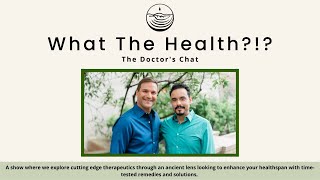
A recorded conversation (Dr. Greg Eckel and Dr. Jonathan Nadal) about an "immune resiliency" program and how to prepare for cold/flu season by prioritizing the patient’s "terrain" (host resilience) alongside germ-directed measures. They contrast germ theory vs terrain, then outline a staged approach: thorough assessment (expanded blood work: lipid particle size, CBC differential, inflammatory markers like IL‑6, viral serologies including CMV/EBV/COVID, hormone panels and diurnal cortisol via DUTCH, organic acids and 8‑OH oxidative/toxin marker, microbiome/GI panels, mycotoxin testing, and food-sensitivity testing such as IgG), targeted interventions (sleep, hydration, nasal irrigation, nutrition, vitamin D targeting 50–80 ng/mL, vitamin C, mushroom complexes, Chinese herbs), and advanced tools for select patients (peptides such as thymulin, ABP-7, BPC-157; bioenergetic scans/remedies; light/laser wrist devices). They emphasize individualized testing (not overtesting), clinical coaching/support, and offer complimentary consults to determine fit for care.
Questions this video answers
Between 50 and 80 nanograms per milliliter (ng/mL).
Greater than 50% of buildings (public spaces and homes) have had some water damage in their lifetime.
Chapters
All right.
Welcome back, Everybody.
I am Dr. Greg Eckel, Dr. Jonathan Nadal.
And we are talking how to stay healthy in any season and in particular, utilizing our immune resiliency programs. And this is, you know, it's that time of year, back to school. Fall is upon us. We're getting into cold and flu season and we have been putting some deep, deep thinking and thought into how to best support people in light of all of the misinformation that has been happening out there around your innate immune system, around your resiliency and around your terrain. So I want to say, you know, this is one of the, we're going to have some fun today, right? This is classic what the health, the doctors chat material and, and why? Because we're bringing information to you that you are not going to get from the top down. This is not getting broadcast on mainstream media. In fact, this is information that really can change your life because it has been implemented for 22 years in clinical practice and help you, your family and your community's health.
Right?
And I mean, that's a big claim. That's a big claim.
Dr. Well, it's true, though. So yeah, it is true.
So, you know, this component of, let's talk about, let's just start out with a discussion of germ theory versus terrain because, you know, some folks that have been long term listeners, they've heard us talk about this before. But it came down to a debate between Louis Pasteur and Marcel Beauchamp. And Pasteur won the debate, right? I don't know if he won the debate, but he had the propaganda on his side, let's say, and that was about the bug. You know, he discovered antibiotics and penicillin. So penicillin, the wonder drug of the 1930s. And that was basically the change of medicine where the advent of antibiotics really put the kibosh on all natural medicine in North America. And so what was the debate? The debate was around, is it the germ or is it the terrain? Pasteur's contemporary was Marcel Beauchamp and he, I would like to say, was a naturopath at heart because he, his whole point was, wait a minute, Louis, if it was the bug, why doesn't everybody that gets exposed to it get sick? Right? So it clearly, and that's germ theory of like the germs and like wear the mask and wash your hands. I'm all for proper hygiene in a public health setting. Like hand washing has been shown to be awesome, really top notch things to stop spreading germs in the ER and surgical centers. Once they put in hand washing, the rate of death in surgical centers went way down. So of course, stop picking your nose, don't put your fingers in your nose, people, because that's how you get germs up in there. But it isn't just about the germ. Right, because everybody gets exposed to it, but not everybody gets sick. So Beauchamp's whole take on it was, well, maybe it's the terrain, maybe it's the strength of the individual that really matters here. Because if everybody's exposed to the bug, why doesn't everybody get sick? And why doesn't everybody get sick in equal amounts or severity?
Yeah. And it begs the question, so fine, let's blast the bugs away. You know, kind of gets. If we picture the enemy and can deal with them, that's it. Right. And you could look at it from kind of an abstract level, like macro to micro, but come on, like the underlying terrain and the human body, if you build that up enough, then you probably don't have to deal with, with the superbugs as much and you can still deal with them. But it doesn't mean you need to ignore the terrain.
Right, right. And I don't want to come across as it's an all or nothing component.
Right.
We have a moniker where east meets west. Naturally we want to do what's most appropriate for the individual in front of us. So we' to choice. And it's not the same approach for everybody because everybody comes to the table in different levels of resiliency. Right. So we're talking about immune resiliency of like, how, how adept, how robust, how responsive, how flexible is your immune system response. So just to wrap up the Beauchamp pasture component, it's the terrain versus the germ. We know that germ theory is incomplete because it's not just about the bug. It's about how healthy is the individual or how resilient is your terrain. If your terrain is hospitable, the viruses or bacterias or infections will ravish. If your terrain is not hospitable, they're not going to, they're not going to set up shock. And we see this time and time again. We see it, you know, as we age, our immune systems tend to become less resilient. Now they notice the languaging that I'm using there because it's tend to become, it doesn't mean that they have to. It's a very common phenomena, but it is not, it is not normal. It's common. So, you know, that's why we saw you know, predominant age of death with COVID was over 75 years old. And that I think speaks to the vitality of our population. How healthy are they? What is the terrain? You know, I think the state of health in North America is dismal at best. People don't understand how their immune systems work. They're not educated. In fact, there are laws been passed that we're not able to actually educate you about that. We're going out on a limb on this podcast by talking about it because I feel like you should know what your physiology is. You should know what the biochemistry is. You should know how your body works, for crying out loud.
Right?
So I'm not making any claims. I'm going to talk about your terrain. How do we make your terrain more resilient?
Right.
And this was the brain child of Dr. Nadal and myself. And in creating, like, how do we meet people where they're at? And we're just going to walk through just how we think of putting together a superhuman program for people on immune resiliency. And, you know, it starts with assessment. So I want to start there. Let's start at the very beginning.
Yeah, yeah, as it should, definitely. And so, you know, being like you said, we're east meets west. Of course, you know, we were the lens of being integrated physicians and testing, you know, from levels of functional medicine, but still doing blood work where we can find a wealth of information on the immune system. We, you know, we started realizing year to year when patients come to us and they share with us, like, oh, yeah, I had this blood work done last year, the year before this is what it showed. A bunch of things just not there. You know, from different inflammatory markers and even someone presenting with chronic fatigue and always being prone to infections. It's like, wait, they're not checking for mold or for things like dormant EBV or cmv. It's like, wait, these aren't even hard to do. And it just literally is just checking a couple of extra boxes off and seeing what's going on. So we decided to start there. Like, all right, even this basic blood work that everyone's supposedly getting with their main doctors. All right, let's take that up a significant notch and actually do a deeper dive into inflammatory markers like IL6, some of the viral markers that I mentioned, because we know, especially with some of the conditions that you had mentioned, if you have kind of a behind the scenes load or burden with some other viral markers that maybe aren't showing any symptoms overtly, that's going to make any other viruses or illnesses much more potent and difficult to deal with. Because the bucket or how filled your immune system is and what it's dealing with is already at the top. It's already overflowing. Right? Yeah.
So I talk about just even the reference ranges. So on it just an annual blood panel. We see so many people that say, oh, I had my annual physical.
I had.
I had blood work at all. They said it all looked good. And you ask did they actually go over that? Do you know what you had tested? And we get the records, we request the records because we don't want to recreate the wheel for people. There are. It's not complete. It's not even close to complete it. There are basic panels for us are we're talking about a lipo profile, a lipo lipid profile. We want to look at particle size of cholesterol. Just starting there. You know, cholesterol panels came into practice 1954. I don't want to use that antiquated test. Cardiovascular disease, number one killer. We're talking about the terrain. How vital, how viral are you? We want to look at that. We look at the cbc. Complete blood count with a differential. What's the differential? That is your white blood cell count. What the symphony of your immune system is playing. What are your white blood cells doing? There's neutrophils that fight bacteria, lymphocy fight viruses. Monocytes are early inflammatory marker. Eosinophils are for parasites or allergic responses. So we want to look at the percentages, the interplay. Are the lymphocytes elevated? That means you have a viral load that you didn't know. Even if your white blood cell count isn't raised, this isn't even getting into the nuance of what an optimal level is. So many providers and definitely the lay public, patients don't understand there is no normal blood work. Right. It's two standard deviations around an average. And I do not want to compare you to the general population out there because I don't know if you've been paying attention, but there are a lot of diseased sick people walking around. You know, the average medication load for a 55 year old in North America is five prescriptions. That's the average. Five prescriptions. That's not healthy. That is not even better. Living through chemistry as we see our age, you know, our life expectancy reversing, getting shorter for the first time in history. And it's not just from COVID Right. It is our whole we're dying at Younger and younger ages now. So it does talk about the vitality of the population. So we don't want to compare you on a reference range. We have ideal numbers that we're looking at and we have specifics. Like Dr. Nadal mentioned the interleukin 6. It's an inflammatory marker. It makes very good sense to look at that especially with immune system response. We have that chronic viral panel and you said CMV and EBV and even we have Covid on that panel. Well, what is that? Cytolomegalovirus, Epstein Barr virus. We're seeing people with post COVID infections where their Epstein Barr virus from when they were a high schooler, which was mono, the kissing disease, where EBV comes from gets reactivated. That part of the long haulers component. This is a big aspect of getting these numbers dialed in and taking a look at that. So you know those. That's just a general panel. So when you say I got my general panel done with my primary care doctor, guaranteed it is not anywhere near our basic panel. And that's the basic panel. So then on top of that we're adding anything else on the lab work that you want to say on, on just like a general western panel.
Yeah, no, I think you, you, you hit the nail right on the head. Just keeping in mind that those ranges is more of the average, of the, of the average sick American next to you. Like and that is not the average that we want to pin you down through. Like there's, there's so much healthier functional levels that we want you to reach for. Yeah, it's a matter of perspective in the lens. So they. Yeah, it's good.
Yeah, perfect. And so looking at terrain, it's not just blood work. So we also want to look functionally like what is going on with your hormones. That's a very low hanging fruit. Meaning if you're having any sleep difficulty, if you have any anxiety, if you have any repetitive thoughts, if you have digestive issues, gas or bloating or heartburn, all of those. Or fatigue, for crying out loud. All of those things could be a result of your hormones being out of balance. So we look at your cortisol diurnal variation, we look at your testosterone level, your progesterone estrogen, we look at the breakdown products of that, we look at the methylation pathway of how your liver is detoxifying and your phase one route of elimination, cytochrome 450 cycle. There's for those that are wanting, you know, wanting the technical aspects there. I know you're out there so that we want to look at a hormone panel and that actually comes in our blood work. We're looking at thyroid up there, testosterone, estrogen, progesterone, sex hormone binding globulin. We are, that's part of our annual free and total testosterone, total estrogens, progesterone. So we look at it in the blood, we also look at in a functional analysis, dialysis. Again, diurnal variation. Cortisol is changing throughout the day. So it makes sense to us to know what level of stress are you on or under. Stress lowers our immune system function. So when you are stressed, your immune system's not functioning well. What other signs around that test do we are we considering there?
I mean even so, even a big one, even pain. So we know that the variations in cortisol, especially if it's dysregulated related, is gonna limit how well cortisol can function as an anti inflammatory hormone. Because that's a huge piece that a lot of people don't know. I mean it's very similar to like if someone's getting a cortisone injection, what do you think that's doing? It's very much mimicking some of the anti inflammatory effects that our adrenals are going to be promoting through releasing cortisol at strategic times throughout the day. So and who isn't in some type of chronic pain? I mean thankfully not you and I right now, but still like no. Yeah, me neither. But it's having these levels in check and addressing them and, and digging further, you know, when we see cortisol levels dysregulated that what does that mean too? That means that there's a pretty direct relationship with blood glucose and how fast it's essentially getting the liver to dump glucose in the bloodstream for that energy. And if there's an imbalance in blood sugar metabolism, guess what? That can kind of give us a sneak peek into potential pre diabetic situations. We know that if cortisol is dysregulated and blood sugar's off, that's going to have direct inhibiting effects on the immune system. So it's really by knocking on the door of cortisol, the adrenals and the endocrine system, we're getting a much deeper picture on how the immune system is actually working. And another neat thing with the Dutch test is that some of the organic acids and the neuro related markers, we're getting a pretty clear picture on how the endocrine system is interfacing with the nervous system. And that's not something people talk about enough because they're really two giant systems working on either side, you know, so. So there, there's a lot to the. That test that that is important to go through.
That's great. Yeah, thanks for bringing up those organic acids and the other markers. The other big one on that one is that there's an 8OH marker, which is specific toxicity. And I've got Dr. Joe Pirzorno to thank for really educating me about that marker, but also the whole community, so much so that it made it onto a functional lab test. So 8 oh is a marker for any environmental toxins that could be damaging DNA or free radical level in your environment. So could alert you for acute toxicity in your environment. And again, really couching this in an understanding and the discussion around the terrain, like how fit, how resilient, how resilient is your terrain. So we want to look at that. You've heard us talk time and time again about the microbiome, microbiome being second brain, but it's also 86% of our immune system surrounds the gut, in the gut, associated lymphoid tissue, the Gault. And you know, you could eat something here and it could just pass through your tube, out your anus, and it literally was never actually inside your body. I put air quotations for people listening there and not viewing. And so what, what do I mean by that? If it hasn't been absorbed through the mucosa lining of your body, so through the mouth, through the esophagus, down to the stomach and into the small intestine, then into the large intestine, then out of your body. That doesn't go through, so that's through the loom and through the hole that goes through the middle of your body. But if it doesn't get absorbed into your bloodstream, it's not actually in your system. I would say. Now you might argue with me, Dr. Nadal, because you get like that sometimes.
But I don't know what you're talking about.
I know you don't actually get like that, but I just wanted to make it compelling.
Oh, yeah. Well, the fun part is that. The fun part is that by bringing up how if it's not absorbed, we're directly speaking to the opposite problem. Right? Because sometimes, sometimes with things like leaky gut, too much is getting absorbed. Even the things that we got to get rid of. Right. So on the outside we have absorption and assimilation issues where people are not absorbing the right nutrients and on which could be used to A number of things like pharmaceuticals and whatnot. But then on the other end, we have leaky gut where people aren't absorbing their nutrients well. And if anything, a lot of the toxins and buildup that should be cleared through their waste is actually going into their system and causing a whole litany of symptoms that otherwise wouldn't have happened. Yeah.
And yeah, great point and that. But again, it's a test. Don't guess when we're talking about resiliency. And what does your terrain look like now? People can get carried away here and do thousands upon thousands of dollars of testing and then they start treating tests. And I see this a lot in functional medicine. More is not necessarily better here. In fact, I've seen some folks, they get a $25,000 workup on every test that you can think of. And I've seen these reports and they contradict each other and it's like, oh, my gosh.
Yeah, yeah.
It's a tone that comes in. It's like one who, who went over that? How did you, as the consumer individual digest it? How did you understand it? How was it presented? Like it's a tome. And honestly, I'm going to make the claim is it's not good medicine in that if you take a good case and you understand the person in front of you, you know exactly what test to run. And that's why I'm saying, you know, we're telling you a couple of the biggies on our superhuman resilient test because these are the levers that through time have made the biggest difference for our patients.
Yeah. There's got to be like a intention, like a zhang of the formula that we always talk about. Right.
I love that. Yeah. What are the last two that we really think about on. On a broad spectrum view.
Yeah. Well, some of the, some of the popular ones too. If we, if we see the gut and its direct impact on the immune system and hormones like we talked about, it's a couple of things. Like, let's say we run a GI panel and we find that maybe there, there is some elevated fungi or yeast then. And depending on symptoms, we may be prompted to do a full mycotoxin panel. Mold. Right. Especially living in the Pacific Northwest, like, what's the statistic that's pretty staggering. Like how many households like you, you.
Know, it's actually in North America, greater than 50% of buildings have some water damage to them in their lifetime. So of public spaces and homes, 50% plus have some mold component. Now, I grew up in western Pennsylvania which is, you know, our claim to fame is the third largest cemetery in the United States. And why is that? I don't think I've ever shared that with you, but it is because we've had three massive floods through three different decades of, of life. And thankfully they capped the dams. They put them in a container. That's not happening anymore. But that caused a lot of the flooding in Johnstown, Pennsylvania is, you know, it's world renowned. Maybe not world renowned, but it made it into a Springsteen song. How about that? So it is. So I grew up in very moldy environment, so thankfully I don't have the genetics that predispose me to mold issues. I can definitely smell mold. I'm mold sensitive because I know what it smells like. But we see, folks, when you get mold sensitivity, toxicity or illness, it has profound effects with your immune system. It leads into mcas. That's mast cell activation syndrome. It leads into food sensitivities, environmental sensitivities. You're like the canary in the coal mine. You can't walk down the, the perfumed aisle in, you know, Fred Meyer or Nordstrom's. You can't go near, you know, where they have the, the perfumes or you can't go down. I call it the toxic aisle. The one that has all the cleaning products that just reeks, like all bejesus. You know, that stuff needs to, you know, that's a telltale sign you're not detoxifying. Well, perhaps your immune system is way over regulated. Also, we know that stuff is not good for you. Like, you know, if I get into another Uber car and they have an air freshener in there, and then I have to educate them that they're creating cancer for themselves and their riders.
Yeah, just.
I don't touch anything up there. However, I do educate them and I would say straw poll. Nine out of ten guys are like, thank you so much, I had no idea. And they get rid of it. But it just is. I'm intolerant of that now. And I can't believe that people don't understand, like, those air fresheners are toxic to our health. So this component of the mycotoxin testing, we, we do put that in where appropriate. And it's a, it's a massive hidden smoking gun for so many people with immunocompromised chronic fatigue, long hauler symptoms. You know, why did your buddy or your, your lady friend get long haulers where you both had, you know, Covid at the same time and one person gets it the Other person doesn't. There's a variety of reasons mold may be underlying that genetic platform. Your level of vitamin D going into the illness also could have had an impact. Yeah, there's a big one that I think a lot of functional, integrative medicine folks have tuned into. One of my mentors, Dr. Dick Tom, actually wrote a book in the 90s saying, Are food sensitivities causing you your illness? And we kept this one last here because, you know, while food is your best medicine, it may or may not be causing you illness.
Right.
How many times do you see patients, they say, I eat a pristine diet. It's so healthy. And they may be eating superfood after superfood, and then we run something like this, and it's like, oh, look at that. We found your immune system is reacting to your superfood, Right?
Yeah. Yeah. It could be healthy in many ways and. And even culturally, like a staple. But guess what? Your. Your blood's not gonna lie. And if your body doesn't like it, you know, it. It's just.
So one component of this. So the way our bodies react to food, there's seven different pathways that can happen. Traditional allergists do a skin scratch test, right?
They.
They put the panel on you and see, okay, do you get a reaction in your skin that's igm? I don't know anybody that's reacting to food in their skin.
Do you?
I don't like the test. I don't like the test. I find it not to be applicable or really useful for folks. Then there's blood tests. So the standard of care in western medicine is ige. That's the, you know, folks developing shellfish allergy, peanut allergy, which actually those types of allergies have increased quite a bit in the last couple decades with peanut allergies, etc. Well, I have some hypothesis as to why that is, but where I'm going with this, that's ige. IGM was a skin scratch test. There's IGG hypersensitivity delayed reaction. That's the one that we test for. There's also. I.
I think you're breaking up there a little bit. Yeah. I don't know if it's me or you, but we're gonna. We're gonna keep going. Unless you're talking at the same time. Yeah. Just going through the different immunoglobulins, the different kind of stages of our immune response and the different cell lines that come through it and arriving at igg eventually, which is a huge part of some of the tests that we run and. Okay, here we go. All right, so yeah, some technical difficulties here. I will see what's going on and we will come back. Okay, so stay tuned and don't go anywhere. Hi. Hi.
Hopefully have you been going, have you been on the whole time?
I didn't know if you were still simultaneously. So I just gave like, okay, we're talking about ig, you know, the different ones. And then I kind of paused and just stopped the recording.
Okay, perfect. So we're back on Facebook Live and we are, we can on. Oh, I think we're recording again. Yeah, here we go. All right, we're recording again. So where I got bumped off in cyberspace there. So did you cover any ground there? I was kind of mid sentence. Okay, no problem. So what. So basically I'm going to put my arms up here. Hopefully we can get that edited. Otherwise we are live. So here we go folks. Welcome to modern technology at its best. It's kind of winding up on the immunoglobulin testing, right. And we have five ways that our immune system immunoglobulin G, A, M, E and D. Those five ways and then two complement ways. Now the gold standard, if you want to get them all, is an elimination diet. And I actually do have an elimination food elimination diet booklet made. It's the gold standard. It's very hard to implement, especially this day and age with our go go, go here, you know, with everybody going which way. If you've got kids or family or even in community, it's very difficult. Occasionally we'll pull that one out. But I like we do a IGG test. It kind of cuts to the chase. You eliminate foods for six weeks to three months and then you reintroduce them to really get at root causes for, for your illness and or again optimizing your terrain. So we're going to really focus going forward because we can talk about optimizing your terrain. And we don't really treat bugs, we don't treat dis ease, we don't treat illness. We treat heart centered beings moving through time and space now. All right, so that was a big, big wind up there to on the assessment front, which quite honestly everybody wants to jump to, what can I do, what can I take? But that assessment is crucial because it sets the stage as to what's the best, most appropriate next step for you. So if you're interested in that, please reach out to us. We do these priceless complimentary consults. You get our undivided attention. 45 minutes. And we're really uncovering some root imbalances and discussing whether we are a good fit. If you qualify for care and if there's anything that we think we could do, we'll offer that to you. So I'm just going to put that out there right now. Mid show. What else can we do? Let's give a tip and a trick for optimizing immune system. What's a tried true naturopathic technique that you can do at first signs of illness? Dr. Nadal.
Besides some of the pillars, like making sure that you're getting good rest and a lot more hydration and water like doubling down on it. Just anything from what your grandmother may have told you. Like gargling with salt water, Right? You didn't lose me. You're still seeing me.
Yeah, I'm still seeing you.
Okay, great, Cool. Now I'm seeing me too. Yeah. Garling with warm salt water in the morning, at night, I mean neti pots and some of those other kind of nasal lavages. It's its own thing. And all those are great. We can't forget that we are mechanically irrigating the system. Right? Yeah. Everything that our biology is trying to do at a snail's pace. It's okay to amp it up and, and take it further with some physical measures. Which leads me to open the door to, to more hydrotherapy and yes, yeah, therapy.
I love it. And those foundations, while, you know, they're not so sexy. Right. So people aren't really promoting those things. But those basics really do matter when we're talking about terrain. Optimizing your system in these miraculous vessels that we take for granted on a day to day basis. These simple things go so far. So far, like we literally are light beings. So like getting out into nature, right?
We.
I've got a friend who studies cortisol response. Like go figure, going for a walk in the forest or even the park reduces Cortisol levels by 25%. I looked at him, I said wait a minute. We need, we need research to tell us that that's good for us. But you know, okay, sure. The data. We love data. We love data, love researchers. We love good P values. Right? So that's on. Is it a good study or not? Those are amazing things. Now there are also supplements. Now, we're not going to give you the laundry list, right? Everybody wants the laundry list of what can I do. Our mushroom complex is good. How about vitamin C? EHB is one of my favorites for cold and flu season. First signs of sniffles. But don't this is not medical advice. It's just here to say there are a lot of options. The testing and the assessment really sets you up for your best program. Right. So what Sally and Joe are doing isn't necessarily the best thing for you because they have a different genetic framework, they have different stressors, they have different issues that are pulling their vitality and their terrain out of balance. So it doesn't make any sense to compare yourself to anybody else. Yes, there are some tried and true things. Like we, you know, grew up in the home of Linus Pauling of vitamin C fame. Right. Oregon State University as the Linus Pauling Institute. He was all about high dose vitamin C. We are too. You know, vitamin D is a good.
One in there and that's good to get a check too to see if it's low to begin with. Maybe it is too.
Yeah, ideally we want those numbers between 50 and 80 nanograms per deciliter. You know, all the range for that. Just FYI, we kind of full circle here, 30 to 100. So if you're 31, they say, well, you're normal, you're in the reference range. We know the research says ideally between 50 and 80. Your susceptibility to long term complications or serious infections goes way down, like considerably down. So those are, you know, some, we do personalized Chinese herbs and botanicals for folks as well. So it really the name of the game is individualize the program. But there are some telltale foundational pillars like Dr. Nadal mentioned. I want you to talk about peptides too, because it's the new darling. We've spoke about them a bit, but there are some specifics for immune system health.
Absolutely.
So how do you orient people as, as our peptide expert? Where do you, what, how do you, how do we wrap our minds around one, what is a peptide? Yeah. Two, what's it doing for us?
Sure, sure, you got it. So I mean if we think about maybe the easiest entry point, you know, a lot of people, they might think peptides, they might think on the shelf of new seasons or some health store, they think collagen peptides. Sure, yeah, exactly. I mean biochemically it is related. I mean even proteins for meat and otherwise, when it's broken down, you have amino acids and peptides. The thing is our bodies use all sorts of peptides for cell to cell and system wide communication in different ways. In this, for purposes of this conversation, we could focus more on the immune system. So our immune system has specific peptides that it works with. Now These peptides aren't just free floating and kind of just pushing buttons where they need to go. These peptides are actually flanked on top of cell receptors and help improve cell to cell communication, sometimes in a very fast way. So it's essentially like we're changing the radio station. Rather than just putting it louder, we're tuning it in so there's less static. And some of the top ones that we like to work with. I think it's now called thymulin. Right? Yeah, Start with that because it has a really nice direct hit for immune support. It helps the thymus gland to help regulate T lymphocytes throughout the lungs and cardiovascular system. Amazing. During times of immune stress. Now if we think about the root of the word thymulin. Yeah. It's having an impact on the thymus gland. Right. Which. Yeah. The schoolhouse for the immune system once we get some new information in it works through different parts of our body, including the thymus. And then we get to, to kind of reprogram and understand what is, is invading our bodies. Right. So thymine. Great peptide to help with that. Some other ones that we haven't. Go ahead.
One note on that. So Greg Fay published research on. He was the first one to publish age reversal research in human beings in a peer reviewed journal. His protocol was dhea, metformin and growth hormone. And in particular what he found with that was protecting the thymus gland. Regrowing the thymus gland, the immune system function. As we age, it's common for that to decline, making the elderly more susceptible to infections that then take them off the planet. So in an aging component, longevity play, your thymus gland is very important. That's why the thymulin is so important as a peptide when we're talking about immune system resiliency. That's my little plug there.
No, that's great. That's great. It's huge. And you're right. Like even if, you know, you have how many older folks or grandparents, they go to the hospital because they got pneumonia, maybe they don't die from it, but they get something else that was in the same floor and it's just a downward spiral. Or even if they break their hip and if their immune system was good enough, they get in, they get out, but now guess what, sometimes they get pneumonia. So it's true. Just keep that immune system up for as long as possible. And it is possible. Possible. Another Solid one is ABP 7. I think it used to be called Thymus and Beta 4. Right now I love the names of these Yes, I know it's, you know, I think of physicists or immunologists and I feel like they just tag teamed and developed all the names for these peptides because those are the ones or astronomers. Right. But we know ABP7 is having direct support on a lot of different smaller, fast moving cell lines from stem cells, connective tissue, skin and all that. But a huge one for immunity and recovery also. And when I mentioned recovery I have to mention the BPC157 which I'll call just the OG of peptides. Right? Yeah. For, for a long while we like to call it the wolverine peptide just because it just helps all everything heal just so much more quickly. I mean from leaky gut, food sensitivities, you name it. But especially immune system cells and glands that are turning over quickly in high times of stress is fantastic. So I would say it's a nice triad of the three main peptides that we think about for immune support depending on the patient.
I think that's great. Then I want to talk about some new and emerging tech and some tech that's been around for a while. So one, I'm going to start with the Nest bioenergetics scan and the remedies. Also I'm going to put a plug in. We are. You'll see it in the notes here. You'll see the link. I'm very proud of it. We're having a bioenergetic summit releasing to the worldwide premiere November 1st through the 9th. Coming right up. Get in there, get in early. There's some really cool bonuses, some great education. I learned a tremendous amount. I got, I mean I pinched myself on some of the people I was interviewing for that thing. There's tons of actionable information. So that is, that's coming up. So that link is in the show notes. Click on it now before you forget and get your name and get signed up for it because it's going to release, it's going to come quick. It's seven days of action packed information. So the bioenergetic summit, well why am I talking about that here? In a resilience program, it's one of the best devices. So we use the voice as a hologram. You know, we can treat your whole body from your ear on auriculotherapy. Right, we can. There's Korean hand acupuncture that treats your whole body as a hologram on your hand. There's a hara diagnosis on your abdomen in Japanese medicine. So the microcosm and the macrocosm or small portion representing the Large person portion. And so that is the same thing with our voice. Our voice is a hologram for the whole. So we can measure your biofields. And this is eerily accurate with Chinese medicine pulses the meridians, connections, the different vessels that are connecting them together. And it is, it's very potent medicine. And then there are also remedies that come with that which is, they call them infoceuticals, which are programmed information carried in water. This is the future of medicine. Now it's been around 20 plus years, but it's still the future of medicine. So go figure. It takes a while for a thought to really catch on, but we're getting some really good data and research. And actually in the summit I interview Hamel Patel. He's an anesthesiologist down at UCSD doing some research on these remedies. And he showed the replication of COVID and of HIV in a petri dish to half and then diminished. Now they're doing some longer studies because they only did it for four days, but I think if they would do it for five to eight days, we would see total resolution or no viral growth in the dish. So it's showing that this is better than placebo. This is actually real science happening on cellular regulation, metabolism of viruses, which is so, so exciting.
It really is. It's just there's so much information in that almost quantum level that we're just starting to really apprehend. And the fact that we could use it for medicine, it's a game changer. It's really inspiring.
It really is. It's really, and it's really fun. It's exciting and it's real. Right? This is when people say one of the things that came out of this summit was all of us like to use the term woo woo because one, it sounds fun and it sounds very, you know, exotic and out there. But there is more and more research. So when, when folks poo poo it as to woo woo. I'll try to get a couple more of those coming here in a sentence too. Poo poo the woo woo. It's, it's showing their, actually it's showing their ignorance because there is research behind, there's, there's research behind non local healing, distant healing, distant prayer. I mean this stuff is powerful and potent and there's a reason why it gets poo pooed because they don't want you to know about it. They don't want you to think it's effective. They think it's maybe, oh, that's just a Bunch of hogwash. No, it's actually way better than all of modern medicine. You know, there are. I mean, the numbers and the percentages are very high as far as efficaciousness, meaning effectiveness. And so utilizing these things, utilizing them in your own life, for your families and friends is really important. Is it the be all, stand all only thing to do? No, that's why we have all of the levels in there. But why not maximize your return and your effort and most importantly your result. Like we want results in the real world. So speaking of that then we also imported like Dick Tracy watch and I am now showing my age here. But the Weber watch is laser. It's blue, red, green light on a wristwatch. And we can potentiate.
So.
And I actually use this for my own bout of the delta variant of COVID which, you know, it was nothing to joke about. I mean, that thing laid me out for two weeks with a very high fever. I was really going after it with everything I knew. And I was just kind of stuck on the couch watching trees breathe. I couldn't even watch movies, Nothing. I was really sick. I brought this Weber Device in, took P5P. Pyridoxel 5 phosphate is a B5 vitamin. B6 vitamin, sorry, activated B6 which potentiates. So then the virus sucks that up and then you put it under light with the wristwatch and that reduced. In Germany they did some research in that. In seven days, 100 of fevers were reduced. Just doing that. Yeah, that is super immune. It is something, you know, if you have concerns with your immune system or loved ones immune systems. This is something to seriously consider having on board for your home formulary and your own medicine. What we saw in the last three years is despicable as far as how Public Health recommended people deal with this. Basically sending people home from the hospital saying you're not sick enough, wait until you're sick and then come back and we'll give you treatment. Countless lives could have been saved had early treatments been developed, researched and implemented that would have been true Public Health. What we got? I don't know what we got. I think we got a compromised system and really a lifting of the veil to see how messed up our medical system is. And that truth hopefully will be coming out. I am putting it out late in the show because that means only our devoted listeners and viewers are hearing that. But it's also the truth. I mean, you know, I will give you the truth as much as I can on these airwaves. And you know, sometimes my Hackles get up. I try not to get them up too often, but. But this, you know, hundreds of thousands of lives were lost needlessly. And that is a tragedy that is on our medical professionals where we were gagged in talking about this and censored, you know, credit card processing machines were turned off in certain clinics that were trying to educate the public on what to do around a virus. It's, we're in deep folks and we're in it together. So I hope you liked today's show. Any last little tidbits or well wishes or inspiration, doctor?
Well, hopefully the whole thing was inspirational. Yeah, I mean, well wishes all around. But you know, when it comes to some of these programs, it sounds like there's, there's a lot to offer and every step of the lab testing to the results, implementing Peptides devices, all of them, they're done strategically and on an individual basis. And there is also part of a different coaching sessions and meeting with the providers. So there's a frequent point of contact so that you know, everything that you're doing every step along the way just to bring it back to we're in this together. And not only do you get all these things, but you get the support with it, which is equally important. Thank you.
Actually, thank you for bringing it up so that personalizing the treatments and the coaching components to have accountability, somebody to help you implement and get into action because we know you don't have to go it alone. So many of us are isolated, alone, kind of just out there in our own islands. And you know, we are here for you. This is the lifeline for nature cures and B vital and we are coming at you worldwide. Please share the show with your friends and family. It is an important one, especially with cold and flu season coming. If you like today's show, go out and give us a five star. Those matter. I want to see more of those happening out there because it does matter. People look at the reviews, they want to know, what did you learn? Why this show? Please tell them, share it, share it with us. We want to know. We want this to be interactive. We're only doing this for you. We like talking to each other, but we get to see each other a lot. We want to, you know, ultimately move the needle for your, your family and the community's health. So here we are. Coming at you, Dr. Eckel, Dr. Nadell.
See you next time.
See you next time. Thanks everybody.
More from Dr.

EP. 197 Brain Regen: Harnessing Essential Oils for Cellular Health and Longevity

EP 196 WTH?!? Unlocking Cognitive Health with Your Genetics with Elwin Robinson






EP 190 WTH?!?: Mind-Body Mastery: Harnessing Movement, Breath, and Sound with Jeffrey Williams

EP 189 WTH?!?: Nourishing Connections: Lynne Bowman on Family Meals and Healthy Living


EP 187 WTH?!?: Clearing the Air: Dr. Kevin Smith on Nasal Health and Migraine Relief