EP 130 WTH?!? The Doctor's Chat: Basic Treatment Guidelines for Foundational Health
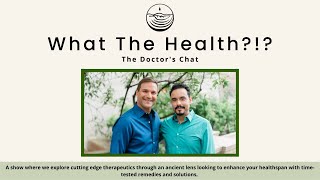
Dr. Nadal and Dr. Ladinia cover foundational health habits: nutrient-dense eating, daily movement, sunlight exposure, hydration at half your body weight in ounces, breathwork, sleep routines, dry brushing for lymphatic support, and 30 to 45 seconds of cold exposure at the end of showers. They focus on accessible, low-cost practices you can tailor to yourself.
Chapters
Hello, everyone.
This is Dr. Nadal and Dr. Ladinia.
And we are here again for an episode of what the health the doctors chat. Today we're going to go over what we like to call foundations of health. Right. Just some good. Some other doctors might call them, like basic treatment guidelines. And these are some of the things that we like to put in place and talk about with all of our patients being the foundations of health. These branch into a lot of different areas of life. Some of them might sound more simple and straightforward, but it's good to talk about them and remind ourselves of them. Right. And so just from, from the start, I mean, we think about food, right? Like what we put in our body, right?
Yes.
Okay. So nutrient dense foods, eating food with the highest value that you can get. I mean, there's so much talk about different diets. Keto, paleo. There's a new one where they're blending keto and paleo. I think I forget who's doing it, but either way, there's a lot of different diets out there. It's not a one size fits all. Just really keeping in mind, depending on where you're at in life and what you're trying to achieve, just focusing on which macronutrients you need and micronutrients. And from there we can just think about proteins, carbs to fats, healthy fats, and getting the right ratios in. There's different nutritionists and apps out there, even us. So it's. It can be. Can sound complicated and intimidating, but it's really not that bad. It's really just talking to someone who's willing to listen and coordinate time to. To put together a good nutrition program for you if you need that support. Right, that's right, yeah. Any fun diets or fads that, that you follow lately or enjoy?
Yeah, not really any that I'm following at the moment. I kind of like to try a lot of different ones during different seasons too. Yeah.
Season specific.
Yeah.
Out here in Portland, it's kind of nice because you can eat locally based on the season, different foods and.
Yeah, right. Yeah.
Yeah. And then some people are still doing it, but a lot of our patients benefited from the whole 30 as kind of a reset, you know, so just, just some food for thought there. Right. So next, let's talk about movement. Give me some information on movement. That's good to remember.
Yeah. This is one of the big foundations of health. Right. We need to move our bodies for various reasons to get our lymph flowing, our circulation moving. We need all this for all of our organs as well as kind of our mental health.
Definitely.
Yeah.
Mental health, hormone optimization. And even once we get a little older, you know, there's a lot of research on resistance training being great to helping prevent some of the things associated with osteoporosis. It's actually good for your muscles and good for your bones. Right. And you know, 30 to 60 minutes a day can look like different things. Whether you want to go to a gym, some personal training, high intensity interval, even some cardio. It's. I think it's best to, to mix it up and make sure that you're having fun with it somehow. Because the best, the best exercise routine is one that you're actually going to do and stick with, right?
Mm, yeah, that's right. And going back to the strength training, I was reading an article the other day about women and kind of trying to, you know, do some of the prevention for osteoporosis. And they were talking about that even before the age of 35. It's very important for women to be doing strength training to build up the muscles and help with the bones strength. So that's never too, too early. Really.
Yeah, absolutely, absolutely. Well, and then what about getting outdoors? It's getting rainy out here in Portland, but it's still super important.
Yes. I mean the big reason to get outside one is for the fresh air. Right. And what that does. And then also we think of the sunshine and the vitamin D, unfortunately here in Portland. Yeah, that's. The sunshine's going away right now.
But something, I mean, even still getting out there, whatever sun is coming into those gray clouds, like we're still getting the benefits of that full spectrum light that's coming through somehow.
Absolutely.
Yeah. Yeah. And then something we could always do out here in Portland is the whole forest bathing. So Japanese word for it is shinrin yoku. I don't know if I'm pronouncing it right, but there's a lot of research supporting getting out in nature in the woods like this and, and serious objective measures from like heart rate variability, improved breathing, blood circulation, like these are all measures that have been tested in different studies. So it doesn't just feel good, it's not just pretty, but it's actually helping your body in real physiological ways and.
Can help reduce blood pressure as well.
Yes, absolutely.
Yeah. And it can even be turned into a little bit of a meditation, you know, if you go out into the forest and you kind of get all your senses on board. Right. Like the smells, the sounds, the sight.
Yeah.
So There's a lot of benefit. And it doesn't even need to be a big forest. It can just be cluster of trees or even in the park.
Yeah. I mean, we have a forest as a park out here. Forest park. So we're kind of spoiled. Yeah. And then even ocean walking. Right. If you have a coast near you or even just a larger body of water, there's something about it, just the, the stillness of water and, well, even waves. But it can really engage some of the parasympathetics and help to reset some. Some of the nervous system tone. So it's good. And then even thinking about, like, when we travel, like, I know about you, but if, if I go overseas, even across the country sometimes, like just being barefoot, like kind of. Some call it earthing or grounding and walking barefoot on the soil there.
Yeah.
Helping a little bit with jet lag and to kind of reset things.
Yeah. And there is that whole ion exchange that happens too, from the, the ocean water exchanging the, the negative and positive ions.
Yeah.
That has been contributed to the, the grounding and the, the kind of relaxation and big parasympathetic shift that happens.
That's awesome. Awesome. And then what about water? The water that we drink? What do you think about that?
Yes. That's also really important because we're mostly made up of water.
Right, right.
And so we want to make sure that we have some clean, clean sources of water.
There's a lot of good filters out there now. Yeah. And I mean, even the idea of drinking like half your body weight in water. Right. And that sounds like a lot, and I guess it is kind of a lot. But, you know, let's say you weigh 150 pounds. You know, look at it as like 75 ounces of water in that way. That's, that's the calculation.
Yeah. And throughout the whole day.
Throughout the whole day, not in one shot.
Yeah.
Yeah. Have you seen. I've seen some friends with those big bottles that. That'll say, like, you're almost there. Keep going. You know, just measure the times of day when you're.
Some encouragement.
Yeah. It's funny. And you know, there's some cases, you know, like more extreme conditions, like congestive heart failure. Like there, there's some circumstances where you need to be more mindful and, and as far as water intake and the possibility of retention and all that. But that's, that's another conversation. These are more general recommendations, obviously patient to patient. It might be a little bit different. So just keeping that in mind.
Yeah. And with the water intake, there's a lot of information out there that talks about how when you actually sense that you're thirsty, you're already a little bit dehydrated.
That's right. There's like receptors in the back. Like. Yeah, if you start drinking water, like, oh, so refreshing, like you feel like you need it that bad, that means that you've probably been dehydrated for a lot longer than you expect.
Yeah, yeah. And being a little bit dehydrated, you can feel tired, a little bit groggy, your brain just isn't thinking as sharply.
It's true. So, and, and I like to put some, some trace minerals in my water throughout the day as well. There's different brands that, that do that and it could just be in, in drop forms, maybe a little powder at least, at least once or twice throughout the day. Because besides water itself, some of the, the lost electrolytes and nutrients that we don't have as much in the foods that we get from the soil that sometimes depleted. It's nice to kind of support that in that way.
Yeah, yeah.
And then we briefly mentioned breath work or breathing. But I mean, let's talk about a little bit more. Mm, Deep belly breaths. What, what does that do for us?
Well, that activates our parasympathetic system. It kind of goes, helps us expand our diaphragm. And so when we focus on our breath coming in through our nose down, and then you focus on it coming down into your belly so you kind of feel your belly go out and then go back in with each breath. It encourages us to take those deeper breaths. And so we're not doing kind of the shallow, the shallow breathing. And then with the deep breathing, you know, getting the parasympathetic system on board. And then it's also helping with oxygen perfusion and circulation throughout our body, giving the little red blood cells more oxygen.
Yeah, they need it, they want it. And yeah, and there's just, I feel like in society right now with as much stress and chaos, it's kind of a negative feedback loop. Like the anxiety makes you breathe more shallowly. And then breathing shallow, it's, it's kind of a low grade hyperventilation that leads to more anxiety and more CO2 retention. So it's. Yeah. So deep breathing meditation besides sleep. But some deep breathing can be. Think of it as like an exercise for the vagus nerve and resetting parasympathetic tone. It's easy. Everyone can do it. Everyone should be doing it breathing at least. But the deep breaths. There's something to think about and incorporate. Then there's so many. There's like mind, body, app and all these different things to kind of guide you through it if you need that support.
Yes. And then the best. The best way to get some deep breaths in that we do a lot.
Around here is like the. The fourfold breath or Qigong or.
Well, we do all that.
Yeah, yeah, yeah.
But.
Oh, laughter. Laughter, yeah. Laughing is. Is some of the best medicine, so. Absolutely. Yeah, yeah, we do a lot of that around here. Laughter, you're taking deep breaths, but it's just freeing a lot of those kind of narratives and. And processes that you might get caught into. So. Yeah. Yes, we are prescribing laughter.
They also have. Isn't it called laughter yoga?
Yeah, I think, yeah.
And it's kind of fun. You just. One person starts laughing and then it's contagious, spreads through the whole group.
Yeah, yeah. It's good to do it simultaneously, like maybe laughter and baby goat yoga. Oh, that'd be awesome.
That would be.
Yeah. As long as it doesn't scare the baby goat. Yeah. Well, also rest. Sleep hygiene should be straightforward, but I mean, with. With the cell phones and computers, there's so much damaging light that we're getting from it. There's. There's got to be a kind of a call to arms and. And reminding people of how important just good sleep hygiene is. Because even if you're really tired, you lay down and you're just watching TV and just looking at your phone, all of the light, all of the fake light and blue light that's coming through all those screens, it's messing with your brain's ability to actually set off the. The timing and release of the right amounts of melatonin and just to kind of shift all the different hormone pathways in your body that are actually going to be beneficial while you sleep to rest and restore. So just really big emphasis on lighting. Right. But I'll also like ambient temperature. It's actually better to be a little bit in a cooler space. Yeah. Anything else you think important to bring up?
Yeah, I think no cell phones in. In the bedroom is a big one. Or you can turn off the WI fi so you don't have any of that.
Or at least airplane mode.
Yeah, Yep. Yeah. And then remembering, too, that it's about kind of setting that routine. And so our bodies do love routine. And so if you can start your bedtime routine at least an hour before bed, even if you're able to take a warm shower or an Epsom salt bath to kind of help you start to relax. And then your body, over time, it may not help the first night or the first couple nights, but kind of over time, your body will get into that rhythm of, okay, now it is time to relax. It's time to go to bed, wind down. And so that can really, really, really be really impactful to fall asleep and get in that pattern.
Awesome. Sacred sleep. That's important. And then what's next? What about, like, moving lymph?
Yeah. So this one's really important as well. Answer all of them, but I feel like I'm saying that on each one. But, you know, lymph is so important because it moves. It's. It's part of our immune system, right? Yeah, it's. It's what's moving kind of the toxins in our body and helping. Helping everything circulate within. So along with the gentle movement, that's one of the easiest ways, you know, our muscles contract, and that's what moves the blood as. As well as the lymph throughout our body. But there's also dry skin brushing.
That's right. That's right.
Yep. And that's just a little brush with some pretty soft bristles. And then you just ever so lightly brush your skin, and you always want to brush up to. Towards your heart so that it can. It can move up your body and then out.
Yeah. And it's a lot lighter than you expect.
Yes.
Yeah. Have you ever gotten a lymph massage? It's like they're barely. It's. It's very, Very light contact.
Yeah. Yeah. It feels like almost like a feather. Yeah, kind of.
Yeah, pretty much.
Yeah. But there are a lot of, like, massage therapists and that, too, that do just specifically lymph massage if. If people are looking to. To do that if they don't want to do it at home.
Yeah.
Or want a little more in depth. There's a lot of training, too, on how to do different brushing patterns or stroking patterns.
Excellent. And then even things like castor oil packs, right? Yeah. Could be over the liver, over the abdomen. This is. The oil is actually going in there and helping with inflammation and eventually improving some of that lymph flow and circulation in the area. It's also good for, like, some pain and inflammation in joints, too. Castor oil?
Yeah. Castor oil packs are amazing. Yeah, we do a lot of. Yeah, a lot for just a little oil.
Yeah, A little goes a long way. It can be messy.
Yeah.
But it's worth it. And then what about things like immunity and just resiliency? Right.
Yeah. I think a lot of hydrotherapy and I know there's kind of been a big.
Return.
Return. Yeah. Especially.
Oh. Like Wim Hof.
Yeah. With his cold water plunges and, and breathing and all that.
So it's huge. It's huge. It's like a shock to the system, but it's a good shock. It's like, it's more of a cardiovascular like contraction and expansion and just really getting things going. And it doesn't have to be diving into a sub zero lake or, you know, climbing a mountain with barely any clothes on and, and being freezing. Even though that's, that's great for some people and very useful. There was, I mean, there was some studies and research like, showing how he was actually changing his immune cells and.
Yeah.
Pretty impressive. But for, for us, for us common folks, we can always just. Even ending our showers with 30 to 45 seconds of cold.
Yep.
Right.
Yeah.
Yeah.
And it's, it's doing multiple things. You know, if you take a warm shower or you're warm, kind of our blood vessels dilate and that happens. And then when we introduce the cold, whether it's a cold towel or just the cold 30 seconds at the end, kind of our, our blood vessels constrict and what happens is our blood is pumped to our internal organs because those are kind of the, the big, the big players. When, you know, something happens, our body's like, oh, we need to take care of our most vital organs. Right. And so that pushes a lot of blood into those organs, which is very nourishing for them.
Yeah.
And then it also increases the number of white blood cells, which is helpful for our immune system. It helps with detoxing and excreting toxins. So.
Yeah.
It's just as simple as turning that dial.
Yeah.
For 30 seconds.
Amazing. And then, you know, we talked about laughter and we talked about movement, but really just the emphasis on, on playing and having fun. Maybe easier said than done. I mean, we know stress kills, right? It's. It's not just in our heads. Right. It's. It's. Cortisol is changing our hormones. It's. It's weakening our immune system. Stress. Right. So finding something that's meaningful and fun and enjoyable, you know, whether it's coming together with community and friends or even just spending a little more time at dinner telling stories, whatever that looks like.
Yep.
Right. Or finding something that, that is fun for you to do. You know, whether it's. It's a simple art Project, painting, poetry, reading, music. There's so much, and it's. It's easy to say, I don't have time for it. And yes, there's different lifestyles and. And sometimes, you know, with family and work, life can be crazy. It can be hectic. But even 5, 10, 15 minutes a day, anything. Something that's gonna bring out some of that joy. Let's call it, like, childlike playtime. It's needed. It really is needed. So recommend it a lot. Anything else on that one?
I just think this is one of the most important ones.
Yeah, absolutely. I love. I love making music, personally. It's a great outlet, good release. I feel like I hate think better and feel better after making music.
Yeah, Yeah. I kind of like to change it up sometimes. Sometimes I'm like, gosh, what do I like to do for fun? And it can be kind of overwhelming of like, I don't know, I'll just go back to my, you know, working routine and so turning it into a little game of, like, okay, I'm gonna try something maybe new that I haven't tried before and see. See if that's fun. See if I like that.
Yeah. The brain and body needs it. It likes it. All right, guys. Well, I. I hope that was fun and useful. Right?
Yeah.
This is back at what the health, the doctors chat. We try and bring you an episode weekly, so stay tuned. There's always more to come. It's. It's good. Connecting with the community and. And bringing awareness back to. To some of the more important things that can be done day to day.
Yeah. And the nice thing with these is the majority of them are free. Yes, right.
It's true.
Which is great because that's our foundation of health. And you don't, you know, have to pay anything for that.
So that's amazing.
That's wonderful. And then it can be a little overwhelming, like, oh, my gosh, look at all these things. But if you just start incorporating, you know, pick one, the one that you resonate with the most, and just start incorporating it every day for a week, and then the next week add another one or, you know.
Yeah, I like that.
And then pretty soon you have all the foundations covered.
That's great. That's a good recommendation. Yeah. Well, guys, thanks again for. For tuning in. We hope to see you next time. Once again, over here at Nature Cures Clinic in Portland, Oregon, this is Dr.
Nadal and Dr. Ladinia.
All right, you take care. Until next time. Sa.
More from Dr.

EP. 197 Brain Regen: Harnessing Essential Oils for Cellular Health and Longevity

EP 196 WTH?!? Unlocking Cognitive Health with Your Genetics with Elwin Robinson






EP 190 WTH?!?: Mind-Body Mastery: Harnessing Movement, Breath, and Sound with Jeffrey Williams

EP 189 WTH?!?: Nourishing Connections: Lynne Bowman on Family Meals and Healthy Living


EP 187 WTH?!?: Clearing the Air: Dr. Kevin Smith on Nasal Health and Migraine Relief