EP 139 WTH?!? The Doctor's Chat: Nootopia with Mark (Mr. Noots) Effinger
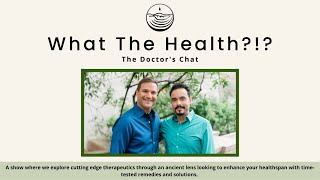
Dr. Greg Eckel talks with Mark Effinger about Nootopia's mushroom supplements and their potential to slow neurodegenerative diseases. They explore how high-performance nutritional products work and what it takes to move from sick to superhuman.
Chapters
Hey, welcome back everybody. I'm Dr. Greg Eckel and this is what the health and our topic today is the potential of mushroom supplements to slow or prevent neurodegenerative disease, which I know is near and dear to many of you out there. My host, co Host today is Mr. Newts, aka Mark Effinger. And he's always had a passion for science. And after a health crisis that left him grasping for his life and the death of his wife from a painkiller overdose, he knew he had to create high performance experiential nutritional supplements that could reverse some elements of addiction and disease. So Mark is now Nootopia's chief product officer where the bio optimize and new atopia teams have continued to solve human condition issues and strive to address it most effectively and healthy as possible. Mr. Newts, welcome aboard.
Dr. Gregg, so good to see you, brother. Thank you, thank you for the invite today.
Yeah. And you know, shared shared purpose and passion with losing loved ones to illnesses or drug overdoses. Really, that's a tragic component that I know has catapulted you into the health realm. Before we got on here, we're talking about ewat and some additives that one can put in for their own edification. So I'm excited for this conversation with you around what you're up to as chief product officer because those are two heavy hitting companies that you're representing there. And I'm wondering maybe if we just start with helping us understanding the sick to superhuman spectrum because that really, I think underpins what you're up to in the world.
I absolutely love that man. Thank you. And that actually I started developing that after my wife passed away from an oxycodone overdose. I started looking at, obviously those are moments of deep, deep reflection and pain where you're trying to figure out how the hell do people get in that state and how can we avoid anybody else ever going down that path again. And the big realization for me was at one point, most of us, not all of us, are going to have a pretty critical health crisis. And when that happens, everything else stops. You don't care about anything. But how do I get to the point where I'm healthy again? It's like it's a stopping point in your life. And what I realized in my own reflection of my own challenges with, I was a, I was a white rat in the military for a drug called oxycodone or I'm sorry, I, I, it was, it was actually an acne drug. And the acne drug burrows itself into your muscle fibers and it stays there indefinitely. I was an athlete at the time and had been an athlete for a decade before I actually did an ewat session, a surprise EWAT session 10 years after I had taken Accutane. And the mdnd that had me at his little BnB up in the mountains said, hey, let's try this. This might be effective for you. I don't know if it'll work, but let's, you know, let's give it a go. And he put me on this thing, put a, put an oxygen mask on me and put me on a treadmill. And within 30 minutes a sore opened up in my lat and it bled out. This clear fluid. We sampled it, sent it to the lab and it was over 80% Accutane. And this is 10 years after being literally a performance athlete and doing runs like the Hood to Coast in Oregon, where we run 170 plus miles from Mount Hood to the coast of Oregon, doing century bike rides and biathletic events and then lifting weights and bodybuilding. And nothing prepared me for the effects of this kind of drug embedded in your system for a decade. It crashed my thyroid badly and other things. So, so we move forward and go, okay, so the big epiphany for me was when my, when my wife passed away was we all are at some level in some area of our physiology and neurology, we have some level of less than optimum performance. So I'm going to call that sick. Now, maybe not quite sick, it may be suboptimal, but essentially when you start identifying, if you had a checklist of all of your cognitive performance traits, your physiological performance traits, and you kind of looked at him, he said, well, I kind of suck at focus, I'm really good at creativity, I have high endurance, I can last, I can be, you know, awake and performing for 20 hours. But during that 20 hours, I'm going to have these fall off performance peaks. Maybe it's blood sugar related, maybe it's some other cardio, maybe I've used up all the acetylcholine in my brain, whatever it is. And when I started doing evaluations like this with thousands of my customers, I realized that there was probably a more palpable and technical process to get people from sick to operating at a super high level of performance. And that was, you know, once you identify it right, I have to identify the problem first before you can do anything. You don't just throw things at the problem and hope one sticks. My dad called that parts changing he said, he said, never be a parts changer. He goes, you don't just replace something because you think it might be the problem. You evaluate, you do analysis, you do technical depth on it, you get an expert in. And then once you're absolutely sure that's a problem, then you fix it. And my dad was a heating and air conditioning tech, by the way. So. So if we, if we acknowledge that we have, if we all have some inherent weaknesses that are unique to ourselves but probably common to, in the 8 billion people on Earth are probably common to a certain group of those is recognizing that and, and acknowledging it and saying, okay, how do I rectify that situation or that condition so that I can get to. From sick to suboptimal. And suboptimal is where most of us operate because we're often working, sleep deprived, we often don't have all the right foods at the right time. We're under highly stressful conditions, whether it's just the normal family, raising kids, having a spouse, any of those things. Dating, my God, dating is stressful as hell. School, the rest. And once we start realizing that we're actually operating kind of off our highest performance, then we can go from suboptimal to optimal. And optimal performance is where we all want to live because we, that's kind of where we feel, you know, we wake up cheery and energized and effective and we're eating the right foods and we're doing the right exercises and we're having the right healthy relationships with the people around us. And we're, we're kind of. It's the thing that almost defines our lives is that feeling of being optimal. But you and I have all met people who we consider super optimal. I often, when I was, I did a lot of venture capital back in the late 90s through the mid 2000s. And what I found was these very high performance CEOs had very unique physiology and neurology and they were always up to whatever the task is that, that you threw at them. It was a difference between them having a mediocre company and them being a superstar, you know, a Google or, or you know, an Amazon or something like that. And it was because they, one, they excuse my language, but they give a shit. Like they really do care about everything that happens in their lives. And the other is that they happen to have some kind of biochemistry and neurology that just allows them to outperform most people. And that's kind of that super optimal performance curve. Does that make sense? Yeah. Yeah. So so the cool part is there's another gear left for, for all of us if we want to take it on. And that, that extra gear that we can shift into we call superhuman. And what it means is that we've addressed our sick condition, we've moved beyond suboptimal to optimal and we know what it's like to get into super optimal. And there's that last gear that we can go to. And what that means is that we had rock star sleep, we ate exactly the right food. Our physical condition is really, really bolstering all of the hormones in our body, all of those positive conditions that we're looking for. Our relationships are healthy, or at least most of them. And we have an optimism, a sincere optimism, because our neurology and physiology are just in harmony with what's going on and we're able to get into that gear. And you can't live there. Just like, you know, if you look at, if you look at any of the Marvel characters, right, they don't, they don't live in that space. They, they, they go to Clark Kent land once in a while and then they'll go to Superman, they'll go back to Clark Kent land. And you've got to be able to have that, that thing. But it's an area that you should be able to neurochemically and physiologically get to when you need it and lasts there as long as you need it for you to be able to perform the thing that you need to do that takes that level of performance. So that's kind of the scale and that's kind of how we get there.
I love it. I love it. And you know that sometimes that scale, it's hard to relate to the superhuman aspect if you're in a diseased process or you have some condition that is currently happening, maybe it's a chronic illness along those lines. But I think it's important for people to know the possibility because a lot of people don't talk about that aspect of the thrive or the superhuman or that aspect of where what are our full potentials or capabilities. And I love having that conversation on what the health, because it is, you know, we see the whole continuum of people wherever they are at, on their journey. But I want to be able to take a stand for the, the superhuman or to thrive. Like somebody needs to be over there to, to elicit. It's like the, you know, banister four minute mile. If somebody had to crack that barrier for then it to become a reality where then whatever, you know, 20 to 50 more people the next year crack the four minute mile because it had never done been done before. So the same thing here in this discussion and you know, if we couch it in the neurological or brain regeneration front, there's a ton of information coming out on nootropics and mushrooms. And you being the formulator, product developer, you know, where do you see maybe go through what product development is with when you're talking about, okay, well let's talk about our brains because without them really we don't have a lot going on there. You know, as coming from myself with watching my nana with dementia for a decade and you know, other life travails, you know what, and dedicating my life to regenerating brain. So I'm, I've got particular interest from you.
Yeah, well, I'm sure you've done biofeedback and you know how, how incredibly powerful it can be to flying spaceships with your mind and doing those things and how it starts to bond in new neural pathways. And of course, what people don't understand about when they see somebody with electrodes with their brain and they're doing something like biofeedback, they don't understand that one of the most critical parts of biofeedback doesn't happen when you've got the electrodes on. It goes when you're maybe sitting with your counselor saying, hey, I've got this stuff that I haven't been dealing with and I would like to maybe work through that with you so that I can get back and create some new neural pathways on those machines and I can start getting into theta mode more effectively or. Right. Or get my delta gamma beta mode and I can do them on command and those things. So the formulation process or creating neuroprotective and neurogenesis optimizing products, it's one of my core passions. Before I was doing this, I know I've got over here, I was making brainstorming software with the founder of Century 21. So we created software to help people think fast and clear. And we had about 400,000 customers at one point, including like Nike and Microsoft and Apple and a bunch of others. So. So I have a long history, almost 30 years in cognitive sciences to a certain extent. But when it started coming into how do I get people, how do I help people perform at levels that are beyond their perception? They're inherent. I'm not that bright or I can't handle that much data, or I can't manage that much information, or I can't solve that big A problem and getting into the point where they actually not only believe they can do it, but. But they're doing it effectively and they're doing it daily to get them there. The first thing is taking a look at how does the brain work? What are the different areas of the brain and what are the different components of that, whether it's dendrites or whether it's neurons or whether it's neural pathways or calcium channel or any of these critical elements that are in the brain that work to either improve or reduce certain activities. So you can get a programmed out, and it's not. We. We can't look at the brain like a computer because it's more like a quantum computer in that it doesn't have just an on and off state for every activity. It's got multiple levels of gray. And you can articulate those levels of gray and you can actually get them to do your bidding once you understand how they're working. So the first thing is, what are the most natural extracts and nutrients that we can combine, where one compound and another compound together makes a third result that's better or bigger or more effective or longer lasting than either of the individual components? It's called potentiation. So that's how I start. I start with two. I'll start with two neurochemical precursors, female alanine and. And acetylcholine maybe. And we'll say, okay, at what ratios and at what levels, at what percentage of those can we induce? How much of that breaks down in the gut? How much of it on the gi, you know, in the full GI tract? How much of it gets into the bloodstream? And then from there, how does it launch into some co product that will be, you know, that's gonna affect your brain. Like how much gets through the blood brain barrier, how much do you need? What are the signaling molecules to call it when you need it? So that. That acetylcholine flows and the serotonin produced from the phenylalanine gets induced. And so you feel good and you're making decisions. That's the process. And after a while, you take two and you go, okay, those are successful. Let's put those aside and let's look at the third element that it creates. And let's go find that in its purest form and find another element. Let's combine those. So now we know we've got these two set aside, let's take two more, and then we start bonding those together and experimenting. And over time, you build what's called a Stack, it's a geek term that athletes have been using for years and stuff, right. But you build a stack and that stack will do in one little capsule. It can do what otherwise would take gallons of product or, or pounds of raw product to do. And then you also, because you're building it in these little Lego like steps is you're, and you're, you're testing it. You also have a very good idea of how long is this going to last and what long term effects are those or benefits are those going to have to the clients so that they're not dependent on it. Again, one of my primary objectives was how do I get addicted people off their addictive thing and into a healthier condition. So you want it to be able to take it as needed for the event you want and then maybe be able to take that event and kind of carve it in a little bit so that you can access that on demand with or without the nutrient or the nootropic supplement or the mushroom or whatever happens to be the compound that got you there. And over time you can do that and you can become independent of the things that got you there. And, and then you can also like. Everything we make, we customize. So we like, we blend it based on your age, weight, sex, height, you know, your eating habits, your workout habits, all of those factors and your goals. We ask your goals and then we formulate based on those factors based on the millions of, of data points that we've collected, almost 20 million data points now. And that allows us to put together something that's pretty close to what you're going to ultimately need and then keep improving it every time you get a new order. So that's kind of our methodology in a nutshell of how we do that.
Oh, that's really cool. What, how does research fit into this component? Like you're talking about, you know, the incremental lego like stacking of these things together. What, what do you, you know, if you're collecting these data points, are people sending their like urine samples to you or is it just collectively they're filling out form? What, what kind of research are you doing on the back end there?
That's awesome. That's an awesome question. So we have a research institute in Bosnia where we have 20 PhDs and PhD candidates that work for us 24, 7. It's at international Birch University. So we basically fund a wing of the university to do deep dive into scientific research. And then every Tuesday, so this morning at 9:00am I was on a zoom call with those researchers and my partner Matt Glant, who's an incredible formulator in his own right and certainly an insider when it comes to nutrition. And we sit down with them with massive Google spreadsheets and database research and go NCBI or PubMed or examine.com have exposed this insight. We've been working with this compound, but we've been working with it in a different way. How about if we take some of that research insight and then we do our own lab research where we, we smear a petri dish with it and we see how it grows and we, we look at the compounds and we look at a microscope and see how it actually is affecting maybe a brain or maybe a paramecium or some other thing that we know should give this kind of output. Because there's been, you know, 100 years of research in single cell organisms and how they respond to certain things. And we do that like, like we're hardcore in that this is not today. I think that we probably had 300 plus data points that we went through today on working with some, some new compounds that we've been working with. One is called Icarin, which is a compound from horny goat weed and it's a, It's a natural PDE5 mitigator. So the enzyme, the, the CGMP component that basically helps the, the cardiovascular system relax and, and the muscles relax so that you can, for men, you know, as you think of Viagra Sialis or whatever those are, those are similar to what this is doing. And what we're trying to do is we're trying to really increase cardiovascular flow. But one thing we found this very, very obscure paper but with a very large base. It was a meta research document. Very large base was that the same compound has incredible cognitive support features and in his neuroprotective. And so we're going, ah, here's a little aha moment for us. And so we do solicit our clients who have, since, since 2008 have been submitting information to us. So they're, they submit their kind of daily results. We also have an app that you can, if you, when you get your, if you get a Utopia package, there's an app. Let me see if that's. There we go.
Yeah, we got it.
Yeah. Is you submit, you, you basically give us this intake form and then every day you can submit feedback on the stack that you chose, the combination of components you took, how was your sleep, you know, all the, all the variable factors and that. And we're aggregating that data and we're then assembling it and saying, aha, somebody that weighs 160 pounds, is 5 foot 7, has a BMI of 21 and eats body for life. They do five meals a day and they've got certain fat, protein, carbohydrate percentages and they are a parkour expert. And they live in the northern region above the 43rd parallel. Here's what's been working for people kind of within that environment. So that gives us a head start on formulating for you and getting closer to what your ideal is going to be. Wow.
Wow, that is. And so, yeah, that's really cool. And we'll put on the links, you know, on how to connect up with you and the newtopia.com etc. You have one in particular that I wanted to highlight for our crowd here on what the health and it's called call a genius. Um, and so it's a antioxidant mushroom complex. Yeah, there it is. Um, so what. And this is. Can improve your memory and cognitive function and has regenerative effects or properties to repair areas of your brain that have been damaged over time. So what, where did this one come from?
And you know, wow, that's so funny. I was building capsules of, of lion's mane mushroom and I was working with some growers who were doing special extraction approach for me, a nitrogen based vacuum extraction, it's called a dual extraction where you use alcohol and distilled water to, to pull the core elements out. One of the core elements that I really wanted to focus on was, was erinacenes, which are these compounds that are responsible for what's called bdnf, brain derived neutrophic factor and nerve growth factor. And they're not only neuroprotective, but they actually are kind of like fertilizer for the brain. And this is one of the compounds. There's basically four compounds. There's polysaccharides, heracinones, aristinines and beta glucans. And people are familiar with beta glucans, that's a pretty popular compound from most mushrooms. But I was making these capsules, right? So I'm making these capsules and my lab assistant, who is also a five star chef and it was chastity, she also hangs out at my house most days and evenings. She was organizing my lab for me and she's pouring these mushrooms into these containers to be able to catalog them and put the. What's called a coa, a certificate of authenticity from the, from the grower and some of these factors. And she goes, wow, that smells kind of chocolatey. And that one smells kind of like coffee and that one smells like cocoa. And. And she started combining them together and we were both, I'm 61, she just turned 51. And we wanted to kind of at least, if not reverse, we wanted at least halt aging. We wanted to go into Dirk Pearson, Sandy Shaw world, you know, and, and see if we could halt the clock. And as a result of that, we put together this, this compound. So it's four mushrooms. So. And it's very highly extracted mushrooms, 50 to 1 to 100 to 1 extraction. So you got red reishi, you know, you've got, you got cordyceps, you've got lion's mane, which is, you know, my favorite in there. And what we did with those is we combine them with these really bioavailable collagen extracts and some natural antioxidants and adaptogens and radically increase the bioavailability as well without even having to really flavor it. Just blend it well with. You got a smart cheese. An incredible flavorist is we were able to make a very beautiful chocolatey tasting natural compound that every dose, every dose which is around 18 grams is the equivalent of around a pound and a half of mushroom extract. And so. Wow. Yeah, it's, it's great and it really does. You feel it immediately and it lasts all day. It tastes great, tastes chocolatey because it is chai. It's how the mushrooms, when they extract them, they taste. And over about a month, you will notice your baseline operating level, your performance level dramatically increases. Plus it tastes great. It's, you know, it's filling, it's a great mushroom. You know, morning drink, I do it in the morning and sometimes in the afternoon as well over ice. So. Yeah.
Oh, so good. Thank you for sharing that and, and that one, you know, we're looking for ways to incorporate potent medicinals, herbals, etc. Into our daily routine. So that, that sounds like an amazing addition into a morning routine right there. I'm going to, I will get back to everybody because that's, that's top of Mr. Newts. I want to thank you for coming on and spending some time on what the health. And I think we're gonna have to have you back because there's some topics that I want to cover in the future with you, but it's been a pleasure having you on the show. Any last parting words for our listeners and viewers?
Just know that you can move from sick to superhuman. You are not a victim to these circumstance. You are the power. So I really encourage people. I know what it's like to be really sick, and I also know what it's like to feel superhuman and perform like it. And I encourage everyone to go that direction.
Hear, hear. Thank you so much. Thanks for coming on the show, everybody. We will see you soon.
Awesome. Thank you.
More from Dr.

EP. 197 Brain Regen: Harnessing Essential Oils for Cellular Health and Longevity

EP 196 WTH?!? Unlocking Cognitive Health with Your Genetics with Elwin Robinson






EP 190 WTH?!?: Mind-Body Mastery: Harnessing Movement, Breath, and Sound with Jeffrey Williams

EP 189 WTH?!?: Nourishing Connections: Lynne Bowman on Family Meals and Healthy Living


EP 187 WTH?!?: Clearing the Air: Dr. Kevin Smith on Nasal Health and Migraine Relief