EP 144 WTH?!? The Doctor's Chat: Healing from Lyme Disease with Tom Moorcraft
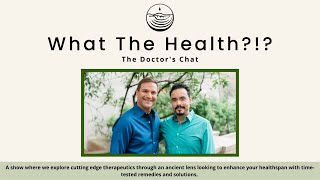
Dr. Tom Moorcroft describes his 20-year battle with Lyme disease, misdiagnosed as psychiatric illness and fibromyalgia before proper treatment. He credits intensive Ashtanga yoga, prescribed at 1.5 hours daily six days a week, with producing 70-75% of his recovery, and now runs a summit teaching doctors to combine medical protocols with patient self-healing.
Questions this video answers
Around 1999.
About 10 days.
Approximately 70–75%.
Ashtanga yoga — about 1.5 hours per day, six days per week, for roughly two years (with prescribed rest on Saturday and new/full moon).
Around 2004.
Chapters
Sorry to share the afterwards, I just thought of it.
All right. Welcome back everybody to what the health. I am Dr. Greg Eckel and today we are talking the key to healing from chronic Lyme disease. A massive, massive topic. It is not likely what you think. And we've got the originator and the creator of the Healing from lyme disease summit, Dr. Tom Morecroft, dear friend of mine on. Welcome, Dr. Tom.
Hey, Dr. Greg, thanks for having me. Stoked to be here, man.
I want to give you a proper introduction with your bio because you treat some of the most sickest, most sensitive patients suffering from chronic Lyme and tick borne co infections, mold illness, as well as children with infection induced autoimmune encephalitis. That's pans and pandas. He focuses on optimizing the body's self healing systems in order to achieve optimal health with simple natural interventions utilizing more conventional approaches when needed. Each individual is a unique unity of body, mind and spirit. He's the creator of the Thrive with Lyme blueprint which assists those suffering with Lyme and related illnesses tap into the true source of radiant health within them and optimize healing. He also teaches practitioners to easily and effortlessly excel at treating patients with complex chronic illnesses. In his Lyme disease practitioner certification and mentorship program, Dr. Tom's goal is to empower each of his patients to get in touch with their inner source of health so that they can experience optimal health. All right, so we are so aligned there, brother. And I always enjoy talking with you and I think that this summit, you know, there's a lot of summits online right now. What, why did you create this one and why now?
Yeah, Greg, I really appreciate that question. It's such a big, it's kind of like, you know, my mission on the planet. And part of it is there's a lot of disinformation about Lyme disease both from sort of the conventional, like, you know, it's hard to get, easy to treat in all cases. In some cases it is. But in many, as so many of our patients know, it's not. But then also even in the, in the chronic Lyme world, if you will, and functional medicine, there's a lot of misinformation. I think it's a lot of people meaning really well. But it's a complex topic and so I wanted to bring together a group of individuals who had like, like you were saying, like we're in such resonance with each other. So on one hand we wanted to make sure that we could get the latest and greatest Research all the way from what medication protocols are coming out to, to the latest herbal research, homeopathics and then bioenergetics, like across the board, the kind of the things you can do. But also we wanted to give people the opportunity, bring people together who were aligned. And we use the word love a lot in this summit. We talk a lot about healing and personal responsibility. And instead of having this external locus of control or focusing on our external ecosystem, that we're first bringing it back to ourselves. So because I find that so much of medicine these days is kind of really like putting out, we look out for the pill or the surgery or the device. Those are all awesome in the right time and place. But what I find is there's so much more healing that can go on from the inside out if we were to kind of reclaim our personal, you know, power and look for that self healing mechanism to really reignite it. And in my personal journey, 70, 75% of my healing was done before I even knew what was wrong with me, because I went on an inner journey and then that allowed me to receive all the treatments and they worked so much faster. And so we brought together this group of people who were all over the spectrum for how they approach people. But at the core, they were all trying to just reignite self healing so people could actually see a difference. Because so many of our Lyme patients are suffering for months and years. I mean, for me it was like eight years before I even found the doctor. It's like, you can't be sick for 8 and 12 and 15. I mean, you can be, but we don't want you to be. So let's get together with a summit where we give you the information. And then I think one of the other through lines, Greg, is that it is stop comparing ourselves to other people. Go on your own healing journey and use others in your community to help inspire you. And also we talk a lot about overcoming trauma and everything in the summit. But one of the things that really came in the forefront for me is, is this concept of being alone and not safe versus being alive and interacting with your community. And that is really what we wanted to do, is get people to feel more alive, more hope, inspire them to take action each and every day on their own behalf so that then when they meet someone like yourself or myself, we look like we really know what we are doing because their body's already going down the path of healing.
That's really, that's super fascinating. And basically you're talking about the future of medicine. Creating that together because it's not so much, you know, boy, Lyme has been around for a long time. I mean, you. You grew your. I mean, one, you had Lyme disease. Two, you had your big osteopathic center in Connecticut, which is where Lyme basically was discovered and originated. So you have had, you know, what, two decades of experience with this topic, and you're out educating at the major medical conferences, training other providers with continuing education, with your mentorship and your kind of your certification as well. So you are one of the leading experts on lime, and you pulled together then your band of comrades to help educate the world on. Maybe there's some other things to consider when we're dealing with a chronic condition such as Lyme. Because I see patients all of the time. They come to me and they're seeing, like, all of the experts around the globe. And I'm like, hey, you have 12 providers on your team. What do you want me to do for you?
Right. Right. Yeah.
And how do you answer that? Because you've seen those there. You know, you become expert on the condition when you have it. You're looking for solutions. My heart goes out to them that they're suffering so much and they're getting maybe conflicting information. And it's like, why do you need more providers? Like, those aren't working for you.
Right. Yeah. Well, I mean, I think the big thing. I was very blessed, right? So in my story, I was following my passion. I ended up getting Lyme in Babesia. They treated me for 10 days and didn't even figure out I had Babesia at the time, but about six. And then from that point forward, over the next six years, I'm diagnosed with all these psychiatric illnesses and then adhd. I'm like, well, duh, I know I have that. That's not a problem, you know, but then it's like chronic fatigue and fibromyalgia. And I almost hit the doctor because I'm like, okay, so I have joint pain, fatigue, and brain fog. And you just told me I have joint pain, brain fog, and fatigue. And I'm like, thanks for nothing. You know, it's like. So when I was. My back was against the wall, I remember very clearly, I was standing during medical school, standing. I remember the apartment I was in, looking at the wall, and I'm like, I'm going down that road over there. And I know exactly what that road's going to get me. Because I've been doing it for six years, and I've been going and I've Been following all the doctors recommendations. I've been listening, you know, to everybody I know. And then I said, well, but I also see this future that I want, and it's like going away. So then I, in that moment, I just said, you know what? I know that's happening already. I'm going to give that one a shot. Even if I fail getting there. What the hell? And I didn't know. I mean, I kind of. My whole life have been tuned in a little bit. Like I feel stuff and very sensitive to what's going on. But I've always viewed it as a blessing, right? So a lot of my chronic, people get very sensitive and then they view it as a bad thing. I'm like, well, you have to learn how to turn it up and down, but at the same time, you're actually being more human, you know? And so I, I never knew to fight Lyme disease because I didn't have a name for it. I was just like, I feel like crap. So then somebody handed me a yoga dvd, and over the course of two years, I did this every single day. Now, this is the thing that a lot of people aren't going to want to hear. I did. And the prescription in Ashtanga yoga is an hour and a half a day, six days a week. You take Saturday off except. And then you do. You take off the new and the full moon. So literally, for two years, I did an hour and a half of yoga every single day. And then a lot of people are gonna be, oh, I can't do that. Well, I couldn't either. So what they said was, you follow the prescription and you do as much as you can. And after you can't do anymore, which in the beginning was about 90 seconds, then the other, the filling, the other part of the hour and a half was breathing. And so what I learned through this, though, was then as I did more and more yoga and I, my teacher, I was so blessed. They were like, hey, it's. It's breath on move. It's moving on breath. It's not about contortionism. So I was always. If I wasn't. So I used my litmus test in all of my life. Now, if I can't breathe fully, something's not right, right? So if I'm making a decision and I start to get really short of breath, I step back and I just say, is that a little nerves or excitement and can I really fully breathe or am I really closing myself down? So it's a great litmus test for me. And so what ended up happening was all of a sudden my body started rejecting all these foods that I grew up eating. You know, food groups like soda and pizza and things like that. Right.
Because we didn't know the essential items. Right, right.
And it's like Jolly Ranchers, I don't know. Yeah. You know, and so then I went through this process of learning how to listen to my body to a deeper degree than I ever had before and also to become non reactive to it. So then when I got to the end of it, I had another coincidence happen in my life where I could change a rotation at the last minute. And I walk into an office and they were treating people who all sounded like me. And then. So here it is, two years after I started the yoga, eight years into my journey of initially health falling apart, I was about 70, 75% better, but I still couldn't get past that plateau. So then this guy is like, you know, draws my blood. He's got, oh, you got Lyme and Babesia. And then it did take me another four years to get better. But what was beautiful was my body was able to accept it. And part of the story is there's about a year and a half in there where because of residency, I couldn't go. So it was really only like two and a half, three years of treatment, which is pretty not that long for what we knew back then. And, you know, I just think that it's. It's an interesting piece when you learn to listen. So once I had the label, I was like, oh, well, that's not a big deal because like, I already. I'm almost better anyway. So I was really fortunate to not have a label. And so one of the things that I try to teach people is that the label don't tell me, like, oh, a lot of people, oh, my lime's acting up. Oh, my bartonella is acting up. I'm like, I don't know what that means. I've been doing that. You know, my first lime conference that I went to is 2004, and I got Lyme in 1999 or something like that. So I know a little bit about it, both professionally and personally. Like you were saying, I'm like, tell me what's wrong, what's going on? So. Or another way to say it is, how are you experiencing your Lyme or Bartonella flare? Because I don't want to invalidate their experience. Because, I mean, that's one of the things we talk so much about in this. Just the gaslighting that goes on but yeah, it was just an interesting piece, you know, to be able to learn from my body. And I was back against the wall. I had no option. I didn't have a name for it, so I couldn't get mad at the name and get attached to a name.
How do you reframe that for folks of, oh, that's my bartonella we're acting up, or my lyme acting up, so. Because a lot of folks attach when they get attached to that diagnosis, then they become it, and then it's like, well, how do we get them to heal from that attachment? What do you do there?
Yeah, that's kind of like the answer to most of what we do, which is it's an individualized approach. Right. But no, yeah, I mean, I think it is. It's like, okay, well, how are you experiencing your Lyme flare? What are the symptoms? And then we start to talk about that. One of the things we have people do, Greg, is come in and I'm like, I think it's so important to be heard. And I. And I think your story has so much power in it. So I asked people to give me a one to two page summary, and no more than two pages. And it's. I mean, so it's on a computer program so they could just write all day. But I'm like, tell me your story and then let's sit down and go through your story. But after you tell me the story that one time, we have a contract that then you release it. You've shared your story with me, both verbally and emotionally, like one on one, like we're doing here. But also we have it documented. I have it written down for posterity's sake if we ever need to go back to the story because you forgot about it, which I can't wait for you to do. We got it if we need it. And then let's be open to new healing possibilities and let's rewrite your story. And I think that that's really the thing is I'm not saying because nobody forgets they have chronic Lyme disease. I've never known anybody who's done so much mindset work and so much meditation, they forget they have it right, you know, at the end of the day that parts of your day weren't as nice as it would be. But what we forget to do. So instead of just focusing on the crap, we don't want more and more and more, because what we think about, we bring about. We look on the other side and we just go, oh, well, I've already just know that I'm not feeling well, but what else is going on in my life and let's start to focus on that. And I think the other part too is just honoring the uniqueness of their experience and looking for the unique reason that they may have had to go through 12 practitioners before they came to you or I. And we talk about it and say, okay, so you did all the protocols that everybody else did. Can we now treat you as an individual? How would that feel? And so that when they go to the support groups or even when they come to our summit. Right. Is I don't want people comparing themselves to others except for empathy and compassion and love and support. That's all good, but like, let's not try to go through somebody else's life and live their life or do their journey. You know, I want you to have your own so you can be like, oh, wow, I have all these tools now. I'm going to work with Dr. Ackel or Dr. Moorcroft or whomever else. And they're going to. They know the tools to pick up. So the more they can share from their heart about what's. And the more we can help guide them to the place where they're having a. More they're sharing their objective experience of life as well as their subjective experience. Not just the subjective. I can't stand this part. Then we can start to crack that egg and really get to see, you know, really big changes. I love that.
Yeah. And that, you know, it really does come through. Dr. Tom, on, you know, your emphasis for people to go within that aspect of the answer lies within and the, the heart centered approach. And I think you really brought that out in all of the folks that you did the interview you said, well, there was this theme. I was like, well, yeah, that's because you were guiding the.
Yeah, that's a good point. Right. Well, you know, it's interesting too because like, I joke, right? And this is a joke, but I could teach a monkey to treat Lyme disease. I really can. I mean, I've done it. Like, not, not literally, but what I mean is like, there's a pro. Like, I have a roadmap. I teach my practitioners all this information from zero to hero type of thing. And we give them a. I even give them a handout where they can literally check off everything that they're thinking about for you to make sure they never miss a thing. But those things are the physical, the testing, the symptoms, the herbs, the meds, the homeopathics, the Detox strategies. But the part that we can't teach by a checklist is connecting like a human being. And one of the big things that comes across in our chronically ill population, period, whether it's Lyme mold or even just cancer or heart disease, is, is this disconnectedness. There's this level of trauma, right? And we talk actually in the summit about what the definition of trauma is because it's not always just like getting hit over the head or, you know, somebody cheats on you in a relationship. I mean, it's, it's more about how your nervous system interprets what's going on. And one of the biggest things is that connection. We've solid with the pandemic. We see like people who are relatively normal, if you will, and healthy just lost their minds when they get disconnected, you know, and so we can reconnect and be heard. I mean, I remember like, I haven't thought about this in a while, but I was, did a. We osteopaths who do study a lot of hands on manipulation. We have this one conference every year where students present these cases. And the first time I ever did it, I did it on the day I learned to listen while working with a patient. And everybody else is like, oh, a tree fell down and broke their leg. So I did this on, on the outside of the cast. And it probably helped them better for get better in three days quicker. I'm like, that's all great. But what I did is I stepped back and I was like, wow, I was so impressed by how the body heals itself. When I, when I think about being a catalyst, I don't want to do the work for the body because then it's dependent on me and I'm not as smart as the body, right? My. So that's really what we try to get through to folks is a new way. And the thing is, the system is not set up for this, Greg. I mean, in both of our practices, I think a lot of what we do is educate people that there's an alternative viewpoint of healing. And that to me brings hope. And then what's really crazy is like, you know, when people actually start to dive into this for real, they, they get better. They feel so much better and they feel hope. And it's interesting. So much like they're like, oh, I feel heard for the first time in like five years or the first time ever. And this gives me hope. Everyone who says that to me, just like you watch them just skyrocket when it really touches their heart and they open their heart. But so rather than looking outside, look in. Because the joke about teaching the monkey how to do is there's an endless number of things we can try for you, but we need to know what your body really wants in that moment to help catalyze the healing. So the idea is to catalyze and then get out of the way. And, you know, I find it works so well when people are willing to go on the journey with me. But I think it's scary because we're not used to it. And that's a lot of power.
It is, it's a lot of vulnerability, right, that, the courageousness to get into that vulnerable state and creating a space where somebody feels safe enough to go on that journey, I think is, is the key to healing. I really, I really want to congratulate you on producing this summit. I'm really looking forward to come for it to come out. You got all on here. Can click on the links below to get signed up. I would recommend doing it right now. Don't delay, don't wait. There's a lot of information on there. I'm interviewed on there. Dr. Tom got me on there as well. Um, and I really want to just help share the message. So if you know anybody out there that needs the information, please share this interview. If you like the interview, go and give us a five star review. Let us know what you learned. You are part of the team, the healing team. We're disseminating the information this way. It's not coming from the top down, folks. Dr. Greg Eckel. What the health. We will see you all soon.
More from Dr.

EP. 197 Brain Regen: Harnessing Essential Oils for Cellular Health and Longevity

EP 196 WTH?!? Unlocking Cognitive Health with Your Genetics with Elwin Robinson






EP 190 WTH?!?: Mind-Body Mastery: Harnessing Movement, Breath, and Sound with Jeffrey Williams

EP 189 WTH?!?: Nourishing Connections: Lynne Bowman on Family Meals and Healthy Living


EP 187 WTH?!?: Clearing the Air: Dr. Kevin Smith on Nasal Health and Migraine Relief