EP 171 WTH?!?: Breathing New Life with Giovanni Bartolomeo
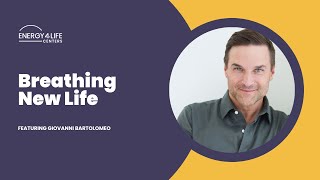
Giovanni Bartolomeo walks through his breathwork method, Elemental Rhythm, born from ayahuasca and Wim Hof training. He explains CO2 tolerance and the control-pause, a breathing metric, then leads a guided meditation. A free 40-minute track is available to try.
Questions this video answers
~7.5% carbon dioxide in the blood (quoted as the peak where 'nothing could touch them').
About 6.5% carbon dioxide and a control pause of 60 seconds (as 'normal range').
The 'control pause' test: after 3–4 normal breaths, exhale normally, hold the nose and time until the first strong urge to breathe; baseline guidance mentioned: perform in the morning, track over time (example baseline: 60 seconds).
A free 40-minute guided track (collaboration with Nessie Gomez) available on the Elemental Rhythm website, YouTube, and Spotify.
Chapters
Foreign. Welcome back Everybody. This is Dr. Greg Eckel and what the health. And today we are talking breath work and beyond the Giovanni Bartolomeul journey. Pardon me? That rolls right off the top, right off the tongue. Giovanni, I want to introd you to him first and give a great intro. He's the driving force behind Elemental Rhythm Breath work, a revolutionary approach to unlocking one's full potential through the power of breath. And I can't wait to share this with you all. As the founder of Elemental Wellness in Toronto and co founder of the Personal Development School, Giovanni is not just an entrepreneur, but a life adventurer with a passion for experiential learning. Giovanni's Elemental Rhythm Breath work transcends traditional practices, offering a profound journey of breath, movement, music and meditation. His mission is to empower individuals to embrace happiness and health on demand while inspiring them to become facilitators and coaches. Welcome aboard, Giovanni.
Thank you. That was an amazing intro.
Well, you have an amazing story and an amazing message to share. You know, before we got on the air, we were talking about kind of things coming full circle and maybe that's a great place to start with when we talk about breath work and the Giovanni story. How, you know, you've taught some of my friends and I found you're the origin of the, of the teaching for the breath work and know elemental rhythm. You've. You've got a mission here. What, where did that, what's the genesis of that?
Yeah, it's interesting because breath work kind of just like stumbled into my life unexpectedly and caught my attention in a way. And you know, I may be the origin of elemental rhythm, but I'm just kind of like a little cog in the wheel that's putting my spin on something that's been around forever. You know, like I'm, I'm more of like, I think classify as a curator rather than a creator. You know, like I curate these experience, I'm taking from those who, you know, were the masters before me and these things that kind of stood out through some of my teachers and found ways to put it together that really worked for me and seemed to resonate for others. And, you know, I never really know where to start the story because there's a lot of places we can start. But it was sometime after, you know, my first plant medicine experience. I went down to South America and drank ayahuasca for the first time. If you're, if you're listening listeners aren't familiar with that. It's, it's a brew from the Amazon that When I first heard about claims have these healing properties that, you know, mental, physical, emotional, healing properties. And you go on these visionary journeys deep within yourself. And I thought, okay, that's cool, let me try that out. And that changed everything for me, you know, like. And I could talk probably hours just upon that. I actually made a documentary about, about plant medicines after coming back because, you know, I thought people need to hear about this and start telling everyone. They looked at me like I was crazy. I had three heads and I had worked on all these kind of like arguments to share with them and yeah, documentary, it's called Psyched out. Okay.
On YouTube.
So anyways, after that, you know, I started realizing more and more how out of alignment I was growing up. You know, net worth and self. Self worth was like equal for me. You know, I was grew up in an area very, you know, like Keeping up with the Joneses. And if you don't make money, you're not important or you're not special. And you know, I had this drive to be successful. And after that experience, I started questioning a lot of things I did. And as the years went on, you know, I started realizing that it wasn't doing it for me anymore. I finally started making a little bit of money. You know, I had a decent car, bought a house, got married, all the things that was supposed to bring happiness. And I just felt this unfulfillment and. But after, you know, a couple years back with that first experience, I started just looking for new things that was. Sparked my curiosity, you know, watching football, drinking beer just wasn't doing it for me anymore. Going to party on Friday nights and stuff like that. So I started going like yoga festivals. I would go to like any kind of, you name it, like events. And what we started doing was we started gathering people together and we would just like at 15, 20 people. And we'd put stuff on a big screen, like a cool video. We talk about interesting things like meditation or we'd watch, you know, instead of heart math videos and like, like all these cool things just to spark conversation. And I remember looking for the next video. I see this video of Wim Hof, you know, superhuman. I think it was one of the specials he did with BBC, BBC or tlc, one of them. Anyways. I was like, wow, like this, this. There's something special. Like I felt it, you know, when you get those like those visceral kind of like sparks where like you just like, okay, there's something here. For me, it was one of those. And I told my Wife. I shorted the video. I'm like, I'm gonna meet this guy one day. And literally a month I had him on a podcast. I launched a podcast at the time, and he was still not. He was on his trajectory, on his way into, you know, super stardom in the health and wellness space.
Mythos. Yes. Yes.
Caught him at the right time, and we became friends, and he invited me to a training, and, you know, when I got to that training, I wasn't really sure why I was going. I thought it was gonna be cool to take a picture with Whim, you know, in a mountain. My shorts might be good for my Instagram game at the time, which I'm still kind of, like, hustling, I thought was important. And when we sat there with about 30 or 40 people, all different walks of life, different backgrounds, pretty competitive age range, probably 30 up to, like, you know, late 50s, maybe a few, like, in the early 60s. And each person going around the circle sharing who they are and. And why they're there, and the transformation that they had gone through from daily breath work, going out in nature, cold exposure, like, I'm talking, like, addiction, chronic disease, depression, physical, like, transformations, like, you name it. And I was just like, whoa. You know, infertility. Like. Like, each one was, like, more and more, like, shocking, you know, anecdotal. It's their experience, but they were sharing. You know, this is my story. Since I started doing this. These. This is what transformed in my life. And I was like, wow. And it got to me, and I was like, I felt like the biggest imposter. I was like, oh, I just thought it'd be a cool experience to come hang out with you. With you all for. For a week. And. And this was, like, the first ever facilitator training for the WIM HOF did in the States.
And.
But what happened was towards the later half of that, that trip, and we had climbed mountains and jumped in, you know, frozen lakes and. And, you know, there was one point where all of these instructors to be got in this pretty much just under frozen lake. And I remember it had this silt at the bottom so your feet would sink into it. I feel like the silt was even colder than the water. And no one wanted to be the first guy out, like, macho, kind of like, okay, I'm not going to be the first one. And we probably all stayed there a little bit too long. Couldn't feel my feet for, like, 45 minutes after that. And I thought, this is another phone call to my wife. Hey, Babe, you know, I really screwed up this time. I'm gonna have to like cut my toes off. But they came back and so this last, you know, this last experience, last couple days, you know, I'm at this point I'm like a whim follower. I'm like, okay, whatever this guy tells.
Me to do, I'm gonna.
Yeah.
So he leads us on this breathing journey, which, which he's playing a drum and he's chanting. I don't even know what he's chanting. And he's just, he's just, we're just following him. He's like, breathe faster, breathe faster.
Hold.
And. And it kept on going deeper and deeper till all of a sudden I feel this vibration, like rolling through my body and I'm just like, what is going on? Almost like a jet was about to take off. And it did. And if within, the next thing I remember is like, I'm out of my body. I'm floating around the top of this, this 20 foot log cabin just staring down at myself. And you know, I had a lot of psychedelic experience, you know, from plant medicine, but this was something totally different. I was so clearly I could see myself. Like I was literally there. And I got scared for a moment and I snapped back into my body.
And started crying uncontrollably.
Like, like for a moment I was like, oh man, don't, don't be that guy that's crying. And then a split second later, like, I don't care, just like cried and cried. For the first time I cried. And maybe like 20 years. And it felt so good. Like I was releasing all of this expectation I put on myself for trying to be successful, for trying to support everyone, for feeling like if I failed, it was the end of the world. Like all this was like coming out and I was like having this sort of conversation, like, it's okay, you know, it's okay. And cried and cried. You know, one of those like booger cries.
Like, like you're.
Yeah, five year old would have had so good. Yeah.
And I walk away and I was just like the next couple days to kind of integrate like what happened there. And I was just like, wow, I need to understand more about that. Like, like there was something that happened there that was like one of the most special experiences of my life. Like unexplainable also. And that's what kind of sparked me to get into breath work. And so I went back to Toronto. I was looking for any teacher, anyone that knew anything about breath work. I wanted to learn from them. I Didn't care what the modality was. Kriya kundalini, you know, transformation of breath. Holotropic. And I just started this self study of trying to get back to that space. I was like, how do I get back there? Because I want to explore that space. And it started happening. I started using the rhythm of music and, you know, just. Just guiding myself. And then I found that adding some specific meditations afterwards allowed me to go even deeper because I was. I can explain kind of the science behind it, but the rhythmic breathing changes the brain waves, and it changes the activity in the prefrontal cortex, which is where the ego and the analytical mind resides. And when that kind of shuts off, going into the subconscious mind becomes much easier. I was able to guide myself into my heart through gratitude, through some things I've learned at the institute of heart math. And it was like, working. And I was getting there, and I was, okay, I'm gonna share it with friends, family, because I already do wim hof breathing. And they're like, yeah, whatever, Geo, let's do it. And it started happening. It started happening again and again. And just like, it just happened. You know, I never intended it to be anything. I never thought, like, hey, I'm gonna start breathwork business or whatever. But what I will tell you is, like, the first time I shared that with someone and they had the experience, I fe sense of fulfillment I never felt ever in my 20 years previous in business. It was a different feeling that was. I could. I could just sense, like, how important that feeling was versus the importance of winning or making some money or doing a great business deal. Like, there was no comparison. Yeah. I was like, okay, I don't know how I'm going to support my family doing this, but I'm just going to keep doing it and allow things to figure themselves out. And they did, you know, they just kind of like one thing led to another. So that's kind of the short, long story of. Of. I love it, how I got into breath work. And I just started learning, like. Like, there's like a whole spectrum. There's these deep cathartic experiences that are amazing for healing emotional wounds and programs in our subconscious mind. But then there's like, the functional side of breathing, which. Which is also equally as powerful, can help you to like, like, side effects of over breathing is like, probably a list probably 20 pages long. You know, like. Like one of those, like, crazy drug commercials. Like, hey, side effects may include. This is.
Yeah, that's. That's.
That's what over breathing will do to people and, and you know, Western medicine, you just give them a pill for that. And I wish, you know, we would teach kids in school how to breathe properly and people how to breathe, probably, which I'm sure you're an advocate of. Like, there's so many things that people can be educated on, whether it's like eating, exercise, diet, nutrition, you know, mental health exercises. And I started going down that path and it was equally as exciting, you know, like, like normalizing the breath and what can happen from there. So anyways, I'll stop there.
I'm rambling massive. No, that was great. And so it's, it sounds like it found you, the breath work around you and that, that aspect, I mean, it is, you know, you said, you know, you kind of that tingly feeling you feel where, you know, I call it the spidey sense of the hair stands up on my arms in the back of my neck. And I know, hey, this is really important. Like I just had that with, with you. Sharing your story is like, no, this is really important. You know, I really advocate for people to not stop breathing. So. Right. We can all agree behind that, right, on that topic. But proper breath, people don't even understand that like they're, they're not breathing properly. You know, we had a woman in our sound room. We do a lot with sound and light healing in the centers. And she came out of there and now it was a sound bath. But we also have a breath work coach. And she said, I just learned from Amanda, I haven't been breathing properly. And she's like, I feel so calm and relaxed. And that component of over breathing and having too much carbon dioxide in your system, creating anxiety and nervousness and restlessness and, you know, all kinds of oxygen deprivation states, nervousness, the stress that it puts on the nervous system. So this is really, it is profound. It's profound technology on all of the different arrays of, of the bre breath work. And I think it's interesting, right, you, you found it as a heightened sense of consciousness really, and, and facilitating that environment for other trainers of breath work. And I'm guessing you have folks come together and do this work together.
Yeah, we found, we found too that, you know, there's something special with the group experience where it kind of like amplifies the energy of the experience, you know, and, and, and heart math did a lot of studies on this. Like if three or four people went to heart coherence, they could bring the next person in without them even, you know, doing anything. Right, yeah. And interesting story. I'm not sure the roots or it's even true, but you know, in Latin, the word spira spirit is to breathe, you know, and you inspire, expire, like, you know, like all of these words. And they said back in the day, you know, people were doing breath work together and they were having these direct experiences with God and the church did not like that. And so they called it a conspiracy against the church. And that was where the conspiracy came from. These people, this is what they say, this is what the legend.
Yes.
So in a way, I guess I'm a conspiracy, you know, activists or whatever you would call it.
Co. Spiring. Yes.
Yeah. I love, I wanna, I want to touch a bit on the science because it's really interesting, you know, the, the carbon dioxide, oxygen kind of paradigm or relationship. Because initially I was always taught carbon dioxide is a waste gas. And growing up I heard that a lot. And, and what's happening is when people are over breathing, they're actually blowing off too much CO2. And CO2 is actually what delivers the oxygen to the cells. So when we start normalizing our breath, we're actually allowing our CO2 to increase so that each breath in delivers more oxygen to like our brain, to our cells, to our muscles. And when we're over breathing and the carbon dioxide doesn', much, we're actually starving our brain of oxygen. So even like over breathing with these exercises, you know, it's, it's actually reducing oxygen in the brain. It's, it's, it's going into the bloodstream. The red blood cells are holding onto it because it's not the carbon dioxide. And then once that the carbon dioxide builds up, it'll start delivering it. And I'll tell you a quick story. Dr. Buteyko. Have you heard of Dr. Buteyko?
Yes, yes.
Russian scientist. And you know, he was initially studying breathing for sending Russian astronauts to the moon. He was like, okay, we need to learn about as much about this and the different, you know, levels of gases. And he also worked in, I think like cardiology or something like that, where he was like, with patients that were, had like cardiovascular issues. And he started noticing that those that breathed that as people were getting sicker, their breathing got shallower, quicker up into their chest. And when people were able to slow their breathing down, they got better, you know, and he started realizing like there was a correlation between the volume of air they would breathe. So it's not just the speed, it's also the volume and the carbon dioxide level in their blood so he actually made a chart. And if. If someone would get to, say, seven and a half percent carbon dioxide in their blood, it was just like the. The highest, the peak. They could not get sick, Nothing could touch them. Like any chronic disease was impossible for them to get. There's a normal range that basically anything above that, you get into, like, super health. So the normal range was about six and a half percent carbon dioxide and a control pause of 60 seconds. So I'll tell you guys what the control pause is. If you want to try it, this is something that we can all do together. If you're listening, listening around, just let's make sure you're not driving when you're doing it.
Yes.
So control pause basically measures, like, your ability to tolerate carbon dioxide. That's it. Okay. So it's best to do it first in the morning because you want to keep a stable. If you're. If you're marking this over time, you want it to be like a stable baseline. Because if you eat, if you exercise, if you have any stress, it'll change. It'll just change your markers. Um, so basically you just sit up normally and you'll take three or four normal breaths. Just regular breaths in and out. And get my stopwatch out. Oh, I got a new watch, actually, I got a stopwatch now. All right, so take two or three breaths, and we'll just take one more normal breath. Have a normal exhale, and then plug your nose. When I see you plug your nose, I'll start the timer. Okay, so normal in, normal out, and just plug your nose and I'll start timing you. Okay, so we wanna hold t. We feel that first urge to breathe, whatever that is. So if we've. If we've held too long, we need to gasp for air after. So we're not going for max. We're going for that first real urge to breathe. Okay. Okay. There we go. Okay, so now what we want to check if you did this at home is that first breath, did you feel like you really had to breathe, or can you go back to normal breathing? So if that's the case, you have to have that awareness of, like, okay, I went a little bit too far last time. That urge is a little bit too much. So now I didn't actually time you there. I pressed the wrong button. It's a new watch. You can do it again after. And basically, depending on where you are, it will. It will tell you how healthy you are. It'll give you this thing, this different ranges of different ailments that you'll have. As you work on improving that, you'll see your health improve, you see your mind become more clear, your ability to deal with stress, improve your athletic performance improve all of these things. So that's on the functional side of CO2 tolerance, which I think is most important once you get the basic mechanics down. Sure, that's great rambling here, but, yeah, I encourage all my clients. It's like you want to know your CP score, you want to keep track of it. And you'll notice when you're really stressed, you get bad sleep, it's going to go down. I'd say it's just as important as hrv, if not more important.
Yeah, that's really. That's great. That's a. That's a pro tip right here. You heard it, you heard it here on what the hell. Yes.
Yeah. So. And then, you know, then there's just the daily practice. You know, people ask me all the time, you know, like, how do. What do I do? Do I do breath work every day? Is it like, what should I be doing?
Yeah.
And I think the most important practice is just being aware of your breath. Right. And going back to the mechanics. Like, there's five basic mechanics. Nose. So breathing into your nose, the rate at which you breathe in. So slowing down your breaths per minute, being in a good rhythm. So you don't want to breathe quickly and then stop and then pause and breathe again. So it's a good rhythm. And the best rhythm, they say, is a short inhale, a little bit longer of an exhale, and a normal pause at the end. So it's kind of like rest, so that the system rests for a second or two. And most people don't do that. Most people are mouth breathing, breathing quickly, shallow into their chest. Next is depth and diaphragm. So deep doesn't mean big. Deep just means deep into your belly.
Ah, yeah.
And the diaphragm is just your belly. So we want to relax that. And part of Buteyko's process was when you're breathing, you have to learn how to relax your diaphragm. What has Western culture done over the last 20, 30 years? Everyone wants chiseled abs. Hold it in tight, like, just really less like. And that's just doing wreaking havoc on our breathing system, which is compressing everything in there. So if you can do those things well and just be conscious of how you breathe, like, you're going to see the quickest improvement in health that I. I've seen with people. It's like just starting to. On the breathe mechanics.
I love it. And you, you do some work with heart math or measuring heart rate variability. Do you see folks increase their heart rate variability within the breath work?
Yeah, it's interesting, you know, the funct too. But sometimes on the emotional side, like someone will have a huge breakthrough in like a one of those deeper breathing experience like, like you had, and then all of a sudden their heart rate variability is up like five points consistently. Like they let go of something they're holding on to. Because remember, if we're holding on to something in the back of our subconscious that's just sitting there all the time, we don't even realize it, but it's, it's our nervous system. It's kind of these fears, these worries, these beliefs on guard.
Yeah.
And so, so, yeah, so I've, I've seen changes like that and we've even seen like crazy again, anecdotal, like, like people doing a single breath work session and claiming to have healed like an autoimmune issue, like a digestive issue that they've had for 10 years and then followed up with me two or three months later just to let me know that they weren't crazy, they weren't crazy and that they can now drink beer and eat pizza. I'm like, listen, you don't want to be doing that. I guess after 10 years of not a little bit here and there is. Okay.
Yes.
But you know, like, besides the point, it was like something happened, you know?
Yeah.
And, and that's what intrigues me so much about this work.
It is so fascinating. You know, I think about the breath, the breath of life, prana, life force, energy. All of these things tied in together with everybody can do it. You don't need any gear, you don't need any special thing from the store. You can do it wherever you are, you know, it's free. It's free.
Once you learn it, you know.
Yes. Yeah. Once you learn it and, and learning it properly. So speak into that. You, you have this school elemental rhythm and a style that is eclectic and filtered through geo's apparatus. And the gift out here to the world. How. How is it different or similar to other breathworks?
Yeah, so, you know, like there's so many amazing breathworks out there. So I don't like to say mine is better or worse. It's just a different kind of flavor brand. Like, like a music genre. You know, we use a lot of music and, and we use the rhythm of the music to help people breathe. When I was getting to breath work. Some of the, the ones that were just like, okay, just breathe deeply for an hour. I would be like in la la land, falling asleep. So the rhythm of the music really helps me to kind of keep focused and keep my, like, my scattered brain, you know, focused when, when I was starting, especially a lot of breathwork. Meditation has helped me to gain a lot more focus. So we have a lot of tracks we call guided experiences. So if you're just looking for a daily track, it'll take you through a little bit of breathing, help you get into that state, and then it will drop you into some sort of like meditation or some guided prompts that are going to help you to focus your awareness on. So anywhere from three minutes all the way to like 60 minute experiences. And then we have some breathing fundamentals courses where we can teach you about, you know, proper breathing. And we also talk a lot about the subconscious mind and the power of subconscious mind and how to really reprogram it. You know, what you're looking for as far as like core wounds, core beliefs that, you know, there's about 18 of them. When you whittle all our beliefs down to the core limiting beliefs. And it's amazing that when you can start highlighting, you know, which ones are present in your life.
Yeah.
Versus we're seeing them everywhere. But then you can have a tool to reprogram them. And you know, and I share this because that was my process once I started learning about them, finding them, where they showed up in life. Like fear of being alone or feeling unsafe. You know, having no older brothers growing up and going into new school and you know, just, you know, this fear of being unsafe and what does that drive me to be is like a successful entrepreneur. Money meant safety for me. And also being seen, which another one of my core wounds was like, I am unseen. And then fear of being alone, like they were all kind of intertwined. And as I was able to kind of see those beliefs and change them. And breathwork really helped a lot in being able to get there. Like your reality doesn't change as far as like what's happening, but your response to it does. You know, things that used to trigger you or scare you or upset you before, they just don't anymore because that belief is gone. Right. And the way the mind kind of works is in layers. Right. And your base layer is beliefs. And when we're born in our first 10 years of life or eight years when, when the brain is kind of like really growing and adapting, you know, it's trying to keep you safe. So it's scanning everything. So it creates these beliefs. Something may happen. It's like, okay, all these beliefs form on top of beliefs is thoughts. Based on our beliefs, something happens, we think, like, we analyze it. Okay, was that good? Was that bad? Am I safe? Am I not? Do I judge this person? Like, like, our thoughts is the next layer, and then after that is our emotions. So based on thought, we react. If it was good or if it's scary, we're gonna feel in our body, and then we react and we will have it either in action or inaction, like freeze or fight or flight or, you know, go into, like, one of the positive responses. And so what I learned from one of my business partners, Tyce Gibson, is like, if you can just get that belief level and change that, it'll cascade all the rest. It'll just change everything. And that's been. The work is like helping people to find where their beliefs are and how they can kind of transform it. So we have stuff like that at our website. People off and that journey inward.
Yeah, I love it. You know, the answer truly does lie within. And I like to say I do a lot of nothing all day in our center. Centers of just, you know, deep presence, listening, reflection back, people tell us exactly what the medicine is that they need for them. And this is a beautiful gift to share. So, you know, for everybody listening. You know, we're gonna have Giovanni on in the future. He hasn't committed to that, but I know we're gonna have. And we're gonna do some actual, you know, experiential breath work, work with him to share because, you know, it is, you know, and maybe we could do a little, if you're. If you're up for that, just impromptu, maybe just a little for people to experience it in, you know, a few minutes. If it's possible to share that. Because a lot of folks, you know, are still maybe at this point in the podcast thinking, well, gosh, I breathe every day. Like, what's the story here, guys? Like, it's, it's, you know, this profound experience that you had with the Iceman of, you know, Wim Hof and who has really done a great service of getting the information out and sharing and, you know, if you feel like it's too brief of a time, we can also do it on another time.
Yeah, we can do it. We can do it for sure. Perfect. We can. Let me see here. Let me see what I got here. So, yeah, I'll try to whip something Together here. I got my playlist though, some, some royalty free music, so you can still share on YouTube and not get dinged for it also. Excellent.
So.
So one thing I'll say is if you go to our website, there's a free track. It's a 40 minute journey that if you want to go a little bit deeper and try it, it's. It's with Nessie Gomez. I'll give you the link to that. You can share it on, on, on there. It's also on YouTube and Spotify. Like one of the things was like, we just want to share this. Like, yeah, put it out there. So that's a really awesome one that I collaborated with one of my favorite artists. But let's, let's do one round of breathing together and then I'll. I'll take you into a meditation. I just want to see if I.
Can share my sound here.
Oh, you have to allow me to share. Yes.
Here we go.
Okay.
Thanks for rolling with it.
Why not?
Yes.
All right, now let's just get the right song here. There we go.
And this component, as you're prepping, I know I totally put you on the spot. You know, this is our responsibility. The dash. I'll put the response dash ability of creating our body batteries and our energy and our receptors. And you know, a lot of times on the show, I'm talking about just how miraculous this life is. And this is such a profound technology of breath work and, and sharing breath together. You know, in Tibetan culture, they. They greet each other with their tongues out. And it's like as if it's the, you know, the health of the, of the being and the individual. And I think we're as maybe cultures on the planet of people on the planet Mother Earth coming together with sharing of this rhythmic patterning and coherence. It's really what I'm up to on the planet is helping as many as I can with heart and brain coherence and dropping into their heart spaces and creating from, from love. And I feel like this is a great, great tool to help support that.
Absolutely. Just do a quick sound check here.
Can, can you just say one thing for me?
Yeah, I'll say one thing for you now.
Let me know if you can hear.
Some music playing here. Music. Yeah. All right. Okay.
So we're just gonna roll with it. Perfect. If you're, if you're listening along, just wants to sit, sit up or even lay back. And we're gonna be breathing in through our nose into our belly. We're gonna do One round. You may feel some tingling sensations in your hand, or any bodily sensations you feel are completely normal. If it worries you or bothers you, just slow it down. If you're not in great health, I wouldn't advise doing this.
And work on your breathing mechanics first.
And just make sure you're not doing this while driving. And also, you never want to do any breathwork practice. Like in water or in an area. If you were to feel dizzy or to pass out, you put yourself or.
Someone else in danger. So that's really, really important to say that.
Otherwise we're just going to focus on taking deep breaths in through our nose. Just practice all the way in into our belly. Just feel your belly expand. And when you exhale, just exhale through the mouth.
Deep breath into the nose. Exhale through the mouth.
You're gonna be a little bit deeper. It's gonna breathe into the belly and then up into the chest. Then exhale.
Okay?
So everything else, just follow along.
Just about five minutes here. Three or five minutes. Okay.
All right.
Okay. So just.
So in, out, in, out, in, out.
So just give me the rhythm of music. Pick it up a little bit here. A little bit faster. Control hyperventilation right now.
Bringing worms to your breath. Each breath. Close your eyes, close your body, lock your shoulders. 40 seconds out. We're going to take a deep breath all the way. We're going to go to the top. 5, 4, 3, 2, 1. All the way in.
Hold it.
We exhale.
I'm going to invite you to hum through your nose. I'll count you down. Five.
Deep breath out. One more breathing.
Sex.
So in two, three, four.
Out. In.
And out.
In.
And out. In and out.
Go.
Breath all the way in. Exhale.
As your exhale relax you go in and out. Some physical changes in your body. And out.
In.
The. Let's pick up one more time. So N2O. 2.
In.
O in.
1 more time in.
Full speed.
Count you down.
Keep breathing. 5, 4, 3, 2, 1.
Deep breath all the way in. Deep inhale. Hold it.
Keep holding.
Again, we exhale. We're just going to hump through our nose.
So slow release. 5, 4, 3, 2, 1. Let's close your eyes. Slow your breathing down. And I invite you to think of.
Remember a moment in your life where.
You experienced an immense amount of gratitude. Think of a moment you experienced an immense amount of gratitude.
It could have been the birth of.
A child, Something you accomplished, something someone did for you, a good friend, time in nature.
Just go to that moment.
The first one that comes up Just be completely present. Who's there with you? Visualize sights and sounds, smells and colors. Just allow time to completely stop.
Bring your awareness to what the feeling.
Of gratitude feels like in your body. What does the feeling of gratitude feel like in your body? So just slowly bring that feeling up to the center of your chest.
Deep inhale in as if you're breathing.
Through your heart, just allowing that feeling of gratitude to expand through your whole body. Again, breathing into your heart, just allowing that feeling to expand.
Yourself, to just.
Sit in this higher vibrational frequency of gratitude. Slowly bring your awareness back into your body. You might want to stay there a little bit longer. You can if you like. When you're ready, you just open your eyes, and I hope you were able to feel something in that experience. A few things. You may have felt just a change in something in your body. As you start to breathe, you know.
You feel a shift somewhere in your body.
Something change or feel different. This is awareness, right?
Did you feel your mind clear at.
All as everything as you're focusing on the breath, that monkey mind slowed down a little bit when we got to the end of each breath hold, and we were feeling a sense of calm. And when we moved into the meditation.
Did you feel anything? You know, some people it'll be like.
Some people, it's like, okay, there's just a subtleness to it. You know, this is a practice in awareness and mindfulness, just really tapping into.
These emotions that exist within us so we have access to it anytime. The more we can find ourselves in these higher vibrational frequencies, like love, joy, gratitude, you know, you're creating that environment.
For your body to heal, to expand, to grow, to create.
When we stay in the lower vibrations.
Of worry, fear, doubt, we're creating those kind of environments, and we think about that more, we attract that more because our. Your brain is thinking, hey, this is what you want. It's a program you're putting in.
So by starting each morning with, like.
Five minutes of breath work and just being grateful for one thing, it's gonna change the whole trajectory of your day. All right, how did it go?
That was lovely. Thank you. Yeah. I mean, in the change of state in such a short amount of time. Thank you. That is, yeah. Really profound and, you know, definitely I like that you gave the disclaimers, don't do that while driving. And it really does take that much time to feel lighter, more present, everything slows down did for me. So I. I really thank you for sharing that with us, and I look forward to many more with community. And folks, if you, you gotta share this one with a loved one. So please think of somebody today to share the gift. Giovanni and Elemental Rhythm. I want to just thank you for coming on and sharing this wisdom and you know, and the techniques and just your, your joy and your presence. So, you know, really super appreciate you and I, I love that our circles are coming closer together. Are, you know, talking about raising that vibration and the consciousness and the love quotient really is what it comes down to. So thank you. Giovanni, any last parting words for our listeners and viewers?
Yeah. So it's just one breath at a time.
You know, you can improve just each.
Breath after breath if you, if you.
Just be a little more conscious, a little more intentional.
Like it's just that, that next breath, breath.
And that will build momentum into great change and transformation.
And no matter where you're at now.
You can improve and get better. And it's just up to you, really.
It's really up to you. And I've seen it with my own eyes. From people from the darkest depths of despair to people who are already having the most amazing and abundant lives make it even better. It's available to everyone. You just have to do it.
That's it. You just got to choose to do it and explore.
And if you want to connect with me, I'm mainly on Instagram @AntimalGeo. You can find me on Facebook and.
Probably YouTube and Google my Internet. I'll probably show up somewhere.
We'll put all of those in the show notes. And Giovanni, thank you so much. Much joy and blessings. And until next time, everybody.
Yep. Thank you everyone.
More from Dr.

EP. 197 Brain Regen: Harnessing Essential Oils for Cellular Health and Longevity

EP 196 WTH?!? Unlocking Cognitive Health with Your Genetics with Elwin Robinson






EP 190 WTH?!?: Mind-Body Mastery: Harnessing Movement, Breath, and Sound with Jeffrey Williams

EP 189 WTH?!?: Nourishing Connections: Lynne Bowman on Family Meals and Healthy Living


EP 187 WTH?!?: Clearing the Air: Dr. Kevin Smith on Nasal Health and Migraine Relief