EP 186 WTH?!?: Harnessing Qi Gong for Brain Health with Dr. Laurie Regan
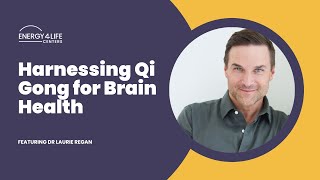
YouTube interview (EP 186) in which Dr. Greg Eckel interviews naturopathic physician Dr. Laurie Regan about Qigong’s history, lineage, core practices, and applications for brain health and overall wellbeing. They define qigong (qi = energy, gong = work), name the Jin Ding Gong (Jing Gong) tendon-strengthening lineage tied to Heiner Fruehof and Chengdu teachers (Professor Wang Qing Yu, Li Dao), and describe foundational practices (shaking that “treats the hundred diseases,” walking, moving and sitting forms, sound work). Discussion links qigong to nervous-system regulation, trauma/ancestral patterns, heart-centered coherence, group/field effects, and the role of visualization in producing physiological change. The tone is experiential, clinically-minded, and hopeful.
Chapters
Hey, welcome back Everybody. I am Dr. Greg Eckel and this is what the health. Our topic today is Qigong for brain health and life. My guest is Dr. Lori Regan and she is a naturopathic provider. We went to school back in the day together and she is, she has been practicing qigong much better than I have been practicing qigong. But I wanted to bring her on because we are revamping our online coaching program and really bringing some high quality teaching and methodology to our members in the community. I wanted to bring her on to what the health to share the benefits of qigong in general because there isn't a lot of discussion around it that I have seen and I've put this in my books. I'm a really big proponent. I love qigong myself in private practice. But you know, with Dr. Laurie out there doing this communities online, I wanted to bring her on and have this conversation. So welcome aboard.
Thank you. Really happy to be here.
I am really looking forward to our conversation and discussion. And I think let's start at the meta level around qigong as. What is that? We'll just start there for folks that may not have any idea.
Okay. Well, in a very simple way, you could translate qigong as qi meaning energy and gong meaning work. It's a practice that goes back thousands of years where people had deeper connection with the natural world than we typically do today in the way that we live. And they develop practices to help them stay healthy by understanding how energy flows within the human body and between the environment. What in those days, or in Chinese medicine is called the macrocosm and the microcosm of the human body. So they're movements, they're exercises. But there's a difference between what qigong or a martial arts application of that, which is people are familiar as Tai Chi. There's a difference between what can happen with these practices and your typical exercise. It still gives you all those same musculoskeletal and cardiovascular and respiratory benefits, but there's as well a focus on building your core level of vitality, what's called your source, Qi. So I love that. Yeah.
And having that kind of the discernment between the differences, like we've all seen the pictures of the, you know, hundreds of people in the parks in China doing Tai Chi and those movements. And is it, is it true to say like qigong, it could be considered an umbrella over all of those other arts?
Yeah, you could say that. Because really, energy work, Taiji is energy work of a specific sort that actually originally. Well, now it's primarily done for health. Originally, it's a martial art, whereas qigong in and of itself is not a martial art. It's the health promoting, qi promoting, balancing, strengthening, exercise practice and your.
And we both studied with a specific lineage and I definitely want to do homage and honor that. Will you speak into that?
Sure, yeah. The lineage and the way we had, what I feel is the great blessing, Greg, and privilege of being connected with this lineage came through the founder of the College of Classical Chinese Medicine that you graduated from and that I was the dean of for I guess about 15 years. So what heiner how he got into this, how he made the connection with this practice is that he was getting a PhD in East Asian Studies, he was in Shanghai and he got sick. He got testicular cancer. And anyway, skipping a lot of the details of that story, he ended up making a connection with a qigong practitioner in Chengdu, where he was later. I mean, he was in Shanghai when he got sick, but he was in Chengdu studying. And he made this connection with this person who actually is the lineage holder of this major system of qigong in China. So and that's Professor Wang Qing Yu. And his connection with it goes back to his childhood. And he was born into a very aristocratic family and his father was a martial artist and made him study everything. I mean, he was a really curious kid and so he studied everything when he was young. But his father was a really strict disciplinarian, made him do all these martial arts in qigong, which at the time he didn't love because he'd have to stand in these really, really low horse stances and you know, apparently get beaten if he, if he didn't stay or, you know, if he did it wrong. But at a certain point he was injured. I'll skip. There's a lot of kind of history and really interesting things that happened. But basically when he was a little bit older, just he was probably at the time, he was still younger than 10 though. And his father took him to study with a Taoist master at a monastery outside of Chengdu so he could learn even more and in the process be healed because he had a pretty severe injury at the time. And so he met this teacher who is named Li Dao, who was a very high level Taoist scholar and practitioner. And shoes fell in love with him as a teacher. You know, he said it was the first time in his life he had this experience of really unconditional love. And so he really applied what he had was a photographic memory and a lot of Physical skill. And so he devoted himself to learning all the practices from this person who freely taught him all that he knew. So the lineage then goes. Well, let me go back to Heiner. Met Shifu Wong.
That's Heiner Fruehof. I just want to make sure we're giving him proper.
Thank you. Yeah. So Heiner Fruehof was the founder, as I said, of the College of classical Chinese Medicine. Before that happened, he had been studying, as I was saying, these East Asian.
Yeah.
Cultures, got sick, met Shifu, and it was through his illness and his connection with the qigong that he ended up studying medicine and later came to found the College of classical Chinese Medicine. And so as a fundamental part of that, he brought in these. This lineage, in these practices, because they're part of the key, not only cultivation of a practitioner, but also they're really, really essential as a foundation for health.
Yeah. So speak into that too. Because that component of the root of dis. Ease and where the. The qigong, the meaning of it and how it was developed.
Yeah. So qigong, this lineage goes back hundreds of years, but the, you know, the real roots of it go back thousands of years. Right. And as I referred to before, back to a time where they recognize that there were these ways that you could move your body and breathe and focus to. To be able to accomplish what we now accomplish through many different modalities of medicine.
Yeah.
In fact, in this lineage, there's a practice that's called a basic shaking practice, which I love that connection to your work and your workbook. But this shaking practice within the lineage is called the practice that treats the hundred diseases. And Chinese language and Chinese medicine always uses symbolism and metaphor, like they talk about everything in the manifest world. Be the being, the realm of the 10,000 things, meaning everything that we experience in the realm of manifestation. Well, saying that the shaking practice treats the hundred diseases really means anything we can treat any other way, we can also treat using just this. These practices and this ability to focus and make a connection with the places where our body, our being, is holding the root or the core of our disease.
Yeah. So having that, the treating of the hundred diseases, which is all dis. Ease or imbalances in the body. As we were talking before, kind of lining up our discussion, I really liked how you brought that up. Of these imbalances or patterns get into the body. So, one, I want to make sure we name the lineage and what that means, and then I want to get into how it's viewed, because this has been instrumental in my practice of medicine in my understanding and really the time that I spent with Dr. Fruehof, heiner Fruehof and you and Professor Wong and doing the qigong of really that microcosm macrocosm interface. And what happens in the universe happens in the body and what happens in the body happens in the universe. And tapping into that, that is a massive quantum understanding of reality that the Chinese, this lineage has been pulling for thousands of years. And it just blows my mind, you know, every day in practice of just complete gratitude and awe really of this experience we call life together. So let's start with the name of the lineage because I know we've got people on the edge of their seats.
Thank you for keep bringing me back to the the basics in the foundation. So the line, this particular lineage is called the Jin Ding Gong lineage, the Jinjing tendon strengthening lineage of qigong, of basically alchemy, internal alchemy. And as I said, it goes back like Heiner met sure for Wong, who learned from his teacher Li Dao, who learned from someone before him, before him. These practices were passed along in these very close knit lineages. And so they were passed on for people to cultivate. And what I really, what really touched me deeply in studying these practices. And I should say I started Learning Gingong from Dr. Heiner Fruehof when I was a naturopathic student at and then ncnm and then I went to China for the first time in 1997 and this year in September will be my 12th trip to China, studying China Surefa Wong with Heron, the Heron Institute, Heiner's organization. So what the lineage has been teaching and what I was starting to say about what really touched me deeply was one of the times in China where Shurfa was talking about this is just another system. There are many different methods and systems in the world. But this is a really tried and true system that connects us with our deepest essence, the heart of who we are as a human and in our role as you could, as they say, connecting heaven and earth. You know, there's a way that they understand that each of us has what's called a Shing, a heavenly nature and a Ming, a destiny like what's our true expression meant to be in this life and but we don't as humans, it's a journey to get there. Right? We all, I like, you know, before I went to naturopathic school, I actually got a PhD in neuroscience. And so I like bringing that in, weaving that in as well. And especially with all of your interested in brain Regeneration, It's a great mix. And you know, from modern times, we. Over the last couple decades, there's a neuroscientist, Stephen Porges, that I know you're familiar with, who did a lot of research in something called polyvagal theory. And he discovered that this part of the vagus nerve, we've all. Most people have heard of the vagus nerve, but he discovered there's a more evolutionarily recent part of that system that mammals have that's called a social engagement system. And it helps us to be really present and signal to each other that we're safe. Right. But that study has made me think about it in this way. Like, here's an example. If I touch something hot, we know that we pull our finger away and that happens as a reflex arc that goes through the spinal cord before we. My brain registers it. I've already prevented myself from being burned any further. But this vagus nerve has much of its. Of the neurons in that nerve aren't going out to the body, they're going up to the brain. And so once we've had that immediate reflex, then all this information goes up to our cortical functions. And we're designed to try to understand our experience so that we can in the future avoid that thing that was dangerous. Right. So we're designed as people, as humans, to make up stories as ways of understanding our experience in the world and how we can stay safe. We all carry these stories, and it's a normal human experience. And especially if something happens that feels overwhelming, our body holds these patterns for long periods of time, and they become the lenses through which we experience the world. And they were really intelligent ways of responding at the time that they were created. But fundamentally, they create patterns of constriction and limitation. So if we hold them over long periods of time, eventually they're going to limit what our experience is. And they actually limit, like we. We create these, what you could call fixed mindsets, you know, like, that happened because maybe I wasn't good enough. I understand that I wasn't good enough. Then I can be better and I can do things perfectly. Or, you know, we develop all these coping strategies that aren't fundamentally the deepest truth.
True. Yeah. I. I love that. I kind of explain it as like, okay, here's my evidence of reality and I can grip onto this really hard.
Yeah.
But I always ask, like, well, how's that serving you? Like, if you are. You're in a suffering state or dis. Ease and you're clinging onto this level of reality. Even though, you know, we know our memories may not be true, we made up a story to make it through because we're all survivors. We're here listening and hearing this and it's, I love that it's like it served you to this point but there you may have gotten some dings or some kinks or some restrictions where then that kind of comes into the nervous system and into the central nervous system and even into the brain. So with the kind of the neuroscience background and some of the recent research on meditation and the qigong components of how do we change the, the physiology, the anatomy, the biochemistry, the bio physics, the kind of the quantum field or field around the body because we know that's even kind of maybe even outside of the body before it gets in here. And I love this. You know, we always start with shaky. Shaky is when I'm teaching classes and or sharing qigong. I say okay, we're going to start with the shaky, shaky and we're you know, just shaking our bodies and, and that component, it, you know, resonates with the Parkinson's community with the Shake it Off book and the tremors and really putting these together. I'm really excited for this coaching container that we're making for folks and also why I wanted to share it with the general at large, what the health community. Because this is a very potent, time tested system. And you know, you bringing that aspect, you know, it's kind of the elephant in the room is trauma. And everybody's talking about it, but a lot of folks, you know, that I'm seeing in their 50s, 60s, 70s that are like, but I don't have trauma. But you know, it's this truism is nobody gets out of here alive. And when we do these inventories of adverse childhood experiences, we actually have to say actually you have had. It's just part of being human. It's not a bad thing per se because you're alive. You've created those stories. So in this practice and kind of a new route of accessing that internal alchemy and a component of what I'm really bringing more and more is the answer lies within. It's the individual. We haven't been taught how to deal with this stuff. Right. We've been taught in our ancestry and lineages we can hold in in. And a component of why I think we're seeing more dis ease and more neurodegeneration on the planet is we've had a longer history on the planet of accumulated traumas. You know Where I just. In my work, we start doing ancestral trauma stuff of, you know, thanking our lineages for getting us here. But let's lay down the trauma. We welcome the intuition, the inspiration and the, you know, guidance, but we don't need to carry the burden anymore. And to do this consciously. I really see this fitting in here as a really beautiful way for people to reclaim that microcosm macrocosm experience and understand they may have more influence than they been led to believe.
Absolutely. And love the way you just talked about that. And I. We don't even have to call it trauma. Right. Like you said, it's a normal human process to make meaning out of experience.
Yeah.
We're designed to do that. And. And I love that you referred to the fact that we actually carry ancestral patterns. So we're even born with some. We don't even know where they came from, that we. They just are the way that we're experiencing the world. And then our job, my understanding is that our job as little humans before we're about age 12, is that we play out the unspoken patterns of our family systems right in our immediate community. And so it's a normal thing for us to carry these patterns of meaning. But as human beings, we have the capacity, we have the ability to choose whether to continue to carry them. There's a certain stage of maturity, and it's, you know, even in. In our. As early as our teens, we have the ability to start bringing awareness. And, you know, these patterns, like we talked about them being formed in a kind of mental way, but they're carried all the way through into our bodies. Right. So the way I like to talk about it is our brains, our thought processes, in a way, are designed. Shouldn't really say they're designed to lie, but in a way, they're made to make up meaning that is designed through intelligence to keep us safe. But our bodies don't lie. And here we're getting back to the value of the qigong. Right. Our bodies hold these patterns. And, you know, you also referred to what's happening. Why do we seem to have so much more disease and trauma these days? I would also say it's because, you know, there's more and more toxicity in our environment. So even when we're super careful about what we drink, what we eat, you know, we're going to breathe in toxins, we're going to ingest toxins. And actually, there's an understanding from Chinese medicine that we also, as you know, produce toxins inside our body based on these patterns. So where are we going to hold the toxins in our body? We're going to hold them in the places where we have these constrictions. Right. Because the constricted flow of qi, of energy, if you will, and is going to restrict the blood flow, is going to restrict lymphatic flow. So toxins are going to tend to build up in these areas that we have less flow. And fundamentally what the qigong affords us is the ability to make a connection back with our body. We can, we can even go into a place that we're making a connection with this deep heart space. And you know, what I started referring to before and probably didn't finish was when surefo was talking about this being a tried and true practice, the purpose of which is to get us back in touch with that deepest self inside to make us, quote, unquote, good people and not good as.
That's great. Thank you for that dopamine hit.
Yeah, that's the one I like the best. So that refers to what I'm talking about. We can get to this deep heart space.
Yeah.
And in the sense of good, in Chinese Shan, it means virtuous. There are innate virtues that we carry as human beings that can get twisted and covered up. And these practices can bring us back into connection with that deep heart space so that we can be in a state of honoring and connecting ourselves and connecting the truth of another person despite what they're doing. If they're acting out from limited patterns of meaning, we can bring our best self to them. But let's go back to for ourselves when we, when we can connect and you know, the word grounding gets used, the word containment get, gets used when we can open up the flow of qi in our body and create this. I mean, there's more and more understanding of the physiology of the heart. Right. All of the heart math research. When there's a state of coherence, when we're grounded through meditation, through contemplative practice, through practices like yoga and qigong, we can create a state where we can actually be in connection with these internal patterns, you know, through internal family system, Dick Schwartz would call them parts. We can be in touch and make this connection even inside of ourselves with a part of us that's been kind of working really hard to keep us safe in the world. But holding this pattern of meaning, that's not true. And through practices like qigong, we can, we can be heart centered. We can access through sensation in our body. Right. We can feel where an emotion is held Physically and in our body, or we can feel a physical sensation and we can be present with it. We can be calm. We can be connected. Even if the part is feeling rage. There's a part of us that can be grounded and in a state of resonance and coherence. And we can create a spaciousness with which we can hold the part that's feeling whatever it feels, whether it's a difficult sensation or it's a difficult emotion. So we can actually do these practices to. In the simplest way, just create more flow, more integration, more connection inside ourselves. And in that process, these old patterns can actually step into the flow again. They can join the party.
Yeah. And make that right. Bring it back together. So many folks, when in a diseased state or diseased pattern state, they. They're. I found that they are out of their body or their. Their talk is so negative of, well, if I wasn't so damaged or, you know, they've almost put their diagnosis on as their identity or meaning. And I. I've been really, really meticulous with language and really stopping people, like, saying, you. You're not. You're not anxiety. You're not Parkinson's disease. But it's kind of laid on people in the. In the languaging and in the kind of what I call the propaganda box, you know, of the. Of the programming of what happens to the human. And what I've found with the qigong and the shaking and some of the forms is really. It's really getting that person connected back into their true nature, true self, and allowing them that direct access to source. So it's, you know, really around that aspect.
Yeah, absolutely. And we could even have compassion for those parts of us that are saying, I'm. I'm whatever they are. There are only so many, I think, fundamental patterns that we make up as humans. I'm not. Common ones are. I'm not enough. I'm alone. I'm invisible. I'm too much. I'm not safe. They're just, you know, they're.
I'm not worthy.
I'm not worthy.
Yeah.
Actually, I did some study with Dr. Claire Zammit, who did her PhD at the California Institute of Integral Studies, on how many of these patterns women carry. And she came up with a matrix of them, just 22, 23 fundamental patterns that are very well characterized. And those patterns, again, were wise choices at the time they were formed. But they're not the deepest truth. And so we can learn, like the way you're helping your patients understand you are not that Right. That's a, that's a survival strategy. But ultimately those survival strategies are not self sustaining.
Yeah.
They're not going to support our survival. So we can learn to hold them gently and with kindness and even with gratitude, but not let them run the show anymore.
Sure. Yeah. And what do you see on that pattern interrupt or the reconnection of totality of being. What do you see with the practices?
You see, people say, oh my gosh, I didn't know that I could just learn how to feel my body and, and not feel like I have to fix myself, not feel like I have to strive so hard. It's, it's a process of getting in touch with a centered place that can discern the choices to make in one's life, lifestyle wise, treatment wise, which things resonate for you that are going to support your journey back to health. But really it's a journey back to, well, being the part of us that's already inherently whole. So even if we're having symptoms, we can connect and activate this innate healing power within, as I know you see and you in. So the qigong itself supports people to make that connection. So calmer, having a way, when we get the word that's common these days, is triggered or activated. We have a method that we know how we can come back to a state of centered, rooted, more calm presence. We can, we can actually start to connect with and integrate these patterns. And you do see a resolution. An example, my brother started coming to my classes, he's on the east coast and he had a lot of pain from a lumbar herniation and problem. And, and one day we were doing a practice in class and just bringing awareness and attention as we were going, focusing, shaking down the spine. And it's also a, a really valuable thing when you have a whole group together, you know, and that group exists in non local space so it can be a group that exists online as well. And you had the whole group focusing into this area where he was holding pain and just shaking and focusing there and the pain disappeared away, you know, because you bring it, you bring awareness to a place where there's been a restriction or a lack of flow. And it's like the, the spaciousness and coherence and resonance of the field. And it can be our own heart field, it can be our heart field in connection with a practitioner, another person. And it's especially valuable to have this whole big heart field of a group practicing together that creates this field of resonance and that allows for, if you will, a kind of digestion and integration of a pattern that was previously held in a crystallized pattern. It's like ice melting. Yeah.
Wow, that's beautiful. You know, if you listeners and viewers would like to join a heart field of coherence like that, put an emoji in the comments down below and we will reach out to you. I think you put that so well and you know, it is so true. That non local component of creating that field, that is a big piece of what we're doing at the Energy for Life centers in Park City. And I'm training my staff that they are the field and we are the field. And so we're creating fields and then we're creating fields online. And this is having a ripple effect and I call it the groundswell before the change happens. Do think change can happen in a, in a heartbeat, in a snap. And, and this is a piece to me, it gets me really jazzed up and excited to say, oh yes, this is. I got a bunch of yeses going up in my spirit of just like, ah, this is perfect timing. And, and I'm really excited to create this with you for, for our patients and for our community because it is so, so needed right now.
That.
Tell me on the different forms of qigong, because sometimes maybe we have preconceived notions of what it looks like because we've talked about the shaking and along those lines and I know we'll do more internally on our communities and if there's enough interest out here, maybe we'll bring some demonstrations out here. We're going to put all of your contact information around in the show notes, et cetera, for people to connect up. But where there are different forms of.
Yeah, yeah. And I would say this lineage, Jing Gong has. Has sound practices, has the shaking practice, very fundamental practice, has walking practices, has moving forms and it has sitting forms. And so. And any of it can be done, like if somebody's not able to walk or even stand, do moving forms or do walking forms, not an issue at all. You can do them sitting down, you can even do them lying down. Because the are the power of our heart and mind and focus into our body allows the process and the benefits to come. So anybody can do these practices. They're not ones that you have to be a super athlete, you know, to do. And they're, they're quite, I mean, I would say simple, but of course everybody has different physical abilities and so certain movements might not be the best ones for somebody given their condition. There are always things that are able to be adjusted for the individual, because this isn't, as I always say to my students, especially, you know, at Nunm now, at the, you know, in the Chinese medicine program, when they're learning these, I'm like, this isn't a practice where we're teaching you to be a drill team. That's going to be in a performance where everybody's learning how to do everything perfectly. It's a practice teaching you how to feel the groundedness and centeredness and flow in your own body. And there are certain postures, there are certain stances, there are certain movements that facilitate that flow. So, and that's going to be unique for each individual. And so I want to give people who are thinking, well, I'm not sure I can do that. Everybody can do it, because there's always something, some way that you can connect in. You can even just be in the field of the group. But so even.
Even envisioning and watching and you're thinking in your mind. So if your body isn't capable of, maybe you're having balance issues or you get, you know, positional vertigo of orthostatic hypotension, where you get dizzy when you stand up, or your tremor is so bad that you're. You're not able to, you know, your body won't be in a position. Well, the beauty of this and the neuroscience behind it is your visualization of the form and being in the field of the group creates the change in your body, which is really super fascinating.
Yeah, Yeah. I. I've always loved that, having read the holographic universe way back that, you know, Dr. Frouhof Heiner had us read as the part of the foundations course in Chinese medicine. I remember the description of a research study that was done in, I think, Russia with Olympic athletes. I think they were high jumpers, correctly. And there were three groups. There was the group that just practiced, there was the group that just visualized, and there was the group that practiced and visualized for a certain period of time. And the group that improved the most over that period of time was actually the group that just visualized. I would have thought, and most people predict it's the group that did both.
Right?
And of course, that was a group that already had the physical acumen, like they had already practiced. And so it's already in their body. But the visualization is like, you referred to the neuroscience of it. We have understanding of why that's true. And you see, I remember watching the Olympics when Lindsey Vaughn was, you know, doing slalom, and before every Olympic run would stand at the top. You see other athletes doing this, visualizing their run. Incredible power in that.
Yeah.
So, yeah, anybody can benefit from these practices, even when your physical mobility is limited.
I love that. I love that. Well, I think we're going to have to bring this one into the station. Any last parting words or messages for our listeners and viewers?
Let me think about what that is. It's that immediately drawn to say again what Wang Shi Fu stresses, which is this is about our hearts and creating a heart bridge. Creating a heart bridge to our own body, you know, for us to, to connect with that deepest part of us. The heart in Chinese medicine is known as the tap root into source, right into the heart of the universe, if you will. However, anybody understands that personally from their own belief system and experience and cosmology. And when we make that connection inside ourselves, we're better able to make a heart bridge to everyone else, to everything else we encounter. And that doesn't mean, oh, everything is okay, I'm just going to be passive in the world. It means I can make a connection with the deepest place of discernment so that I know how to bring an open heart and compassion with clear boundaries, with discernment to myself and to my life in a way that I can live from the essence more and more. You know, we're always going to be making mistakes and those are just opportunities to get in touch with another part of us that's on this journey of learning how to live from our true nature. So simple practices, not always easy, but bringing us to the essence of who we are and what else is there.
In our life, that is it. And the time is now. Thank you so much, Dr. Laurie Regan. I'm really excited to see what we create together and really bringing this energy in the source connection into community. And for folks that are out making a difference for their own brains and their health, for their loved ones, for themselves and for community, it really aligns so well with what we're doing of creating heaven on earth faster than, than we ever dreamed possible. And so I'm just looking forward. The future is very bright. So thank you so much everybody. Listeners and viewers, give us a like if you like today's episode go out. Even better yet, give us a five star review and let us know what you're taking what you got out of this talk today and the sharing and this information and what are you going to do moving forward and to get into action? I'd love to see it. Thank you all. We wouldn't be doing it without you, so tune in next time.
Thanks.
More from Dr.

EP. 197 Brain Regen: Harnessing Essential Oils for Cellular Health and Longevity

EP 196 WTH?!? Unlocking Cognitive Health with Your Genetics with Elwin Robinson






EP 190 WTH?!?: Mind-Body Mastery: Harnessing Movement, Breath, and Sound with Jeffrey Williams

EP 189 WTH?!?: Nourishing Connections: Lynne Bowman on Family Meals and Healthy Living


EP 187 WTH?!?: Clearing the Air: Dr. Kevin Smith on Nasal Health and Migraine Relief