EP 19: The Fundamentals: from Environmental to Metaphysics
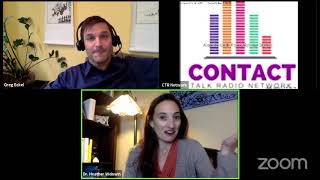
A recorded interview (April 13, 2020) between Dr. Greg Eckel and Dr. Heather exploring health fundamentals from environmental exposures to metaphysical/behavioral influences. They discuss air and water pollution, the ubiquity of industrial chemicals, practical consumer choices (filtered water, organics, grounding), and clinical approaches including detoxification programs, functional testing (food sensitivity, stool microbiome, SpectraCell, RBC minerals), and emotional/spiritual work as part of healing. The conversation emphasizes education, personal responsibility (voting with dollars), and building foundational habits before advanced therapies.
Questions this video answers
April 13, 2020.
naturopathicmd.com (contact via their site / email listed as do@naturopathicmd.com in transcript).
Chapters
All right, we are back. This is Dr. Greg Eckel and what the Health. And I've got my guest on. On Dr. Heather, who is. Is the producer of the Bad Girls Guide to Living well podcast, Naturopathic renegade and overall eclectic physician. That's. That's the moniker I gave you, Dr. Heather.
I like that.
And our topic today, we're gonna. We're gonna do a little off the cuff, the fundamentals from environmental to metaphysics. And we're going to. We're going to see where this one winds up. So I've invited everybody to kind of join in, come along for this journey, because we want to talk about fundamentals today. Dr. Heather. And we're going to talk about influences on our daily lives and our health, daily rituals and practical steps that people can take to stay well in this world we find ourselves in. And, you know, the moniker of my show is what the Health? And it's got a question mark and an exclamation point. And it's typical for this type of conversation, you know, out. I just got in from a lecture that I gave, and there is, you know, we're taking a stand for people's health in this world, and so much so that, you know, they're putting more money into their cars and into their houses and their bodies are falling apart. And I'm wondering if. If you find that. And I'm hoping that we will glean some great fundamentals for everybody out there in what the health land to share with their friends and family. So welcome aboard. First off.
Thank you.
And I will credit you. You actually got me inspired to restart my podcast. So after being on the Bad Girls Health Guide to Health podcast, I was like, oh, I gotta. I gotta get back in on this. Because it's so much fun having these conversations and just sharing this information that we take for granted and we talk about every day. But so many people don't have this at their disposal. And so really getting our information out of our bubble and sharing it with the world is so important. So thank you.
Oh, well, I mean, I guess I started my podcast because I had the best conversations with my friends, and I thought everybody should hear them. And I think the biggest part about our medicine, like, the biggest problem with our medicine is that people don't know what we do. They. They either think that we're just homeopaths or witch doctors or like, they have no idea that most of them have never even heard of a naturopathic physician. And so these conversations that we have about the basics, I'm in the process of writing a book that goes along with, you know, the Bad Girl's Guide to Living well, and it goes for bad boys too, but I think lovely women are a little bit more complicated.
Anyway, so you said it, not me.
It's a physiologic fact. I won't. Yes. Anyway, my filter's on, Cameron. My filter's on. So it's basically like, how do you not get poisoned in this environment? But I was looking up something because I was being a little bit snarky as far as the top 10 benefits of exercise. And Healthline actually said, exercise may help you with weight loss. May, May, May. That was perfect. As far as, like, how deranged is the information that people get in that exercise? Phentermine is probably better. Right. Speed will definitely help with the weight loss, but like, exercise, maybe, maybe it may help you.
Right. And we know now that there is censorship. Censorship is afoot on the big search engines, Google in particular, on, you know, sharing of our information. Anything with natural or alternative is getting really just squashed in the search engine results. Right.
Well, I saw that Google actually counts as a big pharma company.
Yes. Yeah. Alphabet, their holding parent company, has huge stock holdings in big pharma. So it's unfortunate, but folks need to hear it out there. I actually had a conversation with Joseph Mercola about two months ago after the July ranking or algorithm changes on Google, his site that was getting, I think like 15 million visits a month, like one of the largest natural alternative health sites on the web, plummeted down to under 1 million. You know, so it was, I mean, like overnight boom, like disappearing. So that's why our shows and conversations like this are very important and really why I'm encouraging folks to share this information. Because it starts within these conversations and with real people listening to real people and sharing real information of what actually works. So, you know, when we start talking about, you know, how to stay well in kind of the soup that we're swimming in in North America, where do you start with that conversation?
So I guess I've been doing environmental medicine for about 20 years. Started as research. I was doing research for an academic who wanted to combine, like, how as economy speeds up, health suffers. And back then the only thing I could really find was information about asthma and air pollution. Right. But now you can see that air pollution. There's good documentation and data that actually makes diabetes worse. And I love that statistic because it's just you have to bend your mind around it. You're like, wait a Minute. So what I'm breathing is making my diabetes worse. Like, even though my diet doesn't matter, obviously breathing must have some effect on it. And it's just like, you think about the data that is out there and bringing it for people. So where I live, I'm in Sacramento, and we have the 14th worst air in the country as far as particulate matter. We've got, like, our ozone levels are terrible. If you look at our water, you know, there's uranium and radium and testosterone metabolites and, you know, arsenic and everything in our water. And so you can actually find these things. And, like, your Brita pitcher is not getting uranium out of your water. It's just not. And also, like, so when I started doing this research, I basically didn't eat for a year because, like, well, everything's gonna kill me. So, you know, why. Why even bother? I might as well just, you know, drink champagne and. Right.
I mean, sure.
So, you know, who cares? I. And that trying to bring that level of control to people when they feel out of control with these big issues absolutely centers around education. And so go and look up on, you know, tap water resources with the environmental working group, what's in your water, and see whether it's important for you to get a filtration system to protect your kids and your pets and your, you know, your plants, for God's sake. I mean, you're watering your garden with uranium water. I mean, it's a little bit overwhelming in those ways, but, you know, my son has slept in a room with a heavy duty air filter since he was born because, you know, I had access to this information. And then you start on food. So let's just, like, the air you breathe, the water you drink, the food you eat. I do urinary metabolite testing on just about every patient. I have to see what sort of non, you know, heavy metal toxins they're being exposed to, whether it's MTBE from gasoline or plastics or Styrofoams, dry cleaning, you know, rubber components, you know, industrial degreasers. Right? They're all out. So there's 80,000 different industrial chemicals in, you know, use in the United States, most of which have never been tested for human safety, none of which have ever been tested together for human safety, let alone, you know, just being, you know, connected and exposed to all of them at the same time. And we're seeing that lower levels than previously thought are much more dangerous than previously thought when they're alone, let alone it's exponential when they're together. And Bill Mitchell is one of my favorites and he said we are biochemically responsible for every molecule we encounter. And that's a little bit mind blowing when you think about everything that we encounter and what your body has to deal with. And so how do you support that? And so that's why I think that the detoxification, the education about what, you know, foods to eat are better. Better than others even, like if you can't afford, you know, like, food is probably the thing I spend the most money on. Yeah. Really? And I only have one kid, not five. Right. He's four, so he's not a big eater yet. But I mean, my dogs eat better than most people do in some ways.
Yeah.
And it's because, like, I think it's so important for us to have the organics across the board because even though they're not perfect, people are like, oh, well, you know, they're not perfect. They're better than the alternatives.
Well, yeah. And when you really start looking at, okay, well, what do I have control over? Right. So not so much, I mean, I guess where you live, but somewhat. Somewhat. So the air quality, water quality of where you live, not so much so. But you do have on your buying dollars on what you're investing in, basically. And it's either pay now or pay later because oftentimes, you know, I'll hear, oh, it's just so expensive. It's like, I am not sure how to answer that because you're not seeing the end product where it's either you're paying now or you're paying about 100 to 1,000 times more later.
You know what's really expensive? Cancer.
Yeah, yeah. Pain, Dementia. Right.
Not to eat, like quantify pain. Right. I mean, yeah, Right.
And then that long term cost of just not having your health, you know, it, it's like, wow, we're just asking you to move this one lever. Right. It's on food. And just switching from, okay, I'm eating these pesticide laden foods to maybe even just the dirty dozen on the Environmental Working Group site. Right. Of just starting with simple. You know, I started learning about my diet in 1996 and I'm still working on it. Right. It has to be sustainable. It's not like we turn everybody into a monk living in Szechuan Province or anything like that. Nor would we want to.
Right, right. That's why it's the Bad Girls Guide. Like, how do you still live like a normal human being without poisoning yourself?
Love it.
A monk.
Yes.
Yeah.
So it's. Right, so super sexy title. Second, it's a good way to draw them in. And third, you know, it is really practical advice as far as daily living of we make it sustainable for folks. So. Because it can be. When I got into environmental medicine, it was like overwhelming and depressing. It's like, okay, well, we're just swimming in it, so I might as well just inhale. Right. You know, like, that's the piece of it when you're bringing up diabetes and this link to environmental toxicity. And you know, really, people are probably thinking, well, I thought it just had to do with sugars. Right. It's like, well, wow, you know, clean air, clean water. I mean, perhaps the hippies had it right in the 70s of like, let's get back to just some essential, you know, basic, basic tenant rights for people living on the planet. I think if we just come to that, when we look at the EPA and environmental regulations are getting gutted left and right, you have to think, well, what is going on here? Are we just trying to sell more drugs down the road or what?
It's really interesting, and I know that you take this perspective as well, but if you look down from the top and you see every single angle with which our health and well being is being attached act, and it like, it. How could it not be systematic?
Yeah.
Because nothing is safe.
Yeah.
It's not like there's one area where it's like, oh, yeah, you know what? We're good. Like, that's good. That's no problem. It's. Every single element of what comprises health is. Is under attack and is being eroded.
And almost underhand and in such an underhanded way as well. Right. It's insidious.
How could it not be? Yeah. Well, yeah.
So are you suggesting that there's some big entity that's doing this, Heather?
No, no. I'm gonna stay away from the V word too, so that I can live for another year.
Okay, good. Yeah.
But it's like we had a patient who worked for the EPA who was doing monitoring in the ocean waters off the Pacific as far as looking at the radiation coming from Fukushima in the Bay Area. And so they're just watching it go up and up and up and up. And then the EPA was like, yeah, we don't need to check that anymore. And they're like, what are you talking about? Like, it's still going up. They're like, yeah, well, I guess we know it's going up so great next. Right. Like, nothing done.
Yeah.
And as Far as like that big entity, I don't know. But you know, the thing that I tell a lot of people is the only way we really vote anymore in this country is with our dollars.
Yeah.
And so you pay for the organics. And we've seen how things have changed. Like, I know we're west coast and it's probably a little bit slower heading through the Midwest and the east coast, but think about even, you know, five years ago, the gluten free options that we had or the organic sections have exploded. Where I am, I mean, no problem getting organics at any time of the year with a lot of variety. And I know that's not everywhere, but that's definitely a consumer pressure that has been put forth that I think that we need to capitalize on. Because it's the products that we buy, it's the things that we watch, it's what we consume, we vote.
It is. You know, I think, you know, what's coming to me is like it's. There is a new economy that can get created really overnight is. But you know, we're asking for conscious consumption and you know, I think you can get overwhelmed, overloaded and jaded real quick with even that whole concept. But you're right, we're making decisions on energetic flow on a daily basis. And, and we, you know, like, what are your. I was just at a gathering and people were looking at what their, what they were invested in. And you know, these are health professionals and they realize like, oh my gosh, I have stock in tobacco still to this day. It's like, what are you doing? Like, you're making a stand for people's health. And yet that is so incongruent in. No wonder you're not being effective because you've got, you know, you're not on the same page. And that's really what it does take is walking your talk. But it's across the board. Like, I'm as guilty as the next. Like, I still have Saran Wrap in my house. You know, it's like, how do I have that in there? I know about plastics and what they do.
You know, it's so convenient. God, plastic is so nice for some.
I know to put that over the top of the leftover so it doesn't go bad in the fridge. It doesn't touch the food, but there's off gassing, et cetera. So, you know, this is so that's Dr. Eckel who's educated on these things. I still have these items. So it's not like I'm saying, you know, like, oh, pitiful consumers. Like, let's wake up. But it is really, like, it is kind of time to wake up of like, we're on the brink when, you know, we can get really dark. Like, we're, we're a quarter of the way into the show and it's like, okay, I hope people are still listening. There is going to be hope at the end of this tunnel. We're bringing it, you know, we will bring it. But, but this is how insidious the situation is. And when you're, you know, like you're saying, you go on looking at the top 10 benefits for exercise and they say, well, it may be helpful. Right? Or, you know, diet may be helpful. They don't actually say that. Only in diabetes, really, no other health condition does diet matter. It's like, how absurd are we going to get? And, you know, we're called the quacks. So it's, you know, I think it's time just to stand up and say, okay, the emperor wears no clothes. There's a big profit margin keeping people sick in this country. And it's very criminal. You know, we have the most expensive healthcare on the planet, the least health quotient on the planet.
There's population on the planet.
Yes. So it's, what do we do? Where do we start? Help Dr. Heather.
And it's what we do. I mean, it's what you and I do every day as far as the education. And I think that if you put this information in front of people and they can actually look at it and think for themselves, because that is still legal. Is this something that I think is going to be beneficial for me long term to just take a drug until the end of time that basically shuts off a system, you know, or symptom that, you know, is only going to get worse and then I'm going to have to take more drugs. And people know. They know. I mean, most people know. And so what are their, what are their options?
Yeah. Where do they start? I mean, okay, so we know that. I mean, I know it too. But then there is a level of convenience for certain things and old habits and patterns that we've got to go through. One of the things that I've found very helpful is kind of future predicting of looking at. Okay, asking my future self, Greg, okay, how did you get there? Right, because when we look at. I told you we were going to bring metaphysics into this discussion today on talking on environment. Yes. So with looking at, you know, going into the future, because Time is really a figment of our reality here, right? We pretend to be separate in this reality, even though I really truly believe we are one. And time we know is only existent here, right? It's not an eternity. And so there is, you know, all kinds of people can argue with that statement and that's fine. And I'm just letting you know, this is how I think about it. I can go into the future kind of in the mind's eye of looking at and asking questions and then apply those to today. And what I found is the future. Greg, Dr. Greg, he's very healthy, he's got his head on straight, he's really grounded and he's living in a really nice environment. So I'm hopeful for the future even though the doom and gloom of the media and I mean we've got a global crisis that definitely needs to be addressed. But I think we are very creative as a species and we have been through time that for some reason I still remain perpetually and I am a radical optimist on this front that things are going, you know, we have to take action. It's not just going to happen by itself. It's definitely not coming from top down. It happens with conversations like this. And really in sparking that creative thread with conversations and with information, we're not going to shame people into changing, nor should we, because people don't change out of that. They don't change from guilt. Like religions are dead because of that. Like you can't guilt people into doing what's right. One of the best kind of definitions I just shared with my children was, and I'm not an anarchist, but it was Utah Phillips, an old folk, he said once from the stage said, here's the definition of anarchy. He said, the bad people are not going to follow your laws anyways and the good people don't need them. So you know, it's basically, you're not going to legislate people into change, right? It has to come from within. And when you realize it is in your vested interest and your offsprings and your lineage to actually really think about that future self and maybe go and visit and talk to yourself in the future to say, hey, how did you get there and what do we need to do today? You know, be inspired by what comes back to you, you know, so in that, in light of that, I mean that's a pretty esoteric conversation, which, that's why I really brought you on today because we've, we've had a few of these going forward. What, what Comes up for you around that.
Do you remember when John Lennon, I think, was in elementary school, Neil and the teacher asked him what he wanted to be when he grew up?
Yes.
Happy.
Yes.
And they said, I don't think that you understand the question. He's like, I don't think that you understand life. Yeah, right, Paraphrased, I think, but I mean think, what is it that people really need to be happy? And as far as like that future self and that bringing it into the present self. I paid God something like $15 for three rolls of bamboo based, ecologically sound paper towels. And then I got puppies and I thought, this is not a battle I need to fight right now. Right?
Yeah, right.
You know, like I'm gonna go, I'm gonna spend $1,000 on ecologically sound paper towels cleaning up messes. And it's like, choose your battles. What's going to make you happy? But also, I think that we can bring it back to the detoxification here in an esoteric way of. I have never had anyone go through a detoxification with me who didn't shift fundamentally in an emotional way if they were open to it. Right. So you're getting rid of the poisons that are inside of your body, but you also have the opportunity to really look in the mirror and self reflect and get rid of the poisons that are internal. As far as relationships, thought patterns. Have you read. I think it's Joe Dispenza's Becoming Superhuman and seeing his work on disrupting those patterns that we have in our brain.
It'S on the list.
So the book is great as far as, like if you need to prove to yourself that it works, but I don't know if you really need that. I think that just looking at our thought patterns, as far as what's in between us and happiness. Is it that I'm recreating my parents relationship? Is it that I worry all the time about the state of the world and how everything is going to hell in a hand basket and I have nothing I can do about it and the salmon is poisoned and you know, like, I can't even wear lipstick without poisoning my children. Right. Like what? Or is it God, the world is a beautiful place.
Yeah.
Disconnecting from the poison of the television, for God's sake. You know those. My favorite bumper sticker might be Eat beef the west wasn't one on salad, but my favorite is kill your tech your television.
Yeah, yeah, there you go.
Because it's just this way in social media too. It's right. Like you're being programmed with the Matrix, man. It's like you're being programmed to be a consumer and just plugging into their plan for you from birth to death.
Yeah.
And you can either decide that you want to be happy and healthy and, you know, enjoy your life, or you can worry about all of that other stuff that really you might not have a whole lot of control over. And so I think that those brain shifts, if you can recognize that pattern, if you wake up and you worry immediately and then you're like, whoa, let's disrupt this incredible power that comes from that, that as you make that shift, you're going to be making choices that are healthy for everybody anyway.
Yeah, I like that. You know, I think that's what I was kind of getting at with going to future self. It makes a lot of these decisions or so called choices more automatic. Like if you just start focusing on what you want versus what you don't want. Right. So many people will tell you a gazillion things of what they don't like or what they don't want, but they have a really hard time committing into what they want. And as if it's a bad thing that you want something. Right. Like your heart's desire is important and you can live into it. And I think it really does. You know, there's a book, the More Beautiful World Our Hearts Know and Desire, Charles Eisenstein. And he writes really well about this time that we're going through now, between the old systems crumbling and the new vision which hasn't been formulated yet. But I think that through conversations and discussions and really exploring, well, what is going on with our limited beliefs. And it's not just a thought process though. Right. Because we do. I mean, when you feel sick, you feel sick. Right. You have no creativity, you have no energy, you're cranky, you're crabby. You know, like I have to tell my staff here, like we are treating sick people. Sometimes sick people are not very friendly or happy or they're not joking. They're sick. Right. And so we've got to really raise them out of that illness. But it only comes with them making a decision that I'm going to get better. And a lot of times it's hard. Or they've got the pundits and the gurus online saying you're going to have this forever. Or, you know, whether it be Lyme or chronic fatigue or fibromyalgia or cancer, you know, whatever these things are that, you know, there's this big story created around it. I like to say we're the physicians that leave the door open for people for a lot of spontaneous remissions. Right. So on, you know, really couching this into this environmental component and detox, maybe even more the meta level on detoxification. It's not a new term for what the health listeners. But in general, like what. What are you talking about with detox? Because you said there's. You got the biochemical and then you also have the mental, emotional, spiritual realm. Do you incorporate that into a cleansing program?
I try to mean it depends on whether people are really open to it. I think that I have a conversation. I don't do anything specific work as far as, you know, NLP or hypnotherapy aspects of that detoxification. I do recommend that they journal during it. And you know, we check in as far as like what emotions get brought up. Because there's huge emotions when you change anything in somebody's, you know, status quo. And I changed the diet significantly with the detoxification. So it's not just support for the liver and the kidneys and you know, helping with getting rid of toxins and decreasing your exposure. There's also an inflammatory element to it. So you're taking out most of the allergens that you would encounter and then doing a reintroduction. But when you do that, it's like, wait, I can't eat meat and I can't have sandwiches and I can't have grains and I can't have dairy and I can't. Like it brings up all of these feelings that think about how many people stuff their emotions with food so much. Right. And it's just another addiction. I mean, you can gamble, you can smoke, you can drink, you can exercise. I mean exercise, you know, you can have sex addictions and all of these things. But like food is people's go to really. And so like moderating your emotions with foodstuffs is huge. And so as those things start coming up, then we do talk about how to let that go and seeing it for what it is and recognizing that you don't necessarily. People fast for a long time. It's going to be okay if you don't have toast in the morning. You know, it's like, but what does that bring up? You know, is it mom made me toast and it made me feel better. You know, like, what are all of these connections that we have? And I think, you know, as we free ourselves of those addictions, you know, whether it's screens or you know, you name it, right? You know, I recently let something go that. Like a behavior. And I was teasing with a girlfriend of mine yesterday. I'm like, I realized that, you know, every time I had an emotion, I didn't need to stuff it by doing this other thing, right? Like, oh, I'm having an emotion, and it's okay. So that was big. And I've been doing this for a long time and I still feel like, you know, you uncover those layers. So it's a process.
It's awesome. You know, it is really important that we do walk our talk and, you know, we're human as well. And, you know, I think the being on that leading edge and really modeling for what it looks like to thrive, it is. You know, we get really freaked out around emotions, right? Like you're saying there's all a myriad of ways to, you know, distract yourself, not have it, not feel fully into it. And it sometimes feels very scary and unknown. Right. Because it can take you back to old patterns or old stories that you wrote way back. Right. And some could be yours and some could be ancestral as well. You know, it kind of becomes a little bit more complicated there. Yes, yes. So that. That aspect of the ancestral traumas and patterning is one. One thought that I have on. On that topic is why we're seeing a lot more chronic illness. One, we live longer, but also because we have not been taught or it hasn't been modeled on how to have our emotions. Our emotions actually could be our guidance system of, you know, they're meant to be there for a reason. Right. Not to be pathological or, you know, somehow we've gotten this concept of good versus bad emotions, or ones that we're supposed to feel and others that we should never feel. And I think in the healthy human spectrum as a guiding system, and this is coming from a doctor who about a decade ago thought emotions were manipulative. So it is. I mean, I've come a long way here, Doc, and to model this for my patients and really overcome that is. There was a lot of work in there, but it is so much. It's a freer way of being. I call it full contact living of the whole emotional spectrum. Because as far up as you can go, that means as far down as you can go, but it doesn't mean you never recover from it. And somehow we've got like, playing it safe or I want to live in my. My gilded cage. Like, I know what's in here, but it's boring, right? You know, and we're not meant to be like that as a species of. We are that wild. The call of the wild or wilderness. Why make, you know, recommendations for people to get out into nature is because that has such an effect on us. So, you know, it spreads from this ancestral component to personal traumas to maybe the adverse childhood events, you know, the ACE scores. So. All right, so I just unpacked a bunch there. Where do you want to go with that?
We're going dark again.
Yeah. Well, are we.
Adverse childhood events scores?
We need to address that stuff.
Well, we do. Oh, no, 100%. I think that in a couple of ways. You know, I love the nature aspect of what we do. Right. And the more that we see research like, well, grounding or like barefoot walking or even, you know, the Children's Pediatric association said kids shouldn't wear children shoes until they're three and it's like, or five or something like that. It's like, that's just fundamental stuff as far as, like, how our bodies evolved. And the further we get away from nature, the more sick we're going to be. And so we have these, you know, drives in ourselves, you know, that are natural. And it's like women cycling with the full moon. Or we, you know, we talked a little bit about how all of my parasite testing for my clients now on. Right. Is going to be at the full moon because you're more likely to find parasites. And you think about that, that's a scientific fact. And you think about how separate we are from nature, that we, I guess, you know, we don't even know that or you know, that Vitamin D is good now. Right. I mean, 10 years ago, vitamin D was not nearly as sexy as it is now.
Yeah, it was never talked about. Right.
Probiotics. And so it's like, how long do you want to wait until these other things come into being in vogue before you start embracing those aspects of yourself?
Right. And it's really natural processes is what we're talking about. And, you know, we're trying to, you know, get into the tech realm and online in the cloud. Right. As far removed from a reality that you can be. And, you know, the race is on to go. You know, get everything up into the cloud. And then you get the flip side is where forest bathing, which is just a nature walk, is now, you know, a prescribed activity in the Netherlands. You know, like, how awesome is that? But did we really need research to tell us that it's good to be in nature? Like, you know.
Well, we needed it to know that Breast milk was good.
I mean, what in the world, right? So, you know, there you look at, okay, well, what are the regulations? What are we, you know, what are the recommendations? How do they change? And, you know, people get confused. And when you get into a confused state, you don't make any change. And so, you know, really keeping it super simple on why I wanted to call this discussion fundamentals. Right? Because we just launched off all over the place there. So really railing it back in on looking at, you know, how environment affects us, but also how, how we're meant to be in the environment. Right. You know, one thing that comes to mind is the, the astronauts actually have a certain hertz. I think it's 4 MHz, which is the resonance of the planet. They have to pump that into the space station and into the rockets because they get very sick when they're out of touch with Gaia. Right. With the residents. Yes. And so it is like, it's even more emphasis to like, put your bare feet on the ground. Like, I have so many times I'm. People are like, but it's muddy outside. It's like, you know, put your feet on the ground. Like, we wear rubber soles, so we're not, we're insulated from it. And if you're having anxiety, insomnia, you know, agitation, mood swings, like these things are, there is a lot of credit and credence and research to support grounding as a thing. And by getting out in, you know, I always ask patients like, okay, where do you feel best? By the ocean or up in the mountains? Now I live in Portland, Oregon. We have those options, right. This is not downtown New York City where you, it's like, okay, Washington Square or Grand Central Park. So, you know, you have to pick your nature. It doesn't necessarily have to be a wilderness area, but still Earth is Earth, right? So we can get in on that. Cycling this, though, into a discussion around detoxing. You are, you're doing these pop up, really interesting, like, pop up clinics around the country. And I'm thinking you're addressing a lot of this for folks and you're doing like deep healing in like concentrated times. So what, where did that come from?
I have a colleague, Dr. Steve Young, and he has the dream to help revolutionize health for a billion people. And so much of it is, you know, education based, obviously. Right. But he's a doctor of physical therapy. And so he's got like the movement down. And then as he's learned about different aspects of health through his whole career, and, you know, just the evolution of self. I think for those of us in medicine that are able to or have, like, the bandwidth, there's an evolution of our own health that I think we embrace often. And he really did. And so we've got NLP elements, we've got the biologic detective work, which I do. And then we have, like, the structural, physical. How do you move? How do you move through the environment? I mean, even think about how we're sitting, right? And I mean, just having simple posture during the day can be a bit of a workout for people. Then you can get into feng shui and are you surrounded by, like, dirt and, you know, things that remind you of your, you know, grandmother that you never really liked, but you inherited it and it's worth money, so you should keep it. Right. And so, like, all of these aspects that come together, and he's really a visionary about that, and I get to enjoy his process. And we work with groups as far as educating them in this way, as far as. Unfortunately, Greg, what we do is counter to basically every cultural process that's putting pressure on people to exist. Everything that we do is counter to what convention wants you to do. And so I guess that's why we're naturopathic renegades or whatever, like medical renegades, because, you know, what we do is beyond the realm of, you know, conception for a lot of people. Like, wait a minute, you balance your energy systems how? And you disrupt your thoughts how? And you can take a supplement that can increase your testosterone. That's a good thing. It doesn't cause cancer, you know.
Right, yeah, right.
We see, you know, Steve had a. Had a client who I think he increased his bottom line by $5 million in a year because he had enough energy to do so.
Yeah.
Talk about, like, quantifying, you know, energy or not being in pain or, like, clarity of thought. And we do that in, you know, trying to give these options of health and wellness where they're not necessarily always available. Right. On the west coast, you know, I could probably hit a golf ball and hit an alternative practitioner right now. Right. But in the middle of the country, not there. Right in the south, not there. And even if you can come across them, everybody has a little bit of a different philosophy, I think. And so it's really neat. With Dr. Steve and I, we share some good philosophy about what human potential really is. Steve's plan is to live to over 150. Well, right. Because we could, you know, like, we've gotten rid of infections and accidents that killed Most people. Right. So what's the limit of our body? If you are taking care of yourself and you're waking up feeling happy and you're recognizing the thoughts that are poisoning your life. And you talked about the self fulfilling prophecies that come down from like the white coated priests. As far as you have cancer, you have six months to live. And so many times it happens. Yeah. How do you disrupt that ritual? As far as, you know, people identifying their own inner power. And so that's what I guess we're doing.
Nice. Yeah, Love it. So what testing do you take on the road or you have some specific ones that you think, oh, these are basics. Like this is. The data that I gather from these things is so valuable.
I'm so lucky because I get so much data.
Yeah.
Steve and I are data hounds. And so I look, you know, I guess as far as like my. If I were going to make a wish list, right. Starting from children. And I've done like genetic analysis on my four year old because I want to know how to optimize his epigenetics, you know, with what I can feed him and you know, does he need more bioflavonoids to be more successful? And so I start with that. And I always do a food sensitivity. Even though they're not perfect, I think that they can blow out some of the inflammation. My philosophy is there's three main drivers of disease. Chronic disease. Right. So it's like inflammation, toxicity and stress. And so if you take inflammation out, you're making huge inroads. And those tests, I think I run the Oxford LEEP test and so I think it's about 80, 85% accurate. And then with the elimination and reintroduction, I think you can find the rest.
Nice.
I was in so much pain in my early 30s. I was taking Vicodin and Valium to sleep at night. And I found out that I was sensitive to food, that if I don't eat, I'm not in pain. Isn't that wild?
Yeah, that's pretty huge.
It was huge. And so that made a really big impact on me. So I do that. I look at the microbiome as far as stool testing to see do you have bad nasties in there we need to kill. And what kind of balance do we need to get in your gut? Because it all starts in the gut. And do you have leaky gut that we need to heal up so that you're able to build yourself out of, you know, what you're eating or are you just causing more Inflammation, because you're not digesting well. I do advanced cardiometabolic lab work. And so I look at the size and the shape of the lipid, you know, particles. I look at inflammation, whether you're forming plaque. Because standard lipid tests are absolute crap. They are just crap. The American Heart association has said, like, well, you know, in 20 years, like, if we're looking at like 1999 to like 2019, like, what are the inroads we made in, you know, avoiding cardiovascular disease? Yeah, basically less people smoke. Great. Like, that was our win because diet has nothing to do with it. Right, right. And so anyway, I do that advanced.
Tell me how you really feel.
Yeah, right. Idiots. Then don't even get me started on statin drugs. But I want to see what your heart attack and stroke risk really is. And then how does it feed into your pre diabetes? A third of Americans, crazy numbers are like pre diabetic and they don't even know.
Yeah.
I can look at you and tell you for the most part. Right, right.
Yeah.
And so there's that aspect. And look at hormones, you know, sex hormones as well as thyroid hormones. And then I will usually look at the toxicity levels either before or after detoxification. And a lot of this is nice data to have because we can track long term. But also as far as, like the education for people and motivation that comes from it, it's huge. And so look at you and tell you you're pre diabetic. You should probably stop eating so much wheat. Right. Or greens or sugar. And people are like, yeah, yeah, yeah, sure. Right. But you give them a lab test that shows them that. Oh, yeah. And so sometimes I will do neurotransmitters. Depends.
Okay.
I think that's right. I get a lot of data.
That's a ton of data. Yeah.
So that's nutritional status. Nutritional statuses.
Is that the oats test or what do you use for that?
Like oats? I don't.
Yeah, that's all right. I don't run it either. But I'm wondering what functional nutritional.
I like Spectracell.
Ah, cool.
I love the way that they present their data. I love the philosophy of how they do the test. Yeah, but. And I would never run it by itself. But I think that when you combine it, because I also do an RBC mineral through red blood cells and that'll also give you the like, acute exposure, you're getting to heavy metals. So that's nice. Like two bangs for your body.
Yeah.
But then the Spectracel I think is nice Because I can look at it in conjunction to what the nutritional analysis is. Look. Is doing genetically as well as seeing. Like, and that's a nice test just to show people, look, you need more of this functionally. You should take your vitamins, have that conversation.
Because you can see it right here on this lab test.
Right. And so sometimes, I mean, sometimes the labs are run more for them. Yeah, for me as far as motivational piece. But I like data.
Nice. And then so do you have a way to collate all that data or how does that get punched in? You guys have a program you're working with just up in the brain. Okay. That major.
Their goal achieving machine put me into AI.
Nice.
Can't wait to pick my outfit.
But yes.
That'S down the road as far as that number crunching. As far as like, how do you look at everything in that big. That's one of the things that I'm good at.
Oh, love that. We've just migrated. Part of my takeover of healthcare plan so I'm really aligned with you and Dr. Steve is they have a treatment wizard that pulls. It's basically creating our own neural network in Jarvis for our clinic of protocols. And it pulls all of the protocols together for certain conditions. So you've got to put the data in properly, but it'll pull it together.
Then can you talk to him about this?
No, but I'm planting the seed because this is. It really is the future of health care. And I'm game like, this is what we're doing.
And so what I do is fundamentals. And I think that you and I would agree in an esoteric way that our spirits or what it is, whatever kernel of magic that we have from when we open our eyes at birth to whatever disappears when we die. Like that kernel of whatever it is.
Yeah.
The capability to heal whatever happens to the human body.
Yeah.
But you have to be a monk in the Sichuan province, you know, to really harness that in a lot of ways in life. Yeah. And it can be done. I mean, I think meditation does it. I think that different mindfulness practices do it. You know, like energetic shifts when you're open to them. Emotional work. Like, that's why we have to be. We're holistic in the most fundamental ways that you can. Like, you have to hit all of those parts. But the part that I do is I make it a little bit easier for you to make the serotonin so that you feel a little bit easier and happier in your body. You're sleeping a little bit better. Your Energy's a little bit better so that you can devote that extra bit to like sparking your spirit for that healing. And so I think that that's how those pieces fit in together. And what I do is fundamentals. Right. Then we also have the opportunity to refer out to people that do more higher grade interventions like you do as far as stem cells and like all the IVs, peptide therapies. And I just got back from a conference in Seattle and it was for integrative oncology. And I think the take home that I loved most because I don't practice in that realm anymore, is that if you don't have the fundamentals in place, none of those higher therapeutics work as well as they could. And so I'm happy to be working with the basics, with people, because those are the changes that make it less likely that you're going to be sicker down the road for the most part. Yeah. What's really your health insurance?
Yeah, it's huge. That is foundational work though. The way that I describe that is you don't want to be building on quicksand. Right. If you don't have that base knowledge, that foundation in there, the fundamentals that you're talking about, it doesn't matter what fancy therapeutic we lay on top of that. We're just not going to get as lasting results, as quick as results or as good of a result. And that is like one of the goals of this show. And what you're up to and a lot of us are really working on is laying the groundwork of information. Like all of this information is out there. It just. You don't know how to implement it. You don't know well which are the essential pieces of this and what actually works in the real world. Right. There's a lot of theories, there's a lot of speculation, there's a lot of like. Well, you know, we think it's this and. But we don't really, it's not tried out. These are tried and true therapies that you're talking about, right?
Like drink more water. Yeah. Right.
That is filtered, right? Yes.
Chronically dehydrated.
Yeah.
Better energy, you'll detoxify better, you'll lose weight, you'll have better. Less inflammation, your brain will be clearer, you won't. You know, usually by the time we feel hungry, we're actually thirsty.
Simple, simple.
And so it's one of those little things. But I think that one of the basics that I keep coming up against is that we can tell people all Day long, little things to do. Like I have a Fitbit that will buzz me to get up and move or like remind me when to go sleep. But if you don't look at that future self and decide that you're going to make whatever those changes are or where do you want to be if you don't make that choice, we could be up on a table with a cattle prod and people aren't going to necessarily do it.
Yeah, totally. You know, just one tidbit, you know, coming down to the end here. I recently I started viewing myself back as my athlete self and I like to eat. I mean, I live in a foodie town here in Portland, Oregon, and I basically changed nothing other than that thought process. And I'm down seven pounds. I still eat, I still have. Sometimes I have dessert, you know, and I'm down. I really changed nothing other than that thought process of Greg is an athlete and he's fit. And I mean, over. It was like two months. I just got on the scale the other day. I was like, I am feeling pretty good. Let's see, £7. Like, I didn't change my behaviors, really. And so these simple, these are simple things. Right? I'm not saying that's going to work for everybody, but you look at people.
That, you know are infertile for years and years and years, and then they finally are like, you know what? I'm not going to go crazy about this every day.
Yeah.
Boom.
They get pregnant. Yeah.
Yeah, it happens.
Any last closing remarks for the listeners? For what? The health.
Be gentle with yourself. Be happy. Treat yourself like you would treat someone that you really loved. Right. I mean, we so often will spend whatever on our kids, we'll spend whatever on our dogs, you know, our cars, you know, our lawyers. Right. But we won't spend it on ourselves. You know, whether it's time or money or, you know, just the love that you give. And so I guess that's my closing is that just love yourself a little bit more.
Awesome. Yeah, and unabashedly so. Yeah, we all deserve that. Thank you for that. I put all of your contact information are in the show notes. I want people to tune into your podcast as well, because it is really rad. You have some great conversations over there. I love the work that you guys are up to with you and Steve on these kind of entrepreneurial pop ups and, you know, and just the education on this foundational work. And oh, the one thing I wanted to mention. So you, you did mention you can get this testing no matter where you are around the country. Right. So they can contact with you and you can order that up and do some remote consults and things like this. Right?
It's wellness, right?
It's wellness. Yeah.
It's education and it's wellness. And so you can do@naturopathicmd.com and you can contact us through there and we can help anywhere in the country.
Lovely.
I even have workarounds internationally.
Oh, that is so sweet. I might have to talk to you offline around that one. So thank you Dr. Heather, for coming on.
Good to see you again, Dr. Greg.
Likewise. This is what the health if you're just tuning in now, you missed a really good show. Go to NatureCare's clinic and go to the podcast button and you can listen to it all. There's Please be sure to leave us some great reviews out there. If you're enjoying the content, share us with your friends and family. What the health Tuesdays from 2 to 3pm Tune in. See you next week.
More from Dr.

EP. 197 Brain Regen: Harnessing Essential Oils for Cellular Health and Longevity

EP 196 WTH?!? Unlocking Cognitive Health with Your Genetics with Elwin Robinson






EP 190 WTH?!?: Mind-Body Mastery: Harnessing Movement, Breath, and Sound with Jeffrey Williams

EP 189 WTH?!?: Nourishing Connections: Lynne Bowman on Family Meals and Healthy Living


EP 187 WTH?!?: Clearing the Air: Dr. Kevin Smith on Nasal Health and Migraine Relief