Ep 32: WTH ?!? An integrative approach to ALS with Kenneth Sharlin
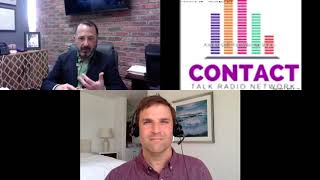
Dr. Kenneth Sharlin discusses functional medicine approaches to ALS, a progressive motor neuron disease affecting about 15,000 Americans. He focuses on inflammation and oxidative stress as central mechanisms, with interventions targeting nutrition, sleep, movement, and infection screening. Emerging stem cell therapies like Brainstorm's show promise but aren't yet curative.
Questions this video answers
April 13, 2020
15,000
Two (speaker said 'really only two' FDA-approved drugs)
Brainstorm Cell Therapeutics
South Korea (company referenced: Corestem)
Chapters
Welcome Everybody. This is Dr. Greg Eckel on what the health. And my esteemed guest and colleague is Dr. Ken Charlin. He's an MD, PhD, IFMCP, is board certified neurologist, consultant, functional medicine practitioner, assistant of clinical assistant, clinical professor, researcher, author and speaker.
Woo.
Welcome aboard, Dr. Charlin.
Thanks, Dr. Greg. Glad to join you guys.
I love our conversations. You know, I've got you on the upcoming Brain Degeneration summit and I want to share that with the folks of.
What the health as well.
We're going to do a little bit bigger, deeper dive. You have this focus on neurology. You've got a book out too that I wanted to mention that is the author of the number one bestseller, the Healthy Brain Toolbox. It's a neurologist proven strategies to improve memory loss and protect your aging brain. You know, this is a topic near and dear to me. I love talking about different facets of brain health and in particular, we picked a doozy of a topic today which is an integrative approach to als.
Yes, very important.
And I wanted to talk to you because this one is really, I mean, I was talking to my partner over lunch just saying, you know, about ALS and you know, it's a tough diagnosis to get. Yeah, it's a tough diagnosis to treat. And a lot of times there's a lot of overwhelm and just pure depression. Right. Because it's a death sentence at this moment in time for a lot of folks. Now, we know that's not the case. Like we've, I think there's been over 43 documented cases of people that were clinically diagnosed and now no longer have evidence of disease. And I want to talk to you about your approach, this functional integrative medicine approach. And overall, I think what we'll do, we're going to start with what is ALS and how is it diagnosed and treated currently?
Okay, for sure. Als, a lot of long words. Amyotrophic lateral sclerosis. And it's actually a disease that's been known about for a very long time.
It goes back to Charcot. In fact, in some parts of the world it is known as Charcot's disease. The French neurologist in the 1800s first described the condition.
In the United States.
We often call it Lou Gehrig's disease. It's probably more commonly used or just als. There is an ALS association just like there's a Parkinson's association and Ms. Society.
So it is a tragic disorder.
It fortunately affects far fewer people than diseases like Alzheimer's. Parkinson's and Ms.
Yet it does affect many of us, unfortunately.
And there have been many prominent individuals who've passed away from the disease, besides Lou Gehrig, of course.
People like I love jazz.
So the famous bassist Charles Mingus died of als. We have people. For example, Sam Shepard, the playwright and actor, not too long ago died of ALS.
So it's around, I think, something like.
15,000 cases in the United States at any given moment in time.
But it's a disease that's characterized by weakness. Weakness is the prominent symptom of als, and it's a weakness that is driven not only by the signals coming from the brain that travel down through the.
Spinal cord, but by the signals that are leaving the spinal cord, going out to the arms and the legs. We actually call that upper and lower motor neuron disease.
Got it.
And what else? So, I mean, it's a progressive condition. What's the timeline? We were talking a little bit before we got on the podcast, around, you know, what are we doing in an inter. What's our goal with integrative medicine? What benefits? What have you seen with improvements of quality of life? You know, of course, you know, in integrative functional medicine, we kind of get, you know, we'll see spontaneous remissions that we can't claim cure because we got an n of 1. However, you know, I would like to think by improving the vitality of the individual, we're stimulating the innate healing ability of the body, and we're influencing some beneficial outcomes.
Yeah, I would 100% agree. So we do have to understand the disease first and what's going on. It can be very rapidly progressive in some individuals. There are individuals who survive beyond the.
First couple of years after the diagnosis. That's not terribly uncommon.
The mortality at 5 years is quite high.
Few people live beyond 5 years with disease. So it's definitely something that we want to catch early. The person is starting to develop weakness.
Loss of muscle mass, possibly spasms, what we actually call spasticity, maybe even some changes in personality or mood or memory.
Because some people with ALS can have changes in their brain, in the frontal lobe and temporal lobe areas that go along with the weakness that they have.
So if a person is developing a.
Progressive weakness, this is the time to definitely not only see your regular medical doctor and find out why, but.
But consider seeing a functional medicine doctor.
Who can help you address those root causes.
Very simple answer to your question, though, is if we look at one of the treatments that is approved. There are very few approved treatments for.
This condition, really only two right now in the United States are FDA approved.
One of them is basically an antioxidant. And as a naturopathic doctor, you probably talk a lot about this thing called oxidative stress. So it isn't the only mechanism at.
Work in this disease.
But it is important to realize that we are treating the disease with an FDA approved drug that's basically a fancy antioxidant.
So we're getting at a mechanism that's very familiar to most of us.
Interesting. What other underlying causes do you see in your practice or what's your current thought process around ALS as far as other things that contribute into its development?
Yeah. So let me, if I may just give a little bit of a backstory. I've spent the last couple years unraveling things like multiple sclerosis, Alzheimer's. We're talking about that in the summit, of course. And there's been very good work by other people like Dale Bredesen, Terry Wahls, other people like David Perlmutter, who talk.
A lot about all of these conditions.
And, you know, it occurred to me, and I have a lot of people with ALS come and work with me.
Through my functional medicine program called Brain.
Tune up, that the principles that we use to treat conditions like Ms. Or Alzheimer's should be applicable to als. It seems like far less is known about als. I've spent a lot of time digging through the literature, and make no mistake about it, there is a large amount of literature, but really deeply understanding this.
Condition from the root cause level still is a little bit of a mystery.
There's a lot of puzzle pieces. It's almost like going to the store and buying that thousand piece jigsaw puzzle.
And then just dumping the pieces on the table.
It's like, oh, gosh, I know all the pieces are there, but it's going to take a lot of work to.
Put all these pieces together.
And that's been a project of mine.
Over this past year to really start.
Start to deeply understand this condition and what are the main mechanisms involved and.
Where can we make a difference as functional medicine practitioners?
And what's interesting to me, among other things, is that one of the first, most recent set of articles that I've been exploring, besides this familiar term, oxidative stress, and you'll know this other term right away, is inflammation. It turns out that inflammation, or what we call neuroinflammation, plays a key role as we work down the functional medicine tree. It's an image that's used a lot by functional medicine Practitioners from those distant branches that are really the names of these diseases toward the trunk to understand.
The main driving factors, then ultimately what's down in that terrain and the soil and the roots, those root causes.
So it turns out that inflammation does appear to play a key role in this disorder. And so if we can then understand our patients in terms of things that are driving inflammation for them, it appears.
That we can make a difference with their condition.
Interesting. So what in your program, your brain tune up, you apply that in with all neurodegeneration because it's that. That kind of tree analogy of going down. So on the root causes or what do you see as main contributory factors, or, you know, I think levels of toxicity we've seen in the research.
What else?
What are you seeing?
Right. So, you know, I decided, I was a board, I am a board certified neurologist, but I decided that I would limit my practice to neurology. I think it's a really important message as we get into this ALS discussion, because I think if we look at conventional medicine in general, most of society has accepted the fact that if you.
Have a heart attack, just as an.
Example, that part of your recovery from a heart attack is what we call rehabilitation cardio rehab. So what does that involve?
It involves diet, right? Your cardiologist is going to work with.
You on your diet, exercise, maybe some fish oil, right? Some. Gosh, that starts to sound like functional medicine. And we kind of understand that when it comes to the heart, but it's really important to say, hey, the brain is absolutely no different. So my message is that whether we're dealing with als, whether we're dealing with.
Alzheimer's or Parkinson's, whether we're dealing with.
Migraine or seizures, we have to fundamentally.
Be thinking about the same types of strategies.
Identify the things that drive inflammation, identify the things that drive oxidative stress, understand that person as a unique individual. What are the factors that make them different from the next person, even if they have the exact same diagnosis, working with the person more than we're actually working with the diagnosis. But the really important message, of course, is that if you have a diagnosis.
Like als, you can get help.
And so we've helped quite a few people through our five pillar process in our clinic to ultimately get some control over their als. I mean, I think you said something really important in the beginning. Is this such a terrible diagnosis that.
When you hear those words.
The next temptation is to sort of give it.
Up, throw in the towel.
We treated a patient, for example, very early on in my functional medicine program, who is a public individual, very public.
About his diagnosis of als, in fact, has a foundation to raise money for ALS research.
And he had the means to travel anywhere in the country, really anywhere in.
The world to get care. He did.
So he would go to the Mayo.
Clinic, and he'd go to Massachusetts General, Harvard, and he'd go out to Johns Hopkins University.
And he said, you know, these are wonderful institutions.
They were absolutely first class.
But the thing about them when I go there is they basically, they want to test my strength. They have me do something called the ALS Functional rating scale. And what they're basically doing is they're connecting the dots over time and they're plotting my downhill course. They want to know, are you worse?
Are you worse? Are you worse?
That's what the visits are all about.
Are you worse?
Today, what we want to do is we don't want to dismiss any of the importance of all that.
These are very important doctors and researchers in hospital systems.
But we want to say, look, it.
Is important to track this disease.
Tracking is key, but tracking can also.
Be about where can you make improvements, where can you make changes?
So one example that we can talk about is diet. You know, it's a very fundamental thing. It's very kind of grassroots functional medicine concept food. But it turns out that it's actually a really interesting subject when it comes to als. One thing that those who are listening to this podcast may find interesting is, you know, right now we're in this sort of cross praise over going keto. Everybody should be on the ketogenic diet. Well, what is the ketogenic diet? The ketogenic diet is, of course, it's a high fat diet and all that stuff, but it's a diet that really tricks our body into thinking it's starving. The thing about people with ALS is that the tissues affected in ALS are.
Very, very high energy demand.
So one of the things that appears to be the case is that if you take somebody with ALS and you do not give them enough energy. I know we don't often like to talk about calories, and we'd rather talk about nutrient density, but if you don't give them enough energy, if you don't give them enough calories and nutrients, they.
Will actually get much worse very quickly.
So things like a ketogenic diet may.
Not be such a good idea for someone with als.
Now, it doesn't mean go out and eat a bunch of junk food and.
Sugar, because that's obviously very inflammatory as well.
So in our clinic what we do is we actually really watch carefully on that nutrient density part, but the amount of food, the energy density of the food, not just because fat happens to.
Be very energy dense macronutrient, but actually eating enough.
I don't know if you've seen this come in all the time. And there's nothing wrong inherently with their.
Choices of food per se.
They're just not eating enough. Like, dude, you got to eat more if you want to make yourself healthy. This is not the time to starve yourself. So it's very critical take home message, especially for those who do a lot of self care. We have this podcast here, there are blogs out there, a lot of folks who want to get on the Internet, see what they can find out, see if they can take a few supplements and do some things on their own. But what I'm saying here is when it comes to diet, we have to.
Be very, very careful because that can be a really important point for some.
I love you stressing that food is our best medicine and it is crucial. I mean, I kind of call ketogenic diet the flavor of the month. Right. I used to work at, I'm a librarian, undergraduate and in graduate school and the medical school. I worked in the Libra. And you go and you look at how many different diet books there have been through time.
Right.
It's amazing. Everybody's got a different take on it. Yes, ketogenic can be very powerful if implemented properly. And it's not a be all, end all diet. And I am with you, Dr. Charlin. I see so many folks that come in with basic nutritional deficiencies and if you don't have the basics met, it doesn't matter what kind of fancy protocol we put on top of that. You're just not going to get any propulsion going in any direction.
Right.
So that I thank you for stressing that because food is our best medicine. As the listeners of what the Health know, I'm very passionate about that. All new patients get a diet diary. I say I'm not a judgmental being. I'm one of the least judgmental beings on the planet. So be brutally honest on that thing. So definitely, if you're watching this and you, you have ALS or other concerns of neurodegeneration or even on your brain health, please know it sounds very simple like, oh, I'm just going to change my diet, but it can have some profound impacts on your well being.
That's right. It turns out that people who are underweight with this disease tend to have a worse prognosis so you actually need to really maintain that weight. Doesn't mean be obese, but you've got to maintain that weight, which in part.
Is getting those nutrients down.
I became interested in this story of ALS through the work of a, I say a well known research doctor. You may or may not be aware of him. He's about a generation or two before us, but his name is Roy Walford. A lot of folks who were following the type of information that you share in your podcast, and our colleagues probably have heard of something called the Prolon diet, the fasting, mimicking diet.
Dr. Valter Longo is at University of Southern California.
Well, Dr. Longo was actually or is a protege of Roy Walford. And Roy Walford's story is absolutely fascinating. And if I had been around, I mean, I'm in my mid-50s, but if I had been doing what we do now, say in the 80s and 90s, Roy Walford would have been king. So he actually wrote a book called.
The 120 Year Diet.
He was a pathologist and a major researcher in the area of aging and understanding the underlying biological mechanisms of aging. He was at University of Southern California. And Roy Walford was one of these very colorful characters. He was on all the talk shows and radio shows. You know, they didn't have podcasts at that point in time, but you know, Larry King Live, that kind of thing. He was famous for his calorie restricted, nutrient dense diet that he was convinced.
Was going to allow him to live to 120 years or longer, potentially.
And it is in fact true that across many, many species, if you restrict calorie intake but maintain nutrient density, that whether it's fruit flies or whether it's mice or whether it's rhesus monkeys, they.
Do actually live longer.
And some of the biomarkers that tell us that this type of approach works are also true in humans, which is really why the prolonged diet is important, why Dr. Longo's work is important beyond.
The commercialization of that diet.
Well, Walford at one point in time had an opportunity to join a team of what they called pteronauts. Okay, These were seven or eight scientists who agreed to enter a structure that's located in the Arizona desert called the.
Biosphere, or Biosphere 2.
This is a completely enclosed system.
I definitely encourage folks to look it up. It's sort of very Star Trek ish, if you will. It's very sci fi.
And they even had their jumpsuits like they're going to outer space, you know, and they didn't short of helmets, they.
Definitely look like astronauts.
And they, they agreed to enter this.
Structure for a period of two years.
It was a completely enclosed structure. The idea was that they would create these ecosystems within this structure and they even, they would have like a rainforest and a desert and you know, and all that kind of thing. And they had farm animals and grew their own food. And it was supposed to be completely, you know, self serving. Yeah, yeah. And, you know, this would be what, maybe if we colonized Mars or something like that. Right. That we would create and that's how.
We would live on Mars.
Well, it turned out that there were.
A lot of problems within this biosphere.
Now, remember that Walford was already a pretty thin guy because he was practicing what he preached and he was already calorie restricting. But he went into this biosphere and they quickly realized that they were not going to be able to produce as much food as they thought they were.
Going to be able to produce.
So all of them were forced into this calorie restricted diet for an extended period of time. And even though he was very thin.
He got a lot thinner in there.
And then some other things happened. For example, we know that trees take in the carbon dioxide, of course, and they put out oxygen.
And we in turn take in oxygen, put out carbon dioxide.
So this is that symbiotic relationship with.
Plant life that we have.
Well, there were problems within the biosphere where certain levels of gases built up. And this included nitric oxide levels that got very high. Carbon dioxide levels got very high. In fact, at one point they sort of had to cheat by pumping oxygen and into the biosphere because levels got so low. Well, Walford, during his time in there, started to display some unusual behavior and almost looked like he was drunk the.
Way he was walking.
And when he left the biosphere, it didn't really improve.
And at first I thought, well, maybe he's got, had some back problems.
Maybe it was his back. He had back surgery. Yeah, the pain improved, but his walking.
Continued to get worse and he started to look like somebody who'd actually had Parkinson's disease.
Well, it took several years from the time he left the biosphere till the time that his diagnosis of ALS was made.
But in fact, Roy Walford did have ALS and he died a few years later at about 79 years old.
So here is a man who, you know, researched aging practice this calorie restricted diet. He's truly amazing, a hero to a.
Lot of people and for good reason, and yet contracted this disease, this terrible disease. And didn't even come close to 120 years.
So that story really fascinated me, and I wanted to know more about it. I wanted to see if I could unravel some of the reasons why Walford may have developed als. So, you know, breaking it down. Of course, none of the other ternauts developed als, so we know that there's some genetic predisposition. But most cases of ALS are considered spontaneous.
So it's by far not solely a genetic disorder.
But genes probably play a role. Don't we say that the genes load the gun, but the environment pulls the trigger?
Pulls the trigger, yeah. Yep.
So important to realize that now. Decreased calorie intake, could that have played a role?
Possibly.
So possibly. I have another patient I saw in my clinic who became symptomatic. I'm not saying it's caused as als. It became symptomatic immediately after finishing extended water, fast. So I actually think that possibly plays a role. Now, what about these toxic gases that.
Built up in the biosphere?
Could they have played a role? Well, there is some evidence that nitrous oxide may play an important role in triggering oxidative stress inside the cells and promoting this disease. So there is that theory of als. Could other factors. Could stress play a role? Certainly was a very stressful environment within there. We do know that aside from all of Walford's story that, for example, people who are more likely to develop ALS.
Have had some head injuries, particularly soccer players, soldiers involved in combat blast injury type of victims. They are at increased risk of developing als.
So there are, in fact, things that we can identify, and we can use Walford's story as a case example of can we understand what happened to him.
So we can understand more deeply how we can approach the problem?
Again, circling back around, it can come.
Down to understanding the things that drive inflammation, understanding the things that. That drive oxidative stress. So what else besides food?
Right.
What do you.
What do you look for in your patients?
Do we.
Well, for all chronic neurodegeneration, heavy metals, you know, we're storing them in our fat.
It's a known trigger for a lot of oxidative stress and inflammation. And I just find if they're there, you got to deal with that because it'll store. It's a showstopper for everything else.
Yes. Heavy metals and chemicals in the environment. Probably huge, you know, huge neurotoxins, no question about it. So we have to address detoxification. We do have to look for chronic.
Infections that may play a role.
You know, we still have to look at the, the other biotoxins like mold.
Or Lyme, you know, Lyme disease, that.
Can mimic a lot of these symptoms. Right, right. So do you have, you have a workup before people come out to your clinic? Are you working them up or how are you doing that?
So, because I'm a neurologist, if the diagnosis has not been made, if somebody's coming to me because of progressive weakness, we're gonna figure out what's going on first. And I may be the one that.
Ultimately bears the bad news to the.
Patient, but I can do all that basic workup. A lot of people who come to me for functional medicine already have that diagnosis, and they're looking for solutions to the problem because their regular medical doctor sort of tells them, well, nothing I can do.
Yeah.
So. But that's it. So we put them through this program. We do investigate heavy metals. We do investigate things like mold and toxins. We look into other things like hormone levels, nutrient balances. We've talked about. That's very key. You get a good, just a good history of things like sleep. How are you doing with sleep? You know, how many folks say, well, my food is dialed in. They say, how do you sleep?
Oh, terrible. Can't sleep.
Well, that's not going to, you know, allow for healing if we can't get sleep.
Taken care.
Right.
We still have to work on that stress resilience piece.
We have to make sure these chronic diseases, these are diseases that are capable.
Of producing a tremendous amount of loneliness.
And it's a very counterproductive way to exist because you do need that support system and you do need a sense of purpose when dealing with these illnesses. So we really want to talk to our patients also about their connection with others. Who's their support system, who are they working with, and how are they framing their life at this point moving forward? Because, you know, we're trying to improve quality of life. We are trying to extend life with quality of life, but we're not saying at this point we've found the cure to als. So our patients do appear to be living longer. They do appear to be more stable, if you will. That's good. But I believe it's because we've addressed.
That whole person includes that mind body connection as well.
What are you finding, like, biggest levers.
To push on for your patients? Have you found certain things to be. Is there any trend or any similarity? I mean, I know it's vastly different for everybody that comes in.
And, you know, you're seeing enough folks.
To say, well, maybe there is a little bit like I'm seeing more in the metals camp or more with, you know, their stool analysis was whacked is the technical term that we use here. So, you know, along those lines, are you seeing any trends or any themes that are emerging?
I can't say that I really am seeing specific themes in the sense that everyone truly is unique. So the way our program works and we do don't do a huge number of stool studies, I'll do them occasionally, but I have a very comprehensive panel of labs, primarily involves blood, a little bit of saliva as well. So everybody's put through that same panel of tests. But everyone also meets with myself as well as my dietitian, my movement person, my health coach, who does a lot of kind of mind body type work, because we need to evaluate each piece.
Of that puzzle for each different person.
So we absolutely check for all of those things. And again, I can't say that I have necessarily lumped them together in such a way that I can extract data.
And say, well, here's the trend and here's the trend.
Sure, got it. What about.
There is some promising research coming out.
Of Israel on regenerative stem cell therapies. They have a third phase trial going on over there.
Yeah, well, actually it's in the. So the company, as I understand it, is called Brainstorm Cell Therapeutics and it's based out of Israel or that, you know, that's where the original research was done. But their, their work is being done in the United States now. They are in phase three for als. They published a letter not too long ago that basically said they had entered into discussion with the FDA for an.
Approval track following the completion of their.
Their phase three trial. So they are actually doing this work in the United States. They put a bunch of Novartis pharmaceutical administrators, executives on their board of directors or medical director, brought out the drug.
Fingolimod, which is used multiple sclerosis.
So they have folks that understand the.
Regulatory system and know how to bring treatments out to the market in the conventional space.
But yes, what this is. And again, I think this is where we're kind of going with als. We ultimately have to create that, that foundation for these treatments to work. The basic lifestyle stuff, the removing the toxins, you know, et cetera, et cetera, treating the infections, but then we have to regenerate. And so what this trial specifically does is that patients are having their bone marrow aspirated. I don't know the exact volume. It's very common to remove around 60 cc's of bone marrow.
But the protocol may be different for this particular study.
Now, what they are doing, which makes their treatment proprietary, is they are manipulating the stem cells that are in this bone marrow to express what they call neural elements. So to sort of behave or look like or signal, if you will, tissue.
Within the nervous system, specifically, as we.
Would say, that these, these cells that.
Are extracted are pluripotent.
They have the potential to divide and become a variety of other specific types.
Of tissue in the body.
What they want to do is manipulate.
This tissue in such a way that it's more nervous system specific.
So what they do then is once they've extracted this bone marrow, they manipulate the cells. They then re infuse the stem cells into the subject. With als, they've been injecting muscle because they have to get to peripheral nerves somehow. And then they also put stem cells.
Into the spinal fluid.
We use the term intrathecal and then measure outcomes. So there have been some exciting results with this trial so far. Doesn't again not appear to be a cure. But these stem cells have very two.
Primary very potent effects.
Number one is, guess what, they're anti inflammatory.
So there's that inflammation again.
But they also secrete messages to surrounding.
Tissues that are growth and repair messages, you know, growth factors, etc.
And so it's that combination of controlling inflammation but signaling growth and repair at the same time that appears to confer.
Some degree of effect on those with als.
Not surprisingly, this type of treatment appears to be beneficial with other chronic neurological.
Diseases like Parkinson's, multiple sclerosis, etc. This very same company has other disease process trials using the exact same technology. Cool.
Do you know, are they recruiting in.
The United States for that study or is that done?
I think they are still recruiting. I have had a couple of patients attempt to get into the trial. I think the, if you will, admission process is extremely rigorous. It is very understandable that the demand.
Is huge to get into this trial.
But bear in mind too that this is a clinical trial. And I always. We do clinical trials in our office. Now we don't, we're not doing this trial to be clear, but that clinical trials are really done for the greater good of society because they're going to have some kind of control that may be a placebo control, and I think it is in the case of this particular study, or it may be what they call active control, where there's some other drug that's an established approved drug.
That the new drug or treatment is being compared to.
So when you go into these trials, you don't really know what you're getting.
You don't know if you're doing the active treatment.
Now, it turns out that in South Korea, there's a company, I think it's called Core Stem, but I may be mistaken. I believe it's Core Stem that actually has very similar technology. And in the South Korean version of the fda, this treatment is actually approved in that country. If you wanted to, I guess you.
Could go to South Korea and find yourself a doctor and check it out.
For your als, But I think that it's coming, and I think what we have to offer Dr. Eckel is that we bring something to the table that's equally valuable. And I really, really believe that functional medicine marries itself so well to these.
Regenerative medicine approaches, because you can't take.
Inflamed vessel, if you will, and expect that you're going to control inflammation with stem cells until you've kind of cleaned up the picture. Right.
You have to get the body ready.
So I think functional medicine practitioners and.
Regenerative medicine practitioners complement one what. Complement each other extremely well.
What we hope to offer in Ozark very soon is at least the opportunity to harvest stem cells from bone marrow and patients who are interested and allow them to receive back their own stem cells into the spinal fluid or into the bloodstream intravenously and treat them. Now, we can't legally manipulate those stem cells, but we think that in the understanding that what we're treating is inflammation and that these are not yet proven treatments in the United States that will have an opportunity to help folks with.
ALS who want to venture into that realm with their condition and offer that in addition to functional medicine.
Lovely.
That's an awesome offering. I'm excited for your clinic to have.
That up and running because that is, you know, I do think that is really where we need to go for these conditions. There's been really no big breakthroughs, and it is very promising. Of course, we need more research. And a lot of these folks with als, like you're saying, you know, the lifespan is. The stats are dismal. They don't have the time to wait for a lot of this stuff to come in. Right.
You know, I guess on that.
What. On innovative treatments. Right. I mean, we do talk, and I do want to stress, like, the foundational work is very powerful. Right. That lifestyle stuff of putting that in. You're right. If the vessel is totally inflamed, it doesn't matter what kind of fancy Therapy we put on top of that, it's just not going to be well received. So, you know, for our listeners, I just want to stress, like, there are a lot of steps that Dr. Charlan is sharing here that you can implement and put into play and practice. You know, in particular, looking at inflammation. What. What are you measuring? What do you. What do you see really contributes into that inflammatory component? So we talked about diet. You're doing some dietary testing with folks and nutritional assays. Did I pick that up right?
Right. We measure for a number of different micronutrients, and of course, we take a thorough dietary history and do a nutritional physical examination.
So it's very key.
And I, you know, maybe, maybe I make functional medicine just sound too simple, but I really believe that those lifestyle factors absolutely are the foundation. So we have to work on sleep.
We have to work on movement, we have to work on stress.
Stress.
We have to work on food, we have to work on connection.
Because there are all these treatments and you may do some of them. What about hyperbaric oxygen? Great treatment. Support your mitochondria. Maybe you want to do some sauna, detox, near infrared, far infrared, if you like that. All that stuff, that's really important. But would you tell somebody, hey, we don't have to worry about diet, we don't have to worry about all these other things. We'll just put you in the hyperbarics and we're good.
Yeah.
Are you going to give somebody IV glutathione for a while? Really support their mitochondria, support detoxification? Well, it does all that stuff. It's great. It's a great treatment. But again, if we're not addressing why that became a problem in the first place, then given all the IV glutathione in the world is not going to make that much of a difference. So there are these more advanced treatments, you know, nad that kind of thing. They all have a really important place. But I think, you know, this is a word I made up. But I always say that we have to be very careful about what I call allopathizing functional medicine. Like there's some kind of treatment, as if it's a pill, an infusion, a gadget. No, that's not really what functional medicine is all about.
It is a holistic perspective that understands the person with the condition.
And really, we are inflamologists, if you will. So we understand all those things that drive inflammation, and we understand human beings. The difference between us and our traditional allopathic colleagues is once they've made that diagnosis, Their treatment is focused on the diagnosis.
They've forgotten about the person entirely. Right. That's not how functional medicine works. And that's what makes us unique.
And I think that's what makes what.
We do very powerful.
Oh, I totally agree. That term that I use for that is green allopathy.
So, you know, instead of the drug, well, here's the natural product. You know, we're treating symptoms. So I really like that emphasis on treating whole dynamic, heart centered beings is the other thing that I say about that is like we treat people right, not disease processes. And that is very powerful because that in actuality, that's why you are seeing difficult, recalcitrant conditions in your clinic and why we see them out at NatureCare's as well is that, you know, people are literally dying for this medicine. And, you know, because we are addressing all of the facets of care and that helps move the needle at a much greater rate rather than just suppressing a symptom. And, you know, that aspect on kind of coming back to, okay, you do the nutritional component and then you do a full array. You are collecting that data across the board. Are you just, just out of curiosity, my interest, are you just keeping that in an Excel spreadsheet or how are you accessing the data that you're collecting? Do you do that through your EMR or what are you doing there?
We do. And you know, I have all kinds of ideas about things that'll happen in the future in our clinic because we do do have this research component of our clinic. But right now, for example, we're using Quest Diagnostics. Very, very large lab company, of course, maybe the biggest.
I think it's bigger than LabCorp.
And so we have a phlebotomist in our office.
We draw blood, we're connected to their.
System, the results come to us, they.
Get ported into our electronic health record.
I wish I could say that it populates the electronic health record in the manner like an Excel spreadsheet, but really it just kind of looks like a standard lab printout. We need to get to the point where it does populate those databases or those spreadsheets because then we can extract numbers, we can do all kinds of.
Statistical analyses on them.
What we have done is we've started to develop, and this does sound very allopathic, but for good reason, we've started to develop disease specific templates for our patients so that if you have als, for example, when you come in, there's.
Certain standard things that we're Going to check, right?
So that everyone with ALS has an.
ALS functional rating scale.
Everyone with ALS has what's called a forced vital capacity.
If you have multiple sclerosis, you do what's called a 25 time, 25 foot walk. You do a peg hold test, you.
Do a fatigue rating scale, because these are the standard things that are always.
Checked in research studies when you have multiple sclerosis, when you're studying Ms.
So once we start to apply those individual templates to people have these conditions, then we'll have a way to extract out data from our database and say, hey, if we use these functional medicine principles.
So now we're back to the whole patient.
We see improvements in the 25 foot walk. We see improvements in the nine peg hole.
In the peg hole test, we see improvements in fatigue, which Terry Wahls has shown from the very beginning with her work. Right.
With als, we see an ALS functional rating scale that either gets better or stabilizes and doesn't follow that expected trajectory.
Which is very fast.
I mean, there's no advantage to having als. But the point I want to make is that because it tends to be.
A rapidly progressive disease, if someone's still doing well two, three, four years out.
You got to believe if you see that time and time again, that you're.
Making a difference for people. People with this disease, you know, with Alzheimer's, that's a much more slowly progressive indolent disorder.
And so it's a lot, you need.
A lot more time to study Alzheimer's in its natural state. But ALS unfortunately goes very quickly. And so I think we can really get a handle on are people doing better. And I think they are lovely.
I love that. And you have. So people come out to your clinic.
Then do you monitor, do telemedicine to checkups or how do you manage folks?
Yeah, so we do both. We see them in clinic and we do telemedicine as well. I'm a, you know, I'm a traditional doc, and, you know, one of the first things I learned about doctors is the laying on of hands. You know, I really believe that touching the patient, being in the same room, you know, it's almost like if you.
Talked about with your listeners, with your.
Patients, we have that energy that we.
Connect heart to heart.
And I think that can happen via telemedicine, but I don't think it happens.
As readily as if it happens in the room.
So though we are in a new age in the United States and I know we promised wouldn't talk too much about it and I won't. But in this age of the coronavirus.
19.
Things are changing for all of us. It's interesting that the federal government has.
Loosened their guidelines to allow providers to.
Contact people across state lines into states.
Where they are not licensed. So you're in Washington, Washington, Oregon.
Oregon. In Oregon. Well, I'm not licensed in Oregon. And if my initial encounter with you in Oregon was via telemedicine, I would have to be licensed here before pre.
Covid, if you will, to be able to take care of you.
That's probably not going to be the case moving forward. So we are now positioning ourselves to do more telemedicine than we've done before. We know that there are a lot of folks who want help, and we've always asked that people come to our clinic and Ozark, and I still ask that they do, but I understand if they don't. And as long as we've communicated those limitations, what's possible over telemedicine, we're more willing than ever to help them out. So the folks with als, that's a really tough disease to have and to.
Travel with, and now we can help them by telemedicine.
Yeah.
And that I think one of the. I guess we can let it out.
Of the bag here. We did really well for 50 minutes. So thank you for that limiting our discussion on Covid. But I do think that's one of the big pluses of what's going on now, because I'm speaking to people all over the country and they are overwhelmed and alone with these diagnoses that they just don't have adequate care in wherever they're living, you know, and to have specialists in their condition that can offer some new routes and avenues to go, that could be a tremendous game changer for them. This really opens that possibility up to them a lot more, you know, for.
Qualified licensed professionals to actually be able.
To help them, you know, 100%.
And, you know, you and I were talking about there are a lot of folks getting on social media and so forth and doing their Covid thing, and that's fine. That's awesome that they're doing it. You know, I'm a neurologist, so I really can't speak in a position of authority about this infection, this viral infection. But what I can speak about is.
For example, if you have multiple sclerosis.
And you take medicine for that disease, do you have an extra level of concern? Right. What do you need to know in this Covid environment? If you have ms, what do you need to Know, in this Covid environment.
If you have Alzheimer's disease, a quick.
Example, one of the most destructive, I.
Don'T know what the word is, just.
Disturbing things you can do to somebody.
Who has Alzheimer's is put them in an unfamiliar environment.
They get extremely agitated and extremely disoriented. Well, what are we doing in this Covid situation is we're saying social isolation. So now you take these folks who are increasingly sort of disconnected, disconnected from the point of view of their degenerative disorder, and they don't always know where they are or recognize people around them, and you really change everything by completely isolating them.
We've got a real big problem on our hands.
So I think for me, as an expert in neurology, it's. No, I'm not an infectious diseases expert, but what I can talk a little bit about is understanding these neurons, neurological.
Conditions in the context of this pandemic.
That we're experiencing and guiding folks, whether they have ms, whether they have Alzheimer's or als, you know, the ALS folks.
They have compromised breathing very often, so.
They really need to be aware that.
They are at especially high risk with this virus. Right. So we need to take extra care with those folks, just as an example, for sure.
Well, coming down to the last final two here, any last parting words or.
Information that you would like to get out there?
I just want to go back to the point that I made in the very beginning, that the brain and the heart share that commonality, that these concepts that the general public is familiar with apply equally to the brain. And ALS is one of those conditions of many. I happen to be very interested in helping people with als, and it's something I've been spending this past year really, really dialing, really focusing in on. And I'll be traveling around the country this year speaking on different stages about.
ALS and Dr. Walford's story and so forth.
But we can go outside of ALS, talk about MS, Alzheimer's, etc. The really important thing to know is.
If you have one of these disorders, there is hope, there is help, there.
Are things that you can do.
No one has just signed your death certificate.
Don't accept that as an answer.
Don't accept that as your trajectory.
As long as you know there are.
People like yourself, myself, they're out there helping folks. Please connect with one of us because we do get results. Our patients are so grateful, and, you know, we want to just help even more.
Awesome. Well, thank you so much for coming on what the health.
Everybody out there listening, please share the story Share this story Share the show Write reviews if you like what you're hearing. I'm trying to bring you the best and the brightest out there in the integrative functionality space and we want to be your authority. You know, I'm bringing in really heart centered practitioners that are in the trenches. Like this is the Clinicians Clinician Show. And you know, Dr. Charlin is one of those leaders in the functional neurologist realm out here in the United States. So I really appreciate you coming on and sharing your information with our listeners.
Thank you so much for having me.
Tuning in to what the health Tuesdays from 2 to 3 Pacific Coast Time and also found on all of your favorite podcast platforms. Tune back in next week, folks. Great seeing you.
More from Dr.

EP. 197 Brain Regen: Harnessing Essential Oils for Cellular Health and Longevity

EP 196 WTH?!? Unlocking Cognitive Health with Your Genetics with Elwin Robinson






EP 190 WTH?!?: Mind-Body Mastery: Harnessing Movement, Breath, and Sound with Jeffrey Williams

EP 189 WTH?!?: Nourishing Connections: Lynne Bowman on Family Meals and Healthy Living


EP 187 WTH?!?: Clearing the Air: Dr. Kevin Smith on Nasal Health and Migraine Relief