EP 42: WTH ?!? Vaccines and vitalism, a discussion
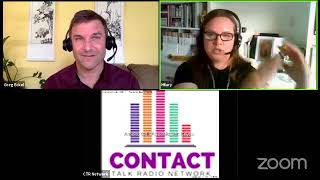
Episode 42 (May 12, 2020) — A recorded conversation between host Dr. Greg (Eckel) and guest Dr. Hilary Andrews (naturopathic physician). They contrast germ theory and the vitalist/terrain perspective, arguing that susceptibility (terrain/vitality), exposure control (hygiene, distancing), and pathogen characteristics together determine infectious disease outcomes. They promote individual-empowerment approaches to immunity — notably vitamin C, zinc, vitamin A, vitamin D, magnesium (Epsom baths), breathing, smoking cessation, weight loss, diet, stress reduction and other lifestyle measures — as ways to reduce vulnerability to COVID‑19 while cautioning that vaccines and pharma are not the only solutions. They also discuss personalized vaccine scheduling ("vaccine balancing act"), critique current public-health messaging and censorship, and emphasize informed consent and patient-centered choice.
Chapters
Foreign or other advertisers.
This is contact talkradio.com consciousness in action and you are taking action into your consciousness by tuning into Contact Talk radio.
On TuneIn.com Hang FM and UpSnap mobile Contact Talk Radio.
Welcome to what the Health An Independent approach to your Health Span. Have you noticed how our healthcare system may not have your best interest in mind? Join Dr. Eckel in this fun and sometimes disturbing exploration of the state of healthcare and what it means for you. Now, here's your host, Dr. Eckman.
Welcome back everybody. So psyched you're here and I am very excited for this discussion today. My colleague and good friend and valedictorian of my medical class, Dr. Hilary Andrews. Welcome aboard here.
Great to be here. Thanks, Craig.
Indeed, I want to give a little bit of background for our listeners and viewers out there because this is such a vital topic. It's going to be a vital conversation. We're talking vitalism and vaccines and in light of basically the victimhood of the world and what we think we could be doing out here. Right. So you know Dr. Andrews, she grew up in the Canadian Rockies. So beautiful up there. Family committed to nature and environmental conservatism. Her parents raised her with a love of the earth and of animals and it's to that end that she became a naturopathic physician. And boy am I glad I had five years of schooling, four years of schooling with you at ncnm, the National College of Natural Medicine. She runs an organization for professionals, vaccineconsult.com and it's hillaryaccineconsult.com really open to the professional realm and has an amazing course on the ethics of vaccinations where I learned a ton. We are going to get into that today. You know, her profound interest in optimizing childhood health and nutrition led her to examine the topic of immunizations and man, this is a trigger word in today's society. So we're going to get into that. She began exploring this topic in depth in 2004 and soon became a passion of hers. So she combined the scientific data regarding vaccines, the science of the body and her strong foundational knowledge of health from her naturopathic education to create an optimal approach to infectious disease. Since 2006, she's lectured extensively on the topic of immunizations, created several CE courses on the subject. Dr. Andrews also served on the national professional level of the House of Delegates, the AANP representing the state of Oregon, and was the chair of the House Rules Committee under the aanpost. Most profound work is that of mother. She and her naturopathic husband are proud parents of energetic, spiritually awakened young man, two dogs and two cats. Their lives strengthened her determination to help parents create the happiest, healthiest humans on the planet. She hopes that her passion for natural health is purely contagious and that she serves as an inspiration again.
Whew.
Thank you. How does that sound when you got. You got that type of intro and wind up?
Fabulous. Thank you.
Awesome. Yeah. So, you know, we. One, I guess, you know, when you start talking about, like I mentioned, I just got off the phone with my accountant and, you know, basically he's talking about, well, until we get this vaccine, it looks like we're not going to be able to open up our country. And I guess I figured I was going to ease into this. But just in light of the conversation before, I said, wait a minute. Please do not do that until you call me when we're talking. Let me frame it a little bit before I just jump into the deep end with you. So what do you think? What is going on out there with our discussion of the research that you've been doing on our immune systems, on the vitality of our innate intelligence and healing ability as human beings on the planet, and to subjugate us to the only solution for viral illness is vaccine number one. Do you think that's a viable solution?
I think waiting for a vaccine and putting the whole planet on hold is probably not a viable solution.
Not a viable solution?
Yeah. Correct. It's putting a lot of eggs in one basket. And I think there's far more successful approaches. We're starting to see some emerge from other countries. But beyond that, one of the potential issues with waiting until there's a vaccine is that we're also forgetting another piece of this equation, and that's that we have, we as humans and actually all life has an ability to strengthen our own immune systems so that we can move through these infections and in ways that either we may not even see any symptoms, so we'll seroconvert without actually having any symptoms, or we'll have minor symptoms. Some of us may have more deleterious symptoms and feel more wiped out. And then there's groups that are potentially more susceptible to this infection who may succumb to. To Covid. And we're certainly seeing that. But what I'd love to tell your listeners is that we have an opportunity to really potentially increase our immune system. And through increasing our immune system, potentially reducing our risk of succumbing to this virus to COVID 19 love it.
And yeah, and you have a cool equation that you. Yeah.
So often what we think of is that the germ. So there's a. There's a very popular theory, it's called the germ theory. And essentially it means that the microbe, which we consider the germ, so bacteria, a fungus, a virus. And if we're talking about COVID 19, we're talking about a virus. So the virus equals the disease, Right? You get the virus, you get the disease. But in fact, that's a very simplistic version of what really happens in infectious disease. In fact, there's a real equation that's far more accurate is that exposure, or size of the exposure, we call the inoculation plus susceptibility of the individual plus the germ, the microbe equals infectious disease. We have an opportunity to manipulate each sides of this equation. We have an opportunity to manipulate the exposure. And that was really the whole movement that did that was the hygiene and sanitation movement in the early 1900s, which was really saying germs are in fact, not everywhere, but that there are places where germs are and we can sort of control a bit of that in our environment. And we're doing that. That's partly what is happening with staying in place, is partly trying to reduce exposure to the germ. It may be slightly slight overkill, truthfully. We'll see. Normally, what happens in the hygiene and sanitation movement is that we isolate those that are most susceptible to a particular disease, and those that have the disease, we quarantine them. We call it quarantine. And then we let the other people in the population who would move through the disease with far less susceptibility, go get the infection and confer herd immunity. So that brings us to our second piece, which is susceptibility. And that has to do with how vital, how resilient we are. And we have a huge impact on this particular piece of the equation. We can change our susceptibility. So remember, a microbe can only cause infection in a susceptible person. And we, as we've seen time and time again with this particular virus, that there are many people who actually are demonstrating not being susceptible. They are in fact, at some point being exposed to Covid and then getting the infection. But the infection is not. We can't determine it, but yet then are conferring immunity. So we know they've gone through the infection. So that's a. That's a huge illustration of showing that that person wasn't susceptible to the disease of the virus, but their immune system was able to confer immunity. So we can change that piece. We can change susceptibility potentially, and that actually then changes the ability of the germ to attack us. So, for example, this is just a. I'll just throw out this example. But Bordetella is a infection in dogs. It causes kennel cough in dogs. I could be around 1,000 dogs that have kennel cough, and I'll never get kennel cough because it's just that I am not susceptible to that bacteria that causes kennel cough. It's just I'm not susceptible. But there are also human pathogens that we have, of which each of us have different susceptibilities and each of us have different vulnerabilities. And we have the chance to change that vulnerability through lifestyle, through diet. And so what I'm really trying to show my patients, my colleagues, my friends, is that we actually. You don't have to feel so desperate in waiting for a vaccine or potentially waiting for an antiviral drug or some sort of pharmaceutical medication. In the meantime, there are things we can do that will reduce our own susceptibilities in general to infections. I don't want to say COVID 19 specifically, but in general, they increase our resiliency and reduce our susceptibility to viral infections.
That is awesome. Right? So, because what's happening now is basically people are put into a hopeless, helpless state of shuttered stay at home with, well, you could just do whatever you want and not you just wait until we sit, come and save you with a. I mean, an effective vaccine for viruses.
We are sitting in limbo waiting for a solution. And what I want to tell you is that there's. We can actually at least move this equation in a way that if we do get exposed to the virus, we'll have far less susceptibility and be able to move through it. We already know, you know, in the virus, in the vaccine field that I work in, an MRNA vaccine for an MRNA virus vaccine has proven to be incredibly difficult in the past. We, to my knowledge, haven't really been successful with that. So. So there is going to be some tricks. It's going to be tricky, I should say, you know, for this to come out as quickly as people are hoping it to come out. And so I'm suggesting let's do things before that time.
Yeah, that. And that has been, you know, kind of my mantra right now. Now more than, however, it's time to take care of your health issue. Right?
Yes.
If this wimpy virus is killing people that have comorbidities, then guess what? Let's get rid of the comorbidities. Like let's go after root causes, raise everybody's vitality and resonance, where then it becomes a non issue. So we've had two months of fear mongering and putting people into fear, which we know lowers their immune system response and possibly even a nocebo response, a negative response to placebo of people fearing for their lives. They don't want to get Covid because it could kill them because look how deadly it is. But that's not proving to be so. But either way, there's a ton we can do right now. Right. And this should be in a sane country, the public health mantra. Instead they poo poo it. And there's tons of research of what we're going to share today. Right. This isn't just made up now one, I want to go a little bit historical here because you know, these are not new concepts, right?
Correct. Yes. This is, this is like, this is the foundations of naturopathic medicine. But the truth is that this was part of medicine, you know, really. When we started looking at the formation of the germ theory, there was really two disputing groups who are really saying, do we give all the power to the germ or don't we? So this has been around for, you know, at least 150 years.
Say that again. 150 years, right?
Yeah.
So. And we're not, you know, this is not. People don't get educated on this at all.
Right, Right. The germ theory has really prevailed. One, because it's super simplistic and for whatever reason they just love when one plus one equals two and it doesn't equal two. But we've tried everything we can to try to make it fit into that equation. The other thing is, is that it completely takes away human responsibility and puts all the responsibility in the pharmaceutical hands. And so there's some profit associated with that. So, so we can build fear. We can then have a solution that will, the solution will cost money, will create profit for some group. And so this is what's really allowed the germ theory to take hold without really recognizing susceptibility. And the hygiene and sanitation movement and really embracing all of those to get effect an effective change and really reduce morbidity mortality to these infections.
So we get, I think we all understand at this point, like hand washing is important and then the social distancing component at the beginning of this to flatten curve Right. Those are the hygiene apparatus that you're talking about. And that comes from basically, you know, surgeries in the past. The physicians would go bed to bed, not wash their hands, and just spread disease and everybody would die, right?
Yes. And so we used to vaccinate with just one needle. We'd actually just draw. Cut a line in people's skin and rub the vaccine material in their skin. And we just cut a line. Cut a line. Cut a line. Just all the way across. Yes. Same blade. Wow. So that's when we realized, because, you know, we started causing hepatitis B and everyone who would potentially get a tetanus vaccine, so we started realizing that, hey, we have to, you know, there has to be some certain hygiene and sanitation to prevent this kind of risk. Yeah.
Geez. So then the next piece of that puzzle, then. So we got the hygiene component, and then we've got maybe the. What would you put next in that equation? Again, because you.
Susceptibility. So in naturopathic medicine, we've really embraced a term called the terrain or the terrain theory, which is essentially that the terrain really represents the human vitality and resiliency. And if you are strong and resilient and have a healthy terrain, you are much less likely to succumb to an infection, or at least you are more likely to bounce back from an infection. So we all know that people. There can be 100 people in a room and one person has influenza, and maybe 10 people in that room will also get influenza, but there will be 90 people that won't. They were not susceptible. There was something in that time that they were not susceptible. And we can change susceptibility. Susceptibility is a variable in this equation that really is. This is the beauty of naturopathic medicine because it's all about changing the susceptibility by increasing vitality and resiliency. And just like you said, getting rid of those comorbid factors that have played such a big role in the death of this infection.
Indeed. And so on that. On the vitalistic movement. Right. On increasing or, you know, the way I talk about it, is just making your terrain inhospitable to other. Right, right. What. What are your recommendations these days around that?
So some of them are incredibly easy. Like the. The top four, actually, that I recommend for almost everyone is incredibly easy. Number one is actually vitamin C, so you can just start taking it orally. We know vitamin C is incredibly effective at both preventing and treating viral infections. So there's lots in the literature. But now we're actually seeing Research papers in the literature directly for COVID 19, that vitamin C has been very effective. In fact, there was a doc interviewed in New York City and I cannot find him now, otherwise. I wanted to say his name here, but he essentially said that our most effective tool, you know, he's on the front lines. Our most effective tool right now is IV vitamin C. Fortunately, it's not that sexy. So until we get a drug, we're going to have to use it. So that was so fascinating to me hearing him, because vitamin C is extremely inexpensive. IV vitamin C is extremely ineffective, inexpensive, but very, very effective. We're seeing its efficacies and so, but we can get the same. We can get similar results by taking it orally. And so at least now we're going to build. Start building resiliency and vitality slowly by taking vitamin C. So. And really ascorbic acid rather than like a buffered C, just plain old ascorbic acid. Yeah, you can get that at any grocery store, truthfully. Yeah. The other great thing that works, that appears to be playing a role, it plays a role in many viral infections, but maybe important in this infection as well, is zinc. So zinc impacts our immune system in so many different angles. It impacts what we call natural or barrier immunity. It really strengthens barrier immunity, but it also helps our more specific immune cells function properly. And we know that people who are deficient in zinc, which is actually really high in the elderly population, are far more at risk for viral infections of all kinds. Influenza, shingles. And this in the research now, we're starting to actually see it come out that zinc is really important in this. So zinc, of course, again, another very inexpensive supplement to take then, vitamin A. Vitamin A actually works synergistically with zinc. They work together in the cell. So it's very important. But vitamin A also provides huge. It sits in our mucous membranes. And where does this particular virus enter? It enters through our nasal pharyngeal passages, our eyes, and our oral. Our mouth. So vitamin A actually sits there and it is in and of itself is antiviral, but it also really stimulates our immune system, gets it strong in that area. So vitamin A, which again, you can get almost anywhere, and then vitamin D. Vitamin D. We see tons of research with viruses and vitamin D. And so, you know, it is. Even there's. With respect to colds and flus, there's very, very strong pattern, seasonal pattern, which actually thought to be linked. There's really great evidence showing a link to seasonal patterns and vitamin D exposure and colds and flus. So those four, like if you have those four in your arsenal and you take them every day right there already, I say you're doing 90% of what you need to do. There's like some other things we can add. Like I love if people like to do Epsom salts baths because Epsom salts are full of magnesium, salt sulfate. So sulfur is just in and of itself great for the immune system. Really sort of brings a lot of our immune system to the nasopharyngeal passage and we're breathing it in when we're having a bath of it. Magnesium is a great smooth muscle relaxer. So we get really good dilation of the lungs which is really important. And that also helps with deep breathing. So we're start. We know that there is some sort of a potentially, that the virus is in some way potentially impacting red blood cells or at least the transfer of oxygen to red blood cells. And so if we can increase our lung capacity through really conscious breathing, you know, even for three minutes a day, then we're and really work at getting oxygen in all the different parts of our lungs by deep breathing and really exhaling also. I think those are like really great to increase our resiliency to this.
Awesome. And anything else on the personal susceptibility fashion, I mean those are like, that's the foundation stuff right there. Right.
So that's. So right now, right there, when we're looking at vitamin C, vitamin A, vitamin D and zinc, what we're doing is we're, we're giving the immune system those main vitamins and minerals that it uses to really be able to prevent and fight an infection. Right. So we're, we're doing that. When we do that, we're hitting a huge part of it. But then we are seeing things. If we're looking at lifestyle factors, things like that, this gets a bit, this gets to be a bit of a bigger topic because sometimes people don't always want to do this, but quitting smoking is going to play a big role. We don't necessarily see that cigarette smokers have an increased death from this infection, but we are seeing that they are having a tougher time moving through the infection. So weight loss can play a role. So you know, trying to eat foods that we get the biggest bang for our buck nutritionally and the low with the lowest amount of calories. So you know, all the non fun foods like vegetables and you damn naturopathy really the key. But yes, you know, it's like because so giving vitamin C, D a And zinc. We're really trying to nip this in the bud at this moment. But ultimately what we're really trying to do, especially as naturopaths, is to change a person life, arouse them to like recognize that they can change their own health. Not through drugs and not through, you know, waiting for certain things to come along, but in fact through exercise, through meditation, through eating better, through, you know, finding some sort, you know, all the thing, anything that we have, which we would call in naturopathic medicine an obstacle to cure whatever's in their way. We want to remove those things that are in excess in their body and that are preventing them from staying healthy and then give them those things that would in fact increase their resiliency.
Yeah, and vitality and that, that aspect of it, of, I mean, empowerment and empowering. That word seems to be like overdone since the 90s. But I kind of want to bring it back because this is like what you're talking about, that personal responsibility piece, right?
Yeah.
This isn't coming from, they're not saving us from the top down here, folks. This is a groundsw and that's why I started what the health so is. This is vital information for you, your family members and your community. This is the more beautiful world our hearts know and desire of what we want to create together. And it's giving you the truth, like, not the fear bullshit coming from mainstream media trying to sell you a fucking drug. So I'm sorry, I'm dropping F bombs. It's my show, you know, folks know it, but you know, I get a little bit fired up over this because it's, it's my people. Like our people are being drugged and misinformed on purpose for profits. And that is criminal. They're treated, we're treating people as a product and not as divine entities that they are. And I've had it. Like, I've had it. That's why I brought you on here to talk about this. I've got, you know, top notch guests coming before and after and you know, it's time like, you know, you keep hearing that. I keep hearing that in my meditations of like, look, just get up and start talking about what you know. Because it transformed lives and this information is old information. Right. And you're right, it's not sexy, you know, but we went to school to help people and to be in service and these things. Like there's not a lot to buy. Like we're talking about eating better, getting your lifestyle stuff down, reducing your stress with meditation and deep breathing like this is, that's potent medicine and you can start today. And you know, not every day you've seen me on the show and talking about, like I admitted on my show, I have a sugar addiction, Hillary. And you know, of course it's a naturopathic curse. And you know, so I work on that. And, you know, you do your best and you treat yourself with compassion, you treat others with compassion. So there, that's my rant there. So this is what the health. Folks, this is Dr. Hilary Andrews, if you're just tuning in naturecaresclinic.com podcast tune in. This is a good one. I want you to leave reviews and please share it with your friends and family because we're now going to get into some heavy topics. Now, there's another piece of this on, on the equation, right? So we covered on, we covered the susceptibility, we covered the pathogen a little bit. We covered exposure with the hygienic movement. Are there other pieces of that equation that we left out for you, Dr. Andrews?
No, I mean, that sort of covers, when we look at that equation, the big take home is this, is that we have been groomed for so long. Like we're being groomed. I want you to understand we're being groomed.
I'd say brainwashed.
Yeah. Brainwashed, yes. To believe that that infectious disease, that all the power of infectious disease comes from the germ and that we have to hugely fear this microbe, this germ, and that the only way we can stop this is through drugs, antivirals, antibiotics and vaccines. And that you are helpless. And I'm so sorry for you. And there's nothing we can do for you. You just need to. And until we can come in and save you. And I want to tell you that that's completely wrong, that there are so many things you can do. You don't need to sit there. That this germ, this virus, if there are things, if you're willing to do certain things, there are things we can do that will increase our immune system and reduce our susceptibility. And that takes the power at least in part from that. I don't want to say that there aren't some people that are going to succumb to it. Obviously, we know that is. So I'm not saying that there is a single magic bullet, but we have so much power to be able to make a difference in our own lives. And I think why that can be so important is, Greg, I don't know if you've noticed this but this is the big, other big piece that I've noticed from this is that people are angry at other people. Like, the fear breeds this anger. Even on, like, no, you know, I listen to next door. Like, they're so afraid, they're angry at people not wearing enough masks, or people are angry at people for wearing masks. And it's like we're creating out of this fear, this real judgment and sort of darkness. And I'm hoping it's. We can bring light to this to realize that we need to, like, really love our fellow man, for one, and realize we're all doing the best we can and hate a little less.
On our neighbors.
Yeah, right.
Yeah, a little less. No, we actually want to advocate for more love beaming out there.
Yes.
But it is understandable, like when you don't know you're scared, you get really animalistic in the mentality and you're actually. The research shows when you get into that state of thinking and fear in the limbic and the amygdala, you're not able to access your prefrontal cortex and your creativity and actually access love and source and energy. And so, you know, there's a reason why the media blares fear. Fear. Fear is. It puts you into a very good buying situation.
Right? Yes.
And so it is like, that's why, again, why I titled it what the health Is. You know, after 20 years of being in medicine and, you know, kind of getting some bonks on the head of, like, really this is what's going on out there. Like, I can't, I can't abide by it. So, so let's talk about then. So let's, let's move it over to. Okay, well, here's the solution that's being propagated, right. The vaccine now going through. I think I have the title of your course correct. Right. It's the Ethics of Vaccination.
Right. I have about 10 courses. The main course I teach is something called the Vaccine Balancing Act.
Okay.
That's essentially. Yeah, essentially looking at the childhood immunization schedule put out by the cdc, the acip, the branch of the CDC that determines the yearly schedule. Taking a look at that and saying, could there be a better way? In other words, there's sort of an almost a one size fits all schedule. But the truth is, is that people are dynamic and different and babies certainly are, and kids certainly are. And their risk of certain diseases, infections that we vaccinate for is different. And their immune system development and neurolog developments are different. And so many years ago, you know, 15, 16 years ago, I started really looking, diving deeply into this and thinking, is there a way we can one, give a more individualized approach to immunizations? So let's look at the child in front of us and decide with each of the individual vaccines, does this child want Is the risk of the vaccine greater than the risk of the infection? Or is the risk of the infection greater than the risk for the disease? Because in biomedical ethics, we only perform procedures and give drugs if the risk of not giving them is greater than the risk of giving them. And so I'm always, at all times. That's why I call it the vaccine balancing act, is swaying out whether the risk of the vaccine procedure is greater than the risk that that child may have of contracting the disease. That's one piece of it. And I'll just give a brief example that might illustrate that if we look at hepatitis B, the hepatitis B vaccine, for example, Hepatitis B vaccine is recommended on the CDC schedule to be given at birth. So every single child born in the United States, it is recommended that within the first 12 hours of life, with almost no. Except there are a couple of exceptions, but with almost no exceptions, be vaccinated within the first 12 hours of life. And so let's look at that, because what is really the benefit? Like, is this child receiving a benefit from this procedure? We know that we can. One of the reasons the vaccine was first given at birth is because if a mom is hepatitis B positive, when she gives birth, that baby moving through the birth canal, that is like a bit of a trauma experience. So there is a chance that the mom's blood will be exchanged with the baby's blood. And if that happens, there's a chance that that baby will contract hepatitis B just through the process of being birth, of being born. And if that baby contracts hepatitis B, there's a chance that because it has such a vulnerable immune system at that point, it may not be able to get rid of that virus. And so they'll get chronic hepatitis B. So for reasons I'm not even going to get into, but they decided to vaccinate every single baby at birth, regardless of whether a mom has hepatitis B or not. And it is the standard of care to test every single pregnant mother to determine whether or not the mom has hepatitis B when she's pregnant and when she's giving birth. So we know we can immediately identify which babies are going to be at risk for hepatitis B and which are not. And by the way, just giving the vaccine to a baby being born To a hepatitis B positive mom is not enough. We actually have to do another procedure as well, given immunoglobulin at the same time. So even in those cases, the vaccine is not the cure. It seems to me that we are administering a medical procedure to a person for which they have no risk for and are gaining no benefit from. Potentially, then we know that there are very defined risk factors for hepatitis B. Let's see, as the child grows, if they fall into those higher risk categories. And if they do.
Yeah. And the two. The two categories are sex and drug use, Correct?
Correct.
So I told my children no sex or drugs when they came into the world.
Yeah, listen, not right now. Not when you're a month old.
So I'm sorry I stopped your flow, but you know, like for case in point. So. Okay, keep going. So if they fall into those categories.
Right, so that's actually very important that you actually brought up what the risk factors are. So the risk factor, the biggest risk factors for hepatitis B is IV drug use and sex. And usually not even just sex, although that can be, but men who have sex with men. So those are where we see the biggest categories. So we are, can we then potentially delay that vaccine or choose to not use that vaccine until that person either falls into one of those risk factors? And in many cases, I would say, absolutely, yes, we can. And so it's looking at that individual child and for each of the different vaccines. So we have each of the different diseases come with their own susceptibility and risk factors, and each of the vaccines come with their own risk factors. So with each, we're weighing, and we can do a far more personalized approach. And then we look at immune system development, because this is really important. Yeah. So we often vaccinate. We vaccinate for hepatitis B at birth according to the CDC schedule, and then we start really revving up vaccines at 2 months of age. But what we've seen something, a very interesting thing happen, which is very well scientifically documented with, particularly with the Hib vaccine, Haemophilus influenza type B, and the pneumococcal vaccine vaccines, is that if we. Which is vaccinating at 2, 4, 6 months, if we actually delay the vaccine from one delay, we actually get to give one less in the schedule. So in other words, that two month, if we don't do the two month, we actually don't need to catch up and give an extra one. That's telling us that the immune system was not even developed enough to actually respond properly to the vaccine, if we delay another month, another time, we actually get to skip that one as well. And so we get to actually give less in a series and still become completely compliant with the CDC schedule. And so our child has received less doses and yet the immune system still received the benefit if that particular child needs, if, if that particular child had risks for those particular diseases. So we get to, we see many times, if we delay when we give the vaccine, we actually get to give less doses in that series and still get the same result, if not better. And then we also see that with pertussis vaccines, for example, this is still coming out. But Kaiser, if we actually delay the vaccine to four years for the first dose, we actually get the pertussis vaccine has a short duration of efficacy, about four years, four to 12 years. But really they sit in this four year window. And why is that important? Because we start, we see pertussis outbreaks around the country all the time and they're almost always in fully vaccinated kids. Like, we see the highest percentage of people who are having pertussis are in fully vaccinated kids. If we were to vaccinate in a more immunologically appropriate, appropriate way, there is some evidence that suggests we'll get, we'll have a much greater response to the vaccine and have a much longer duration of efficacy. Isn't that what we want? So it's, so it's looking at all those different pieces and deciding when to vaccinate for each child, which vaccine, if any, to use and how to use it. And so in doing that, it's sort of creating with each child a more customized patient centered approach. And isn't that where medicine is really moving to patient centered? Let's look at this child. Are they really at risk for these? Do we really want to be giving them? Because vaccines aren't without ingredients that we ideally don't want kids to have. And so if we can delay, wait till their body's a bit bigger, wait till we can increase their abilities to, you know, their immune system, their immune system strength, and also their natural detoxifications, then we're going to have, in my opinion, a lower risk of negative consequences of the vaccine and a bigger bang for your buck.
I love it. And so what is so I guess couple fold here. 1. Why is that controversial?
That is such a great question. That is such a great question. Somewhere. I used to sit on for Oregon Health Authority ipat, the Immunization Policy Advisory Team under Oregon Health Authority. And I really did try to figure that out somewhere along the way, you know, 20 years ago, maybe even longer, actually. I don't really know the genesis of it, but there came a point where vaccines have become almost a religion.
Yeah.
And that speaking negatively about a vaccine is like really speaking negatively about something that is truly life saving, life affirming, life. Like, and this is all part of the grooming that's happened. So, you know, there's your words, like, I recommend vaccines and yet I'm called anti vaccine all the time.
Yeah.
And so, which is really crazy because there's lots of times I recommend don't do Tylenol. I'm not a big fan of Tylenol, actually. I can't really think of many good instances where someone should use Tylenol, but I don't think anyone would ever call me anti Tylenol. You know, like, it's very interesting that it happens around this. And what I notice is that within the public health system, this has been a topic where it's okay to name call and also refuse care. So doctors feel very entitled to say, no vaccines. I'm sorry, you can't be a part of my practice. But yet if they had a child with hepatitis B, they would see that child in their practice. They would have no problems treating that child. But a child who has not been vaccinated for hepatitis B is not welcome in their practice. This is something I can't quite understand because in medicine, we're never supposed to discriminate like that. That goes against all the tenets of who and what we're doing, which is, you know, to make sure that everyone has access to care. And so I'm disappointed. I'm perplexed. I see the. I see it happening. I see the name calling it coming from, you know, from every. From the media, from mainstream media, from, you know, I was even like, Time magazine did a whole thing on it about people, you know, talking negatively about vaccines and what that really means. It means you're anti science. It means you're a flat earther. Yeah. And so it's like, it's okay. We're allowed to criticize almost every other pharmaceutical drug out there. Like, we are like, like killing it on oxycodone and all that stuff. We're allowed to do that. But for some reason, this particular. We can even see pharmaceutical companies as being, like, just out for profit, just, you know, not always in our own best interests in every way, except vaccines. And it's what I call a cognitive dissonance. And I entirely. I don't think it Comes from a good place. That's what I would say. I think the reasoning behind it, it is a lot about profits and unfortunately less about what's ultimately best. But there is a fear that we cannot talk negatively about vaccines. There is a fear that I've seen within public health, within the CDC that we cannot in any way let people start talking negatively about vaccines. We need to shut them down through name calling and all that stuff even.
Well, I mean it's, it's gone one step forward. I mean there's now there's blatant censorship happening around it which to me we're like this close to fascism in the United States with censorship. Like it's an anti science thought process that you cannot have a discussion with facts and with science. Like it's anti science really is what is happening.
It's unbelievable. In fact, so many times I've been told the science is clear, the science is settled, vaccines are safe.
Right.
And I know you and I like as doctors know that the science is never settled. Like we get to like things are happening all the time. We're discovering new things and negative things and positive things that come out of driving all the time. And so to be able to put a lid on this is really, it's fascinating to me and to even suggest like for me to suggest that we delay a vaccine in a particular child for that to be so threatening.
Yeah.
To the establishment has been. Is perplexing to me.
Well that on top of I1 I would call it criminal that that is the way that the discussion in this country has gone and now kind of on a more sense around wait for the vaccine. But it's super paternalistic to think that the government or the state or the doctor can make the decision for the patient or the family. Like it is such a personal choice.
Right.
And that component of the vaccine balancing act that really struck home for me was around informed consent and which is a basic tenet in medicine. And do you feel like we have informed consent around vaccination in this country?
We absolutely don't have informed consent around vaccinations. In fact, in order to somehow get around it, there's many medical ethicists who have explained why we don't need to have informed consent, which is sort of like, you know, it's again being groomed and weaving a story. But we know we don't have informed consent. Anytime we break the skin, if you go, if anyone goes into any kind of surgery or has any kind of medical procedure, you'll be familiar with all These forms you need to fill out, that's informed consent, letting you know the risk of the procedure and the benefits of the procedure. We do not receive that vaccines. In fact, you know, at this point, vaccines are given out in schools, they're given out in pharmaceutical companies. Sometimes they'll do like community. Come to the community center and get your annual flu vaccine like we there is. It's become so such a part ingrained as such a normal part of our society that this is what ethicists say they believe that since it's such a part of our society, we no longer require informed consent. Wow. It's so crazy. And so even people who are fighting for something as small as informed consent in this are actually being marginalized. And what this does, Greg, this is the biggest thing that it does prevents parents. Parents are afraid to bring these questions up with their family. Doctors, their pediatricians, with their friends, with their family because of all the shame that happens. And so in medicine, you should never be. When we look back in history, history in medicine has always failed when one, we didn't have informed consent, and two, when there has been shame placed on a particular issue. We saw that happening with hiv, really any kind of infectious disease, which is often where shame is placed. And I'm really afraid it's going to start happening with this Covid. But anytime we close the door to people feeling okay about asking questions, then we have really done our patients a disservice. And, you know, there was a case here in Oregon where a family who didn't get a particular vaccine for their child actually was afraid to seek care, that everything turned out fine and all that. But what's happening is parents are becoming afraid and we can't become afraid. And so I always say to people, every question is safe, no matter what. And if you decide to do every single vaccine exactly how the CDC schedule does it, I will embrace you and hold you and tell you I'm so proud of you for making a decision that fits exactly with your family. And if you decide to do only certain vaccines and delay them, I'm going to embrace you and celebrate you for making a decision that's exactly right for your family. And if you decide to do no vaccines whatsoever and work on other ways to increase your child's vitality and resiliency, I'm going to completely embrace you and say thank you and you're always welcome in my practice. That's what I think we need to see.
Oh, yeah, that is, I mean, you know, in the personal choice aspect of this what we have now is they get blamed, they get bullied, they get shamed. It's coercive on a decision making. So anybody listening? If you are feeling coerced by your providers or the system, you need to find other providers that actually have your best interest at heart. Like it is an individual's choice. And this comes back then to our whole conversation around increasing your vitality, your terrain. It really lies at the individual level. Like we all come into this plane of existence. It's a full contact sport living and guess what, nobody gets out alive. Right. So we want to maximize our time here, maximize our health, health freedom so we have our physicality and with less symptoms like it's possible and you can find providers that will inform you. Right. The root word of doctor Dose area is teacher. It really is giving you the empowering you. I'm going to use that all show. I don't know, it's just coming up for me.
I mean it's so true. I mean the other piece to this is like they're told, well if you don't vaccinate them, what. But there's the whole other piece which you were just saying increasing resiliency, increasing vitality. So that's the other piece. There's so many other ways to grow a really healthy little human into this great adult. And in many ways that we can increase their immune systems. We talked about just the four simple basic ones. But we can also do that so that they can move through infections and also us be really attuned to, you know, what are the risk factors for this particular child? And this is what I always tell parents, like hey, at this point that wasn't a risk factor for you. When we talked a few months ago, something may have changed. Let's make it, let's. Do we need to make a different decision? Do we need to really work on resiliency in this area? Do we have to consider potentially a vaccine, all of that, but, but keeping it always open and letting them know, empowering them. We have moved into a time where, you know, in so many areas of medicine where it's all about patient centered medicine, where the paternalistic view of medicine has been thrown out the window. It doesn't work. Except this one. For whatever reason there is such a huge embrace of paternalism and around vaccines. Doctors know best, CDC knows best. And, and don't question. If you question then you're putting your child at risk, you're putting society at risk, you're irresponsible and I promise you that's not true.
Yeah. You know, the emperor wears no clothes anymore. Like, they're, they have lost so much respect and the validity of their word is totally suspect at this point that, you know, we're, we got to take it to people and educate. So please share the show. Coming down to the last two minutes here, Dr. Andrews, any last parting words that you'd like to share with the listeners of what the health.
I think it's the same mantra that I've said over and over again, which is like, you actually are not helpless and it's not hopeless in what's happening here in the midst of this infection, this pandemic that we're seeing that there are things you can do that will really increase your vitality. And in terms of knowing that you have a lot of control about the direction of your health, a lot.
I love it. Thank you so much for coming on today and educating our folks. And I mean, so much information and knowledge that you've got. I'm going to I want to have you back in a month or two and kind of get into some of the weeds that I purposefully left out of this conversation, you know, because it's so much, it's such a hot topic and loaded topic. And, you know, we talked even before the show of like, well, gosh, can we even bring it up? Like, yes, it's time to bring it up because it is on the national stage of a potential mandatory vaccine, which is criminal in my book, to forgive and forgo our personal liberties. And where is the personal responsibility we should be empowering people to take charge of their own health. And so with that, my lovely viewers, I leave you. This is what the health Dr. Greg Eckel, Dr. Hilary Andrews. It is. We are on the contact talk radio Tuesdays from 2 to 3 Pacific Standard Time. Tune in next week. Great to see you all. Thanks.
More from Dr.

EP. 197 Brain Regen: Harnessing Essential Oils for Cellular Health and Longevity

EP 196 WTH?!? Unlocking Cognitive Health with Your Genetics with Elwin Robinson






EP 190 WTH?!?: Mind-Body Mastery: Harnessing Movement, Breath, and Sound with Jeffrey Williams

EP 189 WTH?!?: Nourishing Connections: Lynne Bowman on Family Meals and Healthy Living


EP 187 WTH?!?: Clearing the Air: Dr. Kevin Smith on Nasal Health and Migraine Relief