EP 49: WTH ?!? Brain Regeneration with Regan Archibald LAc, FMP, CSSAc
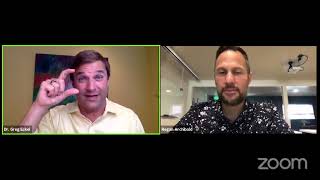
Dr. Greg Eckel discusses brain regeneration through naturopathic and Chinese medicine, drawing on his experience caring for his wife Sariah, who died from Creutzfeldt-Jakob disease. He covers testing, hyperbaric oxygen, intranasal HOCl spray, and why processing grief matters for neurological health.
Chapters
All right, everybody, welcome to your Healthy Self, the podcast and show and webinar that will transform the way you think about your life and your health. We believe your health is your greatest asset. And today I have got my good friend Dr. Greg Eckel. He is an individual who some of you have heard on previous podcasts, or maybe you attended some of his brain regeneration summits, recently wrote a book called Shake it off and incredible read on Parkinson's disease. And just actually, it's a better holistic read when it comes to brain health. But Dr. Eckel has spent the last 20 years developing and refining his unique approach to chronic neurological conditions. So if you have any family or loved ones who've got ALS, dementia, Parkinson's, MS, you want to just hurry and go grab them, they're going to want to hear this. He's got an incredible combination of naturopathic and Chinese medicine that he puts together. And he developed a lot of his techniques in dealing with his wife, Sariah, who's now passed away from Crutchfield Jacob disease, which had no known cure. And so we were there for Dr. Eckel during that time. And just, man, you've been through so much there. But holy smokes, this podcast. I'm so excited because we just spoke a couple days ago, so I want to keep the conversation going. I was just on his show, what the health. So, Dr. Eckel, welcome. Good to have you here.
Hey, thanks for having me on, Reagan.
Yes, of course. And we had such a great talk on what the Health. So I am going to encourage everybody to jump in there. You are an international lecturer and author. You are also one of our partners and coaches in the Go Wellness community. So Dr. Eckel is our naturopathic coach, and he's brought on some great doctors. You've been featured on abc, cbs, NBC, and Fox Television. So what would you say you're most excited about right now in medicine?
You know, in medicine right now, I think it's the whole component of a couple multiple fold here. 1. I think we're waking up at a time where we have this pandemic going around the globe, and we're realizing, oh, the emperor wears no clothes. There isn't anybody at the top that knows what the hell they're doing. And so it rests on us to really take full responsibility for our own health. And to me, that is very exciting to be able to get into conversations with my patients and the public around terrain, how to make your body more resilient, less apt to get ill. And what happens if you do get Ill. There's a lot of things that we can put in, in the natural therapeutics realm that can supercharge your whole immune system and your body's functions. To me, in medicine, just that concept of really empowering people, taking our medicine and really getting it out, getting the word out, getting the message to people like that there is a lot of things that we can be doing that you're just not. Our public health departments have let us down. There are a lot of things that we can be doing right now that can really increase our resilience as a human on the planet. That, coupled with all of this longevity research that's coming out and really making a proclamation of I want to live to be 150 years old. I've said it here, I've said it on tv, you know, and when you say that in a crowd of people, it's like you can hear a pin drop. You know, they.
What's this guy gonna look like when he's 120? That'll be right.
Exactly. And they look at you like, are you insane, Doc? Like, that is like, who wants to live that long? And, you know, we kind of talk about it is, you know, if we can do it with our brawn and our brains and community, like, why the heck not? You know, like, that is so exciting to me. And, you know, I have this really privileged spot as you do as providers. You know, I get to sit with 90 year olds and, you know, to hear them talk, and they say, gosh, Doc, if I knew I was going to live this long, I would have taken better care of myself, you know, and so it's really motivating as a provider of, like, wow, you're telling me that you're 40 years older than I let me. You know, I'm going to take that as great counsel to myself, you know.
Right.
Well, and that's.
I mean, the exciting thing is what we know so much less than what we do know. So it's like, I see the journey that you and I are on, and we're always just syncing up on so many levels, but it's the stuff we don't know that, you know, it sounds like that's what drives you, too, because why do you want to live to be 150 anyways?
Well, I mean, we're living in heaven. I mean, this place is amazing here. Like, the world, Gaia, the universe, all of it is so fascinating. And, I mean, I just want to live fully, and so I got a lot of living to do. Reagan, man.
Well, And I think you nailed it, because one of the things you said is our health system, part of it is it's more like a disease system. And people have heard me talk about this for years. But part of the departure from the belief that our body can heal is, you know, it has happened over the course of years. And the most interesting thing that I see right now is, as we are in the midst of this pandemic, is people forgot that our bodies are actually resilient. And we have been exposed to so many different things over the course of the years. And so, you know, one of the threats that I see that we all have to deal with is the threat of fear, and especially fear when it comes to your health. So how do you maintain your confidence because you want to live to be 150. I have big goals myself. But how do you maintain your confidence when it comes to your own personal health?
Well, definitely the testing component, right? So I started out with measuring my biologic age on telomeres. I get annual, really full panel of blood work. I do a hormone check. I look at my microbiome. I mean, the fun things doctors do, right? We do. Or providers we do. You know, self quantification. You know, I do. I wear a OURA ring. So I'm measuring my sleep. And I really start with the simple things. But then, you know, for me, I really want to explore and push that boundary. I want to be the poster child of what thriving looks like. And so. Well, what is that? So there's that, right? You get the, you get the data, right? I don't. I want to go in with, like, the light shining. And this is not like thousands upon thousands of dollars of testing. These are like simple tests that we're able to ship to people's house. Houses. I got some of that information from you. And then there's blood. You know, just annual blood work. The blood work can tell a lot about what's going on with the body. So that's one piece, and then you layer on top of that, you know, definitely. You know, movement is really crucial, right? So we have the diet, the movement and environment. Those three areas that I really focus in on, on my practice with the patients. And, you know, we're swimming in a soup of 80,000 chemicals here in the United States, and you've got to do some detox. So you know, those basics of the intermittent fasting. I know you're a huge proponent of that. You know, the hormesis around, you know, hot and cold. That's a, an old Naturopathic component of hydrotherapy is a huge one. Just to get the circulation going. You know, intermittent fasting cleanses, detoxes liver. You know, you got to cleanse the liver as the biggest filter of the body, like any other filter in the body or any filter in the world. What do you got to do with it? Right, right.
So that is getting the primary, testing the fundamentals keeps you confident and then you live the lifestyle. I mean, it's, it's always impressive because every time I see you're like, oh, I'm doing this backcountry expedition, you got your skis. I mean, you do not sit still.
No. And you know, it's a big one. You know, my clinic is called Nature Cures for a Reason. And to get out into nature, you know, it is, you know, as kind of a basic premise of naturopathic medicine is nature heals. Right. So getting out, listening, I like to say, you know, my little moniker is Watching the trees Breathe. So I have a hashtag Watching the Trees Breathe because it is a big one. You know, I'm looking out my window here. I've got a great old elm tree outside the library and you know, taking, you know, having gratitude and really just honoring and acknowledging the beauty that surrounds us. You know, I was out for a walk last night snapping pictures of flowers that I'm going to draw later. You know, just the radiance and the beauty we have to. If you're not putting those lenses on, you're not and you're looking. It just depends on whatever lens you want to put on. I'm just choosing. This is the lens I'm putting on. I'm like the more beautiful world our hearts know and desire. Right. That Charles Eisenstein book, awesome book. And it is really, I like to say I'm a lovinator. Right. We're here to light up the world, open our hearts and share that energy with people around us. And that's one of the biggest things, like getting into community. I'm really excited for the GO Wellness event and the whole tribe of heart centered beings and practitioners that you're educating because it's so energizing when we all get together. And that aspect, getting into nature, acknowledging the beauty and having gratitude for what's around us, being around like minded folks and or energetic beings that just kind of feed us. Right. That is, that's one of my secrets, I think. And you know, and remembering to play. Yeah. You know, we kind of grow up and get rigid and stiff and you know, kind of Curmudgeony. It's like life beats us down. It's like, well, wait a minute, why is that? Like, why are we doing that? Like, aren't we supposed to have some fun here? You know, it's one of those things, you know, what I've gone through on the planet, losing Soraya, that was two years ago. And that really, that process, losing a loved one, it just ripped me open as a human being of like, what are we doing here? Life is so short. We don't know how much time we have. So living presently, making sure you're having fun. I've been asking a lot of my patients, especially now. When's the last time you danced? When's the last time you sang a song? You know, like, what are you doing to feed your soul on the planet right now? Because there is a lot of just BS happening, and there's a lot of stress. And so, you know, to counterbalance that, we need to move our bodies. We need to have fun. We need to open our hearts, you know, and just. And play a little bit more, you know.
Man, it's fascinating. You touched on so many things on that gorgeous monologue there. But so one of the things you. You know, watching trees breathe, so, you know the forest bathing that they do in Japan, it's like, let's go take a walk in the forest. And I'm like, well, yeah, of course, you know, the negative ions are there. You're neutralizing a lot of the EMF exposure. Your body just naturally. They've done studies where it only takes 17 minutes in the forest for your cortisol levels to drop.
Yeah.
Like when you leave the city and you get into the mountains and it's. That's so crazy. I've never actually watched a tree breathe. I gotta be honest with you, I think we probably lost half the callers or half the listeners.
Yeah, we'll do that next time we're together.
If you could. You know, you'll be out here in about a week, so if we could just sit down together and if you could show me the respiratory patterns of a tree, I would love that because. And I didn't know you're an artist. You like to draw little things.
Yeah, you know, I really credit. Art really got me through high school. You know, I had a great teacher, Mrs. Gerlick. And she. She saw. You know, I grew up in Johnstown, Pennsylvania, Western Pennsylvania, the foothills of Appalachia. It's like coal and steel country. And, you know, you can get a lot into a lot of trouble As a teenager. And she just noticed, like, hey, these guys are kind of on the edge of what's going on out there. She allowed us to have a, you know, a dark room. And, you know, I was really, I really got into art, so I'm rekindling that these days. I'm taking an art class with my daughter. You know, we're drawing and it's a zoom class. You know, everybody's doing zoom classes. Oh, yeah. But so it's, it's a fun meditative component. You know, it's just another creative expression. Yeah. Wow.
Yeah, that's brilliant. And then, you know, the evolution. So I don't, you know, I know, you know, part of what I want to talk to you about is getting into the mechanics of the brain. But yeah, I also want our listeners to see what rich soul that you are. But what would you say the biggest transformation that occurred in your life, you know, before the death of Sarai? I mean, just watching her go through that process must have been excruciating. But how did you make that shift? Because some people get bitter, they get jaded, they close off and they just get. They get really mad at God or the universe. But how did you make that shift?
Yeah, you know, it's cjd. Creutzfeldt Jakob disease in particular is. It's a brutal one. It's kind of the reverse of als. So what happens in Creutzfeld Jakob disease? It's a rapidly progressing dementia. So, you know, basically within two months, Sariah was non verbal and you know that and has dementia. Like she's kind of wandering around not knowing where she was. It's was brutal process to go through and to get to that diagnosis. You know, it was definitely the dark, dark nights of the soul went through it there. And so, you know, I really, it's weird. You know, I kind of say the whole process has reinstated my faith in that. You know, you kind of get to, well, boy, that is such an injustice of like why or how you're right. You could really get bitter and fold and, you know, really get your head underwater there quickly. And so I, you know, it just kind of ripped me open, I guess I'm, I would say I'm fortunate enough that I had some resources and skills. Community also helped bring me through that. You know, I had made some statements as a youngster, you know, around like, you know, I can do this on my own and, you know, I can get through this, you know, through the world by myself. And so it's just so weird. How those things, you know, I think I made that statement as a 10 year old, right? I uncovered it then, you know, as a 48 year old or 47 year old of like, oh, I am not going to be able to get through this one alone. So I really had to, like, you know, say, okay, ego, you got to give that one up because you're not going to make it if you do not get support. Because this is just, you know, having a practice. We had five kids together, you know, caring for her, it's like, oh, no, we need a lot of support and we need it now. And so I started to ask, you know, it really makes you humble, asking for help and support. And, you know, I was just amazed at the response and the flooding of love that came in with just opening up to that, you know, and being open to it from just complete strangers to folks that you've known forever, you know, and then new people show up in your life, life and world. And so that kind of brought a little more magic back into the world for me and really knowing and trusting, like, okay, the universe is here to support us and being open to it. So, you know, keeping my heart open, I'm not sure. It just was like the way that I was able to do it. Like, I quadrupled down on my brain, on my body and on the practice. It was great. I had a great. I love what I do. I love coming into work. So it was a good kind of relief out of the scene at my house of watching Soraya go downhill quickly. I just really invested in myself and my brain, keeping my heart open. My meditative practices. I really got into clearing my energetic space because I wanted to be strong, show up in a very strong way for my patients, you know, my employees and my kids. I got really, you know, I've been kind of on the path, kind of a spiritual path from high school as well. You know, I kind of found Rom Dass early on in my life and then Kubler Ross on death and dying. So I've been fascinated with kind of that, this whole process, my whole life. And so really a lot of stuff that I had read through the years really came into practice and I put it in and it just, you know, kind of opened me up. So, you know, I think that aspect of how I didn't sink, you know, I quadrupled down on, you know, meditation, really, sitting practices, taking care of the kind of the temple. You know, I never really understood that intimately of, you know, the body is the temple until I really went through this of, like, no, I actually need to, you know, really clean up my diet. Like, you know, at the beginning, it's like, oh, I'm eating gobs of sugar. I'm just kind of stuffing emotions. And then it's like, you know what? That's. I'm gonna. That will actually kill me if I do that. So I need to really clean up my act. Got really comfortable with grief. Not that I'm a grief ambassador, but I think we do. I know we do not deal with grief or loss in our culture. And it's. It was very interesting, you know, talking with friends and family. You'd see certain people would just disappear, like they just couldn't handle. And that's fine, you know, because that's their process and their path. But getting comfortable with that grief. It got me into, you know, ancestral healing of ancestral traumas. And there's loads of research on that, which I found totally fascinating of. And it's actually made my job as provider so much harder because it's like, oh, my gosh, we've got not just this individual here, but it's their, like, family lineage, which I have kind of put together of like. I think that's another facet as to why we're seeing, you know, more chronic illness on the planet is we've been around longer, you know, for a longer period of time. And so there's so many, you know, generations of trauma that people have never really looked at or addressed. That is very important for a healing component.
And. Well, because, you know, we know that by the age of, you know, from zero to seven, our brains are in theta state. And so we're just absorbing things subconsciously, and that's how we're building out the program for our life. Right. And so if our parents are dealing, which every parent is, and there's no perfect parent, but if our parents are dealing with all these traumas, they picked it up from their parents, who picked it up from their parents. And, man, the world's been through some crazy times just in 200 years. I mean, talk about massive evolution. So part of what you had to do was recognize that there's healing and grief. There's. There's some structures you had to let go of that you probably picked up from the ages of 0 to 7 so that you could actually evolve. That takes a lot of courage. I mean.
Yeah, thanks for that. Yeah, it is. You know, it's not an easy path, but it's really. It's kind of. I figured out, like, it's just the work that that's why I incarnated. Like, this is the program that I set up for myself, and this is my learning, you know.
Wow. So we've talked about breathing trees, so I'm going to throw a question. If it puts you on the spot too much, you can say, I don't want to answer that, but. So what's your concept of life after death?
You know, interesting. I definitely don't mind answering it. No, I don't mind at all. I mean, this is really, you know, vulnerable. Right? You're sharing, like, here. Well, here's my beliefs. Here we go on the Dr. Echo live right here. Well, you know, it's interesting. So I really got into. I think, you know, it's interesting. So before this process, you know, I like to say I was a recovering Catholic, right. I grew up in Roman Catholic Church in Johnstown, Pennsylvania. In fact, the poster child for the abuse that happened nationally with Shawn Docherty, my friend back there. You know, we all grew up. It was the parish that we all went to that, you know, a lot of those cases. You know, obviously it's around the globe that that abuse of kids in the church is happening. So, you know, I definitely was jaded on organized religion. If that's your path, that's awesome. And I really support you on it. Right. You know, I'm one of the least judgmental people on the planet, and, you know, I think it's a great institution for those that it works for. But for me personally, I was like, oh, man, I got so much guilt and weirdness around this. It just didn't work for me. So I really got into, like, okay, well, I'm a spiritual being, not religious. Then I go through this process with Soraya, and it's like, whoa, Everything, you know, everything has changed, and I'm kind of back open. So I, you know, I had lost, you know, my mom when I was younger and hadn't really thought about it. Grandparents, etc. This process, it's like, oh, there is. I really feel like I'm not afraid of death. I've kind of studied it my whole life. And I think that, you know, it's just. We lose the body, right? Like, our spacesuit that we come in here with our soul moves on. And I think that it is. Our ancestors are right here with us. They're just on an energetic plane, right? We know in physics that there matter, you know, energy is not lost. It just changes forms. And that's what I believe is happening here. It's a very interesting plane of existence that we find ourselves in with physical form. So that's a component for me of why I want to marvel and everything, like just eat amazing food from Gaia, you know, like the sun energy that comes down and really treasure these spacesuits now. But we're going to move on and we age and we're going through a lot of learning on how do we reverse that process. But also as we move into that more energetic realm, it's pretty amazing the communication Rudolf Steiner actually had. He wrote about this, he spoke publicly on what it means to leave your body and actually communicate in the other realm of that energetic realm. And so I've been playing with that. It's a very interesting. So he was, you know, for those that don't know Steiner, he was prolific in all of the sciences and he wrote, he was actually speaking of how to scientifically measure this communication with the so called dead. And he calls them the so called dead because it is really, you know, he's had public lectures on this. This was, you know, in the 1900s. So it's not that far out there of a concept. I know, you know, kind of the rationalists out there are saying, oh, that doctor is full of hooey. And that's okay, you know, it's not your path, that's fine. I'm just saying, you know, for me, this is how I've made it through. And it's, it's a lot more magical realm in this plane of existence. When you start to open to that and actually discover like, oh, there actually are. You can get a lot of synchronicities and signs that this truly does exist. Right. So I think, you know, life after death, I do believe we move on as souls and it's, you know, where we can incarnate on another curriculum or we kind of just stay in that energetic source, the oneness of it all. And that really, I think what came home for me is that the concept of oneness, you know, I studied it as an undergrad with environmental science and kind of Gaia hypothesis. And you know, we look at the matter of the universe. I mean, we can get really esoteric here, right? The matter of the universe is it is all one, right? There's more kind of dark space matter than actual physical particles. And you know, if you compressed everything down, we'd have like a grain of sand, which is, you know, our minds can't really comprehend that.
Yeah, that was, Yeah, I think that's something that there's this magic in life and, you know, no matter what bend you're on? I had a patient who was doing research on. All he studied were people who had near death experiences. And so every single one of those patients that he interviewed, he was right there in the hospital and he spent about 10 years compiling all this research. And they all felt that sense of oneness, that thing you talked about. And in so many cases, he said, yeah, if they were Buddhist and that was their kind of lean, then they would have somebody that kind of looked like a Buddha that was greeting them. Or if they're Christian, there's kind of a, you know, a fatherly figure that was, you know, hugging them. And then there, there was always family there and people that they loved and cared about. And I'm like, man, that is. That is interesting. I said, well, is it just the chemicals in the brain? You know, because the scientific part of me wants to say, well, what if there's just this massive flush of endorphins and anandamide at the same time? Aren't you going to get like some of that sense of oneness? And he's like, no, it was different. He said, just the incredible experience of being free and the love that was there. It's just like they all had that same experience of love and it didn't matter. Atheists had that same experience of oneness. So pretty interesting and what Bev said to you, Dr. Eckel. Thank you, Dr. Eckel. Last week, Kyle Gray had a podcast with Dr. Joan Rosenberg about Grief is Gold, the Many Angels to Grief and how it can heal a strong emotion. So glad you touched on this.
Oh, Yeah, I loved. Dr. Joan is awesome and does a ton of work around that. So that is, you know, she has a great book out, like 90 seconds to a Stress Free Life or something like that that's totally botched her title of her book. But it is Grief is gold. I mean, it is not. You know, I don't wish it on anybody, but, you know, none of us get out of here alive. And so we all experience grief. And so it's, you know, what do you do with it? Is you just acknowledge it. Like, I'm fine, I'm a crier. Like, you know that I cry publicly. I'm fine with that. So many people, like, you know, you see them in the office and it's like they're apologizing because they have emotions and they're crying and it's like, you know what? These walls don't talk here. You know, there's no judgment. Like, I'm honored that people can open up like that in the office. Right. I just happen to be blessed that I can. I'm a total sympathetic crier. Like, somebody's crying, I'm going to cry. I'm crying with them like that. Just me. And so having. Just being okay with that, like, yeah, we all have emotions. We've all experienced loss. I mean, there's a ton of grief, you know, on the planet at this moment in time. Like, people get stuck inside, not able to travel without all of their distractions. Well, what surfaces is all of the stuff that you've not dealt with, you know, and, you know, you saw, like, early on in this pandemic, people were, like, posting old photos and, you know, childhood photos. And I don't know if that happened in your communities, but it definitely happened. And I think it was a kind of a. Oh, yeah, catharsis. Right. For the. For our society, some nostalgia crept in.
And we started, like, really reflecting on our life. Hey, Jan from Albuquerque. Fascinating and brilliant as always. I live by the shortest way out is through, and that includes all feelings. Thank you again.
It's so true. Yeah, you cannot escape. It is basically through. There's no way around. You can't go back. You can't shove it into the mouth with food or drugs or substances. It's like, no, you have to express them, like, get them out of your body. It's so.
It's like the Ryan Holiday book. The obstacle is the way, you know, where it's like, we all want to go right or left, but we know we have to confront it head on. And that is interesting, what Bev said, grief, even in a loss of a time or name in a sport, and figure on the many alternative powers to learn. There's so much to learn, so much growth that happens through that. And so how have you dealt with the grief of your five kids? I mean, when I've seen them, they look healthy, robust. But I know behind the scenes, there's got to be some moments of pain.
You know, for sure. And they all have, you know, one. I've got to honor their process of how they're dealing with it. They. Not everybody processes the same way. And so, you know, sometimes it's a slower process, sometimes it's a quicker process. But I think just by modeling myself of, like, look, I'm not going. I got it. I'm going through it. You know, I'm going to feel all the feels. And I did that in front of them. I think that was very helpful. We held a wonderful celebration of life where Saria's past. Patients and family members got up and just shared some amazing stories about her. That aspect really, the funerals or celebration of life, those are so important for us as humans to honor those that have passed. But really that gathering is for those that are left, you know, here. And it really. Embracing that and putting some good energy into that celebration was, I think, super helpful for the kids to see. Like, oh, yeah, mom had all of these beings. She touched all these lives. You know, Sarai was this amazing certified nurse, midwife, nurse practitioner, and just a power being on the planet. So definitely left too soon. See, I get a little emotional.
Here's some tips.
Thank you. And, you know, it's. You know, I've actually been on other, you know, talking about it, and some. Some professionals are like, oh, well, you still have. Obviously you have some grief left. And it's like, yeah, I have grief left. Like, it's an honoring of this love that I had. Like, are you kidding me? Like, I. I don't really want that to go away if I can't have that experience and that expression of love. I mean, that's basically what it is. It's on the loss of that, and it's honoring what I had. So, yeah, of course I have tears and sadness around it.
Yeah. And I think some of the grief that we have, it actually forges us into stronger people. I mean, if you think of a Chinese medical concept of grief starts impacting the lungs. And I believe grief becomes pathological when we don't express it, when we don't, like, get into that, the core of it and actually feel it. I know for me, when I went through some challenging times in my life about 10 years ago, the only way, as I believe it was Jan that said the only way was through it. And holy smokes, I can't imagine what you've gone through, but there are nights where I felt like I was not going to survive, and it's like I can't hardly breathe. But then when you come through, it's almost like you have iron lungs. You know, you're ready to go. You can take on anything. So I really appreciate discussion. Ann said, yes, emotions are not to be ignored. That is part of the four in our 3, 4, 5. That is so true. So important to honor our feelings. Love this spiritual discussion. And I know we wanted to talk more about the. Sorry, I got us.
You know what? This is actually a big piece of the healing journey for so many people. So I love it. That's great. And we can switch gears in the Brain.
I think everyone's really happy to talk about this, but I know you are an expert in brain health and brain recovery. There's no one else who I trust more than you on the subject. And so as we look at this, I think part of the pathology that I see is I kind of structured it in three ways with my patients. When it comes to brain health, I talk about memory, people's ability to learn new things, so basically their curiosity level in their brain. And then the third thing is emotion. And so what do you see happening from more of a physiological perspective when people aren't able to express their emotions?
This is huge. And we look at in neurodegeneration in general, there have been no major breakthroughs. Right. Like it's abysmal. And that's why I've been out educating on this topic and wrote the book Shake it off, held the brain regeneration summit. I have a monthly Parkinson's solution summit to provide some hope for folks. But this could be the underlying cause, right? We don't have a cause of like, well, what starts these proteins to misfold? Well, definitely unhealed trauma. Trauma in general creates inflammation in the body and that may be a triggering event contributing. And I don't think it's the only cause of brain degeneration. But you'll see one kind of off the cuff hypothesis is in particular with memory issues is like, okay, it's almost as if the innate intelligence wants to protect the body and the soul, so it just starts misfolding proteins to then so you don't remember. So it's not like a fear based like you got to deal with your trauma or you're going to get Alzheimer's and dementia. But when the numbers of dementia, mild cognitive impairment dementia and Alzheimer's are 50% by the age 65 and showing signs two decades either earlier, 45 can start as early as your 40s. We have some serious things to tackle in the world. Right. When our brains aren't functioning, we don't have really anything. So it is that component around emotions, not processing them. Like having some emotional intelligence training dealing with, you know, I really like the ancestral healing family constellation work that came out of Germany. Bert Helleg, I'm missing his last name, but it is really around constellation work. It's really fascinating. So it's not like the old therapy of get on the couch and tell me your life story, but it's more, you know, putting yourself into different family relations and in a safe environment. I found that to be a really nice avenue for folks that aren't into therapy in the traditional sense to really get into exploring this aspect of their care. Because it is often in Western medicine, it's just not talked about. Right. You don't. Whatever emotions we're dealing with, your physiology, biochemistry, and we're going to drug you. And then they got no cure and no underlying imbalanced assessment or treatment. And so the emotions and that aspect of it. Right. We have in Chinese medicine five emotions for the different organ networks. And they knew. I mean, we know that. That it's integral. These emotions are stored in the organs. And so if you're not moving the emotions, you're not moving the energy, and you're not moving the blood, and then you're not getting complete correction of the underlying imbalance.
Yeah, well. And it's, you know, it's uncomfortable being around people who don't have any emotions, too. You know, it is. And so. All right, we'll go. Susan, thank you so much for everyone's participation here, too. And so the. Oh, man, Susan. The hardest grief for me is the loss of my son. I grieve daily and am thankful for all my memories we shared. We learned that we will usually outlive our parents and elders. But I wasn't taught how to deal with outliving my child. I help my friends not be afraid to talk. Whoa.
Yeah. And that is so heavy, Susan. And sorry for your loss. And again, this component of us being people on the planet, like, we have grief and loss, and you're right, that's not supposed to happen that way. Right. So you look at it. I'm not sure not to get just into your story, but this is a big thing of that grief and loss. And so looking at, you know, it's okay to not be okay as well. You know, I think all of us want to get, you know, get comfortable, make sure everybody is happy or feeling well, but it's okay to not be okay. That's a huge loss, and that's the component around it of, like, I'm hoping that you're able to still communicate with him because he left his physical form, but he isn't that far away from you. And I don't know if you've experienced that. You know, I have it with. I just feel like, oh, I have another angel, you know, surrounding me and helping me do my work and. Yeah, absolutely. So good. Good for you. And, you know, that's a very special bond. Right. Like, you've got allies on the other side, and it's a huge, huge loss. And you can still maintain a relationship. It's just not in the physical form. And for me, where that's gone to is really treasuring every moment I have on the planet. Like, Greg, and you asked me earlier, like, why do you want to live to be 150? And it's like, because this is so special. Like, we have so our senses and our perceptions and our feelings and, you know, the touching and the tasting and the hearing and the, you know, the feeling, all of the feels, right? We get to have them all. So why don't we enjoy the ones that we have now? Right? Because when we leave the body, we don't have them anymore, man.
The sensations are phenomenal. I mean, this is one of the reasons you and I are big biohackers. We're always looking to. I just want to clean out my system so that I can feel and sense everything that's going on in the universe. I mean, there's. There's so much. I mean, I don't know if you have a process, but, you know, every day I ask, you know, the universe or God or Gaia. I'm like, you know, what can I do to serve on a deeper level? How can I show up as the best version of myself? How can I really inspire somebody today? And just by asking those questions, I mean, all of a sudden, it just gets you in this nice, warm place where there's so much more to life than what we can see on the surface. And I think emotions are almost like that portal that transports us from this consciousness to the subconscious, which is kind of that greater connection to the one in which you started talking about, where you can actually start to see trees perspire, you know, maybe.
Respire. Really? Yes. I haven't watched them sweat yet, but maybe that's the next step. I've seen the SAP, you know. Yes, yes. You know, so true. I. You know, I actually have a very similar practice in the mornings and at night, you know, just looking at, you know, how I can show up. I asked my higher self, you know, how do I serve more people on the planet? You know, I didn't want my grief or suffering to be for not. So I want to take my learning from this process and really share it with as many people as I can. And that's really what has lit a little bit more, bigger fire under me. I was already motivated before I went through this journey with Soraya. And it has just created a bigger thing of, like, you know, there's a lot of suffering out there. How do we ease that suffering, how do we show, bring more love and light into this plane of existence? You know.
That'S huge. Well, you're a real gift. You know, I really appreciate you and the healing journey that you've had the courage to go on. Most people don't. I mean, we hide from healing because it's painful and it's not, it's not the easy way out, but it's the only way out if, you know, as Jan said it, you know, the best way is through it. And so let's, you know, imagine, I know you have a whole brain program that you take patients through and they come from all over the country, actually internationally. And so somebody comes in and they're doing your hyperbaric chamber, they're getting their intranasal stem cells, you're using the DMSO nasal sprays. I mean, you have just some novel treatments. Do you actually address the emotions while they're there at your office or how do you, you know, how do you approach that side of it?
Yeah, that's more for the folks that are traveling to come to the clinic. They come to Camp Nature Cures. We're trying to get them hooked up with their local resources for that because that's more of a longer journey. You know, that's not a. I haven't figured that out. A biohack, like how do we just kind of push, go.
Yeah, just get them.
Yeah, go Greg.
Get all the emotions.
Right. So it is, you know, we'll kind of, we bring it up in conversation and then we want to make sure on our follow ups, like, hey, have you plugged in? Have you tried, you know, here we'll even do some, you know, Google searches in their vicinity for, you know, kind of try to vet some folks for them as well and make that a little easier. But you know, I don't have the health coaches as of yet on site.
Go. Got it. Sorry. That little glitch there, I don't know. But yeah, well, and that makes a lot of sense because, you know, they're wanting to work with somebody face to face is so powerful. I've had great experiences. My therapist, Jim Stringham, I've referred at least a thousand people to him. He's just been a great resource over the years. The other thing that we had a comment is some patients actually have a spontaneous remission from crazy diseases just by getting their emotions healed. Whether that's getting out of a toxic relationship or actually experiencing the grief. I mean, it's so crazy. And so I think it's an Integral part of the process. So. So let's talk about the book you wrote, Shake It Off. And where can people get that?
That's on Amazon. So right from Amazon, you can get it right there. Shake It Off. And yeah, basically it's called the full title. Oh, there it is. Thank you, Ann. In the chat, we put it up there, Parkinson's Solutions. And it isn't just about Parkinson's, but it is. So it is on brain degeneration and how to regenerate the brain. I picked Parkinson's because, one, I have a big neurology focus in my practice. I have a lot of patients with that diagnosis. But what you find when you get in on the research and how I got there was I was looking at prions. And that's what was at the root of what Soraya went through with cjd, which are misfolded proteins. And these were just discovered, basically. In the 80s, Stanley Prusiner got a Nobel Prize saying, I'm seeing something under the microscope. It's not a virus, it's not bacteria. He was called a heretic and kind of ridiculed, but he stuck by it and said, no, there's something else here. And so we've got prions, and these are misfolded proteins. Well, in Parkinson's, you have alpha synuclein. It's a misfolded protein. Alzheimer's dementia, you have amyloid plaques that are misfolded proteins. In anxiety states, we see prionic activity as well, which are misfolded proteins. So even up into anxiety. And Bredesen, Dale Bredesen, who wrote the Alzheimer's Solution.
Great book.
He was actually in Stanley Prusinger's lab. So I had some conversations with him around the prionic activity of proteins. And so that's really, when you look, I'll see a lot of my patients at the end of life have a constellation of diagnoses which are all related to different protein misfolding disorders. And so that's the book Shaken off is really about anybody with a brain. But you kind of have to put a flag in the ground and pick a topic to kind of really get people focused in on it. But for your listeners, and, you know, I know you've got it down at the clinic and, you know, I'm doing a lot of the therapies that I learned from you. So that's, you know, hats off to.
We learn from each other. Yes.
Yeah. And then, you know, and then I put kind of added and stacked in my own specific flow here, you know, with the hyperbaric oxygen and kind of the nasal spray that I came up with was an anhydrous chloride. H, O, C, L. Really looking for prions in particular. Once they turn on, they don't turn off. And so when you get in the medical literature, you see they're called infectious agents, like the infectious prions. And I don't like that term at all and I don't know why they started putting that. But it's like all of the authors copied each other on PubMed. Like the infectious prionic activity, it's like, well it's not really infectious. They're not coming in like an infection, like a virus or a bacteria. So I don't like that terminology with it. But I think they, they're saying that because they feel like once one gets turned on, it starts to have the other ones turn on as well. So misfold.
So it's contagious almost.
What's. It's what?
Contagious almost.
Yes. Right. But it's not really in the true sense of a contagion. Right, right. So HOCl is an interesting substance. There's 125 years of research of this stuff and they have over $2 million of NIH research showing that it inactivates prions. Interestingly enough, they did studies at University of Washington on coronavirus and it's 99.99% effective at deactivating and killing off coronavirus as well. So not this, you know, don't have the research for this one right now, but in 2016 they did research and it's a marvelous substance. So I put that in a nasal spray to get it right up to the brain. Yeah. And I've got patients with, a lot of times with Parkinson's, they have a slowing of speech or a softening of their voice and they'll notice they're getting a four to six hour change of the tonality of their sound of their voice. But also they're feeling it like a little tingling up in there. So I know we've got some great activity going there. You know, my cohort of, you know, how many patients I put it on, it's growing every day. And so we're, I'm collecting that data now. I hope to, you know, eventually get that published.
That'd be awesome. If you could just call it a vaccine, I think the government would say, yes, it's good, let's use it. We'll just change the name and then everyone will think we got the cure.
Yeah, totally.
And yeah, we'll relieve a Lot of anxiety, stress. I think we have had a couple comments coming in. Okay, so, Dr. Eckel, could your anxiety, grief show up in an uncomfortable twitch in one hand or area of the body? Not Parkinson's. Don't give Parkinson's a capital letter. Nice, Bev. Many specialists, doctors can't diagnose it. So do you see just some, you know, kind of benign essential tremors showing up that way?
You know, I have. And it can be, you know, it's like when you have an essential tremor. It's static on the nervous system, and so you have to look at. Okay, what has created that neuro inflammation on the body. So that is. That's definitely a. That would be a novel route, Bev, and I think it is worth pursuing.
Yeah, absolutely. Bev, I'd certainly Recommend you call Dr. Eckel. I think he would. You and him would connect really well. So. And I. We are already.
So far.
This conversation went so fast. It felt like we've been talking for five minutes. I don't know how everyone else is doing, but our producer is letting us know. Hey, it's time to wrap it up. But, Dr. Eckel, let's just kind of. Just to summarize. I mean, yes, the depth of emotions also can reflect in a healthy brain, a healthy body, just a healthy overall outlook on life. You've touched on so many amazing things today, and I really want to thank you for being on the show, taking time from your busy schedule. We gave the link for people to purchase your book. How can they contact you at your clinic if they want to do deeper work with you and kind of address some things?
Sure. It's Nature Cures Clinic, so Nature singular cures with an sclinic.com on there. We have a contact form right at the beginning. And so we do consults right there. So it's the first thing on the website. You can contact us that way. Let me know you saw us on your healthy self here with Regan Archibald, and we'll get on the phone with you.
Awesome. Thanks, you guys.
Susan, thank you.
I appreciate you sharing that about your son. Our love goes to you. And then Danielle. I really appreciate you guys taking the time to have and share this conversation. It's been our pleasure. So thanks, Dr. Eckel. Can't wait to see you in just about a week.
Yay. So psyched. Awesome show, guys. Thanks. Awesome. Thanks, guys. We'll be back same time, same place next week, everybody.
Bye. Bye.
More from Dr.

EP. 197 Brain Regen: Harnessing Essential Oils for Cellular Health and Longevity

EP 196 WTH?!? Unlocking Cognitive Health with Your Genetics with Elwin Robinson






EP 190 WTH?!?: Mind-Body Mastery: Harnessing Movement, Breath, and Sound with Jeffrey Williams

EP 189 WTH?!?: Nourishing Connections: Lynne Bowman on Family Meals and Healthy Living


EP 187 WTH?!?: Clearing the Air: Dr. Kevin Smith on Nasal Health and Migraine Relief