EP 54: WTH ?!? What is ALS, causes and treatment with Dr. Shel
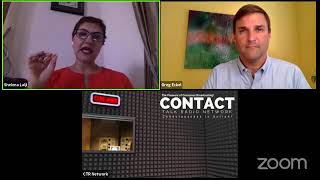
Dr. Greg Eckel and Dr. Shalana Lalji discuss ALS from a functional medicine perspective, exploring potential causes like environmental toxins, hormonal imbalances, and emotional trauma. Dr. Shel shares her personal insights into treatment approaches for this neurodegenerative disease.
Chapters
Taking action into your consciousness by tuning into Contact Talk radio and on tunein.comhang.fm and up snap mobile contact talk radio. Welcome to what the Health An Independent Approach to your health span. Have you noticed how our healthcare system may not have your best interest in mind? Join Dr. Eckel in this fun and sometimes disturbing exploration of the state of healthcare and what it means for you. Now here's your host, Dr. Eckel. Hey, welcome back everybody. This is what the Health and I am Dr. Greg Eckell and I have a treat for you. Today we are talking with Dr. Shalana Lalji, goes by Dr. Shell. She helps her patients regain their vitality and balance so they can look and feel their best. She's board certified as an OB gyn. She masterfully restores hormone imbalances, introduces patient specific nutritional supplements, supplementation creates a healthy GI system, reduces stress and reverses signs of aging through her complete approach to inner and outer wellness. And today our topic though is around ALS and other neurodegenerative diseases and we're going to take a comprehensive and a functional medicine approach. Dr. Shel, dear friend of mine, I want to introduce you to my community here on what the health. We share some journeys and pathways. So welcome aboard to what the health.
Well, thank you for having me. It's great to be here, Dr. Eckel.
Indeed. And so we have actually collaborated through the years on this neurodegeneration and what to do. Right. Because there's been not a lot of hope for folks in this space.
And.
With our paths kind of coinciding from some friends and groups of ours, I feel so fortunate to call you a friend and colleague on the planet. We've talked about kind of co collaborating and how do we get some momentum. You are, I think, a couple steps ahead of me on your organizational skills. So I'm excited to talk to you around that. We are going to talk about ALS and other neurodegenerative states. And so when you're looking at this one comprehensive functional medicine approach. So you went from OBGYN certified and having a really kick ass clinic down in Texas to kind of catapult it into this arena. And so maybe share with our listeners, how did you gain your expertise here?
Well, first of all, let me just say I echo everything that you've said and I am so blessed to know you. Right. You have done such an amazing, amazing job bringing neurodegeneration to the forefront with your summit that you had and it's just been a true blessing to know you. So thank you again for having me here and for your kind words. It has been a journey. And you know, as I always say, sometimes you don't choose your mission, your mission chooses you. So in my situation, my mission definitely chose me. Where I went from being a board certified OB GYN, doing that for the first 10 years or so of my career, and then realizing that both women and men, when they go to the doctor, when they used to come to me as a traditional doctor, I would literally see 30 to 40 patients a day. I'm sure you're familiar with that model, the insurance model. And how well do you really get a chance to know your patients, really know them as people and really know them as individuals, rather than just a chart or a number or some lab results. And that was very frustrating to me because I went into medicine to really be my patient's advocate and to really take care of them from what I feel should be a root cause approach. And so that was. It was a joy and pleasure and an honor to deliver thousands of babies and do multiple surgeries and all that was great. But I thought I wasn't really doing my peace in the world. And so that really struck me when I went through my own journey after I had my second child, Zaid, who is now 16, believe it or not. Yeah. And so I went through a lot of hormonal symptoms, Dr. Eckel, with insomnia and mood swings and depression and hair loss and loss of energy and everything that you hear about all the time. And when I went to see my obgyn, I was handed two prescriptions, one for an antidepressant and another for. For a sleeping pill. And that was the turning point. So there's always a tipping point and a turning point. And for me, that was the turning point because I had to leave the office, hear the prescriptions, and tell myself I have to change the way we treat patients so that we can get to what is really going on. Because I knew my body, I knew my hormones were imbalanced, my thyroid, my progesterone, my nutrients. I had not been sleeping. I had a newborn baby. I had all this stress. And so I wanted to be the kind of doctor that would really take a look at all of those functional medicine type of things that we do now, you and I both and a lot of our colleagues, and really take good care of patients. So that's the first step, right? That's how I went from traditional OBGYN into the world of functional medicine. So that was step one. Step two was, how did I go from doing functional medicine. And I still do all of that. Right. So a lot of my practice is still nutrition and bioidentical hormones and heavy metals and Lyme disease and toxicity and chronic fatigue and other chronic illnesses. But my other passion started about three years ago, and that is my true passion with als. And I would say, much like your situation with what you went through on a personal level with your beautiful wife, I went through the same with my amazing husband. Three years ago, my husband Ayes, who is a dentist and an entrepreneur and an amazing man, got diagnosed with als. Als, as a lot of us know, is also known as Lou Gehrig's disease. And it's a disease in which it is a progressive, neurodegenerative disease that affects only 2 out of 100,000 people each year. But it attacks both the upper and the lower motor neurons of the body, and it slowly robs the body's ability to walk, talk, move, and breathe on its own. And it eventually paralyzes and devastates those affected by it, as well as their loved ones. So that's how my journey into ALS started. And I truly say that, you know, it is something that this journey chose me. I did not, by any means, choose this journey, much like yourself, for sure.
You know, that our paths kind of coalescing and going in orbit together. I mean, it is such a. You know, there's so many levels to go through with that as the healer, as your partner and lover and husband, you know, and as a parent and all of that, you know, it's so. It's complex, right? All of the levels of being human, being on the planet. And so, you know, getting your perspective. That's why I wanted to have you come on the show, because you really have a deep personal understanding of it. And, you know, and we then also, our kind of hearts and brains have kind of connected on this whole component of really, how do we serve folks like, this is not a great diagnosis to have, right? And it's super depressing, overwhelming. And you watch, it's, like, devastating, right? We had the, you know, the ice bucket challenge is what, you know, kind of happened a few years on, just on awareness of the condition, But I don't think people really understood what it is. And so looking at it, you know, how do you feel that ALS and other neurodegenerative conditions, how are they similar and then how are they different?
Great question. So, you know, for the audience, I think it's important to sort of. Sort of, kind of define some of the conditions that we put in the bucket of neurodegenerative diseases, right? So we've talked about als. Then there's Parkinson's disease. That is very well known to a lot of people. Alzheimer's dementia, Huntington disease, multiple sclerosis, traumatic brain injury, and the like. There are all of these. And of course, what's commonly known as mad cow disease, of course, all of that falls under neurodegeneration. And why that falls under neurodegenerative diseases is because they all impact the brain, the neurological system, many different aspects of the brain. So for the most part, they all fall under one umbrella, in my mind, because they are all coming from some form of neuroinflammation. You know, we have discovered in our fields of functional medicine that the source of a lot of conditions is inflammation. And a lot of these diseases are. Whatever the trigger point might be, whatever the specificities may be, they lead to inflammation of different parts of the brain or the nervous system. And so we must look at these diseases as a group of diseases that we all need to really spend a lot of our energy on, because now millions and millions of people fall under this umbrella. And I always say, my husband did not just get als. Our family got als because we as a family have been impacted with this condition where our world has just turned upside down over the last three years. And I think what's really important is for us to realize that, just like you said, there's no cure for any of these diseases. Right. But there is hope. There is definitely hope for all of these conditions, and that's what we're here to talk about today. What is that hope? And what do we know about these conditions? And what can we do about these conditions? So. So as an example, again, going back to the personal story, 2017, June is when my husband fractured his ankle. We were on a hike in Canada, beautiful city of Banff, and just having a great time, and he ran up the mountain, came back down, slipped, and he fractured his ankle. Now, think about the fracture. And I see a lot of patients with ALS that might have gotten triggered by an injury of some kind, a trauma of some kind. And that trauma could be either physical trauma, emotional trauma, spiritual trauma, psychological. It doesn't matter. Leads to inflammation, and it could be the trigger point or that could be the straw that broke the camel's back, so to speak. So we have all of these epigenetic components, genetic components, but what actually triggered the disease? So that started in June, and his weakness started in about September. August. September. And then we were at Mayo Clinic A very world renowned clinic in November. And we went in and they said, oh, unlikely als. Then a day later it is could be als. And then we left with a diagnosis of probable als. Now, at that time I was told, apart from my husband, that, and I asked the doctors because his progression was very, very rapid. He went from being able to run up a mountain to being in a wheelchair in a couple of months and not being able to use his hands very well. And that's very rapid. So they told us that he has about six to nine months, that's it. And so we are, by the grace of God, we're at three years. And I have to say that a lot of that is God's grace, of course. And then us really using a functional medicine approach to trying to slow down the progression of the disease and to support his autoimmune system, his neurological system, his immune system, as well as his nutrition and gut and all of that. And that's where I think we really need to dive in because there is, and there are so many different causes that we'll kind of go over today, but there is hope because to date they've actually recorded and documented 45 ALS reversals. Dr. Eckel, 45 complete reversals.
That's great. I am glad that you brought that up because you held a conference, you also, and we'll talk about the foundation at the end. But I think that is really important and very hopeful news because when people get this diagnosis, they're like, basically like you were told, we have six to nine months to live. Well, we know that's not true because we still have them. Right. It's been three years and you've got 45 cases. So that's coming out of the researcher, Dr. Blalock, is that right?
Yes, Dr. Richard Bedlak, amazing man out of Duke University. And he has made his life's mission to really figure out, document the reversals and to really go back and look at their charts and their histories and meet the people, do the exam and make sure it was truly an ALS diagnosis so nobody comes back and questions it. But secondly, to try to find what the commonalities were in these reversals. And I'll tell you one of the most recent reversal that has been documented that I've met personally at the conference. We invited him to speak at the conference. Mark Manchester, he was on a trach, on a feeding tube, in a wheelchair and totally paralyzed. And he reversed from all of that. He is now eating, breathing, on his own, walking, talking, doing great.
So mention what the foundation that you have, because I kind of had that later in the show, but it's just naturally up here. So let's talk about that.
So soon after Ayahs got diagnosed, we decided as a family that this mission has been given to us. So we started the Lalgi ALS Foundation. Our website is alsheros.com because we feel like everybody that is touched by this is truly a hero. So what we have tried to do is In February of 2019, we held a mastermind, an ALS mastermind, where I invited 33 experts, Functional Medicine experts on neurodegenerative conditions, into Houston. Our foundation brought them all in, and we were together for three full days evaluating possible causes, treatments, interventions, and research opportunities that could be pursued under the field of als. And that was just remarkable. And we got some remarkable information from that. And I was so blessed that all of these amazing people came down to help us with that. So that was one of the big things that we've done. The other was in October of 2019, collaborated with a great organization called Healing ALS. Patricia Tomowski is the founder of that. And we collaborated and brought at the conference over 300 participants. And eight of the actual reversals came and presented their histories, their stories, as well as other functional medicine experts like myself. And then we had a speaker from Mass General. We had Dr. Bedlake presenting. So we really took everything under one umbrella. And that was called the Healing ALS Conference. And it was truly a blessing to be able to host that. But all of that is going to be available. The recordings will be available. We're sharing that widespread because we don't really believe in keeping information like this. We want to spread it, and we want everybody who has any diagnosis of any neurodegenerative disease to be able to benefit from all that we have learned from that. Yeah. So, you know, we continue to do research and we continue to focus on quality of life and technology for patients with ALS because it's just such a tough disease. And support caregivers because it's a very tough, tough area to be in as a caregiver.
Yeah, it's huge. I mean, it has such a. Like you said, your family got this diagnosis. Right. It is impacted everybody that is associated and, you know, it is, you know, so you kind of took it like that kind of mission for the family. So if we come back into kind of this functional medicine approach. Right. So one of the main messages of what the health is, you know, I really encourage folks to share this with their loved ones because this is information that they are not getting anywhere else. And you know, and I have the pleasure to interview world experts such as yourself and, and help share the message because it is, this is a big thing, right? Neurodegeneration is on the rise across the board and we don't currently have really any cures for any of those disease processes that you listed at the beginning. So when we look at treating people and not end product diseases, what have you learned with your extensive work and research around ALS as potential causes? Specific process too. So I liked your process that you.
Sure, sure, absolutely. And I'd like to just, you know, just like you mentioned, you know, this conversation is not just about als, it's about all neurodegenerative diseases. So everything we talk about today is more or less applicable to any one of these neurodegenerative conditions. So some of the things that we've learned and we know are definitely contributing factors are the gut first and foremost, right. I mean, we always say the gut is our second brain, right. So the gut and the microbiome is huge. In fact, there are some multi platform studies going on at Harvard, Mass General and some other institutions because it's at different sites. But what they're now studying even in traditional medicine. And this is when you know that, gosh, we're really making a difference here. Gut microbiome, we have found different actual strains that are really high in patients with neurodegenerative diseases. And then we have also found that specifically for als, when you take butyrate, you actually can promote increased number of this particular strain that is more protective for the brain. So we are doing some great, great work. The entire research community is. But the gut microbiome is number one. Then we have to look at things like candida mold because it produces brain toxins. Then we have to look at parasites, we have to look at glutamate excitotoxicity. So in ALS you really find that there's a lot of excitotoxicity because these motor neurons are just, you know, they're wearing themselves out and there's a lot of fasciculations and there's a lot of twitching and that happens in other neurodegenerative diseases as well. So there's a lot of excitotoxicity and that could be contributing factor as well. One of the more interesting ones that we, that is being researched at NIH right now, there's a study going on with retroviruses. So if you think about hiv, right? It is such a mystery disease, right? There is no hope you get hiv, there's no hope. And then they actually identified the retrovirus. Then they were able to come up with a treatment for the retrovirus. So it's now a manageable condition rather than a terminal illness. And this is what we're hoping for. So NIH has actually come up with a trial where they're looking at this particular retrovirus and they've combined four different drugs and putting them together to treat these patients to see if we're getting anywhere with that. Prions. You're very familiar with prions. You've done so much research on prions yourself because of your personal experience. And we really believe that there's a huge component with ALS and other neurodegenerative conditions as well. The other one that comes up all the time, Dr. Eckel, is toxins. Right. So you look at heavy metals such as lead, mercury, aluminum, and many others, and we can pause for a second and talk about mercury, if it's okay with you for a second.
Yeah, that would be great. Yeah.
How many of us in this country alone have amalgams, Right? Fillings, Silver fillings. I see patients still to this day, every day with fillings. And unfortunately, well, two things. Fortunately, dentists are no longer doing silver fillings, so yay for that. But unfortunately, a lot of patients have these fillings and are not removing them or removing them correctly. Right. So it's very important to be able to have a biologic dentist to address these mercury fillings. So when I first got diagnosed, and, you know, I'm embarrassed to say, but it's the truth, he had fillings since he was 18 and he was a dentist and he got the least expensive fillings. He was 18, he had no money. He got the fillings, and then he went through dental school, was exposed to all these heavy metals around him. He worked as a dentist for almost 30 years, again, exposed to all this mercury around him. Right. We ended up removing all of his fillings and getting rid of his cavitations, which are small pockets of infections, as you know. But I think it's important for the audience to know cavitations is something that are small pockets of infections that can actually go right to your brain and affect the incidence of neurodegenerative diseases. So it's really important as a takeaway for this mercury piece is to, A, do you have fillings? B, if you do, try to identify a fantastic biologic dentist, remove the fillings, check for cavitations, remove the cavitations and consider doing some chelation work. So we have Done a lot of chelation on my husband, but also on just hundreds of patients because we're all exposed to toxins and metals in our environment. But I'd love to hear your thought on that. What have you found in the neurotic?
Yeah, totally. I mean, all neurodegeneration, you have to rule metals out. So, you know, there is, you know, some agreed upon testing methods. I like the urine challenge. So you do a before test, then you do a chelating agent, then you collect your urine for six hours. I like that methodology. I haven't found the hair testing. I used to do both of those together. There's some genetic snips or polymorphisms that people aren't able to excrete certain metals out through their hair. I haven't found that to be so reliable or matching here. For brain health in particular, it's such a biggie for these chronic. You know, just a case that I had of a patient did seven months of a treatment program and just were not getting the results we are expecting. And I asked her, I said, just by chance, do you have any, you know, dental issues? She's like, oh yeah, I have this root canal for the last year. I haven't just, I haven't dealt with it. I'm like, oh my gosh, I so blew it. Like I should have asked you that day one. So I, that was like early on in my career, thankfully. And we took care of that and lo and behold, we got some good movement for her. So, you know, it is such, you know, we don't like the traditional dentists, don't think, oh, it's just your teeth. It's like, you know, in Chinese medicine, the teeth are the outgrowth of the blood, the quality of the individual. Right. And so it is such a big player and then, you know, ubiquitous in our environment. We are all in North America exposed to heavy metals around the globe at this point. So when we're looking at maybe a rate limiting step, that's a huge one. And so everybody gets tested for metals here.
Absolutely. And so I'm so glad to hear your perspective as well, because to me, if you have neurodegenerative diseases, that has to be on the list of things we need to test that is so.
Far up there, the top four that I see are cadmium, mercury, arsenic and lead. It's not just limited to those, but those are the top four that I see in a majority of the folks with NeuroDefe Generation.
Agreed. Agreed, 100%. And so I'm really glad that we spent a little time on this because I think it was really, really important to focus on that. So the other potential causes is misfolded proteins. Right. Especially in ALS, we've got something called TDP 43. That's a misfolded protein. Then we look at hormonal imbalances, and we'll talk a little bit more about that. The autoimmune component, oxidative stress from all the toxins that we're exposed to all the time. There could be some mitochondrial defects in our mitochondria. Then there is, of course, emf, you know, so there's a huge toxin that we don't talk about. It's the invisible toxin, I like to say. And this EMF that we're surrounded by, everything is 5G, everything is Wi Fi. We're constantly bombarded with this, and there's nothing that we can do about it but protect ourselves as much as we can. So that's a huge one. And then, of course, I don't want to not give enough importance to things like lack of sleep, stress, and then emotional trauma. Spiritual and emotional trauma is something that a lot of people think about. Don't know that it could impact you, but it absolutely certainly could be a huge trigger for any of these conditions.
Well, so let's unpack a few of those. Let's start with that one. How are you assessing for that?
Are you talking about for emotional trauma?
Yeah, emotional or spiritual trauma, along those lines.
That's a great question. And I think that's where really getting to know the person and to really focus on the history. So when we focus on the history, I like to really spend a lot of time delving into what kind of childhood they had, what their family life consists of, what kind of emotional support did they have, and have they had a tough emotional event. Right. So a lot of people, I have found, are, you know, perhaps they've had a loss that could be a loss of a relationship, a loss of a loved one. It could be a loss of a job. It could be a loss of so many different things, but a loss that they haven't processed. So if you think about emotional trauma, I always focus on what is unresolved, unresolved conflicts that you're still dealing with. And that's something that's not easy to get to because a lot of people don't even know that for themselves. But they need somebody, and I like to be that advocate for them. And they need someone to help them dive deep and be in a safe environment where they can do a deep dive and come up with what that trauma might be. And whatever that trauma is, we have to come up with ways to address it. So I found some amazing people and amazing experts. Some of my favorites are. Joe Disenza is one of my favorites. He has a great 90 day progressive course, which I've done with my husband several times, because it's great to do it over and over again. There's wonderful ways of getting into different kinds of meditation work, and it depends on the person, because meditation is not a religious thing. It's a very. Just a spiritual. Just a, you know, inside stress management thing. So we expose them to many different things. So simple as different apps to more complex as actually taking courses. Mary Morrissey has done a lot of great work. Bruce Lipton has done a lot of great work. Deepak Chopra. So a lot of wonderful people. And so whoever the person relates to is where I go with that. But some work has to be done. There has to be work done. And for all of us, I mean, I would imagine, Dr. Eckel, that you would agree with that. Every single one of us has things we need to deal with. Oh, yeah, right. So we all have things to deal with at different degrees. And to what degree do we have that unresolved conflict? So that's where I start. And. Yeah, and I like to start there. Because no matter what you do, and especially if you've gotten a recent diagnosis, that in itself is a huge emotional trauma. Right. So how are you processing that? How are you processing when we, you know, when most ALS patients go into a traditional clinic and they get the diagnosis, they're basically told, you need to go home and get your affairs in order. This is a terminal illness. The average survival is two to five years. It could be shorter, it could be longer, but you got to get your, you know, affairs in order. Right. And that's not something that is untraumatic. Right. That's very, very traumatic.
Very traumatic. Yeah. Right. Coming from the institution, that's supposed to have some answers for you, Right?
Exactly. So the mind, body, spirit, work is essential. I really feel like it's essential. And, you know, we've done things like neurofeedback. We offer that in our office. We do a lot of, you know, coaching, and then we have some therapists that see our patients as well.
Oh, awesome. You know, that piece of it is so important, right? Because like you mentioned, there are all of the levels. You know, the ACE scores is one way of kind of a general inventory. You know, the adverse childhood events and what. But basically shows if you grew up in North America, you had a traumatic.
Event growing up here. Yeah.
So, you know, that is always a piece of the puzzle. And do you remember the Joe Dispenza, the name of the 90 day course, because that one sounded interesting.
I think it's called the Progressive Workshop.
Okay.
So that would be a great link to offer to the viewers, as well as a couple of the apps that I definitely want to mention here that I think are some of my favorites. One of them is called Calm. I'm sure you're familiar with it. I wake up with that app every single morning. So I do a 10 minutes of calm every single morning, and I think it's fantastic. Then there's Insight Timer is a wonderful app. Most of these apps are free, and if not free, then they're five or six bucks a month. I think it's completely worth it. Then, of course, I always encourage my patients to do some form of yoga because it teaches them movement and deep breathing and collaboration. My favorite app for that, believe it or not, is called Down Dog.
Down Dog. I love that.
Down Dog. It's one of my favorite apps, and my patients love it. My kids love it. You know, we actually do it as a family sometimes, so it's really. It's really great. But extensive history is where I start.
Yeah.
Because. Yeah, you've got to determine what were some of the triggers that led them to this diagnosis.
How about on the assessment of environmental toxicity? So other. So we got the metals, but are there other tests that you are like, oh, this one is really gold. Like, I'm getting so much out of that one.
Yes. So, you know, and we'll come to the toxins, but to me, the first, you know, the first thing where I start as far as testing. So, you know, again, just to kind of rewind a little bit, I'll start with the history. We'll do a detailed physical examination, a neurological examination. You want to. You want to do some imaging studies as well. A lot of people will come to me with all of the imaging studies done, but if they haven't, you need to look at an MRI of the cervical spine. It's amazing how many people with neurodegenerative diseases actually have cervical stenosis and some sort of trauma that might have led to some kind of cervical issues and constriction. And when you think about that, it makes sense when you sort of need that readily available flow going up and down to be able to bring the nutrients up and take the toxins down. And sometimes when there's a lot of constriction, you're actually holding the toxins in and aren't able to get the nutrients up the way that you need to. So that's an interesting and important one. But I like to. Go ahead. Sorry.
Oh, go ahead.
Okay. I like to do a lot of general health screening, so I'll start with basic things like looking at their blood counts and making sure that there's no issues with their white blood cells, red blood cells. Looking at their liver, kidney. Definitely looking at vitamin D3 deficiency. Hugely important. Looking at their fasting insulin, because we know that when you have a metabolic issue, that can contribute to a lot of different conditions and trigger things. So we always look at that. And I like to look at G6PD deficiency, because a lot of these patients we're going to end up treating with things like the PK protocol or high doses vitamin C. And you need to make sure that the G6PD is there. We also definitely want to look at a complete thyroid profile, because thyroid, amongst all the different hormones, I always like to say it's one of our conductor of the entire symphony. If all of the hormones are players in the symphony orchestra, our thyroid is the conductor of the symphony. And so we always look at the thyroid. But I tell patients, please make sure that you're not just looking at a TSH and a T4. And I'm sure you say the same thing to your patients. You've got to look at a free T3, a reverse T3, and thyroid antibodies to be able to see what the thyroid is really doing. And do we have any autoimmune components to this thyroid issue? So looking at the hormones in great detail is very important. And as we're talking about the hormones, I like to look at the. The adrenals. 110%. You and I both know this, but for the listeners, the adrenal gland sits on top of the kidneys and it releases cortisol, which is our stress hormone. And stress is a huge, huge component of any condition, from neurodegeneration to cancer and anything in between. So I always look at their cortisol and their circadian rhythm to see if they are going through some adrenal fatigue issues so that we can balance that as well. We always look at the sex hormones as well. I find that a lot of patients are deficient. If it's a female, they may be deficient. Even if they're not postmenopausal, they may be deficient in their progesterone in their testosterone and their dhea. And of course if they're menopausal, they're also deficient in estrogen. And all of those we like to replace and supplement in a natural way where we use bioidentical hormone replacement rather than traditional synthetic hormones. And if we're dealing with a male, then of course we're looking at all of those hormones as well, because both males and females need all of those hormones. But I also look at the free and total testosterone in males because a lot of males, if they're over the age of 40, as I'm sure you've seen, are super deficient in testosterone. And there's actually a word for it called andropause.
Yeah, right. The equivalent of menopause. Right?
Yes, yes. And go ahead.
Well, how do you see these hormones in particular with brain health? Like what are you seeing that correlation there in neurodegeneration?
So I think that when I look at neurodegeneration, I'm not just looking at the brain. Right. I'm looking at the whole body, because something in the whole body. So especially when you look at the gut brain connection, you look at the adrenal connection with stress and with neuroinflammation, you look at the thyroid connection with the neurotransmitters, everything is connected very intricately. So I like to look at a very comprehensive approach where if they're very low in all of these hormones, they're going to be exhausted, they're not going to have good muscle mass, they're not going to function properly, they're not going to sleep well. Thus they are going to have more stress, more adrenal hormones, more cortisol. So it's all very intricately connected. And they won't be able to detoxify when they have hormonal imbalances, they are not going to be able to detoxify and they're not going to be able to have those pathways work the way that they need to work. Which is why, just to answer your question very specifically is why I look at all of those things as a full picture rather than just focusing on the brain.
Yeah, perfect. Yeah. And that, that aspect too is really treating whole dynamic heart centered beings. Right. Because we're more than are just pieces and parts. And this is why we're seeing, you know, maybe more movement and improvement for these folks because we're treating them as dynamic beings rather than just a brain or you know, it's like it's a dynamic system.
Sure, sure, absolutely. And so, you know, I couldn't agree with you more. You're absolutely right. And so, you know, when you've looked at all the general screening and the hormone screening, I want to kind of talk about. You do want to look at the neurotransmitters as well? I like to look at the neurotransmitter levels for my patients, which are, are going to show me what is happening in their brain with their, you know, the norepinephrine, epinephrine, serotonin, gaba, all of these really important neurotransmitters that play a key role. So I'll look at that. I'll also look at their gut in detail. So I look at their food sensitivities because I'm going to customize for them what they're going to be eating moving forward. So I want them to eat a meal program which is not going to trigger more inflammation. My goal is we need to cut down the inflammation. We need to reverse this inflammation and not cause any more inflammation. So I'm going to look at their Candida overgrowth to see if they have yeast overgrowth because of course that's going to block our detoxification. I'm going to look at their food sensitivities to see what foods, their particular systems, they particularly, particularly and individually should not be eating because it's causing inflammation. And then in some people, and I don't do this in every single person, but in a lot of people, I'll do a comprehensive stool analysis to look at ova and parasites. There's, you know, a couple of different labs that I really like using, such as Genova or ddi. Those are great labs. I like using allates for some of my food sensitivities and Candida, and those are really great ways to start. But also, two more things I want to mention, and this is very important, you want to really analyze for nutritional deficiencies, oxidative stress markers, essential and metabolic fatty acids, the energy and mitochondrial metabolites and organic acids. All of this can be done with the Genova Nutrival test and I like to conduct that or the Spectracel analysis on most of my patients. I'm sure you do. Yeah.
We're using the Spectracel right now on the food and nutritional analysis, but the Genova one is awesome as well. Yeah, these are great. And then we get a couple of the oats tests off of the Dutch hormone assay. We're looking at some of those metabolites downstream of the neurotransmitters and Yeah, I mean, it's super comprehensive and really tailored to what the history is that you found. And along those lines, one concept I wanted to pass by you here is around. Around the viruses and Candida in particular. And one of my thought processes with that has been, I thought when I've learned about Candida was, like, when I started Medical School in 1996. Yes, I am dating myself.
I started medical school before you, so let's not even go there.
I won't ask. So it is. But that was, you know, the 80s were like the decade of Candida, right? So I was seeing women in 1996. They're saying, Gosh, I've been on this anti Candida diet for a decade plus. All I have to do is look at a piece of toast and I get a yeast infection. Like, what in the world is going on with this? And, you know, I have been treating. You know, we really think of the terrain and our human potential is much greater than what we've been taught. And looking at it like, okay, this Candida bug is pretty prevalent. However, it's not that powerful of a bug. So I started. We started testing, folks, and found, oh, well, they've got mercury, they've got metals that are allowing this yeast to flourish. And the same thing with the viruses. So this was my initial thought process, was these metals kind of mask our immune system. Don't allow the immune system to see these viruses or the yeast. Then those viruses proliferate and cause their own problems, right?
Yes, absolutely. Absolutely.
Now, I've kind of come full circle on this thought process, though, is what if these viruses are actually there protecting the body against the metals? Because I have found, as you pull the metals out, the viruses go away, the Candida goes away. So rather than going right after the viruses or Candida by getting the metals out, they go away. So which kind of goes along with this thought process of, well, maybe the bugs aren't the issue. Right. I mean, you know, I'm kind of couching this in a time of a virus that somebody, you know, we've all heard of going around the globe at this moment in time, but it is not so much the virus. So I'm saying, you know, it's really around the terrain. So I don't know if you've seen that in your practice at all or, you know, I know folks will go directly after Candida and after viruses, even though with metals, doing the metals at the same time. I've just found, like, I'm changing the hierarchy or kind of the tree of order of therapeutics in a certain methodology to see if we can get there faster. I don't know if you've seen anything like that or does that resonate for you or what do you think?
Absolutely, I think that you make a very, very good point there. And I think that it's very important for our listeners to realize that you can't hit the body, you can't bombard the body with all of these treatments all at the same time. And just like you said, Dr. Eckel, you've got to peel the onion and see which meal we want to take away first, which is going to do the best and actually go ahead and get rid of the other stuff without you even having to go after that. Right? So a lot of the metals, if we have them in our body, what it's doing is it's blocking all these pathways and it's essentially just congesting everything. And if it's congesting everything, we can't use our natural defenses and our natural immune system to, to be able to fight these things off, right? So even now, as we're talking about with this pandemic, we have to focus on overall health and well being because our bodies are amazing, amazing machineries, right? It can do a lot. Our bodies, if we give it the right nutrients, if we take away the inflammation, if we give it the correct environment, the less stress and all of that stuff that we know our body is craving, our body can do the job, Our body can really do the job. And so I think that resonates with me a lot because we do know that in a lot of neurodegenerative diseases, you know, we do look for viruses, right? So we look for cmv, we look for herpes simplex, we look for ebv, we look for retroviruses, we look for mold. So we look for mycotoxins, we look for candida. So I think it's important to know what exists. This is kind of my approach, right? I like to first get a blueprint. So I'm going to go into taking care of my patients by a. I want to get to know you. I want to get to know your past, your present, your goals, your stressors, your toxicities, your traumas. I want to get to know all that. Once I know that, let's go ahead and see what the chemical and biological blueprint is. What's going on in the gut, what's going on with your metals, what's going on with your mold, your candida, your nutritional deficiencies, so on and so forth, everything that I've sort of mentioned, right? And then we make a plan. And the plan is not to bombard the body. The plan is let's be conscientious and stepwise, methodical and see what is most important for each individual.
And.
And this plan is going to be very customized based on what we find and what's going on with the patient, what chronic disease process they're going through, if they have neurodegenerative diseases, if so, which one, and what do we want to repair first and where do we have their buy in. Also, I think the other big thing that I know you and I do a lot is the patient is the pilot. The patient has to be the pilot. And if the patient can be the pilot, we are their advocates and we're their copilot, but the patient absolutely has to be the pilot, and the patient absolutely has to be committed. So I definitely look at the mental, which is the mind, the body, which is all these tests and then the spirit, and really just combine it all to give them the best chance possible.
Lovely. So on the best chance possible, if maybe speak into regenerative medicine and stem cells and exosomes, what are you seeing with that component? Because that's very promising. It's really up and coming. We've got some phase 3 clinical trials around the globe. I know in Israel there's some components on stem cells that have really far progressed through a pretty arduous trial. So I'm wondering what you're seeing on that front.
Very good question. Again, the process that we're talking about, I like to equate it to a forest fire. If you have a forest fire we've already talked about, we have to find the fire first. What's the diagnosis? What's the condition? We have to try to stop the fire. All the functional medicine approaches that we talked about, we've got to first stop the fire so we don't continue in the case of als, and then this can apply to every other disease process. We don't continue to destroy the motor neurons. So we've got to stop that progression. And then we've got to rebuild this beautiful forest, which is our bodies, right? And that's where the regenerative medicine comes in. And so if you're talking about regenerative medicine, you know, there's several different approaches. Like you mentioned, you can do different kinds of stem cells, whether it's mesenchymal stem cells, you can do the exosomes that you mentioned. You can, you know, a lot of different things. So there's a. There's currently a trial called Neurone by a company called Brainstorm going on, and it's. It's a company out of Israel, like you mentioned, and that's specifically for als, where they are actually removing the bone marrow and growing the bone marrow stem cells and growing it in a very specific, proprietary way to grow the neural stem cells. Then they are then taking those stem cells and re injecting intrathecally, which is inside the spinal canal. And they do it three times. I believe it's once a month. So that trial is due to give us the results. I'm hoping by the end of this year, by the end of 2020. And then my next hope is that it can become readily available, at least in a expanded access type of a way for patients to be able to. To take advantage of it if need be and if they desire to do so. And it would be wonderful if insurance companies would pay for it, because these stem cells are extremely expensive, as you know, they don't have to be, but many times they are, and sometimes they're out of people's budget because these, you know, to be able to treat conditions like this and give care and things of that nature, it gets to be very expensive. But the point that I want to make with regenerative medicine is it should be done at the right time. So we don't want to have a patient come in and say, oh, let's just treat you with stem cells. Right. Like you said, the terrain has to be addressed first, because if you have a lot of toxins in the body and your body has a toxic environment, here you are spending anywhere between 2,000 to 10,000 for these STEM cells or these exosomes. What's going to happen to those stem cells? They're going to come in and they're going to get chewed up, and they're not going to do what they need to do. So. So the point, in the interest of time that I'd like to make is regenerative medicine is amazing. Awesome. Love it. I've done a lot of this for my own husband and many patients. We've done exosomes, we've done stem cells, we've done. You name it, we've done it. Right?
Yep.
And thank goodness we're at three years now, and we're good. But we tried to do it in the right order. Did we make mistakes? Yes. Everything that I'm telling you is I've learned from my own mistakes because I never had a patient with ALS before him. So we've learned from our mistakes and the learning curve that we've had. The message is, yes, absolutely, do regenerative medicine. Do it at the right time and do it with the right practitioner who knows what they're doing, and use the highest quality materials that you can use.
Yeah. Know your source. You want to definitely know your source.
Yes.
All right, so we are coming up on the final two minutes of the program.
Wow, that went fast.
I know we are. We've downloaded a ton of information to folks. I'm wondering kind of parting words for the listeners and viewers of what the health. You know, definitely we got an uplifting, hopeful message, and we have a methodology of. There are practitioners specializing in neurodegeneration, some of the toughest of the tough cases. And you got a heartfelt practitioner here and Dr. Shell. So any final messages for our listeners and viewers?
Absolutely. I think that, you know, it's really important for the listeners to know that there's a lot of hope out there. Don't be discouraged. Remember that you're your own best advocate. You have to be your own best advocate. If you feel that you need to do something, you've got to find the right collaborator. You've got to find the right practitioner, the right functional medicine doctor to be able to collaborate with. Supplements are very important, but the right supplements, the right quality things like CBD, things like MCT oil, things like NRF2 block detoxification, things like just all of that is very, very important. But try to do it under the guidance of a partner that you trust. Certainly it is important to not give up hope and to never believe that it's not going to be possible to heal. The first thing you want to do is have that mindset. Mindset is everything. Have the mindset that this is something that is something that you'll conquer. You will be able to heal, believe in it strongly, expect to be healed, and then just go do all the right stuff. And it doesn't. It's not easy. Look, none of this is easy. You know, Dr. Eckel and I have been through this journey ourselves. I'm still going through this journey. It's not easy to be a caregiver. If you're a caregiver, take my. Take my advice. Take care of yourself. You got to take care of yourself. If you're looking at me, and if you look at me on my website, DrShell.com, you'll see two different looks. This is me after cancer. I went through breast cancer just last year. And, you know, there's a lot of components that lead to cancer. Stress is a big component. So remember to take care of yourself because if you're well, then your family member can be well and you can be their advocate as well. So caregiver fatigue is the real thing.
Yeah. Blessings and love to you and your family. Dr. Shel everybody. This is what the Health Dr. Greg Eckel. Tune in Tuesdays from 2 to 3, Pacific Standard. And we will see you next week. Thanks for tuning, Sam.
More from Dr.

EP. 197 Brain Regen: Harnessing Essential Oils for Cellular Health and Longevity

EP 196 WTH?!? Unlocking Cognitive Health with Your Genetics with Elwin Robinson






EP 190 WTH?!?: Mind-Body Mastery: Harnessing Movement, Breath, and Sound with Jeffrey Williams

EP 189 WTH?!?: Nourishing Connections: Lynne Bowman on Family Meals and Healthy Living


EP 187 WTH?!?: Clearing the Air: Dr. Kevin Smith on Nasal Health and Migraine Relief