EP 55: WTH ?!? Hormesis, Peptides and Fasting oh my, Dr. Cody Strodtman
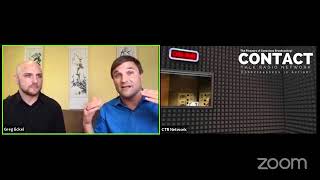
Dr. Greg Eckel and Dr. Cody Strodtman discuss hormesis, the controlled stress that builds resilience through cold immersion and sauna. They cover fasting protocols like 16/8 and water fasts, breathwork techniques including box breathing and Wim Hof hyperventilation, and peptides like BPC-157 and TB-500 that clinicians use for healing and cognition.
Chapters
On tack talk radio and on tunein.com hang fm and upsnap mobile Contact Talk radio.
Welcome to what the Health. An independent approach to your health span. Have you noticed how our healthcare system may not have your best interest in mind? Join Dr. Eckel in this fun and sometimes disturbing exploration of the state of healthcare and what it means for you. Now here's your host, Dr. Eckle.
Yes, it is. Sometimes it's fun and sometimes it's disturbing. Today we're gonna have both of those topics on tap. Welcome back to what the Health. I'm Dr. Greg Eckel. This is my associate physician here at NatureCures Clinic, Dr. Cody Stroktman. Welcome aboard, sir. Hello. I am so excited to introduce him to our community here on what the Health. He's been behind the scenes and I figured I'd bring him out onto the film in front of the camera and get his voice out there because he's instrumental in my thinking at the clinic. And we're back in the physician's room kind of putting our heads together. Today we actually just took a CNS vital signs testing our cognitive powers. And I want to give you a little bit of an introduction to this gentleman. You know, he's new to the team at Nature Cures Clinic. He comes from my alma mater of National University of Natural Medicine. He is a dual degree provider with a naturopathic doctorate and I believe a Master's of science at Oriental Medicine or. Yes, great. You know there's different degree statuses over there, a bit of his background. So he's got a bachelor of science in microbiology from Kansas State University. After graduating, he worked in research and development with a biotech startup focusing on bacteria in the agricultural sector, which is kind of a. We had some interesting conversations around phage that may come up in the, in the discussion today. His strong research background has enabled him to follow the latest developments in research as well as enhanced his ability to think critically about novel approaches in medicine. So really a kindred spirit and soul here talking about peptides. We're going to talk about regenerative stem cell therapies, really cutting edge components of modern integrative naturopathic care. He decided to attend medical school to understand health and disease in order to have a bigger impact in the world.
He.
He received his doctorate from Newnham and a master of Science in Oriental Medicine at Newnham. He is passionate about lifestyle medicine, human optimization and educating the masses on taking action with their health. He is an up and coming author, a speaker, educator and physician. We're going to talk about all facets there. So really, thanks for coming on board here and what you know, I titled it. I titled our talk today. We talked about hormesis, peptides and biohacking.
All of them are my passions. Love them all.
I think what we'll do is put this in the framework of a little bit about. I always like to ask folks, why did you get into medicine? And you did talk about it in the bio there. You went into research, medical research, working in the agricultural sector. And what was the epiphany to say, you know what, I'm going to naturopathic and Chinese medicine?
Yeah. Well, it wasn't a quick transition, but I was working in agricultural sector for a microbiology startup company, which is really, really fun because it was from the ground up. So I was able to utilize the tools that I had already gathered, welding and construction, just really build out the framework of that startup. And I was tasked in the R and D section to increase the longevity of our product. So what that means is optimizing bacteria to survive longer. And that was challenging for me and that's what kept me there for so long. And at the end of the day, though, I just didn't have a lot of fulfillment. And ultimately I was making probiotics for cattle that would expedite the period in which they got to slaughter. So it was exciting, it was fun, but it was time to move on. So during that transition, I thought about, well, where am I going in life? What can I do? And the one constant that came up for me was health and disease. All human beings share that. So I figured if I can understand health more so on the health, not so much on the disease, but if I could understand health, I could have it really big impact. So that's really when it shifted my direction and I started exploring other options.
Did you grow up in Kansas?
I did.
You did. So that is, you know, Manhattan. Kansas State is in Manhattan.
Yeah.
Yeah.
Little app.
So it's the little apple. Right. So near and dear to me have had family living in Manhattan and Kansas State in particular. So it's just a small world. And as one of my favorite favorite comedians used to say, it's a small world. But I wouldn't want to paint it. So that is. But really small world. So that is. That's what took you into the health sphere.
Yeah, it did. And I was. I didn't know about naturopathic medicine at the time just because there was like seven or six naturopathic doctors in Kansas, a lot of them up in Casey, which was hours away from where I was at. So I started to study MCATs and go down that traditional route. I didn't want to be a clinician. I just was going to do research because that was my wheelhouse. It was going to be in neurology. And then I was studying for that. And I was really just griping to my roommate at the time about the philosophy and things that I didn't agree with. And just very succinctly, she said, you should check out naturopathic Medicine. Did a quick Google search and I think it was two weeks I was checking out schools, seeing what it's all about, and it really progressed quickly from that. So I'm in debt to her. We're still great friends today, so thank you so much.
It is awesome. That is awesome. So that actually led. So you did the dual degree, which is. That's why I really brought you in. And this component of your curiosity, inquisitiveness, and also your interest in more of the cutting edge like the peptides, etc. So I understand. And what I wanted to kind of frame our discussion with here is you have a real big passion. I mean, you've got a book, you're in the process of writing a book. And this topic is around empowering people on how to take care of their health, understand their health and things that they can do within their control at home. Now, did I paraphrase that properly?
That's great summary. That's beautiful. So.
And that is a perfect topic for what the health like. This is one of the things of what I wanted to bring out to folks is really things that I want to know, things that I want my loved ones to know, things that I want their families to know, and things that the community should know. And that is honestly how we change the world. And that's why I want you all that are watching, please share this show. If you haven't yet and you're watching, please give us a review on itunes or Spotify, whatever your favorite podcast platform is. Write us a review and share us. Share us on social as well and help us get this message out, because you're not hearing this anywhere else. So this aspect of this book. You are a friend of Hormesis.
I love hormesis.
And so Hormesis. What in the world is that? Because that was in the title of the show today.
It was.
Yes.
Great question. Hormesis, like Dr. Eckel said, is the backbone of my book. He my philosophy of life, a simple definition is difficult to come by, but we're going to do our best here. In essence, a small stress to any biological system is going to have a certain effect and the effects are going to be different with a larger stressor. So to break that down into English, let's just take cold water immersion, something that I love personally. If you jump into cold water and then jump right back out, it's going to have a completely different response biologically, mentally, than if you stayed in for 20 minutes. That brief immersion, you're going to get, you're going to get energized, you're going to feel alert, alive. That's actually going to increase hormones that increase metabolism. So it's going to warm you up, but at the same time, the opposite side, you stay in there for 20 minutes, it's going to have a suppressive effect. Respiration is going to go down, metabolism is going to go down. You're just going to be frigid and cold. So it's this relationship of stress and the overall load and how biological systems respond to that load.
Interesting. So why do we want to jump into cold water?
Great question. Well, I rarely do, but I've looked at the research and I do it anyways. So in that regard, it's building willpower. But on a physiological fact, you're training those systems. So in that example, we're talking about thermoregulation. So we're teaching our bodies how to warm itself. On the opposite side, if you were to get into a sauna, you're teaching the body how to cool itself. And through this, you're educating your body and your bio, your regulatory systems, on how to efficiently deal with different stresses in life. Ultimately, you're building resilience and adaptation in this process.
Got it. And that is the underpinnings of hormesis. Exactly, yeah. Building that resiliency. You know, oftentimes we hear, you know, stress is in a negative fashion. Right. We've got, oh, I'm really stressed out, or I've got too much stress and overwhelmed. And I had watched a TikTok of a psychologist or psychiatrist, it was a psychiatric physician, and she came out and said, you know, I've been killing people for 20 years. A pretty compelling beginning to a lecture. What she went on to say was by saying that stress was a negative and putting the connotations of a negative information, it made the stress or discussion around stress 10 times worse in the individual she was talking to. This concept of hormesis is a really interesting one to really help re emphasize of. No, actually the stresses keep us sharp, it keeps us alive and this balancing of our systems of adaptability and resilience. So the cold water, I mean you've seen the biohackers, we're gonna talk about that next of what that means for our individual viewers out there. But there's some, you know, there's some cold water plunge challenges. There's the iceman Wim Hof that is doing a lot with this thermoregulation and what that does to our physiology and resiliency. I mean as we're seeing with the stressors of the world right now, this is a very big component of having not control but of having that understanding or self regulation. It really is our choice to do it. And that's one of the best things that I found also to be able to like you put this really big smackdown on the system. I mean this is the homeopathic or the homeopathic, the naturopathic concept, right, of hot and cold hydrotherapy, a bit of finishing with cold, your showers, et cetera. And so that is, that burst of it increases. So like on weight loss, like what are some of the benefits of that cold water emerge?
So your thyroid hormones are going to go up, surprisingly enough, if you fast, do a water fast and then do a cold water plunge again, that hormetic stress short cold water plunge, it's going to be amplified even more, which fasting is near and dear to my heart, which is another stressor to bioregulatory systems, which is going to be a part of the book. But also with that cold water immersion, you're going to increase your brown fat and that's associated with a higher density of mitochondria which is going to increase energy. You're going to help regulate, well your norepinephrine and some of those stimulating neurotropic factors are going to be generated. So it's good for overall cognitive health as well. And like I said, it's. Well, I'm glad that. Well, since we're on this topic, it's speculative, but I think it's a very interesting theory to go down. We're seeing a lot of thyroid conditions right now in the world and where we live. And I'm speculating that it could be due to us not working our thyroid. So what does the thyroid do? It helps regulate our temperature and then also increase metabolism in which by affecting metabolism you're going to increase or decrease temperature. So it's speculative at this point, but I'm guessing that if you exercise that gland through cold water immersion, showing your Body how to warm up, you're going to increase that thyroid production. At the same time, again, if you do sauna, you're going to educate your body on how to cool down. And the modern era that we live in, I mean, we rarely are exposed to temperature difference of say, 10 degrees. So we rarely exercise our thermoregulatory systems. Unless you're really active and running. A lot of us don't utilize cold that much. So again, this is just speculative, but something I need to explore. Cool.
That's awesome. And I think you're right. I think you're onto something there.
We'll see.
Yeah. So in the framework of the book, so what was the goal? Like, why did you want to write that type of book on empowering folks at home on different health techniques, on what to do?
Because it's so important. Everything that I'm putting in the book is things that I've done and researched and I wish I would have known before I went to medical school. I wish that my family, my friends, everyone has this information. Because what's so important about it is that these techniques that have been practiced for 2000 thousands of years have been clinically researched and to show beneficial effects, had beneficial effects in the research and then also empirical evidence for thousands of individuals that are doing this. And these techniques are simple, effective, and they're free. So I mean, you can do them wherever you are. And the only thing you have to do is take action, which I think is amazing. So it's got nothing but upside. Potential individuals just have to act. And the whole point of this book is to give them a framework. Not end all, be all, one plan. You have to do this. The beautiful part of Phormesis is it's a general framework and from in which there's tons of variety. I like to do cold water plunges. Somebody might want to do a cold shower or, you know, some variation on that. So there's still. You get certainty and then uncertainty based on your predilections on what you want to do. And I think that's amazing as well.
That's cool. So do you have a. I'm going to put you on the spot. Do you have a working title for this book?
I don't yet.
Okay.
I've contemplated a few, but none really struck home. Yeah, perfect.
So then the overall framework. So like, what are, you know, without giving away the whole book, but just talking about some sections or like the arc of the story arc for folks to follow along at home, what areas are you going to be Empowering us with.
Yeah. So we're going to talk about hormetic techniques in relation to bioregulatory systems. So some of those systems include respiration and with that breath work, working on O2 and CO2 and how that affects your body. So if you're in an anxious state you can do breath work. If you're just normal, you can also do breath work just to work that respiratory system metabolism. We can talk about fasting. As one of my go tos, we already talked about thermoregulation. A mindset is a big, big one out there. Also movement, nutrition. So things like that, things that work on that biological regulatory systems in a hormetic way and techniques that have been verified through all these studies.
Love it. Yeah. So what's an example on the breathwork? Because I think right now, especially with all of the stress on the planet, the breathing, I think we're really going to find a lot of folks needing this teaching and breathing, proper breathing. I mean what have you found in your research there?
Well again it depends on your state. But where we're currently at, like there's a lot of anxiety around here, there's a lot of uncertainty. So just to calm our systems down, we can use two different things. We can increase the extra tired, extra tired, the out breath. We can increase the out breath in relation to the in breath and that will increase vagal tone and bring our parasympathetic, parasympathetic nervous system down, up, decrease the fight S and S. So what that means in reality is it's going to calm us overall, make us think clearer, make us think more sharply. And that's just one example. Another one would just be increase in CO2 and you can get that just through working out and breathing out of your nose instead of your mouth. When you do that, you get breathe out of your mouth with exertion, you get a lot of O2 that tends to be stimulatory. If you just exercise and just breathe out of your mouth, our CO2 builds and that has a calming effect on us overall.
So out of those two, let's look at those. So when you're saying there's a longer exhalation than inhalation.
Yeah.
Like for What? Like the 4, 7, 8 breath or like what. What are you talking about there?
Yeah, great, thanks. So there's various techniques to that. There's box breathing. So four seconds in, four second hold, four second out. That's a common one. But in relation to what we were talking about, you could say four seconds in breathe. Momentary brief pause. And then say six to eight seconds on the out breath. And just do that and repeat. And actually the Navy seals use this in a time of stress just to calm and center themselves. Which, which they do the box breathing.
Okay.
Just a way to regulate.
Let's do it. Walk me through, walk us through that box breathing. So I want to do that right now.
We'll just do a box breathing to bring us back into the present. So inhale deep diaphragmatic breaths into the chest for four seconds.
Two, one.
And then breathe out. One, two, three, four.
Hold.
One, two, three, Four. In 1, 2, 3, 4.
Hold.
And then out. 1, 2, 3, four. Perfect.
So 4, 4, 4, 4, 4,.
4, 4. The box breathing technique.
I love that. I already feel more centered. No, that's great. And you know, these are practical tips to take home. I'm going to put those in the show notes. So we're going to talk about the box breathing here. I love that. And you're saying that is A. Navy SEALs developed techniques they do use, or they use.
They use box breathing to help sear them in chaos. Yeah.
Anybody experiencing that out there? You know, we're seeing it everywhere here at a clinic where, you know, we're seeing a lot of our patients that are, you know, we're kind of over the pandemic. Right. But the pandemic's not over with us yet. So, you know, these techniques that we can use at home, I mean, that's a, that's a brilliant one right there. Then the second piece of that on the breathing you had, there's all kinds of different, these are ancient traditions. So from yogic breathing to box breathing to just a mindful meditation breathing, there's all kinds of different breath work. So this one we're going to highlight there. How does that fit into the hormetic model?
Well, the box breathing that we just walked through would be a regulator of our nervous system. Right. So it helps us, bring us, bring us back into the present. And that so much is not hormetic treatment, so to speak. Hormetic action in the respiratory system would be short term hyperventilating or breath holding, things of that nature, things that really increase O2 or decrease O2 just gets a change in the normal gaseous states in your body. So Wim Hof breathing is an example of, well, it's tummo breathing, but essentially it's hyperventilating, bringing massive amounts of oxygen into our system. And from that you get all sorts of sensations and, which is interesting. And I absolutely love that technique. But on the flip side of that, it would be breath holding. And a lot of athletes use this to help increase their red blood cells and oxygen capacity so they can run longer distances. So that would be two ends of the spectrum in regards to hormesis and respiratory system.
Okay. Oh, cool. Yeah. So that just pushing our body into different physiologic states.
Exactly.
And being able to adapt into those where then the mind doesn't go wacko of like, why are you holding your breath for so long?
Yeah. And it also has a secondary benefit. Because you're holding your breath. And if you've ever hold your breath for an extended period of time, your brain's going to start screaming at you in no time. So just to help that mindset and just help out with that anxiety state, just I have control. This is voluntary. It works with the mind as well.
And we do recommend to breathe. So please don't stop doing that. Of course. Okay. So breathwork. You mentioned fasting, which is near and dear to you. I just had you in. We run a thrive at home program through our clinic and I had Dr. Cody teach our participants some different techniques of fasting. So this is one, it's kind of in vogue right now in the integrative model. So maybe you're not so familiar with it though. So we're going to just start from the basis and the beginnings. So we do call breakfast break fast. So we all are fasting at some level every day. Yeah, but what's an optimal level of this fasting?
It depends on who you ask. Okay, but in vogue, let's talk about time restricted feeding, also known as intermittent fasting.
Yes.
And this is the type, it's not particularly a fast. It's the only one that works with circadian rhythm, typical fasting. It works with the amount of calories that you have. A lot, say water fasting just eliminates them all together. And then others say the fasting mimicking lowers that amount down to say 20 to 40% of your normal caloric load. But going back to intermittent fasting, that's one that's really popular out there. And let's discuss that. It again is a ratio a 12 to 12. So a 12 hour feeding window. That means in the research any the first thing that you eat other than water, that starts your window and then 12 hours later you should stop eating. And then you have 12 hours of fasting where it's nothing but water. That tends to be the balance in the research. Some individuals can extend the fasting Portion. A lot of individuals will do, say an eight hour feeding window and then a 16 hour fasting window. And the longer you fast, you get better results. Well, results, you get increased autophagy, you just feel better. And it also just depends on when you eat. There's things called night eating syndrome in which your cortisol spikes because all your food is coming at night when your cortisol should be low and your melatonin goes up. So it also depends on when you eat. Ideally, you want to be in rhythm with the world. So when sun rises, that's when the animals eat and that's when they're active and that's when you want to be active. So that's when you want to be eating. Night goes down, that's when you want to be resting. So stay away from that food at that particular time. Again, these are broad strokes. They're generalities or generalities? Generalities. So if it works for you, and that's what your schedule is, honor that and do that again. These are broad strokes.
Awesome. I smiled there because it was like, are you promoting nature cures? So, yeah, I had to put it out there. Sorry. I am corny that way. You all know that. And so with mimicking nature, the circadian rhythm is driving a lot of our hormones. And it goes to figure it also helps, it aids our digestive component as well. So that is the time restricted. What would be an ideal? So I did have Dr. Pompa come on and talk about fasting. He's got a big piece of that in his just general regulation of the human physiology, which is awesome. It's an awesome interview. But in particular, you have been a big proponent of water fast. And I'm wondering why, like, how would the general public think about it and what is it that they're getting? The benefits you alluded to, but I want you to spell those out for our viewers and listeners.
I absolutely love water fasting just because of both. Just because of those benefits. So let's break that down. So with water fasting, we're normally in a metabolism of sugar, right? That's what our body utilizes. And by taking away everything, not only is it restorative to the gut, we're no longer consuming anything, so we don't have to worry about breaking that down. But we're also going to shift our metabolic needs to more fat because that's the only energy source around. We have protein, but we don't like to eat our muscles first. We have a lot of fat and that's where our body goes. So not only is it going to decrease fat, it's going to upregulate what is known as autophagy. Now this is the process of cleaning away cells that are no longer functioning normally yet they are still promoting cytokines and promoting out signals to the body on how to react. They're not really functioning properly. So you're clear those cells away and just make your system just vital and robust based on the best cells that are functioning for you. It's also going to help reset your hormones. If you're high in a particular area, you're going to get, you're going to lower that, let's just say inflammatory process. It's going to decrease inflammation. What's another high?
Cortisol.
It's going to lower cortisol and help reset all those triggers, help you get sensitized to that again. It's like a metabolic reset. So when you come back, we see this a lot in individuals that I've worked with and also various other clinics. They're going to go back to their same diet or incorporate different foods and they're going to have a completely different response because now their body is clean and has the ability to say this is my body reacts well to this food or it doesn't. So it's a perfect way to fine tune which foods work for you as well. So there's a lot of highlights and I just top or just touched on a few of them, but those are some of my favorites and why I fast. And then also going back to the mental aspect, it takes a little bit of mental fortitude just to say I'm not going to eat for X amount of time and you're going to get cravings, you're going to get hungry. And just to say no, I made this commitment to myself and I'm going to honor that. So you get the mental aspect as well now.
So just a word of caution for folks. I mean, is this, we're not recommending this for everybody, especially right out of the gate. Now, that said, the flip side of the coin I was going to ask you is how does one prep, how does one prep oneself? So one, the caveats, big asterisks, we are not recommending this. Two, if you are on medications, you definitely want to get involved in touch with somebody who knows what they're doing. You can contact us here at the clinic. We do a complimentary consult for folks for 30 minutes to book a call. If you're interested in that, please just send us an email. It's naturecuresclinic.com you'll find on there for our consult. You're definitely, I will invite all listeners in on that. So that said, I heard you give some really good advice on how to prep your body for one of these water fasts and then how to do it and then actually how to come out of it. And so just as the kind of the Cliff Notes version again. So big asterisks here, folks. But this is a very, you know, people aren't promoting this on the news because there's nothing to sell. In fact, you're consuming much less. But we have seen on, you know, rheumatoid arthritis, autoimmune conditions, you know, arthritic changes, pain states, irritable bowel, sibo. I mean, you name a condition and there is a great response to a fasted state, right? It resets the gut, it resets your hormones, it turns off inflammation because there's nothing coming in to activate your immune system. Right. You're just on a detox route. So that said, if somebody is wrapping their brain around this now I'll give you a for instance. So I was talking on vacation, as I want to do, to talk about health and, and fasting. This topic came up, my kids listened to this and two 18 year olds were like, you know what, that makes a lot of sense. We're going to do a water fast. And they, my boy, he made it a day, 24 hours. And to his credit, he did make it 24 hours. But he was, he thought like, well, wait a minute, I have this big feed coming up. There's a Blazers game coming and I want to do wings and whatnot and I don't want to break my fast with a bunch of. So he stopped. And so how does one wrap their.
Brain around this going into a water fast and. Yeah, yeah. So if you, this is your first fast, I would start first with going down, time restricted eating just to get that ratio down and then go maybe into a fasting mimicking, lower that caloric need for a little while and then transition up to fasting. And the reason for that is you want a little bit of metabolic flexibility before you completely shut off the sugar altogether. You want to make sure your body can respond to low levels of sugar. But if individuals are out there, again, we're not recommending it. If they want to do water fasting from what I've read and done in the past, and individuals that I've worked with Recommend Eating like 3 days of salad, a lot of fiber, try to stay away from the meats and the sugary dressings because we don't want to amplify sugar. And just by doing that, you're going to lower your caloric intake because you're just eating nothing but fiber. And then also that's going to really clean out your GI system, all that fiber, plus you're getting a lot of micronutrients coming from all those rich greens. And then that's. That way you can transition into the water fasting nice and clean because you don't want a lot of sludge sticking around in your body when your metabolism decreases because you're in a fasted state. So I would recommend that. And then coming out of it is very, very important to eat easily digestible foods. So one of the aspects that I talked about with autophagy, our bodies will literally shrink. Like I think it's. Our brains won't and our testes won't, but every other organ will literally shrink due to this autophagy. But on the caveat of that, once you start eating, we go into a vicious growth phase. You know, we just. Tremendous growth phase. So we want nutrients that's going to serve us for that. And our GI system has been off track for, let's just say one to however long you have been fasting. So we need to ease into that. So cook vegetables easily, digestible food, high in nutrients, so you can transition, make it easy on your gut and give your cells all the nutrients it needs when it's in that rapid growth state.
Lovely. Awesome. Yeah. So fasting. Now, one umbrella here is we're talking biohacking, right? So this component, right, Cameron, our producer, said that word just makes me sound smart. And so what is this concept, right? We talked about cold plunges, we talked about fasting, time restricted eating. These kind of fall under this concept of biohacking. What is that and why are you so into it?
Why I'm into biohacking.
Yeah.
Well, I think biohacking is almost synonymous with human optimization. So a lot of individuals are tinkering out there with their diets and you gotta try this. And this makes me, this particular compound makes me feel elated. So there's a lot of tinkering out there and I'm so grateful it's happening because it's causing a lot of innovation. But ultimately it's about human optimization. And this book talks about, gives a roadmap for that, gives a structure for that. And I like to explore and biohack myself if when I'm not at work or doing research for the book I'm doing biohacking. My last one was a dark, Dark. Right, Dark, darkness retreat in which I did. It was just dark for six days. I didn't have any light. I had one protein drink a day. So that was an interesting experience and I learned a lot for that, and that would be considered a biohack. I was just trying to explore what that felt like, what that was about, and maybe glean some insight. So anything that I'm talking about or writing, I've done myself, and I've thrown myself into that. That world, so to speak. So biohackers are my tribe and I absolutely love them because I'm one of them.
Yeah. And I agree. I mean, I say that I'm wearing all kinds of devices, peptides, etc. And this is such an exciting concept for us. You know, I tell our patients here, you know, a lot of the therapies, I want to experience myself so I can tell them firsthand. You know, this was my experience with it. Now, that's an n of 1. However, that's where innovations in medicine come from. So this component of measuring your heart rate variability and your respiratory rate, your temperature, you've got the oura ring on. And so we both wear those. And it was one of the components as to why I brought Dr. Cody into the practice was that kindred soul, spirit component of innovation, of really striving to be on that optimal front. I mean, I've said earlier, I want to be the picture of thriving. I think he is the picture of thriving. And so it's like, let's bring that. That's where we all want to go. There is that abundance component that we can have with our health. And I'm super excited to have you on the team sharing this wisdom with our viewers, listeners, and loving on our patients here and bringing your inspiration into the medicine here at the clinic and also excited for your book coming out. And you'll all be hearing about that whenever that happens. So I wanted to get them out here. He's kind of like in process, so it's just a publicly put it out there. So now he's like, there's no getting off the hook on this one.
It's a timestamp now.
Yeah, so we've got it there. We talked on the biohacking front and then the book with this concept of hormesis and really self empowerment for folks at home. We have a couple other topics that we want to talk in the second part of the show here. One, I'm going To do just a quick station break. We're going to just say, hey, you are listening to what the Health. I'm Dr. Greg Eckel. My guest today is my associate physician here at nature cures clinic, Dr. Cody Strotman. And we brought him in and we're talking about hormesis and we're talking about peptides, which we will get to here. In the second part, we talked about fasting, biohacking. Now, before we get into peptides, because I think that is one of those things I want to say, folks, please share this show with your loved ones, your community. Put it out on social. Help us get the message out. That's how this movement begins. We are not getting it from the top down. If you think it's a vaccine coming to save our lives, you're definitely listening to the wrong show. That's why I titled it what the health. It really is in our hands. We have no leadership at the top. Even at the state level, it's very lacking because it's kind of been bought. There's a huge money influence here and we'll talk about that in later shows. But this today, my ask is just share it with one person. Just put it up on the old Facebook or whatever network it is that you want to or send it in an email. But help us get the word out. We want to grow this tribe here. And you can like us on the Facebook and get the alerts of when the show's coming. But now. Okay, so that was my station break. Now we're back. So we're talking the second part of the show. I want to talk a little bit on the movement and on Mindset Nutrition. And then we'll kind of put in a whole segment on peptides too, because that is a big one that we're doing here at the clinic. I'm learning tons from this guy and we're having a lot of fun on ourselves, our self quantification and we'll talk about that. What we've got coming up too down the pike. But let's start with the movement aspect when we're talking about. Okay, this is such a loaded topic, right? A lot of folks are putting on a lot of weight with the stress out there during the pandemic. It's like the COVID 15 for some people. So what do we got on the movement front? Like, how do we make that fun and enjoyable one?
Just do it. I mean, you just have to do it. And also another aspect of the COVID 15, Covid 20, whatever it may be, is Stress. And with stress, your cortisol is just going to get way amped up and you're going to have a hard time losing weight regardless. But movement is not about weight loss. It's got so much more. And it's actually the king of all exercises is going back to that medic aspect and the bioregulatory systems. Just say you do a quick run, you're working your muscle skeletal system, working your respiration, you're working your thermoregulatory system. It's loaded. So movement's huge and we need to do it as often as we can with within reason. We don't want to be doing a marathon every day, but we can change it up and at home where there's plenty of body weights that we can do. I think you've talked about the seven minute workout. That's a quick and popular one that we can do.
It's one that it's. When I fall out of a routine, I'll put that back in to get back into a movement. It's, you know, basically my statement is if you don't have seven minutes a day, you don't have a life.
Yeah, right.
And so that's a start. I'm sorry I stopped your flow there, but you're fine. Yeah, you're fine.
So with that, there's body work that you can do at home. I know a lot of the gyms are closed, so that's a viable option. There's always yoga or yin stretching just to help strengthen or relax some of those tight muscles, which is going to improve your sleep and just make you feel good overall. Just get out there and move. Even walking will help move that lymph system, help move that sluggish components of that lymph around. Just help help wake you up and going back to circadian rhythm. Try to do that in the morning because that's when sun's rising. That's when all that Yang energy is rising. So get moving, move your body and that's going to help circulate the hormones and get everything moving for you.
So it's a concept of what. What is lymph for folks that aren't understanding that.
Yeah, so lymph, that's a great question. So it's the only. It doesn't have a circulation pump like the heart for blood. So we need to move our bodies and move our muscles to get that out of the way. It's got all sorts of hormones and proteins and just, I guess it's a snapshot of what's in Your body and what's going on. And that's going to be moved around through movement, not so much just being static. And that's why it's so important, because it's got all those messengers, messages in the lymph system. And that's why it's so important to move it, just to process what's going on, what you put into your body and what's what your body produces just to get your body in sync.
Got it. Would you say, does it take waste products out of circulation or what's the purpose of lymph?
Yeah, it gets processed. So with that you have your antibodies in there, you have various compounds. So processing is one of them. Also signaling, messaging is another aspect of it. So, I mean, it's just a multifaceted system.
Yeah, love it. So it's part of the circulatory system, but not a vein or artery. Got it. Yeah. Lovely. So movement. Do you have any, like, prescriptions for it or recommendations as far as times or how much?
Yeah, and that's a tough one just because everybody has their own predilections as to what they find enjoyable. I really don't like running for a prolonged period of time, so I'll tend to do more of the hiit, the high interval training intensity. Interval training high intensity. So with that, I can get a huge amount of stress and a little bit of time, which is another aspect of hormesis when you're talking about frequency and duration of stress. But we don't want to get down in the weeds with that. But I like that others like walking. It's just whatever gets you to do it, do that. Because you don't want to wake up and just dread your movement routine. Ideally, you just want to enjoy it. And it's going to. It's going to bring you up, it's going to make you feel good.
It is. It actually has been shown to beat for mild to moderate depression. Movement has. It beats all drug therapy. So it is. It's a potent drug, actually, I think movement. And actually we did a consult yesterday in the clinic and woman that was in to talk to us about her health said it so. Well, she said, you know what? Exercise movement is not a chore anymore. It's now the question I have for myself is what am I going to do today? Like, what is the movement? There's another great. There's a book out there called the Subtle Leopard. It's a physical therapist, Kelly, I forget his last name, but the Subtle Leopard. Another patient turned me on to that Physical therapist. And it is just about, you know, that's a great image to have, right? The subtle leopard. So like movement in all of the spheres. You know, what happens to us is we get into these routines and we're sitting, we're driving, you know, we're now sitting at home. We're not really moving our bodies. And so, you know, for our brains to actually function at an optimal level, you know, one of the things that we do, we will prescribe qigong and other movement therapy like that, where you're integrating the right and the left hemisphere, you're moving your body in time and space. A big question I've been asking patients lately is, when's the last time you danced? Right. So it is. And you know, just a caveat to that is like what brings you joy and are you doing it? It's a little bit off topic on the movement component, but I just wanted to mention it. It is still movement. I mean, you know, maybe it is, maybe it's making love, maybe it is drawing, maybe it's making music, but you're moving your body in a different fashion, right? So those aspects of we really need to feed our emperors and our empresses our hearts right now. And this movement aspect, when you talk about circulation, of literally feeding the heart, is you're bringing the nutrients, the oxygen, the vitamins, the minerals into the heart and then distributing those throughout your body. We talk about Chinese medicine with blood flow. It's really our focus on Chinese medicine with blood flow, of how much blood is flowing in your body, what's the quality information in the blood? And this is how we determine health, this is how we correct health. This is how we get back into a thrive mode. The movement aspect of this, you could be taking gobs of great supplements, never moving your body and then not moving your lymph and not moving your circulation. And they're not getting to where they need to go. And so this is really a really tenant foundational component. Of course, we've all heard it like, you got to exercise 150 minutes a week and it's got to be of moderate intensity. I also like the high intensity stuff. You know, there's great book called the One Minute Workout Physiologist out of in either Toronto or Ontario province somewhere in Canada. It's that nation north of the United States. And he was basically studying the benefits of exercise and movement and realizing like he's got small kids, he's got a full time job, he's got grad students, he's stressed, he's not able to exercise. And he's an exercise physiologist. So he started studying like what's the minimum dose that I can do to get the maximum output? He and he found it was four minutes. It was a one minute workout. So you warm up for four minutes, you really bust butt for a minute and then you cool down for four minutes and you do that four times, right? So it was four minutes of like high intensity over, you know, 20 minutes. That's my type of exercise. I don't have all day to spend in the gym. In fact, I just, you know, jettisoned my whole weights out of my garage to my 18 year old. And so, you know, I've got to come up with some new techniques here of moving the body at home. 7 Minute Workout is a great way. Just old calisthenics, like that's what we're talking about. Jumping jacks, sit on the wall planks, push ups, you know, sit ups, you know, step ups onto a chair. You could do your triceps off of a coffee table. You know, just simple stuff like that, jumping rope. My staff, they've gotten into hula hooping, you know, so you can get creative with it, have fun with it. That's what we want to promote, promote, really bring more joy out there in the world. And so that's the movement.
Yeah, yeah, that is the movement, yeah.
Cool. So let's talk nutrition and then we're going to talk mindset and then we are. Well, wait a minute, let me look at the time check. So we are going to talk. Let's not talk nutrition because I've had lots of folks on the show talking nutrition. I want to talk mindset and peptides. So I have a big, big mindset discussion next week with David Baer. I'm excited to really bring him to the communities and awesome thinking on Personal Development 2.0. But on the mindset front, this, we are seeing it day in and day out with our patients here with ourselves. What's your take on that mindset?
It's absolutely huge. I mean we can talk about fasting, different hormetic things, different nutritions, but the mind is always present. It's how you perceive information, how you react. I mean the states that you're in, what you tell yourself, your beliefs, your narratives, that is the mindset. And it is so, so important. It can either act as a potent ally or an enemy. And to be aware and bring awareness to what you're thinking, what your perspective, perspectives and beliefs are around certain movements, certain movements just Life as a whole. I mean, it's very, very important to do.
Yeah, I'll just reiterate too, on that. You know, we see people that come through pretty big treatment programs with us, and they've been ill for a very, very long time and their symptoms start to go away and they start to not feel better. But they come in on an evaluation and they maybe they had 90 symptoms on my intake form and they click off 70 of them, right? Which is phenomenal. 70 out of 90 symptoms gone. And I asked them how they're doing and they're like, oh, I'm not doing well. I'm like, what are you talking about? Like, I came in here, I was like, wow, this is amazing. 70 of your symptoms are gone. And they're like, well, what if they come back? What if they come back? So their symptoms, they've consciously written down, check the box. This has improved. 90% improved or better. But they won't allow themselves to experience how they're feeling. So they're still worried like, well, the illness could come back. So I'm still sick in my head. I'm still sick even though I consciously said 90% improved or better. But I don't really feel any different because it could come back. It's like, well, wait, this reality shift here is. Wait a minute, what are we doing? This is a mindset, huge mindset. I totally understand it. It's a coping mechanism. They don't want to get their hopes up. What if it does come back? Well, yeah, what if it does come back? It may. It may come back. Like, we're dynamic beings moving through time and space. So the thing is.
I'm sorry to cut.
No, do it.
It's fear and we're all going to lose this eventually. So you might as well play full on when we can, right?
And admit and celebrate those times. Like, at that moment in time, they did not have the symptoms. They could have been enjoying good health. So, like, now is the moment of what we have. We can't regret the past and we can't worry about the future. It is in this present moment, now. This is cliche, right? I mean, it's like the power of now, but there's so much wisdom in the only reality is now. And so allow it to be if you are feeling better, like, get into it, celebrate it. Yeah, but so many folks are so flatlined and conditioned into, nope, nope, I'm not allowing myself. I've got my mind trap on and damn it, I'm not going to get there unless you're like shocked into it, which, you know, some of us have been, I admit that. But it is, you know, it is that mindset component. So I'm excited for that discussion next week. Now we're going to switch gears here into the last 10 minutes of the show and looking at peptides. So one of the things we did this morning, so this is fun, doctors being geeks, is we really got into a test. We got into testing ourselves and we did a brain test on each other, CNS vital signs. So Dr. Cody took his, I took mine independently, and then we get back and compare notes. But this is a test that we're going to be rolling out with, folks. Now what I'm going to do is I'm going to do dihexachream, which is a peptide. So one just quick overview on peptides. What are those?
Peptides are short molecules that have a drastic effect on metabolism. So protein are big structures and then amino acids are smaller versions of that. And then you have peptides. So they're literally signaling molecules that change how physiology happens.
Love it. And you can take them orally, you can inject them, you can put them on as creams. Yes. So I mentioned the dihexachream. Now our focus has been brain health, neurodegeneration and longevity optimization for entrepreneurs, etc. But how about some favorite ones because you're really ahead of the curve on self experimentation here. So what do you have to share on those?
For cognition, I've tried C Link and C Max. Those are both in that realm of neurogenesis and cognitive function. Also very powerful one is cerebralysin. That's amazing. Lot, a lot of research has been done specifically in Russia and Europe around that. They're giving that to stroke victims, TBI individuals and they're getting a lot of success with that. Dihex is also another great one. I'm enjoying experimenting with that. I just heard about it once I joined the clinic here. So that's been a fun experiment for me to do. I honestly think peptides, I would say they're the future of medicine, but we're implementing them now. So it's here. So it's great because these little small molecules will actually give your body signals and your body will deal with it. And what am I looking for?
Upregulate.
Thank you. Endogenously up regulate the chemicals it needs. So it's absolutely fantastic. I've used BPC157 and TB400 for.
They're not named well, but no, just for overall healing.
I was suffering from tennis elbow for a long period of time. And I was in medical school at the time. And I was, you know, I was broke. So I was like, I know PRP is good for this. I know prolo is good for this. So I tried to do it myself, on myself with those systems, and it didn't pan out so well. And then I ordered those compounds and literally within a week I was back back lifting. And within two days, like, it was gone. So, I mean, they are amazing molecules to help heal torn muscles, torn ligaments, things of that nature. They're just absolutely amazing.
Love it. All right, any last parting messages for our listeners and viewers?
Get out there and act whatever is in accordance to your highest value. Implement that and just do it.
Love it, everybody. Thanks for tuning in. This is Dr. Greg Eckel, Dr. Cody Strotman. We are Nature Cures Clinic. This is what the health and sometimes it's disturbing, sometimes it's fun. Today, maybe a little bit of both. We are here on the Contact Talk Radio network every Tuesday from 2 to 3pm Please share us with your loved ones and I look forward to forward to seeing you next week. Take care.
More from Dr.

EP. 197 Brain Regen: Harnessing Essential Oils for Cellular Health and Longevity

EP 196 WTH?!? Unlocking Cognitive Health with Your Genetics with Elwin Robinson






EP 190 WTH?!?: Mind-Body Mastery: Harnessing Movement, Breath, and Sound with Jeffrey Williams

EP 189 WTH?!?: Nourishing Connections: Lynne Bowman on Family Meals and Healthy Living


EP 187 WTH?!?: Clearing the Air: Dr. Kevin Smith on Nasal Health and Migraine Relief