EP 60: WTH ?!? The real root cause of thyroid imbalance
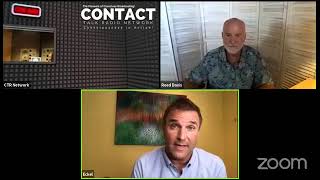
Dr. Greg Eckel and Reed explore why thyroid problems go deeper than TSH tests show. Hypothyroid symptoms can stem from liver function, gut bacteria, cortisol, or autoimmunity, not just a broken thyroid. They discuss broader lab work and lifestyle fixes instead of jumping straight to medication.
Chapters
FDN certification course, helping his graduates build their private practices. He's usually found gardening or riding motorcycles. Welcome aboard, Reed.
Hey, thanks so much, Dr. Eckel. Real pleasure to be here. Great topic today.
I know. I'm excited for this one. And I'm also interested in what type of motorcycles would we find you riding?
Mostly Harley Davidson. I have a Road Glide 2016. I got a couple other bikes, but that's. That's my baby.
Awesome. That sounds awesome. So this one is. Thyroid imbalances are so, so common in around the globe. And I'm wondering when. When are thyroid simple symptoms not a thyroid problem?
Well, that could be most of the time, you know, unless it's a autoimmune condition, which there is definite pathology in the. In the thyroid. But it could be so many other things, Dr. Eckel. And I mean, just to top off the list, you know, the thyroid really only does what it's told to by signals from little organs up in your brain. You know, they call the hypothalamus and the pituitary. So these are very sensitive little organs up in the brain, and they tell the thyroid when it needs to crank up metabolism. But sometimes the signals aren't getting there. I mean, those organs, it could be right there. So it could be hypothalamic, it could be pituitary. You could have a problem in the thyroid. There's such a thing as nutritional deficiencies, but I think they're pretty rare. And I can go on and on. I mean, the thyroid itself doesn't produce active T3, which is usable by the cells. It really produces almost all T4, which has to be converted to T3. Now that happens in the liver for the most part, and maybe that's a problem. So now we've talked about hypothalamic and pituitary and could be nutritional. It could also be in the liver where you're not getting good conversion of T4 to T3. Now, I don't know if you want the whole lesson, but I could tell you that conversion is critical. The liver also was responsible for making thyroid binding globulin, so. So that thyroid isn't sucked up by the immediate tissue around it. So in order for thyroid hormone to travel around the body, it gets bound up and then it goes to the receptor cells in the site, the receptor sites in the cells. And by the way, every cell in your body has a thyroid receptor, so they're ready for the thyroid. So that you can up or down regulate metabolism, basically, and maybe the hormones getting there and Maybe it's not. And so, again, idea of this binding is very, very important. And there's some other ways you can get into the deep, into the weeds on it. Like, the liver also makes reverse T3. If it makes too much, maybe the reverse T3 is taking up those receptor sites. Now that does happen. And then there's a couple other forms of inactive T3 that have to be activated later. Believe it or not, by gut bacteria, up to 25% of your usable thyroid hormone is made out of T3 acetic acid and T3 sulfate, if you must know those. Again, they're made in the liver out of T4, but they're not activated until later, again, by gut bacteria. So it's amazing how it's really an orchestration. And in each case, there are some other examples, other anatomy, physiology, biochemistry that I can give you. But the bottom line is that your symptoms would be the same. So walking into a doctor's office, if you have weight gain or low energy, you could have tingling hands, feet dry skin, hair loss, brain fog, constipation, swelling, the ankles feeling blue and sad, and things like that. That's a traditionally reliable cluster of symptoms that points the finger at thyroid. But is it thyroid? Well, I just gave you eight ways that it's not the thyroid, but. But the symptoms, regardless of what the underlying condition is, would be the same. So it makes thyroid a very interesting little animal. Indeed. Doesn't.
So. So does. And now let's unpack. Like your opening piece there, Reid, was like, enough for five of our. What the health lectures here, which is awesome. I want to talk about. So the eight different varietals. So when we see folks, it's like, basically, they go into their conventional doc, they get their T, run thyroid stimulating hormone, and then they're put on Synthroid. So I. You know, you have all of those symptoms that you listed that could be thyroid. It could be some of these other components. I want to talk about some of the other hormones that you look at. What is. What do you recommend for a blood panel for patients to get a thorough evaluation of their thyroid? And then I also want to talk about that peripheral conversion and ways that people might be able to tell that they're not getting or they're not utilizing their thyroid well, or maybe it's not their thyroid. So let's start with.
Yeah, very good. Yeah, let's start with which one?
Oh, yeah. So let's start with the blood work in the panel. Let's start with that. What do you recommend for a complete Thyroid look.
Yes, yes. You know, it depends on how the patient is showing up. In real severe cases, when I know that they've got a lot of things going on, they're in a state of what I call metabolic chaos. You'll love this construct. You know, it's not a medical diagnosis, but it's my one diagnosis, basically, metabolic chaos. So things aren't going right. There are just thousands of metabolic processes in the body and many, many, many of them can be not operating at full force. Now, when it comes to the thyroid, if you meet a person who's sicker, quicker, and they might have leaky gut and autoimmune and all these different things going on, if they're really miserable, I'd want to do a full panel. I would want to do not only all the thyroid hormones, you would do TSH, you would do T4, T3, probably free T3, you probably do reverse T3 and you could do a couple others. But I would do the autoimmune, the antibody test for TPO and thyroglobulin antibodies because that's going to tell you just how much repair work is needed. So that's a full. Pretty much a full panel. There's T3 uptake and some others. But now you're going to get a more clear picture of is it the thyroid or is it more likely to be one of these other influencers? You could start there. And by the way, conventional medicine, which I don't practice medicine, everything we do is called evidence based functional, functional health coaching. You know, we're always looking upstream. That's why I know about that anatomy that we went through a very short litany on. But so you do have to look upstream. But look, there's nothing wrong. If you have that cluster of symptoms I'm talking about, then you probably should just get a standard panel and see now, because a physician can give you something to relieve your symptoms and we call that relief care, I certainly wouldn't want to leave it there. That's not your landing place, that's your jumping off point. So you could do a standard panel. Oh, yeah. Look, you're hypothyroid, doesn't mean anything's wrong with your thyroid, as I explained, but it means you are low, low in production, lower than normal. So you would have some of the metabolic issues, the tiredness, the fatigue, the sad feeling blue, the various symptoms. And if you took the medication. Not sure I like T4 or Synthroid very much because it's artificial, you know, It's a synthetic T4, it still has to get converted to T3. Why not just take the T3 Active? You know, you can get all kinds of natural products, but. But it's okay to get diagnosed hypothyroid and treated and get some symptom relief. You'll feel better. Now, as to whether you fixed anything, that remains a big question and I in most cases doubt it if you're not looking upstream. Right, Doc? I mean, you agree with that?
Yeah, oh, yeah, that is, it's such a. I mean, I think it's a big play to really look at the anti. The antibodies for sure. I find most folks have Hashimoto's thyroiditis that we, we will take a whole different approach because it's an immune system issue, not just thyroid issue, but conventionally they just kind of be put on Synthroid T4, which is, as you mentioned, the inactive form of thyroid. And it a lot of times doesn't alleviate the symptoms. Like, I'm with you. You know, my moniker is where east meets west naturally. And so I want to do what's best for the individual in front of me. And you know, a lot of folks will just come in on synthetic thyroid and. But it just, long term, it just doesn't seem to do the trick. And that's why I wanted to have you on the show and talk on this functional approach because you're training people around the globe, which is awesome on, you know, proper labs, how to interpret and you know, on creating a wellness program for folks.
Yeah, yeah, exactly. It's. It's a very holistic. We end up with a holistic grounding program. Go on. You were going to ask.
Well, I was going to ask. So on. When you're looking at that, you know, there's a couple different components, right. With, you know, the way that I'll talk about just a simplistic endocrine triangle between the thyroid, the sex hormone, so estrogen, progesterone or testosterone, and, or. And the cortisol adrenal glands, those three glands. Now you threw in a whole bunch of other nuances on top of that. Right. So other areas like, what do you see are the major trends for folks with thyroid?
Well, you're hitting on a bunch of them now in terms of that triad you talked about, you mentioned the gonads, you know, where the sex hormones are produced, the adrenals, where the stress hormones are produced, and the thyroid, which is where your metabolic hormone is produced for the most part. So those three represent a very interesting triad and they all kind of feed off Each other or disrupt each other. You know, the adrenals being maybe, you know, one of the most immediate, you know, handlers of stress. So if stress is. Well, and let me put in this in context too, because I mentioned that the hypothalamus, pituitary, regulate the thyroid. They also regulate the gonads, they also regulate the adrenals. So you've got this. This triad has kind of the same masters up here in the brain. Little tiny, very sensitive organs. So they're intimately connected. The adrenals, the gonads, the thyroid. They all get kind of the blame for a lot of things. Like, we just went over a list of symptoms. With thyroid. You can go over a list of symptoms with the sex hormones, low libido and breast tenderness and weird periods, you know, and just, you just so many different things. And then with the adrenals, you get a lot of the fatigue and foggy thinking and you need coffee and you're sensitive to sunlight and you just. So you could have all these things going on. And you've got to be able to have a construct. I just call it metabolic chaos. Well, that's a good construct. People can understand there's so many different influences, and downstream, these organs are maybe not getting the right signals. They could be overproducing under producing. And the other organs and systems involved, the metabolic processes, they're part of it too. Like I mentioned, the liver is so important to convert T4 to T3 and so on and so on. So you've really got quite an orchestration going on in the body. And you ought to have some way of just starting with one thing that you know and building on it, and building on it, and building on, building on it. So we run labs and we get data on the thyroid hormones, the adrenal hormones, the sex hormones, and then we compare them to a person. And does it explain anything? Do these levels explain anything? Personally, I don't want to just treat the paper. You know, we mentioned, oh, low thyroid. Here's. Here's your medicine. You know, they give you some and. Oh, that'll take care of it. Well, not really. It's just gonna take care of the. Some of the symptoms some of the time. I'm glad you brought up that a lot of people just don't feel that much better on that medication. It's because. And that's a first sign, that's the first clue that there's lots else going on. There's lots of other sort of metabolic chaos. Now I want to throw in here that there's some good news, really good news, and that is that upstream, as we're looking for the underlying causes and conditions, and often you hear it referred to as the root cause. Well, in 20 years of me looking for the root cause, I haven't found it in a lot of cases, but I've gotten close enough to it, doc, to have an effect upon it. So there's no one test you could run for all these things and I could run 10 tests on someone and still not find that elusive root cause, but it doesn't deter me. I'm looking for as many healing opportunities as possible, and then I'm going to apply the general principles of health building. What does it take to have a beneficial effect, a good effect on every cell, every tissue, every organ, every system? So in that way, we're just building health. We're not treating one little thing.
Yeah. So what you mentioned, you know why most doctors call hypothyroidism idiopathic, quote unquote, and why it's not so? I mean, you're kind of answering it now, but I want that explicitly from you.
Yes. Well, if you have a thyroid condition, you're listening to this. Have you ever asked the doctor why, like, if you're on Synthroid, do you ever say, well, what's wrong with my thyroid? The word idiopathic is what they use, but it equates to a shrug of the shoulders. It just goes, that's what idiopathic means. Like, who knows? So, well, we look, you know, like, you got to at least give it a shot, you know, like, look, you may not find the exact reason. You remember I said it could be hypothalamic or pituitary. These little signals from the base of the brain that are. They're reading, they're like a thermostat for the sex hormones, for the adrenal hormones, especially your adrenaline and cortisol and things. And for thyroid hormones, too. And when they. They just know when the time is right to put out some signal to the thyroid or adrenals, make more hormones and. But those glands themselves are under stress. They're under the influence of toxins and chemicals and neurotransmitters and even the daylight cycle, the circadian rhythm and the autonomic nervous system. If you're overly sympathetic, dominant, if you're in fight flight all the time, well, then those little control organs get bad signals too, in a sense, and they're not going to put out exactly the right signals to these other very helpful organs that are downstream. And there's things downstream in them. So that's again why I use this term, metabolic chaos. That's saying something, that's at least a construct. It's a lot better than a shrug of the shoulders.
Indeed. I'm going to take that moniker on that. Metabolic chaos. I like that. So how does stress. So we talked about kind of the endocrine triangle that I talk about it, but how does stress affect thyroid function?
Yeah, well, cortisol is the stress hormone basically and it's the helper for adrenaline. So when you get cut off in traffic or in a fight or yelled at or whatever, you know, your, your adrenaline kicks in to give you more power, more strength. There's other physiological aspects that make you able to run or stand and fight at a higher level. And cortisol kicks in right behind it to enhance the effects of the flight, flight mechanism. Adrenaline. We call it norepinephrine now, but it's adrenaline. And so now you've got, it controls your blood sugar, it raises blood sugar, it'll increase your heart rate, blood pressure will go, you know, again, you're enhancing the ability to run away or stand and fight this fight flight thing. And so what we also notice is that while cortisol might be helpful in that way if it's a short period of time, by the way, cortisol is an anti inflammatory and a painkiller. So it actually helps you. If you get punched in the face, you're not going to feel it. With adrenaline plus cortisol, you can stand and fight and you know, it even reduces the amount of blood you have in your peripheral body parts so that you wouldn't bleed as much. You know, it's really well thought out if you think, you know, there is an intelligence in there somewhere, right?
Oh yes.
And so there's all this intelligence going on. And let me ask you a question or ask the audience to think about this for a minute. Remember, the thyroid is responsible for metabolism. Well, if you're under fight flight, would you want that to be at a high rate or at a low rate? And if you can't figure it out, you'd probably want it to slow down a little bit. Why? To conserve resources. And so there's actually a direct connection between, it's called CRH and the. I'm sorry, it's tr, the thyroid stimulating hormone tsh. So cortisol will suppress TSH from the pituitary. So you know, you're actually slowing down the thyroid purpose if you're under chronic stress? Well, it'd Be natural to go into a little bit of hibernation and save resources and hold on to that energy that might be stored in your fat and organs in the form of glucose or glycogen or something like that. So there's a lot of physiology going on. So that's a component, right?
That's a part of the weight gain that we see or the inability to lose the weight with. When people are under stress and they're hypothyroid. Yeah.
Well, you know, the body's gonna store energy if it can. And so this is why, if you just think of your ancient ancestors, wherever they might be, you know, they, when hunting season was good in the spring and summer, maybe, you know, they were capturing a lot of game and, you know, storing the meat and jerky and pemmican and all these different things. But they also were storing and eating a lot of the carbohydrates that would be more available in the summertime. Putting on fat. They'd actually gained weight in the, in the summer and fall as they were harvesting and, and packing it up. Why? Because in the wintertime it's going to be lean. There's nothing growing. If you didn't store some, some vegetation, you know, some berries or fruits or vegetables or something, you probably weren't going to have any in the wintertime, depending on where your ancestors grew up, you know, or were evolved from or whatever you want to call it. And so there's a natural consequences to being under stress and having food available 365 days, 24 hours a day, you know, that's going to have its moments with you, it's going to have its way with you if you don't be disciplined yourself.
It really is. And I think, you know, we see that playing out with people's health with just the continual access of 24 hour snacking and not getting any gut relief. Before we get into that gut discussion though, I want to talk about that. I'm wondering in your practice or in the coaches that you have set up, are you seeing a greater trend towards the Hashimoto's or the autoimmune component of thyroid? Because you said that is in your complete workup and panel, you do recommend everybody get that evaluated. And, and if so, if you do, great. If not, that's okay too. And then wondering, you know, that immune system function, how that influences the thyroid.
Well, sure, I think it probably influences it more indirectly because the hypothalamus pituitary, remember the major control mechanisms, the thermostat, if you will is they're just little teeny things. And they're very sensitive, of course, to the immune system. And I mentioned toxicity and other hormones and the circadian rhythm and the sympathetic dominance, you know, being in that fight flight. And so it's just one of many things. I would tell you this. I don't focus that much on thyroid. In the initial stages. We'd be looking more at the adrenals and the sex hormones. We look at digestion, detoxification and the immune system, of course, because the thyroid seems to tag along whichever way. Whatever behavior you have or do, the thyroid is going to go along with you. If you can reduce stress and of course, you know, eat right and sleep right and exercise right and reduce that stress, the thyroid might flatten out. It might. Might let just level right up, return to where it's supposed to be. It might take a while and it could take some nurturing as well. There's foods that would help, you know, always. I mean, pretty much never eat, you know, chemicals, pesticides, herbicides, rodenticides, all these things we have that make it interesting. But you know, there. So there's. There's just a way to live out of the trouble that living got you into. And I would just put it as simple as that. I don't know if expressed it exactly that way before, but if you lived yourself into that problem from bad habit, you can really take a stab at, especially with some coaching and some lab. Some good lab results to work with, you know, as starting points and things. You can guide yourself right out of that if you're willing, if you're motivated.
Well, so it kind of. Yeah, for sure. So cycling back into the immune connection though, and how the immune system affects the thyroid and make the symptoms worse, are you seeing a trend more towards the autoimmune component? I mean, you kind of answered yeah.
Yeah, Just in general terms, but I'd say we're seeing plenty of it. I mean, I think regular hypothyroidism is still more common because it's just natural, a natural phenomena. The body's just slowing down metabolism because of the amount of chronic stress you're under. But when you start throwing the immune system into it, it gets worse. Especially if you have what they call hyperpermeability or leaky gut. Then you've got unwanted immune complexes and antigens floating around the body, and the body can start attacking itself. You know, it's trying to put out the fires here and there with this leaky gut, but it will start targeting other Tissue that's your immune system creating a lot of inflammation, and then the dysfunction and downward spiral can be pretty devastating. So again, that's why in the very beginning, when you ask me, I don't run the thyroid antibodies immediately. You know, I get. Unless they have. It depends how they show up. And you'd be surprised how much of that you identify. You know, Hashimoto's thyroiditis, plenty of that.
Yeah. And, you know, it's been. And it could be, you know, my skewed practice, because at Nature Cures, folks are have seen a bunch of practitioners, and I like to say that you don't want to be the interesting patient in my practice. So I might just be seeing more folks with the autoimmune aspect of the thyroid just because it is a different way or different approach when it's the immune system function driving it. Mostly, again, conventionally, people are just put on thyroid medications even when it's an autoimmune condition. Yes, they need port, but we also have to work at balancing out the immune system. So looking at, you know, it was a fascinating component. I want to really highlight how what you said was every cell of the body has three thyroid receptors on it. And looking at it as this metabolic chaos and having really stress components and stressors of toxicity, which we're going to talk about here in a moment, coming into play of slowing down our metabolism, making our thyroid hypo or less active. How do you educate or coach folks around that aspect of it? Of looking at it like, is there a way for people to measure their peripheral conversion of thyroid? Or, you know, a lot of times it's just missed by running the simple panels. Right?
It can be missed, but that's kind of where your clinical skills come in. And we call it clinical correlation. Like really, really knowing how to size people up. The impression forming is what skill, I think, that the best doctors or even health coaches can develop, you know, is correlating these things. And you have to be a good history taker. You got to be able to listen really well and look for clues. You have to be a health detective. Now you've got the lab work to back you up. But, you know, even there, some of the underlying causes can be so far removed from the symptoms that are being exhibited. And thyroid is an example I use in my training all the time. People with that cluster of symptoms we talked about, well, it sounds like thyroid. And so doctors then would run a thyroid test and pat themselves on the back, oh, I found your problem. Your hypothyroid and write the prescription, right. And oh my God. Well, if symptoms abate a little bit, you know, you go, oh, thank you. Yeah, I feel a little bit better, you know, but I still have this, some other complaint, you know. So they. Then again, the physician who's not the best impression former isn't really looking for the clues. He's just trying to find the shortest way to get you out of pain or discomfort. She says, oh, well, that's. Well, let's say now that you're on thyroid medication and you're, you know, you don't have the cold extremities, your constipation, you don't feel so sad. You might even lose a pound or two, but you have no libido, your energy still sucks. And oh, well, that sounds like maybe it's testosterone. So there's. So now and then run a test for testosterone. Pat yourself on the back again. Oh, I found your. Your other problem. It's low testosterone. And here's the prescription for that now. So you really just have a cycle of complaints. Sounds like. And you then run a test and treat the immediate supposed causal factor like low testosterone. But is there really anything wrong with your gonads or, you know, in women, their testosterone is made a lot in the adrenal glands, actually. And so. And they need it. And so, you know, are you really going upstream enough using that system of sounds like. Which means you're guessing at what test to run. And God forbid you're lucky and think you did something, you know, because you can again, you can get people from one visit to the next that way and kind of address each concern that way. But they're not getting healthier. As a matter of fact, they're probably getting more and more unhealthy because whatever is driving those downward spirals isn't being addressed. You're not addressing their environment, their lifestyle, their point of view or anything else. That is really the real answer to it. I'm not sure I answered your question. Yeah, sure.
Do you ever use like a temperature log or following folks temperatures on to see if they're actually using their thyroid? Or is that something that you've seen to be a value?
You know, I don't monitor drug usage. You know, I help people in cooperation with their physicians try to get off medication and use first of all more natural agents, but then again restore the function of the organs. So that's really. It takes time. But I know people who do and do use that, of course. Yeah. And I'm very well aware of how it's done. And you know, I mean we, as a screening in the office, we used to just have people take their temperature and you know, people with low thyroid, it tends to run cooler. And so. Oh yeah, that would just be a self screening that then we could, you know, then recommend they get the test, you know, like. Well, now we're just test.
One way that I've really measured it is I have people take their temperature three hours after they wake up, three hours after that, and three hours after that. So they do that for three days and they average their temperature on the day. I use that to see because their labs could be, you know, within normal limits or the reference range. Right. Because we know there's no normal on the lab work. But we can really see if they're really utilizing and peripherally converting their thyroid from T4 to T3 by having a 98.6 plus or minus 0.4 degrees. So 98.2 to 99. And if they're not in that range, you know, oftentimes I'll see folks, they say, oh, my provider says, you know, I just have a low body temperature. What is the. What. What have you found to be the problem with having a low body temperature? Right. I mean, there's so many enzymes that aren't working in our bodies at that level. And you're telling us every cell of our body has a thyroid receptor. Right. So that is.
So that might point the finger at low thyroid. But the question is still, what do you do about it? You know, so now, you know, they have low thyroid and they're not converting. Good. And then, you know, are you gonna. What are you gonna do about it? So we have a lifestyle program. It's a. It's an epigenetic holistic behavior protocol where you eat according to your type, your right type. Now, cells produce energy. This is part of the temperature thing too. And use the thyroid hormone. So cells have to be fueled perfectly with the right fuel mixture. And there's a perfect mixture for you. It's not going to be the exact same as mine. We might generally both be protein types, but there's going to be somewhere on the dial that you land and I land that are a little bit differently. Kind of like dialing in the old radio stations in your car. If you remember that far back, you'd have to turn the knob until it sounded really good and then you'd always go past it to double check and then you'd back, you know, you go, you know, and back a little bit. That's dialing it in. The expression dial it in. So you can dial in your protein, fat and carb ratios to get that cell firing on all cylinders. And the thyroid receptorship would be a part of why that's working really good for you or not. It's mostly has to do with the oxidative rate, the rate at which you're actually burning fuel. You just want the right mixture. And if you give a protein type the wrong mixture, the wrong, they really do badly, they get really unhealthy, they have no energy, they overeat, they get overweight, they get insulin resistance and triglycerides and cholesterol and all these different things. So anyway, I think that's as important as anything. Thyroid to me just seems to be a part of the puzzle that can be corrected more or less the same way by fueling the cells. Now this, because, remember, I mean, we talk about thyroid here. Those thyroid receptors could be really sort of clogged up with the reverse T3 or they might be burnt out. Receptorship is not a given. It's like, well, if you have had too much thyroid, there's hyperthyroid, especially from poor binding of the thyroid hormone. Remember, the liver is involved. You want to bind that thyroid up but not overbind it. And so if you have under binding because of a liver dysfunction, then you can burn out the receptor sites and then within the cell itself, you can have transcription problems, you know, and it's just not using the thyroid, even if it's getting there, even at the receptor site working. There's other things that can happen on a cellular level. And I'm not sure we need to go that deep, Noctis. But I want you to be interested.
Yeah. Speak into the liver connection a little bit more on what's happening there. So what are you seeing that. That aspect of the.
Well, what you see in the big picture is that the liver is really important and you got to take care of your detoxification organs because. Because they don't just detoxify. They process other elements in the body, like thyroid hormone. They help convert T4 to T3. It happens in the liver for the most part. So the thyroid makes this T4. It's in the liver. It's being converted through enzymes and minerals, cofactors into T3. Basically, you're taking away one of the tyrosine molecules, right? T3 and T4. So you have iodine and you have tyrosine, and that's what it's made out of, see, removing one molecule and then it's Going out there and it could do its job. But the liver is also making reverse T3, just as kind of a balancer. It just sort of knows how to do that. It also makes, As I said, T3 acetate, acetic acid and T3 sulfate. I don't know why, it just does. And those are later converted to active T3 to be used by the cells. They're converted by gut bacteria. So it's just remarkable orchestration. Again, there's this intelligence that's beyond me, but I know it's there and I get glimpses into the. And insights into how it's supposed to be, you know, so. But in the long run, all I can do is guide people's behavior to nurture all the functions of the body. Heart, lungs, pancreas, kidneys, adrenals, ovaries, testes, if you got them, nurture function in the body, coach up function with the right foods for the metabolic type, we call it, with the right rest with exercise, and coach down the contributors to metabolic chaos. The toxins and the chemicals and the mental emotional abuse and the physical aches and pains and injuries. There's a lot to coach down. A lot of it's hidden.
Well, let's talk about levels of toxicity then. So how is that involved with hypothyroidism?
Well, there's always direct effects and then there's the sort of peripheral effects like with the. I mean, all of your organs are sensitive to toxins. And some of these toxins actually made in the body. Some of them come off of bacteria, some of them come from the environment, the external, and they're just, they're ubiquitous. Interestingly, I think back in the 90s, I was an environmental paralegal. I was saving the planet. Air, birds, water, trees, bees. And I noticed things dying a lot. And I made really good money in the environment cleanup business. But I started turning my attention to, well, what's it doing to people? If it's this bad for animals and plants, what's it doing to us, including me? So I made a decision then to start studying that part of it. And I went to work running a wellness center and just had some amazing opportunities there to make some observations and kind of came up with this whole large big picture scheme. And believe me, because of my background in the environment and what I've learned since, toxins are ubiquitously dangerous and destructive and you're breathing them in. I've had one physician friend of mine, really smart guy, Dr. Russell Jaffe. He owns a lab, he owns a supplement company. Brilliant Guy goes around. You may have seen him because he provides continuing education credits for doctors. You go listen to him and get your relicensing credits. So he. He says we're marinating in a toxic soup. Now, he might be in a little bit dramatic, but. But according to some people's bodies and what it does, because, remember, we're all born with these weak links in metabolism. Like, I'm a pretty robust guy. I've got a lot of longevity in my family, and I just seem to be able to stand up and take a beating, you know, like, I've been really hard in my body. It's very well used in case you can't tell. And, you know, so I put it through hell and I survived. Other people are subject to the same things. Not so lucky. Or again, there's these errors in metabolism, weak links in metabolism, what you might call vital voids. And some people just get whacked. They're sicker quicker.
And unfortunately, yeah, I would say we're swimming in the toxins and marinating. I guess if you're a chef, that makes sense. We are marinating.
Yeah, yeah, yeah. He's a chef, I guess.
Yeah, There you go. You know, and it is, you know, it does slow down our metabolism. I think this concept that I keep coming back to and I want to keep exploring with you around, you know, all of the cells having thyroid receptors, that seems to really stick out in our conversation here for the folks that are suffering with hypothyroidism, but for everyone else as well. It's not that all of the cells have receptors for all of the other hormones, right?
That's correct. Only some cells have, let's say, testosterone receptors, you know, where it can have its effect. But thyroid's different kind of hormone. You know, cortisol's way up there among the number of receptor sites because it has an effect. It can break your body down. Cortisol, its job is basically to raise blood sugar. You need energy, and you get it mostly from sugar, especially the brain. It burns through sugar like crazy. So if you're under stress, cortisol kicks in, raises blood sugar. It's why you wake up at night. If you're from, it's from the cortisol. But it might be kicking in because of either low cortisol or from low blood sugar. Your blood sugar drops. Your cortisol is kicking in to raise it. And you do this thing called gluconeogenesis. It'll extract or help extract blood or sugar from anywhere, including breaking down your muscle. If you look at runners who do the marathons and stuff, and they all look kind of emaciated and older than they really are. And it's because of cortisol. I think. At least that's a piece of the puzzle. You're not breaking their body down. No, I think running is fantastic. I think running 26 miles is more than I care to bite off and chew. Yeah, I'm with you.
Speaking of biting off and chewing. So let's talk about that gut and digestive issues with lower thyroid function and that connection, because you said a bunch of our probiotics are actually making the thyroid in the bowel. So speak into that connection for us.
Well, you know, I mentioned that part of your thyroid kind of hovers or is stored as a different form of active T3, the acetic acid and the T3 sulfate. So they're just there waiting for the right time. You know, the body knows what's going on, and it will convert that into active T3. That's up to 25% of your hormones, your active T3 hormone. Can you imagine that? So you'd be walking around hypothyroid, and there's nothing wrong with your thyroid. There's nothing wrong with the hypothalamus pituitary that's sending the signals to the thyroid. It's just that you're missing three quarters of your thyroid because of. You don't have the proper conversion of these sort of subtypes of. Of T3. I find that fascinating why you want to keep your gut healthy. So, look, we've talked about keeping your brain healthy and being stress free and keeping your liver healthy. And, you know, that also detoxifies your body, by the way. And now we're keeping the gut healthy, which is where you break down digestion, absorb food, you know, and not to mention it being 80% of your immune system. So I don't see anything that's not connected to everything else. And I like talking about, you know, I do shows and talk about the thyroid a lot. It's one of the most popular things I get asked to speak on. And so there's people podcasting all over the place for thyroid, but I don't really specialize if I'm a specialist in anything. It's stress and the effects of stress, and everything else is kind of downhill from there, like what it does to the thyroid, what it does to the immune system, what it does to digestion, detoxification, and on and on and on and on. So I think stress is where all. All Illness begins. And so we look at the different types of stress. Wanting to go back to your. Your. Your point about, you know, there's a thyroid receptor in every cell.
Yeah.
Tells you it's pretty important.
Profound. And with. So in back to the gut, though, I want you to get. Stay on this gut topic. You come back into that. So with looking at it like, are you showing symptoms of maldigestion? I mean, you know, the microbiome is a huge study component. You know, what are you seeing with, you know, you're saying 25% of our thyroid circulation is T3. How. How's the gut playing a role there? I mean, with dysbiosis, there are certain probiotics that people should be on. What are the symptoms that somebody's looking for with that gut aspect?
Well, yeah, okay, fair enough. Well, if you just take maldigestion, malabsorption, that can lead to malnutrition. You have all kinds of health problems. But specifically, you could have heartburn, gas, indigestion, bloating, diarrhea, constipation, alternating diarrhea, constipation, nausea, goes on and on. You could have also the very poor breakdown of your foods. So they break down in different ways. Fats. What happens to fat as it's breaking down? You leave butter out forever. It goes rancid. So your fats go rancid. That can produce organic acids and gas. Carbohydrates break down through a process of fermentation, and proteins putrefy. So you have what's called putrefaction, rancidification and fermentation, all going on in an unhealthy gut. And so, yeah, that would be pretty instrumental in interfering with all kinds of processes like assimilation of foods, the biosis versus dysbiosis, Healthy, good flora and thyroid conversion that, remember, there's part of your T4 turns into these inactive forms which are activated later, and that could make up 25% of your total T3. And so, again, I have a kind of a hard time. I always am going upstream, upstream, upstream. I kind of live up in the behaviors and the markers we can use to form baselines that will just. And that's all they are to me. They're not a diagnosis. I don't give any medical diagnosis. I look for healing opportunities. So that's the other thing you want to. You want to borrow a phrase, Healing opportunities versus treatment options. Because diagnosis is like, well, what are the options here? What's the dosage? What's the frequency? Healing opportunities. It's a Whole opens up a whole new world of options for behavior. How are you going to get this to heal itself? It's two different backyards and there's a fence between them. There might even be a bridge over a ravine between them, you know, and I say we own the bridge, you know, so. Because I don't do medical. Anything medical. It's all, you know, health and life coaching, if you will. But we use the markers we use.
Go ahead. Yeah. Okay, so.
Starting point.
Let's tear down the. Let's tear down the walls, let's tear down the fences. I like that healing opportunities component, you know, speaking towards that, it sounds like. So by taking this whole coaching component and wellness model with all of those opportunities, you're able to have the thyroid. So a lot of women in particular are put on thyroid and then they're basically told you're on this the rest of your life. So what, what do you think about that?
Yeah, by. When you get the kind of physician who's a shoulder shrugger and calls it an idiopathic condition, you might be on it for. Until you figure it out. And again, why is your thyroid hypoactive? Or why do you. Maybe it's not even hypoactive. Again, we said it could be producing but just not converting or it's converting into the wrong thing or you get that subgroup of conversion. So, you know, there's nothing wrong with your thyroid. Probably in 80% of the cases, unless you go into the Hashimoto's, that's a different ball game. And that does require some medical oversight because it can get worse from there. There can be a downward spiral where observations I make can't really be capitalized on. You got to get out of the woods first, but then you're in our backyard and we're going to lifestyle the hell out of it. You're going to eat according to metabolic type and fuel each and every cell just right. Then you're going to rest them and give your body a chance to detoxify. You're going to exercise and move things around, do some stimulation there. Stress reduction is huge. We look at food sensitivities. We didn't get there. When you talk about gut dysfunction and thyroid, especially Hashimoto's and stuff, those clients all have some kind of food sensitivities, especially around gluten, dairy, soy, corn, the wheat, of course. And so they're just more contributors to metabolic chaos that in a particular individual resulted in hibernation. Their body is just under so much stress that it naturally Slows down thyroid production, doesn't want to burn up all your resources. And to me, I can't. You know, I just, I stay in my backyard, stay in my lane and I do a lot of good in the world that way because we're the people that clients come to when they've tried everything else, especially all the medicine stuff that's just not helping.
I really appreciate, yeah. The whole person wellness component and the coaching that you've put forth and that you're training a lot of health coaches on. In the last kind of closing couple minutes, any last parting words for our listeners? Reid?
Oh, is it time to go already? We were just getting warmed up.
Now we're just getting going.
And I'm not sure I answered all your questions because again, I'm just trained because I get sort of pestered by all my, I have 3,000 students in 50 countries and we're helping tens of thousands of people and most of them aren't doctors. So I really have to watch the language. You know, like there's proprietary language that only physicians should use. Health coaches shouldn't use it. Like diagnosis and treat bad words to use. If you're a health coach, we identify healing opportunities and make recommendations for lifestyle changes. Now, it's just as scientific. It's all science based, evidence based stuff. But to answer your question, I was asked that question on an earlier interview today. And I just this morning was cleaning my desk and I found something I wrote in 2018 when someone asked me, probably almost three years ago, someone said, what are your top three tips read for the audience? You know, I just found this. And you know what? They haven't changed. They haven't changed in a long, long time. So I say get up every day and decide to be happy. Tell yourself things are going to be good, you're going to have a good day, maybe just a little better than yesterday. But just tell yourself that your point of view is so important. You know, if you see the world as a cup half full, you're more likely to live a happier life. You know, it's just I was born probably with more joy and enthusiasm than a lot of people. I don't know why, but that's really my top, top tip now right up there is to do something useful. Like, you know, if you get up and say, oh, it's going to be a great day, I choose to be happy today. You know, it can become a habit. It can actually have an effect. You can become a more positive person. You're more likely to be healthier and happier. You'll do things like my number two is do something useful, make your bed, you know, you know, obviously you're going to brush your teeth and wash your face or something, you know, but you could, you know, clean up a bit, take a walk, meditate, read something that's in the self help area. Like I think reading self help and I listen to tapes all the time still. I've been doing that for 40 years. You know, some really good old stuff. Get an old self help book. Read something by James Allen for instance. Probably written in the two centuries ago, but it's helpful then. Third thing is spend a couple hours a day or as much time as you can outside, maybe in bare feet. Of course I'm in Southern California, that's easy to say but you know, you want to get outside and get sunshine and fresh air and the stuff we're meant to have. And part of being healthy is being in nature. I really firmly believe that. And as an environmentalist, you know, I spent a long time helping try to protect nature and protect the environment and stuff. So those are my three top things. Get up every day, decide to be happy, do something useful and stay outside as much as you can.
I love that. I love that. Thank you so much, Reid. Of course I called my clinic Nature Cure. So I'm in full alignment with those three top threes there. Everybody, this is what the health if you've enjoyed the show today, please share us with your loved ones. This is how we get the information out. We are here on the contact talk radio Tuesdays from 2 to 3 Pacific Standard Time. See you next week.
More from Dr.

EP. 197 Brain Regen: Harnessing Essential Oils for Cellular Health and Longevity

EP 196 WTH?!? Unlocking Cognitive Health with Your Genetics with Elwin Robinson






EP 190 WTH?!?: Mind-Body Mastery: Harnessing Movement, Breath, and Sound with Jeffrey Williams

EP 189 WTH?!?: Nourishing Connections: Lynne Bowman on Family Meals and Healthy Living


EP 187 WTH?!?: Clearing the Air: Dr. Kevin Smith on Nasal Health and Migraine Relief