EP 61: WTH ?!? Staying healthy through Parkinson's Disease
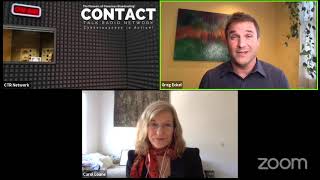
Dr. Greg Eckel and naturopathic clinician Dr. Carol Laurie discuss functional medicine approaches to Parkinson's disease, including testing for heavy metals and mold exposure, managing symptoms like constipation and muscle spasms, and treatment strategies from amino-acid protocols to diet and acupuncture.
Chapters
Or other Advertisers.
This is contacttalkradio.com consciousness in action. And you are taking action into your consciousness by tuning into Contact Talk radio.
And on tunein.com Hang FM and upsnap.
Mobile Contact Talk Radio. Welcome to what the Health an independent approach to your health span. Have you noticed how our healthcare system may not have your best interest in mind? Join Dr. Eckel in this fun and sometimes disturbing exploration of the state of healthcare and what it means for you. Now, here's your host, Dr. Eckel. All right, welcome back, everybody. I am Dr. Greg Eckel and I have Dr. Carol Laurie on the show today. Our topic is staying healthy through Parkinson's disease. And I want to let you know a little bit about our guest today. So Dr. Laurie actually and I went to the same school in different eras. So she is a naturopath, acupuncturist and homeopath. She attended NUNM in Portland, Oregon and then following graduation, graduation, graduation, she moved down to California and got into Chinese medical school and became an acupuncturist. And she now has a clinic in Berkeley, California, the Natural Health Care and Healing Center. She's always been interested in the treatment of complex diseases and utilizes all skills for a mind body approach towards recovering health. Welcome aboard.
I'm so happy to be here. Thank you so much for having me.
Indeed. So our topic today, and I have had, Dr. Laurie, I've had you on my brain degeneration summit and I'm really excited to get a little bit longer discussion here on what the health around staying healthy through Parkinson's disease. And this one, we have a couple areas that we're gonna go looking at for lifestyle changes to make with living with Parkinson's, common symptoms of Parkinson's and living with someone with Parkinson's. And I'm wondering on this one is kind of near and dear, I think for you. So why this topic for you?
Well, my husband has Parkinson's disease and his father had Parkinson's disease. So there is a genetic predisposition to the illness. But sometimes people get Parkinson's without any genetic predisposition. And I think that heavy metals and environmental toxins play a large part in that happening for people.
Yeah, indeed. I am fully aligned with that. And I know we can see in the literature kind of triggering events for neurodegeneration, Parkinson's in particular from pesticides, the metals. I find that a ton in my patients. I'm wondering kind of, let's start there. I want to get into some of the common symptoms but just your approach or thinking about neurodegeneration and Parkinson's in particular, what have you seen in your practice around this?
Well, I think we have to test. We have to use our functional medicine abilities and testing to see what is unique for each person because people can have a diagnosis. But as naturopaths and functional medicine experts, we understand that that's just the chapter heading. And everybody's underlying driving factors of chronic disease can be very different. I think there is a commonality for all chronic disease, and that is something called thio collapse that needs to be addressed. I do that through my very specific amino acid protocols that I use for people with certain illnesses. But functional medicine testing, I think gives us an insight in the key. If it's pesticides or heavy metal, what are the oxidative stress responses of people and where are they nutritionally deficient? That's also extremely important.
Is there a set array of tests that you are looking at when somebody comes in with this diagnosis or presumed symptom picture?
Well, I always do a Genovic diagnostic Nutri eval. I like to do some version of stool analysis to see what's happening in the gut. I want to do oxidative stress analysis, and we can do that through Cyrex Labs. So I think I start there and then. And heavy metals, of course. And then we see where we are as a baseline and then we adjust or add accordingly.
Yeah, for sure. You know, those three areas, you know, the microbiome, I also look at the hormone levels as well, in addition to the metals is kind of what I consider a baseline for everybody with a neurodegeneration and Parkinson's in particular. And, you know, everybody's got the nuances, of course. You know, we've got the mold component that we want to rule out if that's indicated in their history. The, um. I'm wondering, so what. So what are you seeing kind of common symptoms, you know, what are some of the more common symptoms of Parkinson's disease?
Well, I think it depends where they're diagnosed. Sometimes people come in to see me and they have, quote, unquote, just restless leg syndrome. And that can be A folate and B vitamin deficiency, but that's also a precursor. It's an early Parkinson's symptom as far as I'm concerned. So I always start people accordingly on protocols for that. I think constipation is a big one because the dopamine deficiency impacts the autonomic nervous system and the smooth muscle lining of the intestine. Slows down. So constipation can be a very big one. And even in American diets, people think, oh, I'm not constipated. I go to the bathroom every day. But when, as naturopaths, we ask a little bit more details about somebody's habits, and we see that even though they're going once a day, they are still having constipation. So I think constipation is a big one. Restless leg syndrome, fatigue. But all of these, you can see symptoms like this in multiple autoimmune illnesses. So you really need to dial down and just keep digging and really keep going at coming up with an appropriate diagnosis. So you can then start somebody on targeted supplementation as soon as possible, because that really makes a big difference.
I know that is one of the biggest frustrations with folks that I talk to is that, you know, there's no definitive diagnosis. Right. It's a clinical diagnosis. And, you know, there's not a, you know, brain imaging or marker in the blood. Although recent, I guess recently I saw there's some new information out about possible markers for early diagnosis on Parkinson's. But what are you seeing? What are some early. Some not thought of? Like, you had mentioned the constipation and the restless leg syndrome. So other things that you think of for folks to like, hey, maybe I should be, you know, this kind of gets put into the brain bank of, I might have some concern here. Maybe I should get checked out.
Feeling like your legs are like cement. I mean, everything else is fine, but your legs feel like cement. Or you're having. Even though you can walk and you're not noticing any physicality, but how they feel is very heavy and, like, there's bricks around them. And that was one of my husband's initial symptoms that first had us concerned that he was heading in that direction. Everything was fine, but he kept waking up in the morning saying, my breath. My legs feel like cement. And since then, I asked people, because that's more common than people realize. But it's such a weird symptom that people don't think about, oh, yeah, well, I need to pay attention to that. A lot of these symptoms, people dismiss. The other symptom I've seen is chest pain. And of course, when someone has that, the first thing they think is they have a cardiac problem. But actually, the autonomic nervous system is responsible for the smooth muscles between the ribs. So if you're having a dopamine deficiency, it's not uncommon to have this chest pain between your ribs. It's not really chest pain. It's more like a muscle spasm. And of course, you want to have that checked out by a cardiologist to make sure it isn't actually a cardiac problem. But often people will come in and say, well, I've seen my cardiologist. Everything is fine, but I still have this weird chest pain. And I know that that's from a dopamine deficiency connected to Parkinson's disease.
Wow. Yeah, got it. That's a great, great point. Looking at all of the facets of what dopamine does in the body. So other symptomatology that we've got, you put difficulty swallowing and talking. So what do you see with those?
Well, once again, it's an autonomic nervous system response, and you can get food stuck in your throat too often like you used to be fine, but now almost every time you eat or every other time you eat, something gets stuck, stuck in your throat or. People in my practice are on quite a few supplements, and they come in and they say, I can't swallow these pills. I'm having a really hard time. They get stuck in my throat. So. Or I'm having a hard time swallowing my saliva. And that is again, it's the autonomic nervous system which controls the smooth muscle contractions in the throat and the esophagus. So of getting the food and the mucus down the pipe. So that is not an uncommon problem. And what I do for most supplements is we can any. Anything that's in a capsule, we can open it up, and if it's a tablet, we can squish it and you can put it in applesauce or add it to your smoothie or some to water. But then sometimes they don't taste good and people go, oh, my God, this pill tastes horrible. So we have to figure out what pills taste okay and what pills you just have to swallow and what pills are okay to squish or open up and put in liquid or applesauce.
Yeah, got it. So, yeah, delivery method is really crucial there. Are you seeing the swallowing issues? Are those early signs for folks or where do you see those? Or can it just be vary depending on the patient?
I think it really varies, but sometimes what I've seen is that we have the restless leg, the difficulty swallowing, and then the legs feel like cement. Those three symptoms together are. You know, my alarm bells are going off already thinking, oh, we're heading into Parkinson's.
Got it. So it's not necessarily the tremor.
No, the tremor. You know, everybody's different, actually. A lot of people have Parkinson's and do not have a tremor. That's a misnomer. You do not have to have a tremor. Yeah, everybody. The weird or unique thing about this disease is there's no one concrete road that everybody goes down. It's very individual. But it is important to get appropriate diagnosis, I believe.
Yeah, we're seeing, you know, even the differentiation in the diagnosis. Right. So there is subcategories now in the Parkinson's diagnosis category. And I'm also seeing a lot of my patients will gather other neurodegenerative conditions as they progress through this illness. So it's, you know, while it can be very helpful to get the proper diagnosis. For instance, I have a patient with Parkinson's. For 10 years, he's had three different motor neuron specialists, and now the fourth, because they've retired, the fourth one has now said, oh, you don't have Parkinson's, you actually have als.
And.
And so it's, you know, for either of those diagnosis. I mean, I guess the ALS may be in the continuum of worse, but neither of these conditions have a known cure. We have more medications for Parkinson's, but not really anything for als. But he's doing actually remarkably well. So I was surprised that they actually gave him a new diagnosis. I think that he still has some characteristics that are similar to the Parkinson's. So it was. That was interest. So they went down. A whole genetic component you mentioned in your husband's family. Genetic kind of lineage or possibility, but it isn't necessarily genetic. But I'm wondering, are you using genetics in your practice with your patients, or what's your thoughts on that? Because it's, you know, it's kind of in play these days. But I always put a big asterisk around it.
I agree with you. I think that there are certain genetic components like an MTHFR defect and a CYP2D6 that are important to know about. But I. In my practice, I'm not running genetic panels on everyone, and I know a lot of our colleagues are. Yeah, I gather the information I need from those functional medicine tests. And then I follow a very specific neuro. Neuro support amino acid protocol with different levels of dosing, and we do a urine test every now and then to see where you are on the serotonin dopamine level. And we adjust your mucuna, if that's what you're on, instead of the sinemen, appropriately. So everybody's way of treating this is slightly different. And I'm not A genetic expert. I don't pretend to be.
Yeah, got it. You know, I think the value in the genetic testing that I've found is it can kind of put folks to the front of the class based on what their genetic platform is. The way that I discuss it with our patients here is it's around. You know, it's a big asterisk. Like, just because you have the SNP doesn't mean it's your genetic destiny. You know, it really is. I'm in the Bruce Lipton camp of, you know, it is the environment. And whether it is turning on or off our genetic predispositions, we don't know. But we have that as a baseline. So we can kind of look at different therapeutic interventions a little bit differently, that you can try these before you get into the second set or third set. But I do see a lot of folks just prescribing to genetic tests, and I just don't. I don't agree with that. And I don't think the evidence is there to support that either.
Especially with Parkinson's so much. Yeah, right.
So on the other component, you've got underlying causes. So on the autonomic nervous system, do you have some specifics that you have as a baseline for folks that when they're coming in with neurodegeneration and Parkinson's in particular?
Well, it depends where they are in their treatment. Are they coming in on Sinemet? And the issue for me with Sinemen, it's just a very slippery slope. Sinemet causes has a lot of relative nutritional deficiencies, and it eats up the B6. And the. It's so people can end up with some of the symptoms of Parkinson's because of the side effects of Sinemet. So if somebody is initially diagnosed, I try to talk to them about getting off of Sinemet and starting on this relative nutritional deficiency amino acid protocol, which is not appropriate for everybody. There's certain criteria. How many years you've had Parkinson's, how old you are, can you actually take the supplements at the time frame that you're supposed to? Can you afford it financially? Because unfortunately, this type of health care is not necessarily covered by your insurance. So the autonomic component of it is. I think that we have to. I take that within the whole gestalt of the protocols that I use for people. Whether. If you're on sentiment, we have to be very careful. We can't give you too much B6, because that will block actually the way the Sinemen works. But there are standards, supplements that I put people on if they are on Sinemen to support their autonomic and functional nervous systems.
Got it. And have you been seeing, you know, the, the effectiveness of the Sinemet through time to become less effective for folks? I mean, I know it's different for everybody, but the general trend that I've witnessed is, you know, people have about four to eight years and then they're pretty much at the end of the line with that medication. Some people are outliers, maybe 10 years. But I'm curious in your practice if you've seen anything like that.
I agree with you totally. I think Sinemet is a very mixed blessing and unfortunately Parkinson's is a very brain degenerative disease and we want to do everything we can to support the anti inflammatory component of the brain. So really a very important component of this is I think people need to be on an absolute no sugar diet as much as possible because sugar creates inflammation similar to brain cancer. Where there's been a lot of research that the ketogenic diet is very beneficial for people with. I say this a modified ketogenic diet because standard ketogenic diet can really have people's cholesterol going off the charts and beef with just too much fat and I don't think that's healthy. So I say a modified ketogenic diet I think is a very important part. But yes, Sinemet, it's a slippery slope and I think at some point this slope gets steeper and slippery. So if a person isn't able to get off of the sinnit and do this neuro support amino acid protocol, I want to support their relative nutritional deficiencies as much as possible with supplements and healthy diet and mindset and exercise and acupuncture. It's not perfect, but maybe we can make the slope less slippery. Maybe we can give the person a few more years of the Sinemet working. These things make a big difference in the long run.
Sure, yeah. So you're able to work with folks on medication and off medication, support them either way, whatever their choices are, of course educating them on what the options are as well. Wondering on. Is that the Marty Hines protocol, like the U shaped thing? Cool. So that is that amino acid therapy that you're talking about. Have you seen anybody doing the niacin protocol with Parkinson's?
No, I haven't. You want to tell me about what that is?
No, I don't. No. That's why I don't know. I don't know either.
That's not anything that he. Yeah, no, I've never heard of that. That's a new one for me.
Yeah, there's a French professor that has. Big proponent of that, but I don't. I haven't met any practitioners that have used it. So I'm just kind of collecting data. It's a piece I get to learn on my podcast platform as well, so. So we'll move on from that one.
Okay. Works for me.
Yeah. So the, the other component. So when you're talking about combining the functional and integrative modalities with the medications, how about some of the newer medications that are out there around. I mean, it's kind of all derivatives around, around dopamine and dopaminergic receptor sites. And I'm wondering if you've seen anything around doing components with alpha synuclein or other pathways or more upstream, like into the gut. Looking at that aspect, you said you do microbiome testing. Are you seeing any. Any trends in the gut that like, oh, there's a pattern here, or kind of dysfunction across the board?
I think there's dysfunction across the board. I haven't seen any patterns. I think everybody is really different. But I think in general, the people who come in have the wears and tears of the standard American diet, which is sad, but it's also very dangerous. It's sad and it's dangerous. And over the long runs of many, many years, which is how somebody eventually gets diagnosed with Parkinson's, all of that processed food and unhealthy food from a box and sugar and chemicals and dyes, it just adds up. And so people come in and their gut is very dysbiotic. And now we know enough that there is the brain microbiome, too. And the brain and the gut are very interconnected. So improving the health of the gut is where I start. Whether somebody's on Sinemed or the Marty Hines protocol, we always, always, always do that. And I think there's more research that's going to be happening. I haven't seen anybody in my practice on some of the newer versions of the dopamine drugs, but I'm very interested and I've spoken to some local neurologists about that, but they're slow on the uptake. I think neurologists get into their method and their system, and maybe the newer, younger doctors will be taking that up. But a lot of the older neurologists where I live, they're just sticking with Sinemet and they haven't made the switch yet.
Got it. And how about. Are you finding down in the Berkeley community, do you have the motor neuron specialists or is it more just general neurologist with Parkinson's patients?
No, they're specialists. They specialize across the board. There's a group neurology office and some of them specialize in strokes. Other than somebody else specializes in Parkinson's, somebody specializes in motor neurons. I mean it's a very specific.
Great. Yeah, it's great. You know, I'm just talking to folks around the country and globe and they're just seeing their general practitioner neurologist and you know, really wanting them to get that expertise of the latest, greatest info. You know, unfortunately I get the, you know, hear from a lot of folks that, well, they get this diagnosis, they get the medication and then they're basically see you next year.
Yeah, that's what happens. Hi, you have this disease. Here's take these pills. Bye.
I mean, right?
Or, or we want to do a, you know, an IV brain treatment on you to make sure that you are really dopamine deficient. And this is what they wanted to do with my husband. And I said to the neurologist, why are we putting dye into my husband's brain when we already know that he has this disease? And the doctor said, oh, it's for our statistics. Okay. This is like not. No, thank you for our going to pass.
Is that the DAT scan that you're talking about?
Yeah, yeah.
You know, I've seen a lot of patients kind of talking about that in the Parkinson's support groups and you know, really why this platform is around informing folks. So I'm hoping to share this one with a lot of those people that are out saying, you know, oh, I've got the definitive diagnosis because I had the DAT scan. It's like that is not correlated one iota. There is a lot of research happening around it, but that's not a definitive scan. So it is, you know, Parkinson's disease is a clinical diagnosis and it's really functional analysis. And that aspect of really the complementary or the alternative. I don't like saying alternative. It's really.
No, me neither.
Integrative integrate really should be frontline for a disease process that has no known cure. Right. And so that's what we're doing is treating whole dynamic heart centered beings moving through time and space with giving the body as best a chance as ever to have a spontaneous remission or reversal or stabilization of symptom picture. And you know, loan it happens, we see it, we see spontaneous remissions, we see the disease process. Stopping, we see people actually get their quality of life back. Now, I'm not by any means claiming cure on Parkinson's disease or other neurodegenerative conditions, but we are seeing people improve, and we are seeing people with no evidence of disease that we're significantly progressed into this thing. And so that is what gives me hope. It gives me energy to do interviews like this and help get the message out. Because, you know, folks aren't hearing that from their neurologist. Right.
It's a very. I mean, having been in neurology offices, and I took my husband down to Stanford, and the doctor was so dismissive. I actually said to him, I didn't bring my husband to Stanford for lazy medicine. And he was shocked. Like nobody'd ever talked to him like that. And I said, I'm a naturopath. I would never talk to somebody the way you just talked to my husband, ever. And, like, you know, you don't respect what I'm doing. But here you're at Stanford and you're, like, dismissive. And so it's unfortunate. And I think, you know, one of the things that you're doing and with your group here is that we want to really empower people. Not patients, but people to not just settle for, oh, you have Parkinson's. Take this drug by. There's a lot, a lot you can do to slow down the disease, to reverse the process, to. If you optimize your overall health, you are going to slow down your trajectory for your Parkinson's disease. And that's what Dr. Greg and I are talking about here. It's very important for everyone to realize that.
Yeah. So what are some of the most important lifestyle changes to make with Parkinson's?
I want to say, to keep your bowels moving. I think that's critical. I use. There's a product called by Integrative Therapeutics called Laxative Formula. You can find it on the Internet. And when you have Parkinson's disease, you may have to take, like, three tablets three times a day. You need to find out what your dosing is, because everybody's dosing is different. I usually start people out on two, but then, you know, like, I have people who are on nine a day, so it doesn't matter what the number is, but basically, you want to have more than one really good elimination a day. And the reason we need to keep our bowels moving is because if you are constipated, all those toxins get reabsorbed and you're creating a negative feedback loop in your gut. And you're creating inflammation. The second thing I want to say is adopt divorce the standard American diet, the SAD as much as possible and adopt a plant based Mediterranean style way of eating. That's what I recommend for all my patients across the board. Modify ketogenic Mediterranean style with very low carbs and low sugar and just not a lot of gluten. I think gluten is really bad for in our culture. The third I want to say is to move exercise. If you don't do, if you don't use it, you will lose it. So get yourself a stationary bike and bike at home if you don't want to go out or. There's lots of things online right now that I have some patients doing. They stay at home and they're using their weights and this is what I do also at home. It's really easy to exercise at home with these online programs that you can easily find. So exercise is a really important component. And take supplements. I think supplements make a huge difference in keeping your health and optimizing your wellbeing.
Are there any particulars? Now this is not advice for anybody, but I'm just curious if there is any general themes or like a baseline foundational stuff that you think about for your patients with Parkinson's.
Sure. I have everybody in my practice on a smoothie. I call it my healing smoothie and it's individualized when I work with people. But it has some form of either P isolate or whey protein powder as the base. And then we'll add chia seeds and flax seeds, seeds and coconut water and half a cup of blueberries for antioxidants. And we'll add maybe some quercetin powder and a D ribose powder also filled with antioxidants. Sometimes I'll add some herbal powder to it. You can add a handful of parsley, organic of course, or some steamed lightly steamed kale or chard for greens or watercress, fresh watercress. So that really is a really good way to provide some baseline nutrients for yourself. And because you're drinking it, it gets into your intestines. And the chia and the flaxseeds really work to promote regularity. I think essential fatty acids are really important. And a pre and probiotics. Sometimes I'll have them put the powder in their smoothie. But a probiotics probiotic capsule, dairy free. And you want to alternate maybe one month doing one brand and another month another brand there. It's really easy to get high quality supplements right now through I think you need to make sure that they're made to pharmaceutical quality standards. So you don't want to be buying your supplements from CVS or Trader Joe's. That's like, people come in with Trader Joe's supplements and I go, oh my goodness, this is not cutting it. You know.
Well, and have you seen some, I mean, the GMP labeling, what. Have you seen some research on those in particular that are like, these aren't good, or you just know, you know, you look at the other ingredients, list with them and go through there and kind of pinpoint like, what's all of this filler happening in here?
Yeah, yeah, I think, you know, you and I have been in the field for many years, so we have our companies that we know and we trust and that's who I use. Because just the fillers are. Yeah, there's too many difficult options out there and you just need to educate yourselves as clients or you do a consultation with a practitioner and you find out what are the real brands that you want to be purchasing and spending your money and taking care of your health with.
Sure. Yeah, it is. Buyer beware. You know, even on the professional grade, I do recommend folks to, to do like third party assays of those or get them from the manufacturer to make sure it's good to do an audit every few years. I'm a little bit remiss on my audit, but the last time I did it, I actually had to drop one of the professional grade ones. I was like, wow, in their own data. So that is consumer beware. This is not an argument to regulate by any means, but you definitely want to be educated about where your supplements are coming from. And you know, what they say is on the label is in there. So that's a great point. So we had those three keep the bowels moving, the dietary stuff, divorce this sad and move and stationary bike is a great way of going about it. What do you recommend for folks that are, you know, maybe a little bit more further progressed? They've got more of significant tremor or more of the rigidity of the sticking of the feet. Are there some good recommendations for folks that are in that category?
I'm an acupuncturist, so I do acupuncture and there is a microcurrent machine that a colleague of mine who's an acupuncturist uses for her people that she works with in her practice. I think that that's your farther down the line then. And the rigidity is difficult. If you have access to a pool I think being in the pool because you can move your legs and the water is buoyant for you. I think that even if you just hang out by the side of the pool and kick your legs, that is really beneficial. And a lot of the pools have ways to help you if you're disabled with wheelchair access and everything.
It's.
You need, you need help if you're going, going to be doing that. But I think it just takes a certain amount of dedication of you and your spouse and your assistant. Hopefully you have an assistant to really support your best health for wherever you are. And you know, being rigid is, it's unfortunate, but it does happen.
Well, how about when, you know, folks, I kind of describe. It doesn't go like this for healing. There's a lot of ups and downs. What do you do for folks that are in kind of the overwhelmed stage or the angry stage or just like kind of really just upset at the process? Do you have any suggestions on different techniques, counseling that you've seen work, things like this?
I think therapy is really wonderful. I think when you have a chronic disease that really takes and has a huge impact in your life, it's extremely, extremely appropriate to be angry and upset and depressed. However, no matter what that disease is, I think feeling like you're a victim is not in your best interest. So we need to have certain skill sets and talk to people. I also do a lot of work with women with breast cancer and it's one of the things that I talk to them about is their attitude. I mean, yes, nobody volunteers to have Parkinson's or breast cancer, but now that that is on your path of life, how can we use this illness and make the best out of it? And you know, if you're angry when somebody like me says that to you, it just really is upsetting. And I don't mean to upset anyone, but we have to all somehow get through this anger phase because being stuck in anger is only going to make you sicker in the long run. And it's an unfortunate emotion because it's the top level. What's underneath it is sadness and despair and maybe regret and shame. I mean, those are the real emotions that we need to begin to talk about. And through that, some of the anger can be let go. And it's, it's a process. It takes a while. It's not like a five minute conversation and you'll be better tomorrow, right?
Yeah, it is an unfolding, the unfolding process. You know, I've recently had some consults this morning where the words surrender, faith and forgiveness keep coming up with. Talking to folks when they are upset with, like, you know, I'm doing everything that I can and it's just not changing. What do I do about this Doc? There is a piece of. It is like, I don't like to as a provider say, well, let's have some patients here. Right? Easy for me to say. I'm not in that body. And I totally get it. There's lots of things to be upset about. But I'm kind of with you around that agreement around that aspect. Like, of course, express your anger, have the emotion, don't suppress that and look for how can we have peace in this? It's like, what can we gain from the process? What is the positives? Because clearly there are things in their life that are going right and it's just we're not tuned to those because the bigger things are. It took me an hour to get moving today. I'm so frustrated.
That's not uncommon. And I think it's like we need to have a different attitude about how it's going to take you to start moving in the morning. Because the 10 minute up, jumping out, taking a shower, getting to work, that's a thing in the past and it's not inappropriate or uncommon for it to take an hour to get going. And that time can be shortened with certain functionality, steps and certain supplements. But that, that does happen. The hours, I call it the hour in the morning syndrome.
Aha. Yeah. And it is a very common experience with folks with this diagnosis. And so it's coming to terms with, okay, this is what is reality now. It's a really hard place to be in as a provider to say, well, it just is. Right. I mean, we want to do something for them. And understanding, like there is a, you know, there's a ship that has sailed in the past, that there's a trajectory of this thing. Hopefully we can get it turned around, but we're not sure, you know, so you have to be willing to embark on that, mitigate any big side effects. And, you know, if we can improve the situation, then that's what we're after.
I try to aim for slowing down, getting the hill less deep, getting it less slippery, and optimizing people's health across the board. And then let's see where we are then. If we can slow down the disease, great. But it really depends where people are when they come in to see someone like you or me. It just. Everybody's really an individual. It's just an individual disease. Even though everyone has Parkinson's, it just presents so differently. I recently had a gentleman who had a brain tumor, and he developed has neurologists. He had a lot of radiation to his brain, and now they say he has Parkinson's. And when he and his wife consulted with me, and I said, no, you don't have Parkinson's. You have brain radiation, secondary side effects. And we put him on a lot of antioxidants and some of his Parkinson's symptoms. Parkinson's, quote, unquote, got better. But he had the difficulty with the walking and talking. And I was very clear that this was due to the enormous amount of brain radiation he had.
Yeah, yeah. So that basically got parked in the Parkinson's diagnosis because he had all this pieces and parts of it, but it wasn't like, oh, well, this. You just had this brain radiation. Yeah. What do you do when folks come in and they're kind of doubting the diagnosis?
Well, I take people with where they are. I mean, it's not my job to convince somebody. I go, okay, well, whatever the diagnosis is, you have these symptoms abcd, and we need to address them. So if you don't want to think that they're Parkinson's, fine, but we have to. You're here. You obviously are having a problem. You're not feeling well, you're having these new symptoms. Start you on a protocol and see what happens. Let's do some diagnostic testing and see what happens. And I think that denial is, in the beginning is a very big thing. It's, you know, people don't. I can't blame them. People don't want to think that this is going to happen to them. And sometimes if they come in early enough, as you've seen, and we can address the underlying driving factors, we can, like, pull back from these symptoms. Maybe they'll show up many years later. But we both have had, you and I, experiences where we can get these symptoms to stop. Whether it's been Parkinson's or not, I don't know.
Right. Yeah, I'm with you there. I mean, I think the labels are important for some. I'm okay with folks saying, I don't have this diagnosis or, you know, whatever it is, multiple sclerosis or Parkinson's. But then I do it very similarly. I just talk about, well, here's your. These are the symptoms that we're seeing right now. So here's some of the underlying terrain of what we can work on to help those, you know, give them the highest percentage of reversal.
I think we have to mention Lyme disease, because I've had some people come in with Parkinson's symptoms, and it turned out that they had Lyme disease. So I really. And I referred them to a naturopathic Lyme specialist because that's not my area of expertise. And I really want to encourage people, like, if you're out in the wilderness a lot and you develop Parkinson like symptoms and you don't have any family history, you need to be seen by a specialist, not a gp, because there is very different types of diagnostic intense testing which will show not only the Lyme, but the co infections, and that can be really contributing to Parkinson like symptoms.
Yeah. So great point. Yeah. Lyme and then the mycotoxins and mold. So those are always on the differential in neurodegeneration and brain health component, which is. This is news to a lot of folks. Right. So that one of my intentions for this interview was to give people options. Right. Because there I want folks to understand, to get complete care. So maybe you don't have Parkinson's. And you're listening to this one. This is about brain health as well and neurodegeneration. And we know the rates of neurodegeneration are going through the roof in North America, I think, worldwide. And so this is really a podcast for anyone with a brain. But this is specifically around the Parkinson's diagnosis. So I want to move into a bit into living with a person with the Parkinson's diagnosis. And kind of what does that entail? What's that look like? Care for the caregiver. I know a lot of folks, they're watching and listening for their loved ones, so they may be caring for somebody with this diagnosis. So you're uniquely positioned as provider and partner.
Yes, I think, to realize as a partner, first of all, I'm like, in charge of my husband's supplements, so that's my skill set and how he eats and all of that. And he accepts that, and it's fine. I think as a partner, you have to realize that your spouse is changing and you have to just talk to them about it. I mean, you can't have an elephant in the room and not acknowledge the differences. And that's part of intimacy of being in partnership, is that you can talk openly and nonjudgmentally about what each person is feeling. And where do you want to go down, you know, in the moment and in the future? And are you keeping the person home or are you going to put them in assisted living? I mean, these are heavy conversations that we need to have. Because if you're a woman and your husband is heavier than and bigger than you are, I mean, are you going to be able to. If they can't move, are you going to be able to pick them up or. We have long term care insurance. So what point do you start to bring in and if you have long term care insurance, what. At what point do you bring in outside help and for how many hours, how many days a week? Except. And so I think these conversations need to happen. And it is part of the sharing and the love that you have for each other that you can talk about this. It's not necessarily an easy conversation. And I think luckily Parkinson's happens as we get older, hopefully. So as we get older and if you've been in relationship with your spouse, something is bound to happen at some point. And usually it's the man that gets Parkinson's. But there are women who have Parkinson's too. It's just changing or any type of brain inflammatory process. It can happen to men and women. Cognitive decline, which we haven't mentioned here as part of the Parkinson's symptom complex. Just openness and talking about it. And as a care person, knowing what your limitations are and making sure that you get time every day to do what you need to be healthy and happy and take care of yourself. And for me that's. I have to take my supplements. I do my little workouts, I do my power walks, I have my practice. And I think that's really important that as a caretaker, you're not doing anybody any good if you just sacrifice yourself and feel horrible all the time. That's not healthy for you or your marriage.
Yeah, yeah. That martyrdom is not the recommended pathway here, that is for sure. You know, I think a lot of times what I've seen, it can really bring more intimacy or rekindle the intimacy of a relationship in that if you have two willing participants. Right. So of having that component because there is some grief and sadness and loss that comes up with somebody with a chronic illness. Right. So whether it be Parkinson's or any other illness for that matter, in that, you know, there's potentially a progression. So there's a loss of what could have been or how it may have been different. So that's something that I definitely encourage couples to get into communication around possibly doing some counseling. There is a lot of opportunities of doing online counseling now. So there. If you're mobility is an issue or concerns around Covid. So there are a lot of opportunities. One of the biggest Ones that I found to really resonate with a lot of people are the family constellation work that folks have been doing. It's out of Germany and Bert Hellinger, and there's a lot of skilled constellation, family constellation folks, and. Which brings up a kind of a side tangent around traumas. Have you seen any linking of early childhood traumas or physical traumas with the diagnosis of Parkinson's?
I think early childhood traumas. ACE is a foundation for all chronic disease, whether it's Parkinson's or cancer, autoimmune or gut. I think, yes, I absolutely believe that trauma impacts from an early age, everyone. And it just depends where it shows itself. Some people get Parkinson's, some people develop Alzheimer's, some people develop cancer, some people develop autoimmune illness, fibromyalgia, chronic fatigue, Hashimoto's, Raynaud's. I mean, it's just. So I do a lot of trauma work in my practice. I'm not a therapist, but I believe that if we don't bring in the emotional component of a person's life, it's going to be very difficult to recover their health. And recovering your health can look different for different people, for what illness you have and where, what stage you're in. So I think we need to make adjustments and be real. For example, I had a woman with breast cancer, and I was working with her, and it was clear that she was in the end stages. And for her, it was my saying to her, I don't think you should do more chemotherapy. It's a time for hospice. So she was able, with her family and her husband, to die at home in peace. And her husband said to me, you know, this was a success for us. So, I mean, it's sad, but it's also real. So I think we need to think, you know, if somebody has Parkinson's and they're getting to that end stage, it's like, what are the conversations you need to have with your spouse, with your family? Do you want to plan your service? Do you want to talk about things that you haven't been able to talk about? Do you want to go visit a place one more time, even if it's extremely difficult for you to get there? Make arrangements for that. What do you need to feel complete in your life as you get to these end stages? And that's very real and can be very healing for everybody involved?
Yeah, those are really important conversations. Sometimes very hard to get to bringing it up. What do you do around that? So if you have, I guess, just kind of switching a Little bit. But on that discussion with folks end stage or with cancer diagnosis, that they're kind of. They're using the kind of the I don't have it method of like ignoring that this is going on, meaning, you know, not wanting to know any staging and not really, you know, maybe doing the chemo with their doctor but not really having those conversations. Are there ways that you bring that up that are maybe less abrasive or how do you do that?
Well, the people who work with me are really interested in their health. And I screen people, I take in my practice. So if somebody is in. I mean, I don't think that we need to throw in everyone's face while you have this size tumor and you have this stage and this grade. But I think that we need to pay attention to the clues. And the clues for me are we do certain blood work every four to six months. You need imaging from your oncologist. You want to look at your tumor markers and your inflammatory markers and your energy. And we need to pay attention to the clues of your body, your mind, and your illness. And that helps us determine where you are. So if somebody is in denial and they don't want to believe that they're really ill, I don't know if it's. I mean, that's a tricky one. I always ask people, do you want my opinion? Do you want to hear what I think is going on for you? And if they don't want that, I wonder why they're in my office. I mean, I don't quite understand what they're doing.
Sure, that makes sense. Yeah, for sure. Well, let's see. Coming down the home stretch here, we have about five minutes, wondering if there's any last pieces that you'd like to share with our listeners and viewers.
First of all, I'm very glad to everyone who is here and listening and watching or watching it later that you're taking your health seriously and you're incorporating what I call the other side of treatment, whether it's for Parkinson's or cancer or any type of illness than what is offered by standard allopathic care. Your optimal health will happen when you include both. Take the best of both worlds, the medicine and the natural healing that Dr. Greg and I do. And that's how I feel. We'll be able to really help you as your partners in your health, keep the best level of health and functioning and emotionally and physically and spiritually for as long as possible. We can't determine what illness we are given in a life, but we can work to make the best out of our health with that illness. And it is work. It's, you know, the messaging we get from watching television commercials is you have disease A, you take pill B, and you're all better. And that is unfortunately not the reality of what chronic disease management is or involves. It does involve daily dedication and determination to I don't want to take my pills, but I'm going to take them whether I want to or not. You know, I'm going to exercise for 10 minutes today because I don't want to instead of 20, but at least I'm going to get my 10 minutes in. So it really takes that level of self love. Notice I didn't say discipline because discipline is a bad word. Nobody likes that word. It's about self love that you have for yourself that you're then going to do. Self care.
Lovely. Self love and self care. I love that. I've got all of your contact info in the show notes here. You are offering a really nice nutritional guide for folks. So please check that link out, everybody. Dr. Carol Laurie, thank you so much for coming on what the Health. Everybody out there in what the Health Land, thanks for tuning in. Please share this with your loved ones. Post it on social media. You know, if you're involved with any groups, in particular with Parkinson's, but any of the groups that are interested in this type of discussion, please share it. You know, this is not what's coming from mainstream media. It's why I developed this program what the Health and we are here on the Contact Talk Radio on Tuesdays from 2 to 3pm you are also welcome to listen on your favorite podcast player. And if you like the show, please give us a shout out and give us some reviews because that will help other people tune in too. All right, thanks for tuning in everybody.
Take care.
More from Dr.

EP. 197 Brain Regen: Harnessing Essential Oils for Cellular Health and Longevity

EP 196 WTH?!? Unlocking Cognitive Health with Your Genetics with Elwin Robinson






EP 190 WTH?!?: Mind-Body Mastery: Harnessing Movement, Breath, and Sound with Jeffrey Williams

EP 189 WTH?!?: Nourishing Connections: Lynne Bowman on Family Meals and Healthy Living


EP 187 WTH?!?: Clearing the Air: Dr. Kevin Smith on Nasal Health and Migraine Relief