EP 70: WTH Concussions, Alzheimers, Brain health, what does Audio-Visual Entrainment have to offer?
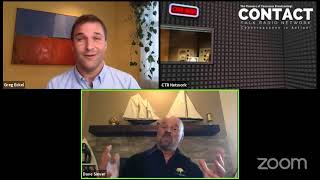
This is a YouTube interview (EP 70) where host Dr. Greg Eckel talks with Dave Seaver (Mind Alive Inc.) about audio-visual entrainment (AVE) and its clinical and performance uses. Seaver gives background (using AVE since 1984; early TMJ work and a 1988 study), explains mechanisms (entrainment, thalamocortical disconnect, lactate/ATP, astrocyte/glymphatic clearance), and describes RAVE (randomized AVE) and dual-hemisphere protocols. He presents many clinical anecdotes and practice findings—improvements in concussion/post-viral low-voltage EEG patterns, addiction remission, improved sleep/HRV, and a 57-year-old Alzheimer’s case reportedly improved after 30 sessions. Device discussed: "The Delight"; typical sessions: alpha-beta mood booster (≈30 min), SMR beta (≈24 min), brain booster (~24–30 min). Seaver notes ongoing studies (Saybrook University collaborations, evoked potentials, anxiety, alcoholism trials) and regulatory/reimbursement constraints (Canada Class 1 device; FDA concerns in U.S.).
Chapters
Of healthcare and what it means for you. Now here's your host, Dr. Eckle.
Hey, welcome back everybody. I am Dr. Greg Eckel and this is what the health and it is our first show, live show of 2021. And I am really excited for this year and in particular our topic today. I've got Dave Seaver coming in from the great, the Great north, the Canadian here coming in from Alberta. And I want to talk this one goes into a theme of this year that I really want to put together. So one, let me give you the theme. Two, I'm going to give you a great introduction and then three, I'm going to welcome Dave onto the show here. But one, the theme of this year I really do think is autonomic self regulation and these devices that we're talking about. You know, I've been talking about sound and light as the future of medicine. I recently got turned on to his devices. I got to try them out as well when I was down in Salt Lake City. And so I was like I got to get him on my show and have this conversation and share this with all of you. So who am I excited about? I got Dave seaver. He's graduated 1978, started working in the faculty of dentistry at the University of Alberta designing TMJ dysfunction related diagnostic equipment and research facilities. And actually I want to plug you, I want to ask you about that because it looked like you did about two years of research there really curing TMJ and finding it was from an emotional imbalances in people. So I'm excited on that Tie in there. Further studied psychology, biofeedback and EEG and qualitative or qeeg. He researches, designs and teaches a course on brain stimulation technologies such as audio visual entrainment, cranial electrostimulation and transcranial DC stimulation devices for use in relaxation performance, treating anxiety, depression, ADD, ADHD, fibromyalgia, seasonal affective disorder, pain, cognitive decline, OCD, insomnia, TBIs, concussions and Alzheimer's. Oh my, there is. And that's not, I think that's just a smaller list that he gave me. Dave discovered a unique type of TBD that presents as anxiety, insomnia and ocd. And based on the knowledge of neuroscience, he is developing techniques for treating these conditions. Without further ado, welcome onto the show, Dave.
Hi. Thank you very much. That's what a lovely intro indeed. My mother couldn't do better.
Thank you. That's a compliment. So we, you know, you have been at this for a while and then we, when you start talking about devices and neurostimulation, people tend to think like, what in the world, you know, I put transcranial stimulation in there. Like, what are we talking about here?
Well, you know, was legit when I first got into it either, but it turns out it's really solid science. It took me especially the audio visual. Yeah. When I got into the audio visual, that was back in 1984, and that was for an instructor in performing arts. And he wanted to use audio visual stimulation to help his performing arts students overcome stage fright. And that's how that all started way back then. I wasn't sure if it was sort of like a new age. What's a good, nice way of putting it? Yeah.
Woo woo. New age nonsense.
And I really wasn't sure, but I started using it with myself, started using it on our TMJ patients. And then in 1988, I did a study with Norman Thomas, who was the professor I was working with. And yeah, it was remarkable at how profoundly this relaxed, tense jaws and warmed up also hand warming was a part of the study as well. And when you get warm hands, that's also a sign of parasympathetic activation and sympathetic shutdown. And all these TMJ people are pretty much in a constant state of flight or fight. And entrainment just in minutes, took six minutes on average. And they're in a deep, deep, incredibly relaxed state. The deepest meditative state you could be in. They were in in six minutes. So then I thought, oh gee, maybe blinking lights. Do something. That's pretty amazing. And then I got, then I started looking for research in the medical libraries and stuff like this. It took many years. And I started publishing and building and building more and finding more research. Then we started spinning our own studies and we've got I think 25 studies done on our gear alone.
Wow.
We've got four studies in the works with Saybrook University. Right now. The students are running studies. I'm just sending out this week some systems to a student who wants to use this for alcoholism.
Wow.
Starting a study on that. We've got evoked potential study right now in the works with John Lemay. We've got. Kyle did a. There's a guy named Kyle did a study on anxiety. Yeah. And so on. And there's been all kinds of studies done on worry as you know, cognitive decline in seniors, college students in grade point average, stress, anxiety, concussions. It's remarkable for concussions. And I think we know why it's working on concussions. But it is impressive on how well it works for concussions.
All right, so before we get into that. So right on that intro, I had a whole litany of conditions and this technology where I'm saying, I've been saying over the last decade, like, light and sound is the future of medicine. And your research. And what you just shared was. No, actually this has been proven for some time. So overall, we're going to focus in on that. Audio visual entrainment. What does that mean for folks that are just totally new into this thing? And so just the introduction to stimulation techniques in general is this, you know, Pavlovian conditioning. What are we talking about here?
You can do all of that. Yes, with audiovisual entrainment is that the concept of entrainment implies you put a frequency into a biological entity, and somewhere in that entity, it will respond with that frequency. So in the case of audio visual entrainment, it's sort of a subset of brainwave entrainment. It's similar idea, but eyes and ears in particular, but tactile as well, can generate rhythms in the brain at the same frequency of the stimulation. And that was way discovered. That was discovered way back in 1934 by Adrian and Matthews. And then hundreds and hundreds of studies, if not thousands of studies were done on brainwave entrainment using audio, using visual, using tactile, but mostly visual. That was a real popular thing because visual was so pronounced. However, that being said, years or decades later, it was discovered that flashing lights really drove up cerebral blood flow. They dramatically drove up neurotransmitters like serotonin and endorphins with. With mild increases in norepinephrine, which is real important. It drove up heat shock protein like 180% in the course of two sessions. Heat shock protein is real important in the body in general, but in the brain, it, you know, fights and it fights inflammation, it fights infections. It's really active in the brain, especially post concussion or post viral or bacterial infections. Heat shock protein has a big role in trying to keep the brain from inflammation and functioning well. But also, and this is one of the keys, I think that has a lot to do with concussions and also viral, like, say, viral infections as well, is that there's a shutting down that goes on in the brain. And I've looked at concussed people for 15 years now, and we get this real low voltage, no alpha condition, which the industry is really missing. They're calling it a sort of a mysterious brain rhythm. But the reality is it's very Obvious. And it took me a long time to figure out what this rhythm was. But it looks like this low voltage shutdown system in the brain has got to do with a shutting down of lactate and ATP in the brain. And when lactate shuts down on the brain, you have severe anxiety. Every single person I've got with the signature has severe anxiety. Fortunately, a study came out around 2,000 or so by Sappy Mariner and they looked at flashing lights in the brain or into the eyes, they found it drove up lactate ATP 260% in five minutes.
Wow.
Yeah. So when I take these people with concussion, they can't think, they can't make decisions, they're alcoholics, they're drug addicts. I just got a guy I treated back in 2016, he just showed me a beautiful picture. He's got a medallion now. He's been alcohol free for four years. He was the most shut down guy I ever saw. And it was all from an accident when he was six years old and he fell off a slide and he crushed his skull in almost an inch and had to be air vac'd to the hospital or he probably would have died. But since then, and the doctor said, wow, lucky he didn't get a brain injury because they just missed being any further. And they said, lucky he didn't get a brain injury, but it shut his brain down. And he was probably the most flatlined person I've seen to date. And as a result, he couldn't learn. He always barely passed in school, he never got a career. He just never amounted to anything. Couldn't have relationships. He was always losing his license because he was impaired, driving under the influence, duis. A real simpleton kind of guy. And he was 31 years old, years old when I saw him. Wow. And when I saw him and I said like, wow. I said, you've got the, you've had a severe concussion. Because on the intake form we asked you, have you ever had a concussion? He said, no.
Yeah.
And he goes, oh yeah, I forgot all about that when I was six. Yeah, I had to be back to the hospital because I almost died. Just completely forgot. We booted him up. And I've got a 90 minute video on YouTube that shows this, him and other people. But it was remarkable. I mean, this guy who's been shut down all his life, a binge alcoholic, all he could do was work odd jobs, move furniture or this or that, just enough to make money. A friend of his was renting a basement suite for like two or three hundred dollars a month. And between that and being drunk all the time, that was what he did. And we fired up his brain in 15 minutes. Went from flat line to giant alpha.
Waves and it stayed at that level.
Well, he took it home. He had no cravings for nine days on his next intake. When I saw him nine days later, he had not one craving yet. He did drink a couple of times and I saw him in the fall, I think it was fall of 2015 or 16. And he used the gear for about a month and then he said he didn't need it anymore, he just used it at home. January 1st, he quit drinking. Now he's almost a journeyman machinist now.
Wow.
Just had to turn on his brain and get it going again.
So that's from. So from an impact, right? No concussion? The physicians say no, we averted head trauma. No traumatic brain injury. This guy's life is affected for 25 years.
Yeah. Story of a lady who was in a car accident when she was about 20, in her mid-20s and she's 40 years old still. She was married and she was still married, but she just job could do nothing. And she sent me the nicest letter. She said, you wouldn't believe this, but about eight years ago, a guy put me on your gear. Two months later after being disabled for 20 years, she said, Two months later I enrolled the university. I just want to thank you for my PhD.
That's awesome. Yeah. That is. All too often we do see people with traumatic brain injuries, concussions, and they're just kind of dumped at the side of the road of like, well, you're not going to be going through school, you're not going to be successful. They're self medicating. Yeah.
Go to neurologists and doctors and psychiatrists and then they mess them up with all the drugs that they put them on.
Yeah.
And. And they go to get MRIs and almost always they pass an MRI because I mean, maybe they had a diffuse sex on injury at some point from actual damage from the concussion, but then the brain healed, but it was still shut down. And that seems to be what's going on is that there's reactive gliosis, they call it, where the glia get involved because the glia go wild after a concussion or after a viral infection as they try to regulate and control everything and stuff. And in the process they throw the brain out of kilter and they end up shutting down lactate and ATP, which in turn shuts down the glia, which in turn shuts down norepinephrine, which shuts down all our gamma waves and beta waves, which we need for cognition, which in turn also, in the process also shuts down calcium. And you need calcium in every. In every synapse because calcium mediates the neurotransmitters. You don't have calcium, your neurotransmitters are shut down. And that's partly why they become drug addicts and alcoholics. They're looking for their cravings, serotonin and endorphins and things like this. And in treatment, just. Yeah, just remarkably, you know, so they don't make alpha waves. So for years I was stimulating them in alpha. But you know, like I say, with entrainment there is a frequency following response. And I was working from that model. But all these other factors play out and frequency turns up is the least of what it does. All these other factors are more important than the frequency part of it. And then we discovered about 20 years ago, I just applied for my patent just in December because It took me 20 years of collecting research to show that if you randomize the entrainment, just mildly, it really enhances the effect, probably because it's stimulating the brain with so many combinations and permutations. Especially when we run the left and right fields and headphones at slightly different frequencies and we randomize them, it has a dramatic effect that's much better than a fixed frequency. So the entrainment is even less from a frequency model, but the effects from a clinical model are even better. So we call that randomized ave. And I just. Just.
Yes, congratulations on that. Yeah.
And now that I've got all my data on add on seniors, on college students, on depression, anxiety, I'm going to start lecturing more about this now, just showing that it is more effective than a fixed frequency. And we call it rave now for randomized audio visual entrainment.
Oh, I like it. That's great. I'll help you get the rave out there, the word on this, because I understand you have a study on some Parkinson's patients or patients with Parkinson's as well.
Yeah, no study per se, just anecdotes. Sure. With cranial electrostim and with I think transcranial dystim as well, there's some Parkinson's stuff.
Got it.
But I should mention, when you get into this brain shutdown state, it either turns into Alzheimer's or chronic traumatic encephalopathy. So if you go to the doctor and you got symptoms of Alzheimer's, they'll call it Alzheimer's. But if you say, well, I had a concussion, then they call it cte. From what I can tell, they're exactly the same condition. And what happens is that once you're flatlining, two things happen. Once you start flatlining. When you think about an alpha rhythm, which is 10 cycles per second, big giant waves on the screen, on the EEG and 10 cycles per second, and it's a flammal cortical loop. So when we quit thinking, and especially when we close our eyes and we kind of blanket our mind. And meditators do this all the time. When you meditate is when you get really calm and kind of empty in your head and the neurons aren't kind of firing amongst each other, they start to sing a ping a little relay loop to the thalamus, which is your alpha waves. But also it's responsible for delta waves as well. And alpha waves, it's 10 times a second. And often you see we're seeing these guys at 2 to 3 microvolts. They mean they're really, really low and they mostly can't make alpha tall. So if you think that there's 80, we'll say 100 billion neurons. And when you're making big alpha waves, 70 billion or 80 billion of those are firing 10 times a second. So 800 billion pulses a second. And then you get now someone with this concussed state, which I call a thalamocortical disconnect, they're losing 400 billion pulses a second.
Yeah.
And this is critical because for two reasons. One is oligodendrocytes, which myelinate the brain, they must see action potentials or they don't know where to go. And a. Well, myelinated neurons, especially when you look at the corpus callosum, let's say that connecting the two hemispheres, those are all myelinated nerves and they're all high speed neurons. And they can ping a signal across at 30 milliseconds from 1 hemisphere to the other, which is roughly 30 hertz. If you think 100 milliseconds is 10 hertz, a third of that at 33 milliseconds is 30 hertz. So right around that 30 hertz range, they really support beta activity and gamma activity in that 30 and up range. When I look at my frequency bands 24 to 30 and 30 to 36, I see severe phase problems in the affected areas. And sometimes it's the entire brain that's affected, but other times it's just parts of the brain that are affected and the phase is just a mess where parts of the brain are really slowed down. And I believe this is from lack of myelination because the oligodendrocytes don't know where to go. And that turns into Ms. And that's what I believe is going on on the Ms. Side. But on the Alzheimer's or the CTE side, what happens is because the phlegma cortical loop is responsible for making large delta waves. They call large delta waves with K complexes, the big ones that we should make when we're in stage four sleep well, these giant delta waves activate astrocytes. I get excited talking about this.
It's awesome. Yeah.
And astrocytes, it turns out, when they see big delta waves, it activates them to clean out the waste that builds up in our brain during the day. And about four years ago or so, a group of researchers discovered that these big delta waves activated the astrocytes. They would clean out the proteins and dump them into the. Into the venous system, which would go into the lymph and then be expelled. And they called this the glymphatic system for glialymphatic system. But you need the big delta waves to activate the astrocytes. People with the thalamocortical disconnect. All these concussed and post viral people. Yeah, delta. These guys sleep three to four hours a night and it's bad sleep. And I believe it's completely tied to early onset Alzheimer's. And we have one case so far that was done in Seattle by a group of researchers. And this lady had, they were doing a. Tom Budzinski was doing a study for us in a couple of seniors homes to improve seniors brains in general. But just kind of by accident they got this Alzheimer's patient who was only 57, had severe Alzheimer's. Wow. And they got her into the study and so they did a whole bunch of brain mapping on her and Loretta's quantitative EEGs. And they had her on the entrainment. And she went from someone who was shuffling around, could not find the bathroom. And in 30 sessions of entrainment, she moved out and moved back home, had a completely normal life, could walk through downtown Seattle to go back to work. Had a completely normal life. And they thought that was really interesting, you know, and I thought that was kind of cool. And then when I discovered the thalamocortical disconnect, I got, I started talking to Leslie Sherlin, who was in on the study with Tom Wudzinski about two years ago, and said, I got to see your data. Can you find it? They did some digging around. They found the data. She did not have an alpha wave and she was low voltage, just like all of my clients. And trainment fired her up and had a completely normal life again. Wow.
On just on doing a couple sessions where there was nothing for her before that. And you're talking. So on this entrainment, you mentioned that there's the auditory frequency, but you kind of minimize that and are focused more on the. On the visual component of it now. Or did I misunderstand what you said because you just, you just shared a ton of information right there. Did I have that right?
Sorry about that.
No, that's quite all right. I really, I think it. Inflammatory cortical disconnect. It just rolls off the tongue, right?
Yes, yes, it really does. Look, I do think the auditory plays a role.
Yeah.
But it hasn't been researched very much. We do know there's things like tinnitus and auditory training and sometimes they have pretty profound effects on the brain, like autistic kids and other kids with cognitive processing issues. But. But it seems to be that the lights do the majority of the work. Okay. And. But I do think that having it all in one go, just in some senses, it stimulates the brain so thoroughly that it fires itself up.
Indeed. I've had one experience. I'm looking forward to some more experiences with your device. It's the glasses and the headphones. So for folks that aren't familiar with what we're talking about, where you're talking about just really the entrainment is on the frequencies that are coming in. It's sound, auditory, and it's also the visual. So the lights going. And your kind of patent pending process here is you're randomizing that so that the brain cannot figure out a pattern and then it just kind of gives up and then floods the gates with opening these gates up. Is that how you would explain that?
Kind of, yeah. I was giving these guys alpha for a long time and it helped them some. But then, I don't know, it was about 2015 or 14. I had this girl, a beautiful young girl. She was about 18 or so years of age. 19. Right around 18. And she was anorexic. And I've had this thing has been bugging me for a good ten years prior to. Because a lot of these low voltage guys showed a real issue down the cingulate, which is tied to obsessive compulsive disorder. And I had hoarders, counters, cutters, ritualists, committed gamers, committed substance abusers, anorexics and they all have the same pattern and it's all down the cingulate, often into the precuneus back here. But mostly the cingulate. And the cingulate has to do with error checking, it has to do with making mistakes, it has to do with obsessing and not being able to move off things. And it also goes into the caudate and the putamen. But the caudate also has issues with stuff like that. And so when you see alpha waves in this region, they're also going through the caudate and that's implicated in OCD as well. And I've got all these OCD cases. Rarely do I see a real OCD case where they actually make an alpha rhythm that's misplaced into the cingulate. These guys are all voltage shut down. The cingulate was doing weird things and there were all these cases. So anyway, I'm giving them alpha all the time. And yeah, it kind of works. I show a bunch of cases on my YouTube video and you can see this. And then I had this girl who was anorexic post severe flu. And that's one of the things about a thalamocortical disconnect. Whether it's concussion or whether it's viral, it never happens right away like most concussives, concussed people. And usually they're mild concussions. You know, two weeks later they're. Three weeks later they're back to work, but two months later they're really struggling. Three months later they're unemployable. So what happens in that two or three month span? That's the reactive gliosis, accidentally shutting the brain down while it's trying to save it. Wow. That's what it looks like. So anyway, I had this girl and I'd seen her before and alpha really didn't work well. So they came back and I thought, you know, I'm just gonna. I was reading some other studies using ultrasound and using needle electrode stimulation and they did some pretty cool things of exciting the thalamocortical loop using beta frequencies. And I thought, well, I'm just going to give her my SMR beta. That's. I've got it in the gear already. It's randomized. It's been, I've been had, had it randomized for about 10 or 15 years. At that point I put her on smr beta and sure enough, boom, you know, 20 minutes later, giant alpha waves. Okay, I'm using smr beta at, you know, the smr band is about 14 hertz. I'm using randomized 13 to 15. I'm using the beta around 19 to 21 and I'm getting 10 hertz alpha out. That goes to show the frequency falling response. Part of this is not playing. I will often see a little bit of the SMR beta showing up in the brain signature as part of the evoked, as part of the entrainment. But for the most part I'm getting giant alpha waves. I was talking to a colleague of mine and she started then using it with, with NFL football players who lost their careers. And these guys are highly unstable as well. They're big guys, they're unstable. At any moment they could harm themselves or someone else. I mean, they've lost everything. And they live in a. They once were millionaires, now they live in an apartment. They're abusing their families often or other people because they have no emotional control. And she uses Argyris triage to get them stable. And yeah, has just incredible results like I'm seeing on our end.
How long is a session? How long is a session? How long is a session with a unit or you know, for, let's say for instance in the triage with the kind of past NFL players that are totally unstable and their brain is just, you know, they're not emotionally regulated at all. Is it like a 15 minute session and then there's a calm state or you also.
If they show depression, I give them the alpha beta protocol, which is a mood booster protocol that we use typically for depression. And it's randomized. So if they show depression, I usually give them that one at least to start in my office while I'm running the brain mapper and the EEG at the same time. Otherwise, and that's 30 minutes. Otherwise I give them the SMR beta protocol, either the straight SMR beta or I'll give them the brain booster one. And I think they're 24 minutes. The brain booster might be 30 and the SMR beta is 24. Okay, make the unit home. This is what's so cool. I mean, the more psychiatric issues you have and the more brain injuries you have, typically the less money you have because you're dysfunctional and you can't work.
Right.
So we can't throw a $20,000 treatment at them. Yeah, they can't afford it. Yeah, they can get the gear and go home and use it every day at home. I recommend to use it when they wake up. Yeah, on the gear, get their brain fired up before they go about their day and Sometimes they'll use it as night too, but if they use it in the morning, they will sleep at night. Most of the time when I put them on in my office that night, they sleep eight to 10 hours. Prior to that, they're sleeping three, four, maybe five hours. Wow. And poor sleep at that, you know. Yes. So anyway, I'm documenting more and more cases as this plays out, but it's been the, probably the most exciting part of the whole entrainment technology that I've been playing with since 1984.
So really the breakthrough for you has been this kind of randomization of the, of the frequencies coming in.
There were all little steps along the way, but that has certainly taken it. Like the dual frequency, the field stimulation was a big breakthrough when we realized you could stimulate the fields and put a different frequency in each hemisphere, which was important for cognition and for depression and things like this. And then we discovered that then when you randomize it, it actually added a further effect again. We also found that colors have an influence. So typically I put yellows or something like that on the right, maybe greens or blues or teal on the left and which is typically alpha. Slower frequency is on the left side and the faster frequencies on the right side and the colors have an effect as well.
How did you decide on the colors or how does that fit in there?
Well, there's little color studies that have been done here and there with flashing lights. One of the things though, that was kind of important was a study that a neurologist named Marvin Sams, a neurophysiologist, him and Nancy White out of Texas ran a study where they were doing EEGs on people looking at different colors. And they were finding that reds primarily increased beta frequencies and yellows increased SMR frequency, sensory motor rhythm frequencies, they call it, you know, like 12 to 15 hertz. Greens was faster, alpha blues were slower, alpha violet was more theta. They observed this. They even further observed that if their participants in their study had their eyes closed and they shone flood lamps on their back with their shirts off, the skin receptors would influence the brain waves too. Was it just what you saw in your eyes? So what clothes you wear can affect your mood?
Interesting. Yeah, now you're sounding woo woo. But I know there's research behind that, so that's awesome. So on, on that research, you know, we're talking about the audio visual entrainment. You gave some really cool case studies on that. But this research has been around for a while. So why, why isn't this taking off in the, in the World, like what's, what's happening here?
Well, you know, I think it seems a little out there and everybody's trying to stick to the drug model or surgery model. Right. I think it's, it's too, it's too, it's too affordable. I mean, I'm approached all the time by some pretty big players who would like to take this big. And they're saying you're under charging. You really want to get this FDA approved. And we would like to start charging $5,000 for your machines, not $500 for your machines. I'm like, I'm refusing to do the FDA thing because again, you're holding people with mental health issues hostage for their treatment. And I don't want to. I mean the medical system is just fraught with holding people hostages for medical treatments.
Yeah.
Just don't want to go there if I can. I may have to at some point in time. But right now I'm trying to hold off. But sooner or later these kind of claims are going to get me in trouble with the fda. I have to be pretty careful what I say. Yeah. In Canada they have allowed me to be a Class 1 medical device, meaning over the counter. And so I can sell it for quite a few things. But there's certain things I cannot marketed for and depression is one of them. Even though it works very well for depression. I can't see that word on our website.
Got it, got it. I totally understand that. I mean the, you know, the system is kind of a win lose system where patients lose, the system wins and we're trying to equal it out. I think we could live in a world of abundance where it is a win, win, win across the board. So, you know, I was super excited. Like I said, get it coming upon what you've got here because. And maybe and I don't have this background, I mean this is your kind of life's work going. So just let me know if I do not have this thinking correctly. When you start playing two different frequencies on in the right and left hemisphere, is that what is called considered a binaural beat where then the brain creates a third kind of.
No, no, no. It's not a binaural beat at all. In fact, I've got a study on binaural beats versus isochronic tones and such. The way to do at least an entrainment, like from an EEG perspective, an actual entrainment frequency, you have to impact the thalamus because it is innervated to the entire cortex. That's where our thalamocortical loop and our alpha waves and delta waves come from. If you don't impact a thalamus, you really cannot entrain. So binaural beat is just two steady tones. Bom. And when you're in a little different pitch than the other. So bomb, bomb. And there's a beat generated between those two frequencies, but those are generated in the olivary body of the auditory cortex and part of the auditory cortex as well, but they don't impact the thalamus because they're too steady tones. So the entrainment effects from a binary beat is very small.
Okay. It's not affecting the thalamus.
Yeah, yeah. And the only reason why you hear that mystical beat. See, everybody's playing on this mystical beat.
Yeah.
But it's fictional, primarily.
Yeah.
When we hear a sound. Let's say you hear a sound off on your left side. How do you know it's there? Well, you know it's there partly because it's louder on the left side. But I can put an ear muff on your left ear.
Yeah.
And you can still tell it's on the left side. How come? Because the phase of the sound is a little bit ahead on the left side than it is on the right side. And your brain detects that phase difference and knows where it's coming from. So a binaural beat, you have these two different tones, and they're going a little bit in and out of phase. Let's say we're running a theta at 5 Hz difference. You got 200 Hz bomb, and then 205 Hz bom. They go in and out of phase. And your brain is picking up on location circuits to locate the sound. And as a result, it gives the illusion of a beat, but it's not real from an entrainment perspective. And the effects of bhandra beats are somewhat minimal. They still have some hypnotic effects and some things like this and sometimes can be calming, but they don't do at all what an isochronic tone will do, which is a bump, bump, bump bomb, bop, or a Monroe beat, which is bomb, bomb, bomb. It's bom, bom, bom, bom, bop, little smoother. And you can select that on our gear. That's the third tone. So when you put on our delight and hear the bup, buh, buh, buh, bup sound, if you push the music note, then you get a binaural beat and hear the sound, press it again, and you get a monorail beat, which is A smoother, isochronic tone. Both of those train the brain quite effectively, but the binary beat is rather weak. So we're really not advocating for binaural beats.
Yeah, no, and that's why I wanted to ask because, you know, we have had some discussions on the show in the past around those, and I just want to make sure we were differentiating this technology here.
Yeah, there's so much confusion about binary beats, and they've been so promoted in, I would say, less than stellar, stellar ways. Yeah, I wrote an article on it, which is on our website.
Oh, great. Great. And I put all of the ways to contact with you in our show notes, so we'll make sure we've got those out there. To everybody you know, you're talking about. We're kind of coming up on the last, last third of the show. I'm just going to do a quick station break, everybody. This is what the health. I'm Dr. Greg Eckell and we are talking to Dave Seaver of Mind Alive Inc. And we're talking about audio visual entrainment in particular, different stimulation techniques in general and really around sound and light frequencies and how those impact our health. And Dave has come up with some really interesting technology here. What is the name of your unit?
We call it the Delight.
The Delight. Perfect. And this is something that, you know, you talk about it as, you know, kind of growing with it. Like, for kids, there's aspects of learning, there's high and key performance components that we can do. So it's not just for a dysfunctional brain.
No, no, no. I've got. It's great for a good functioning brain just to make it more functional. I have a peak performance video on YouTube with different Olympic athletes and stuff who used it to get that edge and take gold or whatever it was in the game.
Oh, that's lovely. So they use it before their event or they do it part of their training. And at the time it's both.
Yeah, it's both golfers really well from them. But we've got speed skaters, swimmers. Right now we've been sponsoring a fencer. She has come from, like, way back to her inner standings to really, really well, you're the American. Glenn Eller, who was, I think 17th place. I forget which Olympics that was now. But he got on to entrainment through one of our distributors a few months before the next Olympics. And he took gold. And he went from like 17 plates of gold in four years. But entrainment played a big part of that. We've got Frank Zhang, Mr. Olympia, who talked about how using entrainment really helped his workouts. He was three times Mr. Olympia and he used trainment for his workouts and said he could work out harder and he could do better with hockey teams. Oakland Raiders were using it. Cowboys have used it. When we had the psychologists used it with the Cowboys and did a study. The Toronto Main Police were using it for a while when a psychologist was there. And I have all that documented in the video. But for peak performance, it really does some remarkable things.
So what's a typical training regimen with the device? Like, what does that look like?
You know, basically you can go about your regular training regimen and just use the device on top of it. And you can use it just to sharpen your mind. You can use it to keep your yourself in a positive performance cycle. And that's one of the things that hits athletes as the competitions get tougher and tougher, as they rise in the ranks, they can slide into a negative performance cycle where they start developing self doubt and then things will crash, the performance will crash around them. So you can use the entrainment to keep reinforcing that positive performance cycle. So many athletes have poor sleep the night before the event because anxiety is about the event. New hotel rooms, just the excitement. And they can put that on and keep themselves calm because it's all been shown that if an athlete is tired, they make emotional mistakes, they make judgment errors, they're more clumsy, they're more likely to injure themselves physically. And it's real important to keep in the zone and keep calm. And that's one of the problems with athletes. They get into that event and their arousal gets pushed too high.
Yeah.
And there's a peak point on that arousal curve and they get pushed over the right end and their performance goes down. Huh.
So on that. So even just not even for the elite athlete you were talking about, this device can put you into what can take years in a meditative state. You can put somebody into that deep meditative state within six minutes?
Generally, yes. Most of the time you start to see it happening. Sometimes in some people, they're already in a deep state in six minutes. And sometimes it might take a session or two, but it's very fast.
And does that also, does that equate into heart rate variability and those kind of the. You mentioned like, okay, warmer hands tells you you hit into a parasympathetic activity. You're in that rest and digest and repair mode. Is that what we're also seeing? Will you see those Changes in heart rate variability with the device.
I'm glad you brought that up. I do have a YouTube video on heart rate variability.
Awesome.
It's remarkable what it does for heart rate variability. And we have many cases now. The clinicians are using it for heart rate variability because a lot of people put it this way, the people who need HRV the most are the ones who mostly cannot do it. Yeah, they're so anxious that when you try to pace their breathing, just the anxiety from being paced makes them worse. So what we did with the heart rate variability, and we've got a patent pending on this one too because it's really, really cool and I don't want. And it took a lot of work to develop it, but we have a Breathe app that's on the Microsoft Store. It's free. You can download it and it'll just put up in the corner of your computer and you can set your inspiration and expiration and hold if you want. And it can remind you how to breathe when you're working on your computer. But if you take the spectrum ISA and you plug it into a USB port, it automatically will run the lights. Now with breathing. And instead of telling you to breathe in and telling you to breathe out, which makes a lot of people more anxious, it changes colors. So you just close your eyes and even though your eyes are closed, it goes to like pinks which are a little more sympathetic and the inspiration is the sympathetic action. So it turns pink and it's flashing though in alpha, let's say. Or you can set the different frequency, but often I think we default to alpha or maybe Schumann, Schumann resonance, but anyway in that band. And then it'll turn pink to cue you to breathe in. Then it'll go blue green to cue to breathe out. And because you're in training and you're dissociating out of all your fear based thoughts, so you're going into that sort of trance, that parasympathetic trance. And it's not telling you to breathe in and out, it's just giving you a suggestion. Yeah. You don't have the performance anxiety about, oh my God, am I doing this wrong? Am I doing this wrong? And then it all messes up. So I do show cases in that lecture that for that other clinicians have sent me people who are untrainable with standard HRV techniques. Boom. In three minutes they're just pounding up this gorgeous HRV rhythm using the, using our gear, you can use it off a delight too. There's a heartbeat that plays if you inhale for two beats and exhale for two beats. That sets up a pretty good heart rate variability rhythm. And I've used, and I've got research on that, but if you use the spectrum and you plug into your lap, into your computer and you have the Breathe app, which is free on the Microsoft Store, it's really profound how well that works. And you can also then set your inspiration expiration ratios. Like it's better if you're 40% in and 60% out. A longer exhale, it's very powerful.
Lovely. Oh, that's really cool. You know, the.
You think people panic attack, calm them in minutes.
Sorry. This is very important. No, that's all right. This is very important technology for this year in particular, just with, you know, there's a lot of change happening for folks and anxiety is through the roof and stress levels just in the background that are impacting. I'm seeing impacts on my patients on a wide variety of conditions on just the background static that is happening out there.
Oh, God, you guys have got it rough in the United States.
We really do. And you know, we're, you know, we're definitely living interesting times. We'll just say that.
Very, very distressing. I'm glad you brought that up because I work in the biofeedback neurofeedback community and so many of them were shut down from treating their patients. Right. And so we're already using our career. I see you froze there a little bit. Am I still coming through?
Yeah, your audio is.
Okay, great. So the practitioners that were using our gear started using it for teletherapy and when they caught on to how effective it was at immediately shutting down anxiety. Plus it works for depression and ADD and seniors and other things, the practitioners that found out about it and got on board with it started buying our gear by, you know, 30, 40 units, 50 units at a time for teletherapy, which before they were buying one or two at a time and now they're just buying them in the dozens because it. And now they're going like, wow, this is so effective that they're going to stick with it.
That's awesome. That's a bonus, right? I mean, I think there are a lot of silver linings over the whole Covid situation. And this is one case in point that I've heard that it's like, well, we gotta reach people in their homes. I'm always looking for technology and ways to kind of go into the living room at this point, really thinking out of the brick and mortar over the 20 years of practice in downtown Portland, Oregon. So, like I said, I was super excited to get turned on to your devices and your company. Your videos are great. I just watched your dancing with your dendrites little video there. Thank you for that. Some comedic relief. So in coming up in the last five minutes of the show, are there things that you recommend for folks like action items or anything that you would like to share with our listeners and viewers?
One of the things I'd love to share. A lot of people are a little bit skeptical, especially about audio visual entrainment. And when you look at the other ones, which we haven't really talked about, like cranial Electrostim or Transcranial DC Stemming Transcranial DC STEM has probably 1600 studies done on it. It's well, well established. CES has a few hundred. Audiovisual is getting up now into 100ish, 150 range maybe. But still a lot of people kind of see audio visual as a little bit of a new age hoax. So I encourage them. And they might even see CES and TDCs as hoaxy things too. So I really encourage education and resources. I put 40 years of my life into this. And if they go on to the mindalive.com site and they go to research and then. No, no, no, sorry. Training and then down to webinars, they can see all these videos that we've been making. Again, Covid, because I wasn't lecturing at conferences here, it saved me a lot of time. Yeah. And so I started just making all these lectures and putting them on YouTube.
Awesome.
It's very thorough and it's the latest and greatest research that we've got.
Love it.
Yeah. Yeah. Everything is there. The concussion stuff is there. Physiology of entrainment, heart rate variability, peak performance, CES, TDCs and other things are all there. There's a few more things I still want to put up. Yeah, I want to do a good EEG one because a lot of EEG has not done so well and one that I've been working on for 30 years is what throws us off. And that's a big, big. That's a big topic. What throws our brains off. It's everything from stress, nutrition, genetics, all kinds of things make us susceptible to mental health issues. And it's a massive training module. So that's why I haven't done it yet, because there's so much involved.
I look forward to that one. I'll encourage you to put that out. I like you've got a training on there for Professionals as well if they want to learn more.
Already I've been teaching this actually to CEUs continuing ED units for clinicians with the Behavior Biomedical Foundation. It's a division off Saybrook.
Okay.
And they're an accredited school. So I think I'm being cut from that program and it'll be shut down probably. Fortunately, politics play out in this and I don't have a PhD.
Got it. Got it.
Self taught.
Well, we're into power to the people and that's what the show is about. Any final parting words that you'd like to share? Gems or inspiration, I guess.
You know, part. You know, there's a. So much, what's so much misleading stuff going on in many ways from people in authority, people so called experts and this and that. And I really to get in touch with themselves, with their own physiology. How do you feel? And you know, be proactive with your own health. No one will be more interested in. No one will take more interest in health than you will. And if you don't take interest in your own health, then you're really in trouble. So get proactive. Take care of your health. My motto is dancing in your dendrites, which means do as many things as you can possibly do. I do everything from climbing to writing music, lecturing, neuropsychology. I'm a caver, I scuba dive, I ski, I do as many things as you can and keep your brain as active as possible. You'd be amazed what it will do to your physical and mental health throughout your lifetime. And as you age, like I am 64 now and I am still caving. In fact, I just did six miles just before this cross country skiing. Awesome. Just before this podcast.
Yeah.
And I have another motto which is today is the youngest day of the rest of your life. So do the youngest thing possible.
Yes. I love it. I love it. You know, Dave, it's been a pleasure. Thank you for coming on and sharing your wisdom and your inspiration for our community. We are all about longevity, aging backwards. So I love that today is the youngest day of the rest of your life. I'm going to use that one and give you credit. Everybody, this is what the health and we are here on the contact talk radio on Tuesdays from 2 to 3 Pacific Standard Time. We're also on your favorite players. If you enjoyed the podcast, please share it with your friends and family. This is how we get the information out. Give us a review. Those do make a difference. People have been writing in telling me how much they like the show. Please share that with the world because this is how we get the word out. So I would really appreciate your comments on the show, your five star ratings. Just let's get it going. 2021. Thank you all for listening and we will see you next week.
Thank you very much.
More from Dr.

EP. 197 Brain Regen: Harnessing Essential Oils for Cellular Health and Longevity

EP 196 WTH?!? Unlocking Cognitive Health with Your Genetics with Elwin Robinson






EP 190 WTH?!?: Mind-Body Mastery: Harnessing Movement, Breath, and Sound with Jeffrey Williams

EP 189 WTH?!?: Nourishing Connections: Lynne Bowman on Family Meals and Healthy Living


EP 187 WTH?!?: Clearing the Air: Dr. Kevin Smith on Nasal Health and Migraine Relief