EP 72: WTH?!? Unconscious Agreements We Make With Ourselves, With Sarah Peyton
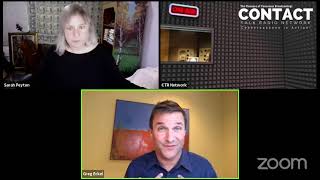
Dr. Greg Eckel talks with Sarah Peyton about unconscious agreements we make with ourselves, the hidden contracts that shape our health and emotions. They explore how anger and fear get locked into our bodies and what it takes to recognize and release them.
Chapters
Station, its management or other Advertisers.
This is contacttalkradio.com consciousness in action. And you are taking action into your consciousness by tuning into Contact Talk radio.
And on tunein.com Hang FM and upsnap.
Mobile Contact Talk Radio. Welcome to what the Health An Independent.
Approach to your Health Span.
Have you noticed how our healthcare system may not have your best interest in mind?
Join Dr. Eckel in this fun and.
Sometimes disturbing exploration of the state of healthcare and what it means for you. Now, here's your host, Dr. Eckel. Welcome back everybody. Dr. Greg Eckel. And I have my esteemed guest Sarah Paton back on the show, the author of youf Resonant Self. I'm excited for our topic today. It is called Unconscious Agreements we make with Ourselves and, and you may be wondering what that is. And before we get into that, I want to give a proper introduction. So Sarah, welcome aboard.
Thanks. I'm so happy to be here, Craig.
I am. I'm so excited. So Sarah is a certified trainer, nonviolent communication constellation facilitator and neuroscience educator. She integrates brain science and the use of resonant language to heal trauma and nourish self warmth and exquisite gentleness. She teaches and lectures internationally and is the author of the book youk Resident Self Guided Meditations and Exercises to Engage youe Brain's Capacity for healing. Her second book, which is also super exciting, is coming out May 25th of 2021. And it is the workbook, your Resonant self workbook. I hope we have a little bit of time. Maybe at the end we can talk about that and what you're showing and seeing without in the communities. But now more than ever, Sarah, these are so important and I'm just bubbling with excitement to get into it. Wonderful.
Well, the workbook is all about the unconscious contracts and the unconscious agreements. So if listeners find themselves intrigued, that's the place to go. It's available on your on your online bookseller as a pre order right now.
Awesome. I want to really help you get the word out on that your work is very important and you, you know, I have a lot of patients that I've referred over into it because it is, it's never looked at really in the western medical approach and really where we're moving as a species is we have to address all of these levels in that true integration. And this piece is really crucial for the puzzle. So one of the things so when we talk about, I put in the show notes of unconscious contracts. What are we talking about? What is that.
What the heck is that? Yeah, yeah, yeah. These are agreements that we make with ourselves, either wholly or partly without our knowledge. So some of us, for example, will have memories of really intense and possibly even traumatic experiences from childhood where we made promises to ourselves. For example, I will never speak publicly again. I will never allow myself. I will never make myself a target so that I can be publicly humiliated. I will not participate in classes. I will not trust teachers. I mean, these are all things that we can have happen when we're little, that we're like making an agreement with ourselves. And the agreements are very big agreements because the whole experience of shame for humans is the most unpleasant. Shame and disappointment are the things that humans try to avoid more than anything else. I can't find this research, but at one point I stumbled across it. Didn't know how important I thought it would be. I read somewhere that with shame we have the largest dump of cortisol of any human emotion.
Wow.
Yeah.
This is such. So you know what I have been saying over the last year? Shame, blame and guilt is kind of the old system dying. Right. It's the weakest position to influence or force somebody into making a decision. But it is so powerful. So powerful. And to hear like, you come across research to show, like, under shame, it's got the largest cortisol dump, which is a stress response. I mean, you know, nobody wants to be shamed.
No. And we'll do anything to avoid it. And disappointment's pretty high on the list too.
Yeah.
So many people have contracts, have agreements with themselves not to hope so that they will never be disappointed again. And you and I, Greg, know that hope is a vitamin for the soul and for the brain and for the health and for the heart and for the mind. Hope is like vitamin C for our existence. So if we have an unconscious agreement not to hope, we're really shooting ourselves in the foot with it, even though it's keeping us safe from disappointment.
Right. That's a pretty dark spot to be in. So let's talk about the component of making these contracts with ourselves unconsciously. So that's coming from. Is it only just from childhood? These are like traumatic events that we say, I never want to experience that again. So to be safe, I'm going to do X, Y or Z.
Right. And this is happening at a non conscious level mostly. I mean, we may catch little bits of it that feel conscious, but there's a deep root of it that's a root of unfelt pain that is unconscious, that we are not consciously aware of, so we can make these agreements when we're little, but we can also make them when we're big. I mean we can be grown ups and have heartbreak with a partner who's infidelist, for example. So, and we can go, I'm never going to trust men again or I'm never going to trust women again. Women are not trustworthy. And that can be, you know, like in order not to ever be disappointed and betrayed again. And yeah.
So how do we figure out if we've done these? Or like, is it evident? You know, one of the things that I wrote and I might have done this improperly, but I said if you find yourself in a repetitive nature with relationships, business dealings of like, how many times is it going to take me to learn this lesson? Is that a sign maybe that we've made an unconscious.
Is it's absolutely a sign that we've made an unconscious contract. An example of the way that that could happen would be if, if I have, you can have contracts not to trust, but you can have contracts to trust no matter what. And so then you aren't even allowing yourself to decode the messages of untrustworthiness that are coming from a business partner. And then it's like we're out in the world without protection. There are so many different ways that we do this. The amygdala, the part of the brain that holds trauma, glues together everything that's connected with a moment of difficulty or trauma. The amygdala goes, okay, here's this terrible moment when I have been disappointed when I hoped for. My mom told me that she was going to get me a trip to Europe for my 16th birthday. And then she just completely never did it. When I asked her about it, she told me she'd never said that. And so I'm never, I'm, I'm just not even going to imagine, I'm actually going to believe that this happened because I'm not worth anything. So we'll have contracts and agreements that our amygdala makes in this moment of difficulty where we go, oh my God, it's me. You know, I'm, I'm just, I'm not worth it. I'm going to believe that I'm not worth anyone following through on their promises for which is the kind of thing that then brings us into the world as adults. And we don't even expect people to be in integrity with us, in their dealings with us. So this is another example of the way that there would be no red flags going off because we don't believe we're worth real integrity with our business partners or with our romantic partners or with our best friends. Like there's just like we've turned off our red flag mechanism, which of course is something that we need very much for our health and well being. We need to know when we're scared. We need to know when things feel bad. We need to be able to decode our body's experiences of disquiet. Because all of the responses, the gentle and warm responses that we make to our body when our bodies are having moments of disquiet, these gentle and warm responses are key to good health. The more that we are warm with ourselves, the more we're regulating that disruptive flow of cortisol, the stress hormone that can take these disruptive and sudden flows of cortisol and drops in endogenous opioids, drops in oxytocin, that these things impact our health and well being. And you and I, I think maybe even have talked about before how contempt affects people's health. It makes people heal more slowly from viruses. It makes people's wounds and scratches and scabs heal less slowly, less, less quickly. Three days longer for, for viruses, for us to recover from viruses. Three days longer for us to our skin to heal from scratches. If we're living in an atmosphere where we're receiving contempt from a partner or another important person, like a boss. So we need to know, oh, this doesn't feel good. But if we have a contract with ourselves to believe that we're not worth feeling good, then we don't know that we don't feel good. We don't know it's contempt. We don't know our health is being impacted. So the release of these contracts is so key for long term health and well being.
It is. I mean our health literally depends on it.
Right, Exactly.
This is so essential that doesn't go addressed or has not up to this point in my training and 20 years as a physician in the schooling, you know, we do learn at least in naturopathic medicine, around the mind body connection. There's not a word in China medicine for that separation. It's all heart centered medicine and is what I really enjoy about the way that we practice. And then this brings a language in here and actually there's science behind it to say you're not healing as rapidly with this receiving of contentment. And in that example, how would you describe that? Is that the integrity of the individual isn't strong enough to put up the boundary to know like that's not mine, and I'm not taking it. And so their. Their defenses are down, or how do you view that?
Well, it's more like if you don't believe that you're worth anything.
Right.
It doesn't matter.
Yeah.
Somebody's cruel or if someone is contemptuous, it just. You're just like, well, that's the way it is. I'm not worth anything. Of course they're contemptuous. There aren't even any defenses to put up. You're just like, well, I'm just a terrible person out here in the world. And of course I'm being treated badly.
And here's the evidence to support it. Right. I mean, here it happened. Here it happened. Here it happened. It's not the conscious thought that I'm. I'm not worth anything, or is it a. Some people have that conscious thought, but a lot of people don't know that they're carrying that around.
Right, right. For the people who can catch that, they're halfway there, because that's half of an unconscious contract is what you believe. I believe I'm not good enough. I will believe I'm not beautiful. I will believe I'm not strong enough. I will believe I'm too sensitive. What do we believe about ourselves that's negative, that we can often catch? Not everybody can, but we can often catch it. But the part that's unconscious is we don't know how deeply relational we are. And we think that we're just. We think that the next part of the contract is, I will believe that I am worthless because it's true. That's what we often think. We just think, and I like to say it's not truth, it's trauma. When we're listening to negative voices in the brain, we always get to say, it's not truth, it's trauma. That helps us remember that there's something probably here that we haven't unpacked yet. If we start to understand how deeply relational we are and that we affect each other and we're changed by each other, then we can start to look at these unconscious agreements we have with ourselves. I will believe that I'm not good enough in order to. If I'm in a relationship with my mother, that's hugely important. How does it serve myself and my relationship with my mother and possibly my mother for me to believe I'm not good enough? If my mother's really critical with me, then it lets me belong to her. I will believe I'm not good enough so that I can Be my mother's daughter. If our mother. Yeah, if our mother is very kind to us but is cruel to herself, then we can have a contract. I will believe I'm not good enough in order to accompany my mother so that she is not alone. Yeah. So once we start to enter an understanding of the way that we're impacted both by our very early and important relationships and by our later and important relationships. I remember that I had a man when I was young. I fell so deeply in love. And the man told me, well, he told me he loved me, but then he left and he said, I never loved you. I said, you said you loved me? He said, I lied. And I was like, oh my God, I should never believe people who tell me they love me. That was something that happened when I was a sort of a semi adult. And there it was. It was relational. It was relational connection. And then the very sweet thing happened. 30 years later or 35 years later, he contacted me and I was like. And he said, oh, I loved you so much. And I was like, what? You told me you didn't love me. And he said, I said, you told me you lied. You told me you never loved me. He said, oh, I was very young, I didn't know how to get out of relationship given to me like a cross, you know, the decades to say, oh, Sarah, you get to be loved. You are lovable. But there had been like a deep disquiet based on something very important, very relational. Yeah.
So those, those traumas are really hard to recognize sometimes. And because it is unconscious, it's almost as if the world, I mean, our, you know, our minds are such goal achieving machines. So they want to show like, well, that's what you think reality is. So here's reality. So you get kind of more of the supporting evidence in the lineup here. So what are the ways that we can kind of start uncovering these contracts, these unconscious contracts, or knowing do we have any?
Yes. Well, if we start to track what are our negative beliefs about the self, which, which is such an important thing to know when we're struggling with health issues, because every negative belief we have about ourselves negatively impacts our health. But we can't make ourselves wrong for having them because then that's more negative impact on the health. So it's a funny thing. We need to make ourselves right for having negative thoughts about ourselves. We need to say to ourselves, of course I believe that I'm not good enough. Not because it's true, because remember, it's not true. It's Trauma. But because it makes good sense in terms of some very important relationship. Of course I believe that I'm not lovable because this amazing partner that I was so in love with left. Of course I would believe. How else do you make sense of such a loss?
Yeah.
Which is a very different way to be gentle with ourselves than our usual let's beat ourselves up some more, kind of.
Right. I mean, you know, all too often it is a dangerous neighborhood to go into by yourself. Right. And it is. We're really. We're really good at the criticism, the self criticism and deprivation and. Or maybe that's just me, but. But it is, you know, that aspect of just knowing, like. Well, those are actually false. Those are false beliefs. And of course, because of xyz, I love that framing of it. And it's really letting your. You know, giving yourself some grace. Right.
Yeah, Grace.
And.
And an understanding that we are. In our Western world, we so often believe that we're alone and that we're just supposed to figure it out on our own. And if we're not figuring out there's something defective with us when we are exquisitely social. I think maybe I discovered this since the last time we talked. Greg. So I'll check with you if it sounds familiar. Did you know that we have heat sensors in our skin that are specifically looking for body heat from other beings?
No. I like that.
Cool. Yeah. And very important for us in this particular moment when so many of us have been in lockdown and isolation for so long and not having the number of hugs and body bumpings and warm connections with other people that we may be used to.
How did. So say that again. So our bodies have sensors that are looking for other bodies to be close to us.
They're looking for body heat. Yeah, we are looking for body. And these sensors, they don't go when it's cold. They don't go off when it's hot. They're not looking for cold hot. We have other heat sensors in our skin that are doing that.
Yeah.
These are specifically devoted to other bodies coming close to us.
I love that. Yes, that is. And, you know, it feels right as well. You know, that is one of the components, I think, with our kind of the guidelines of social distancing. I really wish they would have said physical distancing rather than social distancing. People really took that to heart and just like, hibernated and isolated and, you know, now while we cannot get the body component or the energetic in the same spot. Right. So our senses aren't Feeling it here. But the social connection is also important.
And Dr. Steven Porges, the fellow who's kind of originator of polyvagal theory, fight flight and I had alarmed aloneness and freeze.
Freeze.
Yeah. Dr. Stephen Porges says we need to stop, especially now. We need to understand that the video screen is a way that we can exchange energy. We're not just receiving. So we get to have an experience of give and take and social aliveness and connection, even though we're divided by time and space. And to invite, to invite ourselves to step out of a TV watching idea about the screen and let ourselves receive each other energetically as well.
I love that. And you know, really, it really allows us to expand our sense of ourselves doing that. Right. Which is lovely. So that we are the universe. Right. The verse is in us. That's an old Chinese adage. But it really is coming to terms with, okay, what is happening in these, these times and, and how do we grow out of it and really expand our, our connection that way. So that's a great way of thinking about it. Yeah. Well, how do we. So naming and feeling the deep currents below. Self sabotage. So this is a symptom that potentially you have some contracts that are not known to you. Self sabotage. Right. You get the promotion or you get the stage and then you just like implode on yourself.
Right. Or like if we're thinking about the world of healthcare, so many patients receive recommendations from their doctor and go away and then can't do them. And that's a kind of self sabotage as well. And there can be a whole bunch of different contexts there. We can come back to stage if you're so interested there. Just remind me, but just for a moment to stay with the medical field. People can have contracts never to do what they're told to do so that they preserve choice, so that they don't cave into their mothers or fathers, so that they preserve their soul. And those contracts were of course immensely life saving when they were children. They did preserve the person's soul. But now in relationship with a healthcare professional who says, I wonder if you'd be willing to walk, you know, for 30 minutes a day or whatever the recommendation is.
Right.
We want to be able to take that. There's a reason the recommendation is being made. It's not to hurt us, it's not to control us, it's not to take our soul away. But we don't know why we're not doing it. We're like, my doctor told me to walk, why am I not Walking. Yeah, yeah. Huh.
So that is, I mean that I would love to hear the, the keys perhaps as the physician to make the recommendation. How can I see the signs of that? Is that just on the repeat or the return visit of like, well, I didn't do anything?
Well, yeah, you do have to have enough relationship with your clients. I think that there's a patience, that there's a kind of a trust so that you can say, how are you doing with the walking? And they can say, not so good. You know, I mean that's a relationship of trust where a patient can see, say what's true instead of lying to their doctor. And of course to some degree that's about the trust relationship that the practitioner creates. But to some degree that's another kind of unconscious contract that the patient may be carrying. You know, not to say something bad about themselves, you know, not to just to lie. If they're asked and they haven't been able to do something to just lie about it in order to save face or might be deeper than that. But, but let's say you've got that relationship of trust and the person says, not so good, then it might be possible to say, my guess is that it makes sense that you're not doing it. Would you be willing to think about the ways that it makes sense that you're not following through on the recommendations? Because it makes sense to your soul, it makes sense to your heart, it makes sense to your mind. And if, and if you can figure out how it makes sense, then we may be able to get farther. Is a very one possible way of opening. Yeah, yeah.
So, and just asking them, so on that return or the follow up of. And if you don't have a return or follow up and you're just thinking like, hey, that's me, she's talking about me, don't do the follow through. Is asking yourself, does this make sense that I'm doing it? And when you ask that question, do you find that folks are then kind of put back into a. When they made the declaration or the contract?
Sometimes they are, yeah. Especially if they get used to the work and they're thinking, when did I, how old do I feel? When did I make this agreement with myself? And then they'll remember, like, gosh, I feel like I'm 8 years old. You know, I remember that I got a stepmother when I was 8 years old who was so rigid and I made a contract with myself never to do what she said.
Yeah, I did. So one that I uncovered a couple years ago was around. I made an unconscious contract with myself as a 10 year old that I'm on my own, I can do this by myself. I don't need anybody's support. And it took, it was a big hurdle a couple years ago and life circumstances was, it was clear to me, you're not going to get through this alone, buddy. You're going to need to ask for help. It was so humbling and I was overwhelmed with just love and support. Like I couldn't believe, like I didn't do it before, but it was such a thing. It was unconscious. And I was like, wow, I totally did that as a 10 year old. I made it to like 447 years old on the planet. And it, you know, it radically changed my life to realize like, I don't know, I can actually ask for help and support and I don't have to feel like I'm just doing it myself. Yeah. And it is, you know, it took a very big event in my life to get me to that point. And so if there's ways that we can like fast track this, like perhaps your workbook and these conversations, you know, I think we could really help a lot of people out of their suffering or give them the tools so that they can be empowered. I mean, I'm going to bring back that 90s term of empowerment. It is a very powerful statement. And you know, it is kind of the year of owning our autonomic nervous systems this year, you know, and we are in control here whether we know it or not. And so this is a piece of the puzzle for folks to really bring this into the discussion. I am so psyched to have you on the show today. I'm going to do a quick station break which is this is what the health. I am Dr. Greg Eckel. My guest is Sarah Paton and we are talking about unconscious contracts. If you're just tuning in, you can go back to the beginning of this podcast. It is at naturecuresclinic.com podcast or your favorite podcast player. And so we're going to continue on. There was our station break. So coming in, you know, I didn't, I don't need to go back to the stage discussion there. I'm wondering naming and feeling the deep currents below the self sabotage. So we talked about it. Okay, here's this example of not following through because of a contract of I, you know, I'm not being, I'm not going to get manipulated or whatever. The underlying underlying reason was why we made that. How do we name them? Is it through that process of you're asking yourself or providers asking their client or patient on, okay, does this make any sense? And then seeing what comes out of that.
Yeah, yeah.
How does this make sense?
Yeah, because people don't think they make sense.
Yeah.
And if the, but if a practitioner, practitioner is convinced, like I am convinced that this makes sense, you know, that this is the language of your heart or your soul or your body talking to us about non compliance, for example, or, you know, it's very, very interesting. I was working with somebody recently and it was, there was a. It was about not wanting, not wanting to have, not wanting to have a really intense treatment for a fatal disease because of the side effects. And the person was like, I don't want those side effects. And as. And I, and I said, well, I mean, I believe that this makes sense. Does you have a sense that your system knows that death is. That death is what awaits if there's, I mean, just making space for all kinds of, you know, ways that people find sudden healing or that fatal diagnoses are wrong? Not saying that the Western medical System is always 100% accurate, but sometimes they have a pretty good sense statistically that if we don't do a particular treatment, we might not make it.
Yeah.
And I said, does your system have any sense that, that death is a part of the picture or is your system just pissed off to be asked to do something uncomfortable that has, you know, negative after effects? She's like, I don't think I know that death is there at all. And so there we were touching an unconscious contract that was so strong and that it even prohibited or stopped this person from being able to see the consequences. Like to see with clarity where they were and what their choices were.
Oh, wow.
Yeah. So these things are. I mean, it's sort of like if we bring you make sense, conviction. Yeah. To the people that we work with and we have this like, sense. You often speak of this, Greg, the sense of a person as more than just a body, that the person is a whole system, that the person is also the universe. I mean, there's something sacred in stepping into a healing relationship with somebody who's here in front of us. And they represent not just themselves, but they represent the universe. So, so our conviction that the universe makes sense and that the person is that big, it allows something very different to happen.
Yeah. That is honestly the world that I want to live in is where people understand that, that they are, that that does make sense for them and that, you know, there's a Lot more going on than we sometimes can perceive. And if we. And we don't even know what we don't know.
Right, yeah.
So on those levels on self sabotage, so, you know, if you're listening and you've been in those spots of not following through or things just not kind of adding up on, why is it going this way? Or here's the evidence. Right. Of the, you know, it's not truth, it's trauma. I really like that mantra because if you've got a negative thought process going on, that is your apparatus telling you there's some falsehood here. And so use that as kind of, as Ram Dass said, grist for the mill. That's the signal to say, wait a minute. These two, Sarah and Dr. Greg were talking and they said, if I have negative thoughts about what perceptions of myself, that's a little wake up call to say, wait a minute, maybe I have some unconscious contracts here. Right. Oh, I like that. I'm so happy to have you on the show. All right, so where do we go from here? So we've got. Is there anything else unpacking? Do you feel like we need to cover a little bit more on how we created those contracts? I feel like we covered that one.
Yeah, I think we've got that.
Okay. And then naming and feeling the deep currents below self sabotage.
Yeah, we're starting to touch that. I think we've been kind of touching it by telling stories about it. But when I'm giving people like explicit direction about how to touch and feel this, it's. You say the first part. So, for example, you did this work with yourself in finding that vow that said, I will do it myself. And it was enough for you to touch it and to know it was there, that it released. And you start to. You sort of did the rest of this process unconsciously. And it can happen unconsciously, but it can also happen explicitly. So if we were guiding you, we would say to you in that time, Greg, when you say I have to do it alone, what do you notice happening in your chest? What do you notice happening in your tummy? What kind of sensations are there when you touch into the body in relationship with that? And since you've already done the work, you may not have any body sensations. But.
But, well, if I go back, I mean, it was pretty, pretty profound time. Right. So it was definitely like a heavy sinking on the chest, a shrinking of my being of like, oh, it's so heavy, like I'm carrying the world, you know, and so that. That is no Longer there. I feel really light and limitless. But that. That aspect is. That's. Those are great questions, for sure.
Yeah. Yeah. So then we would say to the person who said there's this heaviness, we would say, okay, now say the words. In order to. I will believe that I am alone in the world, that I must be able do it all myself in order to. And just stay with the heaviness and let it make words for you. What are the words the heaviness makes? I will believe. So if it were somebody else, not you, they might say, I will believe that I have to do it all alone in order to make sense of the desert that I lived in when I was a little kid. In terms of people actually being relationally present, they were not there. They were physically there, but there was never anything there about this all. I was so lonely. And then the next part is after the person finds some words that say the. In order to part, the next part is no matter the cost to myself, because we need to name the cost of these contracts. I mean, if we have a contract not to see death, not to even. Not even to let in the possible consequences and ramifications of, for example, refusal for treatment, then, I mean, it's all well and good to make an informed decision. Just fine. Nothing against that at all. I just have an opposition to people making those decisions if they. If they don't get to see their whole world. So here's a person making that, you know, no matter the cost to myself, I will not see death. No matter the cost to myself. Yeah, and there we go. The cost can be very high. I will not do as my doctor asks me to do in order to pro. In order to preserve my own autonomy and choice and not to lose my soul, no matter the cost to myself. There's a specific impact on the health. I will never be a public speaker. I'll never speak publicly in order to save myself from pain and humiliation, no matter the cost to myself and the world. This person's voice is not getting heard. We need to hear the voices of the world. Everyone's voice is needed. So. So the costs are high. The costs are life and death. And then once we've done that, once people are like, oh, yes, sometimes people feel heat rising off of them once they say the whole thing. Sometimes people's ears turn bright red. Usually there's some sort of body response if we've actually named something that feels true. Sometimes people cry, sometimes they laugh. And there's usually just some kind of response that's like, yeah, that feels true. And then the next part is a really important part, which is the blessing. So there's the release and the blessing. So I release you self, I release you from this contract, I revoke this vow, and instead I give you the blessing to. And it sounds like if we went back to you, Greg, in that experience you had of healing, that unconscious contract.
Yeah.
What was it? What was the blessing that you gave yourself?
I think the blessing is to actually receive love. I mean, that was. It was like, wow, look at this. Like I. Why wasn't I tuned into this before and support. Like it was that. Yeah, it was such an amazing uplifting experience and in a really dark time for me. And it was so necessary. Needed. Yeah, it was just an amazing feeling of like, wow, look how far this community goes, like to complete strangers, you know.
So that's a beautiful example of a blessing. And it's sort of nice to give ourselves a blessing because then it lets us reorient to the world. So if, if we're working with the idea that we don't want to do what somebody tells us to do, I will not do what anybody tells me to do in order to preserve my soul, no matter the cost to myself. Then there's the release. I release you from this contract, I revoke this vow, and instead I give you my blessing to know that your soul is in no way impacted by following doctor's requests. To know your own soul and to let it fly free and not see a link between doing your walking or taking your vitamins or your medicine.
That I really like that. And this is a process you've put in your workbook?
This is. Yeah, the workbook. The workbook goes, takes all different things, like the ways that we tell. We decide that we shouldn't feel certain emotions. That of course, also impacts the health so profoundly. Did you know. I don't think I knew this the last time I was. Was talking with you either. Did you know that if we try to diminish people's anger response, we diminish all of their life energy. There's no way to just turn down anger with, for example, drugs. You can't just use a particular drug that will just turn down people's anger. In order to get the anger turned down at all, we have to make everything be turned down.
Wow.
And so it becomes immensely important once we learn that to say, well, my anger has a place. We all have an anger circuit. Our anger circuit is here to help us and to protect us and to advocate for Us and to help us protect and advocate for others who are defenseless. That's what our anger circuit is for. It's to preserve life. And what. The only thing that we know of that diminishes anger without diminishing all of the other life energy that we have is to link it with love, and it's linked with care. When it's linked with the care circuit with it, then. Then it says, ah, I make sense, I belong. I am not doing any harm. Of course I'm angry. And that then allows the full expense of our life energy to be expressed because we're not having to turn everything down in order to manage anger. So if we have a contract, I will never be angry, then we have a contract which depresses all of our life energy in our entire system.
So on that example on anger, one way that I have heard it explained a little in a different system really is around anger, because that's one of the bigger ones that people are most uncomfortable expressing feeling. Having others have anger, is that it is a way for energy to move.
Yes.
And if you squash it, try to turn it off, take medications to get rid of it, this lowering of the vitality happens. So if you allow it, if getting into motion, breath, work, movement, running upstairs, like, just let it out of your body, it gets the. Yes, you. You acknowledge it. It doesn't diminish what the upset was or the angry incident, and it doesn't trap it in yourself and lower your overall vitality or cause other issues from coming up when you're trying to tamp it down.
And if we add the question, like, again, like, if our anger makes sense and it's linked to our love, what are we loving so much? Mm. Yeah.
Yeah.
That's a very powerful linkage for our system.
It really is.
Yeah.
Goodness. All right, I like that component, and I like the blessing component as well. So is there another example that you would give, like, what are some other tough emotions that people are stuck with, overcoming, get trapped, you know, what are the ones that get us?
Yeah, so some of the other emotions that can get us are. This kind of comes back to our. One of our original scenarios, which was where somebody kept getting into difficult positions with. In business or. Or in life. If we have a contract not to feel fear, then we. Again, that's another way to turn off the alarm signals of the body. So it's a very dangerous contract to have not to feel fear. But it can. It's something that's very commonly made. We very commonly make contracts about because of the way that bullies operate. If bullies see fear, then it makes them usually more aggressive. So in order to keep ourselves safe in grade school, in order to keep ourselves safe with parents who have disorganized attachment and who are scary and bullying, humiliating, emotionally dangerous physically, it may become very important not to display our fear, but not even to feel it so that we can survive these very dangerous situations of childhood. And if we have a contract not to feel our fear, then we come out into adulthood and we are like, well, I'm not just, I'm just not going to feel fear. Then we don't have our sensory apparatus to let us, us know that we need to watch out, that this person is not trustworthy, that we shouldn't get into this situation. We need to be able to feel our fear and differentiate whether it's leftover fear from the past or whether we have very good body signals that we need to not be in this particular work relationship or romantic relationship. Another very interesting circuit that we can turn off with a contract is the contract not to feel any disgust. And we can have experiences of. There can be all different kinds of experiences of intrusion that children live through. Children can be intruded upon emotionally, their parents. I mean, a very sort of low grade and innocent sounding example of this is when the mom says, I'm cold, put on your coat. Where there's no interest in what the child is experiencing, no interest at all. There's just this intrusion of the mother's experience. You know, I'm hungry, it's time for you to eat. They say that less, but I do hear a lot of mothers saying, I'm cold, put on your coat.
Yeah.
And so all of those kinds of intrusion, which can range from emotional, this light emotional intrusion to emotional abuse to verbal abuse to physical abuse, to sexual abuse, all of, of that kind of abuse is intrusive on a child's system. And a child has to be able to survive that and to retain the relationship because children can't live without relationship. And so the child learns to turn off their disgust. I will not feel any disgust about having my boundaries violated in order to be able to survive my body's response to my mother's intrusion. And then we get into adult life and we're like, don't have access to our disgust. We can't tell when we're full, we're eating more than we need because we have no idea how much food we want. There's no, there's no visceral connection between what disgust is supposed to tell us that disgust is supposed to tell us. Too much disgust is supposed to tell us. Intrusion, violation of my boundaries. A lot of people have trouble saying no. Gabor Mate wrote that beautiful book about no when the Body says no. And he wrote a lot about the health impact of not being able to say no. And, and so, and not being able to say no means that we have no response to our disgust and no. No access to our own disgust.
Yeah.
Yeah. So. So these are some of the. And I've had marvelous things happen for people who turn on their disgust circuit, who let go of their contract not to feel it, and all of a sudden they're like, oh, I can tell I'm full. I don't have to overeat. I can tell my partner to not to do that thing that drives me crazy. I can't.
Domino effect there.
Yes, exactly. Magical awakenings.
Wow. That is, that is so hopeful and encouraging. Right. That if we're not, if we are suffering, feeling isolated, alone in dark spots, that it doesn't prove that that is the reality. That is another kind of grist of the mill to realize, wait a minute. Perhaps these are some things that I need to uncover here and finding the resources. I put all of your contact info in on the show notes and we're definitely going to let people know about your book when it comes out. You can pre order it now. That link is on there. That's from your favorite booksellers here in Portland, Oregon. I would say people should know about Powells.com all over the country. Show them some love, folks, because they're definitely hurting in this economy and we want to keep our lovely independent bookstore alive. So we'll say that. And so in the last couple minutes, anything that you would like to share, gems, etc. Encouragement with our listeners and viewers of what the Health.
Yes. To remember that you make sense and to just carry it as a conviction. Well, of course I make sense. And I wonder if I make sense, why am I angry? Since I make sense, why am I angry? What do I love? Or this sounds familiar. I can never tell when I'm full. I wonder if I have turned off my disgust circuit, what will happen if I turn it on again by releasing the contract to keep it off and to just be so gentle and warm with yourselves.
I love that. I'm going to. We're just going to let those sweet words sink in there. Gentle and warm with yourself. Sarah Payton, thank you so much for coming on what the Health. It's been such a pleasure, folks. If you like what you heard here, we want you to share this. We want you to share it with two of your loved ones. Like this is the message that we need to get out to people in these times now more than ever. You kind of hear me say that over the last year and it is true now more than ever we are owning our autonomic nervous systems here at what the health. We are bringing you the top notch thinking and great thought leaders here such as Sarah Paton and her resident self, workbook author, lecturer, educator. Please go out, give us some reviews. 5 star reviews on your favorite platform. These are my calls to actions. If you're liking the show, please share us, help me get the word out. Because you know now more than ever we do need trusted sources and I want to bring you the balanced information. I want you to have actionable items. I want you to know how to take care of yourselves and your loved ones. So you know this is how we do it from the ground up. Maybe that should be my theme song. I want to thank you for tuning in. This is what the health and we are here on the contact talk radios on Tuesdays from 2 to 3pm Pacific Standard Time. You can also find us on your favorite platforms. Thanks everybody. See you next week.
More from Dr.

EP. 197 Brain Regen: Harnessing Essential Oils for Cellular Health and Longevity

EP 196 WTH?!? Unlocking Cognitive Health with Your Genetics with Elwin Robinson






EP 190 WTH?!?: Mind-Body Mastery: Harnessing Movement, Breath, and Sound with Jeffrey Williams

EP 189 WTH?!?: Nourishing Connections: Lynne Bowman on Family Meals and Healthy Living


EP 187 WTH?!?: Clearing the Air: Dr. Kevin Smith on Nasal Health and Migraine Relief