A Big Bold Season in Review | Big Bold Health Podcast Episode 28
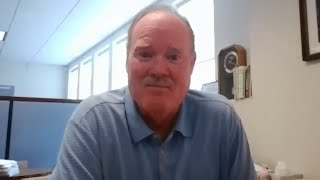
Episode 28 (season review) of the Big Bold Health Podcast — a conversation between host James Maskell and Dr. Jeffrey Bland, PhD — reflects on the first season's lessons about health creation, community resilience, and the pandemic's role in exposing systemic fragility. Bland introduces and explains the coined concept of a "co-immunity community," links planetary/plant/human immune systems and resilience, and describes personal/regenerative-agriculture projects (tartary buckwheat cooperative) as practical examples of health creation. The hosts also discuss shifts in behaviour (more time at home, outdoor activities, interest in measuring biological/immunity age) and the opportunity to move from a disease-centric system to a personalized, health-creation economy.
Questions this video answers
Episode 28
August 27, 2020
74 years of age
A goal of 10,000 acres of tartary buckwheat over the next 3–5 years (via a cooperative)
"Co-immunity community"
Chapters
Hello, everyone, and welcome to episode 28 of the Big Bold Health Podcast. I'm your host, James Maskell, and I am here again with Dr. Jeffrey Bland. Welcome, Doc.
James, I can't tell you how much fun this has been. I can't believe it's also 28. How does that happen? Wow.
Yeah. Not many shows get a 28 run season, but we did, and it's actually just over a year. We launched the Big Bold health concept and a number of the first interviews that came out around the beginning of the summer last year. And so I guess I just want to start with the first question I want to ask is, what have you learned in this last year? What have you learned about big bowl health? What have you learned about health creation? And what lessons have you learned that might be useful to people listening?
Well, thank you. First of all, I've learned a tremendous amount of. From the relationship you and I have shared over this last year. I think it's been a very good synergy. I think the. The way that we have dialogue, you bring a different perspective. You bring a perspective of real, innovative thinking, disruptive, but thinking that is very positive. It's a more youthful, less tarnished perspective than mine. Having been around in this field now for 40, I carry a little bit, probably more baggage, but I think that the melding together of our perspectives has been very, very valuable, certainly for me personally and professionally. It's hard to believe, actually, that now, at 74 years of age, I just feel like I've been revisioned for the next 30 years, so we'll see how it goes. Secondly, I want to really honor and verbally say how much I appreciate the guests that we've shared over those years. I have learned tremendous amounts from our guests, and we've had a lot of empowered individuals that we've had the privilege of talking to. A lot of them are women who are leaders in our field that are really cutting new ground for establishing what I think will be the healthcare paradigm of our future. And it's so great to see the energy, the vitality, the creativity, and the courageousness that we've seen in many of these individuals who are really moving out the wickets of the playing field into a much broader playing space that we can navigate from as we see what happens with the personalization of healthcare and getting people engaged in their health care. And then the last thing, of course, is that we would have never guessed that when we started this together a year ago, which is called COVID 19, we would have never believed that somehow would be A force of nature so dominant that it would change globally every person's life in some way that is living on the planet today. And even. Not even every person, every animal and every organism. You know, people are talking about the number of sightings that they're having of all these wild animals that are showing up now suddenly. And even in our own little home on Bainbridge island in the state of Washington, it's like we have a wildlife park. Every day we're seeing new animals. Like, we saw two deer being born in our property, and a bear the other day came out of the woods when I was walking our dog. And we have six different coyote pups that are running around in our field. And so I think we've learned all sorts of things about the regeneration of the planet. If you give it a rest, if you're given an opportunity to take a breath, how it can be able to be resilient. And it's a model for us, you and me and everybody we know. If we take a breath, if we take a pause, if we take a moment of reflection, we can be resilient, we can regenerate, we can rejuvenate, we can see a future. And that's a pretty powerful thing. Now, you put on top of that, you know, what we've been undergoing here with the social justice movement and the recognition that we've been carrying a lot of baggage that we need to get rid of out of the back of the ship or the train or whatever. It's just heavy weight that's not serving advantage to most of our society. And how we do that is going to create a lot of opportunities for visionaries and innovation and courageous people, of which you're one. People that will come up in the younger generation won't carry on all these bad things of, I can't do it anymore. So I'm very excited about where the future will lead. And I think we did a pretty good job in our 27 series in creating some of the landscape that will be carried forth going in and through into our future.
Absolutely. I mean, I completely agree with that. And I feel that I learned so much by sitting and listening. There were some episodes that I wasn't involved with, and the ones that I was, I felt like at each of the places that we record, it was just interesting. So many diverse thoughts on really what one central theme and this big, bold health concept, I think, has really evolved during the year. One word that I heard you say that I just really took to that. I would love for you to explain to our viewers and our listeners is this idea of CO immunity. Because I think that where Big Bold health is pointing is in a direction of CO immunity. And maybe our idea of CO immunity has changed in the last year.
Yeah, thank you. I think that is something that really came out of our work this last year. And I was, you know, I don't know how things happen at times, but I was speaking to somebody this was several months ago, probably six months ago, and I was talking about that we need to build a different kind of community. It's a community around health rather than the fear of disease. And it needs to be focused on one of the three places that we touch the outside world, which are our nervous system, our microbiome, and our immune system. And as I said that, I said, you know, we need a community. And I said, oh, my word. I think I just coined a word, co immunity community. And that's a good metaphor for everything that we're trying to do. And so from that, then was born the recognition. At least when I want to say born, that's probably an exaggeration, but in my mind, the connection among planet that has an immune system, plants that have an immune system, and humans that have an immune system. Actually, all animals have an immune system. So the interconnection of those defensive boneworks that interface with the outside world and the universe at large, which we call our resilience system, which is encoded within our immunity, is a very, very powerful connector that has to do with planetary health, individual health, and the future of health care. And when I think about that, it takes me away from the worry of disease and the artifice of diagnosis and the recognition of disease risk factors. It takes me rather into a place of, as I've said, allowing the system to find its resting point where it will be rejuvenated through its ability to be resilient, which ties to its immune system. So the planet has its carbon, nitrogen, nitrogen, oxygen, the sulfur, phosphorus cycles that are part of its resilience that we call its immune system. And that is directly connected into the way plants breathe nitrogen, and, excuse me, the way that plants fix nitrogen and breathe carbon dioxide to create plant material that we eat. And they also create immune substances that are called phytochemicals that we eat that bolster our immune system. So it really powerfully demonstrates the interconnectedness that we need to all feel if we're going to be a society that evolved in community with all others and not separate from.
Absolutely.
Yeah.
I guess one of the things that was really interesting is you know, we spent six months talking about it and I was like obsessed with group visits at that point because I was writing my book and I was, you know, mentioning that in every podcast and we were sort of getting through there and then halfway through the year, suddenly now, one, not only is everyone isolated, you know, and not able to be in real community, but secondly, that Covid comes along and really unmasks this lack of function that humans, and especially Americans, if we're honest about it, have developed over years. Of all the things that we've spoken about in functional medicine for years, the planetary degradation, the food system degradation, have shown up in a lack of resilience. And I think it feels like almost like there's an acuteness to the problem that there's been, you know, that there hasn't been a lot of. There's been a lot of inertia in dealing with, what would you say, the lifestyle driven chronic disease. Because it's slow and subtle and now suddenly it's acute. It does feel like there's a change in energy and there's more of a. There's a brewing desire for. Amongst the population and people, but also sort of in the ether for us to, you know, really take this thing a little bit more head on in the years to come.
Yeah, I think that's really well said. And I think what you're doing, starting off with the meetup groups, then moving into the group visits and the virtual practice mentality and how that develops then a relationship among collaboration of individuals in groups rather than individual kind of. I'm weathering the storm of life all by myself and feeling isolation and lonely. And that concept of loneliness which you've brought up, very serious, serious consideration is a pathogenic marker unto itself. There's no really ICD9 code that we can ascribe specifically to loneliness. But it cuts across as a state function to many ICD9 codes. Right. It's a functional component of many, many dysfunctions. And so I think what you have helped us to recognize, and I really, by the way, felt this strongly this last year when I had the privilege of getting out with my group to Angelica, New York with Sam and Lucia Beer on their tartery buckwheat farm and getting my hands metaphorically back in the soil. And little did I know that eventually I would own part of the farm and part of a combine and a tractor and be out there with regenerative agriculture and starting to really see how these things all interrelate at the level of people, people and community. So now we started a tartery buckwheat cooperative because there's no place you can buy tartary buckwheat seed. We have to make our own seed by growing. And then we have to get other farmers who are willing to take the risk with us to put some of their acreage into crops that has to be organic and regenerative. And so now we have a cooperative of three more organic farmers that will start ultimately, what I'd like to think over the next three to five years will be 10,000 acres of tartery buckwheat and we'll have regenerated that crop, which was a colonial American food that was completely lost over the last 200 years or 300 years. We will now regenerate in America as a, as a, as a superfood and it will be done in a regenerative agriculture way to have family farms that can make a living by producing something that is sustainable. It's a really exciting kind of chapter to my own learning over this last year.
Yeah, that is interesting. I bet you never thought that you would put your farming shoes back on at age 74, but here you are, are getting into farming and with regard to this podcast, I even wonder whether this podcast is necessary. Now that you're on GOOP podcast and the word is getting out about this idea, I think the world is ready for it. I listened to the GOOP podcast the other day. It seems like there is an energy out there amongst the people that care about health creation that this conversation needs to go to a wider audience.
Yeah, I think that you used a term there that is. I've given attribution to you because you're the one that put it in my head, this health creation concept. We have been so bound up in the economy of disease that we can't escape from that matrix unless we could find an exit ramp. And the exit ramp, I believe, is in a profitable business called health creation. And in the past, maybe it was a little bit hard to believe that we could take population based public health and create a personalized health business that would rival in the economy that is the disease care system. But I believe that what we're witnessing now with the new technologies and the new mentality of our culture is the opportunity to do what was considered in the late 70s impossible. To take a game called the Altec computer and make it into a way of living, which is what we see today with smart devices. I still recall buying with my sons who were very little at the time in the. Let's see. That would have been the late 70s. We went to the hobby store and we bought a home breadboard kit to build an Altech computer at home, which was a gaming. I mean it was a, it was a, it was a hobby, it was a toy. And it was the Altech computer that really became the basic breadboard for the Apple computer, which then if you couple it together with software and all the kind of innovations that have occurred since then with, with chips and speed. Now we have transformed society and I think we can see the same thing with personalized health care. We're going to go from a disease centric model into a health model as our cloud based understanding of us follows us around all the time and is able to help guide us into intelligent decisions about how we best maximize our genetic potential to become fully functional. And when we do that, we will unleash an untapped potential of humans that will change the world positively. I'm convinced.
Do you think the threat of a microbe or a virus is enough to facilitate that or do you think it could tip it over the edge or what other factors need to come in sort of behind it for the momentum to increase and to grow?
Well, I think that the, and you already stated it in your early discussions about how much you enjoyed in some ways not having to travel and being at home with your family and having quiet time for thought and interacting with individuals in purposeful ways that are not frenetic. And I think in the healthcare system, let's call it the disease care system, if you watch what's happening to many of these frontline workers, having to go through the unbelievable pressure and tragedies that have been confronted with people dying in the waiting rooms and, and the overload of their whole system that has caused so many people to reflect on how do I want to live my life, where do I want to take my skill and training and how do I want to be present in the world and how do I want to prioritize the one thing that you never get back at all, which is time. Time is a one way street and I think it's calling for a lot of people to reevaluate how they're using time in a purposeful way, knowing that it's a limited resource. And I think that that will, as you can see, I mean, I was talking to my son the other day and he was saying that he went to the outback store to get prepared for some backpacking with his family and he couldn't believe how much of the equipment was all sold. I mean People are reevaluating how they're going to spend their time.
I literally had that yesterday. I'm going backpacking this weekend, and.
I.
Haven'T been on a serious backpack for a long time, so I wasn't aware that you only carried dehydrated food and took water. I thought, okay, cans or whatever. So I went in. They were like, no, you got to get the dehydrated food. Dick's Sporting Goods was completely out. And, yeah, I think I live in a place where there's good nature. We're in nature last week. I think there is a shift in that direction because we spend a lot of time staring at screenshots and that the technology fication of the world as a result of only being able to do things in this format. You've obviously heard the phrase zoom fatigue.
Yeah, right, exactly. I felt it after the fifth hour in a row. You definitely get zoom fatigue.
Absolutely.
Well, you know, if you go down and you try to buy an E bike right now or an E scooter, you're going to have the same issue. They're on back orders, you know, and all of these things that we thought were kind of like, well, they're little. They're a little out there now. They're in there because people are reevaluating how they spend their time, how they spend their money, how they want to be present. And we're not. You know, we say, well, we'll get back to normal. Well, the normal will be at something else than we used to call normal. It'll be something very different, I guess Another.
Another business that I've seen thriving has been, you know, the Home Depot, as people start to throw things at home. And, you know, I guess one of the things that I've seen is sort of like a desire for more individual resilience. Yes. And I think that's just starting. And yes, community resilience, for sure. But I think there's right in there, the family resilience. Right. Just to be able to be. To be able to take care of your own needs by yourself, to not be dependent on things that you thought were really solid but actually aren't that solid. I think we all started to recognize the fragility of the systems that we thought were not fragile just because they had continued for so long. And when it gets taken away, you start to reevaluate. It's been wonderful to grow things with my daughter and her to get those kind of lessons. I can't wait to eat what we've created and I think that many people are starting to see that. I've even seen, you know, RVs and trailers in the driveways of people and people living in them. I think there's a just, you know, there's all kinds of things are happening to different people in the economy, and it is forcing a greater level of community resilience. Because just like in nature, when resources dry up, you need the positive externalities of other people in order to survive. And I think when people experience those positive externalities, they were like, I can't believe I went for so long without this.
Yeah. And I think now you are really describing where we started with a big. What we thought was a big, bold idea, which is to bring health front and center and leave disease by the side. Because what we both started off with this concept was that when we think of health in our society, or used to think of it, let's say it was really tethered to disease. It was, I'm healthy if I don't have a disease. That's what medicine is all built around, that health is the absence of disease. But we recognize, all of us in our hearts, that health is more than just the absence of disease. It is a presence of function. It's a presence of wellness. It's a presence of the ability to. To engage in the things you want to do and at the end of the day, feel good about it and a sense that you are at peace and you feel loved and you have joy in your life. And all of those which used to be considered like, well, those are a little soft. You can't measure those. We're now saying, no, you actually can measure those. You can measure them. If you want to measure them, you can find ways of doing it. And we now have tools to allow us to actually quantify those so that we can actually create a measurable, quantifiable health system, not just the only thing you can measure is disease.
Yeah, I completely agree. And, you know, just. I've reorganized all of my thinking around. Around that concept. If I could. If I could throw out one thing, is that the first sign that that is actually happening I see was in an article that I read in the New York Times earlier this week, which it was essentially saying that a lot of the disease care system isn't happening, and in general, everything's fine. And I just thought that was like the first, like, you know, like chink in the armor, that, yes, there are problems with hospitals not being able to see cancer patients, and there's certain level of care that has caused other problems. But in general, the majority of the disease care, diagnose and prescribe system, you know, people are doing kind of well without it to a certain degree. And I feel like the long term ramifications of that are just starting to click into as people become more aligned to, you know, what's really true here. Right. And I think that there's a truth that comes from within all of us that we don't have to hear about on tv.
Yeah. The one thing I'm very proud of that we started making as a cornerstone of our big Bold health podcast and the Big bowl health positioning is that health is really measured in your function. And when people really talk about health, they're really talking about their function. And to try to bring that up as a very important conceptual framework. So saying no, when you talk about health, it's not just how low is your cholesterol or did you have, what was your HSCRP level? Health is really, when you describe it, you hear people use words to describe their health. It's did I, was I able to do the things I really wanted to do? Did I have the freedom and resilience to be able to put myself at times extending myself and not worry about either being injured or not successful or disabled? And as a consequence, if we really want to build a health system, what we want to build is people that have their cognitive, emotional, behavioral, metabolic and physical function at the highest level possible. And if you do that, you have a healthy population that resilient and they won't be the statistic in the COVID 19 severe cases. They'll be the person if they got exposed at a very mild case and they moved on with their life. That's health.
Absolutely.
Yeah.
And I think it's really interesting to see the measuring standards that are start to come out. I know we're going to talk more about that as we, as we move forward, but I've heard a number of people talk about their sort of their actual, their biological age and then their immunity age. And ultimately I think there's more and more ways that people are going to start to understand that. And you know, I do see that that is making it into a wider, wider group of the public. And you know, I think that possibly the, the issues that we're seeing with who is suffering from COVID here today and with what you mentioned earlier with regard to racism and so forth will cause a fundamental reimagination of what it takes to keep population healthy. And I'm excited to see where, where that leads us.
Yeah, me too. And I, you know this. Every day I wake up with the feeling of privilege to be part of this community and be knowing there's a lot of challenges ahead of us. And, you know, as they say, the dawn comes after the darkest of nights sometimes. So hopefully that's what we're going to witness over the, over the months ahead. But I just wanted to say it has been, continues to be and will be in the future a great privilege and treat to work with you, James, and kind of combining your energy, your enthusiasm, your vision, your intelligence with my experience and my kind of perspective in the framing, what I hope will give people the ability to find their place as part of this community and be part of the revolution of change that's occurring. So I want to thank you. I think we've had a really great run and I look forward to this next year to see what we can do and being these disruptive innovators.
Absolutely. Well, look, I guess I just want to finish by saying thank you for the opportunity. I'm so glad I said yes. I really felt like the last decade for me was about helping doctors understand functional medicine. And at the beginning of this year, I moved into a new intention for this decade, which was to see the widespread adoption of these ideas into the system. And ultimately, with that new focus, I think it's just really sharpened the saw and got to the clear part of the focus. And I see Big Bold Health playing a role in that. But, yeah, it's been a great time. If you want to have a season two of the Big Bold Health Podcast, we would love to hear from you. What do you want to hear us talk about? What has been exciting? What have you learned in the first series of the Big Bold Health Podcast? It's been a honor to be part of it. It's been great to go on this journey with you, the listener, and we look forward to many more conversations in the future. But in the meantime, it's goodbye from me, James Maskell and Dr. Jeffrey Bland. This has been the first season of the Big Bold Health Podcast. Thanks so much for watching and listening, and we'll see you next time.









