Advocacy Through Action: Meet Ruth Westreich | Big Bold Health Podcast Ep 14
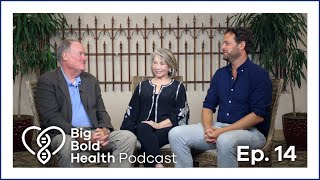
A recorded interview (Big Bold Health Podcast Ep 14) where hosts James Maskell and Dr. Jeffrey Bland interview Ruth Westreich about her decades of work in integrative and functional medicine, environmental advocacy, and community organizing. Ruth describes her approach of convening "salons" to build networks that drive action (soil regeneration, safe food/water, toxin removal), emphasizes upstream environmental drivers of health, and highlights nutrition and palliative care as cross-cutting priorities.
Questions this video answers
Advocacy Through Action: Meet Ruth Westreich | Big Bold Health Podcast Ep 14
James Maskell and Dr. Jeffrey Bland, PhD
Ruth Westreich
November 1, 2019
Approximately 120 people
Chapters
Hello and welcome back to the Big Bold Health Podcast. I'm here with my co host, Dr. Jeffrey Bland, and we are in a series of interviewing some up and coming women who are leading us to a more interesting health future, more successful health future. And we are super, super excited to have here today in the studio, Ruth Westreich. And Jeff, let me just pass it to you. This is quite a coup.
Yeah, I think it's not many times that Ruth was willing to sit before a camera and give the essence of her wisdom to the masses. So this is, to me, a real special moment. This is just easily said one of the leaders who is a connector par excellence. It's an individual who has that native skill to attract people together, to be a big idea person, to organize thoughts, to get people to kind of smooth the edges of their positioning and their language and to get collaboration to work. And it's all about collaboration. So if we're going to be big and bold, then we better learn how to collaborate. And Ruth West Reich is one of the experts in helping us to do that. So, Ruth, thanks.
Thank you.
Well, Ruth, you've been, you've been sort of steering the ship of this sort of integrated medicine in a certain way over the last few decades and playing an incredible role. What is it that gets you out of bed to want to play this?
Well, you know, it's actually interesting because the entry point where I came in so, so many, so many years ago has changed dramatically. And I think there's a number of reasons for that. One, there, there isn't a simple either or answer to this thing that we called health and this thing that we call disease. Right. It is a, it's a con. It's a convolution of conditions at a certain, as a certain time and perfect storms coming together for either good or not so good. And since I've been involved in integrative medicine, functional medicine, natural medicine, palliative medicine, nutrition, arts and healing, that's been where the bulk of my work has been centered. And it's all, every single bit of it has been about building collaborations because every single one of these disciplines, this silo is not going anywhere. In fact, I see it's just doing the opposite. It's going down where it should be going up. And because there is no one answer, and because now we're in this world of precision medicine which you so artfully talk about, we understand that every single one of us is an n of 1 and we have to be looked at that. And we have the tools now that we can analyze and make decisions for us, our families, our pets, all around that. The thing that I think is exciting for me is with the technology that we have with our way to communicate information to each other now is we have ways to communicate information that make people want to change. Right. We haven't always had that, and we have figured out that change is different for everyone. What's going to motivate me to change, really? Change may not have any meaning for you whatsoever. And so that's all about this individual, personalized time that we are, that we're in now.
Well, I think that was beautifully said. And one of the things that you have taught me in the years that I've had the fortune of knowing you is the marriage of art and science. Right. I mean, you're an artist. You're a very accomplished art, both teacher and producer. And you also have this other part of your brain that is really embracing science and technology and how it can be employed humanistically. And the marriage of those two things together is part of the life experience. Right. It's like the whole organism, how we don't operate just on one side of our brain. We operate through this connection to our environment, to our world, to our aesthetics, to our function through our physiology. And I know that that has brought your advocacy very strongly into the environmental movement because there's something very sentient and artful about putting your hands in the soil and being. Being out in the world. Could you tell us a little bit of how that has manifest for you?
Well, in looking for and creating health, ameliorating disease, I had to keep going upstream because there wasn't an entry point that I felt was the entry point. And so I became what I call an accidental activist. I certainly didn't start out that way, but I think if you are a conscious, thinking person today, you will end up that way. The entry point for me is no matter what we do, no matter what tools we have available to us, if our food source is not safe, if our environment is toxic, none of this stuff, it's just window dressing. It's like meshing around the deck chairs on the Titanic. So we have to look at regenerative farming, we have to look at safe water, we have to look at removing toxins from our bodies. And we know how to do that. So we have all the tools that we can get us to a position where we actually can create health. But you can't just go in and start band aiding everything because it doesn't work that way.
How would you Compare and contrast. Sort of over the last time that you've been involved. You have on one hand environmental degradation continuing.
Right.
But at the same time consciousness about functional integrated medicine and health creation increasing kind of rapidly. And I just, you know, to contrast those two things. And which do you think is the sort of more powerful long term force.
For me? The environment. The environment. If we don't stand up and say we have to do something about our environment, we have to be in a position where our food is safe, where our soil is not destroyed, none of this really is going to make a whole lot of difference over the time because we are degrading at a faster pace than we are improving, in my opinion.
So let me take that because your advocacy comes through action. I mean there are many of us that talk about these issues and there are probably fewer that do things about it. And the way that you. One of the ways, not the way, but one of the ways that you have done something about this, which I think is absolutely brilliant, is by what you call salons. And the salons, I want you to tell us what that is. But I think that that concept that you're going to describe can be used in many different forms to create community activism and community awareness. So tell us about your salons.
Absolutely. I came up with this concept many, many, many years ago. And I go back to, you know, I used to enjoy reading about the 17th and 18th century French salons. Right. And how that changed policy. It politically, that's where the change happened. And I thought, wow, I can do that. I'm in a position to do that. I know the people, I have the resources. And so I started bringing people together many years ago into my home. I'm able to do this. I have a large home. I have people to help me do all of this. But to have conversations of consequence that matter around the things like I just had one and Jeff has been to, he's been to a number of my, what I call dog and pony shows. But he shows up for me and I just had one about two weeks ago about soil regeneration and what that looks like. I had 120 people. I had two of the groups I think are have been the biggest in this area. I had kissed the ground and I had farmer's footprint, Zach Bush's farmer's footprint. I had farmers that came from Saskatchewan. I had a farmer that came from Saskatchewan that has regenerated 40,000 acres. 40,000 acres came all the way from Canada. And you know why I did it? To create community with Other like minded people. I had people from all over California. I had it from New Jersey. And we had a conversation. You come, we have a networking so that the appropriate people meet the appropriate people. We have follow up. We have, of course, great dinner, right? Great dinner.
That is true.
And somewhat of a conversation about this. I never ever fundraise. I don't allow it. You cannot ask for money at my house. That's so inappropriate. But I believe that if I can present the kind of impact that I believe that I can present in, you may want to get involved.
Right.
And then we have a follow up to have that happen. So we have an email, we have, you know, this is how we stay connected. They start blogs. I mean, this changes things. And I've done it, I've been doing it for 20 years.
And I will absolutely validate that this is an agent of a very positive change, having been a participant and observed how you orchestrate this, which is brilliant. You know, again, it's a sign of your management expertise. And I think I reflect back on a simple model of this to my mother's era when I was growing up with Tupperware parties. Right. You know, and what are these all about? If you were to have these, because, you know, the way you do it is very elegant, but it can be simplified. Where neighborhoods can get together and they can talk about local areas of their own environmental concern, which then connects them into all sorts of things, into their water, to the air, to the safety of their neighborhoods, to their food supply, to the health of their children. So we start developing a ground rule, groundbreaking kind of movement.
Well, you know, I've had the privilege of having a private family foundation. Right. And it has been in existence for 25 years now. And I have so many success stories of the way that I have chosen to connect, to mentor, to collaborate. The one that comes to mind that I absolutely love is Moms Across America. They're one of, they have been one of my grantees for many, for many years now. She's about six years old. She reaches through a grassroots effort, four million moms a month. Four million?
Yeah.
She started out with zero, started out with glyphosate herbicide. Right. She has now branched out into things that are toxic soil, you know, all of this kind of thing. Those are the conversations you're talking about. Those are the people that she reaches. She reaches average moms in very small towns all across the United States who go out and talk in parades, hand out flyers. I mean, that's the way we're going to have to do it.
And it works so that, you know, when I try to capture in essence, in reality what big, bold health means. That's an example, right? Yes. It's a big, bold idea executed by kind of courageous people who are, by the spirit of their energy, recruit others to a similar theme that has a deep rooted, as you say, upstream effect on all people's health, whether they're recruited into it or not. It's going to influence positively their health. And now we start forming a movement. That's big, bold health for me.
I think so. And I don't think, you know, I've always. It can't just be the them and the us because that's a recipe for disaster. And we've talked about this many times. It's unfortunate that western medicine, allopathic medicine, is the best in the world. We could all need it. It's there if we need it. That's the place we start. We always start at the top. And that's not where we need to start. We do not need to start there with the most interventional, the most costly, the most invasive. We need to go back and let the body try and do what it wants to do naturally. Because if it wasn't good at doing this, we would not have survived as a species. But we have to get out of our own way and we have to remove those things first that are going to keep us from being able to have any kind of health. And then we move up the ladder. But the interesting thing is there's the therapeutic order of healing which our friends at natural medicine have put together, which I love have it on my website. But there's two things that run up and down that whole therapeutic order of healing. One is nutrition, the science of nutrition. And the other is palliative care that runs up and down both things and can be applied at literally every stages. In fact, I just, I'm very proud of a nutritional curriculum that is just being rolled out at the Institute for Palliative Care now at Cal State San Marcos, which is one of the only curriculum programs in the country for nutrition in palliative care and hospice care.
Wow, that's fantastic.
And when I said this is what I wanted to do, they said, well, there isn't anything like that. I went, I know. That's the point, isn't it? That's the point. Because I believe that nutrition can have an influence on you and your body until you take your last breath. I know it can. And I've seen it work in hospice. I've done so much work in hospice and I have seen people just about ready to cross over who have been. The right nutrition can still be applied, whether it's a congee soup or whatever, you know, whatever it is, we don't have to give people at end of life buckets of ensure. It doesn't have to be that way. So I think we need to pay much more attention to, to all that. The things that work all along are the things that we need to concentrate on.
So, James, can't you revalidate why we felt Ruth would be the greatest voice of big bold health? You can see how this is manifesting in this discussion.
The first time that I took a look at the West Rice foundation website, I was like, this is my person. Like everything was involved there. I want to just ask you something that Jeff and I have been learning this weekend as we've been interviewing people. And you know, all three of us, to all different degrees, have been involved in trying to get health creation delivered in the medical system. And one of the things I think we've, we're learning as we go through this is although, although that has been absolutely necessary to set up. By restricting health creation to the delivery of healthcare professionals that are licensed and have, you know, have been trained in a totally other form of medicine and we're trying to retrain them, we may have limited the capacity of health creation as a force. And these Tupperware style dinners with the exponential potential of a sort of a peer to peer side really seems to have in my mind a more exponential potential to move things a lot more quickly.
Well, in all of the work that I've done, I understand how each one of these disciplines became a silo and why. Because they had to grow up in a silo in order to just exist. Right. But then you reach a point where that doesn't work anymore, then you have to start broadening it. You have to start thinking about collaborating. And the idea I've always. I'm going to offend some of my friends in integrative medicine. I'm so sorry, I don't mean to do this because I love you all, but when I started in the integrative medicine world, it was about whole person health. Was about whole person health. And it's ended up in many, many, many instances being totally modality driven because that was the entry point in the existing medical field. And so I think we kind of diluted it from what it was supposed to be. And I think that's why you saw functional medicine, that you were so Great in bringing about and saying, hey, wait a minute, it's about function here. It's not about modalities. So that's how all of this happened. But what I see is, You know, classically trained allopathic physicians are very good at what they know. Their knowledge has been limited to what they've learned in medical school, and they are very reluctant to learn things outside of that because it's foreign to them. It's not reductionistic. Okay. It's about expansionism. And then you start looking at, you say, okay, now what's going to happen in these next couple of decades? And if you, if you utter the term decentralization, people want to shoot you because again, they don't understand that that's not going to be a bad thing, isn't taking anything away from them, but it's giving other people more choices and more access to the things people have to be responsible for their own health. You can't, you can't abdicate that to somebody else any more than you would abdicate the health of your children to somebody else.
Yeah, I think that you said so many things that are important, and I just want to give one little vignette to your point about doctors training and their comfort to move out of their training zone and the medical legal risk that they might feel of doing that. So nutrition is a very interesting, as you said, universal concept that I've yet to meet someone that hasn't eaten some time. Right. So it's a common theme. That and breathing and drinking fluids. You know, there are certain things breathing and are all kind of like characteristics that we all share. So then I will say to a physician in talking about this, so are you engaged in doing a nutrition in your practice? And oftentimes, if they're classically trained, they'll say, no, no, that's not in my bailiwick. And then I'll say, so you do practice scientific medicine, right? Oh, of course I practice scientific medicine. And then I say, do you think that diet and nutrition has any bearing on the outcome of a person's health? And they'll generally say, well, yes, if they're being honest, it does have some effect. And then I'll say, well, if in fact it has an effect on people's health and you believe in scientific medicine, wouldn't you want to control that variable so that, in fact, whatever you're going to do, whatever your surgery or chemotherapy or whatever it would be, is going to have more kind of controllable outcome, a scientific outcome, because you've controlled A variable that we know causes influence on how they're gonna. How a drug might respond in their body, how they're gonna heal from surgery. And when you put it in that mode, I've often seen the eyes of these disbelievers go, oh, you know, I never really thought about it.
How many people have you converted with that one, Jeff?
Well, you never know about conversion, but you can see in the questions they asked that at least it got their attention.
Called the virus.
Yeah, I think that's the virus that you put in there. They can't escape from it once it's there.
You know, I will say one thing, that I was married my former life to a gastrointestinal surgeon for 20 years in Los Angeles, and he was brilliant. He didn't learn anything about nutrition in medical school, not one thing. So it's not his fault the curriculum didn't teach it, they did. And then we started learning. Okay, well, then there's this whole dietetics association, which is the food pyramid, how it looks on the plate, how you take it in and put it in the hospital tray, and all this kind of stuff. That is not the science of nutrition. And how what you put in affects your body. It doesn't have anything to do with it. And so when you don't know anything about anything, it's very, very hard to put it together with, oh, I need this, and I will. You know, I did have. I. I'm always trying to convince people in the conventional medicine that there is, you know, that there's maybe a few things that they probably didn't learn in medical school, especially if they've been practicing 20, 30, 40 years. Right. So I had one of my salons, I had like 60 docs. You were there?
Yes.
You were there. We have like 50, 60 docs there from all of the honcho places in San Diego. Two wanted to know more. Two wanted to know more. We're talking some of the best known people in San Diego, and it was because they couldn't imagine how they could learn it, how it could be applicable in their practice. They didn't imagine that they could have the time to learn it. So they needed some kind of intermediary or practitioner as a helpmate, as a guide. And so that's what's missing for them.
And I think what we're saying in big, bold health, and you've actually said it already very beautifully, very gently, is that this revolution, or evolution, really, as James has called it, will occur from the soil up. It'll occur through Healthcare consumers. It occurs through moms. It occurs, occurs through the way children are being raised. And that kind of more organic, so to speak, movement will be the force of change. In fact, that's actually how healthcare has changed historically. Even going back to Semmelweis with the, you know, washing your hands during delivery of children and the concept that he was, you know, purged from the medical society because this was so antithetical to the way they thought about it. It was by women and observations of nurses that ultimately got that push through. It wasn't by the top down of the practitioner. So I think we're seeing a top down receptivity starting, but a bottom up push to really create this evolution of big world health.
I think there's another aspect to it is that we're getting to the point where there are conversations that we cannot have. Right? And I think that's a very big worry. I look at, you know, we know that there is big industry, big ag, big there's another couple. I think there is now something called big philanthropy and I think there is something called big technology. And the big technology could almost be the most troubling of all. And so I think we have to be able to have those conscious conversations. We have to be able to do the research that's going to inform how we take care of ourselves and our children and our planet. So those are the things that I'm concerned about.
I think we can see why Ruth is the quintessential example of our big bold health principles. James?
Thank you, Ruth. It's been wonderful to have you here and I think that this will spark a lot of conversation. And one of the things that you said right at the beginning I think is so true is that health is different for everyone and comes for different reasons. And so you can go to big bold Health right now. Tell us what health means to you. You can find out more about Ruth's amazing work at her foundation website, which we'll put in the show notes. But thank you so much for being with us here today. It's been an absolute honor and I think everyone will have enjoyed it at home and use all of those big tech platforms to share this out. Thanks so much for watching. We'll see you next time.









