All Things Brain Health! | Big Bold Health Podcast Episode 26
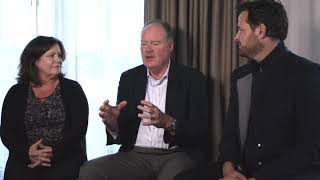
Dr. Mary Kay Ross runs a Seattle clinic treating cognitive decline with personalized care. A 70-year-old patient regained driving privileges after three years of treatment. The clinic combines neuropsychological testing, brain coaching, and a teaching kitchen, and partners with the Institute for Systems Biology to find biomarkers of neurocognitive disease.
Questions this video answers
May 21, 2020.
70 years old.
Almost three years.
Visuospatial functioning and mathematics.
Brain Health and Research Institute.
Chapters
Hello, and welcome back to the Big Bold Health Podcast. My name is James Maskal. I'm here with my co host, Dr. Jeffrey Bland, and we are interviewing leaders in the future of health. And we have with us today Dr. Mary Kay Ross. She is a brain health expert and the founder of the Brain Health and Research Institute here in Seattle. Mary Kay, welcome.
Well, James, thank you. And thank you. Jeff.
I can tell you it's such a privilege to have you as our guest. And the whole concept of health, when we ask people about their own personal definition of health, so many times it's around cognitive health is their focus saying, I never want to be a burden of my family. I want to be clear. I want to keep my personality. I want to keep my cognitive intention. And here you are creating the global center that will be that of leadership around brain health. So we feel very privileged to have you here today.
Well, thank you. It's an honor to be here. And actually, I'm so excited about what we're doing in Seattle and trying to help people with cognition.
So, Dr. Ross, I wanted to. You know, the last time we met, you told me a story that there is one person in the state of California who has lost their driving license from cognitive decline and then re got that driving license in history, and she's your patient. So can you just take us through how something like that works?
Absolutely, I can. And actually, to tell you the truth, right before I came today for this podcast, I left her in my office with the rest of my staff. She's been here for two days, and they'll be flying out this afternoon. So she's doing very well. She does still feel that there are areas that she needs to kind of sharpen. But her family are thrilled. They have her back. She recognizes and remembers all of her grandchildren's names, and she's functioning very well.
Could you tell us just how. What was her condition when you first saw her?
So when I first saw this patient, actually, she'd been diagnosed with Alzheimer's. She really had become a shell of the person that she used to be. So families state that she didn't cook, she didn't talk, she didn't have a personality. And she's 70 years old right now, so she was young. And I've been working with her now for almost three years, and she has just blossomed. But we've treated a lot of things, and a lot of these things are very touchy points in medicine, and she's just come a long way. She's on a big protocol, and now we're trying to fine tune it because she's still having trouble with visuospatial. And actually through neuropsych testing that was performed yesterday in my office, we realized that actually she's gotten a little bit worse in the visuospatial and then also mathematics. So those are her weaknesses.
And how about her communication skills and her kind of memory of events and both short and longer term.
Fantastic. She's actually doing very well.
So not a day goes by that I don't see some sort of output in the media talking about some sort of health creation we've been talking about on this podcast, whether it's diet or whether it's meditation or whether it's dancing as the only solution to cognitive decline because there's no drugs.
Right.
So can we talk about that? One of the themes on this podcast has really been that health creation is chronic disease management.
Absolutely, absolutely. So the program that I utilize, all of these things are important. So we are a culmination of our life and the things that we're exposed to and the habits that we develop over time, and eventually we hit a tipping point and that's when we get sick. So all of these things we evaluate in our programs. So we look at dental health, we look at sleep, we look at exercise and brain exercises, and we incorporate all of these. And I try to do them in a way that speaks to the person and what they enjoy in life and what would be a natural addition to their life. So in that regard, you're more likely to have them follow through on them.
So, you know, in the big bowl health concept, we believe that function is the determinant of how we actually quantify health. So here is a woman who comes in with a specific complaint that we might try to seek a specific diagnosis, put a name on it, let's say Alzheimer's. But really what you're saying is that there are a whole series of functional disturbances that map themselves together to create then the outcome that we see as this cognitive decline. So understanding the different components of function as you've described to give a more integrated approach towards its management and the recovery of function is a whole different strategy than treating a name of a disease with a silver bullet.
That's right.
And so this is a really a paradigm shifting concept. How has her family responded to this? Because this is a different language system probably than they're familiar with totally different language.
So they've done a great job. She has a very supportive family. Her husband has just been a trooper. He's done everything he can to support her. And she has adult children as well. And so I've been come very close to the entire family and they've been amazing. So they're coming to our clinic now and having sort of succeeded, if you will. So it's exciting to start again now with a new approach looking at how can we sharpen this pencil? Because she hasn't been following through with the mindfulness, she hasn't been doing the brain games properly. So now we're taking our neurocognitive testing and focusing on her deficits. And then we'll change the brain games and we're using brain HQ and we'll really focus on the areas of her deficit and see if we can't sharpen that.
This is so exciting because really you are giving us the quintessential example of a personalized approach. That the generic approach is treating all people with cognitive decline with the same kind of umbrella approach is not going to laser in onto their specific deficits or functional needs. So what you're really doing is you're using a scientific approach to functionally define how in fact that person best should be managed.
That's exactly right. That's how we're approaching it and that's what we do in our clinic every day. So that's our method.
Can I ask you just from your experience of dealing with all these patients and having them do this personalized approach, what sort of difference does it make whether or not they have the supportive spouse and the supportive family in actually executing on these healthy behaviors?
That's a great question. So I think support is essential. I do have one patient that's done really well, that's single and it's amazing. She was diagnosed with Alzheimer's and she actually has had that diagnosis removed. She's in New York, she's a psychiatrist and she's coming back because she feels she's not 100%, but it's unbelievable. The support is necessary. So if we don't have a family and we have an Alzheimer's patient, we're now looking at inpatient and how can we give them what they need? And hopefully someday we'll have the inpatient memory center where you check in and you check out in the right direction.
So one of the things that's so exciting about your program, not only your wisdom as a clinician and how you're managing your patients in this kind of broad based way with personalization, but also your alliance with the Institute for Systems Biology and looking at this as a node Or a nexus of gaining data to try to understand brain mapping, brain physiology, neurochemistry, in ways that might really revolutionize the whole treatment of neurocognitive disorders. Could you tell us a little bit about this alliance you have with the Institute for Systems Biology?
Yes, I think that it's so exciting. It's a marriage. It's a marriage of the deep science and the marriage of the clinical medicine. And so we meet with a group of scientists every two weeks around a table. I take my whole team and we sit down and we dive in and we go through everything. We're looking for biomarkers, we're looking for drivers of disease. We're actually getting ready to start another study, clinical study, with a different group, but through ISB as well. And where, again, we're looking for the drivers, and I think it will be sometime in the future, and hopefully not too far, where we actually have a biomarker that we find that, you know, you can go to the doctor and maybe, you know, you're an APOE 4 and you go to the doctor and we can test you and say, guess what, you know, it's time to go on a program before your symptoms ever start.
That's our hope, you know, for those who may not be familiar with the Institute for Assistance Biology, it was founded by Dr. Lee Hood, who is world renowned as really given, I guess, arguably the title as the developer of the concept of assistance biology when he was at Caltech as a major researcher and professor there, moved into the University of Washington with a Gates foundation grant, did a fantastic job of building out this whole systems biology approach, moved from that through several biotech incarnations, ultimately to develop his own institute, has spawned all sorts of technology and multiple of his former students that have gone out to really pioneer this kind of basic science of the understanding of the network of disease. And now by alliance with people like yourself, skilled clinicians, starting to show how this translates into clinical practice. So you must feel like you're right on the front edge of this personalization of healthcare movement.
I absolutely do, yes.
Super exciting. So I know that you've relocated here to Seattle, Jeff. I mean, you've lived here your whole life, I guess, for a long considered period of time. What is it about this part of the world that is attracting this kind of attention and interest for companies like Dr. Ross's.
Yeah, I think that this has been very interesting to kind of reflect, James, on the history of Seattle as one of the nodes of developing personalized healthcare. And I think the reason for it is probably several fold. First of all, the Northwest historically has been kind of removed up here in the corner of the continent in which it kind of had its own little oasis, I think of intellectual development. It wasn't kind of connected into some of the major eastern metropolitan centers. Secondly, it kind of was a lifestyle related place that a lot of people came for the quality of living and the outdoors and the mountains and the water and the animals and everything, the forest. And so we have this kind of back to earth philosophy here. And then third, I think is the basic statement that up here, because of the centralization in Seattle of medical services for many of the Northwest states, including Alaska, Idaho, Oregon, this became a center of excellence for people to be treated with the top level healthcare and medicine. So you have technology, you have an environment, you've got intellectual, robust, you've got a lifestyle. All of these things have spawned in a whole generation now since I started here in 1970, of practitioners and researchers working collaboratively around this new model. So to see what Dr. Ross is now doing is absolutely so for me, so gratifying to watch how this model is really developed and evolving.
And I'll tell you another thing, I feel it's exciting. It's just, you know, if you are someone who is suffering with cognitive decline, there's no shortage of content out there for free on the world about how to reverse this. You know, the functional medicine community has really gone above and beyond to create assets that you know, that could be, will do. So Dr. Ross, for the audience who are watching, who might be thinking, hey, it's not working like it used to, what are some things that you would like to share with them about things that anyone can do and just sort of baseline personalization maybe?
Well, I think, you know, anybody can look at their diet. So we know that the standard American diet is probably not the healthiest diet for us. So you can start reviewing what you're doing. Look at the processed foods that you're eating and remove them. You can start working on more plant based foods and how you source them. Start thinking about how you're sleeping and how you're managing your stress. Stress is a huge driver of disease, we know that. Start looking at inflammation and thinking of the things that you drink, how much alcohol you're drinking, if you're drinking soft drinks or sweet tea, things like that. Remove these things because the things that we do every day over time accumulate and if they're bad, those are going to be the things that get us.
Yeah, I was very pleased to see just recently in September, in the Journal of the American Medical Association, a scientific report of a study that had looked at cognitive decline in a group of average people in the United States and was able to show that lifestyle intervention in diet, exercise, stress management, sleep had significant positive benefit in slowing the loss of cognitive function. And so this, what seemed to be so maybe outside the range of medicine even five years ago now is coming inside to be seen. No, this is where the real heavy lifting is going to happen for the treatment and prevention of these diseases. It's not going to come with a drug that treats Alzheimer's, because Alzheimer's is not one disease. It's multiple conditions, as you've described, that require focal intervention based on the uniqueness of that particular person. And what you're doing at your clinic is really implementing and translating, executing on that new model in a way that is really going to produce much better outcome in patients getting their objectives being achieved.
I think you're right. You know, we have a teaching kitchen, and it's so important to show people how they can eat. I just think that through generations, we've learned many wrong ways of eating and the foods that we incorporate. And so. So, yeah, well.
And you just said another important thing that I wanted to point out again, going back to James Concept about Seattle. It was not too long ago that here at the VA Hospital in Seattle, a psychiatrist was working on cognitive decline in veterans and found made this discovery that hyperinsulinemia was associated with cognitive decline. And everyone said, no, the brain doesn't require insulin. But through her work, she was able to start to piece together the insulin part of this puzzle and why it is with this rising tide of insulin resistance and dysglycemia and ultimately type 2 diabetes that it tracks very closely also with cognitive decline. Absolutely. So you're really, again, taking that kind of research and now translating it into clinical practice.
Jeff, can I call out an irony that I see in the world right now? So one of the things that I've been looking to do is to take away this sort of hierarchy in medicine, Right. And there's a hierarchy where neurologists look down on family doctors, and family doctors look down on naturopathic doctors, and naturopathic doctors look down on dietitians, and dietitians look down on health coaches.
Right.
And everyone's got their place in the pyramid. And yet the only solution for one of the issues that the neurologists are facing is really to partner with the health coach. And, you know, it just seems to me that the necessary flattening of that hierarchy is so key because, you know, I'd love to know who's on your team there and what do they do?
That's a great question. No, you're absolutely. You hit the nail on the head. So we have a chef, and the chef is also a certified nutritionist and a wellness coach from Bastyr. We have a registered dietician, certified nutritionist and wellness coach from Bastyr. We are looking for an exercise physiologist. We don't have one right now. I have a brain health coach that I actually brought from New York. Amazing person. And she's our patient liaison and kind of oversees all of the coaching. When people come in for their two days, they spend a great deal of time at a table eating lunch and learning about food and helping make food. We have a neuropsychologist, so we believe it's very important to do a battery of testing so that we can make sure that we have the proper diagnoses. You know, we've already obtained all the information before they come. And I have another physician that works with me as well.
So can I respond, James, to your extraordinarily important, insightful and disruptive concept? Right. I think that you've hit really, as Dr. Ross is saying, a very important salient issue in this whole dilemma. How do we take disease and convert it into health? And, you know, we have a system, the disease care system, that's really good on the end stage disease in the treatment of those symptoms of end stage disease. To ask of them to create health may be beyond the scope of how they were trained. They were trained around diagnosis and treatment of disease. They were not trained on how to really create health. That wasn't the principle because the assumption was that if they were not diseased, they must be healthy. But we know that there is a much bigger gap between those two than just the words. And so I think what you're saying is, why is there this hierarchical pedigree kind of hazing system? It's because that which you have trained to believe is important is that which you then find important. And you then dismiss all that other stuff that's outside your range of training, your range of expertise. You assume that if it was really important, you would have been trained to understand it because you went to a good school, had good mentors, took tests, got certified. So it must might be that important if you didn't learn it and hadn't been tested on it. And now what we're recognizing is that, yes, you've been tested on disease. If you go through that neurology training and you're really good at that, but you've never been tested on health, that was not even part of your training. So it's actually asking of these people something that's unreasonable to wonder why they have this kind of discrimination of people that are doing things that they didn't even get trained to understand.
Absolutely. And, you know, furthermore than that, when you look at stress, you said stress was such a big area. One of the biggest areas in this area is social isolation and loneliness, social stress. And ultimately, even below health coach, there's peer, family, friend. It's not below. It's just as important. And, you know, I would argue that, you know, one of the most important ways if we're going to, if we're going to really get a handle on this, is to introduce people who want to get healthy to each other.
You know, James, I'm really glad that you mentioned that, because that's what we do. So we have started a lunch and learn program strictly because we have people that feel so isolated. So that's only going to take care of the people in Seattle. Right. But we also have a caretaker, family members group, and we have a patients group, and we have people that actively talk with each other regularly. They have traded emails with each other, they call each other, and it's been amazing. In our office, when we have more than one family, which we usually do, they eat together, they spend a great deal of the day learning the processes together. And then when it's a personal moment, we separate them. So we have found that that is essential, and that's huge. So that is what actually our patient liaison, Kerry Mills, takes care of. She oversees that and does a great job.
So now let me ask you a personal question. I hope I'm not treading on sacred ground here. If so, please just tell me. But you've made a transition, right? And you're from where you were trained, probably how you started off, maybe early in your career, earlier in your career, what was it that motivated you to make the change? What kind of training did you have to undergo to kind of make this conversion? How did you bring this into your life so that you're now the expert that you are?
Well, I was emergency medicine trained, so I was pretty much your level one trauma center teaching residents, and very regimented and traditional. But I became ill. And so when I got sick and didn't really like all of the things I was hearing and none of it made sense, I went to ifm. So I couldn't stay. I mean, I took every course that I could possibly take while still, you know, working. And then I realized I can't practice this kind of medicine anymore. This is crazy. And I'd seen all of the repeat offenders, if you will, through the emergency room, the people that, you know, just don't get better with their bag of pills. And so it was a quick transition, but it was easy to make.
So from your example, I would say there must be some kind of a general aha. Experience that docs need to have in order to kind of open their minds, increase their neuronal plasticity so they can start to take on this other material.
Absolutely.
How are you then liaising to the rest of the medical community? Because clearly people are making judgments about you, they're observing what you're doing. So what are you learning?
Well, I'm learning first of all that I guess I've been doing it for a while now, so I'm starting to feel like most people are, are on our side, but they're not always. And so, but I'm always open to share everything I can. And teach, we have to teach. We have to teach the younger physicians and physicians that are open minded and teach them, you know, how to cure chronic illness and how it occurs because quite frankly, they just don't know.
So in the big world health imperative, what we're trying to help educate the healthcare consumer, the person out there living their lives every day, trying to make either conscious or subconscious decisions about things that will give them maximum opportunity for function and health, and then interfacing that with the healthcare community through the Institute for Functional Medicine, the Functional Medicine Advocacy for Education. So as you reach out into the community for your advocacy to the consumer, what kind of messages do you provide them as you're doing your workshops or your, your public service announcements?
I think my message is there's help and there's hope and so you never want anyone to feel that there's nowhere to go. And if you end up with a physician or a doctor and you feel like it's a dead end visit where you're getting a pat on the back. When it's cognitive, it's usually a pat on the back and a prescription for Aricept and we'll see you in six months, you need to seek out other help because it's there. And I think that as medicine to me is, this is the most amazing time in the world to be a doctor. And if I were a patient, I wouldn't be afraid to be a patient now because quite frankly, I think the support and the knowledge and the help are available.
So if people want to find out about what you're doing, where do they go?
Brain Health and Research Institute.
Is it on the web?
We're on the Web and we're also. We have a Facebook page, and we're right here in Seattle.
Wonderful. Well, super exciting things happening in the brain health space. I hope that if you've been watching this episode, either yourself or someone you know needs to hear it. So please share this episode with that person and that community. Thank you, Dr. Ross, for being part of it and being here. It's a special time for all of us, all to be in Seattle here together and be part of this. And, you know, it's a pleasure for me to bear witness to, you know, to what you guys are up to. And Jeff, obviously laying a foundation for this energy in the Northwest. So this has been the big bold health podcast. Thanks so much for tuning in. I'm your host, James Maskell, here with Dr. Jeffrey Bland. See you next.









