Building, Protecting, and Healing a Healthy Brain: Meet Dr. Hyla Cass | BBH Podcast Ep 16
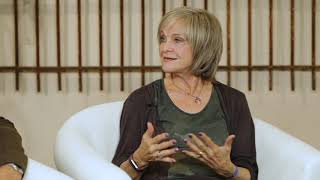
Transcript excerpt of a BBH (Big Bold Health) podcast episode (recorded Nov 29, 2019) featuring Dr. Hyla Cass, Jeffrey Bland, PhD, and host James discussing brain health. The conversation contrasts a disease-centric vs. health-centric approach, emphasizes lifestyle (diet, sleep, exercise, community, nature) and prevention for mental health and dementia, critiques over-medicalization and long-term psychotropic use, and highlights nutrient-based/ integrative interventions and societal factors (schools, water contamination).
Chapters
Hello and welcome to the big Bold Health podcast. We are making health Personal in a World of Disease. And today we're going to be talking about brain health. Now in our series, we have been now focusing on leaders, female leaders of the health movement. People have been on the cutting edge, really changing our understanding about how to create healthy body parts. And in this case, we're going to be talking about with Dr. Hyla Kass, who is a very well known integrative psychiatrist and lecturer and product creator. And a lot of strings to your bow, Hyla. So, you know, throughout this podcast we've been talking about this shift away from a disease centric health system to a health centric health system. And so I guess the first question I want to ask you is what is specific to the brain in terms of what does it take to create and maintain a healthy brain?
What's interesting is it's connected. The brain is connected all the way through to the whole body. And it's so interesting that psychiatry, the way I was taught it, it's from the neck up, you're treating brain symptoms. And that's not where the issues are. The issues are how is your body doing, how is your overall health? So the good news is that whatever you're doing for your overall health, you're also doing to benefit your brain.
Yeah, absolutely. And this conversation, I mean, you've been in the business of helping people sort of recover from psychiatric illnesses and they're coming in probably expecting the pharmaceutical cure. What sort of a shift is that for the people that you come across to start thinking about creating a healthy brain and bring that brain back to health?
Well, what we know is that nature is the best pharmacist and our bodies just know how to heal. So take away certain problems, certain issues, certain lacks, replenish with the right nutrients, with exercise, with sleep, all of that, and the body responds just beautifully so we don't have to cover over symptoms with medications that then have their own problems, the side effects and, and whatever, dependency tolerance. And I see a lot of addiction too. So it's wonderful what we have learned over the years and that we can prevent so much of what we're seeing now in terms of mental illness, brain degeneration, dementia, we can prevent a large part of it.
Jeff, I think you guys have known each other for quite a while. Am I right on that one?
Yeah, it goes back three decades. We were just doing a little mental arithmetic here. But Hyla is an extraordinary colleague, friend, leader in the field and a co collaborator in what I would consider this new model of health creation. And so, Hilah, it's really for me, personal pleasure to have this opportunity to kind of sit and chat about this journey that we've been on collaboratively. I think one of the things that I take away, we were reminiscing a little bit. The first time that we met, I think, was at your place in Malibu and you were hosting a variety of what then were kind of renegade thinkers 30 plus years ago. And now many of the things that we were talking about then that were considered renegade have now come to be really considered, like right in the stream of new thinking, of current thinking. And I believe that it's really important to have a person of your stature and experience to kind of talk about how you reflect on these paradigm shifts changing. You've been kind of a chronicler of watching the shift over time. And there's still a big pushback by certain quarters within the field saying if it's not the way we say it, it doesn't exist. But we've seen more and more people kind of coming into this field. The movement towards us is a lot greater than the movement towards them. So how would you see from your perspective, this transition having occurred, where health creation and what I would call personalized prevention has started to become much more commonplace?
Well, first of all, the science supports it. And so we're seeing a lot more on lifestyle. We're seeing the American Cancer Society talking about eating your vegetables. And that was unheard of. So even the very conservative organizations are looking at lifestyle. And that's really where to start. I mean, I have to say that for myself, when I'm treating patients just doing lifestyle modifications, the sleep, the exercise, the good diet goes so, so so far in actually re establishing good mental health. So guess what? They didn't have a Prozac deficiency.
Well, you know, it's interesting. There are so many institutes now, very esteemed research clinical institutes, that are actually taking on board clinical trials, as you say, in lifestyle for brain function. And there's a wonderful study that was published called the MIN study out of University of Chicago and Northwestern medical schools in which they showed clearly that you could prevent the onset of dementia by lifestyle dietary intervention. There was a study in Norway, excuse me, in Finland. It's a very large study that got a lot of press in Scientific American a year ago. There's a recent study that just was published in JAMA in the. I think that was the June 25 issue of 2019 on a clinical trial in the United States looking at retention of cognitive function in older age individuals by, as you just stated, lifestyle intervention. So these individuals that have said, well, there's no proof about this, it's just a bunch of speculation. The only thing we have proof of is drugs, which by the way, in the way of dementia, there's never been a drug that's proven to be successful. It looks as if, like we have the weight of evidence on our side.
Absolutely. And we look at the blue zones and what do they have? They have lifestyle, they have community, they have a sense of family, they have meals together, they exercise, they walk up and down mountains. Often they walk places, their water is clean and not only not polluted, but also not with our, what we put in our city water, the things that we use to contaminate the water as well as all the medicines and all the other things that are found in our water supply.
Yeah. Isn't it staggering when we learn more about the Flint, Michigan situation to find out that it's not just solely Flint. Right. That just happens to be a tip of a bad iceberg and there's all sorts of stuff below the waterline that we're experiencing. In fact, in the Great Lakes water they find that there's enough metabolites from antidepressants that it actually influences the life of small microorganisms, which means we're medicating, as you stated, our water supplies, which seems almost unfathomable that that would be the case.
And hormones. There's hormones in the water.
Oh boy.
If you took it to its logical conclusion, Hyla, just the journey that you just described, described over the last 40 years. When do you see that? Do you see that there's a time approaching where sort of a lifestyle first approach or anti inflammatory approach to mental health would just be just the way that it's done?
Hard to predict, but I'm certainly seeing a lot more of it than I did in the olden days. And I'm still bucking a current and I still have many people coming to me on medications that I then have to reframe all of their thinking. And in fact they come to me because of that and I help them with their lifestyle and help them to detoxify from the medication. So I have to do some, have some undoing to do. And what you're talking about is let's have prevention from the get go so we don't have to undo what's been done. But in that process of undoing what's been done, there's been a tremendous amount of learning. So we know what can go wrong and we know now how to prevent it.
How would you compare the way that brains respond? A brain that is sub functioning suboptimally but has never been connected or used medication versus a brain that is suboptimal but has had maybe a decade or two of medication? What is the resilience feedback like in those two situations?
There's no question that brain changes occur. In fact, people on benzodiazepines have a shorter lifespan. So can you imagine at least 10 years shorter lifespan from using benzodiazepines? So other brain changes occur. You get depleted of neurotransmitters or brain messengers, brain chemicals. However, what we can do, we who do integrative medicine, we know how to replete and how to repair that brain.
Yeah, I know you've spent a lot of your last, at least, you know, decade, at least, trying to get the word out to a much broader group than, you know, than just the patients that you're sitting opposite. You know, how. What have been some of the things that you've learned along the way as far as, like, communicating these new ideas to populations that may be either medicated or not, but are, you know, sort of searching for a healthier brain?
It's important to start in childhood, to start educating parents. So I really try to speak to parents in whatever forms I can, that, for example, if a child is exhibiting any kind of quote, usually medicatable issue from add, adhd, whatever, again, to start with diet and lifestyle, and there are more and more parents who are doing that, and sometimes they're having to buck a system that's wanting them to medicate. So we're at a crossroads. And what you're asking is, when is it going to be weighted more heavily to the way, the natural way, the way that we were made, the way that we were built, the way that responds so well to, to natural interventions, I don't know.
So, Hyla, I'd like to take you back just for a second. And I'm going back in my experience. In 1982, I went to a meeting with Dr. Michael Lesser. You might remember Dr. Lesser, and he was one of the founders of this whole concept of orthomolecular psychiatry and movement that was started in the late 70s and into the 80s. And we were in San Francisco at a meeting that was the, I think it was the charter meeting, a founding meeting of the Society for Biological Psychiatry. And so we were very excited to think that you would approach psychiatry from a biological basis, thinking that this was Going to be about how the brain worked and about nutrients and things. And of course, what it was, biological psychiatry was the new drugs, the SSRIs. And we were both, I remember driving out of there with this state of disillusionment, saying this is a, this is interrupting biology. This is actually not working with biology.
So well, that's what's the crazy thing. For example, the ssri, the serotonin reuptake inhibitors are actually depleting serotonin. So these people become more depressed. So what do you do? Up the dose, change the medication, add a medication and you know, you're off to the races of dependency and addiction to these drugs that you. It's really hard to get off them. So the individual's not having the antidepressant effect, but they're also not doing very well. So what they really need are precursors. They really need to have some 5 HTP or some tryptophan and some B vitamins and magnesium and zinc and so on and some of the other CO factors. You know, when you're baking a cake you need a lot of ingredients. So when you're making a neurotransmitter like serotonin, you need these ingredients. And that's just natural. And we know this, we've had the science for so long. So when you give this poor brain that's been abused with a drug, and that's drug abuse by the way, that when you give them the right ingredients and they start to make serotonin, you can start reducing the medication, they feel better. And by the time they're weaned off, they feel better than they have in many, many years.
Oh, you said something there that's so interesting for me. And you remember this. I know I'm recording or just reporting on what you already know, that this nutrient 5 methyl tetrahydrofolate, an active derivative of folic acid that has very brain active function. There was a clinical trial done of it along with antidepressants for depression. And the clinical trial was designed to see if 5 methyl tetrahenidal folate was advantageous for the treatment of depression. However, the way the study was done and it was funded by the pharmaceutical company that makes SSRIs is they had a placebo group, they had a group that got the antidepressant alone and then they had a group that got the antidepressant plus bimethyltetrahydrofolate. But they did not have a group with just five methyltetrahydrofolate. And what they showed was that the combination of five methyltetrahydrifolate with the antidepressant worked best of all. But the real question that we all wondered is, what happens if they didn't have the antidepressant, they just had five methyl tetrahydrofolate.
Similar study with thyroid. Giving people thyroid. So thyroid actually helps the antidepressant work better. Isn't that interesting? But these people were hypothyroid, and that's all they needed was some thyroid.
So, James, I'd like to ask you, you're obviously a different generation than Dr. Kass and myself. So you have a young family. And so as you look at this, being born now and moving into this as a leader in this new rebel, new generation, how do you see what we're talking about translating into your generation and the parents that are raising their children?
Yeah, look, I mean, first of all, the over medicalization and of children is something that seems like a really disturbing thing that's happening because ultimately those cases probably end up in the wastebasket that is psychiatry. Like, there might be a million reasons why you end up having a mental illness or what society would describe as a mental illness. That's really nothing to do with, like, brain health at all. I mean, we're kind of in a weird time in the world, right, where maybe being mentally ill is probably an appropriate response to the stimuli that's coming along. Second, the death of community.
Right.
You know, there's so many great studies that I've been seeing, and this is something that I've been up to date with is just the effect of loneliness on brain inflammation, right. Which leads then to depressive, like, symptoms. And we have, over the last 200 years in America just, you know, the destruction of community to a point that you don't even interact most of the time with people that, you know, you get all of your goods and services from random people, you know, like your Uber driver or whatever. Like, the world's changed completely. So, you know, it's kind of a worrying time to be in it. But I think that one of the things you said hi there. That I've just come to appreciate is just that what a slippery slope that you get on once you're on the medication train. And ultimately, there are so many ways that you can seek to maintain healthy behaviors before you ever get there. Because it does look like a slippery slope from where I'm standing. And it's something that I've experienced, experienced in my family. And, you know, what I want for my daughter is not to have to engage with the psychiatric profession at all.
Right.
And so doing everything we can right now to build a healthy brain. You know, following the, you know, I've got a couple of Highlands books in my house that I've read a few times. So, yeah, I mean, that's, that's, it's a, it's a serious, serious consideration. And you know, one of the things you said at the beginning was just how, how intertwined the brain is with everything and how stresses in the, you know, in, in all the way through the body end up in the brain and then the brain signaling everywhere else. So, you know, probably the most important thing. And I don't think my daughter will be playing football.
Yeah. Yeah. Well, you know, there's, there's another part of this that I wanted to talk to Dr. Kass about, and that is there are school systems now in the United States in which two thirds of the, the elementary school children, boys in the class, are being medicated for behavior related, what they consider dysfunction, which gets all labeled somewhere in the DSM as some form of ADHD or something of that nature. So it begs the question, are we really seeing an epidemic of frequency? Why is it so frequent in boys and is it really the boy or is it the social system in which they find themselves that leads to the diagnosis, at least to the medication? And so it's a very complex do loop. I think sometimes, like a dog chasing its tail, you get into that vicious cycle. So what is your perspective on how this all plays out?
Part of the problem too is that these children are being fed breakfast cereal, highly sugared breakfast cereal. And then they go to school, and that certainly makes them jumpy. And they often don't have recession or they don't have enough recess and they don't have enough sports in school, and they don't have a way to work off their energy. And then they're boys, they are boys. They have testosterone. Even little boys have some testosterone. And they need to have an outlet for their energy and they don't. The whole concept of schools of children sitting in rows and listening, that is not how we learn. We learn through movement, through doing. It's bizarre. It's the factory model of schools. We no longer are in the industrial age, but we're still having industrial age education, except for the more progressive schools.
Yeah, I think that's such a really beautiful kind of point for all of us to pay attention to that. When you talk about brain health, as you said in your introduction, it is the full environment of exposures and experience that really patterns the brain. So. So it's how we eat, think, look, act, breathe, all these various things, the community we have, as James was saying. So I think for people searching for answers, that's why we want Big Bold Health. We want to be assertive and not passive about the concept that these solutions are available. You can achieve health, but you've got to be bold. You've got to be courageous. You can't listen to the party line. You have to seek out your answers. It's individual to the child or to the person and not just take a formulaic approach. If you. And I think that's why we're sick and tired, so to speak, of being passive about this topic. We want to be aggressive and bold to really tell people there are options for health that are accessible to everyone.
By the way, something else for the children is free play. Going outside and playing, hanging out with their friends, building forts, climbing trees, being in nature. Nature is a big healer and the big teacher. In Japan, they do forest bathing. There's actually a name for it. And other cultures do as well be in the forest. It's so healing. We are made to interact with the plants and the trees and the earth grounding and so on. So these are the things we need to really take advantage of to be fully healthy.
Thank you.
Absolutely. So this has been Big Bold Health. We've been here with Dr. Hyla Kass. It will take some big and some bold, bold action to step out of the norm and maintain a healthy brain in this current environment. But that's what we're here for at Big Bold Health. I've been here with Dr. Jeffrey Bland. We've had integrated psychiatrist Dr. Hyla Kass here. Thanks so much for watching. We'll see you next time.









