COVID Voices: Dr. Jeff Bland and Sheelin Coates
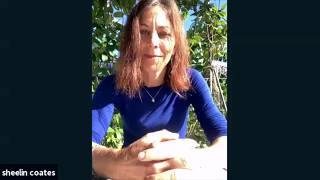
Transcript of a June 2020 YouTube interview between Jeffrey Bland, PhD and Sheelin Coates focused on regenerative agriculture, food systems, and community responses during COVID‑19. Bland discusses recent reading about climate, CO2 effects on crop nutrition, and the links between soil, food quality and human resilience; Coates describes her permaculture gardening, Slow Food/slow gastronomy training in Italy, community organizing in Noosa, and hopes for a culture shift toward regenerative, community-based food practices.
Chapters
You know, we've been doing these kind of follow up emails with some of our podcast visitors and then we follow up with that with a actual visit to kind of bring us up to speed because sometimes these podcasts occur a few weeks before, even months before we actually have a chance to play them. So here we are with Sheilan Coates, one of my great friends and colleagues from Australia, from the Brisbane area, actually the Gold coast of the beautiful Sunshine Coast.
Sunshine Coast.
Sunshine Coast. Thank you. Oh my word. Yes, thank you. Shame on me. I know better than that.
We're very protective of our sunshine.
Yes, you should. It's much more ecologically pure they're than the Gold Coast. That's right. So Sheila, and welcome back. I wanted to jump right in and show you what I've been reading because I think it then will set the stage for what I want to talk to you about because this is an area of your great expertise, your great interest, your passion and there's so much going on in this area right now. So I'm just going to show you a few books that have been on my reading list this last couple of weeks. Now that we're all sheltered at home, we have more time for reading. So it starts with this book.
The.
Uninhabitable Planet, which is written by British actually journalist who is talking about life after global warming, which is a pretty powerful book. Then that led me into to reread a book that I had read back years ago, which is really, this was in celebration of the 50th anniversary of Earth Day. It turns out that I started my professional career as a chemistry and environmental science professor in 1970. Because of Earth Day, the university decided to start a department of environmental science out of the chemistry department. So I was hired and I obviously over the years had a chance to meet a lot of people in this regenerative, sustainable earth area. One of who was Paul Hawken, who is the author of this book which really talks about Earth Day and the whole nature of what it means and its history and how it has a legacy importance for us. And then that led me into a book that actually you first introduced me to and I've read some time ago. But I wanted to reread it because it, it's more than just a book about food and eating the third plate. I had a chance to visit with Dan Barber recently and this is a very powerful manifesto about land and use and food and regeneration and nutrition and health and global consciousness. And then most recently I got introduced to this gentleman who just published this book, which is a really activist book, a call to action on climate, farming, food and a Green New Deal. This is Ronnie Cummins, who's a farmer, a grassroots rising. And after all of that, then one of my colleagues at our little company came to me and she said, so, Jeff, have you read this book that is considered a classic? And I said, what's the name of the book? She said, well, it's by Mansuobu Fukioka and it's called the One Straw Revolution. And this is an unbelievably powerful book. Over, I think 2 million copies of the book have been sold. And the introduction to this book was by a person who influenced me greatly back when I started as a professor in 1970, Francis Moore Lope Diet for a Small Planet author who kind of connected together plants, the environment, ecology with nutrition, health and maybe started the whole plant nutrition revolution. So that's what I've been reading lately, which then took me into a kind of a deep dive into what's happening in this whole field of regenerative agriculture, environmental changes, healthy people, healthy planet. And that's been an area that I know you have had a huge passion for. The way you've designed your home. It's a good example of that. Your time that you spent in Italy, which was taking your kids to really go on, I would call it from my. It's probably not a good term, but a vision quest to really dig deeply into things that were really passionate for you as it relates to this connection to food and planet and agriculture. So maybe you can just bring us up to speed as to. Since we spoke last, where are you in your journey on this whole area?
Well, well, as I said, I'm currently sitting in my garden. So the COVID lockdown has, I guess, meant that a lot of us have been. Well, I guess we've focused on our home turf, basically. And so that's where I'm currently at, is still trying to regrow my permaculture garden, which is taking an inordinate amount of time as gardening does. But also I'm in the process because we've had a. In Noosa, we've just recently had our council elections and things like that, which. And we've unfortunately got quite a few unenvironmental people on the council. So another thing that I'm working on is trying to motivate the environmental groups, bring them back together, because the elections occurred right at the beginning of COVID So it's really ended up being a little bit of a. How Would you say a break in the momentum? And so that's another area that I've been trying to work, is just bringing everyone back together. I think I mentioned in our last podcast, I coordinate sort of an environmental and community networking initiative. So between gardening and, you know, just working at that grassroots levels within the community and homeschooling, my hands have been quite full. I'm looking at all the books you've been reading. I wish I'd had the time to read all those books too.
Anyway. Yeah, I think it's one of the few virtues of being 74. Right. You don't have kids any longer. You have a little bit more time, that's for sure. So when you reach back to your extraordinary experience that you had in Italy, tell us a little bit about now kind of being away from for a while, what you learn and how it's impacted your thinking and. And what you might tell other people that they could learn from your experience.
Well, I guess looking at my experience initially, as I mentioned, I studied with a university that was founded by the slow food movement. And. And it was really an amazing experience. There was a. The university is a holistic gastronomy, well, the only holistic astronomical university. And the whole idea is to bring in all aspects of the food system. So it's not just about the good food that you're eating and preparation, but it's about the farming. It's about the history of food, the role of food and community and culture. And as well as we covered aspects of food activism, food stories, and I guess the role that food has played in the development of culture around the world. And I think, and that's one of the key premises is that you can't enjoy food by yourself. The whole, you know, you can have good nutrition and wonderful meals, but part of the beauty of that is when you share it with other people. And I guess it's. I know that Diana Minick talks about the spirituality of food and conviviality and community is just as important a part in the whole. In the role of food and nutrition, I think, as the nutrition and the production methods itself. Because if you haven't got the. If you haven't got the community around food, it just becomes something that you're eating really, and eating with a more mechanistic view of things. You're not doing it. So that's something that I've really reflected on during COVID because. So when one. A lot of people have been benefiting from actually eating at home and it's really. And they've started to eat with family. And I think there are a lot of really positive outcomes of this. And I hope that moving forward, everyone does focus on the positive outcomes rather than, I guess, rushing back into their previously, you know, manic lifestyles. So, and that's one thing, I mean, we, we were lucky that a friend, another family, actually came back from France at the very beginning of COVID because they decided they'd been living in France and prior that the US So they made the rush home and came and basically came into isolation into my studio. So I've been very fortunate because once they're out of isolation, joined our family. So we've really enjoyed a lot of community in this house. And I think that's, that's something that's really been driven home to me is how we need to keep this momentum going. It's obviously been a shame that a lot of people for the restaurant industry and the services industry, I mean, they've suffered. But I think it's also been a reflection of the fact that most of us have stopped eating at home, stopped preparing our food and we've been relying very heavily on that industry. And obviously every time you eat out, you really don't know where your food's coming from unless you're going to the very best of restaurants. And most people don't have access to those restaurants. And you tend to, I guess you're not as present with your food too when you're sitting in a noisy environment, so socializing with other people, but you're not so much sitting down with your family and having those dinnertime conversations and I guess that more deep interaction that is possible when you're having a family dinner or a dinner at home with friends.
Yeah, that was really beautifully stated. And here with COVID 19 in the States, one of the things that we're hearing more and more about is these comorbidities. And I find it very interesting when we use the word comorbidities because they're really not comorbidities. What they reflect is the health resilience of our culture. And our health resilience has been compromised. And the term that is being used more and more now I find interesting to talk about why that's occurring is food deserts that the people that are less fortunate financially and socially that live in situations where there is not access to some of the things that we're talking about, fresh fruits and vegetables and high quality foods, they end up eating hand to mouth out of processed foods and these food deserts then compromise your nutritional states. Which compromises your immunological defense, which compromises your resiliency, and now makes you a candidate. And we kind of use this term which I find very aggravating. It's a kind of a discrimination calling these individuals that they have comorbidities, you know, rather than saying they're the product of an environment of deprivation. And as a consequence of that, it produces a compromise in their immune vigilance. So as you said, food and its composition and the environment in which it's consumed with people that are in support, not under stress, not under anxiety, not under fear, there are all sorts of variables in terms of the social determinants of disease here that make people more or less susceptible to infection. That's. That's what my belief is.
Absolutely. And I think actually that you saying that one thing I find, whenever I travel, I always find myself in a food desert, because you can't actually find those food ways. And unless you live in an area and get to know them as a traveler, even coming to the States, even though you do have your Whole Foods, when you're a traveller, you often can't access those places unless you've got a car. So every time we all travel, we find ourselves in a food desert. Even in a place that actually might be, if you knew it better, you'd be able to find those little nooks and crannies. But that always takes a long time to find. Going back to our course, one of the subjects we studied was looking at refugees and people who have been forced to move to new cities. And one of the big issues for them is that they are completely disconnected from their original foods. And so they've got to create. And that's so much a part of their identity and their culture and how they relate to each other. And then they're often find themselves in a western city where they can't access those foods, they don't have the money, and consequently they're forced into the industrial food system. They lose their nutrition, they've lost. They've lost their community. They're disconnected. And it becomes. It's a very vicious cycle. But I think wherever I've traveled, I've always found myself to be in the middle of a food desert, because.
You.
Can'T grow that desert until you know that area and know the people in the area who can send you in the right direction to find the nutritious food that you're looking for.
Well, I think you've been a really great teacher for me, and I think I've lived a Little bit vicariously off your trip to Italy. And you've taught me some things about this. It gave me a broader perspective and it kind of led me into Dan Barber and really kind of dealing with the ethnography and the bigger cultural aspects of food and eating and how that connects into kind of the body, mind, brain, gut connection. Right. It's all. All part of the process.
Exactly. We get more and more holistic. The next layer. Yes. As we evolve, so to speak.
So let me share something that I've just learned and see what your thoughts are that shows, at least for me, identifies this kind of unintended outcome, type of situation that we. When we see big changes in our environment. So, by the way, this is really great to have the wild birds in the background, the Australian birds. This is good. I don't think we've ever piped in that kind of wildlife into our podcast. That's awesome. So this is something I just saw recently in Science magazine that at first when I read it, I said, is this really true? The title of this article, which was just published a couple months ago or a month or so ago, is entitled Carbon Dioxide Increase May Promote Insect Apocalypse. And I said, what's that all about? So as I got into reading it, they cited this paper, one of many papers that had been published recently, which the title of this paper, I'm not sure if you can see it, but I'll read it. This is actually from MIT and John Hopkins and Ben Gurion University in Israel and University of California, Davis, and the National Institutes of Agro Environmental Science in Finland. It's got a variety of different authors and the title is Rising CO2 threatens human nutrition. Now, what is this all about? What is this all about, I would have never thought about this, is that as we have this increase in the percentage carbon dioxide in the atmosphere. And by the way, when I started as a professor, I recall there was already some forecasting of concern about rising CO2 is 180 parts per million, 1970, it's 300 part per million today. So this has been a real change over that period of time. And so what they're saying, and there's good data to support this, is because of increasing CO2, it stimulates plants to grow really rapidly. That sounds great. However, if the plants don't have proper nutrition to support this rapid growth stimulation from increasing CO2, what happens is the protein content and the nutritional quality, the plant goes down. And that then, because insects are eating those plants, they're malnourished and they die. And Then animals that eat those plants don't get this, the right kind of nutrition. And then the people who eat the animals that eat the plants don't get the same nutrition. So all the nutrition levels of protein levels are starting to decline and they show data of that over the last 20 years showing the effects that very high CO2 has on. You think stimulating plant growth sounds good, but if it's plant growth with improper nutrition. So then to make that story even a little bit more powerful, as I got deeper into this, I found this paper that is entitled Carbon dioxide levels this century will alter the protein, micronutrients and vitamin content of the major grains in the world of which we know the majority of people nourished on rice with potential health consequences for the poorest rice dependent countries. So this, you know, when I started thinking the spreading effect, which then lastly led me to this paper that was just published which you would immediately get. Sulfur deficiency induced repressor proteins optimize glucosinolate biosynthesis in plants, meaning that if the soil is devoid of sulfur or bioavailable sulfur, those sulfur nutrients that are necessary to promote sulfur containing phytochemicals, which are called glucosinolates in plants like the cruciferous vegetables, are not there. And even if it's grown organically, if it's in a low sulfur soil, it has a lower level of these favorable phytochemicals. So all of this is part of this system of thinking that you led me to understand. Food is, is much more than just calories and satiation. It has all these implications around planetary health, global climactic change, soil conditioning, regeneration, sustainability. It's the marker for support of all species.
Yeah, absolutely. I was just, I mean in and alongside that obviously as we know with the green revolution, the NPK fertilizer fertilizer revolution has also contributed to that too because I mean, I guess it was seen as such a godsend because suddenly you got these lush, fast growing plants but they, you know, the sodium, sorry, nitrogen, potassium and phosphorus are going to create lovely green plants but they're lacking in so many other nutrients too. So these, this has already been going on post war war for a long time and now we're adding insult to injury with the carbon dioxide. So we really are facing, you know, it's quite frightening to think what, what lies ahead unless we correct all of these things. And as I said, well, help save our planet and, and get more CO2 back into the soils where it should be. Because once, once you capture it in the soils and you build the humus, then you obviously build up the micronutrients in the soil and it becomes a self fulfilling problem solve, you know, solution.
Yes, yes. So coming out of COVID you gave us a very, I think, optimistic perspective and that is that we might see a deep enough impact of this that it will change people's behaviors and we will see a culture shift. I recall in my experience in the early 80s when I was in, at the Pauling Institute in San Francisco, right at the start of the AIDS epidemic, this would be 81 and 82, 83. This viral condition was creating panic throughout the globe actually, because we didn't understand it. It had a lot of the same kind of personalities from the social psychology, the population, to what we see with COVID 19. The difference being that it could be kind of in some ways marginalized because people said, well that's only a certain class of people. It's not, not everybody has to worry about it now. We, with COVID 19, it's fairly agnostic, it can influence all of us. And as a consequence, this fear based model has to transition over into a proactive model because fear doesn't solve anything. So we have to find a way of taking the energy that's now going into heat, which we call fear, and put it into the energy of activity, of creating something better. Do you think that that is, from your experience in Australia, possible?
Well, I guess I'd like, I like to remain optimistic. I think I certainly noticed. I mean, I guess my observation is that some people do live in, live in fear and I don't know that they have yet be able to find a way out of it. But I've seen a lot of other people, you know, I guess slowly the awareness is rising and so the number of people connecting I find and who are also expressing themselves on social media in I guess what I'd call, I don't want to sound, it's hard, but I guess in a more open and possibly slightly understanding or more enlightened way. I think a few, you know, a few of the switches are starting to be flicked, so to speak. And I'm certainly noticing that whether that applies to everyone, but it remains to be seen. But you know, one of the issues here, I've got a garden, but it was very impossible to find seedlings. And so I know that there's been a big movement. A lot of people have gone and started creating gardens, which I think is such a one. You know, it's, it's, that's the Start, I mean, one, just to be able to, you know, grow a plant and get your fingers in the soil instantly has so many health benefits. And I think people are realizing that their food security is, you know, it doesn't take long. All of a sudden everything's run out, you know, runs out in the supermarket. So that's drawn, brought home the importance of being master of your food in a way and having, knowing how to grow it. And also I think people have started to realize, you know, they need to have the nutrition of homegrown food. So there's certainly been a big awakening. How far that extends remains to be seen, but I think the trend has started. I'm certainly determined as well as my network here to continue to push that and to nurture that because it's very easy for us to all fall back into our old habits. And I'm hoping that this has been a big enough wake up call for people to commit moving forward to making those positive changes. So I say I'll remain optimistic and hope that the lessons, you know, have. Well, the seeds have started to germinate or they've been planted, and we have to do what we can to ensure that they germinate and also to assist people because it's a big transition. I grew up on the land, but I grew up in a beef cattle property. So my, I'm not actually the best of gardeners. And this has been a great and a very difficult learning curve for me too, because I'm a bit, I'd say add gardening really makes you slow down. It's a process and it's a wonderful process because it's very meditative, but it takes a lot of time and you have to make that your priority. And I think there's something, I remember one of Zach Bush's podcasts and he was just saying how, you know, the irony is that the people that are rushing around, you know, don't have the time to garden. And I call this, I guess I've sort of dubbed it the hunter gatherer paradox, or it's a bit like the. The minute we went, we walked through that door and started agriculture, we basically crossed a threshold that is very hard to go back to because really, food, we started out as a species and food was our main priority. And we spent most of our day looking for food, preparing it, and then also had a lot of time for, you know, community. And it was, it was a joint effort. But the minute we moved into agriculture, it became a singular effort. We separated, we started stockpiling, we Started, you know, eating a lower, you know, less diversity of food, and our health has suffered. I mean, all the things that go with that. And so I think, well, how do we. How do we move back but still. Still live in our current life, live our current lifestyles? Really, the two do not coexist. It's the yin and the yang. And so that's my. I spend a lot of time contemplating that, because for me to grow all the food for our family would take up, you know, a good half my day. And if I'm also wanting to be an activist out helping the world, I'm, yes, how do you do the two? And that's where we need the village. I mean, that's why I call my house Kijiji, meaning, you know, the village. We've got to bring back the village. We've got to bring back community. We've got to help each other in this process. We shouldn't be just, you know, an individual vegetable garden should be a shared vegetable garden. Composting, that takes a lot of time. We should be doing group composting, you know, street composting, so that everyone. We're not all recreating the wheel, but that takes a lot of communication and trying to. You know, any community garden often has the issue where some people contribute more than others. And I guess we've just got to learn that some people we have to carry. And if they can contribute in other ways, then, you know, if they're out helping the community in a broader sense, then, you know, that's where we humans have to learn to cooperate more and divide. How do you say, divide? Responsibilities and share, which we. I think we. Over this last century, we've become more and more selfish and time poor. So we haven't had that opportunity to do that.
But I think you eloquently and beautifully and also graciously just talked about what I guess we would term a collective consciousness, a shift in consciousness. And I was very taken. A couple of days ago, I was on a podcast group of individuals, one of whom was the former head of banking for the largest investment company in the world, actually. And he was saying that his view of this, COVID 19, was to reinforce his learning that this is the chance to reconstruct every part of our system to be more culturally conscious and socially conscious, and that this could be seen as a malware. This viral RNA could be seen as a malware that got into the genetic code of the human culture, and it then needs to be expunged by looking at every possible scenario. And not falling back to old fix it concepts that this should open up the opportunity for all scenarios to be considered because the world going forward demands a whole different view. And I was reminded of that because when he was saying it, I just found, the day before an article that was in the 1970 issue of the Journal of the American Medical association. And that was the year that I started earth day year 50 years ago as a professor. And this article was entitled Environment Colon People Pollution. And it was related to global growth of population, which at that time in 1970 was 4.3 billion people in 1970, when I started as a junior professor. Now these 50 years later, we recognize that we will be pushing on for 30 billion people over the next 20 years. And when you think of that as each one of us needing resources, each one of us having a vision as to what we would like to have in our lives, and we try to make it built on the models of post Keynesian economics and production and disposable and stuff, it really doesn't work very well. In fact, it doesn't work at all. So we need a different model of how we set value. What is the value creation principles that you were talking about? Really? They're the value principles of people to people, people with families, people caring about one another, people caring about animals. It is interesting, isn't it, that one of the areas that is most watched now during COVID 19 are animal videos. So people are really finding solace to understand more about how we fit in, that we're not multiply and subdue and have mastery over the earth. We're part of the earth and maybe this is the big learning for us, I hope.
Yeah, I hope so too. Just what you were saying then. Actually, speaking of books, a wonderful book is one by Daniel Christian Wall Wahl, Building Regenerative Cultures. I've only just read the first three chapters and then I've lent it to a couple of people since. But he. It's an intense book, but I really like what he had to say and it captures all of that. And one of the things he was talking about there came to mind was time banking and where every, you know, in a community, instead of paying rates, we should all be contributing time and as part of a community, you know, either whether. And I just think that's such a wonderful concept because it instantly connects community, you know, if you're, you know, involved in tending to a community garden. And it's. Sadly, we have to nearly make it compulsory so that people do get involved, but then they Automatically connect with other people and they develop a social, you know, a broader social network. And going back to the eating at home, I guess when you've got a broader community, I guess you're not so reliant on individual family as well, because, you know, you've. It's like in the. All the blue zones, they know that they've got a whole social network to fall back upon and that just knowing that people are there, they've got your back, and that you're not going to be alone is, I think, well, it just takes such a load off everyone's shoulders and it just automatically boost your health because you. That stress aura is removed. And I think that's something. I mean, looking at Covid and the number of people that have been by themselves and who have, you know, have been cut off completely from society is. I think it's quite horrific, actually. But again, that's. I think it's just driven home how important that is and. And how moving forward, if we could build regenerative cultures, not just regenerative farming, but regenerative cultures and regenerative politics and regenerative economies, what an amazing place. We'd be living in an amazing world. It's utopian. But I think even if we start moving in that direction, then it's the best place to go.
Well, I think you said it absolutely beautifully, and it gives me goosebumps just to hear you talking about it, because you can never do more than your biggest dream. You can always do a lot less. But if you don't start with the biggest dream, you're never going to realize it. Right. So I think that that is a really wonderful way to kind of bring this chapter in our evolution, both as friends and his colleagues, to. To a place of saying maybe there's a next step that's really going to be good, that the next time we visit, we'll talk about the progress that's being made.
Exactly. And all hands on deck this time. It's sort of your community thing. Yes.
Well, thank you. I can't tell how much I've enjoyed this. And I love sharing with you in your backyard garden there and hearing the birds in Noosa.
You can see it's pretty sunny out here, actually.
Well, let's see your. You're coming into fall, right?
Yeah. Well, in winter now, so, no, we're into pretty well officially winter. We had probably one of our coldest days ever a few days ago, but the sun's out. This is the beauty of being in Noosa.
Well, it's a beautiful place. So thank you so much. Love you dearly. And we'll talk again soon, okay?
Thank you, Jeff.
You're welcome.
Goodbye.
Bye. Bye.









