COVID Voices: Dr. Jeff Bland and Dr. Kalea Wattles
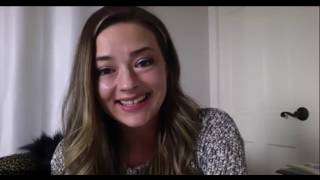
This is a recorded interview between Jeffrey Bland, PhD and Dr. Kalea Wattles about how COVID-19 has changed clinical practice and patient care. Key points: Dr. Wattles has transitioned successfully to telemedicine (plans to continue hybrid care), finds functional medicine visits well-suited to virtual formats, and sees opportunities for group visits and partner inclusion in preconception/prenatal care. She discusses fertility-specific counseling during COVID-19 (low apparent risk to pregnant women and limited evidence of vertical transmission), prenatal care adaptations (home BP/dopplers, telehealth visits), billing for telehealth (using standard codes with telehealth modifiers; reimbursements somewhat lower so far), and her new integrated clinic VIDA (thinkvita.com) with multiple locations and services.
Questions this video answers
thinkvita.com
She stated the data analyzed "147 pregnancies" (as reported in the interview).
Chapters
Well, here we are. You know, it's been a couple of months since Dr. Wattles and I had this to do. An extraordinarily interesting for me, discussion about her life as a naturopathic physician and what's going on in this world that we share. But lots has happened, hasn't it, in the last 60 to 90 days.
It's a lot of world.
So I thought it would be useful, as you're listening to the interview that we did a couple months ago, to kind of bring up to currency what's going on in the busy life of Cleo Wattles. So thank you for joining me again. And this is kind of the warm up to the real meal deal. So how has it been going for you and your family and everything around you over the last 60 to 90 days?
Well, I think like so many people around this world, I am finding a delicate balance between career and family as I see patients from home and have a five and two year old at home. So we're doing zoom preschool and we're doing lessons in art and that I'm seeing patients and doing work for ifm. So as most people, people around this whole world, we're all wearing many hats and kind of navigating what that looks like for our personal growth and health of our family. And it's an interesting time, for sure.
Oh boy, that's like the Chinese curse word, isn't it? Interesting time. Very interesting. So tell me a little bit about how this virtual practice has gone for you because a lot of people are making that transition. Some people are making it very comfortably. Maybe it has to do with the way their relationship develops with their patients or how their practice was set up. Other people are having a little bit more challenge with it. How's it going for you?
To be honest, it's going really wonderful. I was concerned having never done a virtual practice before. This pandemic situation. You know, part of that therapeutic partnership that I have with my patients in the office is so important to me. And I think that's why we can really break through a lot of barriers that people might not be able to overcome with maybe some other providers who they don't have such a strong connection with. So I was really worried about that part. But what I'm finding is even with my new patients that I'm seeing over our telemedicine platform, we can really still have that strong therapeutic bond because I think maybe because I hold that so dear as a philosophy and as a goal. So it's really going wonderfully and we're making so much, much progress. And I actually feel like functional medicine is really well suited to a telemedicine practice because we tend to have a bit longer visits. And I actually think that might make it more accessible for people that maybe are at home with children. I see lots of my patients, their kids are popping up from behind the chair and maybe they couldn't take time for, you know, a 60 minute visit in their daily normal routine, but now they can because they're at home. So it's actually really wonderful. And when we're able to go back to the office, I'm going to keep a telemedicine practice as well because I'm enjoying it so much.
Yeah, thank you. I'm going to make an observation which is probably not fair to do because you always tread out into the uncertain when you start talking about another person. But I'm going to tread out there anyway and say, it doesn't surprise me that you're being successful. You, you have the right outlook, the right sense of presence and the right appreciation for the uncertainties of life and to celebrate them. And I think that that is a very important feature for all of us to keep in mind as we're embracing the uncertainty of today is that we need to wear as role models our sense that there is a future that we will overcome, that there are solutions that we can find by being creative. And then in the end it comes down to the human enterprise of intention. And I think you really bring that very beautifully through your Persona. So I'm not surprised that you're having success in this transition mode. But I would also encourage those that are watching it to look at you and how you present yourself in terms of your demeanor, your Persona. Because I think these are things we can all work on. We can all model ourselves off certain styles and take parts of them that fit us in our own self improvement. So thank you for sharing your outlook. I think it's a good role model for many of us.
Well, that is extremely kind of you. I would be dishonest to say that it's easy every day because of course it's a roller coaster of emotions. But that's actually been a place with patients where we can bond because it's a level playing field right now, all affected and we're all anxious and we're all uncertain. And so that's actually an area where we're really able to connect because that's the human part of us, that we're all a little bit, a little bit weird right now. And it's actually a real strong point of connection.
Well, you know, it strikes me that with the broad range of activities that your life has brought you, that you described in our previous discussion, that you have multiple places to play, your different personality types in the world that you serve, from mother and partner and homemaker and professional and ifm, you know, kind of involved with a very important role in development of curriculum there. So tell us a little bit of how this, this whole virtual creation concept is influencing over into the functional medicine community and the work of the Institute for Functional Medicine, because clearly all of us now are sequestered and concepts of getting together in big meetings are changing. So how does that lop over to the other parts of your world?
Gosh, it's really interesting. And what we have talked extensively internally about, about at the Institute for Functional Medicine is that we have an exciting and really important opportunity right now to teach our patients and the public and doctors about the importance of treating chronic disease and using personalized lifestyle medicine to make our patients and humans more resilient, more healthy in general. And, you know, just to kind of weave this into my fertility practice is people are really frustrated right now and aren't really sure should they try to conceive, should they keep going? Really, for everyone, we're saying we have this opportunity right now to cultivate wellness in a way that's going to set us up for success, whatever that looks like for us when this time is over. So in terms of fertility, we have this excellent opportunity to build the foundations of health, nutrition and rest and toning our nervous system, all of these things that are going to set us up for healthy pregnancy, successful conception. And so at ifm, we're really trying to figure out how we can best make this message accessible to doctors who serve large communities of patients, because we know that the best way to support health of humans and the planet is to start from a lifestyle perspective and building those foundations or health. You know, in the functional medicine world, like you and I, we would talk about the bottom of the matrix, right? Sleep, nutrition, relationships, stress management, all of those things that, as all the memes are talking about, you know, love is not canceled, healthy food is not canceled, all of these things that we can still do from our living room. And so that's really been my goal as someone who, you know, I use social media and I do interviews and I try to have a bit of a voice is to spread that message of empowerment. And I think functional medicine is really the way that we serve that purpose.
Well, that's really beautiful. I think that was inspiring for all of us to hear you talk about that and how you speak about it. So with women who are in the throes of contemplating starting a family or extending their family, do you find that there is increasing anxiety right now that is making their. It's like a dog chasing its tail. It's creating its own do loop of anxiety, which produces more problems with regard to their health. And how do they break that spiral if they're in it?
Absolutely. I mean, when you're trying to conceive, that's a bit anxiety producing. In general, it's a big deal. And it's. You're at the edge of a big life transition. And so absolutely, this new challenge is pretty anxiety provoking. What I'm telling my patients is, you know, I'm kind of taking the lead a bit from the American College of Obstetricians and Gynecologists and the American Pregnancy Association. And what they're really saying is for those who are in the process of trying to conceive naturally, there's really no reason that we know of right now that you should stop, that you should discontinue that process. However, of course, there are some special considerations, and my approach is to really discuss all of those considerations so that my patients can synthesize all that information and make an informed decision about what's best for their family planning goals. So the biggest question I'm getting right now is what's the potential impact on pregnant women and on a developing baby? And, you know, the World Health Organization came out with a statement saying that they have analyzed hundreds of pregnant women. I think the data said it was at 147 pregnancies that they analyzed and that pregnant women didn't have more severe disease than the general public. You know, historically we think about the immunologic and physiologic changes during pregnancy making pregnant women a bit more susceptible to respiratory viruses. If you people who've been pregnant, you get every cold and your toddler comes home from preschool and you're like catching every little respiratory thing. But we're not seeing that women are more susceptible to severe COVID 19 infection. So that is something to consider, I think. And then we think about what is potentially happening with the baby. And what were my main concern would be a fever. A high fever is one of the features potentially of a coronavirus infection. And there's really limited but actually pretty conflicting data about whether high fever in early pregnancy is a problem. Some literature shows that there might be a higher incidence of birth defects or pregnancy loss. But when we look at data from the SARS epidemic or the Middle Eastern respiratory virus pandemic, we didn't see, we didn't see higher rates of birth defects or pregnancy loss in confirmed cases in pregnant women. So, you know, I'm sharing with patients, the risk is low and we're always going to do what we know to, you know, cultivate whole person health and make your body strong and as resilient as possible. So I'm telling patients from a pregnancy and, and a developing baby standpoint, it's looking pretty safe. We're also seeing that the vertical transmission, so the transmission from mother to baby during pregnancy is looking like it's not happening. They're not finding evidence of the virus in amniotic fluid, in cord blood, in breast milk. And so it looks like baby's fairly well protected. The other piece I really want to talk about with patients is from a prenatal care perspective, you know, we're moving to telehealth, which I love. Telehealth is working so well for me. But I remember when I was pregnant with my first child, keeping those regular visits with my birth provider was such an important piece to me to keep me calm, keep me confident, keep me informed. And so just preparing patients that should they become pregnant, you know, those visits are likely to be spread out more and more. Potentially there'll be some telehealth. I've seen lots of birth providers are sending blood pressure cuffs and dopplers to the patient's home and they're doing the telehealth and they're taking their own vitals, which is an excellent option right now. But it doesn't feel right for everyone. So I'm just trying to prepare everyone that prenatal visits might look a little bit different. And then I'm also talking about the, I guess the social and financial aspects. So with changes to employment status right now there's changes to income, changes to insurance coverage. And my philosophy is that a preconception plan also includes some financial planning because there's a lot that changes in terms of finances. So keeping those considerations and the social aspect that, you know, oftentimes when we come home with a new baby, grandma or aunties or neighbors or friends are coming over and that might look a bit different. And so what do we need to do to build you a really strong support network right now if in person visits aren't going to be as possible?
Yeah. Oh, those are really sage advices. Thank you. And how about the partner who may be in training in the birthing process. How does that handle into this new medium of distance learning?
Yes. So I actually love to get dads involved in the preconception plan. I actually love when I see on my schedule a dad to be. And it says like preconception plan, fertility health and the referral, it says wife. I absolutely love that. That's my favorite thing ever. So this is a great opportunity when we're doing telehealth, especially for preconception or prenatal visits, that a partner is actually involved in getting on the screen and listening to the call. And, and I think it really underscores the importance of getting a partner involved in the preconception, prenatal care of the partner, because this person as a support team member is more important than ever when maybe doula access or midwife care is we're doing telehealth and we can't do as many visits. So this person is going to be really essential for creating mental, emotional, spiritual support. And so getting them involved as much as possible with nutrition, with preparing the home, with doing stress management techniques, that's all going to be really essential right now.
Wow, this is really powerful news to use, I think, because I can only appreciate, I mean, clearly I'm a number of years away from having little children now. It's even years away from having little grandchildren. Kind of scary they're all getting to be teenagers. But I do remember very vividly the anxiety that comes when you start a family for the first time. Even your second child is still an experiment in learning. And I think what you're talking about are ways, particularly during this very extraordinary period of time, to reduce some of that anxiety and to implement a little bit more locus of control. And here's where maybe a good relationship with your virtual provider, like your patients do with youth, decides. Sounds like a really great support team.
Yes. And I'm seeing partners taking their partners the patient's blood pressure for them or using dopplers on bellies. And what a beautiful way to get engaged with your partner in a way that you wouldn't have before than when you're actually participating in their healthcare.
Well, it's exciting. And let me just go a little bit farther into the weeds here. So there's always this question of your time, which is the most valuable thing that we have. It's the thing in shortest supply because we don't get it back once we've used it, unfortunately. How do you handle the whole reimbursement for services model? Under this kind of a virtual format. Is it a different structure or how does that work for you?
We're just starting to submit bills, so we will see what happens. But at this point we are coding our visits just like they were a normal visit. We're using the appropriate modifiers to signify that it was a telehealth visit. But so far it seems to be going pretty well. We are seeing that our reimbursement is coming back somewhat lower than our in person visits. But I think from a perspective that we're still able to continue seeing patients and doing it in a way that's safe for everyone, it's really worth it. And we are getting reimbursed and bills. You know, we are able to keep billing insurance so our patients still have access to care. And I think overall it's a huge win.
That's really exciting. And how about the possibility? This may be very different in your type of a practice, but I'll just throw it out as a question about aggregate or group visits where you can have people that are joined together for something that you do a consultation on. Is that a possibility or that's not really effective in your area?
Absolutely. I've actually been thinking about this a lot, especially because I see so many patients who are well, but they want to maximize their health from a fertility perspective in the preconception phase. And I really see an opportunity to do some group visits for preconception because these women all have lots of questions and building a sense of community around potentially entering a whole new phase of life I think could be really inspiring and empowering. And I anticipate that some of these patients would form really lifelong friendships when they're getting pregnant and going through that whole process together and then having small children. And really it's establishing a support network that can see you through pregnancy and beyond. And so I actually am really excited about the possibility of starting to do some group visits for fertility focused topics and then moving even further into pcos and improving egg quality and then getting all the guys together to talk about sperm quality and sperm health and male fertility. There are so many opportun that we're thinking about.
See, that's making lemonade from lemons and that's really exciting. That's a win win for everyone. So again, creative minds find creative solutions and deliver the unexpected. So thank you very, very much. Is there anything you wanted to share that we haven't talked about as an update to where we were here a few months ago?
Gosh, I think that I'm not sure if last time I talked to you, I didn't mention I started a new practice in January. So I started it VIDA Integrated Health, which is this awesome clinic system where we have functional medicine, chiropractic, physical therapy, massage therapy, acupuncture, and along this topic of telehealth. It's really been exciting because we have our physical therapists doing telehealth, our chiropractors triaging, acute low back pain and some musculoskeletal issues. Our acupuncturist is able to do kind of traditional Chinese medicine consults via telehealth. So there's so many opportunities to connect with patients still. And working in this integrated system at vida, I'm really seeing the power of how we can utilize these tools to keep giving patients care for all kinds of modalities. And it's so exciting.
So how do people tap in? What would be your place to send them to?
Yep. So if you go to thinkvita.com that's our clinic website, you're able to view all the services that we provide, all of our doctors, and we have five locations. So if you're in the Washington state area, there's definitely a clinic for you.
Well, we'll make sure that we have those in the show notes so that people will be able to find it. And what a great, great update to an already fascinating visit that we've shared. So thank you so much, Dr. Wattles, for what you're doing, your advocacy, your energy and your vision. We really appreciate it.
Thank you so much for having me. It's been a pleasure.
My pleasure. You be well.
Take good care.









