Create the Change: Dr. Jeff Bland Talks With Niki Fox
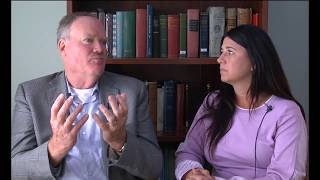
Dr. Jeffrey Bland and Niki Fox argue the U.S. treats disease, not health. They propose measuring function instead of symptoms and building a cross-disciplinary movement to redesign care, linking healthcare failures to food systems and economic inefficiency.
Chapters
Hi, my name is Nikki Fox, and I'm a consultant in the integrative, functional, and personalized medicine world. And I had asked Dr. Bland, the grandfather of functional medicine, if he wouldn't mind doing a quick video with me just to kind of bring together the collaboration that we had about this vision and this idea of really creating a healthcare system. And so this is gonna be fun.
Let's go for it. It's exciting. No kidding.
So one thing I want to put into this video is if you're viewing this, you know, really taking maybe some of this information that Dr. Bland and I have discussed today and really holding it, and maybe collaborating and bringing new ideas on how you also believe that we can take this idea of a healthcare system to the next level. But why don't you go ahead and share a little bit about what we're really talking about?
Yeah, you know, we started, I thought, with a very important premise, and that is the premise is that we don't have presently a health care system. We have a disease care system that we put under the rubric of health care. But if we really want to think about how much time is spent between the patient and their practitioner in the traditional model of health, it's very, very limited. It's. Well, let's see, you don't have a disease, so you must, by definition, in absence, be healthy. This is the diagnosis by absence. And what we really started to talk about is the fact that health is a very complex word, because it's like the word love a little bit. We use it a lot, but we know it's a very squishy term that has a lot of different meanings in different people. So how do you get a definition of health that's really much more quantifiable, like is disease? Everybody, when they talk about a diabetes or an arthritis or a heart disease, they have a certain kind of descriptor that is very well set in medicine. When we talk about health, it may be very different from person to person of what they would really mean by health. So we started talking about the only thing you can really measure is function, because function is measurable. And then how that translates to health is really variable in the way the person perceives it. So one person might think mental function is really the most important thing for health. Another person might think that physical function is the most important thing for health. And so for them, health is really equated against those determinants. So that gave us the ability to say, maybe we should be trying to raise the understanding of what a Health care system would look like, not a disease care system.
So one of the things we talked about is just what a big mission this really is. Right. And if we're looking at this 20 years down the road, what would we have to do to actually create this? And one of the things we discussed was this idea of collaboration, of there's not one entity or one person or one idea that's actually going to get us there, right?
Absolutely.
When we talk about collaboration, since we are talking to an audience out there, who are we talking to? Who do we want to step forward with us on this journey to really create this healthcare change?
Yeah, I think that that is really where the whole. It's like crowdsourcing. Right. If you can get a certain body politic that is sharing a common vision, regardless of what other restrictions are there, financial or political or whatever restrictions, they go away because the body politic ultimately will push through those. We see that in history. If you've got what Gladwell would be calling, you're at that tipping point. So how do you achieve that? You do that by forming a common language and a common vision that everyone can aspire to. They might have different parts of that mission that they vary in terms of the emphasis, but the overall objective is shared by all. So that then leads us to a new definition of what that system would be. It's not just the patient centered focus alone, not just the practitioner centered focus. It's also all the collateral system of the ecology of health, which has to do with information, it has to do with testing, it has to do with behavior modification or behavior science. It has to do with food, it has to do with environment. So now we start building a convergence of particular expertise from all these different fields around this mission that leads to the emergence then of a healthcare system. We don't even design it, it designs itself.
Absolutely. And what we're currently seeing is that we are just continuously going about it the same way and people are allowing themselves to do business as usual and patients to continue on this road because they think it's the way it's supposed to be, but really about allowing there to be something different.
Well, I think we're at that point where every person that examines the economics of healthcare recognizes that this model we're spending more and more and getting less and less. There are three different studies published in top tier journals, including the New England Journal of Medicine over the last few months that have all indicated that out of 12 developed countries, if you look at 10 different health indices, we're at the lowest end 11 or 12 in all those indices. And we're spending twice as much as any other country per capita on healthcare. Well, that's a duh, right? People go say, well, something wrong? Yes. It's not just a reimbursement problem or an access to care problem. It's what we're doing is not right. So that gives the opportunity for a great transition in thinking and bringing all these creative minds, this convergence of all these individuals to emerge. A whole new model.
Yeah. And I think that's what gets me the most excited is about like this coming together. Right. So it's not just us trying to declare something and be warriors, but it's really about community and about the technology coming together to really create the change.
Well, and I think you said, just in the way you phrase it, that this community that we develop by shared common interests and we put aside those differences to look at the real value that we want to pass down in posterity to what health means. That's a huge unifying feature. And I think that it's not too soon to really be worried about this. We have a lot of things that are concerning about our health. We have global climate changes that has impacted our health. We have impairment of our food production system. We have problems as it relates to toxins in the environment. All of these things are interplaying decisions that we are going to have to make as a society if we want to be around for the next few thousand years.
Isn't it interesting that it is kind of all entwined? Because it's like if we take on healthcare, in a way, we're kind of taking on all of it.
That's exactly right. Health of the planet is the health of the individual and vice versa.
Absolutely. Well, I'm honored to be on this journey with you and to be looking at this camera in 20 years and come back to today and say, like you created and it'll be there stepped up to come join us on this journey.
Thanks, Nicole. Really fun.









