Earthwise Eating: Nutritious Fare with a Sustainable Flair
Webinar (host Mary Purdy) introducing “earthwise” or sustainable eating: links between food systems and climate/environmental harm (GHG emissions, deforestation, soil degradation, biodiversity loss, pollution) and health. Covers greenhouse gases from food (CO2, methane, N2O), the food system lifecycle, recommendations to reduce meat consumption and increase diverse minimally processed plant foods, support organic/regenerative farming, choose sustainably sourced seafood and better meat, and practical actions (CSA, farmer’s markets, advocacy). Ends with audience Q&A on protein, plant-based alternatives, costs and barriers.
Chapters
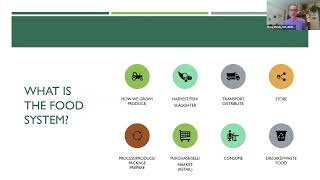
Welcome, welcome. I'm seeing people join. Thank you so much for coming today to Earth Wise Eating Nutritious Fair with a Sustainable Flair. Now we're just at the top of the hour, so we will wait just a minute while we see our folks join us. Thank you so much. We had over a thousand people sign up for this webinar, so we're super excited that so many folks are interested in this topic. We'll be starting shortly. It. Thanks so much to those of you have just joined. We will be starting in just a moment, but thank you so much for being with us today and looking forward to hearing questions. And if you'd like to drop any information in the chat as we go along, you are welcome to do so. Or if you have a question, feel free to drop it in the chat and I will be taking questions at the end of the webinar as well. So thank you for joining us today for Earth Wise Eating Nutritious Fair with a Sustainable Flare. Just going to wait one more second and then we'll get started. Okay, well welcome everyone to today's webinar Earth Wise Eating Nutritious Fare with a Sustainable Flair. My name is Mary Purdy, I am an eco dietitian and I am also the nutrition and sustainability advisor for Big Bold Health. So pleased that you join us today and feel free to let us know any questions you might have throughout the session in the chat and I will either answer them as we go along or or I will answer them at the end of my presentation. So I want to acknowledge the complexity of this topic because number one, as you may all know, our connection to food is quite personal and in some cases it can be emotional. Additionally, there are differing opinions and attitudes and beliefs about our current food and agricultural system. So this is not meant to be the be all, end all answer to the the question of how do we eat in a way that is more sustainable? We also have to always consider access, affordability. It's important to understand how that plays into our decisions. And the word sustainability actually has different definitions. We might ask sustainable for whom and where and how and when. So this may not necessarily always be about personal choices which we will be talking about today, and it does make a difference. But ultimately this is about a bigger conversation which is around transforming our system. And one last moment here to just make sure that you understand that I am not personally able to add in any personalized recommendations for you if you are working with any medical issues. So just wanted to say that up front. All right. I'm Just going to check our chat real quick because it looks like there's a couple things. Oh, and thank you so much for letting us know where you're from. Illinois. And I'm sure there's many other spots in, in the states where people are coming in from, so really appreciate that. So let's continue on here. I want to actually start off with a, with a story. I remember when I thought about food years ago. I really thought about it in the context of how does food affect me, my health, how do I eat in a way that makes me live to be a hundred, right? I'd been that way since I was 12 years old. And I remember making a smoothie one day, probably that five, 10 years ago. And as I was making that smoothie, I was putting in my frozen pineapple and putting in my spirulina, my protein powder and my, my berries and my kale. And I stopped for a moment and I thought, wait a second, where did all this food come from? Who picked these berries? What was the cow fed? Who, who made this whey protein? How was that cow treated? How were the workers treated? Who were, who were picking those berries? Were the berries made or the kale made with, grown with, with, with pesticides, with, with, with chemicals? How many hands have touched the food that I'm currently eating? And it really changed my trajectory. So I had been in clinical practice for about 13 years with real personalized medicine, functional nutrition approach, before transitioning into working in this more sustainable food systems arena and their intersection with human health and climate change and the environment. So let's actually talk about climate change. According to a recent report, and there are even more recent reports than this, our global emissions have reached record levels. The last seven years were the hottest on record. You may have experienced that yourself, depending on where you live. Our sea levels are rising. Our coral reefs are dying. We are seeing degraded soil, we are seeing a loss of biodiversity, that is the variety of life on Earth. We see a lot of air pollution. I know where I am in the Pacific Northwest, we experience a lot of air issues with wildfires. There are many, many severe heat waves, floods. All of this risks our food security, our nutrition security. And we know that the influence of human beings has been established and is absolutely undeniable. And there tends to be a disproportionate effect on those who come from lower or disadvantaged communities, lower income or disadvantaged communities. So I have a question for you all to answer. What percentage of our greenhouse gases come from our food system? Who's got a thought about this, Anyone have a number they want to toss out? A percentage. What percentage of our greenhouse gases come from our food system? I see 30%. 40%. Yes. Well, I see 60. Okay, we're going up. We're going up. Well, essentially, if we think about this, the agriculture and food system is responsible for about one third third of our greenhouse gases. And partly this is because of practices that inhibit the ability of our soil to sequester or store carbon. So I've got another quiz for you all. I talked about greenhouse gases as a general term. What greenhouse gases are coming from our food system? Anyone got a name for a greenhouse gas that they know of that comes from our food system? I see methane in the chat. I see methane. Methane. Methane, yes. All right. We aren't dealing with just a tunnel vision of carbon dioxide, which is important, but yes, it is carbon dioxide. It is nitrous oxide, which not many folks are often familiar with. And as many of you mentioned in the chat, methane. So carbon dioxide, we know, comes from the deforestation of forests. It comes from fossil fuels, and that also includes the production of plastic as well as the agrochemicals that are used in our industrial agricultural system. Nitrous oxide. Anyone know where nitrous oxide comes from? We'll talk a little bit more about this as well. It is from fertilizer. Thank you. Yes, I see someone said that in the chat. It is also from the stored waste of livestock. And then methane also comes from the enteric fermentation or otherwise known as burps of livestock. It also comes from landfills and the food waste that accumulates there. In fact, that is the third largest source of methane, and it comes from fossil fuel combustion. Now, the bad news about methane is that it's actually more potent than greenhouse, than the greenhouse gas carbon dioxide. The good news about methane is that it is able to be removed more easily from our atmosphere. So cutting our methane emissions is one of the biggest opportunities that we have to make a big difference between now and 2040. So what's next? It's not just about greenhouse gases. Our current food and agricultural system goes way beyond just climate change. It is also responsible for a huge amount of deforestation eutrophication, which is the bringing of nutrients from our soil. These are from our fertilizer and pesticides into our oceans and waterways and preventing animals and marine life from surviving there, creating those dead zones. It is responsible for using a lot of land. It is a leading cause of soil erosion, water contamination, biodiversity loss, a major source of pollution. And it is Indicating a huge loss of habitat for wildlife as well as for people. And all of these things that I just mentioned, they all have human health impacts. And very often they disproportionately affect marginalized communities of color, indigenous community as well. And unfortunately, a lot of these same practices that are having a huge impact on the Earth are winding up producing very cheap and, and, and highly, highly processed foods that are food products or food like products as, as Michael Pollan likes to say, that are contributing to many of the chronic diseases that we see in our society today. So I've got another question for y'. All. What is this thing, this thing I've been talking about the food system. Gonna do a quick, quick quiz on this one, see what people say in the chat. What do you say? What do you think? What is our food system? Anyone? Anyone? I. I see some adjectives. Our food system is sad. I'm not. I'm actually talking about what does the actual food system mean. If you think about the last thing that you ate, maybe it was breakfast, maybe it was lunch, maybe it was a snack. Where did that food come from? How did it begin? So I'm seeing other things here. Agriculture, processing, growers, shippers, handlers, stores, packaging, farming, everything. Yes, absolutely. So it is how we grow and produce, harvest fish, slaughter our food, transport, distribute it, store it, process, package, prepare it, purchase, sell it and market it, consume it. And hopefully it's delicious and healthy for us and unfortunately discard it and waste it. So I want you to think about all of the resources that go into that food system. I've already mentioned a bunch of them. Our industrial model of producing food uses a huge amount of the land, soil, water, energy, fuel, gas, chemicals, or inputs, as they're called, labor, and then packaging, which is ultimately produced by petroleum. So this doesn't mean that we have to stop eating. My goodness, no. We have to keep on eating. So it isn't necessarily about stopping these processes, but the way we are doing it and the intense way and the industrialized way that we're doing it may need to shift. In fact, it absolutely must shift because how are these processes affecting our environment? Well, we are seeing these agrochemicals and the way that we are producing food from an agricultural perspective is damaging our soil. Wildlife and pollinators, who are responsible for one third of every bite that you take, are being affected by some of these chemicals. Our ecosystems are being disrupted. There's lots of pollution, as I mentioned, and packaging and plastic, which a lot of our food happens to come in and that's very difficult to avoid, but that can produce greenhouse gases as well and also have an impact on marine life. And of course, human health. Our human health is also affected. The other thing that's interesting to note is that there is a really big discrepancy between what we are recommending in our own dietary guidelines and the reality of what is being produced. So take a look at this little chart on the right. We can see in our global food production versus our recommended consumption. So the blue is what we are actually producing. Right. The orange is what we are recommending. So take a look at that top one. And might I ask you a question? I pose to you? How much sugar is being recommended in our dietary guidelines? I'll pause for a fact. How much is being produced? A whole heck of a lot more than is being recommended, which is very little. And if we go down to our fruits and vegetables, you will actually see that what we are recommending again is the orange and the blue is what we are producing. So this isn't necessarily always a matter of eat more vegetables, eat more fruit. It's pretty hard to eat more vegetables when those vegetables don't exist. In general, we are seeing a supply of things like cereals and red meat being much, much greater than what is being recommended. If in fact the US population wanted to meet all those recommendations for our fruits, our veggies, our legumes, our tree nuts, our agricultural system would actually fall short. And this is not necessarily about, again, your choices, eat more vegetables, have some more broccoli, for God's sake. No, this is about policy, about systemic change that's needed. However, when policy and systemic change isn't always available, we have to take matters into our own hands as citizens, as eaters, as consumers. So there is hope. I promise you, I would not be doing this if there were not hope. We know that consumption of healthy and sustainable diets presents major opportunities for reducing greenhouse gas emissions and improving health outcomes. So there is good news here. This is from the IPCC or the Intergovernmental Panel on Climate Change. And we, my friends, we have the power to help create change. So I wanted to know, what about a sustainable diet or earth wise eating? What does that mean to you? Who's got a thought? And the reason why I'm including all this information is because it will really help you to drive the decisions around your eating patterns if you understand what the problems are to begin with. So I see Lisa saying, buy local. I see grow, make what you can. Yes, fabulous eating as close to what God made as possible Purchasing local. Thank you so much. So three areas of focus that I want to focus on today for being an agent of change, as a consumer, as an influencer, as a community member are the following. And again, this is not the be all, end all. This is just what we have time for today. Number one is to reduce meat consumption and increase the diversity of minimally processed plant centric meals. Number two is support foods that are grown using organic and regenerative and climate friendly methods. And number three is to seek out. And that says four by mistake. Sorry, but that better meat and sustainably sourced seeds, seafood. So those are just a couple of things. Again, it's important for us to understand the problem before we can come up with the solutions. So industrial animal agriculture is characterized by a lot of those agrochemicals. And in fact the global livestock sector is responsible for up to 16.5% of the global greenhouse gases. Milk and meat are a part of that. And part of that is coming from methane gas. As we talked about those manure lagoons. That's the whole bunch of poop that someone mentioned in the, in the chat. And growing feed for those animals and then deforestation. Additionally, animals are often overgrazing that depletes our soil and there's habitat destruction as well. However, it is not necessarily the cow, it is the how and how many we are consuming. So we have to consider that in general, we know that animal based foods tend to be more resource intensive than plant based foods. You can see here, blue is the amount of water, green is the amount of land and orange is the amount of greenhouse gas emissions. So should everybody go vegan? Not necessarily. That may not be realistic for everybody. And if it is realistic for you, then go ahead and eat in that way. But even cutting meat by 50% can reduce greenhouse gas emissions by 40%, which is pretty remarkable. We do have to meet people where they are at and that may depend on what someone's access is and also what their culture is. Maybe they have familial connections to these types of foods as well as. And I saw someone mention that we need to decrease feedlot raised animals. Absolutely. And I'm going to mention a little bit more about that as well. Fish agriculture and aquaculture is also something for us to think about. We are seeing overfishing which is really having an impact on our food supply. Right. And reduces biodiversity. The process of aquaculture or farmed fish has issues with feed and pesticides and antibiotics that can also contaminate the water. How an impact on Other fish. So some better choices or some more eco friendly earth wise choices would be bivalves like mollusks. This is your oysters, your clams, your any kind of fish that has a little shell like that. Mussels would work as well. Wild caught and surface dwelling fish, otherwise known as pelagic fish. These are anchovies, mackerel and herring. And one thing I love to find out from you all is how would you eat anchovies? How might you eat mackerel? How do you eat herring? I'm a big fan of sardines. I love making sardine spread, mixing it the same way that I might make a tuna spread as well with a little bit of garlic sauce and capers or some other kind of vegetable or parsley and spread that on a piece of bread as a lunch type of meal. Wild caught pink salmon is another good choice or sockeye salmon. And very often these better choices tend to be more nutrient rich. So not only are they good for our planet, good for our ecosystems, but really healthy for us in terms of high having higher levels of those omega 3 fatty acids which we know are good for your brain, good for your eyes, good for your heart, good for your gut and all of the above. Now, some of you might be having a moment. You're saying gosh darn it, Mary Birdie, why are you telling me that I can't eat bacon? I am not telling that you can't eat bacon. It is about the amount and again maybe the type of bacon. There is humane animal agriculture that is done well. This is often referred to as better meat. I'm not saying better, is saying that you are better if you eat this kind of meat. People often misinterpret that, but it's often referred to as that more humanely raised animal. And this can come from a well managed farm that has humane practices. They're grass fed. It actually has benefits for the well being of the animal, for the land. There's a symbiotic relationship between the crop and the livestock. Where the livestock eats some of the COVID crop. It takes a nice big poop. That poop becomes part of the land and fertilizer for the soil. And this is really interesting to see. I actually visited a winery recently in my neck of the woods where there were chicken who were hanging out on that farm and they were pooping and their poop was providing the fertilizer for those grapes be grown to create delicious wine. Additionally, if there's rotated grazing that can help with healthier soil, that creates a healthier system, that system becomes more resilient and it invites other habitats, wildlife and pollinators. And there are certain areas of the world that may actually need to increase their animal production. Not the United States, not the EU and many other more high income countries. But there are needs that need to be met in places like that. So I just want to honor and recognize that there are also cultural connections and there's issues around food sovereignty and land sovereignty that we need to look to. The good news about grass fed animals or pastured animals is that we're seeing lots of studies that show that they have higher levels of those phytonutrients. This can be our omega 3 fatty acids. It can be conjugated linoleic acid. When animals are fed the diets that they are meant to eat, they're their meat or their flesh or their impact as a food can have really good health benefits for us as well. There's just a bevy of research about getting more plant based foods into the diet. We're seeing planetary health diets, we're seeing more plant based dietary patterns, the necessity of making these dietary changes, the global adoption from the World Health Organization of a more low meat diet that meets nutritional recommendations. So the data is out there. It is really powerful to see this. And again, this can have really positive health benefits too. And I see people might be getting nervous a little bit too. When I talk about plant based proteins or plant based meals and diets, people get nervous, oh my gosh, how am I going to meet my protein? I need more protein. Well, I'm going to do a real quick math equation here. You can save it for later. Everyone's a little different, of course, but typically, and again, this is typical and very general. Are you ready for some math? 0.8 grams to 1 gram of protein per kilogram of body weight. Now, I know not many people in America use kilograms to measure their weight. So it winds up being somewhere around a little less than half of one's body weight. That might vary from person to person depending on what a typical weight might be for you or a healthy weight might be for you. Um, but about 150 pounds would equal somewhere between 54 to 68 grams a day of protein. And again, work with your personalized practitioner to help you determine what your protein needs are. Now the other question that I get next is, well, what the heck is, does 65 grams of protein look like Mary? Well, I'm about to tell you these are some of our usual suspects when it comes to protein sources. In the plant centric world, a cup of beans or lentils, about 15 to 18 grams. A cup of nuts or a quarter cup of nuts is about 4 to 7 grams. Depends on the nut. 3 tablespoons of certain seeds like flaxseeds, chia seeds and hemp Seeds are approximately 10 grams. Three ounces of tofu equals about 10 grams of protein. A cup of edamame, about 15 grams. Three ounces of tempeh, 21 grams of protein. A cup of peas. Yes, peas have about 8 grams of protein. And all foods, of course, have a little bit. Feel free to throw your favorite protein source into the chat as well. And remember, when we talk about beans and lentils as a category, there ain't just one type of bean. In fact, there are dozens and dozens. Chickpeas, black beans, cannellini, pinto, navy, great Northern, as I like to say, cranberry beans, fava beans, adzuki, mung beans, black eyed peas, azuki or Anastasia beans, kidney beans. So many different lentils, right? There's many, many different cultures that use beans for a variety of different foods and meals. So if you are attached to a certain culture or if you have a background where beans are part of your family history, it can be really fantastic to bring beans into your life in that way that feels really culturally connected. And of course it has to be delicious. Then we've got our grains or our pseudo cereals, which doesn't mean they're any less than a typical cereal, they're just called pseudo cereals. And about a half a cup of grains has about 2 to 5 grams of protein. And this can be your half a cup of millet has about three grams. A whole wheat pasta has about three grams. Half a cup of buckwheat has about three. Wild rice, three, quinoa has four, and teff and amaranth both have five. So as we see some different types of grains, and the variety of these different grains provides a different amount of these protein sources. And sprouted grains can actually contain even more. So a sprouted tortilla, for instance, might contain something like 5 grams of protein. Of course, this depends on the size of that, that tortilla. But we see a difference when foods are sprouted and then some other protein sources that might be less whole foods based, but still can be part of a great way to get more plant based foods into the diet if that's something that you're looking for. There's protein powders which can be anywhere from 10 to 25 grams per serving. There's soy, there's rice, there's hemp, there's pea protein, pumpkin seed. There's often a combination of these protein powders. Sometimes there's sprouted powders in a protein powder. And then there's protein based foods like a chickpea based pasta or a lentil based pasta or a, a bean flour. I cook with chickpea flour a lot as well, combining with other flours to make things that are a little bit higher in protein. And then of course there's some protein bars out there, if that's of interest to you. Sometimes they're nut and seed based, sometimes they've got some soy protein isolate. Some are obviously more processed than others. So not all protein bars are the same for sure. I also wanted to point out some other unusual suspects when it comes to plant based proteins. Nutritional yeast, 9 to 10 grams. A tablespoon of spirulina has got about 4 grams of protein. And then more processed alternative proteins like seitan, which is a vital wheat gluten, which is obviously not going to be helpful for those who are gluten sensitive or celiac, but that can provide 14 grams for somebody who can digest that. And then mycoproteins, which come from mushrooms. They are a fermentation of our friendly fungi. And I'm seeing some other things in the chat here. Lupine seeds, or lupine seeds make nice flowers and pastas and dips. Absolutely. One thing I want to make sure that we understand because I often will hear when I was in private practice, I would have a patient say like, oh yeah, I, you know, I had a, a protein rich salad. They offered avocado at the, at the store. Like avocado is not actually a great source of protein. It has some. But if you want to get protein, avocado is not the way. You can see here that one cup of avocado, which is a whole lot of avocado, only has 3 grams of protein and other misrepresentations around protein is the jackfruit, which is a fantastic food to get in. It comes from far, far away. So it might not be completely local, but it's an option. Tastes delicious. It's a traditional Indonesian fruit and a half a cup of vegetables is only about 2 grams. A Portobello mushroom, which we often see on the menu, replace a burger. Not even 3 grams, that is a 3 gram. So if you're curious about being hungry after you have that portobello burger on the menu, it might be because there's simply not enough protein to really have you feel satiated and fruit is pretty negligible when it comes to protein. Some other creative ways to get beans into a menu if that's something that you're looking for. Make a chili, have a bean burger, have a lentil soup, black bean soups, a hummus or a bean dip, add to salads. And again, if you've got ideas about creative ways to add beans in, please throw them in the chat. I love seeing the ideas from our our webinar participants. You can even combine half of beef with with some mushrooms so that you're getting that flavor of beef with pizza which people often really crave. But but part of that burger comes from a mushroom source or maybe mycoprotein or maybe chickpeas. So many health benefits to beans and legumes and lentils. We see benefits to our heart, helps to reduce cholesterol, helps to reduce high blood pressure. We see helpful balancing of blood sugar supporting healthy blood sugar. The microbiome obviously loves a good dose of fiber and we get so much of that. Half a cup of beans has 7 grams of fiber, which is already close to being about a third third of your daily needs. I'm seeing from the chat black bean and sweet potato soup. Oh yes. If you want to throw a recipe in there, please feel free to do that. Two of my favorite foods Other ways to reduce meat and bring more plant based foods in Participate in getting your institution or workplace to do a meatless Monday. Although I gotta say, sometimes the word meatless makes people a little bit, a little bit irritated. So it might be like a plant filled Tuesday. Or signing onto something called the Cool Food Pledge, which is an initiative out of the World Resources Institute. Ask for more vegetarian options at your local restaurant or wherever you go. Dining Big small Every time I go to a restaurant, I wind up saying to the waiter, hey, do you have any beans? Do you have any vegetarian options that aren't just pasta and vegetables? And very often they don't. So I think the more of us who speak up about this or if you have any influence in terms of determining what goes on menus, you can use that influence to make sure that we have more of these yummy options. And boy is it important to make sure they sound good. If we just say bean soup, that sounds a lot different than sizzling black bean sweet potato surprise soup, right? So keep it interesting. And then if you are going somewhere, bring a dish that you know to be delicious. Maybe bring that black bean sweet potato soup that somebody talked about. Our lentil sloppy joes. I'm seeing Someone discuss in the webinar chat. As I mentioned earlier, you can be a force for change by advocating for buying, serving, recommending and demanding humanely raised grass fed beef or grass fed or pasture raised pork or chickens. There's a lot of influence that you have as a consumer to make these demands. Consuming more mussels, clams and oysters. And again, this can be those live clams and oysters or it can be something that comes from a tin can. And that's a really easy way to make a mollusk into your meal. These choices are great, but sometimes it is about policy. So if you're somebody who likes to pick up the phone or write a letter or write an email and talk to your representative, there is a support that Healthy Future students and Earth act just getting more plant based meals into school lunches. The next piece I want to talk about is just soil because soil can be part of our solution. It sequesters carbon and when it is healthy, it provides a habitat. It is more resilient to drought and flooding. It reduces the susceptibility of plants to diseases and pests, which means we don't need as many pesticides and herbicides. It creates healthy food, it is the lifeblood of the plant, it purifies water, and it is key for biodiversity. So I just said a word there which not people, people are not always familiar with. So what is biodiversity? Anyone know? And the reason to know about this is because it will help with again making those decisions. And I'm seeing a great idea in the chat too. Beans and green soup. Mushroom barley, lentil soup, chickpea curry with coconut milk. Oh my gosh, I'm getting hungry. Thank you. So biodiversity is the variety of life on Earth, from teeny microorganisms in the soil to people in your office, right? The environmental benefits is that they create resilience in an ecosystem when we are biodiverse. Just like if you had a portfolio, you want it to be diverse, right? It supports soil, it makes healthier plants. And those beneficial insects which we want to be around can often be really helpful for controlling pests. From the health benefit perspective, if we have a variety of foods, that means we have greater access to many more and a larger spectrum of nutrients. Those phytochemicals, those polyphenols, and that helps with our immune function. In fact, when we consume over 30 different types of plant foods throughout the week, we know that's associated with a more diverse gut microbiome. And we know that gut microbiome has huge implications for a healthy Operating physiological body system. Biodiversity also safeguards our food supply and it connects us to foods that might be really, really something important for our family, for our culture, for our spiritual connection to food and land. So question for you all, another quiz. How many crops and how many animals make up the bulk of our calories? Who's got an answer for that? How many different crops or types of crops make up the bulk of our calories? I see less than 10. I see hundreds. I would say it depends on who you are. In general, about 12 different crops and five different animals make up about 60% of our calories. So we know that when we grow food in a way that is in concert with nature, this is called agroecological farming, organic farming, conservation farming, regenerative agriculture that builds the health of the soil, that creates biodiversity. I saw someone mention that regenerative agriculture is really important for soil health. Yes, this is a type of agriculture that doesn't disturb the soil. It doesn't have a lot of tilling, which is a lot of brushing of the soil and disturbing the carbon sequestration that's there. It maximizes different crop diversities so that we have a variety of microbes in the soil. We keep the crops and the soil ground covered, which helps to preserve that soil and prevent erosion. Crop rotation helps to control pests and weeds. There are no synthetic chemicals used in these types of operations. They often integrate livestock, which can be helpful. Again, that poop is really coming into play here. And there's many, many different permutations of this style of agriculture. So why is this important for us? Because there are human health benefits when we grow and when we eat food that is organic, regenerative, agro, ecologically farmed, we see improved nutrient richness or nutrient density of those crops. So higher nutrient levels like minerals and vitamin C, amino acids. And specifically, what we're seeing, the research is telling us that when we farm in this way, we're seeing higher levels of these plant chemicals. These are phytochemicals. These are good chemicals, not like your Ajax or your Windex. These are chemicals that the plant produces that are very, very protective to our health. Might be beta carotene, it might be anthocyanins, it might be quercetin, ergothione. There's different plant chemicals depending on the crop. There's a greater diversity of microbiota in these kinds of regenerative farming practices than conventionally grown. Lower levels of heavy metals. And we see when people are eating more foods that are grown in this way, there is A reduced incidence of birth defects, infertility, infertility rather metabolic syndrome, non Hodgkin's lymphoma, other cancers and other health conditions. And the soil sees a greater microbiome diversity, which means that we have a greater gut microbiome diversity in our microbiome. So you may not know it, but every time you munch on a piece of spinach or carrot, provided that carrot hasn't been doused in Clorox, which I do not recommend, or are boiled, you're eating some of the microorganisms from that plant from the soil in which it grew. And you may notice yourself that we often see better flavor in foods that are grown in this way. And again, that is directly connected oftentimes to those phytochemicals. So how can we support. How can you support these eco friendly or organic or regenerative farming? Shop at your local farmer's market. Get to know your farmer. Seek out that organic label or pesticide free or local and ask them about their practices. Diversify your diet. Get different foods in there. Look for color. Join a community garden or support 1. Join a Community Supported Agriculture or CSA or you're getting deliveries to your door or to a local place where you pick it up. Support black indigenous people of color farmers who may often be practicing in this more ecological way. Grow your own food, maybe it's just a basil plant on your windowsill. And advocate for this type of farming practices or sourcing of foods in your favorite cafes, events, you go to your workplace. Any other ideas that people have about ways they might already be supporting this. All right, well, you have a chance to say more later. So I have a question for y', all, which is this is all sounding quick and easy, like, all right, good, just eat more organic foods, eat more plants, find better meat. What are the barriers? What are the challenges that we are coming up with here? And I do see some people are saying, talk to your friends and family about it. Deck Garden. These are answers to the last question which I asked, which is, what might you do? What challenges do we have? We have to understand why this is hard for us. Behavior change is difficult. It's not easy to just say you should do this because it's better, and then we do it. There are barriers. So I heard someone say, location, accessibility. I see cost. Yes, it is difficult to make sure that all of those things are easy. And again, that is where our system and change needs to come from. A larger systemic change, institutional change. But again, our voices really matter here. And what we Buy what we eat also makes a difference as well. And some people are saying sometimes organic food can actually be inexpensive depending on where you're getting it from. So in summary, and this is when and if possible, eat and advocate for more plants, advocate for a more diverse diet, eat a more diverse diet, purchase local, purchase seasonal support, climate friendly and organic and regenerative practices from farms who are really producing food in this eco friendly way. Source sustainable seafood, source better meat. These are some of the third party certification labels that are out there that I think are fairly trustworthy. Of course everyone has different opinions about this, but these are just some of the ones that I wanted to mention that can be helpful to look at. And lastly, our consumer demand drives change. People are influenced people, people are lemmings. Often times we want to do what other people are doing. I saw someone in the chat say that they were that, that it's important to just talk to people about it. So yes, talk about these issues, educate yourself about it, call your representatives, post about it, respond to posts about it on social media, write a letter to the editor of your local paper or magazine that you love. I see someone else saying grow your own food. And organic food should be mandatory and subsidized. Yes. What a difference that would make if we were subsidizing and paying farmers for creating food, growing food in a way that was actually eco friendly and producing more healthy food for us as a community. Ultimately we've got sustainable development goals that we are trying to achieve to produce greater prosperity and peace and health in our society. And if we don't address food emissions, we cannot meet any goals of reducing those emissions and achieving these sustainable development goals. So you can be a champion. What is one thing, and I see so many things that people are putting into the chat as well about that that they might put into play this week. I see using more frozen foods. People should invest the time to educate themselves. When it comes to food and the relationship to health, it's doable. Invite friends and family organic foods again and grow a garden. So wonderful. Wonderful. We have a couple of minutes for some questions and I think I see one question here which I'm going to take which is do you need. Oh, gotcha. So I'm assuming this is Vitamin K. Do you need vitamin K2? If you have enough vitamin K in your diet and have a healthy diet, this is a great question that I would say it's really important to speak with a healthcare practitioner about because everyone's a little different. You know, someone who might be on A certain medication might have to have a certain intake of vitamin K because things like blood thinners actually require a very consistent intake of vitamin K. So it kind of depends on your situation. It may be related to bone health, it might be related to other issues that vitamin K plays a role in. So there are very many ways to get vitamin K in the diet through food. So I would encourage you to talk to a practitioner about what's going to be best for you. See if I can see other questions here. Are plant based burgers and dogs reasonably nutritious? I'm going to answer that question with how I answer pretty much every question when it comes to nutrition. And that answer is it depends. I would say there are many plant based burgers and hot dogs that are extremely processed and don't have a real whole foods ingredient at all. And then there are those that have lots of whole foods ingredients or maybe you perhaps can make your own using grains or using flour or using black beans or lentils and other vegetables and then something to hold it all together. So it really depends on the brand that you are purchasing. The lease process is, is usually the better. That's not to say, hey, if you're at a barbecue this summer and someone's offering you, hey, here's a garden burger or here's this Boca burger, doesn't mean that that isn't a good choice. It's. It's all about moderation and it's all about if that were the bulk of your calories every single day, then it might be something to consider. But if it's something that is an option for you periodically, then that's can be a good way to go. I'm also seeing, are there any studies about the cost of growing tomatoes or cabbage versus versus purchasing it? Weather in some areas creates barrier with short growing season. Yeah, that's an interesting question because this is why it's really important to focus on local and seasonal. We need to get away from this idea of, oh, I'm in Iowa, let me start growing almonds in Iowa when Iowa is not the place to grow almonds and we would use a ton, ton of water. I'm not saying we're growing a lot of almonds in Iowa, but we need to grow food in the places where they were meant to be grown because the weather conditions tend to be more applicable to those crops and we don't have to add extra water or put it in a greenhouse. So I don't know if I've seen studies about the costs, but I think it is something to look at in terms of where it's going to be grown in your region and if you can buy it locally from a local provider of that. But in general, when we grow our own food, it can be a good saver of money for sure. Other questions I'm seeing here, which foods are nutritionally dense despite people not regarding them that way, and which foods regarded as nutritionally dense are not so? Oh, that's a great question. I would say the foods that I think are nutritionally dense are the ones that I've mentioned that are in their whole form, beans. I think people don't think of beans and legumes as being nutritionally dense. They're like, ugh, beans. They've got no flavor. It's just like a protein with a lot of fiber in it, but they have lots of minerals. They have those polyphenols. They're really rich in all different kinds. They've got iron, they've got potassium, they've got magnesium. So those are very nutrient dense. Same thing with, with nuts and seeds. Those tend to be very, very nutrient dense as well. Sometimes they tend to be higher on the fat front, which can lead to high calories and fill you up. So you miss out on other things. But those are great one and I think starchy vegetables are great to get in the diet too. And that includes like your sweet potatoes, your squ squash, your cassava, those beets, those carrots. Those are really, really rich with so many rich fiber. And those polyphenols come into play. I've seen. Have you heard that UC Davis has developed a plant based livestock feed that reduces methane gases. It's also cheaper. I have not heard that, but I know that there are many operations out there who are trying to increase things like seaweed in the diet of animals, which can reduce the production of methane gas from enteric fermentation. And that's great. The issue still remains that we need to be consuming and producing less animals or fewer animals. So changing the feed is part of this. But ultimately it doesn't matter if we change the feed and continue to produce the same amount of animals that we are producing right now. We need to have fewer animals on the planet. We need to be feeding fewer animals on the planet. But we're kind of all hands on deck at this point. So we are just about out of time here. I want to encourage you to continue to reach out and attend these webinars. We've got one next Wednesday with Dr. Austin Perlmutter which is all about gut health. And if you are enjoying these webinars, spread the word. We are here because you are here and we appreciate your support and that the fact that you are participating and enjoy and are continuing to follow up. And as I think most of you know at this point there is a recording of this. This is being recorded. So if you're nervous that you missed a part of it or that you had to leave early, it is absolutely being recorded and will be sent out in the next week. So thank you again so much. I wish you all well. I wish you a beautiful earth wise food pattern of eating throughout this week and throughout your lives. Take care and please do reach out if you need to.









