Female Wisdom: Dr. Keesha Ewers on Creating Health Through Balance | Big Bold Health Podcast Ep 15
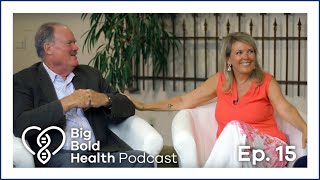
This is a podcast interview (Big Bold Health Ep. 15) featuring Dr. Keesha Ewers in conversation with hosts James and Jeffrey Bland. Core themes: health as a life-long journey, the need to rebalance masculine and feminine energies (activity vs receptivity), restoring intuition and community rites of passage, and practical examples from Ewers' life — including reversing rheumatoid arthritis, taking children on vision quests, and framing menopause as a rite of passage. The episode mixes clinical observations, cultural critique (loss of community rituals), and practical mentoring ideas for women’s health.
Questions this video answers
November 14, 2019.
At age 30.
Six months.
54 years old.
53 years old.
Chapters
Hello, and welcome back to the Big Bold Health podcast. Now, if you have been following us for a while, you've probably gone to Big Bold Health, and you've seen we've been asking the question, what does health mean to you? Part of this whole journey is that we believe that health is moving to a much more personal understanding, and it means different things to different people. So we're super excited this week to have. We have, obviously, Dr. Jeff Bland, my co host.
Welcome back, Jeff. Thank you, James.
But we have Keisha Yuan, who started as a nurse practitioner, but has trained with interesting healers all around the world and has had her own very interesting journey through this health system. So, Kesha, you know, a lot of people have described this sort of health as a journey, and I was just wondering if you resonated with that.
Absolutely. And I think we get a little disenchanted in our medical system because it's not recognized as the journey. Right. We have this interesting idea that we can separate the mind from the body, and we can have specialists and we have pediatricians, we can have geriatric medicine and adult medicine, and there's no continuity. And it wasn't until I was in hospice that I started recognizing that, oh, this specialist doesn't know what this one's doing. The same fingers on the same hand aren't even working in tandem together. We've really lost this idea that it is a journey, and it's a continuous continuity in a spectrum, and that's causing us to suffer in a great many ways. And I kind of see it as a cultural trauma, really, is the way I'm starting to identify it. And the worse it gets and the more disjointed it gets. I'm seeing trends like this with autoimmune illness going up and some of the things that we're trying so hard to fight. It's more about relaxing into this. Health is a journey. What do we need to do to recognize and mark the rites of passage and the transitional times in life with some mentorship from perhaps elders? Wouldn't that be a great concept?
Well, Jeff, as you know, my favorite topic is community. And ultimately, I think what Kesha was talking about there is that a lot of these rituals that used to be community driven have now either gone away altogether with the end of community or the death of community, but have been in some cases replaced by either services from the market or from, you know, from the government. But ultimately, it seems. Seems like we very much deviated very quickly from our historical norms as far.
As how humans interacted with each other. Yeah, James, I think you do a beautiful job of teeing that up. And Kesha, of course, you're just a superb force of nature. I mean, you're a person that exudes both mastery of your area of expertise from your graduate studies and your clinical work, but also your heart and your soul comes through with the way you present yourself. And I think that that's, to me, symbol of this transformation that's occurring in our culture right now through a woman centered revitalization of the health movement. And although James and I are males and we're the hosts of these podcasts, what we're really trying to understand is the origin of transformation that our culture needs to go through. And I believe it's going to occur a lot through the side of the feminine, which is more collaborative and more maybe introspective and less concerned about the details of the piece parts and more looking at the overall organizational structure, whether it's harmonious or disharmonious. And I think you embody that spirit in your being. And so, as we know, example is the best teacher. So how do you relate to your clients that are seeking answers?
Well, first I want to address what you just said, because there were some Peruvian teachers that had come over here and they were in New York City looking around after being in the Andes, kind of going. And the first question was, where are the men? Or where are the women? Right, where are the women? And their response is, well, they're, you know, you can see them on the streets. They're everywhere. No, there's no feminine limit setting against all of this building, you know, and where are the women that are the nurturers that are the limit makers for this constant need for expansion? You know, you can think about historically, guns, germs, and warfare, right, and where we've gone with taker cultures and leaver cultures. And so how I approach my clients is helping them to start to get into that conceptualization of, oh, I need to relax into my being instead of doing, doing, doing, doing, and that there has to be a feminine and a masculine balance between activity and receptivity. And you can, you can see even in some of the science that's been done, the body bears the burden. Trauma that people have experienced will reside in the body, and oftentimes it will be very targeted. If you feel a lack of support, there'll be a shoulder that'll be out. Is it on the right side or is the left side? It's very interesting and there's a lot of research around this. So I try and help them start to get in touch with their bodies. Like, what is your body trying to tell you? And I know when I was diagnosed with rheumatoid arthritis when I was 30, that was one of the big takeaways for me was that I was such a pusher. I ran marathons. I was driving myself. I was so competitive, and the person I was competing with was me, you know, and autoimmune disease is you at war with yourself. And it made me kind of like, sit down, shut up, and really start asking my body. And then retrospectively, I can go back and say, the 10 years that led up to that diagnosis, I had all kinds of imbalances that were happening that I hadn't listened to. Lots of Advil. I even took Accutane for acne when I was 18. Lots of antibiotics, you know, and instead of really investigating early signs, which it seems that we've gotten to a point where we're so frenetic, we're so busy. We're so busy expanding and building and gathering to ourselves that we're not taking time to, like, what is the coating on your tongue?
What?
You know, what is your energy level? You know, I conceptualize a vital sign as a libido level. You know, your vitality, your passion for life. Is that even present? Or are you taking something to mask what your body is trying to tell you? So I always start there, like, listening in to what is your body saying to you and really learning how to speak its language.
So can I jump in here just for a sec? Because I think you said something that's a real aha for me. I like to get James feedback, too. You know, we call this the Big Bold Health podcast. Which, quite honestly, for my wife, she said, well, that doesn't sound very feminine. That sounds like really masculine, you know, like, big and bold.
Well, look who started it.
But I tried to say to her, but we're moving into an era in which the feminine needs to be heard better. It needs to be assertive about the message. It doesn't mean beating people over the head. It's the way that you just expressed it. Right? That was big and bold, without assertiveness, without trauma. It was graceful.
I had assertiveness, but I didn't have aggression.
There we go. Thank you.
Right. And there's a big difference between aggression and assertiveness.
So I want to, I guess, pose a question. Can you be big and bold about your health and still be in your balance as it relates to and I think you can.
You can. And you know, one of the things that I found when I was in my own search for what to do about RA when I was 30, I was able to reverse it in six months. And part of that was going to the literature, going on the Internet. My doctor had said, here's methotrexate, here's a nonsteroidal anti inflammatory drug. Take these and when you get worse, come back and you'll go on a different class of drugs or we'll up your meds, right? And my questions of, I'm really disciplined, I make my own food. Is there anything else? No. In the history taking, it had come out that my grandfather had had ra. In fact, he was dead. I'm 54, he was dead by 53 in a wheelchair, you know, with ra. And so she said, it's genetic. Put it on the shelf, right? Big and bold is important because you have to be assertive. On the way home in the car, I remember thinking, there has to be something else. And I found some science of yoga and what it did with autoimmunity. Took my first yoga class, found ayurvedic medicine, which is the sister science of yoga, and in that process started to really understand that, oh, one of the takeaways was they say that autoimmune disease is undigested anger. So the fact that I didn't have aggression, right? It was all stomped down. I was, you know, I always say that people with autoimmunity today, 80% of autoimmune diseases are diagnosed in women are people pleasing, they're perfectionists. And they have held onto poison from old hurt or trauma. These three Ps, right. Outside of what we already know around leaky gut toxicity, genetics. And so what I started thinking about was, oh, well, first thing I said was, I'm not an angry person. I was a people pleaser. And so the aggression that I ought to have felt about past sexual abuse when I was 10 in elementary school from vice principal, never occurred. Just got stomped down, right? And all my people pleasing and perfectionism and driving myself, I was being aggressive to my body, right? So I had to learn how to be assertive versus aggressive. Now that's just coming out as we're talking. I haven't really made that distinction.
I think you got your next book. Yeah, I think that's really good.
Assertive versus aggressive. And. And it is a masculine, feminine balance. And there is a difference. And so I think this and bold works.
So let me. You've got four children. Yes, and they're both boys and girls, men and women. So how have they been receptive to this message of their mother?
They're amazing people. And, you know, they each have a way that they're trying to figure this out. I don't know how you guys are, particularly you. James, my 28 year old son is still trying to figure out like what does it mean to be white, heterosexual male in our culture today. Right. So that's a discussion about that masculine and feminine, aggressive versus assertive. And he's figuring that out as he goes. Right? Yeah.
Certainly been a big shift. I guess I wanted to, you know, following on from that ask, you know, obviously you were, you were kind of like the hero of your own journey going through this, finding it all out for yourself. One of the things you said about the beginning was just, you know, these lack of like rites of passage.
Yes.
Now that you know about it about yourself, are there certain things that you done with your kids to help them, like make this, to understand this journey?
Beautiful question and I appreciate it. So as my kids went through, they're now 22 to 30 and as they went through what I called coming of age time for them, and that was indeterminate. It was, when did I see a shift to what they would need this. I took them on a vision quest. So from the time they were in preschool and kindergarten, I would say there's going to be a time in your. Before you leave home and go to college that you're going to go on a trip with mom, just me. And it has to have five things you have to learn about another culture. You have to learn a new language, you have to train for it, you have to learn the spirituality. And then there has to be some sort of service and you design it. And so they've each done something a little different. But it's always been going into a culture of leavers rather than takers. Right. To use the Ishmaelian reference. And they've learned how to, you know, to seek for a vision. They've all, except for one, sat in the Lakota Sioux way of being in a vision quest. Four days and four nights with no food and water, up on the top of the mountain by yourself, seeking for a vision in their 20s. And so I found, I was telling Jeff that I found myself there in June for the second time. And I realized it coincided with menopause for me, that I had self initiated what I needed for a rite of passage to go into menopause, to pause, to take a moment and to Say, what do I want my legacy to be in this next bit of my life? And I just don't think that we breathe and move so fast. We're not taking pauses. And women come into my office that are just annihilated with their hormone imbalance, their adrenal dysfunction, their mess. And I'm saying, look, menopause means pause. And our culture just doesn't have that built in. There's not that mentorship of wise woman elder to say, okay, you've just made that switch. Now come, this is what we're doing, and here's what you do to seek for a vision. So I'm very interested in doing some research around this and starting a larger conversation in our culture about encouraging this kind of a conversation for each of the rites of passage. If you were Lakota at the age of seven, you would be sitting your first vision class seven years old.
So I want to just reinforce for our viewers and listeners that this is the essence of Big Bold. Help what you're saying. This is the undercurrent. Big and Bold doesn't mean, as you said, doing something to somebody else. Big and Bold is taking charge of your Lifestream and knowing that you own it with privilege and it's the most special thing you'll ever have. And I think you so beautifully expressed this. I mean, this is exactly the essence of what we're trying to. To get away from this feeling of an apologist, like, oh, I've been told to do something. Maybe I should apologize for my own feelings about how I want to treat my own body. No, no more apology. We're going to be out there in front, assertive and in rhythm with what we need.
Beautifully said.
One of the things you said in your story that has resonated with me because I've heard it from so many of the female leaders in our space, is that leaving from that doctor's office in the car, there's like an internal knowing that's like, there's got to be more options than this. Whereas I think a man is view is like, you know, deference to authority. There's sort of like this intuitive nature that comes through. This is like, hey, I, you know, I know that this isn't the answer. I just love to, you know, I know that you've. Part of your work has helped to foster that in other people. Where's that gone? And how do we get it back?
That's a big question. That's intuition, right? So listening to your own intuitive spark inside of you and your inner Knowing and women, traditionally, you know, our brains are different. We know this, we're better multitaskers. We had to keep the children out of the fire while we were tanning hides and grinding corn, while the men were going out and getting food and bringing it back. And we were in communion with each other. We were the story keepers. We were the medicine women. We were the healers in our tribal ways. Right in those days. And so where has it gone, I believe, is that, you know, you can put all kinds of names to it, the red tent, the time around the fire, whatever it is. But it's intergenerational, from little small infants to wise women, elders training each other how to go through each of the phases of what it is to be a female. And within each of those phases, there is a developing of intuition along with wisdom. So men tend not to be too gender biased, tend to have a great sense of direction, a great way of with numbers and, you know, left brain. And women tend to have that more visual being able to have the perceptive, intuitive ability if they nurture it. I always tell people it's the muscle. If you don't go to the gym and work out, then you're not going to have that particular muscle that you're complaining about being flabby built. It's the same with your intuitive ability. It's taking again, you have to be still. You have to be quiet every single day. I meditate every day. You know, whatever it is for you, it needs to be a quiet time. And people always say to me when I say, I'm going to teach you how to meditate. Oh, I can't make my mind shut off. And I always say, you know, a mind that's shut off is a flat line on an eeg. It's not supposed to do that. That's a myth, right? And so it's the ability to be able to just notice it, not react to it, let it float on through. And that is a skill. And people just kind of seem to expect to be good at whatever they're doing for the first time around meditation. And it's a skill. Just like listening to your intuition and developing it is a skill.
Yeah, absolutely.
Yeah. I think that's interesting. And Jeff, just as a final point to that, you know, I know we've spoken in past very unfunctional flow. I think about, you know, intuition as pattern recognition. And ultimately it's like diffuse attention. Plus, pattern recognition is certainly something that can give you more information than like the single focus or single bits of Information that I think we as a.
As a part of the species might thrive on.
Pattern recognition.
Yeah. And that's my takeaway from the beautiful way that you language your story, which is all of our stories. Just. You say it very beautifully because what you're doing is you're providing a landscape for us to make observations about our life on this journey from which we collect information, to then develop the pattern that's ours. It's going to be our aspiration, the achievement of our aspirations. And what I've come to learn is that everyone has a slightly different aspiration of what they call health, but they need to define what it is for them and then develop their pattern of recognition as to how they're going to achieve that, because we can't tell them that they're going to be healthy this way. It's not just the absence of disease. They need to find it.
And too many women will say, I don't even know who I am if I'm not mother, daughter, sister, you know, and so that's a lot of my work is helping them really figure that out. If you don't know who you are and what health looks like for you, then how do you expect to go to an office or get online and have program teach that to you? You have to do that for yourself. Yeah.
Yeah.
Well, it is big and it is bold to be able to stand in the face of a whole system and speak your truth and navigate it. Kesha, thanks so much for all the work that you're doing to help women navigate it. And if you enjoyed this episode, make sure to leave us a comment. Go and check out bigboldhealth.com you can put in what health means to you. I think we really got into some. Some great stuff. So thanks, Jeff, for being here and thanks, Keisha. You can find her online. Keisha Ewers, this has been the big Bold health podcast. We are making Health Personal. Thanks so much for watching. We'll see you next time.









