Fertility: Are There Ways to Optimize the Body for Conception and Pregnancy? | BBH Ep 6
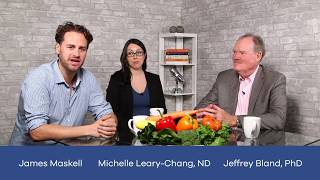
Transcript of a Big Bold Health podcast episode (guests: Dr. Michelle Leary Chang, Dr. Jeffrey Bland, host James) discussing optimizing health for conception and pregnancy. The guest shares her personal fertility losses and eventual successful pregnancy, describes using functional/naturopathic approaches (nutrition, nutraceuticals, myo-inositol, saw palmetto, insulin/sugar management) and advocates preconception optimization (≈90 days to 6 months) and group/accessible care models.
Chapters
Foreign.
Welcome back to the big bold health podcast. We are making health personal in a world of disease. And we have this week as our guest, Dr. Michelle Leary Chang and as ever, my co host, Dr. Jeffrey Bland.
Dr.
Bland, how you doing?
James, Great to be here.
I know you're excited. Well, thank you. I know you're excited about this episode. What is it about what Michelle's bringing that gets you excited about this conversation?
Energy. That is going to be the energy of change in health care because it's the type of energy that Michelle is going to bring to us. It is exemplary and I think shows the kind of next generation of health care that is focused on health and not just disease. And there's no person I could think of better to represent that new developing energy that's going to be the transformative energy for health in our system than Dr. Michelle Lurie Chang. Michelle, welcome. What a treat to have you here. And you know, you're the quintessential example of what we consider the 21st century Wonder Woman. You're a mother, a wife, a doctor, a professional person who is working and is an advocate patient care, trying to cross barriers of conversation and communication, looking at networking, being involved with those that are medically disadvantaged as well as those that are creating the new paradigm in healthcare. I mean, it's a really big swath palate to play with, but you still have only one life that's still 24 hours a day. How you doing it?
You know, I think the best answer to that is that I'm doing the best I can. Most days I feel really energized about everything that I have going on. And then there's other days where it feels like a lot. So I think that we'll talk a little bit about that. But honestly, it's really exciting to be in the middle of so many different industrial changes within healthcare. So I feel fortunate to be in this position.
Could you tell us just briefly about the points of contact you have? Because I think they're very interesting when you lay them side by side as to how they develop a kind of a network of understanding of where we're going.
Yeah, so part of my life is really dedicated to working for the Institute of Functional Medicine and U Jeff actually really inspired me to get involved in IFM from the get go. And I'm fortunate to work with an amazing group of people that are advancing not only the clinical education aspects of functional medicine, but also the research avenues and thinking about how we can really develop outcomes based research protocols to think about kind of taking functional medicine to the masses. And so that's one area that I'm involved with. Another is doing patient care. And so I'm at Vida Integrative Health, and I'm fortunate to be starting a functional medicine program there. And it's really brand new, so we're kind of just testing the waters and seeing what happens. But I do really firmly believe in the insurance model for bringing functional medicine to those who need it most. And at this time, while the insurance model is not a perfect model by any stretch, I am passionate about using my skills to be able to offer integrative medicine services to those who may not otherwise be able to afford it.
And, you know, you came up very interestingly through an exercise phys background and a whole other pedigree and another career. There had to be something that you felt as a calling where this field was going and where you wanted to be in it. You know, you also have talents now in nutrigenomics, and you've taken on that as a. An additional part of your expertise. What is it that drives you and how do you see the future that you've tried to align yourself to?
Yeah, what drives me. One of the big things that drives me is a calling to create something big. I do come from an exercise physiology background, and that was cultivated actually, back in 2005 when I started teaching Polaris Pilates and got the opportunity to be in front of people in a classroom setting and teach them about their bodies from an exercise standpoint. And that inspired me to say, wow, if I can do this as a instructor, a fitness instructor, what could I do if I had a bachelor's degree in this particular area? And what could I do if I then took that to a hospital setting? Cardiac rehab, which I did. And then what if I started a cardiac rehab program within a larger clinic? And then I did that as a medical wellness director at an organization called Pinnacle Medical Wellness. And that then took me to. Wow. Patients are being referred to me for cardiac rehab or obesity management from an exercise perspective. And I want to do more. I really want to help these people on a bigger scale. Well, I need more education. And that led me to exploring different avenues of medicine. I did spend some time at the NIH and talked to several prominent physicians at that time, and that really shaped the direction of where I wanted to go. And it led me to go to Bastyr, which offers naturopathic medical training. And naturopathic medicine, being very similar in philosophy to functional medicine, brought me to this place.
So it's Pretty exciting journey. No kidding.
Some of the context that we've been talking about in the big Bold Health podcast is really separating out the sort of disease care model and a health system that's focused on health. And so one of the things we spoke about in a previous episode was what health means to each of us. And I'd love to just get your thoughts on what health means to you, because I imagine that's evolved too, over this period, right?
Yeah, absolutely. I think health means to me when you don't have to think about it. Right. If I go out in the middle of the day and I'm living my best life and I don't have to think about my own health, then I must be doing pretty good. Right. If I am having to think about different ways in which I need to take care of myself because I'm not feeling my best, then health becomes more front and center as my priorities. And what's really important to me is that I am able to chase some of the ambitions that I just mentioned and by having health as something that I don't have to think about every day and allows me to have joy, allows me to have happiness, allows me to smile and take a deep breath and not worry if I'm coughing or sneezing or having any respiratory issues. To me, health is something that is amazing when you don't have to think about it on a daily basis. And there's a lot of people who aren't in that camp yet, but there's ways to get them there.
So let me. You know, you are kind of a role model for me as it relates to aspiring up and coming leadership in women. And, you know, we still haven't democratized childbearing. It's still a woman's thing. And maybe in the future it'll change, but right now it's a woman's thing. So you just recently had a child. One of the things that we know in our culture right now is that there's a tremendous amount of problems in reproductive medicine. In fact, the concept of reproductive medicine wasn't even a discipline until the last 25 or 30 years because of challenges that women and men are having in successful birthing. Conception of birthing. So tell us a little about how you see women. The process of conception, childbearing, and ultimately bringing to the world a new being relates to this whole healthcare movement.
Yeah. I just want to start out by saying that I knew I was going to love my child, but I did not know I was going to love him this much. As Both of you are fathers, so I'm sure you can relate to this. It is crazy to have this little being and be so responsible for them and yet have a career that you're going after. So I just want to say that from the get go, I do think that some of the challenges with being a aspiring or being a physician, also being someone who wants. Wants to have a family life that is very robust, I think that there's challenges there. And when my husband and I decided that we wanted to start a family, this is in 2017, I was a little bit ignorant to the fact that it was going to be more challenging than I thought. And what happened was we essentially started to think about, okay, what the next steps were. And I got pregnant fairly quickly and we actually lost that first pregnancy. And that was devastating, as you can imagine. And, you know, I kind of said, okay, well, it happens. You know, miscarriage is something that is very common and is not. Is not talked about in our culture, in my opinion. Enough. And then we got pregnant again and we also lost that second pregnancy. And that brought me to the point where I just said to myself, why are we not talking about this? Why is this not something that is more prominent on social media? Why are women feeling like there's something wrong with them? And I went through that period. I went through a period of feeling like I was broken. And here I was a recently new physician and feeling like, gosh, I need to fix myself, right? And ultimately it taught me that the process of going into motherhood, while also wanting to cultivate a career, made me reflect on my own health. And I had to take a step back and think about what the foundations of health were for me. And we fortunately were able to have a successful pregnancy. And my son was born four months ago. But one of the reasons I'm sharing this with both of you is because Michelle Obama recently came out and put in her book that she had some fertility challenges. And I think that that's just a really important, important thing to make women know that there's no shame and we need to normalize it. And it's important to talk about.
Did you make any changes in the way that you were approaching your health over the course of this series of events?
I did at the time, during the first pregnancy, I was working five days a week, and then also on the weekends, I ran a pregnancy private exercise therapy company still. So I took a step back from that. I decided to hand the reins over to someone else and said, I need more time. I need to take care of myself better. I put myself on a fertility protocol, and I'm fortunate enough to have the education to know how to do that. That involved nutraceuticals and certain dietary changes. And I did the same thing for my husband. And it also drove me to think about what was really important in my life. It allowed me to reflect on the priorities that I had. And if this was a goal of mine in my life, then I really needed to step back and, okay, how can I take better care of myself? I'm talking to my patients every day about this is what we need to do to kind of get you back on track towards health, towards optimization. And I wasn't living that best life at that time, and I can't say I definitively am now, but I certainly felt like it was an important time of reflection.
Well, first of all, thank you so much for being willing to share that. I think it's a hugely important message. And I'm sure that the people listening and watching this are just really moved for both your willingness to share it and also kind of the deep reflection that this is a problem in our society. And I think, as James and I are trying to develop in this whole podcast, the big, bold health concept that health is very personal. And this is one marker. Right. It's not the only marker. But for you and your husband, having a healthy child was a very big, important objective. And so health for you would surround that as a very high and important objective. For me, at my age, that wouldn't be considered an important objective. I'd want my grandchildren to be very healthy, but for me, I wouldn't be considering how could I make myself healthy enough to be able to conceive a new child. So I think that this is an important part of the whole context of personalizing our objectives of health to achieve our objectives, because they can be different from person to person. And I'm reminded, just as a quick story, that a doc came up to me, this is a number of years ago now in a seminar that I was giving in Minnesota. And he said, so, Jeff, I just wanted to share something with you that, you know, I've been coming up to your seminars for the last six years, and I've been saying how we've been unsuccessful in having a child in our family. And you gave me some thoughts about what I might be doing with my wife and I to kind of change our nutrition and our thought patterns towards this conception. And I just want to show you the photograph of our new child, Jeff. Right. Which we've Named after you, Jeff. Yeah. Was the greatest kind of compliment. Well, the go forward on this is that when Jeff graduated from college, it's been that many years now, I was invited to his graduation and he is going on in healthcare, in reproductive medicine. So the concept of how these things get woven into the texture of our understanding of the psychosocial, biomedical, environmental, nutritional, lifestyle principles that control how our genes express themselves through the function of our life is a superly important part of our life process. And that's what we're trying to get people to understand in big, bold health. Yeah.
I can't tell you how many times I've heard that exact story in 13 years. In this world of like, I was having problems, this is where we first noticed it. I was. You know, it's funny, what you said at the beginning is that if you don't notice it, then it's not happening. Right. And for, for a lot of people, this can be like the first wake up call to, hey, something's not happening in the way that it should. And then ultimately that's sort of like a moment of. Can be a moment of transformation. I've heard that from so many practitioners, from so many people who have had pregnancy as the sort of moment where it was like, okay, this is real now. And it comes back to what is health for you? And it seems like health for a certain number of people, for myself and my wife was like being able to live a life of having a child. And it's amazing how it's sort of most like, sort of like an early litmus test that most people are connected to at some point.
So I think you said something very important I wanted to ask Michelle about, because in part, what you're talking about, what we're all talking about is resiliency. Right. Building the reserve, like when you have a child, you better have some reserve because it's going to push every button and every limit of your ability to manage time, manage all the functions of daily living. So as you've gone through this process, Michelle, and it would translate obviously into how you communicate with your patients. How has that influenced how you're now talking about health to your patients?
Yeah, it's been transformational. To be honest. I, I am grateful for that experience, as difficult as it was, because I have a whole new level of relatability for women who not only have gone through fertility challenges, but also women who have lost a pregnancy. It's made me so empathetic and compassionate to the point where I really believe that we need to Just open this conversation up and continue to talk about it and be willing to share these stories because otherwise women are going to continue to feel like there's something wrong with them. And ultimately it may not be anything that can be changed or controlled. But there are foundations of health. There are ways that the body prepares an egg or sperm to be optimal and we need to get that information out. And that's what I mean by when you're healthy, you don't have to think about it, right? And I, by all different definitions of conventional medicine, I was very healthy and yet I had these two experiences. And ultimately I was fortunate to have a third opportunity and have a healthy pregnancy. But not all women are. And a lot of women are going in the direction of either giving up or potentially seeking out care that very well may be necessary. It may also be not. It's so individual. And I would never tell a woman, no, don't go consult with a reproductive endocrinologist or OB gyn. I think it's very individual, but so interesting.
Like at that moment, there's a crossroads. Am I going the disease management route? Is this a disease? Right. And if it is, should I go and see a reproduction reproductive endocrinologists and talk about ivf or is this a health issue and should I go into the health world and look at eating differently and otherwise? And I think there are so many women that are like a caught in that crossroads right there where there's two very clear paths. These are very different paths and both could have success. But one is, you know, I think. Well, what do you think? I mean, what do you think of that choice? Because now you're probably speaking to people who are on that precipice. Right.
I don't think it has to be either or I think it can be an and, right. If a woman or two potential parents decide that they want to seek out consultation from someone who is a specialist reproductive endocrinologist and they want to understand what options they have from assisted conception technology. I think that they, that can be very empowering to know that that is potentially an option for them and you don't have to feel like there's no possibilities. At the same time, I think that we need to think about the health of both parents and there is so much we can do as health oriented practitioners to optimize the body typically 90 days prior to trying to conceive, at least 90 days in order to help support a healthy embryo and having those conversations in parallel, if that's the choice of the parents Now, I have a lot of patients who may have that conversation with me before they go see the reproductive endocrinologist and want my advice on, oh, do I need to do this? And the standard recommendation is if you're under 35 and you are as a woman and you have been trying for less than a year, the recommendation is not to go in that direction yet. However, you tell that to a 32 year old busy woman who has all her friends are having children and she feels like, gosh, there's something wrong with me. If she wants to go have that conversation and understand what other options go for it. Meanwhile, let's optimize how your body is functioning and that's gonna translate into supporting your ovaries.
So give us a few examples of what that looked like for you and your protocol and what you recommend to others. What are the sort of, on the health side, what you recommend?
Yeah, so for me, I did a lot of nutrient support. Something called myo inositol was an important nutrient for me. I reduced my intake of sugar because I wanted to balance out my insulin. That was another factor. I used something called saw palmetto which helped lower testosterone. I had a particular condition called PCOS and that was contributing to, or it very likely was contributing, contributing to what was going on with me. And so I wanted to optimize my body to not have as many different follicles in the ovaries and to really focus on a dominant follicle that could nurture a healthy egg. Ultimately, majority of mutations, chromosomal mutations from the mother is just at random. But there are ways that we can help again, support the body to produce healthy DNA within that egg.
Can I speak just for a second? I think you've really hit on a specific example that exemplifies what we're trying to get across in big bold health. And this is a really kind of a seminal moment and I appreciate you kind of taking us across this threshold. So let's look at PCOS just for a second. Polycystic ovary syndrome, Right? It's not a disease, it's a syndrome. And in your case, you're a healthy, fit, exercising, nutrition conscious person. The traditional woman who has PCOS would be a woman who is reasonably elevated body mass index. So she's a little overweight, she's got insulin range resistance, she's got blood fats that are disturbed, she's got inflammation and she's got, you know, some problems of hyperandrogenicity, of too much testosterone. So we start looking at that Kind of the way that she would look. Well, you would, you would not think of you being that architecture. Right. But it's individualized and it's unique and it's personalized. No one template defines the individual. And this is very important, what we're trying to get across, because we need to read ourselves and then match it against what our health aspirations are. It's not somebody else that we're matching against, it's ourselves. And I think that this is a very, very instructive moment because you then took charge, you were not a person that would fit into the standard definition of a PCOS woman. But you said, okay, you're going to give me a name. But that really is irrelevant. What's really relevant is I want to tune up to my maximum capability to provide the opportunity that I'm going to have a healthy outcome in my pregnancy by doing some adjustments. Right. Some tuning up. And I think that's what we're trying to get. And that's not medicalizing, that is healthizing. Right. And there's a difference there, as James is pointing out, that that crossroads. You were healthy, healthizing, you weren't medicalizing. Right. So I think that's a very important lesson.
If I could synthesize your career into one concept, that could come from this as a way, a big, bold way of solving this problem. You know, you talk about how functional medicine is going to make it to the underserved. And a lot of times we've talked about making groups of people. And one of the things you see in pregnancy is that post pregnancy, when people have young kids, mothers that now get together and you're grouped by literally like, how old your kid is. Right. That's one of the things that I saw. My wife's friends were people whose kids were the same age. No other reason, just that they were in the same age. So in the same Pilates and knee class or otherwise, a preconception group visit, right. Where you have group of people working together. Because I feel like there'd be so many questions that would come in that, that would help everyone understand and then to put some. Someone in that visit who, like yourself, has gone through that journey and can answer questions from the other side. I mean, you happen to be a physician, but I know in that group setting, the person that's done it is ultimately far more credible than even the doctor, you know, in that case. So, you know, give that. That seems like that could be a good plan, Right?
I absolutely agree. I think that there are so many women who, whether they are ready to have a child now or in five years. There are foundations that we could teach in a group visit that could optimize the way that our reproductive system functions. And I think that the majority of young reproductive age adults focusing on women, but men too, who have an interest in having children in the future, future could benefit from something like that. And you know, there are so many different ways in which we can affect positive pregnancy outcomes that are non invasive. And I just have to mention I have a good colleague and friend that is a physician as well. She runs an Instagram blog called Functional Fertility and really advocates for exactly this promotion of health and learning about your body through explaining different hormones and having women know what's going on with their ovulation cycle. Some women don't even know how to track their ovulation. And that's something that we could teach and easily teach. And perhaps for some women, they say, no, I just want to see if it happens. And that's fine too. It's a very personal, personal choice. But for those who want to have a little bit of control in pregnancy, there's very little you can do once conception happens. It's really out of your control in a lot of ways. And then once the baby's born, even more so. But there are definitely things we can do to optimize, optimize health in those preconception months to years.
And is there a triggering moment where you could be like, okay, this is the moment when you should start doing it? Because like, like you said in a previous episode, Jeff, you know, prevention of issues in a pregnancy is, doesn't become real until you have issues in the pregnancy.
Right.
So you know, is there a moment where you could be like, okay, everyone has to have this group visit.
I like to recommend at least six months prior to trying to conceive again. It takes about 90 days to have an egg go from the time that it's going to be chosen to be, you know, to the point where it's released to be fertilized. And I think that there is a lot of opportunity during those six months to think about ways to improve health and to improve, potentially improve pregnancy outcomes. Now, I do want to mention I don't treat pregnancy. I am not a perinatal practitioner. However, because of my experience and because of my training in functional medicine and naturopathic medicine, I do feel like there's a lot we can do as a preconception time period.
Yeah, it's interesting. Just think, you know, coming back to it as well is that there's been a medicalization now, sort of like almost like a demedicalization, because this role traditionally probably would have been grandma, right in the, in the community setting. The grandma knew how to work this kind of stuff out. So it's interesting to see it coming back. Well, look, I really appreciate coming to share this and be vulnerable with the story because I know just like you said with Michelle Obama, being vulnerable, vulnerable about it is helping a whole new group of women be vulnerable about it. And now you sharing this here. You know, we wanted to talk about things that matter and we want to talk about what health means to people and making it really personal. And I appreciate you sharing your own personal story. And I think this has been another great episode of the Big Bold Health podcast. And thank you so much for this.
Is Big and Bold. Thank you so much, Michelle.
Thank you for having me.
Thank you.
Thanks for being with us here for for the Big Bold Health podcast, Making Health Personal in a World of Disease. We've been with Dr. Michelle Leary Chang and also my co host, Dr. Jeffrey Bland. Thanks so much for watching. Subscribe everywhere you find podcasts. We're on itunes and stitcher and everywhere else you download your podcast. Thanks so much for listening and we'll see you next time.









