Functional Medicine: An Iconic Conversation
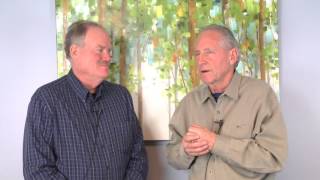
Jeffrey Bland and David Jones, who founded the Institute for Functional Medicine, talk about building a clinical approach focused on root causes instead of organ systems and drugs. They describe their frustration with conventional medicine, the decline of primary care, and why investigative work in that space matters.
Chapters
Can you believe the great surprise and privilege that I have to introduce and talk with my colleague and brother in arms, Dr. David Jones, one of our co founders of the Institute for Functional Medicine, some more than a quarter of a century ago? David and I have had some fun today, just kind of reminiscing, reflecting on how we got to where we are, where we are today and what we're up to here moving forward. It's been a really extraordinarily robust and kind of heartfelt nostalgia as to how the functional medicine model really emerged. So, David, you know, they've heard a lot from me on these videos over the years. Maybe they'd like to hear from you. How did the functional medicine actually get started? You can tell the real story.
Well, I imagine you've already told the real story. But the way that from my perspective, it all started when I sat at my desk at the end of a clinical day and looked at the list of patients and realized by that time I had been in practice long enough to see the side effects of using acute medicine for chronic illnesses. And this patient, this patient, this patient would have been better off had they not come then looking at the day after and saying, who should I call? And tell them that I don't have the tools to really address the immensity of the suffering that they often feel and the lack of tools to really address that suffering. So I started looking, and fortunately, that's when we met. And we were both young professionals, young professionals with very strong opinions. People call us other things than strong professionals. And we joined together and we started asking the question, is there another way to dissect apart the causes, the underlying causes? Because basically, as time went along, it became obvious that the reason that doctors interrupt patients in 15 seconds is that they have a heuristic that they're taught. And the heuristic is find out which organ system is having the most trouble. Look in your PDR and find out what drugs are there for that problem, and you're done with your work for the day with that patient. And my experience was making a diagnosis was important, but that's when the work began. Because why did this patient have that?
Yeah, I think that's really an unbelievably good example of what I've learned from you over the years. I think that sometimes you're just fortunate enough in life to meet by happenstance, if there is such a thing, an individual that complements your skills and your insights and views as a human being and makes you better than what you would have been in the absence of meeting that person. And that has been the nature of my fortune of having met you now, 30 years ago, that you brought a whole new worldview, a whole new kind of way that I see the world from a kind of a clinical perspective through my lens that allows my skills in the area of kind of basic science and biological sciences to be better focused. So I think it was that relationship that really birthed the spar and peri and the intellectual dynamic that became functional medicine.
Well, I know from, if you take my stand in my shoes like I am right now, these are shoes I'm standing. The same is true for me because I came through medical school and we basically, when we got to the clinic, they said, well, don't worry about the pathophysiology that you learn the first two years of medical school. It's not useful. There's a heuristic. You find out where it fits, what organ system is having the most trouble. I mean, I got scolded because I spent an hour with a patient that was about to have a valve replacement. And the cardiologist said, you'll never be a very useful doctor. It took you an hour or two. I said, well, I wanted to know how this happened. What was the underlying. What was she going to do when she came out of the hospital? Because there is that information about you do best if you know, if the patient knows what the problem is and is inspired to be there, they end up. That becomes more important than a lot of things we think are important. And I wanted to know about that. And he said, well, that's a waste of time. And if you come back on my ward, try to remember this is cardiovascular ward has to do with the diagnosis and cardiovascular. And you don't need an hour to do that. And you knew that we were going to do surgery. So I think you need to get moving along a little faster. And fortunately, he just made me mad.
Well, you know, I think historically people would have called us probably young turks for that reason, because we had a low tolerance for not getting answers to questions that we were asking. And so that pursuit of that lifelong learning has really characterized probably both you and me and has characterized the Institute for Functional Medicine, which is on a seeking mission, no question.
Yeah. Well, I think one of the interesting things we talked about today was the issue of primary care and how it's been demoted in so many ways. In The United States, 80% of primary care entrants into postgraduate post medical school programs are foreign trained because our graduates want to go into the high end specialists, specialties because they make more money. And you ask me the question, well, what would you do now if you were at that same place? And I know that the ent, when I rotated on the ent, they really put the hard rush on because I was an honor student. And I said no. I think Dr. Well being is much more attractive that you would have that relationship. And it's only over time that I realized that I haven't suffered from burnout because that interplay of investigation together is an energy positive experience. When you see the excitement and the re. Enchantment of, and the belief that what they aspire to be, you could help them be that person. Whereas in specialties, it's usually the functional knee or the functioning wrist. And if I've had those problems, I've been glad that there's people that want to focus that narrowly. But that wasn't what I wanted to do. And then me and you, then we really started raising the ante. We began to realize that there was no domain of human experience that didn't need to be investigated.
I want you to share this with people coming up that maybe kids, children that are aspiring to be in medicine or are looking at a certain level in their career development, that they're looking for places to make a difference, to have purpose. Dr. Jones is talking about the esteem of really being a good doctor. And we like to think that's what functional medicine is, a tool to help provide.
Well, I know in primary care, one of the reasons you revered is you've given us tools. I mean, the science is so important to understand how something works. Now, if you don't put that in the context of how that patient works in the bigger sense, then you can make a lot of mistakes. But if you put those two together, the physician, scientist with the clinician, healer, then you have the ability to go into a room and say, bring it on. Let's find answers here. Let's do it and let's do it together. And it gets exciting. It's not a burnout because before I can remember, before we started working together, it got to be really tiring. I was the answer man. You're kind of trained to do it to the patient, ask the questions. If they get into areas that you're not familiar with, you divert it back to a very simple heuristic that gives you a drug to give. It doesn't help the patient. I was sitting there at the desk going, mildred and Bob, they shouldn't come here because David doesn't have anything real and authentic to give him. And now we do.
Do we ever. And I want to thank those of you that are listening. This is a pretty special moment for us to really reflect on 30 years of watching the field evolve around us and feeling like we've had a chance to see what the blending of two worldviews does to create synergy. So, David, thanks a million.
A pleasure.









