Herbalism, plant-based, the next generation of health | Rachelle Robinett on Big Bold Immunity #31
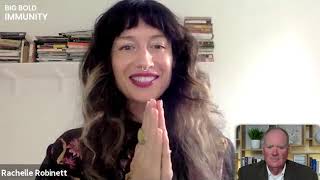
Herbalist Rachelle Robinett talks about her company Supernatural, which sells plant-based remedies and runs a tea shop and apothecary in Brooklyn's Industry City. She connects personal health to planetary health through an artful approach to herbs and food medicine.
Questions this video answers
Industry City (Sunset Park, Brooklyn), 2543 Sixth Street
ursupernatural.com (email/handle referenced as supernatural@ursupernatural and ‘u r supernatural’ domain)
Chapters
And it's not, you know, it's less of a relationship and less record and more recognizing that we just are a part of the natural world. And we have, you know, are progressively forgetting that or progressively becoming disconnected and not understanding how we actually relate to, you know, the light that's coming in through the window or the water that we're drinking or the food.
Welcome. Big bold immunity. Oh, this is such an important area for this time and age. And how we approach the concept of immunity goes well beyond that of colds and flu or even SARS cov2. It goes into the whole of how we're living. And today we have the privilege of having a discussion with an extraordinary energy. A person who really has a vision has the inherent kind of magic about how you take this information, create value out of it, and then repurpose it out to people for their value. We're going to be talking with Rochelle Robinette, who is, I think, an amazing guide, a woman who is coming up in the world with her advocacy. And I think all of us can draw both energy and example from her message and her experience. So let's move into our discussion with herbalist Rachelle Robinette. Well, here we are, and I'm so excited to be part of this big bowl health podcast experience with Rachelle Robinette. Let me just say a couple of preliminary words before we have the pleasure and privilege of getting Richelle involved. As you know, this whole field of healthcare has been a long standing passion of mine, going back now, I hate to even say it, more than four decades. Hard to believe, but I've had the privilege over those years of meeting many, many people. And what I've come to recognize is that this wave of health vigilance and health advocacy is really carried by and driven by leaders who have a certain energy, they have a certain vitality, they have a certain perspective, they have a certain sense of community, they have a certain de joie de vie about them that is infective and infectious and brings people with them into this world of self regulation, of people taking charge of being part of their own life experience in which they're not a victim, but they're actually orchestrating their life. And what I've recognized is that the generation that's coming up now behind me, and now it's two generations behind me, are individuals that have an extraordinary vision about what the world should be and how it could be and how to make it that way so that we restore and renourish values that can lead to perpetuation of survival. And flourishing of joy and bliss and great opportunities for achievement over the course of years to come. And one of those people happens to be Rochelle Robinette. So that's why I'm so privileged to have her in this discussion. And I've known Rachelle for many years. I won't say how many, but let's just say it's more than a few. And she has grown up to be an incredible force of nature in the natural world. She's an herbalist, She's a nutrition expert. She's a personality. She is an entrepreneur. She is a guide and teacher. That's a pretty reasonable biography just to start with. But we could add a lot of other things on to what she is. An individual whose personality will illuminate by her own presence. So with that introduction, Rachelle, thanks so much for joining us on the Big Bull Health podcast. And I can't think of anyone that may better represent Big Bull Health than Richard Rachel Robinette. So let me start in the. In the usual place I probably should. What brought you, with all of your talents and background experience into this field and keeps you as a person who's so dedicated to its evolution?
Well, I mean, firstly, thank you so much for that introduction. That was definitely my favorite ever. So I'm glad it's recorded. I really appreciate it. Yeah. Gosh, what brought us here? I think that there's a combination of factors from growing up in a very health aware home. Both of my parents, in different ways were very much in medicine, in western medicine, in natural medicine and nutrition, and in just having an interest in the way that the human body works and the way that the body and the mind work together. And, you know, we would bang our knee or get a bloody nose or get a headache. And it wasn't quick, let's fix it. It was, why, you know, does this thing happen? Why do we have this symptom? What is your body telling you? What can we learn? What's happening here? And I think some of those lessons ultimately did bring me to where I am now. It's a sort of curiosity and this perpetual sort of interest in the way that the body, mind and the natural world all work together. I think it's also the need in the world that drew it out of me professionally. So I was not, I was not intending to be an herbalist. I came to New York to work in fashion. You know, I was not intending to be sort of in the health and wellness industry. And I used to have conversations as a kid with my dad, you know, sort of Vehemently, like, I don't want to do that. That's not what I want to do. I want to be creative and artsy and do this other stuff. But I had a knowledge that I was using personally and have been using my whole life, and the world wanted it. You know, they said, can you please help me? Can you teach me how to eat? Can you teach me how to use these herbs? Can you share what you know? And after hearing that enough time, I said, okay, okay, yes, you know, and. And began Supernatural. That's the very short story. But I would say being steeped in it from a young age, practicing it personally, you know, with extreme dedication for as long as I can remember, really. And then having the world say, we want some of that versus the coming out of Supernatural, which is my company.
Well, you know, I think you said so many really important things there that I just want to highlight, the first of which is listening to what the world is telling us. You know, I think all of us as we go through our life experience, get messages from the universe that kind of help guide us if we're willing to listen. But often, you know, we're so busy with our own sense as to what's around us, we don't hear these broader things that are coming to us that might be enlightening and maybe frame shifting and maybe, you know, miraculous alternatives or options for us to explore. And I think it takes a certain kind of personality to be open to being a listener while you're also focused down onto doing the work of the daily job and whatever you think your task is. So I want to compliment you on your capability of still maintaining from your artful perspective what the world was asking you and telling you and also reinforcing in you that you're good at and kind of giving you that. Add a person, go for it. That's number one. Number two, I think to move from the west coast to New York, which is a great laboratory for self development and experience and exploration and pathfinding. But not everybody who comes into that environment has a successful experience. So what do you think allowed you to be successful in making that transition from a West coast, maybe more simple universe to a more complex social matrix?
Oh man, it was rough. I'll say that New York is not easy in the sort of getting to know process. The only thing that I can think is just pure grit. To be honest, I had no friends, no job, no like long term place to live. Just that story of two suitcases and a lot of ambition and it really kind of tested those early years really tested like, how bad do you want this? You know, how much do you, do you really have in you to kind of make it here? And I think it was just that. I think it was this, this grit that is partly nature and partly nurture. I definitely have both been taught it. We grew up on a farm. You know, we learned hard work, we learned to sort of find the limits of what you physically and mentally are capable of doing. And I think the combination of just like the day to day sort of survival in a place like New York as a young person with no real safety net and then the simultaneous, you know, I'm not just trying to get a job to pay rent, which I am, but also like I'm here to do something. And that became kind of of what I'm doing now. And that's taken, you know, I've been here for 11 years or 12 years now, and it's like finally kind of coming to its full fruition. And that's a long, long path of dedication which is obviously not over, but it's, you know, it's like the first flower now is what it feels like.
Well, I think it's more than the first flower. I think you've got a pretty good garden growing there, but hopefully it's perennial as well as annuals. Right. So let's talk about how you landed on your entrepreneurial focus and how you named your company, because all of that is part of your identity. So how did that happen?
Yeah, it's so funny. The company has even affected the way I dress now. I wear herbal fashion. So it did go through a few different, not a few, but a couple of different variations. In the beginning, I originally the company was just rx, you know, sort of like the prescription rx. And that was kind of an early branding exploration that I had. And then fairly soon after that, I think when we became a little bit more official, I, I, it took a long time to come to the name Supernatural, which is funny because it seems, it just, it makes sense and it, you know, it's a great name. We're trademarking it and you know, all those important steps, which is hard to do with a name like Supernatural, but it actually took multiple brainstorming sessions over the course of many months with a couple of different people that I really respect to articulate what exactly are we doing here. And you know, in the early days it's, it was not as clear as it is now what exactly are we doing here? And you know, I think that Herbalism and nutrition and holistic health and functional medicine are so many things that it can be hard to put a label on it. You know, my title has changed so many times. Holistic health practitioner, wellness coach, you know, all these different things. Because we are talking about nutrition and we're talking about herbs and supplements and lifestyle habits and all these different things. But Supernatural really represents, you know, obviously I don't even think I have to explain Supernatural, which makes it, you know, it's a good name, people get it. But you know, I am working with the natural world and primarily with plant based remedies, food and herbalism to help people be super. Well, you know.
Well, you know, it's interesting to me that the name or the title or the word supernatural can connote multiple things to multiple people. Right? Which is really kind of cool because a person can read in their own kind of perspective. So supernatural could be above natural, it could be the best of natural. Right, that's one kind of literal translation. Another is it could be beyond natural, it could be in the hereafter, it can be in the environment of the ether of the ID that we don't understand. And it probably draws people from both philosophical camps, I would imagine, doesn't it?
Yeah, yeah, it does. And they're all welcome here too. And they're all very welcome in the herbal world. Because I think herbalism, you can take a very functional perspective where you can be much more interested in the mystical or energetic or supernatural realm of the plant world. So it works for everyone and this works for everyone.
So tell me a little bit about how a person would connect in with your company.
Yeah, let's see. So I would say most people find us online first these days. As you know, I have an Instagram following. We have both one for Supernatural and myself. And so people tend to find us there. We also have a weekly now newsletter which is really popular. So a lot of people are linked in digitally. So that getting a lot of kind of advice there. And then we do have the physical cafe. So we have basically a tea shop, an apothecary, a wall of herbs, and this really great space where you can come in and see and touch and feel and taste all the things that we talk about online. You can, you know, get custom blended herbs, you can shop all the products that, you know, I recommend all day long to clients and classes. It's a really nice physical, you know, presence for Supernatural or you can do that all online with our online shop, with online classes. So there's very much, there's more of supernatural online than in person. But if. If you're in New York or Brooklyn, then you can could buy the shop and meet us there. Yeah.
So what's your address?
Our address. So we're at Industry City, which is a really big little mini. It's like a mini city in Brooklyn. Our address is 2543 Sixth street, but most people just know Industry City is the destination. And then you can find supernatural there. It's in Sunset park in Brooklyn.
Awesome. Well, congratulations. That's a huge. I know it's a step along the journey, but it's some pretty good steps you've laid down there. It's very exciting. So let's. Let's jump back now a little bit to our shared enthusiasm, advocacy, and work for this concept of regenerating the planet and. And the plant world as part of what I think is a planetary immune system. And when we look at from a big board health perspective, and people have asked me, so, Jeff, you know, you've been around here for a lot of decades. Why are you doing something like this? I mean, can't you just kind of sit as a senior citizen and weigh in on opinions and why would you start a company, Big boy Help? And my answer to that is fairly simple. And that is, first of all, in four plus decades of doing this, I feel like I have a payback because I've really been so fortunate to meet and be impacted in a favorable way by so many remarkable people in my 6 million miles of travel and all the things that I've had the privilege of doing that I feel that comes a little bit with a payback to hand off what I've learned that might be of value to others. So that was number one. But number two, I felt that having started off as a professor of environmental science and chemistry at the University of Puguget Sound in 1970 on Earth Day. That's why I was hired, actually, was because they were trying to find a professor to start an environmental science program out of the chemistry department because it was Earth Day's first year and they wanted to be part of that rising academic opportunity. So I started started as an environmental scientist and chemist at the University of Puget Sound. And over the years, I found that those two things really served me very well in the 13 years I was a professor there and teaching both on the biochemistry side and the clinical medicine side and also teaching on the environmental science side, that they actually married themselves together in my mind as a healthy planet, healthy people, and vice versa. So now, now as I see what's going on in the world at large and have become more understanding of the important role that the immune system plays in how we 24 7, 365 as people defend ourselves against things out there that might want to take advantage of us. Not just SARS Covid 2 and not just cold and flu, but all sorts of things. Chemicals and toxins and toxic emotions and all sorts of things. All of that becomes part of my belief that the immune system is kind of the center of the locus of control of health, because it's something that's sampling our outside world 247 and it changes every two months. Our immune system is reborn. People don't understand that two months from now, the cells that we call our immune cells will be different than the ones that are today. So will they be as good as, better than or worse than the ones we have today? That's a question. And we can reform or remake the immune system based upon how we treat it and how we relate to it. So with that as a concept, when I was waxing philosophical, as I often do on a Monday morning after going to a meeting, my colleague Trish Urie, who has worked with me now for over 25 years now, said, jeff, you know, it's really great that you're always on your soapbox here when you come back on Monday, but, you know, you're a big guy. These are bold ideas. You know, maybe you need to start another company called Big Bold Health and really give you a platform to talk about this. So that became for me, the start of this some two and a half years ago. And then from that it led me into two things that I have been intimately involved in, as I guess you call them hobbies. One is Alaska fishing. In the Alaska fishing community and Alaskan native populations, boating has been. And kayaking and exploration has been my kind of family hobby. And now my kids are involved with that, and now their kids, my grandkids, are involved in it. So we're all kind of Alaskan adventurers. And the other is agriculture and food production and sustainable agriculture and organic, which I've been involved with for 30 some years. And so I thought, could I marry those two together in such a way to make them tools for Big bold health? And through that then led to a series of what I call coincidences. They probably weren't coincidence, but serendipities that led me into Himalayan Tartary Buckwheat led me into a sustainable fish oil product. And we built the first pharmaceutical grade plant in Dutch Harbor, Alaska. And the Aleutians and So now here I am back in the, in the commercial world. But my advocacy has been around nurturing the planet and connecting the immune system of the planet to the immune system of people in a harmonious way. So then that led me obviously back to you because although you've taken your own individual approach, our approaches do converge in terms of what we're trying to accomplish. So with all of that long winded hot air that I just expressed, tell us a little about your mission and how this connects, this concept of regenerative agriculture, natural herbal products, how it connects into your philosophy.
Yeah, yeah. Oh gosh, so many things to respond to. Firstly, I mean, the Alaskan salmon, I just, I grew up on that and to this day it's the, it's the epitome of, you know, of a perfect food. You know, I'm. That surprises people because I'm, you know, a plant based advocate. But man, this wild molasses salmon, it's caught well and respectfully. I just don't know if you can beat that. So. And it's, it's really neat to hear your more of your journey. My mission is to help people to understand their own health better, their own body and mind and that relationship and absolutely that full relationship to the natural world. And it's not, you know, it's less of a relationship and less record and more recognizing that we just are a part of the natural world and we have, you know, are progressively forgetting that or progressively becoming disconnected and not understanding how we actually relate to, you know, the light that's coming in through the window or the water that we're drinking or the food. So I really want to both empower people to be able to live in their body, mind, environment better. I think that happens through simplifying so much of this information and just making it accessible, making it cool, making it inspiring and, you know, practical. And this stuff, you know, we're in it every minute of every day and it's not an indulgence and it doesn't have to be an extra thing. Like it is the stuff of life and it can be preventative. It can also, you know, reverse a frightening diagnosis. I mean, all these things, you know, and I just, I want to give that to people and do, you know, do give that to people and they get a little taste of that change. And from there it's like the whole world opens up, you know, when you can feel the change, you can see the change. And a lot of times people have been, you know, trying for so long and kind of stuck And I think that we again, try to simplify and make it really practical and also make it relate directly to this world that we're in all the time is what really helps. And for me, yes, it's plant based. You know, this is, this all does come back to nature. And it's really just that we are all, we are all that system. You know, we get ill when we get disconnected or kind of don't understand how to, how to relate to each other. Did I answer your question?
Yeah, I think that's. Well, first of all, you know, these great questions of life never have complete answers, right? What I find is that they are answers in process because each day we learn a little bit more when we never learn enough to be complete. Unless maybe we're some Zen master, maybe. But for most of us, we aspire to learn more each day towards some kind of a self realization, self understanding. And I think that this construct that you set up and how you're doing it to me is very enlightened. I mean, I wish I have granddaughters coming up and I'm hopeful my granddaughters will find in their lives as they become young women. Well, they are becoming young women as they become older young women, that they will have this advocacy to take the things that they've learned and been exposed to and had opportunity to integrate in their lives and take that out to their broader constituency. Because I think it's that advocacy. And I believe also that we are in an epic period where feminine energy is going to be really, really important for the healing of the planet and for the reconsolidation of, of global communities. I think that, you know, there was a time probably where the male energy that's driven by one pentacyclic molecule, testosterone, was advantageous because a lot of stuff that was done was manual labor and moving stuff around and picking stuff up and pushing stuff from one place to another. And, and maybe there is, I mean, we could probably, probably is arguable, but I think there might be some advantage just from a mechanical musculo strength basis for the male with the higher testosterone levels and greater muscular strength to survive in those kinds of environments. And so maybe there's something about maleness in early stage societal development. But I think over time, and certainly in this time, different kind of energies become very important. Cooperative energies, energies of collaboration, energies of deeper thought and communication. Maybe less the specifics of the piece parts and more of why the watch works as a watch rather than worrying about each of the springs and gears. And so I think that this period of time in which we start talking about the complexity of the world as a guide to the simplexity of our life, that concept of simplexity. So we absorb complexity to understand how simple our life can be if we get rid of a bunch of garbage out of the house and we clear out space to really be free living. And I think that's what your teacher teaching and that's what you represent. And that's to some extent what we're trying to do in Big Bold Health. We're trying to redefine health as being big and bold and owned by the individual as to what their definition of health is. And it may be different than someone else's for one person, it may be, I want to run a marathon. For another person, it might be, I want to go to my grandchildren's college graduation. Or it could be many different things that define our health. But to define it and then provide an access to it so that it is big and bold in its achievement is a mandate for Big Bold hill.
Yeah, yeah, I love that. And I love that that's what comes through about Supernatural. I think that's very much a personal priority too, which is this creating space and creating the simplicity and. Yes, kidding. I'm thinking about so many things now, from the physical clutter to the digital clutter of this, you know, world that we live in, all the intakes that we have and really just reducing it to. Funny enough, you know, some of the things we've known all along are responsible for our health, which come from the natural world.
So I want to acknowledge the art style side of your being because I think, you know, as I've grown up. My sister is an artist. She's a commercial artist. My grand. Not my grand. My niece. Her daughter was a Berkeley Fine Arts graduate and is quite an artist in her own right. Has done illustrations for children's books and is really skilled. I wasn't granted that talent in terms of the visual arts. I thought of myself more, maybe hopefully a little artistic with words and languaging. But I was not a graph kind of artist of the same type. But I've always admired it. And now what I recognize is that everything is art in life. If you see it in the right way. Everything fits into an artful framework. And the more that you can accentuate the art component of it, the more it speaks not just to your inductive reasoning. It speaks to the deeper sense of where we are, our soulful being. And if you really want to have impact in this world, you can't just speak to the frontal cortex of the brain. You've got to speak to the deep emotive parts that drive people's behaviors and their belief systems. And that is somewhere in their art center. It's somewhere in their soul of art. So you're a very artful person. And the reason I know that is not just because you've told me that you are, but because I look at how you present yourself on your podcast and your social media. I also saw what you did recently for us with our big bold health tartery buckwheat flour. And I thought, man, that little kind of video compilation you put together of the different recipes that you mixed, that is really artful. So where does that come from? That's cool. Cool.
Where does it come from? I think it's. I think it's also nature and nurture. I do. You know, I have, like. I'm thinking I have certain relatives who are poets and can draw. I can't draw for anything. But, you know, I always loved making potions, and I do write, and I love taking photos, and I had all these different sort of artistic explorations. They're sort of in my. In my person. And it was a little bit of a problem when I was younger. It's like, well, what do you want to be when you grow up? Because you can't be all those different things. And, you know, ultimately, I went to business school. My heart wanted to be an artist, but I went to business school. And so now what I'm doing is integrating, you know, my whole person in this current, you know, space, which is supernatural, which does allow me to be artful. And I mean, just as an aspi, working with plants and with beautiful food, that's. I mean, to me, that is. That is art all day long. Like, it is just gorgeous to, you know, cut open the rice, mayo or brew rose petals. And, like, I have my face in that stuff all day, which is total joy. And so I think just turning it around, you know, thanks to social media and letting people see the recipes that I am playing with or the herbs that I am, you know, making, that I'm formulating or whatever it is gets. Gets to. It gets for me. I get to combine kind of a love of nature, a love of the art of photography or video, the recipes and the real magic of making, you know, food medicine or herbal medicine. And then again, thanks to digital, now we can just kind of put it out in the world, and you can all see sort of behind the scenes, but it comes from yeah, kind of a combination of being truly obsessed with the beauty of what nature produces. And then we get to eat and drink and, you know, see and smell and also having part of my, you know, person still want to be an artist, which I fully intend to do.
Well, I think you are. I don't think you have. Your intention has been met. It's just a question of how you're going to grow that up and expand it over time. But one of the things that struck me was really, and I'm sure you noticed this when you did some work on our Himalayan turkey buckwheat flour, and you produced some really beautiful products, some recipe products from that. I'm sure you noticed that as you started to work with that particular flower, as contrasted to other flowers, it undergoes color changes, right? Yeah, it undergoes color changes. And, you know, my left hemisphere, my brain, my chemistry side, says the reason it undergoes color changes as you add fluid to it and other ingredients, that it then activates specific enzymes in that live flower because. Because it's very live. And those enzymes start pre digesting some of those flavonoids into other compounds that become very bioactive and they have colors to them. So I'm sure you've noticed that it actually, the fresh flower has one color, but once hydrated and it sits around in the bowl for a while, it becomes another color. And then if you put it in the refrigerator and put a cover on it and come back a few days later, it becomes another color because it's actually undergoing a live process of generating downstream secondary metabolites from these polyphenols. So it's a really interesting example of art and science kind of being seen.
Yeah, yeah. And I think just like, you know, and I didn't know that that would be the cause, but. But now knowing that or hearing that and sharing that with people like that is so inspiring. And that alone, you know, would convince me to have more of this flower and less of any other flower. You know, it's. I think, I think the ability to share again, kind of the magic of nature. It does. It does a lot of the work for me at least, you know, just communicating this is what's actually happening out there. You probably want some of it. People are like, yes, I do, actually. You know, so.
Well, you know, to me, when. When I started playing around with that particular seed, it's not a grain, it's a seed. I was amazed to see that so much of its genes are dedicated to producing nearly 100 different phytochemicals. And then I started asking the question, well, how does that compare to a common buckwheat? First of all, it's a shame that we call these things buckwheat, because putting wheat in the name suggests that they're some relationship to wheat, which they're not at all. They have no genealogical connection to wheat at all. But anyway, that's the way the name happens, so it's stuck. So I asked the question, what's the difference between common buckwheat and this tartary buckwheat that we've been using and developing? And it turns out out that the genes of the tartary buckwheat, although they have similarity to common buckwheat code for producing more than 60 to 100 times not percent times as much of these phytochemicals as common buckwheat. So then I asked the question, well, why would a plant spend so much of its energy to have genes that made so much of this stuff? I mean, it doesn't do it because it doesn't have anything else to do with its life. It, it does it for a reason. And so then you go back to its history, knowing that it's been consumed as a food for about 2,500 years. It's a lot longer age than that. And it grew up in the very hostile Tibetan, you know, Himalayan mountain region, southern Himalayas, and under very hostile conditions. And to survive, it didn't get irrigated, it had to sit up in the sun and get sunburned. And it had pests and it had all these actually grew in very bad soils, very high aluminum soils. So it turns out that it developed genes that detoxify aluminum. It produces all these plant insecticides that are these polyphenols that keep insects from eating it. It has anti sunburn cream built in that are these flavonoids. And it basically survived against all hostile elements that would normally have put plants in that environment that wouldn't survive. So then I asked the metaphorical question, well, what is that plant really doing? And what it's really doing is it's evolved its immune system. And if it's evolved its immune system, then what happens if we eat that plant? Because those things speak to our immune system. It's really kind of an interesting network of thinking of how we're interconnected in this whole cycle. So all of that to me was. It just drew me in. It became my big, bold health kind of. Okay, this is a metaphor to everything we're trying to do.
Yeah, absolutely. It's your math thought. Fascinating. And I mean, as soon as I started down this sort of plant path, obviously I'm hooked because I think that nature is just full of, you know, stories like that, that planet clearly, you know, exceptional. But I think that the herbal world, which is really just the natural world, has so many, so many similar kind of stories.
Well, now tell me when in our few minutes remaining now that you've. You've hacked your path into the. Into the forest of the unknown and you've laid your first stepping stones. Well, not your first many of your stepping stones. Where do you see your journey taking you? What's your big dream? What's your hairy, audacious goal?
Yeah, so I just want to bring this to as many people as possible. I am scaling Supernatural in every direction that we can to be, you know, not less one to one, but more one to many and bringing, you know, all of our education online. We have more and more online classes. There will be a book or books in the future. Our product line is expanding quite quickly and for the most part, you know, right now it's about up and out and just getting in touch with as many people as possible. I want, you know, I want to empower people to understand their health and be able to navigate this space, connect with nature better every day. Well, I think doesn't seem so unreasonable, you know.
No, I think it seems very reasonable. And it's going to happen just by your energy, your force of nature and your commitment. But I think you said something there. That's a really a watchword for all of our viewers. I have distilled down a philosophy of life into two alternatives. One, you've already expressed very, very well up and out. The other is down and in. Down and in versus up and out. And under those two very gross headings, you can put all sorts of subtopics. But if you're in the down and inside, it takes you in a certain direction. If you're in the up and out side, it takes you in a different direction. Now, it has been my thought that we as a society right now are caught a little bit too much in the down and in. And we're in a do loop of the down and in model. And we can see where it takes us. It doesn't take us into a good place if that is your only vision of your future is down and in. And I think what you just said is so prescient and so informative that we need to find a way, each one of us individually, as to what helps to take us up and out. Rather than down and in now for you, your passion has provided a vehicle for not only you, but many others to share that vision, to find an up and out route to express our goodness. I think there are a lot of people who are on the down and in path and what it is forcing them to do is not express their goodness, but express their angst, their anxiety, their anger, their rage, their frustration, their feeling of inadequacy, their feeling of being lost. And when you're in that do loop, I believe that it takes you into a place over time that is not going to be in the best interest of getting the full expression of what your genes are capable of doing. For most of us, we're given this legacy, right, our book of life, and it's up to us to figure out how we're going to read our book of life in our genetics and what it's going to become as we grow up and go on. And I think that this model that you just described that is underpinning your business and your philosophy personally, up and out is a. Is a model that I hope everyone listens to that's watching this podcast.
Yeah, me too. So well said. And I have to say I also really appreciate your continued reference to health as, you know, individual and therefore relative. You know, there's a lot, especially as the wellness industry has become, you know, this big machine, all for the better, but mostly for the better. But to understand that it's not so much about what the industry or the trends are dictating, but individually we can all improve our health, have our health change the path that we maybe were starting on. Just really appreciate that point as well.
Well, in the course notes, we're obviously going to give your referral of information to your website and so forth, but do you want to just verbally say it for the. For people that are hanging on every word and would like to write it down immediately?
Yes. Find supernatural@ursupernatural. And that's the letter U, the letter R, supernatural.com it's all there. You'll find Instagram and online store and cafe and all the herbal education you will ever need hopefully there. Thank you.
Well, I can say on behalf of our big, bold health community, co immunity that we are very, very appreciative of who you are, what you're doing, where you're going. We need so many people like you creating the world that will be. I want to leave this world to my grandkids and beyond. That will be as good or better than the opportunities I had and you're doing that through your work. So thank you so, so much. We really appreciate all that. You are so much. Thank you.









