How Food Heals and Unites Us: Meet Dr. Deanna Minich | Big Bold Health Podcast Episode 24
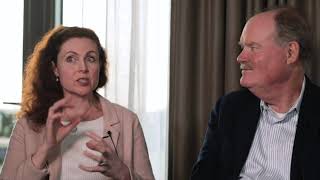
This is a podcast interview (Big Bold Health Episode 24) featuring Dr. Deanna Minich in conversation with James Maskell and Dr. Jeffrey Bland. Dr. Minich recounts a personal journey from restrictive early diets to integrating nutrition, creativity, and spirit; she emphasizes "eating the rainbow" (color, creativity, variety), her graduate work on carotenoids, a seven-system food-and-spirit framework (body, emotions, mind, giving/receiving/love, speech, intuition, and connection/spirits), and the power of community-based group teaching to reduce suffering and empower choice. The conversation situates these ideas within the "big bold health" movement.
Questions this video answers
April 17, 2020
Irritable bowel syndrome (IBS) and endometriosis.
Carotenoids (plant pigments).
Chapters
Hello, and welcome back to the big Bold Health podcast. I'm your host, James Maskell, and I'm here yet again with Dr. Jeffrey Bland. And we are super excited to be interviewing women on the forefront of this shift towards a big, bold health, personalized world of health. And we have Dr. Deanna Minich, who's here with us this time. And Dr. Minich is a researcher, lecturer, and author and clinician and has many strings to her bow. And, Jeff, I know you're pretty excited about this one.
Well, I'm excited about it, everyone, but I do have to say that I'm particularly excited about this. Excitement is my middle name, and this is a reason to be excited because Dr. Manik and I go back in a very close working relationship now for the better part of 13 years, I believe.
Yeah, like, I think 16, 2003.
Ish. Wow. Okay. See how time flies when you're having a great time. And it has been a great time, actually. So Deanna has been involved with so many interesting and important things in pioneering, I think, the synthesis of how we would try to define big bold health over the years to come as a multiphasic soil, person, environment, spirit, kind of symphonic orchestration among all elements of this grand scheme that we have the chance and privilege to be on and in for at least some period of time in this configuration, our bodies. And Deanna has really done a great job of contextualizing the interconnection among these different phases and creating ways to get people to see themselves as part of the system and in charge of their own of that system and to see how it all interconnects that makes a difference in their life. So, Deanna, it's really a great privilege to have the chance to speak about your advocacy and your really leadership in what I would call the big bold health movement, as we're trying to describe it. So thanks for being here.
Well, thank you, Jeff. And thank you, James. Jeff, you have always set for me such a great example of synthesis. You said the key word there. And also integration. How do we see everything in its larger context? You've been a great mentor.
Well, thank you. Likewise. I think you've taught me many good things over the years that we've had a chance to work together. And I think one of the things is a good segue now into an advocacy that you've had now for a number of years, probably well before you even started to work together with me. And that is this food and spirit connection. I mean, clearly with your PhD in nutrition, your clinical nutrition Experience having seen countless number of people in counseling and nutritional therapeutics, and being part of our research group at the Functional Medicine Clinical Research center and seeing patients on our different clinical trials, you've got that kind of core competency as it relates to nutrition and the person and how it affects their health and life. But then you've got this bigger principle of how that fits into the spirit of their living and into processes that we have that leave value to us that really create the big capital H of big bold health. So how does food and spirit connect together for Dr. D'? Animik?
You know, I think all of that came from more of a personal journey, quite honestly. I think for many of us it does. And so for me, I grew up with a lot of restriction, a lot of constriction, a lot of rules and regulations. And I feel like what I needed in order to get out of that is to see the whole and to realize that there's more. So starting on my journey, looking at things like food and then realizing, but it's more than food. Food is medicine. But then relationships are medicine and sleep is medicine. And habits, the way that we move through our day is all saying something about who we are. So I think for my own journey, having issues with my gut, having ibs, having endometriosis, and creating my own journey forward. And I would say it wasn't a straight line. It was very zigzag, you know, trying out different things and really being resistant to the whole food is medicine. Because I grew up with, like you, a health nut mom who forced a lot of things about food down our throat.
You mean those paper bags that we carried every day to lunch?
Yes. Not the white bread, but the brown bread. And so I think you and I are kind of unusual in that way because we grew up with moms who had this vision. And in that time and place, I didn't want to be different. And so I went the other way. I was looking for other things, not food. And so I ventured down the path of yoga. I really liked yoga because it really got me in touch with my body. One of the things I didn't have a very good sense with. And then perhaps what was very different for my family was I got into art. And that wasn't. I didn't go to school to study any kind of art. In fact, I kind of resisted that. But I used it as stress relief. Kind of like when I couldn't make sense of stuff, I'd pull out a big canvas. And for some reason, I only Wanted really bright colors. And so I would paint organic shapes, organic spirals, and my husband had all kinds of comments about them because they were all over our house. So this was in my 30s when I really got to this point of starting to express myself in different ways that went beyond the plate, went beyond. Even though I had studied nutrition, I realized that there was more beyond that context. And creativity was taking me there. And I started to then fuse together creative expression with food and the art of eating. Because so often we go to conferences, right? We go to science conferences, we learn about the head of food, like the analytical aspects of food. But then it's like, well, what about the art of eating, the art of colors on your plate, the sanctuary of your kitchen and what things smell like and how things taste and how that all plays into the picture. So that's when you ask, how does it all connect? I would say it's really hard to tease out any one path. It was a gradual journey of many unfoldings.
Well, I think what you did, and you taught me to live in your hologram, right? Somehow to live in your hologram and to recognize all those parts are interconnected and you can see all parts in any one part. It becomes the signature of your living. So if you're living a big, bold health, you are at every point of your life a manifestation of every other point, which is a really interesting example of synthesis. Right. And you use color as an extraordinary metaphor through this, not only through your art, but you might want to talk about eating the rainbow, right? Which you've been an extraordinary advocate of, written best selling books and lecture and discuss this as a way of. Of selecting how to eat not synthetically colored foods, but natural foods. Eating the rainbow. So you might want to use that kind of. How did you get to that metaphor? Because it all fits together, I think, in this hologram that I see as your life.
Yeah, well, I would say it started on my scientific path. So as part of my graduate work, I was studying something called carotenoids, which are plant pigments. And so we were looking at how do these plant pigments help with health? And then I joined your research team and you began teaching me about plants as modulators, meaning they don't have on or off switches, they have dials. And so understanding the complexity of plants. Because in grad school I was taught that plants were essentially antioxidants. Right. We all probably know that buzzword from the 1990s, and now it's so 1990s. You know, it's like well, so much more than antioxidants, right? These are magic. Plants are intelligent. They have thousands and thousands of compounds that don't have calories, but they have activity and they're speaking to our cells. So you really got me turned into a different direction. And then I started to realize that I was so tired of all the nutrition wars, whether it was keto, paleo, vegan, vegetarian, it was like everybody was arm wrestling each other as to how to eat. And I realized eating is not something to divide people, it's something to unify and connect people. And color could be one of those ways because no matter how you eat, there's always color that comes into it. So I can talk with my 5 year old niece about color. I could talk with a 15 year old teenager about color. And I've actually done that in high school talking about the rainbow in the way of a smoothie. I can talk with a 50 year old, I can talk with a centenarian about color. It's like a universal. And so if I can connect into color, that means I can connect into creativity and then I can connect into variety. Those are kind of like my three principles. Color, color, creativity and variety. And so establishing things like a variety challenge, like challenging people to get a bigger complex of their palette. You know, if we think of paint on a canvas, we have many different dabs of different chromatic hues. Right. And so like how do we bring that into our eating experience?
You know, one of the things I.
Really just appreciated watching your career over the last few years is exactly that. You know, a desire to breathe, bring people together around common concepts. When it comes to spirit, which again has been bastardized and actually put people at each other's against each other, what are some of the ways that you found to sort of create convergence in that realm?
Yeah, and that is such a tricky word, isn't it? That's the one that people stumble upon when they hear food and spirit. They're like, well, what is that? Is that some kind of like religion or. What are you talking about? The way I define spirit is the essence of connection. So within food and spirit, I talk about seven systems. That of our physical body, the things you can see, the emotions, the mind, how we give and receive, love, how we speak, how we intuit. And the last one, the spirit is all about the connection of life. This is one you're really good at because it's the up and out. It's when you realize, I think that there's a quote by Philip Brooks. If I have it right when you realize the greatness of your smallness, right when you look up at the sky at nighttime and you kind of see, like, wow, I'm part of this big expanse, this big web. And so you kind of get perspective. It's kind of like the macrocosm is the microcosm. And so that, to me, is spirit. It's the interconnection. It's having a piece of food, it's having a sip of water and realizing that it's not in isolation, but it's part of the great big whole. And that that is healing in and of itself. And the more that we have fragmentation and separation from that, I think that's where we get into disease. That's where we get into dysfunction. That's where we feel depressed. And so having the sense of spirit is kind of like the universal force that is all connecting. It's kind of like the oneness feel.
So as you have talked about this with your clients and with your audiences and with the professional people that come to you for consultation and education, everybody might enter into that conversation with a different and personal experience, right, as to how they're drawing on that thought. And probably some people have been wounded or injured or maligned or not validated or. I mean, there could be a lot of negative experiences that people might bring into that. Do you find that there are certain doors that can be open for people with differing experiences, some of which maybe are less positive than others, to get them to have that revelation and feel that sense of wholeness?
I always start with a story. One of the things that I've learned from being in functional medicine is that everybody has a story. And when we witness each other's story, it's almost like we come into that place of unity because we can remember or connect into some common thread. It's kind of like, oh, yeah, I may not have had that exact experience, but there's something about that feeling that that person is conveying that I'm tapping into. So I think that we have a lot of those universals. We have food as a universal. We have creativity as a universal. Many people say to me, oh, I'm not creative. I'm not an artist. And I really like to shift that conversation as a portal of entry, to realize that our body is creative as we sit here, ourselves are dividing. Everybody has that sense of creation within them. So everybody has certain things in common. And I think if we go there, then we get to the connection, we get to the spirit, and we start with our name. I am and kind of go from there and start to witness the story. In fact, it's really interesting because I have a whole group of practitioners, and some of them get really tangled up into all the forms and all the biomarkers and all the assays and all of the metrics. And I say, sometimes pull back and just open the space for their story. Just say, tell me your eating story, and spend 10 minutes talking about their eating story. Let them talk about it. So I think that's the portal of entry when you say people coming from trauma, coming from all walks of life, we can all share in the concept of story.
Beautiful. So when I say big, bold health, what does it mean to you? What's your definition of or how would you connote big, bold health?
To me, it feels like taking a stance. It feels like taking back our power as it relates to our bodies, as it relates to our choices. So, I mean, using those words big and bold already confers pretty massive energy in the direction of health, which I think we need, because so often people feel like they're in the background, they're not in the foreground of their health. Right. And so it's like, how do we empower people to make choices? And this is. I'm so glad that you're creating and have created this initiative, because so many people need help in terms of seeing that they're in the driver's seat. And I had a physician at a retreat that I did just some weeks ago, and he's in the Kaiser system in California, and he shared with our group that one of the first things that he will ask a patient is, what do you think is wrong with you? Which speaks to me of big, bold health, which is it's about you looking for your healing team, your health guides, but you know your body better than anybody else. And so I really like the position of coming in bold, coming in strong, and really owning who we are in body, mind, and spirit.
Ooh. That's the whole basis of what Jim and Zay are trying to do. But I do want to ask you an addendum question just quickly. And that is, there are those who would say that being in bold sounds very masculine. Sounds very like in some people's violence, maybe, that it's attack and control, and therefore it doesn't really resonate with the feminine energy. Would you have a comment about that? That big and bold is too masculine a world to attract women into a health movement?
Well, it does denote a certain warrior energy. However, I don't see a warrior energy as solely Masculine. I think it can bring out the warrior in all of us, and all of us embody masculine and feminine. And so I think it calls to action, all of us being in right relationship to those elements within. And I would like going further and forward for us not to think of masculine and feminine, but of the two working together in concert. Right. Because health denotes perhaps for some people, something feminine. So I think it's really the trio of kind of coming together in this holy trinity of all of us rather than thinking about things as masculine or feminine. It's just. It is. We're living in a time of great revolution in order to, I think, take us into the evolution of wholeness.
Oh, beautiful. Yeah.
One of the things that I resonate with that completely is, Jeff, you've been. You've said a number of times that you feel like this is a feminine rebalancing in medicine. And ultimately there's a little bit more of, like, warrior firepower that needs to come in from behind that energy, because this is the way that it has to be. And ultimately, you know, I think that part of the big and bold energy for me is just like. I think there's been, like, an inferiority complex for a long time in our world, and, you know, that is not serving us anymore because we have big problems to.
To solve.
And that ultimately there is a little bit of, like, feminine warrior that needs to, you know, to. To be present for. For this to go where it is. And that's why we've been, you know, interviewing powerful female leaders to be able to, like, unlock a little bit of that, because that is, you know, sort of the, you know, the. The energy that a couple of dudes like us are trying to.
Well, but I think we have to give the men credit, too, because usually women are at the forefront of all things health and healing. And so it's like, we've got that covered in many ways. And I think that men have been maligned to some extent that can be compared with what has happened with women. And I really have great compassion for men in helping them back into their right. Masculine. Right. And really coming from a place of not needing to be a fighter and warrior, but knowing that there could be softness that men can exhibit, the feminine as well. And so I think, all in all, big, bold health is hopefully, at least my vision of it would be bringing people back into wholeness. And there may need to be a little bit of oomph and a little bit of kind of moving into that with some momentum. But we're up Against a lot in these times.
Takes a little bit of oomph to overcome the status quo think. And the status quo is deterioration of health and chronic illness.
Yes.
And so there is a little bit of oomph that's necessary to, you know, to, to, you know, to come against that. So I'm excited to, you know, to see that. You know, one of the things I've. I've enjoyed about, you know, our dialogue over the years and content that we've made is really this understanding of connection and community. And, you know, I'm of the very strong opinion that this cross section of this new way of thinking of health and community is really the way that these ideas really foster into a fully, you know, fully actualized movement. And so I'd love to just get your thoughts on that because I know you spend a lot of time thinking about the same things that I. I'm.
Right there with you. I love that you are into community as a healing vehicle. And one of the things that happened with me after being at the Functional Medicine Research center, really moving away from one on one client, therapeutic relationships and realizing that there's power in a group. So now for the most part, I'm only doing group connections. Like today I just taught and I just hold the space and I ask everybody else to weigh in and then to comment on each other's comments, to ask questions of each other. I mean, that's the real gold that through each other we see ourselves and we come into that place of realizing that we are really all connected. It's a very spiritual, spiritual exercise. So in the ancient traditions, we would look at tribe and community as part of like the first formative stage. But really it's all along that continuum into a very advanced spiritual element as well. Because when we can see ourselves in others, then we can see ourselves in everything. So I love the aspect of community. I embrace it for myself. And this is my only way of teaching now.
That's really a beautiful model for what we're trying to get across with big bold health. We'd like to see ourselves as a meeting ground for advocates for their own personal health that share with others the spirit of making this community movement forward globally. And you know, what you just said reminds me, and I'm doing a mea culpa here, so bear with me for a half a second. So years ago, in my early doctor education seminar experience, this would have been the middle 80s, say, I was doing these lectures at Omega Institute in Rhinebeck, New York, and I was very proud of the course that I was doing and it was well attended every summer, people would look forward to it. And it was a live in experience. We were in cabins and so it was a full immersion experience for a couple of weeks. And so this one feeling, that hubris, which is a very bad thing to feel, you got to be careful of managing that. We started the first day and this guy comes up to me, doctor, and he says, so this is going to be on nutrition, right? And I'm very proud. I said, yes, we're definitely going to be talking about nutrition and nutritional biochemistry. And he goes, so it's a lot like food, right? And I said, yeah, yeah, it's about food. Yeah, yeah. And then so I go into my repartee, you know, I'm thinking very highly of myself that I've got this all wired. And so the break comes and the first morning he goes, that was the most disgusting experience I've ever had. He said, I thought you were speaking about food and nutrition. And I said, well, I think I was. He said, no, no you were. That had nothing to do. Don't you know anything about the life in food? Don't you know anything about food and spirit? Don't you know any about the manifestation of the universal design, how the architect of food really speaks to the soul? That's what I came for this course. I thought, okay, that just shows me I have a lot to learn. He didn't last until the afternoon and I got an education. So I think that there are so many elements that come together as to how we define ourselves again. It's part of this hologram of how we define the hologram of our own life in the context of the world as we see it.
Yeah, what a great example. And we still have much to learn. We have much to learn in the way of science and spirituality of food. So it's going, dipping back into the ancient traditions and then bringing that within the lens of what we have as our modern everyday.
Oh my word. You just took the byline of big bowl health.
Oh, my.
Ancient wisdom focused through the lens of modern science.
Really?
That's it.
That's pretty amazing.
Well, that's working together for reason. Some scary.
Love it.
So if you had a magic wand and you could wave that wand and have your wish about health to be achieved, what would it be?
The first thing that came to me was that people wouldn't suffer. It's like the phrase you don't know what you don't know. And it's almost like to give people the experience of feeling good. How can you ever go back to not feeling good? Right. Based on the choices that you make. And so, you know, what I hope is that people have less suffering and can have better quality of life, and it can start with really simple changes. And so that's. It may sound simplistic, but, gosh, I mean, wouldn't we all want that so that everybody can live very full lives? And I think so much of it comes down to our choice. You know, one of my teachers, Carolyn Mace, had said some years ago that there's something even greater than love, and it's choice, because you have to choose love. And so what are our choices? What if just on one day we wrote down every choice that we made and how many choices we have to really create a course? Correct. And so I think every experience is about choice. And so really magnifying choice for people through big, bold health, knowing that they have choices, feeling empowered and fiery through those choices, as much as embraced and nurtured by them.
So not to overdo this connection thing that we are just sharing this mind meld, let me just say quickly that what you just said about the reduction of suffering is exactly the reason that bigwell Health has been developed. When I left the Pauling Institute in 1982 to go back to my university professorship, my tenured faculty position, and made the decision on the road, road home, driving home with my family 1000 miles in the car, that what he said to me as I was leaving, which was, are you sure your classroom's big enough? That was my last conversation with Dr. Pauling before I left Palo Alto. And I got thinking about that, and I recognized that every meeting I had or every meal or every social exchange I had with Linus and Eva Helen Pauling in those years that I had the privilege of knowing them, it was all about the reduction of human suffering. That was the central feature of their life. A lot of people don't know this. They think of him as a nuclear chemist or as a. Whatever they might think, vitamin C or whatever. But the central feature of his life was to understand structure and function that he and his wife were advocating. That was his whole work in peace. And the disarm, you know, the cessation of nuclear arms testing, atmospheric testing, all of that came about through the concept of. Of reducing human suffering. And if you could know enough from the subatomic particle up to the social matrix of complexity, you could then do something to alleviate unnecessary suffering. So that was really the reason of giving up my faculty position. That was the reason for the start of what healthcom became, then later ifm. And that's the reason for Big Bold Health. So thank you.
Thank you.
Yeah, it's been a really great run and we're only started to hopefully infect people with the advocacy that they possess to be all the health that they deserve. That's our model.
Well, it's been such an honor to bear witness to this over the last few years. And as you can tell from Jeff's energy, we're just getting started.
I can tell.
Wonderful to be part of it and thank you everyone for tuning in. I know that this pair has meant a lot to a lot of people, and I've been very, very, very grateful to share it here on the Big Bold Health podcast. If you've enjoyed the episode, make sure to share it with your friends and family and anyone who you think needs to listen to this. Check out the show notes for links on how you can find out more about Dr. Deanna Minich's work. But in the meantime, thanks so much for tuning in to Big Bold Health. Thanks so much for tuning in and we'll see you next time. Sam.









