Improvising a healthier cuisine | Chef Paul Canales on Big Bold Immunity #36
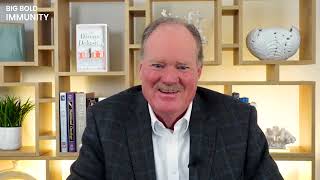
A recorded conversation (YouTube, Aug 4, 2022) between Jeffrey Bland, PhD (host) and chef/restaurateur Paul Canales about the overlap of cuisine, sourcing, and immune-focused health. Paul describes his personal journey (liberal-arts background, Culinary Institute of America, recovery from substance addiction, career change at 33), his restaurant Duende in Oakland, CA, and his cooking philosophy: Basque/Spanish touchpoint, improvisation with strictly seasonal, local ingredients (most sourced within ~100 miles), whole-animal butchery and use of lesser cuts and offal, and paying farmers/ranchers enough to support regenerative/biodynamic practices. Paul explains working with small resilient farmers and ranchers (example: grass-focused beef from Ukiah), and how ingredient origins affect flavor and nutritional density (dark, weight-bearing muscles are mitochondria-rich). He became interested in functional nutrition via Mark Hyman and Bland’s work, adopted Himalayan Tartary buckwheat (HTB) personally (reported reduced allergies) and in dishes (HTB crepe and using HTB flour as a béchamel thickener); HTB dishes are planned for Duende’s menu (Christmas Eve crepe) and for a 40-person order. The interview ties culinary storytelling, ingredient provenance, and immune/nutritional considerations together, positioning chefs as agents who can “insinuate” health into people's lives through delicious food.
Chapters
If we have good animals, you have a good source, then you can provide sort of insinuate into people's lives health. Because no one wants to go to a Spanish health food restaurant. Maybe they do, but I don't know how to market that. But what I can do is get them in and they'll say, why is this so delicious? And then I can have a conversation and say, man, I feel great. Well, there's a reason for that. You're not eating garbage.
Well, here we are once again at the Immunity Big Bold health podcast. And I can't tell you how this is an exciting moment. Once again, I am so fortunate to have these extraordinary people to have these conversations with. And you're going to be able to be valued, I think, in this conversation, because our podcast, Key Opinion Leader Today, comes from a source that I have never had the privilege of actually interviewing, and that's someone who is a master chef, is a founder and owner and operator of a very successful restaurant, Duende, in Oakland, California. My sister lived in Oakland for 30 years. She's now in Marin. But she was always taking me to different restaurants in Oakland. It was a very interesting and robust community of all sorts of different ethnicities and different cultural opportunities. And Paul has got a history that I will be sharing with you, and he will share as well. But let me just say a couple of words as to why I think this is so opportune as it relates to immunity. You know, immunity is an interesting concept, isn't it? Because we often think of it as a system in our body that just fights against foreigners like bacteria or viruses. I think that's a very simplistic view of what immune function is all about, because we now know the immune system is in constant communication with everything in our lives. It's in communication with our relationships. It's in communication with our environment, with exposure to various toxic molecules. It's in communication with our exercises. It's in communication with our sleep patterns. And so when we think of immunity in the broader context, which I think is the proper context, we have to look at it as to what are all the information events that are impinging upon our immune system, that are creating then the function of our immune system as we move along through the journey of life. And asking about our immune system in that context changes the way that we might even think about conversing with people that are opinion leaders, people that are innovators, people that are agents of change in disciplines that you would say are full removed from immunity. But maybe actually what they're doing has an impact on each one of our own immune system in ways that we never imagined. And that's why I think Paul Canales is such an interesting person to talk to because he is one of those agents of change that has been that agent of change in his own life, but it's also impacted many other lives in the process in a very positive way. So let me just quickly introduce his background. As I said, master chef, owner, entrepreneur. But he comes actually with a very broad kind of landscape upon which he paints this part of his career. He was kind of a liberal arts guy and majored in college and explores all sorts of things from philosophy to literature, traveled the world, did all sorts of explorations, was involved with fitness and competitive athletics, engaged in many, many different things that relate to taking his knowledge base and applying it to marketing and sales related activities. Ultimately then coming back in and grounding himself in where he has been in residence as a first, a chief chef in a major Italian restaurant, introducing a whole different kind of cuisine by what he calls experimental cuisine or impromptu cuisine that uses the best things available at the time to create new recipes. Very creative way of approaching being a chef. Now moving that into his own restaurant. But this story of the restaurateur in Paul is just part of the dynamic of his holograph of the major things that he has done in his life. So Paul, welcome to the big Bold Immunity podcast. Thanks so much for giving your time to this. And I guess we should start off now that I've given a kind of a broad brush descriptive explanation of you, but much better coming from you. Tell us how you ended up here at Duente and this innovation that you're doing in your restaurant.
Well, first, Jeff, thank you so much for that lovely introduction and it's a tremendous honor to be with you. As I mentioned before, you're a beacon of light in the world that I recently came across and functional medicine, which you're thought of as the father of personalized medicine now, immunity, rejuvenation and regeneration, if you will. All these things have changed my life in radical ways in a very short amount of time. So I just want to acknowledge that and thank you for all those years of hard work. And I'm very familiar with your biography and I do love the picture that Mark Hyman points of you walking around with your binders and data. And I love that because I'm similar in a way. I can't get enough information and input. And I think you're an improviser as well. You mentioned that I do sort of impromptu sort of things. And more than being a foodie, I'm not really a foodie by identity, so I think food is what I do, but it's where I have the opportunity to. To create and improvise. And I've done that with sports and music and academics and marketing and business. I was certainly unorthodox there, and that served me quite well. So at the core of it, I'm an improviser and you in a synthesizer, in a way. And I think what you do, what I admire so much, is you take vast amounts of data and synthesize it in ways that just a normal guy like me can understand and. And take action on. And I think that's a very special thing. So thank you so much for having me on and to be part of this. Back to sort of what you were saying. So, yeah, I've sort of gone through lots of different things in life. I've had the opportunity to be a competitive athlete and to be a scholar of sorts and a musician and be in business and got to go to Stanford to study and just things like that. So I've had tremendous opportunities and all along the way I was sort of an achievement junkie, if you will. And we'll get into what that does to your health later, I think, in our conversation. Because while it's wonderful in many ways that the health is not probably first and foremost when you're thinking of all those things, but during all that time, and I just want to say right off the bat, I'm not shy to talk about, is I had some underlying genetics, but that led me to a path of addiction to alcohol and heroin. And as it turns out, I was never a very good drinker, but I certainly could function quite highly with other substances and of course, some of their resultant behaviors. But what's fascinating about that is coming to grips with that some, almost 28 years ago, really set me on a path that leads to where I am today in terms of changing my life, changing my career, honoring sort of what is important to me and sort of ordering my life in ways, putting the most important priorities first. Although probably the most important priority, my biology, I didn't quite put first, other than stop getting in the way of it by putting things in that didn't quite work well. But yeah, so I think that's sort of how I got where I am. And I always wanted to do my own thing. All those things we talked about, sports and music and academics and these things, you sort of have to have a Core understanding and fundamental facility with. But then at some point you find out if you have a point of view or if you have something to say, you know, you could say it that way. And if you have a voice, you know, you think about that in terms of music or sound or things, and then you start to create and improvise and develop your own thing. And I would say that takes about 10 years, you know, to really practice and copy and learn and work through before you develop your own thing. And that's about the amount of time it took me before I was ready to open Duende. And so that was a whole process of learning. And I changed my career at 33 years old to become a cook. And, and then eventually, you know, because of these other accomplishments, rose relatively quickly. And all of that, and using my academic penchant and ability to kind of put my body in the way of things and make things happen, I eventually became a head chef and was interested in, in all aspects of cooking, starting with butchery. And where is this food coming from? Like, can I butcher any animal? And the answer is yes, I can. Now can I, can I clean and fabricate any fish? If you gave it to me and the answer would be yes. And where are all these foods coming from? Can I act and think like a butcher? Can I act and think like a fishmonger? Can I act and think of these farmers where this amazing organic and sustainably raised food is coming from? Can I act and think and honor that in a way? So that really became the basis for my creative expression from the sort of fundamental firmament of technique and things like that.
Well, you know, first of all, you are being very humble. You did go to the Culinary Institute of America in Hyde park, which I guess arguably is considered one of the finest culinary schools in the country. So you've never taken any of these things lightly. It sounds like everything you've approached, maybe even your abusive habits, you approached with full in to learn whatever you needed to learn.
I was definitely committed.
Yeah. And I think then to take what you learn, I'm going to steal from Malcolm Gladwell now and to become an expert in what you need to learn, which takes ten thousands of hours, and then to create a new path from that expertise in the case of some self abuse issues, that led you to a path to say, okay, been there, done that, know what its liabilities are. Now I need to recreate myself in a different way. And I think it's that kind of attribute and skill that you possess, or maybe if it's Not a skill. It's a motivation that's deep down within you that differentiates a successful journey in life from one that might get high centered and end up being Sidebarred. And I think there are so many individuals, unfortunately, that when they get. We all get sidebarred at times. So I want to say, no matter who we are, we get sidebar. But it depends on whether you're high centered indefinitely or you can find a way to turn that into a positive experience and create the next opportunity for yourself. And I think your story is one that really exemplifies that. And so if we think of the immune system as expressing either the joy or the sorrow of life, the immune system has an attitude. And so you feed it information from which it responds back to you. And we feed it in multiple ways. But certainly the way you've been feeding your immune system is feeding back to you now a certain sense of joy for the process of living. And I think that's really the message that we're trying to get across through this immunity focused podcast, is that the immunity is more than just the white cells cursing around our body in preventing infection. It has all sorts to do with how we feel, act, and look each day of our lives. And I think you exemplify that. So I feel very passionate by your willingness to share your experience, which then leads actually down into how you manifest some of this multiple touch points in your life into the ethnic cuisine, this Basque cuisine, which pulls from your genetic heritage into how you expressed yourself in your restaurant.
Correct. That's the point. I really love the idea of having a touch point to work from creatively. You sort of said it about the immunity system. I mean, the fact that it turns things on and off and it has all these things. Well, it's the same way with cuisine, really, because one of the things with choosing a cuisine, in this case Spanish, Basque cuisine, you want to. For me, I'm not interested in really making what I might consider museum food, which is these recipes in this way? And I mean, I'm in California, I'm in the Bay Area. Everything I get comes from within 100 miles. It's really an incredible place. Why would I be locked into something that's some hundreds and thousands of miles away, except for as a place to jump from and to start with? And there are all these beautiful regions in Spain. It's not just the Basque region, but Catalonia and Valencia, Andalusia, and all these wonderful regions. And they all have different growing seasons, and they all have different things that express themselves in terms of produce and techniques and traditions, all those things can be learned about and studied and you can travel there and eat. I would say if you're interested in cooking, eat well and then ask what they did to make that happen. That's the best way to learn rather than standing in a kitchen and peeling onions in the corner. But although I've done that, I would say so using those sorts of things as a touch point and then creating your own cuisine from what comes in the door or in many ways, what's left of an animal. So if we take the humble pig, I have amazing pigs from a biodynamic regenerative farm in the Central Valley. And this pig comes in and we start immediately with the legs. I mean, those are the things that are going to go first. The lighter muscles that we think of as kind of light, light colored are fast twitch muscles. Those are the muscles that have less myoglobin. They're from locomotion. They move the animal around, whereas the shoulders are going to be quite a bit darker. They're the weight bearing part of the animal and they carry the most weight. And they got to move. The legs don't really do much. They just get things going. So they're quite light. And as lighter muscles, they've got to be used more quickly and used right away. As we work our way through this animal, we're really cooking with leftovers. We start with one thing and then we've got something else. And then we say, okay, now we've got to use the chops or the bellies, or we've got to use the skin, or we've got to use the shoulders. And that's the way with these animals that are so fun to work with. And it really gives you the opportunity to not get stuck with buying pork chops or lamb chops or whatever and garnishing them. I mean, you can do that at home and there's nothing wrong with that. I do it myself at home. But it's much more interesting to be integrated and deeply involved with these animals that live an amazing life and have one bad day and how can we honor them? And the same thing with this produce. I mean, these farmers are. People think of these farmers as, you know, some way somehow vanity projects. But these people are working hard, like your friends the beers. I mean, this is a, this is a life of passion and hard work. So how can I best express what they've done for me in a very simple and straightforward way, but provide enough technique and value so that people will pay you to do it. Because I have to get a certain amount of money for these products in order that I can pay these farmers and these ranchers to do things in a non conventional way, which is much more expensive than using tilling and all sorts of destructive ways of farming. So for me, that's really what drives me. It's this background, the study part of it is the context and then the rest of it is really improvisation with what's available in season and what comes in the door and what's left over from animals.
Wow. I'll tell you that description. I'm glad we captured that on video. That was, that was a lesson plan. That was an extraordinary concentration of a lot of life experiences that you've had. One thing that you said though, from my kind of nutritional biochemistry perspective that I'd never thought about. Thank you. You just gave me a gift. And that is what makes those weight bearing muscles have the darker color and what makes them so is that they have iron in them. And where is the iron concentrated? It's concentrated in the iron of cytochromes that are called cytochrome PO450s and oxidative enzymes that are producing energy for the animal through mitochondria. So those are the mitochondrial rich tissues. And so if you think about energy density, those are where a lot of the metabolic energy is really being produced in those tissues. So it's very interesting to think about the physiognomy and the physiology that connects together the kind of food we eat with their origins in the, in the process of their production in the animal or the plant.
Well now if we could just take that, that idea that you just shared with us and we think about what you're doing with, with big bold health and all the things, you know, what you've done by going to Dutch harbor and finding the leftovers and you've created something amazing from leftovers. And then what you're. I was really excited to hear you using the hull of, of the plant because I was going to have you send it to me if you weren't using it. Because that stuff, I mean there's a, you know, you've got the aluine layer, you have all these various things that are super valuable and nutritious. But, but, but let's just talk about. And these are things that our grandmothers knew or maybe our great grandmothers. So for example, we take the shoulders and the shoulders are rich and you braise them. Now if you go to a culinary school, they're going to tell you this but your grandmother already knew that, or your grandmother's grandmother already knew that. They didn't need to be told that. And that food, and generally those are braises and hardier things are eaten in the winter. But not only. I mean, obviously, you're not only slaughtering animals in the winter, but so you've got to be getting those things you spoke about, that mitochondrial nutrient density, it's got to be coming even in the cooking process, because it's going into the liquid if you don't. If you don't put too much liquid. So it's got to be captured there somewhere. It can't all just evaporate and steam or whatever. So, yeah, we think in this country, and, you know, the best thing would be the middle meats, like tenderloins. And, you know, the pessoas major is the tenderloin and the longissimus that runs down the back of the animal. The chops and the loins and things. Well, they're very light and they're delicious. They're nice, but they're very mild in flavor. And I think that's why people like them. They're typically more tender because they don't do much in life. They're not. They don't really have a lot of purpose, so they don't do a lot. So that's. Hence, they don't need the energy that you've spoken about. And so. But everybody wants that. But I want the skirt steak. I want the diaphragms, I want the hearts and the livers, and the only asymmetrical muscle in the animal, which is the anglais or the hanger steak, all these sorts of things in the shoulders. I want the more interesting things with the collagen, which turns to gelatin over time and temperature, and all these fascinating. That make very suave sauces, you know, so all this sort of thing is really important. And again, back to nutrition. If we have good animals, you have a good source, then you can provide, sort of insinuate into people's lives, health, because no one wants to go to a Spanish health food restaurant. Maybe they do, but I don't know how to market that. But what I can do is get them in and they'll say, why is this so delicious? And then I can have a conversation and say, man, I feel great. Well, there's a reason for that. You're not eating garbage, you know.
Well, you know, again, this is just so fascinating. You're a wonderful storyteller for this amazing way that you conceptualize your work and what you're doing. I'm wondering then, about the demographics, about the people that come to your restaurant, because they must be drawn. You know what my mother used to say, birds of a feather flock together. Right. So what kind of people do you attract into your restaurant? I'm sure it's a variety of different types, but is there. Is there some kind of unique personality archetype that you would say, is the frequent customer at your restaurant?
Well, that's a great question. And I think what I did with Duende is I wanted it to make it broad and fun and interesting. I had a chance to make my own thing, so I wanted to make it fun and inclusive. As a matter of fact, when you come to visit, and I say when because it's not that far. And your sister's in Marin. And by the way, great podcast with her. I really enjoyed that last year.
Oh, thank you.
Yeah, she's quite a character in her own right. But when you come to visit, and Trish, of course, you'll see on the. On the. On the wall, it says sangre igual, meaning. And it's not even a real term. It just means equal blood. And so what I wanted, this was at the time of Obama versus the gentleman from Utah, I can't remember, but at the presidential election, Obama's election first, and my friends who would be Republicans on the right side and my friends who would be Democrats on the left side, and everybody on either poll couldn't really talk to each other. And you didn't have to talk to each other because you have your own information source. You don't even have to get an opposing point of view anywhere. So I decided that when people walk into Duende, they're going to see this idea, and it will insinuate themselves into their consciousness that we come into this world and we go out of this world equal blood. And you know what changes me from my wife might be a chromosome, and there's very little that's really different. And not to say personalized medicine isn't critical. It is. But I'm saying if we can all just step back for a moment and find that there's much more in common than we have at difference, that's really proven out over the last 10 years in both wonderful and terrible ways. But back to your question. There are these hardcore food types that come in that really know me. They know what's going on. But I don't really know enough people to keep a restaurant busy. So it's important that other people come in just randomly Going to a show at the nearby theater, you know, and I wanted people to bring their own kids in so it's highly accessible. But from a demographic point of view, Bay Area diners are very smart. They're well informed, almost too much in some ways in the sense that you can be too conceptual and less experiential about things. But I think that we have a very broad demographic from older to younger people and all walks of life, all ethnic demographics. And again, I think most people want to have fun and enjoy themselves and that's what we're trying to do. And then the serious stuff is happening behind the scenes.
So I'm wondering also about. You mentioned your suppliers and these sound like they're a very interesting unique personality identity group as well. Those that bring both the animal products and the vegetable products to you within the hundred mile radius. So is there some kind of a characteristic that you've learned about them and how you, how you relate what you're doing in your restaurant to what they're doing in their farms and ranches?
100%. So they're all incredibly resilient people. So regardless of whether they're older farmers, say maybe of the baby boom era and a little beyond, or they're. Or they're younger in their, even in their 20s, coming out of Davis maybe, or Santa Cruz and other places and just farming a few acres and getting their start or leasing a couple acres of property somewhere. But they all have a tremendous resiliency and passion and a care for important things like soil and soil development and really trying to express these vegetables and animals in the best possible way. I have a wonderful guy that I get beef from up in Ukiah, California, and he thinks of himself as a grass farmer. He doesn't even think of himself as a beef rancher because he's got these amazing grass. And if he can keep his grass growing and water throughout the year, then he has high protein, high nutrition grass and not hardened off brown grass that doesn't really do much for the animal. So they all have a resiliency and a passion for expressing what they're trying to grow or build in a way that. And they'll have. They're all a little quirky and kind of fun. And I typically don't use a farmer or a rancher that I haven't been to visit their ranch or seen their farms because I really want to verify and know what I'm seeing. There are some people out there who are less integrous than others. I don't really come across Them, but I know they exist. So other than the beers, I've been to most places and I plan on visiting the beer sometime.
Oh, that I know they'd love it. That that whole. The, their small little artisanal farm has been such a pleasure to get to meet them and what they do and, and see their passion, even to their roadside stands where they sell their Himalayan Tartary buckwheat in the Saturday markets. It's really fun, but you just touched something in me that I wanted to share with you and share with our listeners and it relates to exactly what you're talking about. I had the privilege now, oh, the better part of 25 years ago, I guess, of being a member of the Coleman Natural Meats Scientific and Advisory Board. And Coleman. Mel and Polly Coleman were fourth generation cattle ranchers in Colorado, the Saguache area. They had the highest elevation cattle ranch I believe in the United states. It was 11,000ft. And they had an experience with their meat which was being produced by traditional methods of take the animals after they were a certain age and take them to feedlots and, you know, grow them up and sell them. But one day when they were in doing demos in one of the markets around Denver, Polly Coleman, the wife, had all these little samples on toothpicks and she was eating them throughout the course of the day. And she had some kind of a reaction at the end of the day as she was leaving. It was like a serious allergic reaction and she never had that before and she wondered what the heck it was that she'd been exposed to. And then she was reproducing those reactions. In subsequent times they did demos and suddenly she said to her husband, Mel, she said, do you think it could be something that we're doing in the raising these cattle that is causing me to have this adverse response to our own meat and we're trying to tend to it passionately and committed to quality and what's going on. So they made the decision that they would start raising their cattle without giving any veterinary drugs to them and on natural feed and grass fed, no feedlot, finishing with traditional feed. And when they did that the first year, she had no more problems with the meat. And she then started, they started selling this, it was a limited amount at first, and then people started saying, whoa, the flavor is so amazing and I'm feeling a lot better when I eat this meat. So they grew up this business and then they started to certify the Coleman process this natural. They were the first company and actually we argued with the USDA to get the natural meat designation. That was a whole other chapter in my life. I won't bore you with that, but that was kind of interesting. But the one day I was up there visiting them and they said, well, would you like to go up and visit one of our satellite ranchers that has a ranch right next to ours up in the saguache? And I said, yeah, that would be. My wife and I were there together. I said, that'd be fantastic. And as we were driving up in their four wheel, they said, now you got to know that this person, he's in his late 80s, he's been ranching for all these many years. His ranch was originally so remote it was hardly even able to get to. Now we get to it on a dirt road with a four wheeler. But this is a great story because he's been married to the same woman now for over 45 years that he met because he was told some 50 years ago that there was a new school teacher that had been brought from Missouri to teach in the school that was 30 miles away that was the most close school. So he said, is she young? And they said, oh yeah, she's really, she's a filly, she's great. So he got on his horse and he rode over to the school and waited until she came out and said, I'm such and such and, you know, I'm dedicated rancher here and I hear you've been looking for some people to meet. I would love to meet you. And ultimately that led them getting married and she moved onto the ranch. So that was the context of driving up there. And as we arrived now, if you can imagine, this is just a beautiful setting up against the Rocky Mountains. And as we drove into the valley where their house was, the Colemans were explaining that he had built this whole house themselves. And everything that we saw was their own hard work, their hands and labor. And as you drove in there, you could see this was an octagonally shaped home, very architecturally unique. And it looked up the windows. It had kind of an upper story with windows that looked right up at the big 14,000 foot mountain above them. It was like the most picturesque place. And as we drove into the kind of place in front of the home, here was the older gentleman, the rancher with a pick and shovel out in front of their house digging a very big hole. And so as we came up, it was one of the quintessential moments in my life actually. And we stepped out of the truck to walk over to him to be introduced. He stopped and he came over to visit the Colemans and he said, I'm so glad you're here, because this is a day of celebration. And Mel said, oh, what's the celebration? He said, my wife died last night looking out of the window of this room in the home that I built for her when she got sick so she could sit in the bed and look out at the mountain. And I'm burying her today. And it's so great to have friends that I've known for over 50 years here to celebrate her passing. And I thought to myself, there's so many parts of that story about humans, about who we are and how we display who we are in the world. Even if it's displayed in a very small way, it has a big ripple effect on how we connect together. And it was a lesson. As I left, my wife and I drove away, we were never the same after it. It really, it taught us all sorts of lessons.
Oh, my God. I mean, I'm tingling. It's just, just in your retelling of it, it's, it's a stunning story and, and beautiful. And, and just the idea, the imagery that you, you shared, you were at a blessed. You were at a sacred moment, really.
Oh, it was. And I could recognize that, you know, he saw those. He and his wife both saw that the cows that they produced that went into the Coleman system were part of the extension of their worldview. Right. Which was self sufficiency, honesty, hard work. I mean, those were not just stakes that were coming out, those animals. Those were a whole expression of philosophy. And it was really. And I'm not a really big red meat eater, but it really just gave me the reverence and respect for this whole process.
Well, and what you just said is super critical because when you. In our country, we think a steak is something that comes in a plastic Styrofoam tray with a pad under it that's now colored red so that it doesn't look like all the, all the stuff that's exuding from the animal that once was an animal. And they don't really know the story behind where that animal came from or why it even existed on that ranch. And, and if it was finished in a, in a way that is careful and thoughtful and raised or, or whether it was just sent to a feedlot. And I mean, I'm sure you know about the condition of PSE and bse. Yeah, and, and that's why they invented those little, those little SOP systems in those trays, because those, those stressed animals would exude middle moisture. And it had to go somewhere. And it wasn't appealing to see a tray of. Of exuded liquid from a stressed animal. Non stressed animals don't do that. But your story is beautiful and thank you for sharing it with me. It was very touching and I feel changed by it myself just hearing it.
Well, let me segue if I can, because you somehow, and that's an interesting, I'm sure, story as well, got involved with this Himalayan tartary buckwheat, which is not a usual crop. And it has a certain flavor profile to it. It's not as neutral as. It's not even a grain. It's a seed. And because of its high phytochemical content and its immune strengthening nutrients, it has a flavor that makes it very, very unique. But somehow you got interested in it. How did that happen?
Well, so I don't know if we sort of have to go to how I ended up in the whole interest in health in the first place, because I got to you, of course, through your podcast with Dr. Mark Hyman, and I was catching up on him. About a year ago, my sister shared with me Dr. Mark's podcast. So I started listening. I think, wow, this guy's really interesting and engaging. He's super funny. And I noticed immediately he had a tremendous talent to take complex things and make them interesting, funny, or a turn of a phrase. That is a certain kind of. There's a certain cleverness in that.
Yeah. Yes.
To take something complex and give it a funny name. He also has sort of a wicked little sense of humor that appears corny, but if you hang with it a minute, it's quite deep. So I started listening to that and I had motivation. You know, I was approaching 60 at this point. I was 60, but approaching 60, I started having some physical weird things happen. Like I was carrying something and tore the long head, bicep tendon of my arm. And I'd never done that before. I mean, it was. It was an awkward sort of a situation. And I tore that. And then I had a funny thing in front of my home where I was. I stepped off the curb and sort of had my heel drop and I overreacted and tore the sort of belly muscle of my calf. I'd never done these things. So I have a really good friend who's a physical therapist, and I called him up and he said, you know, Paul, you're getting old now. I didn't know about inflammaging, and certainly I didn't know anything about immunity and doing anything about that, but I knew. And also my pants were not fitting correctly. And if I did know about the waist to butt measurement, I would have been certainly obese over 10 or at least 10 or more on that measurement. And so I had motivation. So getting back to how I learned about this, I've been listening to Mark Hyman and I did his longevity roadmap and learned about levels in that and their work in using CGMs to understand blood sugar. And all of a sudden I'm finding out that all this amazing, organic, beautiful, artisanal made food, not all of it might be good for me. Eating a 1 inch slab of sourdough bread for breakfast and watching my blood sugar shoot to 160 and then needing to go for an immediate walk to make it go down or. And if I didn't, it would kind of hang up there and come down to 140. And so that was sort of a rude awakening. And then I just started learning a lot on my first trip to get my first Covid shot. I'm catching up on. I start at the beginning of things. It's probably not surprising to you. I'm sort of a completist. So I started at the beginning with mark, which was 2018 or 19. By the time I catch up to, I GUESS it was April 2020, it's now March 2021. And there's this guy named Jeff Bland. I think I've already learned about Sid Baker, but now there's Jeff Bland and you come on, and I'm literally in a line of cars at the Oakland Coliseum waiting to get my first Covid shot. And you come on. And so I'm listening to this during this long line of cars while I'm waiting to get this shot, and they start talking about immunity, and you're talking about immunity as even a precursor to. To inflammation and everything. And you had me at the word plasticity. I don't know if you remember, but you spoke about the plasticity of things. And I had learned about that at Stanford, about cognition, the plasticity of our nervous system, making language possible, and all sorts of fascinating things. So I'm listening to you and I'm hooked. And then you're talking about phytochemicals and nutrients. And I know about this because I know about dandelion greens and things that cinaric acid in cardoons and artichokes and how those things can be good for you and. And that bitterness that you alluded to in Himalayan tartery, buckwheat, which is quite Pleasant, by the way. I. It's not a barrier at all to. To enjoying that, because you're not, you know, unless you're gonna, you know, you're not gonna lick a battery, so why would you just lick, you know, tartary buckwheat? So anyway, I wanted. My immediate reaction was, where do I get this? This? How do I get this? And at that point, you didn't have a big, bold health website, but I went to your website. Don't tell my kids. I was in the car doing this like this on my phone while I'm in line, while you're talking, because I got to get this buckwheat. I've got to find out what it's about. And I think your website took me to the big, bold health website, and at that point, it wasn't available. But what was available was the rejuvenation pills capsules. So I immediately subscribed for those. And I was already interested in fish oil, so I jumped into Dutch harbor behind that. Then came fire and Ice. And now I know there's something in the well behind that. And then there's the rejuvenation shake, which I do. And I interspersed that with Mark's Peegan shake. So anyway, that's kind of what did it. But it was that one podcast that kind of blew my mind. This guy, Jeffrey Bland. And again, that picture of you walking with all this data and then synthesizing it into something that just an ordinary person like me can understand and take action on got me very excited. And then I wanted to work with it, so I ordered it and started playing around with some things. And I got on the wait list and it came, and. And I think I. The first thing I might have made was Mark Hyman's pancakes, but I didn't want to make them sweet or with all the spices. I wanted to use them as a savory base. So just change the. I changed the thing quite a bit and made it like. Almost like a blini, if you will, but that bigger amount, and used it instead of pasta to put a ragu on or braise or whatever and use it as the starch. And then I watched what happened with my cgm. Nothing Beautiful. And regardless of dosage, actually, I mean, I imagine you could do something with dosage, but. And I say dosage, you know, portion size. So I'm like, wow, this stuff's amazing. And already I'm confronted with these ideas that Mark's talking about. I've read Food Fix. I've got to. What am I going to do in my own restaurant. How am I going to start implementing these things into my restaurant? And again, not to lead with my chin and have people not understand what they're coming for, because I want, I don't want them to think they're coming for a purgative experience at a spa. I want them to come for enjoyment, but then I want to insinuate health into their lives and then have a good experience physically, emotionally and all of that, not just sensorily. So I started playing with the buckwheat.
And then.
I started posting things on the Mark Hyman community Facebook page of things I was doing because people are interested in that community. They're pretty bright community, very health focused and not no one had really gotten that flower yet. So I started posting things to kind of promote it there and things you could do with it. And then I started doing more of it and I needed more flower. And so it was interesting because I was going to send you a DM to your email or someone there, probably Trish would have intercepted it to keep me away from you. But we have got a live one here. Let's keep an eye on him. But Jennifer Saunders with Dr. Mark Hyman, his group got me in touch with Trish and that was really the beginning of starting to get excited about getting it in volume and really starting to make some things. And I met with Trish and Michelle Babb and I am glad to share anything I do. Nothing is, is really original in this world and we're really working and standing on the shoulders of giants and working with things. And this is a new ingredient and it's fascinating, but I'm working with core competencies to build it on. So that's what really got me started with it. By the way, after just a couple months, my allergies were gone. I had always had sort of random hay fever and things. When I took your test, I had an angry immune system. Now I could take it and not have that. So I wanted to bring this more into my own life and then bring it into the lives of the people in my restaurant. So it's been a process of figuring out what to make and contextually. And now we're going to the first thing that's finding its way onto the menu and scale will be on our Christmas Eve menu. And it's a buckwheat crap made with just the HTV and egg and a pinch of salt. And you could use milk. I used almond milk for just those purposes because I don't want to just Use buckwheat as an ingredient because I could make great buckwheat pasta with 50% white organic, artisanal white flour. But I'm not really in that world. I'm trying to use it without anything and no gluten free flours that are filled with starches and things that will shoot your blood sugar to the bejesus. I'm really trying to get this down to essential form. So I start with 50% and then work out whatever I've added and see what I can make so that crepe will be on the menu for Christmas Eve. And then this week I've got a big order going to our architects. And last night I made a gratin that I shared with Trish. It was a cauliflower gratin with a bechamel that was thickened with the buckwheat flour and it was brilliant. My wife went crazy. Everyone loved it. So I'm going to be doing this for this first order, which is be for 40 people on Friday. And then we're going to do a Christmas Eve meal that will be a to go meal and I'll make it for that as well. So people will get it in bulk there. And so I'm starting to use it in more ways, but I'm a little careful with it because I know it's not something I can just get in a 50 pound sack, but I'm building with it. So that is what got me started was my own health journey. And then that all led me to you. And I am a completest of all.
The.
Dr. Jeffrey Bland products and anything you put. I hear you've got some interesting things coming using the hulls and I'll be looking for that as well. Because some things you just can't. You can't get everything directly from food and you need some support. And I'm not interested in having the biohacker stack of things, but I will absolutely use the things that I know will get me a bang for the buck and the max benefit. And this immunity thing is brilliant, especially in this time when we need it more than ever. Covid and all its buddies and relatives and God knows what else is coming our way.
Well, Paul, you have just been so inspiring and I can't tell you how much I've appreciated sharing this time with you. But also in collaborating with you, I think you're going to take some of the things we've been working on. And now that I'm kind of this gentleman farmer in upstate New York in stewarding the development I guess the first time since colonial America of this ancient food to have it in the hands of people like you that are so creative and so innovative. And you can tell the story better than I could ever tell it because you're telling it from personal experience. It's just really inspiring to me. And I can't tell you how much I appreciate you sharing both your experiences and your time, which I know is very valuable with all of our viewers and listeners. And I think there are going to be a lot of people that are going to take this message. You just delivered on many levels, not just the buckwheat story, but your story of your journey of life is very inspiring for all of us. So thanks so much, and we look forward to keeping in touch. And I see you as a fellow collaborator. We're going to create mischief together, in a good sense of the word.
I'm looking forward to it. Mischief is maybe my middle name and maybe it was my original name. I'm not sure. So I'm interested. And it's all for the good cause. So any way I can support 100%. And what I learned is yours as a gift for the return of my health and all that you do for people. So it's my pleasure.
Wow. Thank you. Well, be well, and we'll be in touch. So appreciate it.
Take good care.
Happy holidays.
You as well.
Thank you.
Sam.









