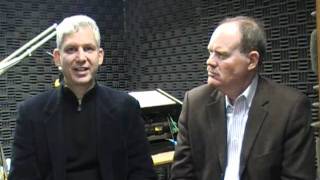
Short interview (recorded Dec 13, 2011) between Jeffrey Bland, PhD and Dr. Jay Lombard about Alzheimer's disease. They emphasize the rising prevalence and family impact of Alzheimer’s, argue against therapeutic nihilism, and discuss opportunities for early detection (subjective memory concerns, olfaction testing, genetic/protein biomarkers, PET/MRI imaging) and lifestyle/dietary measures (exercise, Mediterranean/high-antioxidant diets, vitamin D, folic acid) as prudent interventions.
Chapters
What are we doing now?
Okay, what we're doing now is we're going to have a little just quick introduction to blogsphere. So this is my good colleague and friend since 1984, Dr. Jay Lombard. Neurology, psychiatry background. And we were talking just a moment ago about what's happening in this extraordinarily concerning area of Alzheimer's disease. And I think we all recognize that there's one area that we're concerned about as we look at healthcare, rising burden. It's this mental health issue of Alzheimer's disease. I think every family has been affected either directly or close to being directly by this condition. And it seems it's rising in prevalence and creating a tremendous loss of function and producing misery in many families. So, Dr. Lombard, tell us a little bit about, from your perspective, where this whole Alzheimer's situation resides to you and some of the hopeful things that we see in the future that might give us some. Some thought that we can start battling back against it.
Well, I think first of all we have to sort of undo or reverse the sense of therapeutic nihilism which exists in the neurological community. That there is nothing that we can do which is not true at all. And once we understand first of all the scope of the problem, how big the problem is, and what steps we can take potentially to reverse or inhibit or to slow the progression of Alzheimer's disease down, then I think we're in a whole different dimension regarding the use of identifying pre clinical aspects of patients that are higher risk of developing dementia. So we can take steps actively before the onset of disease.
So start early. That sounds like the watchword obviously of things that we've been saying, but you have to know when to start and who to start with, what to do. Are we starting to get some early biomarkers, early indicators of people that might be more at risk?
Well, I'm optimistic that we are. I think that the tools at hand or in front of us, we have to learn how to properly use those tools. I think that early detection of Alzheimer's in pre clinical stages is going to rely upon sort of various integrative models of how we would identify patients. Things as simple as asking people, are you concerned about your memory? And stepping up care and people who identify themselves as having a concern about their memory, either because of family history or because of their own personal subjective experience with memory problems. We talked about olfaction as being a very simple bedside tool that clinicians can use to see if smell is reduced in patients. We know this may be a risk or a harbinger of late development of dementia. And in those patients, triaging them appropriately to having genetic biomarkers, hopefully protein biomarkers, which indicate active disease process and refining our imaging technology, which may include either PET imaging or MRI scan imaging that can pick up the early changes associated with degeneration and Alzheimer's disease.
So one last quick question, and we could go on and on on this, obviously, but do you think there are lifestyle and dietary variables that connect with Alzheimer's, meaning that certain kinds of counseling in terms of diet, lifestyle and environmental exposures could be of value?
I don't think there's any doubt. I think that the evidence is overwhelming that things as simple as active physical exercise, the Mediterranean diet, diets that are high in antioxidants, vitamin D, folic acid in the vast majority of people are very prudent and reasonable recommendations to make. The issue is identifying people who are at higher risk that may need further interventions, either pharmacological and or nutritional, as a further layer of protection in those patients.
Well, thanks. You heard it from an expert, a person who's right at the front lines of the evolving field and some notes of optimism. Thanks a million, Dr. Lombard.