Organic Reach: How Natural Products Became a Billion-Dollar Industry – Part 3 | BBH Podcast Ep 11
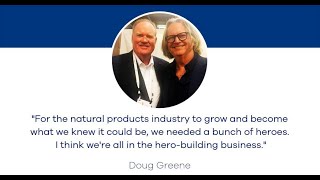
Transcript of the final episode of a four-part conversation between Doug Green and Jeffrey Bland, PhD, reflecting on their 40-year partnership. Major themes: personal styles of leadership (responsibility, leading by example, emotional resilience), the value of volunteerism and community development (Grenada and global projects), and a detailed retrospective on the Dietary Supplement Health and Education Act (DSHEA) and industry self-regulation. The episode closes with mutual appreciation and perspective on future work (personalized medicine, industry standards).
Chapters
Hello, and welcome back to the big bold health podcast, Making Health Personal in a World of Disease.
Well, here we are back with the Jeff and Doug journey of the last 40 years. And this is going to be our final episode. And we've been talking first about the history and then talking a little bit about the present. And now we're going to talk about the future. And that's really the thing that probably is most important to any of us. Where are we going? We can learn from the past, but we chart our way to the future. And we like to think that the future will be as good or better for those that we leave behind than that which we found in our past. And, you know, we said in our conversations earlier today, Doug, something that I thought was really profound that I'd like to throw back to you for your thoughts. And that is I've always observed you to be what I would call a leader by example. You know, there's many ways of different leadership being seen. Some are very emotive, some are very strong personalities. Some are quick to volunteer, and others are more individuals who just keep operating under high principles that other individuals see and want to emulate. And in fact, that's the style that I would say has been your watchword of the 40 years that I've had the privilege of knowing you. And when I think about that, you know, you were saying to me when I was talking to you about this that, well, you like to be at the back of the room so you can see everybody ahead of you and kind of understand the group. And what I said to you is it's interesting because leadership of your type at the back of the room becomes the front of the room that you have people turning around and you started in the back, but you end up, not by far proclamation, but by authenticity becoming the front of the room. So tell us a little bit about your view of leadership and how it's manifest and how that plays forward, you think, into this world that is ahead of us.
Well, to me, leadership at the end of the day is about responsibility. And I always think, if I'm going to do something, I don't think that what am I going to do? I think, what am I going to take responsibility for? For. And whether you're in a family or in a business or whatever it is, and if you're going to take responsibility for it, that means really a lot of emotional effort. And I find we talked earlier about this, the entrepreneurial journey. But the entrepreneurial journey is not just a. It's definitely a physical journey and it's definitely a financial journey and it's definitely a mental journey. But more than anything it's an emotional journey. And like as you know, through functional medicine, how you can, you can increase your functionality by various processes and whatnot. The same thing you've always got to be working on your emotional strength because that's what's needed more from leaders than anything I think is really emotional strength. And I was involved in a session once where I didn't know the people and we were broken up in the groups. They said who want to be leaders of the group? And I saw four or five people shoot their hands up. And of course I kind of moved to the back of the room because if you're a leader and you've served any leadership functions, you know how hard it is. No leadership project happens quickly. And it's a great challenge and trial and tribulations, but of course worth it. But it's not some self congratulatory thing. And after this two day process with people I didn't know, I realized that every single person that shot their hand up wanting to be the leader were actually the naturally the worst people to be the leaders. And that the people that went to the back and were quiet were really the real potential leaders and true leaders because they understood what it meant to do it and they still were pondering whether to do it or not. And I've always looked at things that. Because I also value my personal time and I value my personal life. And I think that you can't, you can at times. You have to give your life away for certain phases more than others, but you also got to be careful about it. But I always look at something that does something in the world need to happen. And I think, okay, I think that really needs to happen. And I think do I have the skills to contribute to that? And I think, okay, do I have the financial resources to, to at least get it started? And then I think, well, gee, it's. If I see it needs to be done, I have the skills and I have the financial resources. Guess what? I have to do it. That's my turn to do that thing. But leadership, as they say, is lonely leadership. You've got to say no a lot more times than you say yes. And that includes to not only say no to, to loved ones and friends and associates, but also to yourself. But where I've really learned most of my leadership skills is from observation and of course, reading everything, participating everything, always looking for any little kernel of truth you could find but when you sit like Izzy Sharp, the founder of Four Seasons, I mean, I've learned some. I've never met the guy, but I read books, I've talked to people that know him. And you talk to people who work for him, you mention his name, they light up. Well, that's what everybody wants, is when somebody mentions their name that people light up. That means he's brought light into their life. And so we have been fortunate through our lives and to have a lot of great leaders. I go back to Bill Gore and Jim Autry and others, and also I found when you find true leaders, they know how difficult it is to be a leader and the challenges. They're always willing to lend a hand or a friendly word and offer. And offer some advice. But it's a. And people ask me once, you know, who's a leader, and I say, well, in a certain sense, everybody's a leader. And you've got to lead your own life. You've got to your community. And I'm always searching for what needs to happen next, what role can I play in that? And then try to make a cautious entry into that process, because I'm always looking for. It's like catching a wave in surfing. When you catch a wave, you know you've got a wave and the board starts going, and you know that it's not your arms pushing you forward. You are in union with nature. And I think that's on what leadership is, too. It's choosing a wave and paddling it and catching it and realizing that you got to choose your waves carefully and you don't catch everyone, you know, and you go back and you keep going. But it's an important skill set that recently has gotten blurred in some of our. Some of our world, and I hope we can get back, because the world needs leaders more than ever. And we have more leaders than ever, in a certain sense. But the more we can work together in the same way we've worked together between the medical community and the natural foods industry. It's really all these linkages of working together that's really going to make the world that we all want to leave to our children and our grandchildren.
Yeah. Hear, hear. And, you know, when I think of Doug Green with epic moments in my life of observing you, there are many that I could call up, but one that I think serves to this specific discussion, which probably for you is just a trivial example of your life as just one of many. But it was a major observation for me, and this was back in the Grenada days of Reagan. And in which you and I at first thought you were being facetious, and you said, I got to get to a Grenada. During the middle of the conflagration, I got to get to Grenada, and I'm thinking, like, you're going to, like, save our medical students over there at the medical school. I mean, where were you going? And your thought was, I need to be there where democracy is being born. I need to be in that cauldron where people are having a new sense of reality and they're willing to be in the flux of change, which is not easy, may even in certain cases be life threatening. But I need to be there. And. And I thought that was a measure of you. I mean, that tells so much about the way that you approach your circle of influence and how you are on a learning curve and your willingness to put yourself in harm's way for the spirit of growth and development. And that led me into recognizing that our business models that we use today are really so built around a model of looking backward. We call the basically the audited financial statement. I mean, what is the audited financial statement? It's a historical record of something that happened. It tells you nothing about the vitality of the organization at the moment or its future opportunity to grow and develop and have value propositions that build new cultural opportunity for other people. It just tells you where you were. It's the business plan. It's the person who gets on the plane to go to Grenada in the middle of a conflagration to see if they can buy a restaurant to be part of the community. That's a different spirit. Right? You said it to me earlier today. You said, that's taking away the rear view mirror. So you cannot look back. You can only look forward using the resources of your learnings, but to project them forward into the future. And that, to me, is the rugged definition of an entrepreneur.
Well, on Grenada, I just happened to have a friend who had a Grenadian nanny who, he said she was the sweetest woman he'd ever known. And then I thought, well, why are we invading Grenada? And I, some crazy reason, jumped on a plane and went down there and almost got killed the first night. I mean, literally within a tenth of a second of being killed, they thought I was a Cuban spy. And so I called my local congressman and said, hey, can I get a letter from you saying that I'm, like a decent guy and in case I go back? And he said, well, there's a special office in the White House set up for Grenada that this is a new thing. And he said, let me get you an appointment. And I was going to be in Washington D.C. anyway, a few days later. So I said, great, I'd like to go to the White House. And so, you know, around politics you realize that, you know, half the people on the staff are like 26 years old. And so I go there and here's this Michael Chastain, a 28 year old guy. And I think at the time I was 33. And by the time I walked out of the office, I was in charge of Grenada. He says, you're the first guy that's coming here that's not trying to sell paving equipment or something. You're the first guy that's shown up and wants to help. So you go down there and you. And I'm going to write you a letter and see what you can do. I ended up going there on my own dime 23 times. I only got this restaurant not because I wanted a restaurant, because I wanted to show them good management techniques where you treated people fairly. And so we had this lovely restaurant, Delicious Landing. And I partnered with Terry Dalton out of Miami, who had the number one natural foods restaurant in America for like 20 years. And a fabulous partner and a fabulous man. But from all that, I got to reorganize our United nations office and got to do all these interesting things. Fritz Maytag from Ankerstein Beer came down and adopted their brewery. And oh my God, they're almost like poisoning everyone because when the communists were running it, they forgot about sanitation. And then, you know, Peter Roy from Whole Foods was down there and we had a variety of people. We put on a conference about getting back. I would go on the radio and give pep talks to the whole country on how to have vision and hope and things could be better in the future because they had been through a tough time. But from that I saw the importance of a community to create jobs. Because when you have a job helps give you meaning in your life. And we're all in a search for meaning in our lives, as you know so well. And so I realized that and I said, I realized, I saw this prime minister really wanted to create some jobs. Herbert Blaise was a really good man because the last prime minister had been cut up and little pieces and fed to the fish. And he would look out his window at these unemployed workers and he would say, fish food, fish food. He was afraid he was going to become fish food. So I saw how he wanted to create jobs. I came back to America to see and we did end to get, get some people to do a few Calvin Klein put a shirt packaging company there and, and there's some nice things. Some really creative companies were trying to do some things to help and it was very inspiring in that process. But then I realized that every community, everyone in the world needs to create projects. And I started this expansion management magazine that become the number one magazine in the world in economic development with 700 governments advertising in it, that's now owned by Penton Media. And so I didn't go down there to start a business and I didn't go down there at that. But I ended up with this multi million dollar magazine as a byproduct of just going to help some people that were having a tough time. And so, but I've always found that volunteer work, my work in South Africa, my work in China, my work in the Philippines, my work in Russia, all these places were not business driven starts. It was all because I was lucky enough to have. As the natural foods business took off, I had a little a bit of time in my life and I had some resources and I think everybody should be doing volunteer work in their life. And I know you've done a lot of volunteer work with me and for me that I thought well I can go help my school do this or that, my local school, and I did. But I thought, okay, I live in a global world, how can I go do global volunteer work? And it's been one of the things in my life that has been most satisfying and strangely enough one of the things that's introduced me to some of the best people I've ever met and has also emerged a lot of interesting business ideas and processes because any world you go into where you're paying attention, you, you learn and you think. So I always try to counsel my, my kids and my friends and my friends kids that hey, make sure you're doing some volunteer work. Make sure you're doing some things that aren't economically driven but you're, you're lifting a hand to help somebody else and writing a check is good too. And I believe in that. But I think it's also important to go physically do the work. I had the lovely experience of, of getting to know Robert Mueller who used to be the head administrative guy at the United nations for years and ran it. And I was on a panel with him once and he wrote a book. Most of all they Taught me Happiness, who was working with all the great leaders. But he would pick up trash every day on his way to the train station and walk a different route. Here's the guy running the United nations and he's out picking up trash every morning. I thought, what an amazing guy. And he just. And so I started looking at that. He really inspired me to get more involved in volunteer work and saw that and he said, hey, you need to go do some physical volunteer work, doing regular stuff. And he was a huge inspiration. And so volunteer work is one of my big messages to everybody.
So let me if I can take us back now 25, nearly 25 years ago. And I think there's a, an interesting shared experience that we have that is instructive about where we're going and how we might go there using the concepts of high level philanthropy, high level volunteerism, high level mission driven activities. And this is going to be a reflection with you of the dshea, the Dietary Supplement Health Education Act. So I want to give my quick vignette and then I'd like to get yours. So my quick vignette was that we had in the nutritional products field and the dietary supplement field been through a very interesting period from the 70s on with Senator Proxmire working with Bill Thompson at the Thompson Vitamin Company to fight back against the FDA's attempt to take over the nutritional supplements as prescription drugs.
And why were they doing that?
Well, I think that they were doing it for two reasons. I'd like to think the laudatory reason was that they were worried about consumer safety and they didn't know a lot about the safety of these nutrients. And people were now using mega doses of various nutrients that were far beyond that where you'd get even in a good diet. And so the fda, the toxicology branch said, you know, gee, we're venturing out and work areas that we don't really know much about. Let's control this until we really have better safety. That would be my high level thinking. I think the other thinking, however, is that because there was some sense that people were taking control of their health and they were using dietary supplements and foods and so forth and moving away from the belief of the primacy of the medical model as being the solution to all health problems, that it was causing some rumbles of, hey, this is like a revolution in the streets that we need to be very mindful of because we might lose the power structure which is a major portion of our economy is these growth industries called the drug and pharmaceutical houses. So I think there were probably multiple forces at play. But what happened ultimately coming out of Proxmire, then as we know into the 80s was that the FDA kind of got its wind again with the, what was called the Shoadenko disaster, which was tainted tryptophan that was produced by the Shodenko company in Japan that was causing a disorder called eosinophilic myalgia syndrome, in which there was 2,470 people in the United States, 60 seriously injured, which I think my last recall was something like 17 deaths from taking tryptophan as a supplement that was tainted at the time. It was not known to be tainted at the time. It was thought to be a result of a dietary supplement. So this emboldened the FDA to say, see, I told you so. And we need to step in and we need to control these things like they're drugs and enact higher standards and rigors with drug approval processes for these supplements. If it were not for one of our friends, Michael Leiner, who at the time was the CEO founder of his company, Leiner Health Products, with his partner David Brubaker, who knows what the nutritional supplement company would have, where it would be today. Because Michael Leiner was involved because his company was the largest distributor of tryptophan, most of it coming from the Shoidenko company in Japan. And so they had huge consumer liability, this was potentially billions of dollars of consumer liability with the deaths and the injuries to individuals. And so Michael, who is a chemical engineer by training, not a nutrition guy, but very smart guy and also an MBA from Harvard, he went over to Japan to negotiate and discuss with the Shoidenka company culpability for this problem. And of course, Shua Denka was offshore far in Japan and was putting, pushing back and saying, no, we have no responsibility. That's your product and if you had a problem with it, shame on you, not us. And Michael was a very sharp attention to detail guy, to say the least. And he had noticed in some of the chromatograms from the chemical evaluation of the Shodenko material that there was a peak in the chromatograms that was way out on the tracing, that was way beyond what people were looking at when they went to the court and had these battles as to the safety and purity of the Showa Denko material. And finally one day in this meeting in Japan, this kind of come to reality, meeting with the 16 attorneys for Showa Denko Corporation and the Leiter people, he asked the question, what about this peak E, peak letter E. And they said, what about peak E? Well, that's a peak that's been identified. That's way out here. What is that they said oh, that's irrelevant. That's just like a trace thing. They said, well how do we know that trace thing is not really? Because that P key is only found in the Shoadenka material. We've tried many other sources of tryptophan. We don't find that pk. Well, to make a long story a little bit longer, it was found that that PQ was an indolamine cross linked byproduct that was an immune toxin and at very, very low levels would create in genetically susceptible people a very serious autoimmune reaction that was called ems, the eosinophilic myelosia syndrome. And it was not tryptophan in and of itself nor the nutritional supplement. It was the impurity. And then it was found out that lo and behold, Shoadenko then finally did disclose, well, they had changed the production process to a genetically modified organism and they weren't changing the filters appropriately to get these trace contaminants out of the material. So they eventually took on the responsibility for the several billion dollar liability. So it was that phase, then the fighting back against that. What was the attempt of the FDA once again to completely regulate dietary supplements that led into then with a variety of very active people through Orrin Hatch, Senator in Utah, the development of the language for the Dietary Supplement and Health Education act to put suitable claims and controls under the quality and and claim support for authentic dietary supplements leading to the structure function claims of today in 1995. And of course Lauren Israel sent our good friend and colleague being the former legal aide to Orrin Hatch and then later president of one of the major herbal product companies and then now the United Natural Products association founder and president. He was actively involved with his group in, in working with Congress and Senator Hatch in drafting the legislation. At that time we in Gig harbor set up the Natural Products Quality Assurance alliance which I had 100 member organizations in our field that all signed up voluntarily to meet once a month, the CEOs or their senior people in Gig harbor and our little company in Gig harbor, to draft our own internal documents of quality assurance that had never existed before in our industry. And we said, let's beat the FDA and be the first to the mark so we can show responsibility. Which then Senator Hatch did read into the Congressional record. And we were told that that was one of the important things that then Senator Kennedy, Ted Kennedy used to justify his being the late person that voted in favor of DSHEA to get it passed. Without his vote, it would not have passed the midnight vote. And all of that process then is one of a great story of vision and commitment and. And people volunteering their time because there was no compensation for anyone. In fact we. Yeah, let's just say there was no compensation for anyone that was involved with this process. And there were many debates and you held forums. I recall several really interesting meetings in Boulder, Colorado that you sponsored with members of the industry. Some were a little bit more firebrands than others.
Yes, yes, I remember them very well.
And eventually the DSHEA was passed against all odds because no one ever thought in fact burned out many, literally burned out many fax machines. In the days of faxes of congressional individuals with their machines being over, I think there were more citizens response than of any other previous thing in the history of.
With the exception of the Vietnam War, was it.
Okay, so number two, so now this is a long winded warm up to what I want to get to. I apologize for being belabored on this. But it leads me then to a point for me of some disappointment. And I've learned from my disappointment now over the years to what it all meant. But my disappointment was when DSHEA was finally passed and there was a very large meeting of celebration in Las Vegas for the natural foods industry. And I was thinking this was going to be a great moment of celebration, which people would say now we can responsibly conduct our business. Going forward, there's a huge opportunity. We have these structure, function, clearance. We're bringing in these authentic herbal products from Europe that can be used in our marketplace now for the help of individuals. And we're going to as an industry step up and be responsible. And what did I hear in the cocktail hour before? I heard a lot of conversation about now we can exploit, now we can take advantage. Now we have taken the controls off, now we can do whatever we want. And it reminded me that we as human beings are driven by different things. Right. It wasn't everybody. So I don't want to give a blanket smudge to the. But there were those who were exploiters and they were opportunists and this was now a chance to abuse. And for me that was the moment where I decided I need to put my energy in the health professional side. Because if I can raise the health professional side, maybe I can pull forward the quality in the consumer side. So how does this all this story which has been long winded, how do you relate to it in terms of your vision and your perspective about the best of human beings and how we see light from dark?
Well, first let Me say that I remember when you stepped into that void because it was. You are very humble in your comments about what you did, but if it wasn't for you, that wouldn't have happened. Because we needed to come from science to have credibility in Washington and we needed a leader and there was only you. I mean, you stood head and shoulders above it. And then I always look at it as you and Lorne Isleson are the two that really made that whole thing happen. And we did have a series of meetings trying to bring the leaders of the business and as you recall, there was a lot of people going off the ranch with their own axes to grind and coming from really strange point of views. And we had to get everybody together and Washington kept telling us, hey, don't come here with five different groups trying to make this happen because nothing's going to happen. You guys have to get unified and do that. And I don't think it could have happened without you, honestly. But you stepped into that. And I remember when you stepped in because we were all worried about it and the whole industry was worried about it. There were people worried and there were people overreacting and it was, I'd have to say, the most emotional time in the industry to date at that, at that point and maybe since even so that was really appreciated and it was hard work and it was a lot of work. And then at the same time, which you also helped on tremendously, is then we at New Hope set our whole standards program up to be able to exhibit at Expo, which still runs today and it's still funded, has a huge staff and we're one of the few trade shows in the world that do that. And the FTC used us as an example of self of industry regulation. But how were we able to do it? You, we would have never been able to put that program together without you. And you were in all the meetings and you were the organizing for us and your name just lended credibility to what we were trying to do. And as it still goes on today, we still have New Hope, still has auditors that come in and nobody knows who they are looking for health claims that are ridiculous and whatnot. And it's a process. But as you say, when I remember after it passed and I remember that meeting and I remember the cocktail hour beforehand and so you're just always reminded that there are, there's always everything in the room, you know, and so the good people have to work together more and you have to, we need regulation. I mean it's a world that, you know, we don't need over regulation, but we need regulation. And we've just gone through a process of doing something in Boulder, a very intense regulatory process. At the end of the day, we agreed with every decision they made. Our whole thing was, why did it take us 12 months to do this? This is so expensive. How can we do this in three months? And so how could we do it faster? But we weren't against regulation. We just said, let's have a more timely processing of this regulation. But I think we're always. You're always going to have players coming in from all angles, and you always have a responsibility as your community to police your community. And at the same time, be open. Because as you know, the future always comes from the fringes. You know, the future doesn't ever come from the center. The future always comes from something like, oh, I remember when somebody told me in 1978 that probiotics was going to be larger than PCs. Well, today it is. And I was like, what probiotics are going to be? It's 1978, and of course it is. And there are so many things that we would hear about, and then, you know, 15 years later, it's mainstream. And I think that's really part of our job. And what we do is to respect the fringes at the same time, police them and monitor them, but be open. And that's a very difficult place to be because you're not knowing it's not black and white. And to be open to that. And then our job is to help sort through that, find out what's real, find out what has science or how can we get science, and then take that and then pull it bit by bit into the mainstream, knowing that now the big term is influencers, and there's nobody more important influencers in the medical community and the healing community. And so I think that's our role now, and I think that's always going to be our role in the future, is to be looking at the fringes as what's emerging. I remember the first time I heard you talk about Omega 3s in 1982. I still have the tape and I go, Omega 3s. I got to look that up and see what that is, you know, and so it's people like yourself that have the credibility, that spot things in the. What they call fringe. But of course, with your educated background, your awareness, you realize it's not the fringe. You realize it's the future. And that part of our job, part of our job and especially important work that you're doing is to help spot that and bring it in the future. And you continue to do that. And your Institute of Personalized Medicine I think is fantastic. And that really is the future. And I'm so glad that you've chosen to focus on that at this stage in your career. And it's a great task and also I think will create one more great legacy for you.
Well, Doug, I can't tell you what this journey, this dialogues with Jeff and Doug has meant for me personally. I hope those of you who have taken part of our series here will have some takeaway things that might enrich your life, help in your charting path forward, knowing that no one life is completely superposable on anyone else's life. But there are certain things that you can use as guideposts. And this is a man of wisdom, Doug Green, as you can see from his experience. And you know there's a few pounds of flesh that have come off his body over the years with out there as the as you know, I always say there's a difference between an explorer and a scout. A scout still maintains contact with the Wagon Train so they see them periodically and explore. They might be lost for years until they come back and you never know if they did do it or not. Doug is an explorer. He's bringing the rest of the Scouts, of which I'm one up with the Wagon Train to explore new territory and to settle it in places that are going to make differences in people's lives. So Doug, thanks. What a fun, fun episode and event this has been for me and any things you wanted to add as we close our four part dialogue.
I love you. It's great to have you as a friend, as an associate and you have been knowing you has been a joy and in my life and it just I feel incredibly lucky to have met you and Susan and I appreciate it so much.
Thank you so much. Thank all of you.









