Planetary Health is Personal Health | Big Bold Health Podcast Episode 27
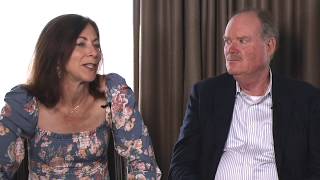
Podcast episode (Big Bold Health Ep.27) hosts James Maskell and Dr. Jeffrey Bland interview Dr. Sheilin Coates Hall. Dr. Hall — a veterinarian from Eidsvold, Australia, with diverse careers (large-animal/dairy work, veterinary pharmaceuticals, an MBA, banking) and personal experience caring for her late husband Alex — describes how those experiences led her to focus on planetary and personal health. She stresses soil health and food systems as foundational to human health, describes moving to Noosa (a UNESCO biosphere) and founding Green Drinks Noosa to connect environment/community stakeholders, and advocates regeneration (soil, community, hope), gardening, and community-based health practices.
Chapters
Hello and welcome back to the big Bold health podcast. I'm your co host, James Maskell. I'm here with Dr. Jeffrey Bland and we are interviewing people on the forefront of health creation and really excited to be here today. And typically I do all the intros, doc, but I think today I think you're going to do it.
Well, it's very kind of you to give me some chance to do an intro, so. But I'm very privileged to do this int. I know our guest quite well, Dr. Sheilan Coates Hall. What a remarkable woman she is. But I'll tell you a little bit about her because she wouldn't say it about herself because she's too self effacing to do so. So Sheilin is many things, but I'm just gonna kind of give like a biographical sketch. She is a veterinarian, obviously grew up in Australia, as you'll hear from her wonderful Australian accent. She was on a station with her family, a large multi thousand acre cattle ranch in which she grew up with intimate relationships with the environment and with horses and with cows and really leading that rugged life that you might think of kind of the classic being out back and being in nature. Then she traveled from her vet school and went ultimately and did postdoctoral work in Florida, which is considered one of the large animal vet specialty areas, and got into dairy cattle, which she wasn't really that excited about because of the way dairy cattle were being raised and maintained and the BSTH and all those kind of hormones things. And then from there through a trip through London and England and back into the veterinary drug area, where she was thinking maybe that's a solution to the problem is to get into veterinary pharmaceuticals and found, well, maybe that wasn't really so good. Eventually got an mba, then went into banking, thinking maybe that was going to help for beneficial support of good activities of humans. And she found that the investment banking area was not so good either. And she has taken all this extraordinary talent, including taking her children to Italy to do cooking school in Italy and.
Educating them a master's in food and sustainability. No cooking involved.
Oh, masters. Okay, well, that's even more profound. Thank you. Because that was going to be my segue.
I wish there was more cooking.
The Sheila that I know today is a woman who is a steward of the universe. She is, with this deep training and background, both on the natural life side and on the biosciences and health sciences side, has constructed this extraordinary Persona of depth and character that relates to stewardship of the land, stewardship of the Species that live on the land and stewardship of the community of people that are using the land and its space that we call ecos or home. So Sheilin, with all of that, you sit as a guest for Big Bold Health with a principle that I think is so important for us to be spending more time in. And that is this concept of healthy planet, healthy people, healthy people, healthy planet. And I know that this has been a driving force for you as you've gone through all these different iterations of your self education and your professional activities. So let me just say first, how did you start down this path and how did you get here? Because just saying it probably people are saying, wow, she must have lived like three lifetimes.
I know. And I guess it's just, I consider it the journey of life and you never quite know where the next wave is going to take you. You just got to be open to catching that next wave. And I guess I feel very blessed and grateful to have grown up in a wonderful country environment where, you know, it was just my family on this big property and where we didn't have much else to do apart from, you know, interact with nature. But then having grown up there and then going to Brisbane to school and then university and then across to Florida and moving into the intensive dairy industry, that was an absolute contrast. But it really, I mean, I arrived in the States with very rose colored glasses on. And so I guess I've always been. I'd say I come from a town called Eidsvold, which in itself has got a lot of history to it. But I said, I'm Sheilin from Eidsvold and literally I was this little country bumpkin and my journey has opened my eyes. Unfortunately not in the best of ways. Then Geoff didn't mention I met my late husband, Alex hall, who is a very well known entity or was a very well known person in the natural health industry in Australia as well as in the States and Canada. And I think I feel very blessed that Alex actually introduced me to the natural health industry because I guess it's like all the knots, all the strings came together and it started to tie up all my experiences and observations. Sadly, Alex had, well, basically had a brain tumor. He'd had it when he was 19. We met when he was only 26. It came back 18 months later and then for the next six years we were caught up in dealing with the medical system and all that entails. So that in itself was a big eye opener. So as I said, it's one of well, and then I also. We have now have three children. Alex passed away when I pregnant with our twins. And it's, you know, I guess you don't expect these things to happen in life, but they do, and you can't prepare yourself for them. But I guess in everything there are learnings and gifts to be had. And while it hasn't been the easiest journey, I guess I wouldn't change the learnings and they've brought me to where I am now. I guess with Alex's journey and being in the medical system, I became very interested in, well, what's going on in our food system, in the pharmaceutical system, and where have we gone so incredibly wrong? And I guess that led me then down to the tracks, like, where do you have to go? To the very beginning. Where does it all start? And I believe it all starts with our soil. And fundamentally our health depends on our soil health and our planetary health. And obviously the food that we put in our mouths. Every mouthful counts towards either contributing to better health and a better planet, or else detracting from our health and contributing to climate change, et cetera. So that's a very convoluted answer to.
I don't think that's convoluted. I think it's the depth that makes people what they are. Right. It is your story that makes you such a person of importance, because I think you can speak across all sorts of areas with personal experience, not by conjecture, not by speculation. You've lived, you've walked the journey. And I think that as a seeker, which you are, a lifeline learner, you've obviously affected the kind of thoughts of many people. And this is really the essence of big, bold health. Because if we're going to be changing the concept of health globally, we need not to be apologetic. We need to be big and bold about our assertions. We need to obviously be well prepared, we mean it courteous, and we need to be understanding. But we shouldn't be feeling like we have to be apologetic about the story. And so when I look at what you've done and how you're raising your children and the whole concept of ecological integrity and systems thinking, I'm wondering how that translates. You live in Noosa, in New South Wales, in Queensland. How does that translate out from what you see to the people that are living in that area? Are there certain things you see blocks? Are there certain places where the eyes glaze over? Where are the receptive places where your story starts to gain resonance?
Well, I guess I'm very lucky to be living in a UNESCO biosphere. And I don't know if people are familiar with that, but it's. So Noosa is one of the. It's been designated a biosphere and it's where man meets environment. And so. And that's one of the reasons why we've moved to Noosa because it means that the environment is placed as a priority. And also just recognizing that environmental health is critical to human health is also at the forefront too. Of course, Noosa, being premier beast destination, has its fair share of developers. And so you've got the opposing interests. But I've only lived in Noosa for three years, but I've established. I basically started a concept. Well, it's a global movement called Green Drinks Noosa. And I'm very social. That's one of the things I like to bring people together. And Green Drinks occurs in about 600 cities around the world. And it's so that people with environmental and community interests can actually meet each other, network and establish and strengthen connections. So I've started that in Noosa and that has meant that one, I've automatically met all the people that are interested in environment and community and health. And I was going to say too, another thing, I've become a very, I'm a very passionate environmental activist now because that's also, you know, I realize that's part of. It's fundamental to health too. So we can't afford to sit back and be complacent. If we want change, we've got to go out and be the change. And, and, but again, as I said, I've been lucky to come into an environment where once you provide an opportunity or a forum for people who are interested in these things to come out and meet each other because often we're all lonely voices. And that's been a great experience because I've met some wonderful people. And also just seeing the different connections being made across different groups has been really fulfilling as well. And I think in my journey, I suppose I've noticed even being in Australia, people tend to operate in silos. And that's one. And I guess that's also the divide and conquer policy, if you want to. If the bigger forces at play don't want change to occur, then they basically pit people against each other or separate them. And that's been a big issue in the natural health industry in Australia. The government has done a lot of things to, to really weaken it and to undermine it over the years. And you find that even with the environmental movements too, it's the divide and conquer put up lots of roadblocks. So I guess my passion is to bring people together and once we're all together in linking arms across different industries, you know, natural health, in the environmental movement. I think, because we all have one big goal, which is a better planet, which is ultimately going to lead to better health.
I think that, you know, the sort of overarching concept of where we've been is this age of separation, right? Separation from nature and separation from each other. And I really resonate with bringing those people together because ultimately that's what the functional forum was all about. It was about bringing together people who cared about functional medicine together because they were disparate and they were isolated and they were operating in their own little environment and just knowing and seeing just the magic that has occurred, some of which I've witnessed, most of which I have not witnessed because it's been happening on six continents. It's just really, really incredible. What have been some of the things that you've that have.
Could I jump in there really quickly? I think you said something very important. I want to go to Sheila in just a sec with your question. But I think you've really hit on the essence of why we decided to move forward with big bold health. What we have tried to do is be a safe meeting place, right, for individuals who aspire to have planetary and personal health being conjoined to see this as a system and to have their advocacy and their aspirations being met and supported and reinforced by communication with others. And so that's why we ask the question, what is health to you? Because what we want is people to express their own personal aspirations for health and, and see how this universe of aspirations connects together to form a different system. It's not a system of the absence of disease means you're healthy. It means the presence of function. To create posterity, to create longevity, to create, I guess you'd call it sustainability becomes a major kind of collective of individuals. So that we've moved from a fear based model, which is disease, to a proactive upward mobile model, which is the proactivity of health as being a central feature. And I think what Sheilin is bringing through this conversation and your question relates to is how do we form communities that allow that alliance to really do the impossible, to create the changes globally that will really reconstruct survivability.
Yeah, 100%. And I'd love to just find out from your experience of bringing these people together, what are some of the outshoots that come from that because ultimately, you know, that that's, you know, that's where the magic is really happening.
Well, for instance, just in the last couple of meetings we've had a couple of lawyers who have been wanting to do their bit for the environment and, but you know, again, as they've attended and so now they've connected with other people who need that help and, but again, most environmental groups can't find, you know, can't afford it. And I think also I was actually just going back because when I was in Italy the degree I did was a degree at the University of Science and Gastronomy, which is a university that was established by the slow food movement. And I'm not sure how many of you are familiar with the slow food movement. It's very active in the States, but it originated in Italy and it was set up in response to fast food in the, in the 80s. But slow food is all about conviviality. I mean, they're trying to bring back the importance of meeting around a table, of bringing people together, of conversation. And also because I think, you know, there's food and there's health, but there's a whole other aspect about food and that's about, it brings cultures together, it brings societies together, it keeps family together or we meet to celebrate over food and we have good conversation. And you know, when you have a long sit at a long time, you know, lunch or something, that's when you, you do have great conversation, you discover more, a lot more about people and you form much stronger connections. So I guess I've also come from that, that background. And so bringing that in, across to green drinks as well is just because I think, I mean it's wonderful when you do see people meet and resonate and connect and you can even, you can feel the frequency rise in the room too when you've got like minded people, especially when they find their tribe too. Because I think I've often felt that I did a little bit like a square peg and a round hold often and so not quite resonating with everyone else. So it's so nice when you do come across a group of people who are like minded, who do think the same way. And again, I suppose it's more than incremental. I was saying to Jeff, it becomes one plus one equals five when you meet those other people and you realize that you aren't a lonely voice. And, and I guess it also gives you a lot more confidence and power as well because you know that there's other people that'll back you Up. You're not crazy.
You know, it's very interesting as I'm listening to you, because you and I shared an experience actually, in Noosa when I was visiting not too long ago that I really was so energized by. That demonstrates what you're talking about. So I had met this woman at a meeting, actually, in Texas, who was Australian and had lunch with her. And she was a very powerful molecular geneticist and was doing genomic testing and was doing personal nutrition counseling in Australia. And of course, I admit, and knew you very well. And then in this conversation that she just mentioned that she's relocated from Melbourne to Noosa, and I said, oh, on my word, isn't that amazing? I have this good friend who lives in Noosa, and maybe I could broker a conversation between the two of you. You both have young children. Maybe it would be an interesting thing for you to meet. So we were fortunate to get this meeting together. And what occurred for me as an outside observer, watching two women of power and authority and wisdom who met for the first time and how quickly you were able to find the commonality of your belief systems. And that was the one plus one equals five. I could see it before my. And it turns out that she only lived but just a small distance from you, which was even a more significant coincidence. But it was a living example of what happens when you form a safe place for people with ideas that they share in common to create goodness. And that's what we're trying to do with Big Bold Health, is be that kind of a location.
Well, I want to throw out one word that I think maybe typifies a lot of what you're talking about, about whether it be the relationship that you created there or whether it talked about your work.
I want to talk about.
I'd love to get your thoughts on this word regeneration and what that word means to you in all the different aspects that you're applying it.
Well, I guess it's regeneration, obviously, of the soil and the planet, but also of community. Oh, regeneration of hope as well. I think a lot of people are feeling confounded. They're not quite sure what to do. They've lost their optimism. So it's finding ways to re. Inspire people. But I do think community is fundamental and bringing together people because just. I mean, it doesn't matter how healthy you are. If you're living an isolated life, it's lonely. You've got to have every spoke in the wheel. And I think community, especially in places like Australia and America, where we've we stem from where cultures, where I guess we've had a lot of people that have traveled a long way, they've been separated from their original communities, they're big countries, you're separated from family. So it's hard to maintain those cultural traditions and community tends to break down. And when you go back to Europe and places and you see how you go to a village and the whole community gets together and the children are out there and the 90 year old grandparents are out there and they all participate together and they learn to coexist and also learn to accept each other's differences because that's, I think that's also something that's fundamental to change is learning to accept that we do have different opinions, but to honour other people's belief systems and then find those points of connection. Because whenever you do talk to people, you will find a place that you both resonate with, with or a point that you might both agree on. But until you actually start establishing those dialogues, you're never going to find those points of commonality and just connecting people because we are energetically all connected. We've just somehow built up all these different barriers between us.
I've noticed a theme recently, and I'm a part of this theme, is that people who are in this world of health creation that we're in, whether you call it functional medicine or otherwise getting into farming.
Yep.
I've started to grow hot peppers and you know, I saw that the film the Biggest Little Farm recently playing and just saw the power of regenerative agriculture and I just thought there are so many lessons that cross across from regenerating the earth and regenerating the health of our microbiomes. As an example, you're right in your zone.
But I think, well that's the thing. I've also done the same. So I've been building a house, it's a toxin free house and trying to live as much off the grid as I can, but in suburbia. But just I think growing your own food is fundamental and unfortunately. Well actually everyone can grow their own food. You know, you can just get a little cup with a bit of soil in it and grow a seedling and that's all it takes. But it just gives us, also gives us a much greater understanding of how difficult it can be to grow food and why we have to spend good money on good food. And I think, but I mean for me I've built this big garden and it's taking an inordinate amount of work but actually whenever I'm in It, I feel so happy. It's just, you know, I now see what, what it is about gardening and, and, but I think just getting your hands in the soil too just instantly reconnects you with what's fundamental to life and what, you know, I think everyone should be. I mean, these school gardening programs are so, so key, I think, to teaching children how important that is and how soul filling it is too, to get out there and to grow your own food. And once you've got that connection with food, you appreciate it so much more too.
I'm so glad that you're having this conversation because I'm kind of just going right back to seven years of age. For me, I grew up in the Southern California, in the San Fernando Valley in Southern California. My parents relocated. My dad was from Illinois, that's where I was born. We relocated in the 40s to Southern California and we had a little tract house. My dad was a veteran from World War II, so all the houses were the same. But in the back of our house, small little house, was a little planter box. So my dad was big on laying bricks. He liked to have all things nice and neat. So we had brick planters. And there was one space that was maybe as I remember it, maybe as not probably in 5ft long by 3ft wide, that had you put a brick border around it. It was just got sandy, you know, Southern California soil. And so my mom says to me, this is your garden. I was seven years old. Take it. And that was an incredible experience for me because every year for the next five years, about until I was about 12, I think I would have my separate rows of vegetables. I'd have my turnips, I'd have my radishes, I would have my tomatoes. I had, let's see, what else did I have? I had cucumbers, I had peppers. So I have these rows. And that was my world is seeing this garden through to the end of the season and picking stuff off and being able to, to give it to my mother for dinner. And it was at the time, of course, when you're a kid, you just do it. You don't think much about it. On reflection, I think it really set in a pattern, very important pattern for me that has followed probably through my whole life. Because what my mother was really trying to do is teach me about nutrition. She was very, very big on nutrition and the connection of nutrition to the soil. None of my friends knew about growing anything. You know, we all lived in the same neighborhood, but I was the one that had this little tiny garden. So I think your points are very. If we're talking about big and bold.
Things, well, in the 50s, the rage was like mayonnaise in a can.
That's exactly right.
Basically, you have the opposite experience of that. And look where we've all ended up.
Actually, that made me think, though. When I was 8, I was trying to make wine. So what does that sound like?
You are much more sophisticated than me.
But actually, that brought to mind one thing that really struck me, reading Nelson Mandela's book Long Walk to Freedom, because he. When he was in jail for 20 years, he built a vegetable garden in the jail. And he basically. I think that's, you know, because he was getting nutrition from that, but I think also just the solace that provided him. So not only did it. I think it helped his mental health and also physical health, but I've been.
Diving deep in the last year to understanding group medical visits. And, you know, sometimes these groups start as people coming together and being together in groups because they all have type 2 diabetes. But if the group is run well after a short period of time, they don't, you know, that they're healthy. And these people want to stay together because they build community. And I asked the guy who was building these groups what happens after insurance stops billing for these, and what do they look like? And as well, they just start doing healthy behaviors together as a group, and they decide as a group what they want to do. Well, I was like, well, what do they do? And he's like the number one thing.
They all like gardening.
Yeah.
And it was really interesting to see that even, you know, gardening as a group, take anything that's healthy and do it together. I think there's a real, you know, there's a real companionship.
Still trying to convince my children of that.
You give them 5ft by 3ft.
Exactly. I've got to give them ownership. That's a big.
Yeah, yeah. That's all you need. Well, look, I'm super excited to. To. To be having this conversation and to bring, you know, all these disparate areas together, because ultimately, you know, Jeff, you know, I know that the big, bold health has a agricultural angle to it.
Absolutely. This is a healthy planet, healthy people. That's what. When health is with a capital H, it's not a lowercase, it's a big capital H. And Sheila, you've helped to make our. The font size of our big H even bigger. So thank you. Thank you so much. Really appreciate it.
Thank you, James.
Wonderful to have this conversation. And you know, for those of you at home, you know, please go to the website and tell us what health means to you. We've had a number of people that health to them means the ability to be able to participate in growing food and being part of their community. So also, if you have people that you know that are interested in agricultural practices and how it relates to health and gardening, we'd love them to see this episode as well. So please share share on social media. But in the meantime, I'm your host, James Maskell, my co host, Dr. Jeffrey Bland, and we'll see you next.
Time.









