Super 70! Health is a Big Bold Choice at Every Phase of Life | Big Bold Health Podcast Ep 18
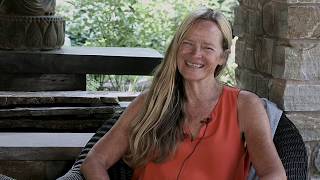
Jeffrey Bland interviews his sister Christina Louise Clark about staying healthy across different life stages. They discuss wearables, genetic testing, and microbiome analysis, and how to take control of your health while working with doctors.
Questions this video answers
Super 70! Health is a Big Bold Choice at Every Phase of Life | Big Bold Health Podcast Ep 18
Recorded on December 28, 2019.
Christina Louise Clark (host's sister; also known previously as Christy Bland).
She says they've been married for 41 years.
She says she started snowboarding at 49 and has been snowboarding for 21 years.
Chapters
So welcome to the Big Bold Health podcast, making health Personal. And, oh, I'm so excited, as I always am, but particularly excited this version, this episode, for what you are going to experience. I think it's going to be a real treat because we have a distinguished guest, Christina Louise Clark, who I actually know much more about this guest than I do normally. So I don't have to do a great biographical kind of review in preparation because I have lived with this person now almost 70 years of her life. And that happens to be my sister, who I knew as Christy Bland earlier in her life. But over the last 41 years, it's Christina Louise Clark, a mother of two remarkable children, Georgia, a daughter who has recent twins with her husband, Jacob, and a son, remarkable gentleman who graduate in history who is just one of those great spirits of the universe. So, Christy, it's just such a pleasure to have you here on the Big Bold Health podcast. Thank you.
Thank you. Do you see some genetic expression there?
Well, she got the looks and I got something. I'm not sure what it was. But anyway, you know, this is really one of those extraordinary moments for me, not only because it's a chance to have this intimate discussion with my sister that's so intimate that we're going to be putting it on the Internet. But I think more importantly, as I've said so many years, actually so many decades, that I would go out of my way to know you as a friend. And I'm just so fortunate to have you as my sister because you're a person of extraordinary, extraordinary energy, power and substance. And you're a leader by nature, and you're a person who operates by action, not just words. And, you know, it's proof of the pudding is how we behave. And, you know, as a career woman, as an athlete, as a civic responsible environmental activist, as a dog lover, and actually having multiple huskies, which are not easy dogs to care for while you're having children and having done some extraordinary things with your husband Dennis, including living on a houseboat in Sausalito and doing home remodeling and all sorts of things, as I've said to people. So if I was to be asked, who do you want to go across the United States with in a covered wagon if you were in St. Louis back in the 19th century and you were to be traveling west? And I would say, well, the first person I'd ask would be Christy Clark, because she has all the attributes that I don't to survive that long trip going westward. So with that, as kind of an overview introduction. Chrissy, Let me just kind of set the context. You know, you're a person who has always been as an artist, when you're at UCLA and doing art and then an artist as a commercial artist, over these many years, you've seen the world through the lens of an artful woman of substance. You've watched the transition in women occur and you've, you've had a chance to express this on multiple levels throughout the last 50 plus years. So what's been your driving force? How have you seen, you know, you're a person who cooks and does natural foods and everything we've ever done, you've tried and tested it on your own body to see if it works, you know, what's the driving force for Christy Clark?
Well, I think it probably goes back to the influence that our parents had on us and the combination that was so unique of a thoughtful yet staid father. Being from the Midwest, he had kind of like really intellectual but colored within the lines sort of thinking. And our mother, who was the less staid, I guess we could say Californian. And it was just the synergism of the two of them. And I think it created a really fertile environment for us to excel. And they did a really great job, maybe too good of, like, telling us that we could basically do anything that we wanted. And to my dad's credit, our dad's, he always encouraged me as his daughter to do whatever I wanted. And if I had any sort of, like, sort of tomboyish ideas about wanting to have, you know, pursue a sport or an activity, he was always on board. He never said, oh, girls don't do that, you know, and, or a career. If I thought I wanted to be an architect at one point in my life and say, great, go for that. And it's hard to believe now, but back, because I turned 70 in a couple weeks. But back when I was in grammar school and wanted to be an architect, there were no women architects that I knew of anyway. So, yeah, I just always felt like I can do whatever I feel like doing. And then having you as my brother, who I always admired and wanted to be, like, I was always, you didn't realize it, but I was always competing with you.
You did a good job. You exceeded the competition.
I don't know about that, but I remember, like, I'd have these small victories in my life. And like when we were 8 years old, I was 8 and you were like 11 or something, and we were playing quote, unquote, touch football out in the front yard with your contemporaries and then the little kids, my group. And so you guys had to play on your knees.
Oh, that's right.
And I remember I caught the ball and I went for it and you had your arms sticking out like that and I just leapt over it and you were like, whoa. That's when I knew I had like a future in high jump.
So I think you've said a lot of things already about your personality, your fearlessness, your courageousness and your forward thinking and take charge. You've always been a person, I think, who takes charge of your life. Have you considered yourself as being, I don't want to call it a woman's liver because that's kind of an old term, but let's call it a woman of independence during this whole period of time, because this was certainly a time as you're growing up in which women's roles were being redefined. And your daughter is very different in the world now than you would have been at the same age. So how did you see yourself during this whole period?
As somebody who bucked the system in the beginning and was ready to take on the male dominated workforce. My first real job was I was hired by CBS to work for Pacific Stereo as their first woman in their affirmative action program to get women into sales and management training. And Pacific Stereo at the time was like, well, it became a hundred store chain across the United States. It became really big. I was the first woman that they hired. And so all eyes were on me. And it was an interesting time, especially selling stereos, which was like a very male dominated activity. And women didn't actually, in reality, women have better ears than men do. We can hear greater frequencies, ranges. But the men had owned that audio file. You know, they declare that they owned that. So I was set to like prove them wrong and earn my. But I earned my way. I started in the stock room and I would stand out in San Francisco behind the store. And we'd have to unload the truck with these huge speakers that weighed like 50 pounds or 40 pounds each. And I'd stack up four of them on top of the hand truck.
And you didn't just stay in the stock room, obviously you continued to advance up. But I'm sure each of those there were barriers for your advancing. It wasn't like, oh, just open the door and come on into the C suite, you know, of the company and oh, be fully fledged. And it even reminds me, you might want to mention even when your daughter, when she was younger, wanted to go into girl Scouts, but she didn't like the Girl Scouts. So you had to form your own group called the unscouts.
Yes.
And then what you did with it. So there are examples of, I'm sure, in your life where you had to pass over these barriers.
Right, right, right. That's true. And I don't know, I just. When an opportunity arises, I seize it if I feel that I can, you know, benefit or my child can benefit from it. And so in the case that you just mentioned, my daughter was just graduating from grammar school, so fifth grade, she was going to be entering middle school. And I remember what a tough time that is for a transition for all kids. But having been a girl, I know especially how hard it can be on all girls. And I thought that I wanted to instill in these girls a sense of self reliance. And I think that is the overarching theme in my life that I've always tried to achieve. So self reliance. And I had an opportunity to do some backpacking one trip with a couple of trips with you. And so at this time I thought, this is a great time to send these girls out into the wilderness with me, with guides and teach them self reliance. And so I engaged in this whole thing and I'm pretty organized. So I had like this giant list of everything they're going to need for the trip and where we were going to go. And then I had a training schedule. So I had them meeting every Saturday where they had to be in shape. I couldn't have any stragglers and they had to carry a pack. So I had them all meet at Lake Merritt in Oakland, and we'd run around the lake, which is 3.1 miles, and then they had to do it in under 30 minutes or they weren't going to be able to go on the trip. That was the cutoff. And they all did it. And it evolved over the number of weeks prior to them. And then some of the mom and dads got involved too, and they were all running with me. We had one trip where we did 50 mile loop in the center of Yosemite National Park. We were as far away from any boundary as you could possibly be. And we went up to Red Peak Pass, which is the highest peak in Yosemite. It's like 12,000ft, I think. And we had wild weather. We were hiking back and there were huge explosions of thunder and it was real scary.
Well, and I think again, you're symbolizing exactly that kind of what it takes to develop self reliance in people. You want to be at the edge where you're forced to accommodate change, but not so far over that you're in mortal danger. That's a subtle. And I mean, look at you. You. You took up snowboarding when you're nearly 50, right?
Yeah, I was 49. I've been snowboarding now for 21 years.
So that then leads, I think, to a very interesting kind of story that other, both women and men, I think, can identify with as it pertains to developing resilience and staying on your mark and staying focused. So here you are, this career woman. I'm going back now in your life to an earlier time. And you and your husband Dennis make a decision that you want to have children. So you are practicing to have a child, and you have a series of repetitive traumatic events. Right. That might test a lot of people. Could you just tell us a little bit about that? Sure.
I had, like, when I first, I got pregnant immediately. Of course. That's how it works. I'm in control. And then I had a miscarriage at, like, in the first trimester. And it was like, really unsettling. And it was like, why is this happening to me? I don't know anything about this. I'm healthy. I run, I do this, I do that. Why is this happening? And then over the next six years, I had probably a dozen. I lost count after a while, but probably a dozen miscarriages. And then I was finally successful in having my daughter at the age of 37. And of course, it was a blessed event. She was perfectly healthy. Everything was great. It was definitely a momentous occasion for both my husband and me. So we pretty much just devoted our lives around our daughter. And then we were fortunate to have a son. It's actually five and a half years later because I had a couple other even more traumatic events in between that, trying to have kids. But anyway, so I have two healthy C section babies and her now terrific adults and my best friends.
Yeah. So I think, first of all, thank you for sharing. That's a hugely. I know, privileged and emotional story, but I think all of our listeners can value from that vicarious experience. But this also is an interesting point because I think for some people after a few miscarriages, they might have said, well, hold up just a minute. I have a career, I have a life, I have other things I like to do. This is way too traumatic for me. Maybe this is just not for me. I'm just going to give over this thought about being pregnant and having a child. But yet you pushed on. Not only did you Push on. But you didn't put your life behind. You continued to forge forward in your career. You continue to be in your fitness program, you continue to do your social advocacy and be a member of the planetary Stewardship group. So there must have been a decision series of points along the road saying I'm not going to have this push me back, right? This is, I'm just pushing forward.
I mean, I honestly think, I just, I don't dwell on that. I mean, yeah, there were low periods, don't get me wrong. But it was just always, of course we'll keep trying, you know, and if it happens, it happens. And if it doesn't, it's okay. We've got like that's when I got into windsurfing and, and was really hard, really into that. And then we had, you know, my career was advancing and I was really enjoying it and I thought life is good, but it's just not all I want it to be. I want a child. And then finally we were gifted with it. And the nice thing was that I was able to do both, continue with my passions and incorporate our kids into it. And they're really fantastic people.
They are fantastic and very different from each other. And so I think that as I look at your life kind of from one step removed, you've had many, many interesting. This is probably the most extreme example of kind of your self dependence and independence and, and following your mark. But there have been many examples of this along the road as it relates to how you've lived.
I think it boils down to that self reliance thing again. It's like can do. We just like soldier on. There's so many beautiful things in life. These little hiccups just are making me kind of laugh. It's like you were saying when we moved onto our houseboat with sort of like on the spur of the moment when my son started college and my daughter had and her husband wanted to live in the house that the kids grew up in. And it was like, oh, this is so great. I love this so much. And then it got cold right away and it got in. The house was really drafty. There were all kinds of openings and I got chilblains. That winter it was so cold I had like this rheumatic condition of my hands.
And we have to talk about the fact you had no bathroom facilities. Oh yeah, go to the marina.
Oh yeah. That was just. But you know, this was before I had a smart, you know, one of these sport watches and I. So I wish I'd had One then, because I had so many steps every day, because the bathroom, it probably broke.
The number of steps in that thing.
It was a half mile away. And so it was like, okay. And it was a pretty wet and miserable winter, and so there was one time I had to go. And Dennis goes, are you sure? I have to go. And so I headed out of the houseboat and I walked the half mile, and the wind was just howling, and the rain was horizontal, so I had, like, a rain jacket on, but my legs were totally soaked because the rain was horizontal. And I was like, okay. All I could do is laugh, though. It was like, funny. This is a real adventure.
I think this story says it all, Christy. This is the lesson that I'm trying to get across, because, A, you're being big and bold, but B, you're exercising your affirmative action of being on the planet as to how you want to be seen in a very personal way, right? So this is personal health in the reality, in the moment, in the windstorm, in the rain. But you're still living your dream of being on the houseboat.
Oh, yeah. You know, I could not complain. I mean, I could only laugh about it because, I mean, it was totally our choice, and it's what I always wanted to do. So eventually, you know, it would get better, and it did.
The construct that often we have when we talk about big, bold health or personalizing health is. It just comes easy, right? We just sit down and everything will come to us. But life is really one of advocacy, isn't it? It's really. There's this thing of how do we want to represent ourselves? And being represented in the complexity of life sometimes requires us to push through things. And then how do we push through? Do we push through with all sorts of bad memories and stuff that injures us? And we always say it kind of takes away from us. Or do we say, look at. I just flourished through the most adverse circumstances, and I'm better for it. And it actually, in retrospect, I can make a joke out of it. And that's part of being healthy, right? That's a really big part of being healthy.
I think so. I do think so. And a lot of that, I feel so fortunate to have a husband who has kind of, like, driven me into some of these situations, but driven me in a loving and me totally willing way. I mean, I was just, like, lucky. The synergism between the two of us is, right. We've been married for 41 years now, and it's. It's. You Know, made us who we are, you know, And. And on the flip side, Dennis, like. I'm, like, the health nut, and Dennis is, like, a totally willing subject. I did this. I was having some issues and autoimmune issues, and so I. I said, I'm gonna go on this plan, and I'm gonna, like, you know, give up all gluten, all this, all that. And, you know, and. And since I'm the cook, I was like, are you on board with that, or do you want me to cook separately for you? He goes, oh, no, I'll do it, too. We're a partnership.
So you. You and Dennis did become very good windsurfers. You went down to Baja, and you did windsurfing down there and. And really took it very seriously. And then you convinced me to get involved. Windsurfing, which I then started into the sport. And you said, well, you know, if you're gonna do this, you ought to come down and go to. We'll take you to this place in Oakland that we go to, and, you know, you can use our boards, and our friends are there, and you can give it a whirl, and there's a lot of other people there. And, of course, I had been a surfer when I was younger, so I knew.
In the sailboat.
Yes. So I knew this was just gonna be, like, for me, just stepping on the old windsurfer. I was gonna take off just like you. And, of course, I knew that I could be more ath. Athletically capable than my sister. Right. Ha ha. So I get down there, and I still recall you and your friends were all lined up in your beach towels on the incline of the beach, and here are many windsurfers out there. And I had the board saying, you gave me the basic instruction. Okay, okay, I got the instruction. That's all I need. So I get out there, and, man, I was working my buns off, and it just was not easy at all. And I was having all sorts of problems, and. And finally. And I looked up, and you guys were. You know, you were being pleasant, looking down there at me. Looking down there at me. Finally, I felt I hadn't. I was concentrating so hard, and then I looked up, and you were all cracking up and laughing, and I recognized I was going backwards.
The only reason you succeeded is you're so darn strong that you just, like, worked against nature. Yes.
That was a moment. You said, okay, I think I've got you forever on the windsurf. I exceed. You did.
That was good. That was funny. But you got payback with me when you had me go out here in Washington in Purdy and gave me your board and said, here, have fun. And I go. So I head out and then your equipment fails and I have to paddle back over all these rocks and walk it back. And it's been hours and you haven't even noticed I've been gone.
So there is a big brother, little brother story. What can I. I guess I have to.
We have a lot of those stories.
So these are the self reliance lessons that we're talking about. And I think that, Christy, what I want to really recount once again is not only the extraordinary joy to have this chance to have this conversation on Big Bold health podcast, but really to honor what it takes to develop resilience, particularly, I would say, in a woman of your age growing up in that period where women were starting to get opportunities, opportunities. But they had to express themselves strongly to get those opportunities to happen, not just be seeing a sweet little girl. I have tremendous respect for what you've done, and I think it's a very great lesson for both women and men that are listening to this podcast that it doesn't come easy. It requires fortitude. You've got to overcome barriers, but you can also laugh at it later and see that you were victorious.
Yeah. And if I have one parting thing that I would like to offer as a recommendation to young women and to young and to young mothers, the children, get your kids backpacking. I mean, I know this was like my thing, but it's like it pays off in so many dividends, I can't tell you. It's like to give yourself the survival skills that you need to anticipate anything, it's like, will pay off dividends for the rest of your life.
So there's a tip. Making health personal. You're not a technophile. You're certainly not a bio. You're not a biohacker. But yet over the years, you have learned actually early adoption, to use new software programs. How has technology, do you think affected you as you've traveled through these last 40 years of your professional and personal life?
Oh, it's been revolutionary.
Right? That's kind of the takeaway to this because at the first level, any kind of new technology, and certainly we've been confronted with great speed of new technologies to adopt. But at first it's totally intimidating, even to technophiles. But then how you embrace and address that intimidation is really the question.
Speaking of the biohacking thing, I really see the value in personal devices. I I'm addicted to my Garmin Vivoactive that my daughter and son in law gave me for my birthday. But I'm on Strava and I follow that, you know, my really embarrassing runs, but that's a whole other story. But. And I just, I can follow snowboarding, know how many vertical feet I went, how fast I was going and, and I just like that kind of thing. I've got a digital scale that measures, you know, it's just an inexpensive one, it's not a high tech one, but it gives me a baseline for my body fat and my muscle. Muscle fat, tone, fat, no muscle mass. That's the word. And bone density. And so I'm always looking for new ways to look like, go back to my N of one to like perfect the model and figure out what's working for me and what isn't. And sometimes that can be helpful with these devices.
So why do you feel that people that are in a certain age group are resisting to the acceptance? What's the intimidation factor and how can people overcome that? Do you feel to make use of these in ways that are going to make their lives more, maybe even more healthy?
I think it's a motivational factor of being able to see that the benefits far outweigh the little bit of pain in the learning curve. And they have to keep reminding themselves that we need to grow our brains, especially as we get older. So take on new tasks, learn new things and that's a good way to do it.
I think that's a really good pearl. That's a fantastic pearl that each time we're confronted with a challenge of learning, we can think of it either as this is really a kind of a pain in the posterior or think of, oh no, I'm doing dendritic branching. I'm really creating new ways of processing information. This is keeping my brain healthy. It's like working out. I think that's a really interesting model. So let's talk a little bit about taking technology to the next step because you've it's not just remote and remote sensing devices, but also you were an early adopter to genetic testing. And there are a lot of people that have pushed back on genetic testing. And in fact I was very excited to see when we both had our genes and you sent me our comparative genetics. Fortunately we were brother and sister, so we weren't living an illusion. That was good.
But our parents didn't pull faster than us.
So why did you adopt or why did you take up genetic testing when a lot of our People are still kind of fearful or pushing back on it.
Well, I want to know my genetic story. I want to know, am I at the same risk as our dad was for diabetes and his side of the family? And, and if so, what I can do to avoid that. And if the information is out there, I want it. I want to know everything I can about what benefits me. I don't want to live to be 120. I just want to live vitally until the day I expire.
So that then leads to. That takes to the next level microbiome.
Yes.
So why would you want to go to the complexity of a microbiome analysis?
Oh my gosh, it was so worth doing the poop test. I mean, I suffered from leaky gut. That was the root of my autoimmune. I had an eczema condition and it was driving me crazy, as you know, and I healed it by healing my gut. And so after that, it became very real to me that the bugs in my system were very important in the balance. And of course it kind of happened, coincided with all the interest and the new tests available and stuff. So it was sort of serendipitous in that sense. So I've just. It has only been a little while since I've had my results back, but it's been really helpful for me to see a. That it wasn't as bad as I was afraid I was, at least as far as I can tell. And I want you to look at my results. But I also found that it helped me with my concerns with diabetes and my risk to it and managing blood sugar. And so it's given me a list of foods that are good for me to eat based upon my microbiome and others that I can eat, but I should really like limit or eat, make sure that I combine it in small quantities with other foods to make my blood sugar not spike. And once I kind of figured out the formula, now I've been less diligent about mapping area, doing my daily diary, but it's been so great.
And do you feel that obviously I think the answer to this is no, but I'm trying to probe as to why other people do that. This is not just making your life too complex and dismaking it too confusing and dislike information overload. And it's like, well, now I'm paralyzed. I mean, why do you feel all this information is not like just a tsunami that's knocking you over with too much?
I guess because I've just always been experimenting with trying to better my Health and this, these are new and better, more refined tools. So I just like, it goes back to being an early adopter, but it's just like, oh, I'm always seeking things that are going to like refine the model and make it better. So it was a no brainer that I wanted to do this for me, but I can understand where a lot of people like that's a big ask. It's like I don't really want to know. You know, I like what I eat. I don't want to get out of that, you know, pattern. And what if I can't eat bread anymore or this or that, where I say there's so many foods out there that are good. I don't eat bread anymore. I love bread. As you know, I used to, I live in San Martin, we have the best bread in the world and I don't eat it anymore. And it's a small price to pay for feeling better. And there's so many other good things that I can focus on. So I eat a lot more meat than I ever used to, but kind of enjoying it.
So one of the things as I look back at your upbringing, which I can identify with because it was mine as well, was our mother who was very, very, you could either say ahead of her times or revolution or certainly different terms could be applied.
Heretical.
Yeah, yeah, I would say she was ahead of her times. And so she raised you and me both with a very strong sense that nutrition played an important role. Do you think a person today who didn't grow up with that, maybe that same primordial motivation to be a little bit of a nutrition renegade and to be a health renegade, because health was a big virtue in our family, could still be successful in taking this stuff on with being overwhelmed. In other words, were you accultured?
I think I probably was. And I lost my best friend, as you know, to cancer, to colon cancer. And she always kidded me about my sort of obsession with health and she died way too young and it was totally preventable.
So as we move ahead and we start to see people communicating with their healthcare providers and having more access to information and coming in having looked at the Internet and having their wearable information and so forth, how do you see being a patient and going to your doctor that's shaping the relationship between you and your provider?
I see a traditional medical provider. That's one of the reasons I'm an n of 1 is just because I feel I do better managing my own health and only go to the doctor when it's pretty bad.
But I think you've just said something that's really important and I think this is a takeaway. These tools that empower us with information, allow us to be in a locus of control so that we can select how we want to navigate through. I'm going to call it the disease care system. And so it's not that I believe, and I'd like your thought about this. I'm just giving you my opinion. It's not that these docs who were trained in the disease care are wrong or bad or malfeasant or whatever negative term you'd use. They have a specific expertise in training that's really valuable when it's used in the right way, but they don't have as much training and value in other ways that we might want to use them. And so it's like asking a person at times to do something they're really not that well trained to do. So if we have a locus of control around our health, but we have someone in the wings that's really good for addressing what might be that injury or that thing that comes up that we need, the more crisis care, intervention, it seems like we have trained ourselves and educated ourselves to have the best of both worlds. Right. Because then we can start navigating the system with greater intelligence without using parts of the system to do things that it's really not best suited to do. How do you respond? Do you think that's I'm off base?
No, I don't think you're off base at all. And I was just thinking about, like, the way I manage my own health. If I have an infection or something that needs like clearly antibiotics or some sort of treatment, or I've broken my ankle snowboarding, then I'll see my doctor if I. But when I had that eczema rash, I knew with that that was not I was going to fall into an area of medicine that they're not good at, traditional MDs, at least mine. And so I just did self help on that and it worked out beautifully.
Yeah, See, I think that this is really an important topic that you're addressing because I think often in this field were quick to do judgment and point fingers and blame saying, well, my doctor doesn't do the following and they don't know about this and it produces some sense of upset. Well, rather than saying, my doctor is actually really good at certain things and I'm glad they're there, but I'm not going to ask them to do things that are not really they're not that good at. So it recontextualizes the relationship. Don't expect a person to do something that they're not trained to do. And this is part of the difficulty, I think, that we have with this word health care, because it assumes that they are trained in health. They're not, they're trained in disease and they're good at it. And so don't go there thinking you're going to get health, you're going to get disease management, disease treatment. And so then it begs the question, well, does that mean they know nothing of health? Of course they know something of health. They know about standard conventions of risk reduction. What are the conventions of cholesterol, of blood pressure? I mean, these are guidelines that are useful guidelines. It's not to say they have no value, but they're not individualized to you, the person. They're community based, population based standards. So if you want to know about you in the healthcare system, then you're saying, now I'm going to start implementing a different strategy. It's more my locus of control. Now you may, you know, some people may say, well, I still need help. I'm not quite as far along on the curve as a Christy Clark and using wearables and genetic testing and this and that and practicing for 40 years. So, okay, then there are other members of the broader community that are health focused and you need to find one of those to be your facilitator. But don't expect your crisis disease care person to have the skills that you're looking for and then call them wrong. That's not, that's not fair.
No, I agree. I know you talk a lot about and you're really interested in changing the whole procedure, changing from the disease model to the health model and how can doctors then be compensated? And that's a whole different thing.
Yeah, I think that that's where we are right now. We're into an era where I believe that people are starting to say we need to find ways of paying for people keeping healthy like we pay for people who are sick. I think that what we're observing right now is a transformation about what health care is, about how this disease care, healthcare interface occurs and where to go to really find healthcare intervention versus the emergency room. I mean, no one would go to the emergency room for healthcare, would they? So they might go for something that's related to a serious problem, but it's probably not health care. How that translates to individuals who may not be quite as motivated as you or don't have quite the support system that you have, or maybe even the interest is that we need to find then kind of a distributive system that gets down into things like health coaches and group cooperations. I know that when Mark Hyman, Dr. Hyman did his interesting work at the Saddleback Church, in which they worked on health of the congregation of Saddlebacteria, several thousand individuals, that they found that in group settings, that without going to the doctors and getting medications, that these people had unbelievable individual changes in their health by reinforcement of one another, by being willing to talk about, you know, I've been fighting my weight, or I've been having blood sugar problems, or I've got pain and such and such and finding people that have similar problems and then working collaboratively through that. So that we have a different approach to health than just one patient with one diagnosis, with one drug and one doctor. That's very kind of provincialized system.
Yes. Yeah, I agree. Plus, I think that just the psychological factor, the emotional group setting, I mean, we need connections. It's part of our whole health picture. I attribute a lot of my own good health to good family relationships. I think it all builds and then friendships and just interaction with the world.
Yeah, I think you're right. And I look at. It's an interesting observation. We obviously just lost our mother at 92 a year ago, and unfortunately, we lost our father in his early 70s. Right. And so here is a huge gap. Two people that were deeply in love, great people together, that was a huge different gap in their health. And then you start to say, well, how did that actually happen? Was it genetics or was it environment? And I think as a learning curve within our own family, I believe you and I have not spoken about this much, but I think we would both think the same, that there was a lot of difference in the way that our mother lived than our father. Right. And so, yes, there may have been genetic differences, but they were amplified by the lifestyle choices that our parents made. And so you had very, very different example in our own family of how this played out over the course of 70 plus years of living. And, you know, as a resource, as I get older now, I really recognize this as a resource to a family. There's something very important in the wisdom of the grandparents and maybe even the great grandparents to pass on to their children about living, about the cultural adaptation to change and to the kind of life lessons. But if you're not well or you've died, you're not going to pass on a lot of messages Right. And so I think that there is something very important as we start growing older to recognize that it's not just that you are giving to your children when they're little or even if you don't have children. You are giving back if you maintain a level of vitality and health to the culture that needs the wisdom of experience. But you can only give that wisdom of experience if you're healthy enough to do so.
That's right.
Well, I want to really honor, I think, Christy, what you've done. I mean, it's very interesting. We have all these different diversities of ways that people approach health and from soup to nuts in our. In our broader field, everything from doing nothing to going overboard and being health fanatics. And what I think you've done is found an incredible place to move forward with technology, to use it in a humanistic way, to incorporate it without being owned by it. You're using it as an advantage to your life. And, you know, you're not a biohacker, but you're a tech savvy person that's been able to harness and utilize these tools that really accelerate what we see here today. A 70 year old woman that's vital, capable, and raring to go.
Yeah. Ready for the next snowboard season.
Exactly. So good on you. Thank you. And for you, of the big, bold health universe, it's a pretty good model. Yeah. Those of you that are aspiring as you move forward, I think Christy Clark does a pretty good job of carving out a landscape. That's a good carving.
That's a snowboard.
I know. That's why I used it. It's a metaphor. So thanks a million, all of you. Thank you. Thank. You.









