Systems Biology & Functional Medicine: Chronic Disease Management with Jeffrey Bland, PhD
Jeffrey Bland argues medicine is shifting from treating disease categories to personalized P4 care: preventive, personalized, predictive, participatory. He uses the Functional Medicine Matrix to show how gut health, immune function, and metabolism connect to cognitive decline, and presents evidence that lifestyle changes can reduce genetic risk for heart disease and dementia.
Chapters
Welcome.
I'm really excited to introduce Dr. Jeffrey Bland, who is my mentor is the reason I'm here. I first heard him probably 1996 and it was one of those moments where I realized that the whole world was going to change. Either what he was saying was basically crazy or he was a genius. And I had to figure out which one because, you know, I wanted to be sure if he was true in what he said, then it was a revolution in medicine and it changed everything about how I was going to approach my patients. And Jeff's a unique guy because he studied with Linus Pauling, he's a nutritional biochemist and he has basically been a one man computer synthesizing data for I don't know how many years now, 40 years. And every time I see Jeff, he's got a stack of papers in his hand that he reads all the time. So he synthesized data from across specialties from genomics to immunology, to study of the gut and the microbiome. And these concepts he found early in the literature and he brought them out to clinicians who then began to use them in their clinic. And that really was the origin of functional medicine. And for me, you know, it's been the cornerstone of my practice. In fact, when I was learning this, and I basically learned it by listening to tapes of Jeff for hours and hours every day and usually I had to rewind because I didn't understand he was saying half the time it was when they had cassettes. And the concepts now that are commonplace were completely absent in medicine. For example, the microbiome that was a cornerstone of our approach in functional medicine was addressing the gut and the microbiome inflammation, which we now know is linked to obesity and heart disease and cancer, diabetes, dementia. That concept was seminal to the teachings back then. And also, for example, he looked at the mitochondria and things that we're now beginning to understand are critical in medicine. He's looking at the idea of detoxification and the role of our detoxification system. These concepts were so far out of medicine, but we began to apply them and see extraordinary results. So Jeff is not just that, but he has held so many positions. He's been the chairman of the Institute and the co founder, Institute of Functional Medicine. He's runs biotech companies. He started, he became part of medagenics, a nutritional supplement company, started healthcom, which began his teaching and really has been the father of functional medicine. So I'm really pleased to have Jeff Bland here at Cleveland Clinic at Grand Rounds because He's the reason for all this today.
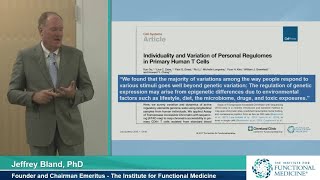
Wow. Wow. Well, thank you, Mark. That's very gracious. And I don't think I can fully accept all of that laudable comments, but it's really a privilege to be here with you this morning and to kind of talk about the perspective that I think is a way of thinking as much as a way of doing, which is the functional medicine model. So you're going to hear me really kind of emphasize the construct of how we address questions and how we approach getting answers, and where does truth really reside as it relates to individualizing the treatment of patients. And so it's going to be a little walk down memory lane, but hopefully it'll be walking down the literature that's available today that really supports the construct that underlies a systems biology approach to medicine, which is functional medicine. So let me give just four little points before I get into my slides as to the overview of what I'm trying to accomplish with you this morning. And this is like the Cliff Notes version, so those you want to check out after this, you at least got the summary. So the first point of my four points is that I think we're moving on a broad scale globally, from the age of the average to the age of the individual. And this cuts across many, many different sectors in the public domain, in politics and sociology and economics and information science, and in medicine, moving from the age of the average to the age of the individual. And I'm going to talk a little bit about that, because most people in medicine would say, well, hold it. We've been treating the individual, you know, historically. That's what we're up to. So isn't that being a little presumptuous to suggest that, you know, we're suddenly making some transition from the age of the average to the age of the individual? And I'll move on my second point, which describes why I'm saying that. The second point is if you ask, what is the fundamental basis of the nosology of medicine? Where did it arise as we would think of it today? What's the philosophical germ seed of the way we think this combination of inductive and deductive reasoning in medicine, one could argue probably about different points of origin, but I'm going to go back to the beginning of the 19th century, because it was a very interesting period of time, which we had the field in Germany of statistics being born under Friedrich Gauss. You know, there was no such thing as a Gaussian curve until Friedrich Gauss kind of brought this construct out of mathematics. Similarly with another interesting person who was a savant, Florence Nightingale, the Crimean War. Those of you who've studied her life know that she was a genius clearly, and she was the first person to use population statistics for health related issues and, you know, start aggregating data together in a very logical way to make decisions about individuals based upon group principles. So the combination of Friedrich Gauss or the field of statistics and that of aggregating that into graphical forms so you could understand big data from simple pictures was the start really of the founding understanding of what later became the Flexner Report in America that gave, gave rise to scientific. The birthing of scientific medicine, you probably recall, in the 20th century, the early 20th century. So that was the kind of curriculum we all went through as students, probably, which was basic science curriculum. You get the math and the physics and the chemistry and the biology and biochemistry, and then you're trained to be ready to be a doctor. And it's all this kind of logical extension of taking information from groups and distilling it down into understanding how to classify a patient. That's called differential diagnosis. That model, which we would call individual medicine, is really built on a statistical basis of group aggregation. And so we treat from a statistical norm. And I learned in 1974, actually in a meeting that I attended in Houston, it was a founding meeting of the American Society of Preventive Medicine. And Linus Pauling spoke there and Roger Williams, who was the head of the nutrition department or actually biochemistry at University of Texas, and he made. Williams made a very interesting point in his talk. He said, nutrition is for real people. Statistical humans are of little interest. Now, that stuck so strongly in my central nervous system that I've never been able to escape from it since that was 1974, because I recognized that I had spent a lot of time actually studying statistical humans, right? And yet probably in practice, you would never see a statistical human. You would see individual people who bring individual backgrounds and individual issues that may not fit directly into the midst of a Gaussian curve. So that's an underlying principle that we incorporate within functional medicine, which differentiates what I call individualized therapy from a statistically based approach to aggregate into personal medicine. I hope you kind of get the differentiation. So my third point then is the theme that functional medicine is less concerned about what we call it and more concerned about where it came from. Now, that's a simple thing to say in English, but it's a more complex thing to really figure out what we mean because it takes us beyond the differential Diagnosis, the differential diagnosis. Now we move into the ICD codes, you know, and we used to be have the ICD9s and then suddenly now we have the ICD10s, you know, and we thought we knew all this stuff about disease. And then suddenly in ICD10s we have three times as many diseases. So what does it say we really knew about disease? It says, well, maybe it's a work in progress. Maybe as we get into segmental analysis and we get more differentiated understanding that there are many forms of diabetes, many forms of heart disease, many forms of whatever disease, when you start cutting it into smaller sections to individualize it, that the construct of disease is almost like the infinitesimal in calculus. You follow what I'm saying? That eventually you have so many different cuts of a disease that the name of the disease is not even important anymore. It's really more what that individual has. So that's my third point, is that we're going to be talking less about end organ pathology and more in functional medicine about how genes interact with the environment. Because that's the plasticity upon which one can actually generate a modifiable intervention for that person. It's actionable if you understand that relationship. Now, I don't want to be so presumptuous to say that we know everything we need to know about either genes or environment or how they interact. But I want to say that that's the birthing of a new paradigm. That's because we now have the capability of measuring things and understanding things at that interaction of a genomic uniqueness with the environment, lifestyle, diet and background of that person in ways that we never could know before. Based upon the development of technology, information science, all the kinds of what we call enriched data clouds that are going to travel around with each one of us that we can access and carrying our own medical record or health record with us. So this is a new age, it's a paradigm shifting time in history. My last point is, so what is functional medicine? If it is more focused on how you got there than what you call it, then what is its point of differentiation in logic? The logic tree would suggest, and this is where I'm going to go into the slides, this is the longest introduction you've probably ever heard, is that the nature of what we have historically done is to apply to memory a variety of algorithms that allow us to recite on demand specific types of descriptors. That's medical education, really. There's a lot of memory, isn't there a lot of memorization and Recitation and being drilled to the point that sometimes we lose the skill of the neuronal plasticity to start interconnecting things together in ways that would make maybe more sense for the patient. Now, I'm not trying to be accusatory, and I'm not trying to be dismissive of the power of medical education. It's hugely valuable. But it does create a way of thinking that can often then reduce our ability to have inductive reasoning in its full expressed potential. So where does disease really start, if there is such thing as a disease? And that's a whole other question that we could talk about, but it starts with dysfunction. There is not a single ICD10 that you cannot say has some underlying dysfunction. Now, even traumatic injury probably had some precipitating events that led to it. And people say you need three things to go wrong at the same time to create an unexpected tragedy, Right? So what are those precipitating events, those triggers, as we call them in functional medicine, that allow the appearance then of what we ultimately call a diagnosis. And so dysfunction is a precedent of pathology. That's an underlying theme of function of functional medicine. Now, what does dysfunction mean? And here is an interesting, I think, terminology, because dysfunction can occur at multiple levels that are all holographically interconnected. Those levels can be obviously physiological dysfunction, which we can measure by disturbed molecules. It can be physical dysfunction, which we can measure in physical medicine, how a person moves, acts and behaves and flexibility and all the endurance and all those things. It can be cognitive dysfunction, or it could be psychological dysfunction. It could be spiritual. Lost your way? All of those are potentially measurable components of what ultimately arises together in an aggregate to become the individual. How they are seen, they're looked at and feel in the world. And that is a result of how their world, their environment, starting at the moment of conception and maybe even preconception, influences how their genes are going to be expressed into the world in which they have found themselves. That's a very different model of disease, by the way, than the way I learned it, which was a pathophysiologically based model based on the endpoint. And then going back, this is starting from the beginning and going forward. So those are the four points. I hope. I've kind of described the difference. So we're less concerned about taxonomy and we're more concerned about ecology. Let me say it again. Taxonomy is kind of naming stuff like Linnaean, you know, species and genus. And we're really good at medicine naming stuff. But the real question Is what does it mean once we've named it? Where did it come from? How does it manifest? What's its origin? In the past, addressing those questions, as was told to me by my medical school professor in 1967, was, you're going to have a lifetime to explore that question, Jeff. Just learn this stuff and recite it on demand. Well, my lifetime now at 71 years of age is that we have had now many years to explore this and there are new tools and new observations. In fact, when I was in medical school, virtually none of the chronic diseases had known mechanisms of their origin. That's not the case today. Four plus decades later, we have some pretty robust explanations for the etiology of many chronic diseases and we recognize the variegated forms in which they appear in patients with the same diagnosis. That's the new opportunity to leverage that knowledge into the creation of a different way of thinking about the patient as to how they, on their journey of life, got to that point where they're in the clinic and, and asking for remediation. So with that as my long winded introduction now, I promise you I will spend less time on each of the slides going forward. So what are the objectives of what I'd like to share with you? Really three objectives. I'd like to talk about systems biology and how it applies to medicine. I'd like to talk about the conceptual framework of functional medicine built out of the concept of systems biology. And then I'd like to explain how functional medicine represents an operational system that allows us to implement systems biology thinking in the management of chronic disease. And I want to differentiate between acute disease, which often a very rote model is what you need in the emergency room. You're not going to spend, you know, hours putting together a complex puzzle probably about that patient. You're going to deal with the triage in the moment. And therefore there is a very good place to use kind of differential diagnosis, immediate response, kind of disease, pathology, focused intervention. But in the chronic state, which is complex, that model may less be applicable to achieve the benefits for improving patient outcomes. So I'm not saying one system is wrong and the other is right. I'm saying there's an aggregation of thinking using the right tool at the right place, where as they say, if all you have is a hammer, everything's a nail. So now we want to increase the size of the toolkit to provide different ways of approaching different problems. Okay, what are my disclosures? None that I'm aware of, other than the fact I have five grandkids And a wife who holds me accountable and I travel too much, but other than that. So let's move on to some of the background information. First of all, we recognize that we have a society in the United States that has complex chronic disease as a common burden. In fact, 75% of our healthcare expenditures now go into managed chronic disease. This particular recent article in JAMA talks about that. We need to foster health systems that will allow us to address this rising burden of chronic disease. We need to empower individuals to be part of their healing. We need to equip clinicians to have more lifestyle based consultation because a lot of these disorders associate with altered lifestyle and environmental concerns. We need to have education and training to get people involved in their own healing. And we need to enhance patient centered outcome based research. This is all kind of fundamental to the functional medicine model. Now, where did this all start for us? For me personally, it started in 1980 with this paper that appeared in the New England Journal of Medicine by the then head of rheumatology at Stanford Med School, James Freese, who wrote this, what I consider landmark paper. We probably all have our favorite papers, you know, and for me, I've cited this literally thousands of times, I'm sure over the years. This is entitled Aging a Natural Death and the Compression of Morbidity. And I could get going along waxing discussion about freeze, but let me just summarize it. He came up with a very important observation. He said that disease from a rheumatology perspective was associated with increasing morbidity over time. And it was associated with the loss of organ reserve, that when we're born, every animal, humans and others, has a reserve of organ function. Beyond that, you require for homeostasis somewhere between four and seven fold above the reserve that you need just to maintain basic low, low level function. But a unifying principle to animal behavior or animal physiology is over time your reserve in organs, be it your liver, ability to detoxify, your cardiovascular function to be able to handle stress, or your brain to be able to handle new complexity. It's lost over time. But the rate of loss is not the same in all people. And in fact there are some that have very steep loss of function over time and other people have very slow rates of loss. So biological aging, he proposed, is really connected to maintenance of organ reserve. The good news of the story is, he said, by practicing the right thing in your life, you can not only retard the rate of loss of organ reserve, but you can actually regain organ reserve if you practice the right things. This was the implication of this paper, thereby compressing morbidity and but the last few moments of your life leading to natural death and extending your life expectancy to that of that of your life opportunity, your lifespan. Right. So this was a very, at the time, heretical model, I might say, to the way medicine was thinking about aging and illness. And it received tremendous amount of controversy. In fact, I don't recall any paper that I've ever seen in the New England Journal of Medicine, having followed it now for 40 plus years, that had more letters to the editor of response to this article, because they said, well, this is a theory without proof and you know, who knows if this is true? And all sorts of interesting counterveaning discussions. In that particular paper he provided this model, this is a model that many of us have used. It's certainly a fundamental foundation of functional medicine that over time we have declining function. Right. This is the standard curve that you see for people as they grow older in age, their percent vitality decreases. This is like a standard. We all believe this is true. And in fact, if you look at the risk factor for virtually every disease, what will be one of the risk factors? Aging. But it really begs the question, what is aging? How does aging relate to the risk factors of this disease? Is it aging or is it some biological process underlying suboptimal function that gives rise to these conditions? So then he proposed that actually there would be a way of rectangularizing the survival curve so, so that you lived out to the limit of your biologically set life and you just kind of had a silent in the night moving on to the next regime. Right. You didn't have a long period of disability compressing morbidity. Now this is what some people call the blue zone today. These are the places in the world where people live to be centenarians. They work out in the fields, they seem to have very little medical high technology intervention and then they just suddenly wear out and they expire after 100. So what is it that relates to how one then compresses morbidity and attains this concept of natural death? So he and his associate Dr. Crapo at Stanford, some 18 years later did a follow up study to this model with alumni from Penn from the University of Pennsylvania looking at what was their life experience as they aged over 40 years. Those people that self elected to be involved in a n of one study in their life to eat right, think right, act right and be right. What was their outcome? And on average 14 years later, onset of chronic disease symptoms and three and a half years, longer life span, life expectancy. So they said, you know, our model is just not theoretic. There are things here to say that it's real and the way that people treat themselves and how they, what their outcome is over the course of living. So this is the gene environment, age, right? And there are many, many papers talking about this genetic variation among healthy people that more than 3 million single nucleotide polymorphisms have been discovered. We're not sure how many of those are really material for modulating our function, but some percentage of them are. These are the kind of operative gene polymorphisms that really may affect then how a person's response to their environment influences their health over living. And we then might see these as the actionable areas in a person's genealogy that would, under certain conditions of their behavior, lead to improved outcome. Like for instance, let's take an example that's very trivial. Gluten, right? If a person has genes that relate to that molecule that's found in grains, which is part of the green protein for which their body sees it as a foreigner, based on their unique HLA antibody response, then for them that's not a good thing. So you individualize to that particular characteristic by modifying their environment, and then you compress morbidity. That's the model. So what is this all about? It's all about regulomes. This is an interesting term because within this complex matrix of over 25,000 coding genes that appear in our genome are certain what I call genetic hot spots. These are in fact, some people call these genetic acupuncture points. They're the places where you have the switching yards of many genes that are regulated by specific upstream operational units within the genome. And if you can speak to those regulating areas, those regulating intersects like insulin signaling, inflammatory signaling, cell mitotic activity, that you can then downstream affect many, many different processes at the phenotype. So these are called the regulomes. And so how do you know where these regulomes really reside? And how do you interface with them in an individual to modulate their function over life so that they resist disease and they increase function? So in this article they talk about the regulation of genetic expression may arise from epigenetic differences, meaning things that are above the genes, right? Epigenetic meaning things that relate to imprinting of the genes with things like methylation or acetylation, ubiquinotation of the genome that then allows only certain portions of your book of life to be expressed under those conditions. Right. It could be either good stories, or it could be not so good stories depending on where these epigenetic marks are found. And those are related to environmental factors such as lifestyle, diet, microbiome, drugs and toxic exposure. So this is, you know, kind of in some sense a manifesto of what we think about for functional medicine. So as you probably know, this model has been woven forth into what we call a systems thinking about the etiology of disease, or what I call omics derived systems biology. This is Eric Topol's wonderful paper that appeared in the journal Cell a few years ago talking about this landscape of various types of disciplines within biosciences that really works together as a hologram to describe human health with a new kind of perspective. So we could think of it as the exposome Dr. Hyman has spoken and Dr. Hanaway both about what that means. I mean all the things that are exposed, that we're exposed to, that we have antennae, receptors out in the environment sampling our universe that sends signals through all these different levels, the epigenome, the microbiome, the transcriptome, into the metabolome, into the kinome, into the lipidome, and ultimately into our phenotype. Right. So all these variable ways that you can look at the individual feature set of a person's function based upon new tools that are accessible only within the last, say, 10 years to get this information. Well, I have the fortune of being in Seattle, Washington and being a colleague of the director and founder of the Institute for Systems Biology, Dr. Lee Hood, who really kind of coined this term. And I could go on effusively to talk about Dr. Hood, who is arguably been credited as developing the three instruments that were central to the deciphering of the human genome. As you probably know, he was brought from Caltech by Bill Gates and set up at the University of Washington School of medicine with $100 million grant. And then as a consequence of other things that happened, ended up with his own institute and, and lots of interesting stories. But Lee and I have really been talking quite a bit with his colleague, Dr. Nathan Price, who will, I understand, be here to be doing a grand rounds coming up following me. So I'm kind of the warm up guy for Dr. Price. And through this construct, Dr. Hood has come up with what he calls P4 medicine, which really connects very closely together with functional medicine. And he says there are four characteristics of this P4 medicine, four Ps preventive, personalized, predictive and participatory. That last P is very important. And I'm sure all of you here at the Functional Medicine clinic are recognized if you don't get a person to participate in their own process. This model doesn't work because it has to be a collaborative model in which the person takes some responsibility for their own life and their own health. So what is systems biology as it applies to four Ps in functional medicine? Well, Alberto Barabasi, I think beautifully said it in this article in New England Journal of Medicine. Some of you know, of his pioneering work in really starting to develop the, I would call the algorithms, the high level computational thinking as to how you take all this information and put it together into data rich clouds for which we can then interrogate that person's complexity based upon this information set. So he wrote this article in the New England Journal of Medicine a few years ago and you probably have seen this article because it's one of the fundamental teaching models in functional medicine, entitled Network Medicine from Obesity to the Disease Zone, in which he tries to demonstrate that there are these various levels of how we interrogate a person's basis from a functional perspective. Starting off, if you would, with their genomic and, and microbiomic kind of information and then moving on from that into the metabolomic information. Something about biomarkers and you know, how we measure stuff in the blood to then moving on to the sociogenomics. And I know Dr. Hyman has spoken considerably about this, that social networking and who you hang out with and your nearest neighbors influence then how these things from your genome get ultimately translated into your phenome. So it has to be a complete concatenation of all these various factors together to form a functional medicine interrogation system. You can't just look at one level, you have to look at these levels together. Now why is it that this system has taken so long to kind of gain some stickiness? I think because you'll notice, and I'm talking about complexity, it actually is easier to just memorize a laundry list of different signs and symptoms and come up with a differential diagnosis. I don't want to trivialize things, but, but that is a little bit simpler than having this complexity in which you're saying, you mean I gotta learn all this stuff and I go back and restudy my immunology and my biochemistry and my, you know, genomics and genetics. And then I have to compile that with a complexity of patient behaviors and understand sociology and psychology. And the answer is yes, there's no way getting around it because that is what our central nervous system is capable of doing. And that is the solution to many of these problems is integrating this information together in ways that really make sense. But fortunately, we do have a tool today that we didn't have 25 years ago, personal computing. Now on our wrists reside these little devices that are as powerful or in our pocket with our smart devices, as powerful as a cray supercomputer was 15 years ago, in which it can aggregate information. We don't have to store all that in our brain. What we have to use is our inductive and deductive reasoning and ways to assemble this information into logical conclusions. So the body systems are interconnected. And what you probably have seen is that you take all the diseases in a map and you recognize that these diseases are interconnected through their shared common functional disturbances. And we're going to talk more about this in a moment. Similarly, as people are connected to the right in their own social networks into different ways, so you can aggregate in different ways and think not in pathways, but think in networks. So we're not a combination of pathways. We are a complex network working in real time, interfacing with our environment to create an outcome called our function. That is a very different model than the histopathology basis driving for a differential diagnosis on an ICD10 for reimbursement than I learned. So with that in mind, we're entering a new era of healthcare, right? It's built around this new available logic and information. That is, it's a precision and personalized form of healthcare. And the concept of precision prevention is valuable for effectively targeting preventive strategies for individuals who really need it. Because not everyone needs to be on a low salt diet, not everyone needs to be on a low fat diet or whatever the model is that we use in a public health sense may not be individualized to the optimal need of that particular person. Or saying it another way, there's no perfect diet for everybody any more than there's a perfect exercise program for everybody or a perfect social environment for everybody. There's all sorts of variations on a theme that gives rise to the robustness of the plasticity of the human is all these various ways that we express ourselves. So this article that appeared in the New England in JAMA really kind of got, got my attention. It's called the 10 to get one rule. And I'll just quote because I think they say it better than I could say it. They say the need for a change has been apparent for some time. They're talking about medical therapeutics and how we apply pharmacology. While group wise comparison of outcomes in randomized trials provides the rationale for the FDA approval of medications, it is often found that a minority of the study participants drive this effect. Or saying it another way, if you take 10 subjects in a traditional randomized clinical trial for a drug approval, one of those is the driver individual with very great outcome that drives statistics into being P005 or less. Why do you think we have in some of these conditions such huge drug trials? It's not just solely for the exploration of safety, it's to get the levels to statistical significance because the treatment effect is so small that you have to have huge data sizes in order to get them to significance. So this construct that you know when you give a drug you get the same outcome is totally specious. I mean, anyone in practice knows that. But probably we don't understand the variation of response that appears among a population using a therapeutic that's been approved. Or saying in another way. Gina. Phenotypic information is only powerful if the phenotypic information is present. So we know the gene, but we have to know how the person is responding to the signal that comes from their environment. So this is the functional medicine revolution. It's a combination of what I call precision personalized health care with the P4 concept as an operational system to systematize systems biology and healthcare. That's kind of how I see functional medicine emerging. So what are the defining principles of functional medicine? You've heard this time and time again, so I don't probably need to spend much time on there. It's patient centered versus disease focused. It's systems biology focused, using web like interactions versus pathway kind of logic. It is dynamic interaction between genes in the environment that's happening every moment of our life, including right now. Your genes are sampling this information that you're being exposed to. From the auditory frequency of my voice and the lighting and the temperature and all your association with your colleagues. All that is information being processed, that's giving rise to altered ways that your genes will respond in the expression of that information. Health is a positive vitality, not merely the absence of disease. That's a powerful concept, by the way, that I could spend quite a bit of time talking about, but I think it probably is self evident. And lastly, physiological, physical, physical, cognitive and emotional function is where the focus is. Not just on the endpoint that we call pathology. So we quantify wellness and illness using the functional medicine operating system. This tree like metaphor, everybody has their tree. Our roots are in the soil of our environment. They're modulating the way our genes are expressed, which gives rise ultimately to our function. That's seen in the leaves and the branches and the limbs of the tree up above. And we got a lot of people who are very good at diagnosing when the leaves don't look very good. But we need sometimes to go down into the soil to understand what is the origin of the problem. So what are the characteristics of functional medicine that differentiate it from a histopathology based drive towards a sine aquanon called a diagnosis, a disease? And that is we look at the antecedents, the triggers, the mediators, and then how they influence the severity, frequency and, and intensity of the signs and symptoms that the patient is expressing or experiencing. So how does that differ? Once again, just to emphasize, we're more concerned as to how the patient got there versus what you call it when they got there. That's the basic model difference between the two, as I would envision it. So we have the functional medicine matrix, which is this clinical algorithm. And again, I could spend a lot of time going through the various subsets of this algorithm. Just suffice it to say this is kind of the learning tool. This is the clinical way that we send the information to the patient through this lens called the functional medicine matrix that allows us to understand, hopefully more the pattern recognition of how these things aggregate to individualize the patient need. So there are seven core physiological processes that we've identified within the matrix. These are the kind of constructs that allow us to have on operational and quantifiable subsets of characteristics that a patient experiences. And each one of those seven physiological core processes has a body of literature associated with it. Not only individual as a silo, but interconnected to the other six. So you've got this web like interaction of these seven core physiological processes and they look like this. And you probably have all seen this again multiple times. Assimilation elimination, that's gastrointestinal function detoxification that Mark was talking about. Immune function, cellular communication. These are things like apolipoproteins and hormones and things that communicate action at a distance, basically from one part of the body to another. Cellular transport, which are things that actually move things around like glucose transport, lipid transport, protein transport. So you have dysfunctions at each of those levels that we can identify when you drill deep down into understanding physiology. Energy bioenergetics, this Dr. Hyman alluded to, with mitochondrial function that appears in every cell of the body that's actively involved with converting food to energy. And some of you know that the Cardiocyte, for instance, 75% of the volume of the Cardiocyte is occupied by mitochondria, so it's chock filled of these energy powerhouses. So any functional tissue that's constantly producing work, like neurons are heavily mitochondrially rich. And so they depend upon the fuel, they depend upon this wire called the electron transport chain. And then the patency of all those things that come out as high energy intermediates and how they ultimately regulate function. And there's many ways that we're now seeing pathology at different levels, chronic and acute pathology. And then lastly, but not least, is structure. I mean, I used to think of the skeleton as this thing in the anatomy lab that was kind of dead hanging over there on a clothes hanger. But now we recognize, of course that the skeleton is an active part of our function. It has the marrow versus all the white and red blood cells. It has WNT signaling, things that communicate to other tissues of the body. It's inter regulated with adipocyte function. And how that ultimately you can have fat bones and fat bodies and all sorts of things that we're now recognizing that structure and function are intimately woven together. You can't separate one from the other. This is the philosophical, you know, angels on the head of a pin type argument. They're all working together and communicating. So we are really looking at a different kind of model, a model that really is focused on function, not just in pathology. Some people would call this wellness. Wellness is a kind of a squishy term. We're in the process of really trying to make wellness scientific because now the information I'm describing allows us to quantify many of the things that were before. Just kind of qualitative and not well described. Disease is incompatible with, is incompatible with health, but not wellness. You can have a cancer patient who is well or not well, right. And probably relapse rates post cancer therapy is somewhat related to the wellness quotient of that patient after they've gone through treatment. That's maybe kind of a contradiction in terms, but we're starting to recognize that disease and wellness are not actually the same. They're not sides of the same coin. They're different characteristics that are associated with them. Less is known about what contributes to wellness and what causes disease, says this article in Jamaica. The time is right for engaging people in the promotion of their own wellness. This is a quote from this JAMA paper. So that's what I've been involved with, with Dr. Hood. I was a member of the Pioneer 100 study where 105 people were involved in the pilot program. I think Toby Cosgrove was one of these 105. Maybe I shouldn't say that, maybe that's speaking out, but we all had a chance to have in my case now more than 3 million different data points taken on me over the last two and a half years as kind of a pilot to assemble information as to what would this robust data rich cloud really look like and how would it inform a 71 year old guy as to how to modulate his life going forward. So this is what the Pioneer 100 program looked like. We took all this kind of data from the microbiome every quarter. We had our gut microbiome analyzed, we had our obviously genome sequenced, we had all these functional parameters measured, we had various biometrics done, we wore our wearable devices that went to the cloud and all that information then gets assembled into ultimately into the laptop of a coach. We each had our own individual coach that helps us to interpret this information. And I need to say, as a guy who has measured his blood chemistries every quarter for 27 years, you might say I would have very little to learn. I learned a tremendous amount actually about myself through this process that I would consider valuable assets in navigating my forward progress. So I can see information is power. And if you can get information in the right construct that can be delivered and communicated effectively, it can have great value. So Michael Snyder, who was the head of genetics department at Stanford, was the first guy to have his, what he calls quantified self done. He's the NA1 experiment of himself. I don't know if you've read Dr. Snyder's book. It's a really great primer called the Genomic Revolution. It's just about 150 page book that really gives you a lot of extraordinary news to use about this revolution. But Mike has been quantifying, he's probably had I think over $3 million of laboratory testing done on himself over the last five years. He is the first quantified human in which he's been measuring how he feels. As you probably know, if you know his story, he actually went into becoming a diabetic during the course of this because he got a viral infection and he got on metformin and he followed his whole web of interacting ohms over this period of time. And he resolved by increasing his exercise and changing his diet and he resolved his diabetes, got off metformin, all of that is quantified. It's all been published actually in Nature. So this was a very interesting exercise to actually examine from the theory translation into the practice of an individual. Now, not everyone's going to have $3 million of lab tests, right? So let's be realistic. But someone has to pioneer an understanding of where the real stuff might lie out of this big data set. Where are the real operationally important things to be understanding and measuring? So we're in the era of predictive analytics. Predictive analytics incorporates complex information about the patient into this prognostic model. Physicians, it goes on to say in this JAMA paper, must understand limitations of information that result in predicting risks versus benefits of specific therapies. Now let me say something about risks. I think this is a very important term because everything that we think about as it relates to omic information has been contextualized in terms of risk. Now what does risk mean? It's a disease based model. It's a pathophysiologically based model. It is a model I would suggest is built on fear. Why do people not want their genetic information? Because they're fearful that they will learn what disease they're going to die from. Now let me make a point here. This is a philosophical point, but I'm going to stand with it and I'll be measured by this. I believe as we learn more about genomics, we're going to find that out of these 25,000 coding genes and out of the huge amount of dark matter that's in what used to be called junk DNA, which is not junk DNA at all. It's operationally important executive centers. It regulates through various types of small RNAs and other transcription elements, regulates how genes are expressed. That's what's in our dark matter. It's actually what really separates us from our close relative 97.6% homologous genes of the chimpanzee. It's not our genes that code for protein. It's a non coding dark matter. In all of that information, you will find that there are many, many more functions that regulate health than regulate disease. Why are we always focusing on disease risk? Why aren't we focusing on the functional attributes that give rise to our ability to be resilient against a changing environment? And by the way, that's what Eric Schott and Steven Friend are doing. As you probably know, they have the Resilience project. They have turned this whole thing around the other way. They're saying let's not just look for disease risk, look at our genome as it relates to those individuals who have a vast family history. Their fathers, their uncles, their grandfathers or grandmothers all had specific diseases and they have a strong lineage to being diseased, yet they live in the 90s and they're completely healthy. What is about them that allows to confer in their ability of function, resilience against disease when they are already marked with what appear to be bad genes? And by the way, I hate the term to put any kind of marker on genes as bad or good genes are unique to the way a person responds to their environment. And what may be considered a bad gene at one period of history may have been a good gene for survival at another period of history. So it's a way actually of discrimination when we start talking about, oh, you have a disease risk gene, we should be talking about, you have a unique genetic history that then asked us what environment is optimal for its expression. Okay, so this is converting the at risk patient to the resilient human. This is the resilience project of friend and shot. They say there are 127Mendelian single gene diseases, but those are very infrequent in our population. As you know, There are over 5000 non Mendelian diseases with different susceptibilities to converting the at risk patient to the resilient patient is related to epigenetic effects. Those are operational things you can do. How you think, act and look and feel in the world is determined then by things you're actually doing that are actionable. And this concept of disease adjacencies and comorbidities, I would consider those languages that are going to be defunct in the American medical lexicon because it suggests that these conditions that interrelate one with the other, like a woman who presents with osteoporosis, cardiovascular disease and rheumatoid arthritis in the same person. That there are disease adjacencies or comorbidities that only just begs the question, is there a singular underlying feature that's associated with those three conditions? And as we learn more about the etiology of dysfunction, we learn that discriminating into the siloed concept of subspecialty, medicine loses its clarity. So a morbidity or comorbidity or disease adjacency really doesn't exist. And I use this Chama article to really describe it. This is talking about the rank rankl system. Some of you know about demosabab, this drug for osteoporosis, which is associated with the rankl system in bone. But it turns out that if you look at this closely, you'll find that messaging system, that cell signaling mechanism, the rank rankl system. This is receptor of NF Kappa B ligand rankle that it is expressed. Those genes are expressed in immune cells that are associated with arthritis, in bone cells that are associated with osteoporosis, and with vascular endothelial cells that are associated with cardiovascular disease. So what do you think that the drug companies are going to do to develop an immune active rankle blocking agent? They're going to say, hey, we'll start off with our first beachhead being osteoporosis and then we'll do maybe a future approval for cardiovascular disease and then we'll move on into arthritis. Because these diseases share common lineages as it relates to their dysfunction. Treating the cause rather than the effect is the future of where we're going. That's functional medicine. Let me give you another example from Nature Medicine. This is a really interesting one talking about airwave diseases. So this is things like chronic obstructive pulmonary disease. Is the gut connected to the lungs? Is the question and the answer is yes. GPCR, this is G protein coupled receptor 41 which is in the gut mucosa is activated by dietary fiber to signal then through bone marrow immune cells to the lungs to modulate chronic obstructive pulmonary disease. That's what this article tells us. So who owns this? Does a gastroenteroenterologist own this? Does an immunologist own this? Does a pulmonologist own this? And the answer is no one owns. No subspecialty medicine owns it. It's part of a system of dysfunction that treating the gut can treat the lungs. So germs and joints. You've seen this. This is again from, from Nature Medicine recently, the contribution of human microbiome to rheumatoid arthritis. This was published last year. Or the oral and gut microbiome being perturbed in rheumatoid arthritis and partly normalized after treatment. I can find hundreds of examples. I'm just giving you the tip of the iceberg here as to this new thinking that is aggregating information together in a new way of approaching it. And then of course, the wild card, which is food, which modulates genes, right? The predimed cardiovascular study in Spain, the largest clinical trial ever done in controlling diet and looking at the effect on cardiovascular disease risk factors and looking at metabolic syndrome showing significant changes in cardiovascular functional outcome with people who elect to have a low glycemic Mediterranean diet with nuts and olive oil. Or how do disease and diet interrelate to premature death to heart disease in which 50% of of heart disease has now been associated with Faulty diet according to a recent JAMA paper last year. Actually that's this year, 2017. Or what about personalized nutrition and the complex diet gene interaction? This is the lead cover article in the top cellular biology journal in the world. Everyone wants to be published in this if you're a cell biologist. And what was the COVID article and the editorial will diet and exercise save Us going forward? Saying we now have the mechanistic understanding of how important these variables are in modulating gene expression into a healthy phenotype. That this should be the focus of where we're taking our science. So I'll close by this last little example. Genes plus diet and lifestyle equals cardiovascular health or disease. You probably saw this paper in the New England Journal. It's a blockbuster paper published in the January issue this year of looking at genetic genes risk genes. So these have been taken from the GWA studies, 88 different genes that have high penetrance into cardiovascular disease. So they analyzed these 88 genes in four different studies, over 55,000 people. They also analyzed their lifestyle. They broke down their lifestyle on different principles. So here are the genes used in the risk analysis. And each one was given a score, a weighting factor, whether it was monolylic or bialylic. They got a risk score based upon each of these 88 genes. Then they assigned their lifestyle to one of four different risk categories, from high risk to low risk, based upon their diet and their exercise patterns and their sleep and the lack of smoking. So you have an indicator, a metric for lifestyle, an indicator and a metric for gene risk. And then they did a comprehensive analysis. And what was the conclusion? The conclusion was many observers assume that a genetic predisposition of coronary artery disease is deterministic. However, genetic risk is attenuated by a favorable lifestyle, such that the people with the highest genetic risk factor scores could modulate the appearance into the phenotype of cardiovascular disease by 50% if they elected a healthy lifestyle. So it's not genes only, it's not lifestyle only. It's a mix of genes and environment that is functional medicine. And you can actually aggregate these genes, this is kind of Jeff Bland stuff, into different therapeutic families. Inflammation genes, lipid metabolism genes, vascular function genes, vascular smooth, muscle proliferation genes, and coagulopathies. Those are the families of the 88 different genes that are all operationally modifiable based upon lifestyle, meaning they have inducible characteristics. Right. So it's influenced by the way we treat those genes and the information we send to them. So lastly, I said lastly, but this is Truly. Lastly is what about this other big enigma, the rising spectrum of Alzheimer's disease, cognitive dysfunction. One of the major, obviously concerns that we have with an aging population. You probably saw the COVID Scientific American in March, and what did they talk about? They talked about the finger study, this finished geriatric intervention study to prevent cognitive impairment, in which they showed significant reduction in the appearance of Alzheimer's disease and cognitive impairment over life of time. When individuals elected a personalized lifestyle intervention program. It may be the most powerful way that we're going to actually manage this condition. And that's, of course, these are the data you can actually look at. All different measurements of cognitive function were improved over time. And that's what our collaboration at IFM with Dale Brednison and his Cognitive Improvement program is all about, is finding ways to really operationalize these things so that they're not just theory, they're reduced to practice and they're studyable. We can actually quantify this and measure them. So with that, I thank you. I'll open up for questions, and you've been very patient to allow me to move on. Appreciate it.
Thank you, Jeff. That was extraordinary. Kaleidoscope view of systems biology and functional medicine. Does anybody have any questions?
When you sampled your blood for 25 years each quarter, what did you learn from then to now, and what did you find? Oh, that's a really interesting, important question. So just to give a quick answer, I was very fortunate. Some, probably 25 years ago, a guy wandered into our offices at our research center. And he had been, as a younger man at the cdc, involved with setting up the blood parameters for the standard reference ranges for blood chemistries. And what he said was that the most significant thing they learned over the years of trying to establish those normal ranges that we all use in our laboratory studies was that it was not the value in and of itself, it was the trajectory of change that really was most important in determining a person's health. So it was serial change deltas, right? Changes in. So people that were high to begin with, if they stayed high, that was not, as I'm talking about marginally high, was not as important as if they either went very low or they went very high over time. It's the change, it's the change in physiology. So what I learned was, because I've been measuring these things sequentially, was there are changes that we have in our physiology even as we continue to stay on the program that we thought was healthy for us, that we needed to make modifications. So things start creeping, right? And Then you have to iterate and change. So you can't say, well, well, I was doing fine on that program when I was 40. But what about when you're 50 and what about when you're 60 and what about when you're 70? So it's making iterative changes. That's what I learned. It's not like I've got it locked in now. I know exactly who I am and I'm going to stay on that program for the rest of my life. So it's, I think it's constantly interacting with this information base to tune up your program.
Any other questions?
I want to get to the revolution in the paradigm because it seems to me going from statistics to the individual patient, from statistics to causation, you're doing three different things. First, you're throwing out risk factors. That's all statistically derived. So you have a totally new set of metrics. I want to see what the metrics are. Secondly, you're also throwing out randomized control trials. That makes. That's wimpy science because that's statistics, not causation. And three, this has profound implications for reimbursement. If you're able to use this new metrics and new theory to rectangularize, to use your phrase, that means you should pay the doctors and so on that are able to get you into the blue zone rather than the declining standard. I think you've just done a fantastic job of more eloquently summarizing what I was trying to say in the last hour. So that was. Those three points were the answer to why I was trying to make my statements. So yes, I think that the metrics we're using are changing based upon functional parameters, not just on pathophysiology based parameters. And by the way, interestingly enough, and all of us know this, that when cholesterol was introduced into the standard blood panel, it was the first time that a preventive analyte. There is no disease for which cholesterol is diagnostic, right? It is a functional measurement of dyslipidemia, which associates with risk, but it associates with more than just risk. It associates with a whole series of other functions like endocrine hormones like bile acids. I mean, there's all sorts of interesting ways that that can be recast in a functional medicine model. So I think your point is very well taken. And lastly, pay for performance. It should be performance based upon improving function, not just changing numbers. Right? And that's a whole nother discussion, but I think that is driven by information, right? That's where we're going, aggregating information. This big rich data cloud that's going to follow us. Part of our electronic health record, not just medical record. There's a difference between a health record and a medical record, isn't there? It's more robust when you have a health record. So I think that's where we're heading. And the wearables, you probably saw that Apple Computer disformed an agreement with this company that is now producing for this earth time continuous glucose monitoring that will go to your Apple watch, your smartwatch. And yes, right now it is invasive because you have to have this little wire inserted under your skin. But for diabetics, this is going to be life changing. And as we get this to be non invasive continuous glucose monitoring, which will happen, think of what that means when a person looks down at their smartwatch and says, oh my word, I just had stress. Look what happened to my blood sugar. Oh, I just ate that, you know, whatever it was and gee whiz. Or I just ate a really great diet and exercise and man, look at my sugar, it's down like perfect. This is reinforcing behavior in ways that we've never had access to in the past. So these are tremendous paradigm shifting technologies. They're not just fads, they're game changers for how we're all proceeding.
Okay, well, thank you so much, Jeff, for coming to Cleveland, for being part of this, for inspiring us and making it all happen. I think you've got a little taste of the overview of functional medicine and how it intersects with the future of medicine and systems biology. And this is the future and that's why we're here at Cleveland Clinic. And thank you all for coming.
Thank you. Thanks Mark, so much.









