The deep connection between your immunity and your gut | Dr. Tom O’Bryan on Big Bold Immunity #30
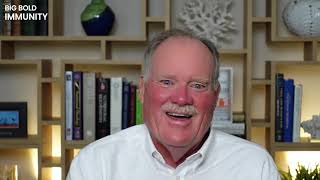
Dr. Tom O'Bryan explains how wheat triggers immune activation through the gut lining, increasing intestinal permeability and systemic inflammation. His approach: test for inflammation sources, remove wheat and processed foods, eat a rainbow of polyphenol-rich plants like Himalayan tartary buckwheat.
Chapters
Most common source of inflammation is what's on the end of your fork. So if you're putting things down there that are activating an immune response to protect you, that's what inflammation is in your gut. Your body's trying to protect you from something.
Hi, I'm Dr. Jeffrey Bland, and this is Big Bold Immunity. This is your introduction into the fact that all of our health travels through our immune system. It's easy to say, but maybe it's more difficult to really understand what that means and how to implement it in your lives. Our podcast is going to be exploring that through the lens and the expertise of individuals who are leaders in the field.
And.
And in this issue, we are extraordinarily fortunate to have Dr. Tom O', Brien, a friend, colleague, thought leader, researcher, author, personality, and one of the individuals who's really made this concept of gluten and its concern as it relates to immunological influence become a topic that has had a global impact on our food distribution system and how people think about eating and their immune system. What's this all about for you? It's learning about how selections that we make based upon our individual characteristics can influence our immune system. Through Dr. O', Brien, you're going to learn some things that probably you never heard before as it relates specifically to how our genes and our diet influences our immune system and how various foods that we eat play principal roles in activating our inflammatory processes and may even relate to the whole family of 88 different disorders that we call autoimmune diseases. But more than that, you're going to learn about Tom o' Brien as a person, a very individual, as we all are, who carries his journey in life from which we can learn much about our aspiration to health. So let's now get into a discussion with Dr. Thomas O'. Brien. Well, welcome. Here we are at our Big Bold Health podcast. And oh, my word, am I so excited. You'll notice. I wish he was seated next to me, but virtually seated next to me is Dr. Tom O'. Brien. Tom and I have shared a journey in life, both professionally and personally now for several decades. And Tom is more than just an intellectual treasure to me. He's an intellectual personal treasure. And, you know, there's in our road of life, many, many people we have the privilege of meeting. Every individual brings their own unique texture to our lives of experience. And, you know, I'm a believer that the end of life, the winner is the person that's had the most personal, positive experiences in their life with other people. That's the winner of all. And I've been very, very fortunate in my life in traveling, you know, more than 6 million miles. Even to say that sounds crazy, but that's true. To have met many really remarkable people and learned so much. But on my short list is Dr. Tom O', Brien, who is one of those seekers, a shared person walking on this trail of self discovery and bringing experiences through his own lens to the world that can be shared with many others to their betterment through his diligence, his perseverance and his depth of thinking. So. So, Tom, thanks for being one of our charter members of our season two of Big Bold Health.
Well, thank you. It's a real honor to be with you, Jeff. This journey we've shared has been one. We see each other a couple times a year and kind of like high five and how's it going and what's new on the plate. And it's just been a treasure for me also to refer to you as my mentor and as a gift, as my friend. So thank you very much and it's a pleasure to be on Big Bold Health.
Well, you know, thank you. One of the measures I used for evaluating the nature of connection you have with other people in the planet is how it brings out of you the deepest of your emotions. And you and I, I feel, have shared the privilege of, of having a number of deep conversations that certainly brought me to tears in a very positive way. And I think you as well. And you know, my father said many very important things to me as I grew up, but one of them that has stuck with me, that I've said to so many people since was he said. So, Jeff, as you grow up, if your life is like mine, you're going to have three kinds of interactions with people over time. You're going to have interactions that lead to the discussion of things, you're going to have interactions that lead to the discussion of people, and you're going to have interactions that lead to the discussion of ideas. And of all those three, most of your time probably will be discussions about people and things and you probably won't remember those so much. The minority of the interactions you'll have will be those that lead to the discussion of ideas, and those will be much fewer in number. But those are going to be the ones that are seminal in your life that you'll remember. And I've thought about that so many times because it's true, the greatest memories I have are those less frequent experiences where you can touch together with a person in Communication around the substance of ideas, of being human. And you and I have had the privilege, I believe, of those kind of seminal moments over the years. So with that, it's kind of a sociological introduction. Why don't you tell people about who Dr. Tom O' Brien is from the level of your discovery of life, because your trail of living has been quite remarkable in its own right. So I'm going to turn it over to you to give us your story.
Oh, my. Born in Detroit, tough kid. Growing up, tough neighborhood. Many of my friends didn't make it into their mid to late 20s. They're gone. But my heart was always in people, always in community, and always wanting to connect. And spent eight years in Ann Arbor with my hair down to my waist and a beard. And I was a baker. I don't know if I've ever told you. I was a baker in a natural food restaurant baking 48 loaves of the best destination bread, meaning people drove to get it. Just the very best. Un yeasted stone, ground whole wheat, flour, water and salt. But we'd get it to rise. It would take 24 hours to rise with the natural yeast. And it was just a fabulous bread. And the bread comes out of the oven. I'd take a slice. I'd cut off about a thick piece of an end cut, and I'd put peanut butter on it. Protein, Gotta have protein. I wanna be healthy. My thinking was then I'd pour honey on it and then slice bananas on top of that. And it was just delicious. But it was a blood sugar time bomb.
And how about that gluten? Dr. O'. Brien?
Right. You know, now that a slice of whole wheat bread, it's called the glycemic index, how much sugar your body thinks is in what you're eating, that a slice of whole wheat bread has a much higher glycemic index than a Snickers bar. And I was doing this every day when bringing the loaves out of the oven. And so in my late 20s, I had blood sugar problems. You know, back in the 70s, we were talking. In the 80s, we were talking about hypoglycemia. And everyone had hypoglycemia. And to some degree that was probably true. The vast majority of people did. But that's what got me into health. And I started reading this journal, this magazine that was out called Prevention magazine. And there was an author, he had a monthly column of case studies. It was a doctor, and he was from the University of Michigan. And I'm from the University of Michigan. So I really, I resonate with this guy. And so I would read his case studies. This was Jonathan Wright, and he was writing case studies about. Somebody came in to see me, they had piles and he used the language that the people would use. And then he'd talk about the exam he did. And then he'd make a dietary recommendation and some nutrition. And for a paragraph or two down, all of a sudden the guy comes back in six and piles are gone. And then at the end of it would be a reference to a medical study as to why this particular food had benefit with that condition. And I read those case studies every month and I found that I was kind of. Well, I certainly was looking forward to them reading the next one and reading the next one. And my love at the time was martial arts. I was teaching aikido and I had gone to Japan and I was a deshi. I lived in the main headquarters. Being a deshi means you get to clean the toilets. So that's what I got to do. But I missed my girlfriend. So eventually I came back and I married her. And when it was time for a real job, I thought about health care and I said, you know what? I can do this diet, some vitamins and things. Because Jonathan Wright was such an excellent writer and just a brilliant guy, a true pioneer. And so I looked at osteopathic schools and my uncle's an osteopath and I was accepted. But I just didn't like hospitals. And I was a hippie in Ann Arbor and I just did not like hospitals at all. My girlfriend, soon to be wife, had a back problem, she couldn't walk. My friend at work said, I took my wife to a chiropractor and I said, what's a chiropractor? I didn't know, but we called, he said, bring her right in. I carried her in, she walked out. And Dr. Harold Swanson was 76 years old. Just a beautiful, kind man. Ham hock hands. But you know, he said, tom, you come back and watch. Oh, okay. Dr. Swanson, you know, so he saw something in me. So I went back and I'd visit every once in a while. And Dr. Swanson said, this is Tom, he's going to watch. And the patient would say, oh, okay.
Hi Tom.
You know, I'm a long haired guy with blue jeans with holes in them. And not the fad holes of today, but worn out blue jeans. Back then I would watch and Dr. Swanson would say, carol has asthma, she has difficulty breathing. Now Tom and Carol would be laying on the Table and say, feel here. Do you feel anything different here? And he put my hands around between T2 and T4, the upper back area. And he said, well, Dr. Swan, it kind of feels like the muscles over here are a little like more than on the other side. He said, that's right. I'm going to adjust that area and it might help her breathe a little better. He'd make an adjustment and the patient would get off the table and say, it always feels so much better. Dr. Swanson. And so that was my introduction. And this 74 year old man would say things like, tom, everyone should rest and your digestive system should have a rest. So one day a week, give your system a rest. So he was talking about fasting and he didn't know what he was talking. He didn't know the language we know today or why, but he was introducing these wholesome concepts of what a healthy body is like. So I enrolled in chiropractic school. I went to Chicago. This was January of 1978. And some of my first talks that I heard outside of my instructors. Jeff, the first, one of the first was you. And you were in Chicago. You came to Chicago. And I just sat and went, yeah, yeah. I didn't know half of what you were talking about. But at the time, you know, but it was such a catalyst for me just carrying me up from the Prevention magazine case studies with the reference in the back to saying this doctor, the British medical journal said this and this doctor the journal American Medical association said this. And you see what this one said last week in the Journal of Pediatrics and how they connect. And you got me thinking about how to connect science facts and not be stuck in one line of thinking. And it's just been a journey ever since.
So that's, you know, again, I didn't realize this connection we had with Jonathan Wright because Jonathan Wright and I both started together in Redmond, Washington, Bellevue, Washington. He was with the local kind of health group and I was with Dr. Lee Bowles. @ the time I was a professor and I was head of the laboratory that served the medical lab that served Dr. Bowles clinic. And he and I were together in starting in a study club and we met both as authors for Prevention magazine. I wrote an article on vitamin E from the work that we were doing. It connected him to me. And we both started then in this study club that ultimately became a study club that Dr. Joe Pizzorno and many others, the founding fathers and women in natural medicine in the Puget Sound area were all engaged in. That became Functional Medicine Update. Eventually, that I did for 35 years. So all of this connection is interesting history. And for me, one of the things that has struck me about your career is your ability to humanize, personalize, and demythologize. A lot of this gobbledygook that I talk about, the deep science. And I remember one of. I don't know if it was your first lecture series you did that. We did in combination, but one of the early ones where you were talking about your father and your mother and the relationship of that. That kind of guided some of your principles and thinking maybe you could share without getting too personal. But I think all of these are part of what sends us on our way to become advocates and to. To reach out beyond.
Ourselves. Well, my father died in 1990 of a massive coronary at 64 years old. He had no cardiovascular indicators whatsoever. And the pathologist, chief pathologist, city of Detroit, friend of my brother's, did the autopsy, and he called me and said, Dr. O', Brien, I'm sorry, I don't know why your father died. I said, what do you mean? Well, he had a heart attack, but there was no evidence of a clot, and he only had 30% blockage in his left descending coronary. Now, that's the widowmaker, but that's not enough for the blockage. We suspected foul play. I'm sorry, but that's the law. So he did toxicology screens. There was nothing. He looked for needle marks on the whole body. There was nothing. He did lung biopsy. There was nothing. He. He said, this is the second time in my career I'm baffled. I don't know why. Your father. He had a heart attack, but we don't know why. We don't know why. Well, that sent me on the hunt. And the first person I called was you. And you said, of course, very sorry. Call Kilmer. And I called Dr. Kilmer. McCully. And I said to Dr. McCully, he's the godfather of homocysteine research. It's a marker of inflammation in the body. And I said, Dr. McCullough, I know that an elevated homocysteine can cause vasospasm, meaning the blood vessels to spasm, like restless legs and that kind of thing. He said, yes, yes. Can an elevated homocysteine cause a basal spasm at the site of a 30% blockage in the left descending coronary artery, effectively making it a 100% blockage? And then when the heart attack comes and the person dies, the blood vessel relaxes again, he said, tom, that is an entirely sound theory. We've reproduced that in the laboratory. But by that time, my father was buried, and no one ever checked a homocysteine level for him in 1990. And so I did the next best thing. I checked mine. I had elevated homocysteine. My brother did, my sister did, 19 of my 21 first cousins did. And so it's genetic. And so the assumption is my dad had an elevated homocysteine. That's a $40 blood test that his doctors never ran on him. And so every new patient exam I did for 20 years, we also checked homocysteine. And we found a lot of people that didn't know that they had elevated homocysteine. Now, an elevated homocysteine occurs most often because of a B vitamin deficiency. You're just not getting enough of the B vitamins, and it's so easy to fix. You know, you fix them in three weeks. And doctors always, I always say, you recheck in three weeks and make sure what you've given the patient has done the job. And so that the metabolism is now working better. It doesn't take long to know if you fixed it or not. Why did my father have a B vitamin deficiency? Well, by then I was already on the trail of wheat related disorders. And of course, we know B vitamins are absorbed in the first part of the small intestine, which is where celiac disease occurs, in the first part of the small intestine, because that's where the inflammation begins when people eat wheat, is in the first part of the small intestine. And if you have that inflammation, you're not going to absorb the nutrients very well there. So my dad had a function, likely had a functional B vitamin deficiency, which caused an elevated homocysteine, which caused a vasospasm at the site of a 30% blockage and making it 100% blockage. And we lost our dad at 64 years old. And so that just got me after that, when a patient would come in and we do our exam and I would say, you know, I suspect we need to check this, this, and this. And the patient would say, well, how much does that cost? Or does insurance pay for it? And I said, well, it depends on your insurance, but likely to pay for these first two, but this last one, most likely not. It won't pay for it. But this is why I think it's important. And if the patient says, well, doc, I don't want to spend the money, I can't Afford it. I say, okay. Patient refuses such and such blood tests because of finances. Would you please sign this? And I put it in the file and it. Well, why would I do that? Well, because I'm going to do my best to help you, but if you die, because I didn't know that you had an elevated homocysteine or whatever the marker is for the test, I'm not responsible. No, no. Okay, I'll do the test. Good. Thank you. And doctors should be concerned if they order tests and they come back normal. Because you don't order tests to go fishing to find a problem. You order tests based on what your clinical indicators are of. This is a likely path where there might be a problem. And I can't miss it because it killed my father. You can't miss it. So when people would give me flack. Excuse me, but if they give me flack about my recommendations because they can't afford it, and then two months later I see them on the street or in the shopping center and they have a deep tan because they just came back from two weeks in Mexico, that got me to understand that I wasn't educating well enough about the priority of why the test was important. So my entire career has been based on the premise test. Don't guess so that we don't miss.
Things. So, Tom. Oh, boy, you know, this is why we do these discussions, because this is another place that you and I are deeply connected. So my beloved father, who later in his life worked with me in the start of what became later to be healthcom and Functional Medicine, who, I'm very proud to say in his retirement, I had to force him out of the company so he could spend more time with my mother. And in his retirement dinner, he said he had actually recorded every boss that he had ever had since he delivered architectural drawings during the Depression to help his family out at 10 or 11 years of age, he had every boss he had written down, person that he reported to, and every job he had had. He eventually became an aeronautic engineer. And so at the end of his story to the team, this little address he was giving as he was retiring to our team, he said, and I want you to know the reason I've gone through this is my last boss was my son, and he was the best boss I've ever had. Now that's the kind of relationship that I shared with my father. So after he did retire and he and my mother spent more time together, he started to develop Parkinsonism. And it got to the point where his quality of life had become so impaired that the thing that he loved doing the most, which was programming on his computer, was now really jeopardized. It would take him something like an hour to write a line of code just to get his hands to use the keyboard correctly. And obviously my mother was the principal caregiver. And so she and I would be in conversation and she said, so, Jeff, you know, the stuff that you do, Is there anything you think we could do for your father? And he was being seen by top line medical professionals out of Stanford. Actually, they were living in Northern California at the time. And I said, well, I wonder if his internist has ever measured his homocysteine and his methylmalonic acid levels. And when I looked at the pedigree of his internist, he was an MD, PhD with his PhD in hematology. So I just made an assumption, right, just as you were describing with your father, that maybe something had already been analyzed with this level of expertise. And so when I then called him and spoke with him, it turned out that no, it had not been analyzed. And then he said, well, why do you think it's important? And so I gave him the Tom o' Brien story in capsule. And he said, oh, are there any papers on that? Well, you never asked Jeff Bland or Tom o' Brien for papers, right? So I said, well, let me fax this in the day of faxes. I said, so let me fax you some. Well, it turned out to burn out his fax machine. I just sent a whole ream of papers. So the next day his office manager called me. She said, so the doctor would really like to talk with you. I said, well, yeah, please, that's why I sent all those papers. And he said, well, this is a whole area that I was unfamiliar with. I didn't understand this association as these papers are describing. And so where can I get this test done? So I said, okay, well, let me work out a couple of laboratories options for you. Then he came back and he said, well, you know, I'm not sure that Medicare will, will support these tests. So I'm not sure I can call them because I don't want to get in trouble with Medicare. And I said, well, let's not worry about that. I'm more than happy to pay cash for the test. That's not the issue. So then finally we got over that hurdle, which was the reimbursement hurdle. And then the data came back, as with your father. Well, you didn't know for sure, but in my case, I did know for sure my father's levels were elevated. So then he said, so, what do I do about this? So I said, well, why don't you prescribe a therapeutic dose of folic acid? I suggest this is pre 5 methyltrahydrofolate and intramuscular vitamin B12. And I said, why don't you teach my mother? Have your nurse teach my mother how to administer the IMB12 so he could get it daily. And he said, oh, gee, that sounds like a lot of B12. And I said, well, relative to a normal average person, maybe. But maybe in this particular case, we're going to use this test to titrate what level is required to get his homocysteine levels and methylamoic acid levels down. So that started. My mother was giving him daily injections, and she would call me daily and report in and would say, well, I'm not noticing any change yet. You know, your father still pretty much the same condition. Ten days into this therapy, my mother calls me and she's frenetic and she's crying, and I am really worried that something really disastrous happened. So I try to get her calmed down. Eventually I'm able to. She catches her breath. She's able to communicate. And I say also, and I'm thinking the worst. And I said, so has dad really had a serious problem? He said, oh, no, no, no, no. It's the opposite. I'm calling for the opposite. For the first time in the last three years, when I woke up, you know, we're not sleeping in the same room anymore because your father didn't want to keep me asleep with all of his restlessness. So he's in the other bedroom. So for the first time in three years, I'm woken up by your father, who's fully dressed, on his own, standing at the foot of the bed, saying, it's a lovely day. Do you think we can go on a picnic today? For the next four years, my father was at his computer every day. He completely regained his cognitive function, and it was a miracle. Now, let's ask the question about the physician. The physician then observed this. So he calls me up and he says, so I looked you up, and I see that you do something called functional medicine. He says, does that relate to what you were doing with what I was doing with your father? And I said, yeah, that's a part of it. That's part of what we're in our body of knowledge that we teach. And he said, hey, this could be really interesting for me. I think I want to be doing this And I said, well fine, I'll send you some information. We have courses. This is just when we're starting the applying Functional Medicine clinical practice program. And you can do this in a couple of sessions, get the basic information. When I sent him the information, he called me back. He says, you know, I'm really busy. Do you like have a one hour tape that I could listen to to do this? And I said, well, you know, it actually takes a little more than one hour. Even with a person with all your background and education, it really takes more than one hour. So unfortunately he never took that up. But later I went down and saw his office some year later and now he was on his shingle. Internal medicine, hematology and metabolic disease specialist. So you know, it's so interesting what we learn about ourselves, other people. The story here however is so similar to the story that you experience and what it does as it did you, it did me, emboldened me to not be apologetic about what we do. Try to be understanding of those that don't know, try to do the best job I can in communicating. But if there is a resistance and an unwillingness to even open the door for exploration, then my thought is, don't waste the time. There are plenty other people out there that have still neuronal plasticity that have enough open mindedness to look at these opportunities. So I think we've shared the same energizing our advocacy through our parental.
Experiences. I've tried to be kind when talking to a patient about a practitioner like that that they may have. And I've said, well, you know, it may be time to expand your healthcare team and just bring on another specialist who might have a different outlook. Or when patients come in and they're on high blood pressure medication. I'll say now, but here's what we're going to do. You stay on your medication. Of course you need medication, you take it. But I want you to go back to your doctor and say, listen, I've met this new doctor that I'm working with. I'm changing my diet, I'm learning to exercise, I'm taking some vitamins. Would you monitor my blood pressure for me? Can I come in like once a week or whatever you think is appropriate so that you monitor me so that I don't take too much medication because they're telling me my blood pressures might get better and if it gets better I can get dizzy if I take too much medication or I could pass out. So could you monitor me? Every doctor in the world wants their patient to be healthy. And one would assume they would say, yes, of course, come in once a week, we'll check your blood pressure. If they say no, don't take any of that, then you get a new doctor for your blood pressure to monitor you. Right? But we all have a place in this world to contribute. We all do. And it would be silly to think that you don't need to see a hematologist if you've got a blood problem, just do functional medicine. Nonsense. You see the specialists you need to see to CYA to cover yourself, but also be looking and asking, where might this be coming from? What in my life has set up the direction of my health? So I'm going downhill here. It's like a boulder rolling downhill. There's nothing in the world that is ever going to turn your health straight up like this. It just doesn't happen. The best that you can hope for is to taper that downward slope and plateau it out. And then eventually, as you're going to health, more health, the destructive processes are slowing down and they stop. Right? It's like in your, in Big Bold Health's Omega 3s, you've got these pro resolvins in them. No one puts pro resolvins in their Omega 3s that I've seen before. What a great idea. Because what pro resolvins do is that you've got inflammation. It's normal to have inflammation. You must have some inflammation to protect the body from the bugs we're exposed to and all that. But if you have too much inflammation, you want to turn off those genes of inflammation when they're no longer needed. And so you've put some pro resolvents in the Omega 3s that just help calm down those inflammatory genes, just kind of tone them down. See, genes don't. I shouldn't say this to Jeff Bland, but genes don't turn on and off. They're on a dimmer switch. And that we want to dim down the gene. There's 1,200 genes for inflammation over 1200. We want to dim down the genes of inflammation and turn up the genes of anti inflammation. So pro resolvins turn down the genes of inflammation in a gentle, easy way. I mean, it's just there's some common sense things that unfortunately, you know, I just did a talk in. Where was it? London a couple days ago. You know, it's all remote now, so I don't know where I am sometimes. And I was talking about. Unfortunately, the nutrition education in medical schools has been terrible. A paper in 2010 showed that 26% of medical schools had adequate amounts of nutritional education as deemed necessary by the American Board of nutrition education. In 2004, it was 32%, but in 2010 it was 26%. So I looked, and in 2015 it was 24%. In 2018, it was 26%. So our medical students are coming out of school without knowledge about diet and nutrition. And it's not their fault. It's the system that they've come. They're just not getting the knowledge. And I thought about it. Why is that? And I wanted to look up some documentation, but I didn't. I didn't have time to do it yet. About how much the pharmaceutical industry contributes to medical schools on an annual basis for grants on research and things like that. And so pharmaceuticals is the emphasis, whereas how much do nutrition companies contribute to medical schools? And it's probably, and you may know better than I, but I don't think it would be very much at all. It's peanuts, if anything, compared to the pharmaceutical industry. So our doctors, our new doctors are being trained on what the influences are that are coming in. It's not their fault until they start talking to you, saying when you hear a gastroenterologist that you've gone to see because you've got some kind of gut issues, maybe an autoimmune disease or some kind of gut issues, and they tell you, no, it doesn't matter what you eat, it doesn't have anything to do with it, you know that you're talking to the wrong guy, right? Anything that's going on in your digestive tract is going to be influenced by what you put in the digestive tract. You put bad gas in a Ferrari, it's going to run like a Studebaker. So there's just some common sense things like.
That. Well, I think one of the things that you have done brilliantly on kind of a broad platform, if you've taken the concept of eating by using gluten and gluten containing grains as an example exemplar, and you've connected it into health and the healthcare system in a way to show the continuity, it's not that in and of itself. It is what it embodies to the whole of the nature of how food agriculture, food processing, food delivery, food preparation influences the function of our body through this signaling system called the immune system, of which something like 60% is clustered around our intestinal tract. That's your beautiful message because you've harmonized those, showing how they're integrated through using gluten and glutenous grains as an.
Example. Well, thank you. Thank you for that. And you know, it just makes sense that if you're putting things down there, common thing I say is, most common source of inflammation is what's on the end of your fork. So if you're putting things down there that are activating an immune response to protect you, that's what inflammation is in your gut. Your body's trying to protect you from something. And it could be an altered microbiome that's developed over time. It could be the food you're eating or something you're drinking. Could be the bugs that you've accumulated in your gut, but your immune system's trying to protect you. The more you put down there that activates an immune response, the more you're withdrawing from the bank account of your immune strength. How do you expect to fight a virus that is threatening right now if your immune system is constantly fighting to protect you? So many resources to, to protect you from food that you're eating that's causing a problem for you. Now people say, well, I don't have a problem with wheat. I feel fine when I eat wheat. Well, the science tells us that the ratio is 8 to 1. For every one person that has gut symptoms with an immune reaction to wheat, there are eight that don't. They've got brain symptoms or skin symptoms or joint symptoms or hair symptoms, they're losing their hair or thyroid symptoms. They don't have gut symptoms. So if you think that you have to feel bad from a food you eat before you need to check to see if it's taxing, you're withdrawing from the bank account of your immune system. If you think you have to feel bad, you're going to miss it. Eight out of eight. Seven out of eight.
Times. Yeah. And I thank you because that was really, and I owe you some homage for this, that that's what kind of led me into this Himalayan tartery buckwheat story. Because as I learned about its history and use of 3,500 years as a food source and saw that it's a gluten free, not a cereal, it's a fruit seed, and that it's got all these unique polyphenols that also have immunological activity, I thought to myself, well, here is something that really, at this time where we're being burdened with foods that are all challenging our immune system system, why don't we bring back this product that actually was a colonial food that was brought over by our colonial ancestors to the States because it's such a hardy thing to grow, doesn't require fertilizer, doesn't require irrigation. It has its own insecticides. It makes through all these polyphenols, so it doesn't need biocides. Why don't we rebuild that back into the American food supply system? And that was really a lot of billing off of your advocacy through this whole field of food and immune.
System. Well, thank you. I think it's very kind of you to say that. You know, and my wife and I, we have our coffee. Time is sacred. In the morning, it's my wife and I and our son, and we sit outside and listen to the birds and watch the butterflies and have our coffee. And we love having our cookie. We have one cookie a day. And our cookie always contains Himalayan tartary buckwheat. That's our daily dose of getting those polyphenols. The two things that I say, I've done a lot of talks in the last year about this virus and about the threats from the virus. What would you do for the immune system? The two things that I say that will help you dramatically is first, identify how you're throwing gasoline on the fire, causing inflammation in your body, meaning withdrawing from the bank account of your immune system. And stop withdrawing so much from the bank account. Stop eating or being exposed to the food. If there are foods, that's one. And the second thing, thanks to our friend Dr. Deanna Minick, is the rainbow diet that I want the full spectrum of colors. And Deanna says 50 foods a week. 50 different colored foods a week. And that's the goal. Mrs. Patient. Because those colors of the vegetables and fruits, those colors are the polyphenols that help strengthen your immune system. You know that the virus has to get inside your cell so that it can shed. They don't reproduce, they shed. But they have to get inside the cell. And to get inside the cell, they have to go through the receptor site on the outside of the cell. The receptor site is like a catcher's mitt. The pitcher throws the ball to the catcher and sits on the outside. Well, when you have abundance of polyphenols sitting around your receptor sites, then the virus has a really hard time getting in and it gets eliminated. So the more fruits and vegetables you eat, the stronger your immune system gets. And now we include in that recommendation that Himalayan. Himalayan tartery.
Buckwheat. Well, thank you. And, you know, you've also done a really nice job of demythologizing a Big thing in science that won a Nobel Prize for medicine and physiology back in 2012 called pattern recognition receptors, of which there are members of that family with different names like the toll like receptor family TLRs. And we now learned that they, they're triggered by debris from bacteria in the gut, so called mucopolysaccharides that can activate these toll like receptors that initiate then a signal to the whole body. And you've done a very wonderful job in helping people to understand without getting too science geeky, about how these receptors that are unique genetically to each of us receive information from the diet and influence the whole body in terms of response. So maybe you want to just say a couple of wisdom words that you do so.
Well. Thank you. Thank you, Mrs. Patient. You have the same body as your ancestors thousands of years ago. You know, we have the same kidney, the same lungs, they work the same, the same immune systems, our immune system for ancestors had to fight against bugs, parasites, viruses, mold, fungus and bacteria. That's it. There was no red dye number 42. There was no soda pop, there was no colas, There was no bpa, bisphenol A, the plasticizers that we're all exposed to. There was none of that. Bugs, parasites, viruses, mold, fungus and bacteria. Our immune system today is the same as our ancestors. We've not genetically changed. There's not been enough time, tens of thousands of years to genetically change and adapt. Our immune system today is designed to protect us from bugs, parasites, viruses, mold, fungus and bacteria. No matter what comes in the inflammation response, your immune system thinks it's a bug, parasite, virus, mold, fungus or bacteria. When our ancestors found food, first they'd sniff it, then they'd nibble at it to make sure it was okay. Then they'd eat it. And if there was bad bugs on the food, but not enough to make the food rotten so they couldn't smell it, hydrochloric acid in the stomach is supposed to kill it. Hydrochloric acid kills everything. But if it doesn't, there are sentries standing guard just inside the first part of the small intestine. It's called the proximal part of the small intestine. Those sentries are standing guard. They're what you referred to as toll like receptors. There's nine, I believe for humans. Toll like receptor 4 is the one for bugs. And so those sentries are standing guard just in the inside of the small intestine. So anything that comes out of the stomach, if there's a bug that comes out of the stomach toll like receptor 4 gets activated right away. What happens? It sends a message and you get leaky gut. The mechanism, you make more zonulin protein and it opens up the space between the cells. Water comes into the cell. That's leaky gut because it's washing out the bad bug. That's its job. Oh, there's a bad bug here. Let's wash it out. Turn on the garden hose and you turn on the hose in your gut to wash it out. That's the first thing that toll like receptor 4 does. The second thing toll like receptor 4 activates the major amplifier of inflammation. Now, I always talk about garage bands when I talk about. Because back in the 60s, you know, garage ban. Why were they called garagebands? Because our parents said, take that stuff out to the garage. It's too loud in the house. Right? And we have to get an extension cord and plug it in from the bedroom, out the window, out to the ground. Because there was no electricity in the garage back in the 60s, right? And we do the amplifiers. Well, the major amplifier of inflammation in the body is NF kappa B and tolike receptor 4. The sentry turns on NF kappa B. So here comes all the inflammation in your gut. So now you got leaky gut and you get inflammation to kill this bacteria. It's a one, two punch. What we've known now, and the first paper I read on this, I think was in 2015, no, 2006, Scandinavian Journal of Gastroenterology, 2006 is that wheat activates toe like receptor 4 in all humans. So your gut, the human gut misinterprets gluten as a harmful component of a bug. And this occurs. And the papers are really clear. They say this. Maureen Leonard from Harvard says this in her paper in the journal of the American Medical Association. This mechanism occurs in all humans who consume gluten. That means you. Well, I feel fine when I eat wheat. Well, remember, the ratio is 8 to 1. It doesn't matter how you feel. Do you have headaches? Are you on medication for high blood pressure? Do you have skin problems? It doesn't matter where the symptoms are. You always want to check. If you're dealing with a health concern that is not getting better the way it should be. Just check properly to see do I have a problem with wheat? Just.
Check. Well, Dr. O', Brien, as always, information, content, dense, huge news to use. Such fun. Your ability to weave stories and articulate them in engaging ways is a huge skill, a huge gift that you have. This is big bold health. In the reality, this is what we're talking about, taking charge, being big and bold about it. I can't thank you enough for allowing us to walk down your journey of life with you and to have a chance to look in a few of the nicks and crannies of treasure trove of information. And we wish you well and continue to do the extraordinary work as an ambassador that you're doing. And we're going to be following you closely. Thanks so.
Much. Thank you. Thank you, Dr. Bland. And I was just thinking about this. It's now a privilege to include in my own resume visiting faculty. Big, bold health. Thank you so.
Much. Well, I will appoint appoint you as a demonstrable member of our core faculty from here on. So thank you so much. Be.
Well. Thank.
You. Thank.









