The Fertility Journey with Dr. Kalea Wattles | Big Bold Health Podcast Episode 25
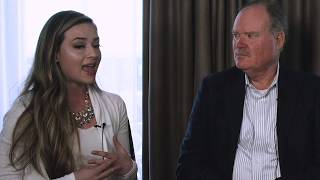
Podcast episode (hosts James Maskell and Dr. Jeffrey Bland) interviews Dr. Kalea Wattles (Functional Fertility). Topics: Dr. Wattles’ path to functional fertility care; the role of lifestyle and systems-based functional medicine in treating infertility (including unexplained infertility); links between gut health, inflammation and PCOS; clinical markers such as AMH; birth-location choices and microbiome considerations; postnatal depletion and breastfeeding energy demands; practical timing advice (~120 days/4 months) for improving egg and sperm quality before conception.
Chapters
Foreign.
Hello and welcome back to the big Bold Health Podcast. I'm your host James Maskell, here with my co host, Dr. Jeffrey Bland. And we are here back for another episode. And we're going to be diving into the future of health and the current state of health with leaders in the field who are making a big impact on the corner of health creation. And we have Dr. Kalia Wattles here, and we're going to be talking a little bit about, well, your Instagram handle is functional fertility, so let's just start there.
Man, am I excited to have this topic and this person doing this topic because there's virtually nothing that we have asked of us that's more important than how do we create healthy babies and how do we create the new world of healthy, capable children and how do we help mothers and fathers to be successful in parenting? And we're fortunate we've got an expert that's going to help us. Pretty neat. Thank you.
Thank you both for having me.
Yeah.
So obviously, when you train as a physician, right, there's all kinds of things that you could do. What sent you down this path to end up focusing in this area?
I think this was a few things. I'm the mother of two small children, and I think that experience of becoming a mother was so transformational. And I realized I really want this experience for whoever else wants this. When I was a naturopathic medical student, I spent the last two years of my training rotating with the doctors at Seattle Reproductive Medicine, which is our local fertility clinic. And I realized how many lifestyle factors were at play. And these women were there treatment for in vitro fertilization, but they had insulin resistance or low vitamin D, things that I could so easily address. And even if that didn't cure their infertility, I know that those things would improve their outcomes with their advanced reproductive technology. So I think it was a really beautiful moment when I realized this isn't an either or situation, that there's a lot I can do from a functional medicine perspective to support fertility patients.
So, Kalina, you just said something that it just lights me up. I can feel the goosebumps, actually, because I've had the privilege now probably nearly 40 years of going out and talking to different groups, principally healthcare practitioners, practitioners about the things that you're such so well informed and an expert in. And one of those experiences I had so relates to what you just said. So I was going back to the same cities in the United States for annual seminars and educational events, and this doctor in Minnesota came up to me who had been coming several years. And he said, so Jeff, he said, I have a very kind of a private thing I wanted to share with you and I'm not sure this is appropriate because I know you're just giving general education. But you know, my wife and I have been trying to get pregnant for many years and we've been unsuccessful. We're considering ivf, but we're, you know, going back and forth on this and you know, do you have any thoughts? And so then I asked him some simple questions, probably much more simple than the questions you might have asked, being more skilled in this area. And so I said, well, you know, given what you just told me, I think now this would be about 25 years ago. I think that maybe there are some problems with insulin with your wife, maybe some problems of inflammation. Have you tried this and this and consider this. And so I just kind of free of charge gave this information, you know, and. And off he went. And then he kept coming back to my seminars in subsequent years and I never thought, shame on me to revisit with him for about six or seven years, you know, how things went. And then it's kind of a private thing and I didn't want to pry in his life. So he came up to me about seven years later and he had a big smile on his face. He said, jeff, remember I had that conversation with you about seven years ago at one of these seminars and you were giving me some suggestions. And I said, yeah, yeah. So Bill, how did it go? He said, well, and then he opens his wallet and he takes out the picture of his seven year old son. I mean, it just lit me up. And he said, everything that you said, my wife did. And within the next month we got pregnant. So I became a real believer of this whole field of healthy reproduction. And you are a leader in this field. You are seeing these problems. What leads patients to you? Is it frustration? Is it word of mouth? Is it they've read something? What is it that brings people to you?
I think it's a couple of things I do try to put, I would say health education out into social media is so great these days because it gives me a megaphone to shout this message for people that I wouldn't normally reach. But I think people come because they're frustrated. And I've thought about this in thinking of how we can be, how we can look at infertility from a health promotion perspective. And I was thinking about infertility and how when couples have trouble conceiving, they go and they Get a fertility workup, and oftentimes they're diagnosed with unexplained infertility. You know, 20 to 25% of couples have unexplained infertility. And so then I see them, and this is where functional medicine is so beautiful, because if we use this body systems approach, I can look at their assimilation, their defense and repair systems, their energy production, their biotransformation and elimination, transport, communication, structural integrity, all of these body systems. And we know that when we think of body systems as a web and we pull on one area of the web, it's going to spill over and affect other areas of the web. And it gives people an opportunity to really have hope and say, actually, no, every stone hasn't been turned over already, there's somewhere to go. And it's really heartbreaking when someone comes to me and they say, oh, I have. I have unexplained infertility. And I almost wish that I had endometriosis or I wish I had pcos. Because then there's a direction. We know where to go. But using our functional medicine tools, we have somewhere to go. We have tools. So it's really beautiful and inspiring and hopeful.
Yeah.
I mean, it has to be the first port of call if we're looking to, like, make the biggest impact at the least possible cost. Because there are some really expensive options, too, right?
Absolutely. And I do. I personally get frustrated a little bit when someone comes to me after they've exhausted all those options. Like, wouldn't that be beautiful and wonderful if they came to me first or while they were going through treatment? So it's a personal life goal I have, and we'll keep working on that.
Absolutely. I think, you know, fertility is a. Is a huge, huge issue. And obviously for the continuation of the species, we need to work on it. But I just want to ask you a question, because I. I was born via C section.
Right.
And I didn't think that was abnormal until 2012. And my wife is pregnant. And I sit in the first ever lecture from Dr. Bob Rountree about the microbiome, and I'm thrown into a world we're thinking, actually, this was a suboptimal situation for myself, and my wife is about to have our daughter in a few months. What are we going to do? And then it's like, we start looking at the research and, like, kind of want to have a home birth. And then I see a film by my friend Ricky and Lake called the Business of Being Born. I'm like, this is kind of a racket here in America. And, you know, we ended up choosing to have a home birth. And, you know, I think that there was so many amazing things that came out of it. I didn't really do that much, honestly, the support role. But, yeah, I would love to just. Just tap into that, because I just feel like if we're talking about big, bold health concepts.
Right.
The medicalization of the birth process has maybe led us into a sort of a suboptimal outcome environment compared to, like, eons of history. I just love to get your thoughts on that specific topic.
I absolutely hear what you're saying. And I think many of us see films and, you know, we're in the integrative health field, and we get freaked out about origins, how we all, you know, came into this world. However, I think it's so important that for someone's birth experience, we consider where they feel safe. Because if someone is feeling fear, fear is such a powerful emotion, and how that can really stall your labor progress. And so if someone feels safest in a hospital setting, then that's where I'm going to encourage them to go. And I think my role as a clinician is to present them with the facts that I know. And then they have to choose where they feel is best. And whether that's in a hospital or in a hospital with a nurse, midwife, or having a home birth. That is the most important part is when wherever you feel safe, and then you choose that location. And then we're gonna work with whatever happens. If you have to get a C section, we're gonna call in all the tools we have to support the microbiome. And at the end of the day, it has to be where the patient is in her best zone.
Yeah.
So interesting. I've been thinking a lot recently about placebo maximized healthcare.
Right.
Generally. And what you should probably do. I'm reading a book by Dr. Wayne Jonas on rethinking about the placebo effect as the ritual effect. And there's a huge ritual to this whole part of it. And what role do you feel like that plays? I mean, it seems like what you're advocating for is people to choose the ritual that they want.
I think there's a couple parts to this because I've heard from many women that they always thought maybe they wanted a hospital birth, but then they do a little bit of information collecting, as you did, and they realize that actually that's not what I want, and I do feel safe somewhere else and with some other options. So so access to information I think is really important and then someone's support team. So we talk a lot, especially in functional medicine about this therapeutic partnership between practitioner and patient. And I think regardless of who's your birth provider, if you have faith in them that they are confident and going to take care of you, then that's going to really take a lot of fear out of the equation and it's going to be a really game changing experience for you. So yes, I think that the birth experience is multifactorial and how you are successful and there's so many moving parts that we have to unpack before someone is in labor.
Well, I can see why you're very successful. You are an extraordinary communicator and you have an extraordinarily deep range of understanding of the complexity of the physiology that goes into the process of creating a full born term infant and how that affects both the mother and then secondarily the father, which then leads obviously to now we're through the birthing process, now what do we do? The woman is now going to be responsible with her partner in moving that thing forward. So what do you do at this level?
Gosh, new moms. I have a five and a two year old, so mothers of young children are really dear demographic to me. And I've been kind of diving into this whole concept of postnatal depletion. And I think it's more common that we hear about postpartum depression, which is absolutely an important concept and condition that we should screen for and treat. However, postnatal depletion is I think, a little bit more nuanced and less prevalent in the the practitioners that are screening for this. So this is actually really fascinating when we think about women breastfeeding. And I hear from women all the time, they didn't even realize that you actually need more calories when you're breastfeeding than when you were pregnant. When you're pregnant you need about 300 extra calories every day and when you're breastfeeding that's 500 and people don't even know that. And I heard this statistic and I'm going to say it even though I don't have the PubMed article to back it up. But I'm just going to throw it out there because I think as an idiot it's fascinating. There's this book called Postnatal depletion cure by Dr. Oscar Saralak and he spent a lot of time working in maternal healthcare systems and he said a baby or a young child will consume 1 million calories from their mother before they're independently eating on their own.
Oh, my word. That's incredible. Wow. I never thought about that.
And granted I didn't dive in and fact check him, but I think that the, the concept is good either way, that mothers give an extraordinary amount of energy to their children before they're ready to go out in the world on their own. And what that means for the mother.
Let's do the math real quickly. I think we can prove this. So let's say that full fledged independent eating at three years, let's just assume that. So you have a thousand days, right? And you have a thousand calories.
I'm very happy for you to do this math in your head.
That's a, that's a million calories. Yeah, so that's how you get there.
Okay, then that seems really reasonable, doesn't it? So when mothers are exhausted and their hair is falling out and they're not sleeping, it's like, well, you're giving a million calories to another human and what could your body do with that energy?
You were keeping it. That's a super concept. Talk about like a mantra, right, that really directs your attention. And then you ask the question, okay, so how is that breast milk being formed? What are the raw materials that the mother has available to create the composition of that breast milk? And how much is her body being wasted for the production of the milk that she's producing? So I think this is a very, very powerful concept. So when you then counsel mothers they're breastfeeding, how do you adjust their nutrition? What things do you look at to personalize their intervention?
Yeah, well, it's actually funny that you just mentioned kind of the prioritization that happens because I always tell mothers we have to begin from a place of fullness because when you're pregnant and when you're breastfeeding, your body is wise and it's actually going to prioritize this baby over your own body. Which I actually used to tell my 5 year old, you know, I made your skeleton with the calcium from my own bones. So just don't forget that. It's very important to remind them of that. But I think I love thinking about this. We have to start from a place of fullness because it's so easy to become depleted. And I never want to put extra stress on a new mom because she's got enough on her plate. So I love just the eat the rainbow concept. We're not going to do anything crazy. We're not going to count or measure anything, but we're going to eat from the rainbow every day. And I even have a checklist that I have from Institute for Functional Medicine that has, you know, our red, green, all of the foods, and we check it off and we're making sure that we're getting that phytonutrient spectrum because that's the best and the most simple way I know how to make sure that she's replete, all her nutrients, and then if we need to supplement, we'll do that.
So I know that you're very active in social media as an authority, which obviously you should be. Do you have kind of common questions that you find reproducing themselves on your social media, things that are the topics of a major conversation that maybe some of them might have surprised you, or is it all pretty well understood?
Well, I think that the most common questions I get are probably about PCOS, which is to be expected if, you know, 1 in 10 women have PCOS. So no surprises there that I hear about that a lot. I also get questions about anti mullerian hormone, probably every day, anti mullerian hormone being one of our key markers for ovarian reserve.
Could I make this for those that are maybe not so familiar? That's Mullerian. M U L L E R I A N. So it doesn't relate to malaria?
Nope.
And I don't want to make Mullerian.
Nope. It's a hormone that's produced by our granulosa cells, which I call our helper cells, for our eggs within our ovaries. And so we can't directly measure how many eggs we have at any given time, but we can measure anti mullerian hormone that's produced by our granulosa cells. So it gives us an idea of how many eggs we have that need support. So I get many questions about anti mullerian hormone and there's an age decline and there's a whole range of anti mullerian hormone. And many women are very nervous when their anti mullerian hormone is low, that they are running out of eggs or that their birth control has disturbed their egg count. And so we go through that often.
Yeah, they may have heard this. Often docs will use abbreviations, so they might have heard it as amh.
Absolutely.
And so that's their AMH level. And that then ties, if I can go back to your previous statement to pcos, polycystic ovarian syndrome. And I think it's very interesting, first of all, the frequency of PCOS in our society, the most common endocrine problem that women experience in their menstrual age and that it's not been talked a lot about, because I think women are a little bit maybe apprehensive to share that information. And third, that polycystic ovarian syndrome, it's not a disease, it's a syndrome. And. And it's not even specifically related to polycystic ovaries. It's related to ovarian dysfunction and being androgenic. So maybe you can tell us a little bit about what you've learned and how you. How you counsel your woman with pcos.
Sure. So we can actually tie in the AMH conversation with PCOs, because AMH is actually emerging as a diagnostic measure for pcos, because if someone is to have polycystic ovaries, meaning their ovaries are trying to grow so many eggs at a time, normally we kind of choose one egg and we foster it to its full potential every month, and then we ovulate that. But in a PCOS situation, our ovaries are trying to develop so many eggs that none of them reach to be the dominant egg. So we have all of these little growing follicles, and all of those have granulosa cells that are supporting them, and they're all releasing amh. And so then we can actually have an elevated AMH in women with pcos. So that's an emerging kind of diagnostic strategy then. What I like to talk about from a functional medicine perspective is, as you said, not everyone actually has a characteristic polycystic approach on their ovaries, but they have PCOS that this could. You know, there's so many areas that are involved with pcos that is chronic inflammation. And an area where I am absolutely fascinated about is all this emerging research linking PCOS with gut health and this dogma hypothesis of pcos, which is, you know, dysbiosis of the gut microbiome and how that causes gut permeability, and then large particles are traversing the gut wall and entering the systemic circulation, and how that leads to chronic inflammation, which particularly affects the ovaries, and how in the inside the ovary, then we can have even more resistance to insulin, which is one of the main problems in PCOS is insulin resistance at the ovary level and. And impaired progesterone production within the ovary. So we know that women with PCOS have a hard time ovulating, and we only make progesterone when we ovulate. And so even if they are then ovulating, their progesterone is low because of the ovarian inflammation, the fact that we could potentially intervene and support gut health, and then that has this effect on all of these other areas and can help heal PCOS and someone could get pregnant.
That's amazing to me what you just said. I hope you listen to this carefully. This was brilliant. I mean, I'm telling you, I'm in this field for many years. That was superb. And it is the most quintessential example of functional medicine systems health. Right. Because people might say, you mean my gut is talking to my ovaries? Come on. But this actually in Nature Communications, a very well respected International Journal, just two months ago in 2019, was a paper describing the connection of dysbiosis to the production of a specific inflammatory cytokine that then influenced through systemic circulation, ovarian androgen, estrogen production and is associated with pcos. So I want to compliment you. You're right on top of the literature. That is awesome.
It's extremely fascinating to read and it's what I do for my pleasure reading. And I was just trying to tell someone who's not in the medical profession the other day I said, I just read this fascinating paper that used the word the genderome microgenderome, because it said in animal studies that when animals go through puberty, the microbial composition in their gut it totally changes. And I thought, wow, that's really fascinating that there's that much specific action of our microbiota.
Yeah. Remember, I think that when we make hormones, they have to go somewhere so they get metabolized generally by the liver, then they get excreted in a metabolically changed form into our guts, and then they have exposure to all those bacteria in there. So as we go through our, you know, adolescence, be it women starting to menstruate or men starting to have higher testosterone levels, now our gut microbiome is going to be exposed to a different milieu. So it's an intercommunication. And then if you have a lousy diet and you've got antibiotics and all these other things now, you've really got a confused state of affairs.
Absolutely. This bi directional communication between our hormones and our gut and then our brain and our gut, it's all.
So what do you think of this, James? Isn't this something? This is big, bold health.
Big bold health. Well, I guess what I wanted to ask is, you know, it seems like a lot of the work, like, why do you see, search out someone functional fertility.
Right.
And it's typically because something's gone wrong. Because if something, everything was fine. You wouldn't even search that out. And ultimately what we're doing here at the Big Bold Health podcast is sort of taking out this information out of like this is a disease that you have and bringing it out into sort of like health creation. So I guess I wanted to ask you, you know, I think a lot of people in your position sort of dream of the patient that comes a year before they're planning on getting pregnant. Like, you know, just tell me what to do ahead of time because, you know, you don't want to be that other person again. So for, for the people who are listening at home, who may be, you know, either weeks or years or months out from this journey, what would you say to someone who is preparing?
I'm going to actually take that even a step further because I have a dream and a hope, as many of us in the healthcare profession do, that I will actually have an opportunity when women are preteens or teenagers and I'm their doctor, to give them some information about their fertility, to say this is how your menstrual cycle cycle works, that there is an, you know, an age related decline with fertility and lifestyle. So if you're not exercising or you're a smoker or dietary factors, that we can increase our ovarian aging and we can decrease our egg quality by how we live our life. And if I can intervene before those things are happen happening and teach someone about fertility preservation, then hopefully they won't even need me later. And that's the real goal. But that's not how the world works, as we know. And so when someone is starting to work with me and they're very impatient because when people wanted to get pregnant, they wanted to get pregnant yesterday. Right? It is very frustrating. I like to give just some basic physiology and show them, you know, we need 120 days ish to go through a full cycle of developing an egg and for recycling so sperm. And so minimum, if I can get four months of your time, this is going to, you know, this is going to give us the best shot. We're going to have the healthiest egg possible. We're going to have the healthiest sperm possible. So while I would love to have a year to make sure that we've reduced toxic exposures, that our nutrient density is incredible, that our stress management is there, that our sleep is there, if I can get even just a few months, I think it can be a complete game changer in terms of fertility outcomes.
Well, you're putting yourself in the right position because those teens and Preteens are on Instagram and are looking for information that they might not, you know, they might not be fine. So I definitely congratulate you so far on the activism. I know that's a long way to go, but also that, you know, Jeff, what do you think the chance of that dream being, being happening?
Oh, I think, I think it's. It's happening with greater opportunity for adoption all the time as we get. And because of work like Kali is doing in educating and making this information more available on the Internet, obviously helps us. Hopefully podcast helps us as well. But you said another thing I want to really capture that I think is a general theme of big, bold health. And that is you were talking about four months. Now, how long? What is the half life of a red cell, A red blood cell? It's about 120 days. It's about four months. Right. So is there something about four months in recreating a new health posture in our physiology? Is there some kind of central theme here about timing, about chronology? So if you want to change diabetes, you're going to have to probably go a lifetime half life of a red cell probably going to have to go four months. If you want to recreate muscle cells, it's about a four month period of time. So I think maybe this is a theme that we want to get people thinking about. That this is not like taking a pill to, to treat a gram negative bacteria with an antibiotic that tomorrow you're gonna wake up and your infection is starting to go away. That we're recreating cellular mass, cellular physiology, and it takes some time to do that. So a patient needs to be patient.
Patient needs to be patient.
Yeah. And I think that little model that you were sharing with us may be a thematic thing that cuts across many different conditions as it relates to how we contextualize expectations to the individual about, hey, you got to stick with us for a little while, give us four months.
I love how you said that your whole body is the terrain, right. That your new baby will grow in. So whatever we can do all the body systems.
Well, I can see that you're an extraordinary, exemplary guide model and coach for your patients. And I'm hopeful that this is just coming through our podcast and infecting all sorts of other people who are either thinking about being pregnant or are in the stages or are parents and of daughters and others that are thinking about getting pregnant. This is a very strong advocacy and we thank you so much for both your skill, leadership and communication.
I would say also the word is getting out. I have even friends in the UK who are working on this, who are coming into contact with functional medicine information that I haven't delivered to the them. And these are people that I know. And it's because you know the incredible power of the Internet. And so if you are watching this at home and you know someone that needs to hear this information, please share it with with your communities. You can follow kaliaunctional Fertility on Instagram. Thanks so much for being part of the Big Bold Health movement and podcast. I'm your host, James Maskell. I'm here with Dr. Jeffrey Bland and we'll see you next time. Sam.









