The Gut Brain Connection to Immunity and Nutrition
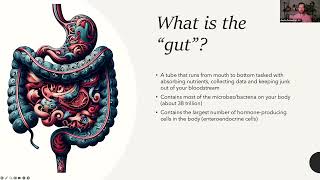
Dr. Austin Perlmutter explains how your gut microbiome talks to your brain through the vagus nerve and immune system, shaping everything from mood to immunity. Short-chain fatty acids from fiber, tryptophan metabolites, and bile acids are the main messengers. Sleep, exercise, fermented foods, and polyphenols strengthen the connection.
Questions this video answers
About 30 trillion bacteria.
About 45 million unique genes.
Approximately 22 to 30 feet long.
Standard published goals around 25–35 grams of fiber per day.
Chapters
Okay, well, if you are joining this webinar after the fact, after The Live, I'm Dr. Austin Perlmander. I'm the managing director here at Big Bold Health. And we are going to be kicking off the webinar here in just a few minutes, but we're waiting for some of the live attendees to come in. And so if you are one of the people who are joining live and a lot of people joining live and welcome. I'll ask the question I always ask when we get started, which is where are you tuning in from? So if you're joining us now, go in the chat and let us know where you're coming from. And the other thing I'll say is the webinar this time around, we'll see how long it goes. But if there are questions that you would like addressed, I can't answer anything of a personal medical nature because I'm not your doctor and from a legal perspective, I can't do that. But if there are questions related to the material you would like answered, put them in the Q and A, which is different from the chat section. But I see tons of people who are joining here from all across the world. So just a quick shout out to people joining from the uk, from Pennsylvania, Arizona, from Canada, from Nevada, from British Columbia, all sorts of places. So again, if you're just joining, looks like we have lots of people here today, so really excited to talk about the topic, which is how the gut and the brain links to the immune system and to the food that we eat. But let us know where you're tuning in from. And I'm going to presume based on the fact that I'm getting tons of responses, that you can all hear me pretty well, that my microphone is working and that you can all see my screen. So let me do a quick reintroduction if you're watching this after the fact or if you're watching this live. Either way, I'm Dr. Austin Promoter. I'm an internal medicine doctor. I'm also the managing director here at Big Bold Health. And for the last month, month and a half or so, we've been doing these educational seminars online. Big shout out to Trish Urie, who's behind the scenes here helping us put all of this together. But the goal here is basically to help educate, provide information on the latest information we know around aspects of science related to the immune system. And the reason for this specific topic today is that one of the things we see a lot of people talking about right now and interested in right now is gut wellness, gut health. And this makes so much sense because gut issues are so prevalent. But most of the time when people are discussing how the gut has problems, they tend to focus on maybe the microbiome or the gut itself without talking about one of the most vital aspects of what constitutes gut wellness, which is the connection between the gut and the gut immune system. Now, beyond that, in an area that I'm in particular invested in, is how does what happens within our gut influence our brain, our mood, our cognition, and how is that influenced by the food that we eat? So the purpose of today, the conversation we're going to be having is how the food that we eat interacts with the gut, both the microbiome, the gut cells and the gut immune cells, and how that message gets translated to the brain. So we'll talk about, compared to maybe other times, a little bit more detailed science. So little disclaimer. This is going to be a science rich meal. There's going to be plenty of information in this and there may be some things that are a little bit more complicated than usual. What I'd say is stay with me. And if we get to the end of the conversation and there are still aspects of it that don't quite make sense, put your thoughts and questions in the Q and A section and I will try to address all of those. So that said, we've got lots of people who are here. Looks like we have about 170 people who are tuning in live at the moment, lots more people who are jumping in. If you're just joining, let us know where you're coming from by dropping that in the chat. And with that said, I think we are ready to get started. So let's jump in. The gut brain connection to immunity and nutrition. General disclaimer here, which I have to say is that what we are discussing here is not a relationship that I have with you as your doctor and some sort of advice I'm giving. Everything that we're talking about here is for information purposes only. This is not tailored medical advice for you. So tell definitely make sure that you're still working with your healthcare provider to institute anything before you put it into practice. Okay, the objectives for this session is to, or are to. First of all, we're going to talk about the basics of the gut, the basics of the immune system. So if you're new to these topics, we will go into a bit of this conversation of what is the gut. Everybody's talking about it. You see it on TV and magazines, on social media. What is it really same thing around the immune system. And I think in both of these cases, people tend to miss some of the most important aspects of what actually makes these systems so important to our wellness. We'll also talk about how the gut interacts with the brain. A absolutely fundamental and so interesting aspect of modern science is the knowledge that what is happening in our brains so our thoughts, how we interact with the world, how we act, how we is a reflection of what happens within our gut, that the gut programs the brain and vice versa. We're also going to talk about how the gut microbiome in particular is impacting your brain. We'll talk about the pathways that link these various aspects of our body. So the focus on, for example, the vagus nerve, which you might have heard about before, turns out to be a central conduit by which data can be transferred from the gut to the brain and vice versa. And then we're going to talk in particular about diet. So everyone always wants to talk about food, but in this case in particular, diet is so important to the conversation because diet is the most important way that the average person is able to reprogram what happens within their gut and to change the signals that go up to our brain from the gut. We'll talk about some of the up and coming research related to this science, where we maybe see the future going around each of these topics. And then I do want to carve out some space at the end to talk about what are the new ideas, what questions you have. So again, if you're thinking about this throughout, drop your questions in the Q and A section and then we will get to them at the end. And just a real quick call out here for those who are in the webinar chat. Can you all hear me? Okay, can I get a yes if you're able to hear me. Okay, and a maybe if you're on the fence, if and a no if you can't hear me. Okay. Okay, we got lots of yeses. So if you are somebody who can't hear me very well, sounds like you just need to find a way to increase the volume on your end. Okay, thank you, everybody. All right, so as I look at this topic, as I kind of approach any more complex topic within the range of science, I like to think about the Venn diagram concept, something you're all I'm sure familiar with. And it's this question of overlap. So where is there overlap in these topics? So the topics here are gut health, the immune system, the gut microbiome, and nutrition. And then we're talking about, in addition, how this relates to the brain. But here, when we're talking about these areas, we're talking about intersections. Now, in order to kind of define these intersections, we have to know the various components. So what is the gut? You've all heard about the gut on podcasts and books, and. And just to address a question here that people are asking, there will be a recording afterwards. So if there's anything that you feel you want to watch again or that you need additional time with, you'll be able to watch this afterwards. We'll be sending out the recording. But to begin, what is the gut? The gut is, as a basic definition and really kind of what many of us learned. It's a tube that runs from your mouth to your bottom, and it serves a number of tasks. So, number one, probably the most important thing is it's tasked with absorbing nutrients. If we can't absorb nutrients, we die. Pretty straightforward. So you have to be able to take nutrients from our food and pull them in through the gut, which means it necessitates the idea that the gut is permeable in some ways. Now, that doesn't mean leaky gut, but it does mean that you need the nutrients in your food to be able to go through the gut and get into your bloodstream, where they're able to reach your cells. It's fundamental. In addition, the gut is tasked with collecting data from the outside world. Now, this is something that, you know, I. I really only started learning about maybe about five to seven years ago. And Dr. Jeff Bland, who is the CEO of Big Bold Health, and I talk about this a lot. So the gut is really tasked with collecting data from the outside world. Think about what this means. We all know that when we eat food, we need to absorb that food so we can synthesize or basically create cells. But what we don't think about is that there are all sorts of other data points within the gut that the body is learning from. For example, the composition of the microbes in our gut teaches our cells about what is happening in the outside world. The makeup of the food in our diet not only is converted into nutrition, but also actually influences what is happening in the gut and tells our body about what's happening in the outside world. One interesting example would be that there is, for example, fiber and other things that we can't digest that are nutrients in food that teach us about what's happening outside. In addition, and also very important, is that the gut keeps out unhealthy stuff so we don't want to be constantly absorbing everything that comes into the gut. There are certain things that are very important that we keep outside of our bodies. Great example here would be certain types of bacteria that live in the gut and products of those bacteria that we really don't want to be absorbing. So it's a kind of a challenging task that the gut has because it has to be able to pull in the right stuff, keep out the bad stuff, and throughout this whole process, be constantly learning about what is happening in the outside world and relaying that signal to what is happening inside of our body. As far as statistics go, you may have heard this one, but it's, it's really relevant to the conversation. The majority of the microbes, and in particular the bacteria that live on your body are located in your gut and in particular the large intestine. A statistic that most people, I don't think do understand is that the gut also has the majority, or by weight, most hormone producing cells of any part of our body. These are called enteroendocrine cells. So by the size, the gut actually has the largest composition of these hormone secreting cells. It's roughly 22 to 30ft long. It's not a competition, but it is something that's interesting when you think about how much actual cell surface area there is in the gut. How much surface area is there? It's been debated. I learned at one point that the gut was roughly the size of a doubles tennis court. That's been updated a little bit. It's probably closer to the size of a studio apartment. Not that that makes a huge difference for what we're talking about here. But if you're deciding, you're wanting to quote, the quote is it's about the size of a studio apartment. What we'll talk about in a moment is that the gut is linked to the entire body and obviously by the bloodstream, because we know that nutrients and other molecules have to come into the bloodstream, but by the immune system and the vagus nerve. And these are three major ways that the brain and the gut are able to communicate. Okay. What I think we maybe have heard before, but I want to reiterate, is that issues in the gut are now understood to affect basically the entire body. So. So it's not as though the gut, or really any organ for that matter, is somehow separate from the brain. Everything impacts everything else, but the gut in particular seems to be an area in which, when things go wrong, you can have issues throughout the body. Okay. So that's the basic Primer and what the gut is. Obviously I haven't covered everything there. If we don't get to a certain question, you have put it in the Q and A and I'll try to get to it at the end. What about the immune system? So this is a huge area that we are invested in, obviously at Big Bold Health, in trying to educate people on this incredible world of what the immune system actually is. If you turn on the tv, if you go on social media, you'll hear that the immune system is a defense system. You'll hear about boosting the immune system. These are small pieces of what the immune system does and is capable of doing. The immune system is actually trillions of cells and signals throughout your body. And similar to the gut, it is responsible for a number of different processes. So, yes, it is our primary defense system, but it is also hugely involved with signaling and data capture. What that means is your immune system takes information from one part of the body and can amplify or decrease the degree to which that information is translated to another part of the body. Really important as we look at the brain, because what happens in our peripheral immune system, meaning what's happening in our blood, can impact what is happening in our brain's immune system through a host of pathways. So really want to drive this point home, which is, yes, the immune system involved in defense, but maybe even more important, the immune system is involved with signaling and coordinating responses throughout the body. So some other areas in which we're now studying the immune system is include everything from pain to cognition and mood, digestion, temperature control, and so much more. Let me give you an example of this. If you have higher levels of a certain type of immune protein called interleukin 1 beta in your bloodstream, you will spike a fever. Why is that the case? Well, it is your brain being told by what's happening in your body to change the temperature set point. Similarly, we know that changes in the immune system are linked to how we experience pain. Why is all this relevant? It's because, again, we're getting outside of that bubble the idea that the immune system only does this one thing, which is defense. And once you start to understand that, you can appreciate that there is more that we can do to enhance the wellness of our immune system and more outcomes that we can act on related to how the immune system is functioning. How about the gut brain axis? This is something that, again, you may have heard about before, but it is revolutionizing the way that we look at brain health. The reason for that is because we now understand that there is a bidirectional communication, a two way highway that links the brain with the gut. So we have all of these neurons that you've heard about in the brain. Brain has roughly 80 billion neurons, but we have a ton of neurons that are actually located in an area of the gut called the enteric nervous system. Huge cluster of neurons down there beyond that. We also know that the brain communicates with the gut by way of this vagus nerve. The vagus nerve we'll talk about in a moment. But it is a nerve that runs from the brain to the gut and from the gut to the brain. And that hormones and immune system signals from the gut can influence the brain. So the point here being that what happens in the gut changes the way the brain functions, and that what happens in the brain changes the way the gut functions. So this has relevance for digestive wellness, for brain wellness, for overall well being. Now, if there's one kind of takeaway from what I'm teaching you about how the gut operates is that this is a site of bidirectional data flow. It's easy to conceptualize the gut as a place in which data from the outside world comes into the inside world. That's how we look at food, we absorb food. And now that's data that changes our cell makeup, that changes our hormonal function, that changes intracellular pathway signaling. But the gut is also a place where data from inside the body changes what is outside the body. And this is in particular relevant as it relates to the gut microbiome. So as I mentioned, the gut microbiome is the primary location where bacteria in our body are located. We have probably over 30 trillion bacteria in our gut. So most of the bacteria on our bodies are located in the gut. And we know that when these bacteria eat food, whether it's fiber or something else, when they consume food, they create byproducts. They also create byproducts just by virtue of existing. These byproducts, these breakdown products and metabolites, can actually change the way that the gut immune system functions. So it's not just that the bacteria themselves are talking to the gut immune system, which is also something that happens, but what they produce basically educates the gut immune system. When we think about the gut microbiome, there are some really fascinating updates from the recent research. And just some of these statistics are absolutely mindboggling. So again, something like 30 trillion bacteria in your gut right now, but the gut microbiome as a whole has about 45 million unique genes. And we know that the composition of the gut microbiome is changed by lifestyle factors, changed by medications, changed by everything from the stress we experience to the food that we eat. This was a really interesting study, and they were looking at whether genetics explained the microbiome. So there's always this kind of debate in medicine, which is the question of how much of what happens is a reflection of your genes versus what you do in your life. And as we look at the microbiome, which as we'll continue to talk about, the composition of the microbiome has a direct impact on so many aspects of wellness. There's the question of, well, do I just have the microbes that I was born with? And what this research has shown, this study that was done with twins, is that genetics plays a very small role in the overall composition of the microbiome, which means that the majority of why your microbiome has one bacterium over another is a reflection of what you do in your life. So it's not always things that we do by choice. For example, we know that the way we're delivered, whether cesarean or vaginal birth, has a big impact on the microbiome composition that we have. But as adults, some of the biggest influences on the microbiome are actually things that are within our control, because a lot of them are actually dietary. Diet turns out to be huge. And so diet by itself seems to explain about 20% of the differences in the microbiome. And importantly, and this is the point that I make, whether we're talking about the brain or the immune system, and certainly around the gut, is that the microbiome is constantly changing itself and is changing itself in a conversation with the gut immune system, which is changing itself based on what's happening in the microbiome. Here we have this idea, which is that this is an incredibly powerful system, a huge system that comprises trillions of bacteria that has major impacts on all sorts of aspects of our physiology, and that we have access to modify that. We can help to manipulate this for our betterment. It's really, really impactful and important science. Okay, as I said at the start of this, we are going to do a little bit of. A little bit more science this time. And if you curious, if you tuned into my last session where we talked about the immune immune system as a whole, Drop a comment in the chat. I'd just be curious if you attended the last one or saw that one on replay, just so I know how many people this is following up with and how many people are seeing me for the first time. But as I said, this time we're going to do a little bit more science. So here we're going to be talking about microbiome metabolites. These are what are called postbiotics. In the conversation around the microbiome, everything is biotic. So you can have a prebiotic, and a prebiotic, great example would be a fiber is something that feeds healthy microbes. Then you can have the actual probiotic, and a probiotic is the microbe itself. And then you can have a postbiotic. And a postbiotic is something that the microbe creates. There's also symbiotics, which is a combination of multiple pre pro postbiotics. And now we're talking about psychobiotics, which is an interesting term that talks about bacteria that when we consume them, have benefits on our brain health. So just a little quick idea as to some of these terms here. We're talking about postbiotics. And the most important postbiotic for most people to be aware of is basically the short chain fatty acid. It's commonly abbreviated by this scfas, short chain fatty acids. Short chain fatty acids are the result of bacteria in our gut metabolizing foods like fiber. Why they're so important is because these short chain fatty acids act as fuel for our gut cells. So this is a circuit that is absolutely important for you to know about. Our gut cells eat what our microbes basically created when they ate. So, so you eat fiber, your gut microbiome eats that fiber, produces these short chain fatty acids. Then our gut cells use those short chain fatty acids as food, as fuel. And that just tells you how closely everything is linked. So if we're not feeding our microbes with the food they need, then they stop producing the food that our gut cells need. So beyond just the fact that these short chain fatty acids act as fuel for our gut epithelial cells, they also change epigenetics of our gut immune cells. So they act as programming tools for the immune cells in our gut. This is really interesting and important stuff because here we're now talking about a circuit whereby the food that we eat changes the microbiome, which changes their byproducts, their metabolites, which then can change long term by way of epigenetics way that our immune system works. So we always get to this point where we say every bite of food is a vote for or against wellness. And this is actually the science as to why, in addition to short chain fatty acids, the gut microbiome produces a number of other metabolites One of the more important groups are the tryptophan metabolites. They're called indoles. Why are these important? Well, you've probably heard of some of the tryptophan metabolites. The most common one that people would know is serotonin. So, yes, serotonin is generated from tryptophan. And quick myth here. People will say, well, the majority of serotonin is made in your gut, therefore your gut is the biggest manipulator of your mood. Not exactly. Serotonin is produced majority in the gut, but it doesn't cross the blood brain barrier. But instead, these tryptophan metabolites, like serotonin, which are produced in part through the microbiome, have significant effects on the local gut. So it changes the way that the gut functions, including changing contractility as well as regulating a number of other pathways. And what I wanted to mention here in particular is that these metabolites of the microbiome can actually influence the microbiome by way of the immune system in the gut. Complicated stuff. I know. We'll break it down. When gut microbes consume fuel in the form of fiber or in the form of other nutrients in our diet, they can produce metabolites that basically tell our gut immune system to produce antimicrobial peptides. Antimicrobial peptides, or AMPs, selectively kill off certain microbes in the gut microbiome. So in this, what it means is the food that you eat changes the gut microbiome, which changes our gut immune system, which, which then changes the microbiome by producing molecules that can hopefully improve the health of the microbiome by selectively killing off microbes. Now, I know I said at the start, this is going to be a little bit of a science dense lecture. So if what I just said didn't make perfect sense, go back, watch it again, or drop a question in the Q and A and I'll try to get to it at the end. Okay. To kind of round this out, I'll also mention that the microbiome produces what are called bile acids. And these bile acids have effects on the immune system. Pathways here are a little bit more complicated, but just so that you're aware that these are different products, and here we have a question about whether AMP is related to amp K. Those are very different things. So adenosine monophosphate, which is amp, is an energy currency and a recycling component. That's important in the context of MET metabolism. Here we're talking about antimicrobial peptide, but I just did not put all those words out. So different pathways, but same abbreviations. Last one here, trimethylamine. Many people may have heard of this in the context of tmao, which is now being researched as a surrogate for health issues. Why this is important is that tri, tri methylamine is a product also of certain microbes producing these byproducts. This would be more on the flip side. So if the short chain fatty acids are something we want more of, this may be one that we want less of. Okay, thank you all for bearing with me for that little moment of intense science. And again, if you have questions on that, just drop them in the Q and A. Let's talk now about something that many of you may have heard about, may have questions about, which is this whole concept of kind of intestinal permeability and leaky gut. There is still somewhat of a debate in the conventional medical world as to the importance of this question of what is the leaky gut. And many people don't recognize this term. But I would say at this point there is a consensus that having a more permeable gut membrane is not good. We do not want this to happen. Now, we can call that leaky gut, we can call it increased intestinal barrier permeability, which is what you'll see if you look at the peer reviewed research, more than you see leaky gut. But the bottom line is coming back to the original point here. We want a gut lining that pulls in what we want and keeps out what we don't want. And when that gut lining starts to become more permeable, it, it makes it harder for the gut to regulate what comes in and goes out. So the idea here is that damage to the gut membrane, which we would call leaky gut or a more permeable intestinal barrier, happens when these gut epithelial cells, which are the lining cells of the gut mucosa, become damaged. How does that happen? Well, number of different pathways, but what a lot of research is suggesting is that one major pathway relates to our food and it relates to the connection between the gut microbiome, the gut immune system, and the food that we eat. So, meaning that this kind of trifecta of variables has a major role to play in whether the gut membrane is intact, keeps out the junk and pulls in what we need, or becomes more permeable where it lets in stuff that can be not great for our wellness. So when there's more kind of transport, either because the cells themselves are gone or because they open up spaces between the cells, that's where we would have what we call leakiness. And as I mentioned, the immune system is a major variable in this potential leakiness. Okay, now we're going to talk about a really important term in immunology that actually has a lot to do with what's happening in the gut. So this is getting into this question of what kind of an immune system do we want? And in particular, what do we want the gut immune system to be doing? So for context here, because again, this is a little bit more of a scientific, technical idea, we have to get away from the first level concept of the immune system as something that should just be boosted. And as an example here, we'll say if the immune system is creating problems in a person's body, the last thing we'd really want to do if it's already creating issues with cells and stuff, is to boost it where it does more of what it's already doing. Now, we do want an immune system that can respond to threats. Of course that is the case, but we don't want it to go overboard. So that introduces something called tolerance. And tolerance is basically the idea that the immune system is able to recognize that something, you know, may be foreign, maybe looks a little bit scary, but it doesn't have to go crazy and attack. It doesn't have to create a whole reaction. It's able to tolerate these things that come into our body. And this is really important because again, we don't want an immune system that goes completely crazy every time it sees something that it doesn't quite recognize. So how does that relate to the immune system in the gut? The gut microbiome programs the gut immune system towards a state of either reactivity and activation or tolerance. Meaning that if the microbiome in the gut is telling the immune system in the gut, hey, you know, there's going to be some, some food stuff going on in here. There's going to be some pieces of microbes that maybe look a little bit scary, but you don't need to go all out and attack them. That's actually really a good thing. Now, we don't want too much tolerance. We need the immune system to be at its right set point. But if we don't have any tolerance, then our body goes crazy. Our immune system goes crazy every time it sees something that's a little bit foreign. So we want, interestingly, more tolerance in certain parts of the body, in the small intestine, when there's more tolerance, that actually has an effect on tolerance throughout our body, where in the colon, tolerance is more local. And just as kind of an aside, it's important to recognize that the majority of the microbiome is located in the large intestine. So you really want a kind of tight loop of what's happening there. I mean, it's not that it's dirty per se, but you have tons of microbes and you have tons of gut immune cells in there, and they really need to participate in a way that keeps things locked in pretty tightly in the small intestine. You have more of a way to kind of influence the majority of the body because you don't have as many of these things that are active. So again, little side note there. Let's take this to the next level, which is to now ask, we've kind of built out the gut microbiome, the gut immune system, the gut cells. How does this influence the brain? And one of the most important pathways here, probably the one that gets the majority of the press, is the vagus nerve. The vagus nerve, as you've probably heard, is a cranial nerve that runs basically from the brain to the gut and back again. And when I was in medical school and in training, we learned about the vagus nerve primarily as a brain specific conduit, meaning we learned about the brain shooting these fibers down through the rest of the body. So it was kind of telling the rest of the body what to do. What is now understood is that the majority of the fibers of the vagus nerve run from the body to the brain, Meaning it is taking data from places like the gut and the heart and other parts of our body, and telling the brain what is happening there as it relates in particular to the gut. We know that the vagus nerve has a ton of sensory endings. What does that mean? Well, think about the vagus nerve kind of as my hand, if you can see my little finger face on the screen here, it's got all of these little kind of tendrils and it is sensing to try to figure out what's happening in the gut. And based on the information that it takes in, it tells the brain to do things differently. It tells the brain what's happening. So a really easy way to think about what this would be is if you know your gut is distended because you've eaten a big meal. That's important information for your brain to get access to. In part, the vagus nerve can convey that. In part, it's conveyed by other kind of endocrine pathways, but that is data from the gut that has to be transmitted to the Brain. The vagus nerve, though, has endings that detect everything from neurotransmitters that are produced by the gut microbiome to gut immune molecules called cytokines that are produced in the gut. And we know that this is really, really fascinating. There is this breakthrough bit of research with something called a neuropod. And the idea here is that we have these signaling pathways that run from the cells in our gut that basically synapse onto these vagus nerve terminals, which is mind blowing because a cell should not synapse, right? Only neurons should synapse. But basically what we have here is a cell acting like a neuron and transmitting data rapidly in real time from the gut to the vagus nerve, where it's able to get to the brain. If you really want to nerd out, check out Neuropods, go to Google Scholar and learn more about this. In addition to this, the vagus nerve can detect a host of gut hormones, maybe one that's interesting to many people right now, GLP1, glucagon, like peptide 1, as well as a number of other hormones. This helps to tell our brain that we're full, to make us feel like we're full. So this is a really important pathway, right? We want to feel full so we don't continuously eat. And it's one of the reasons that many people are trying to learn about how we can influence these pathways using higher levels of these molecules that are taken from outside of the body. But importantly, really important, these are pathways that already exist within our body and are influenced by the food choices we make. We also know that the microbiome can influence the vagus nerve via these entero endocrine cells. So that is again, talking about hormones. We know that the hormones that are produced in the gut as a reflection of what is happening in the microbio, can bind to and impact the vagus nerve. And as I mentioned, stretch related changes are transmitted to the vagus nerve. So basically just saying, if you have a big meal and your gut is distended, you know, you think about the anacondas that have eaten some sort of a wild pig and you have your belly is full of food. You want that information to get to your brain. You shouldn't have to, you know, feel your belly to know that it's full. You should have that information transmitted. And so the vagus nerve is involved in that as well. I think it's also interesting to note that the vagus nerve has sensors for components of bacteria and metabolites of bacteria. So coming back to what we had just described around the short chain fatty acids, these bile acids, and these tryptophan metabolites. The vagus nerve is able to detect many of these metabolites. And so again, you're kind of getting this real time update where your brain is being told, here's what's happening in your gut, both in terms of your gut's immune system and in terms of your gut's microbiome. And what we're learning is that this may be influencing mood, maybe influencing cognition, maybe influencing behavior. And it's subtle, right? So it's not like, oh, I ate this meal and it's a good meal or a bad meal, and therefore I know for sure I want to eat it or not eat it again. But these might be subtle changes in our brain that actually change our behavior. And there's this, this not even hypothesis. There's this idea which is so much of what we do and so much of how we think and how we feel as humans may actually be a reflection of the composition of the gut microbiome and influenced by the gut immune system. So it changes this whole paradigm of, oh, everything comes down centrally from the brain and helps us to recognize that, you know, a lot of what makes us who we are may actually be happening in the gut. Interesting ideas. I wanted to include this, this is from a recent paper, just to give you a sense as to how all of these things are able to impact the brain. So if you look at your screen here, the important thing is basically on the bottom of the screen you see there's all these bacteria floating around. That's the inside or I guess the outside of the gut. So that's the tube of the gut. These molecules, these pieces of bacteria, these hormones, these immune signaling molecules either get transmitted across the gut barrier or sometimes go through the gut barrier to essentially when there's more of a leaky type of scenario. And all of these different signals converge onto what is technically called the afferent neuron. Efferent neurons run from the brain to other parts of the body. Afferent neurons run up to the brain. So, point being, there is a convergence of all of this data from the gut onto the vagus nerve, and this then influences the way the brain functions. Okay, let's talk a little bit more about this. Historically, we've thought about the vagus nerve as running from the bottom of the brain because it originates in the brain stem to other parts of the body. But I really want to hit this point because it's so important to understand the Majority of the vagus nerves or neurons within this vagus nerve run to the brain, not away from it. So we've historically thought about this as kind of a top down control. But it may be the case that the majority of the value of the vagus NER it's bottom up education, no pun intended, but from the gut to the brain. Okay, let's now talk about how this gut brain access, gut brain access relates to immunity. And we'll do Just a quick pause here because we're pretty deep into this content. Will you all let me know, is this too dense? Are you following along? Are there any themes here that you feel like you'd like to know more about? Just let me know in the chat so I can have a little bit of a real time sense as to whether this is the right degree of scientific complexity. I will keep going on. I see it. Please nerd on something that I like to hear and thank you all for your comments. Okay, so let's now talk about how does this gut brain axis relate to the immune system? To recap, immune signals from within the gut which are generated by what is happening within the gut's immune system. The majority of your immune system is located in your gut. So we're really talking about a lot of immune cells can change the way your brain works by signaling through the vagus nerve to the brain. But we also know that immune cells within the gut and the signals that they create can change what happens in the brain by way of the bloodstream. So think about this for a minute. You have your immune cells within the gut. They can signal through the vagus nerve, but they can also just produce molecules and they can move. So immune cells that are located in the gut can say, you know what, this data is so important I need to transmit it to another part of the body. So I'm just going to pack my bags, I'm going to head out and I'm going to go to another immune hub to amplify this signal. So importantly here, immune cells in the gut can change what's happening in the entire body's immune system if they decide to transmit that signal further than what's local breakdown products of the gut. Microbes can also program immune systems in the body and in the brain. And this is probably the more important pathway than what I just said. For number two, what we're talking about here is that the gut microbes can create a number of molecules, either helpful or harmful, and when they get into the bloodstream, they're able to reach immune cells throughout the body. So actually, one of the kind of core mechanisms by which it is believed that the body's immune system can get thrown out of balance is this exact pathway. So if you have high levels of immune signals within your bloodstream, that can then impact your immune system and your tissue health at any part of the body that has exposure to it as it relates to the brain. We know that the brain's blood brain barrier is able to keep out some stuff, but not necessarily all of this data. We also know that the nutrients, and this is pretty basic, but I'm just going to reiterate it because sometimes we forget it, that the brain itself and all of the signals within the brain are made up of molecules. Those molecules have to come from somewhere, and where they come from is the food that we eat. So the nutrients that we absorb that we consume in our diet and actually make up the signals and the cells within our brain. And then the question would be, if we consume different nutrients, does it change the signals that happen within our brain? Does it change the physical makeup of our brain? The answer is yes. And do the changes in the signals and the makeup of the brain influence the brain's immune system? And the answer is yes. So there's always, you know, I keep making this point, there's no way around it. Every bite of food that you take is going to have so many effects on your entire body. Now, that doesn't mean that we have to be incredibly paranoid and worry about every single bite of food, but it does mean we have to take it seriously. And it does mean that if you look at the quality of your diet, maybe not over the course of a day, a week, a month, but certainly over the course of many months and many years, that this is a huge way in which we're either voting for wellness or voting against it. So how does the gut impact the immune system? We're talking here kind of local to systemic. So as we've already discussed, what happens in the gut dramatically changes the gut immune system. We know that the strength of the gut lining, in addition to the gut microbiome, changes the gut immune system. So just thinking about this for a second. If you're a gut immune cell and you're waiting just below, because they hang out just below the actual gut barrier, Although some cells, called dendritic cells, are actually able to reach up their arms into the, into the gut, and they're able to sample from what's happening by going in between the gut cells, which is super interesting. But most of these gut Immune cells are sitting just below the barrier with the outside world. And if you open all of these barriers up, basically create more space between the cells, these immune cells are going to have a whole lot of different data that is going to program them. So it's another reason why we really want a very tightly coupled gut microbiome, gut cell, gut immune cell conversation. Because when one or more of those systems gets thrown out of whack, it kind of brings all three of them down together. Immune cells in the gut, sample from the gut microbiome, and the food in their gut. So just be thinking about this. Every time you're eating, you're kind of raining down all of this data, and your gut immune system is sitting there picking it up, looking at it, making decisions as to what to do next. And then, as I mentioned, molecules that are made by the gut microbiome get absorbed into the bloodstream and impact systemic immunity. So this is in part, a local story as what's happening in the gut immune system influences what happens throughout the body. And it's in part a systemic story where, where molecules in the gut get into the bloodstream and impact systemic immunity. This is a point, I think I've made this a couple of times, but I think if you can understand this, it really, it really ramps up your total comprehension of what's happening here. So the microbes in the gut, the gut microbiome train the immune system in the gut to know the difference between helpful and harmful microbes. So I mentioned before that certain pathways between the microbiome and the gut immune system can upregulate the production of these antimicrobial peptides by the gut's immune system. So in theory, some microbe in there could be saying, you know, I'm looking around and I don't like what I'm seeing. These other microbes, they're not good for you and they're not good for me. I'm producing more of this molecule for the gut immune system to look at. When the gut immune system sees that molecule, it says, okay, I see what's happening here. And it literally sends out these missiles to destroy the unhealthy microbes. So what we're saying here is there is this bidirectional interaction where ideally, the healthy microbes and the balanced gut immune system keep each other in check and keep down the unhealthy microbes in the gut. So they actually teach our, the microbes teach our immune cells which are the good guys and which are the bad guys. And, and we in turn teach the microbes in our gut by changing our food choices. So it's this whole cycle whereby we're able to influence the gut microbes, which influence our immune system, which then influences our brain, which then influences our food choices. It becomes a little bit, can be a little bit overwhelming. But I will just say this, at the end of this, we're going to talk about some of the top tips on just what types of foods, other interventions make sense for most people. So I promise we will get back to some basics. Okay, to round it out, what about the gut immune microbiome connection? We know that the microbes in our gut influence the immune system, vice versa, that when there is a imbalance in the makeup of the gut microbiome, it can imbalance the gut immune system. And because we get to influence the microbiome based on the food we eat, we could influence the programming of the gut immune system by way of the microbiome. We talked a little bit already about the postbiotics, and as you'll remember, I went through kind of the major terms here. The prebiotics being things that we can use to feed our gut microbiome, the probiotics being things that we consume that are actually live microbes, and then the postbiotics being things that are produced by the microbiome. So going back to the probiotics, many people, myself included, are seeing probiotics as a important step to improving immune wellness. That's a really interesting term. It's usually not or not interesting concept. That is not usually the way people look at this. I think most people look at probiotics as a way to improve gut wellness. But the reality is that one of the major ways that these probiotics can act on our bodies is by extra educating the gut immune system. So how does this work? Well, in part, if we are consuming the right types of microbes, or if we're increasing the populations of the right types of microbes, we might be able to crowd out or otherwise keep out the unhealthy microbes. In part it's because certain microbes may actually improve the stability of the gut barrier. In part, it's because certain microbes produce more of these pro or postbiotics, like short chain fatty acids. And interestingly, these probiotics, these beneficial microbes, can actually influence gut immune cells by binding to specialized receptors that are found on both the gut epithelium, which is the outer lining of the gut, and on gut immune cells. So this is interesting because what we're saying here is consuming a Probiotic. So, for example, if you were eating some yogurt that had some beneficial bacteria, it's not just about the fact that, oh, well, you're improving your gut state by consuming some yogurt and those microbes are going to be in your gut. And that's a good thing. It's actually because the microbes, specifically certain microbes, may bind to and influence gut immunity by way of these pathways. Something to think about. Okay, let's start getting to now. Some of the things that I like to kind of prioritize and some of the strategies that may make sense if we are really focused on how do we enhance this system. So what are the variables that impact this? Nutrition is the main one we're going to be talking about. But just to give you some more context, we know that stress influences the gut. We know that cortisol, for example, may actually increase gut permeability. Sleep. Sleep influences everything. You will hear this from me anywhere you find me. And that is that sleep is absolutely vital and to any aspect of wellness. And if there's one thing you could do on a given day to enhance your brain health, it is prioritizing sleep tonight. Sleep, however, also has an effect on the gut microbiome, on the immune system, and obviously on brain health. Physical activity, another one that we see coming up time and time again. There's now data showing that physical activity reprograms the gut microbiome. So exercising isn't just a good thing for your heart. Exercising is actually a way to help to enhance the state of your gut. We know exercise is a great thing for the immune system, and we know that exercise is one of the absolute top things you can do for brain wellness. Medications. Medications do lots of things, but we know that they significantly impact the gut, brain, immune axis, pre and probiotics. As I've already said, nature exposure, super interesting. When we are around nature, it actually reprograms the microbiome, especially on our skin. There's also some data suggesting that it reprograms the immune system and that the nature exposure has beneficial effects on our brain. So this is a really strong vote for getting dirty of all things. When people are in the soil, when people grow things, when you take kids and change out their classroom from one that is inside and kind of sterilized to one that is outside and interacting with soil. And it changes their microbiome and it changes the way their immune system responds. So nature exposure isn't just some sort of. I would be nice to get into nature. It's Actually a significant variable as we look at the gut brain immune axis, alcohol consumption. You know, I always have been a little hesitant to talk about it because I always bother certain people. By and large, consumption of lots of alcohol is really not a good thing for any aspect of our wellness. But it may in particular throw off the state of our gut microbiome, throw off the state of our immune system, and be certainly in the aggregate and in long term and high doses, one of the worst things we can do for our brains. Aging, definitely. Aging changes so much about our bodies. Where you now understand that the microbiome changes as we age, the immune system changes as we age, the brain changes as we age. What's really positive about the age piece though, is we're now learning that by modulating many of these other things, because we, we obviously can't, unless somebody has a time machine somewhere, we can't actually age in reverse as it relates to the years we've been on this planet. But what we can do is ask why is aging a problem for a number of issues? And then say, what can we do to act on those pathways? And actually we can act on many of those pathways using the other bullets here on this slide. Genetics, as I mentioned, it does play a role. It's probably one of the smaller things as it relates to how much it influences these pathways. Okay, so in the last few minutes here, and then we will go to a couple of Q&As, let's talk about some practical ideas around the gut brain axis and how it interacts with the immune system. So I think important to understand, obviously I'm a huge fan of nutrition and lifestyle modification, but this is a system that seems to be especially responsive to nutritional intervention. The reason for that is that you have a combination of all of these systems in the body that are very, very sensitive to the data from the outside world. And that food is one of the biggest kind of ways that the data from the outside world changes. So you think about it, the immune system has to be incredibly responsive to the outside world. And so it responds to diet. The microbiome is incredibly responsive to diet. And the brain is also made up of food. And it has to respond to information in real time. And we're now understanding that the brain changes depending on what we feed it. So this expands beyond nutrition to lifestyle intervention. But the great news here is that when we change our lives to enhance the quality of our decision making around food, exercise, sleep, stress, that this appears to have an immediate and substantial effect on these systems. Important idea here Is that the immune system is kind of central to this whole conversation. So whether it's the microbiome, whether it's the gut cells, whether it's the brain, the immune system plays a central role. And as I said, these are all different things that we can work on. So sleep, exercise, decreasing our toxic load from the environment, getting better hydration, that doesn't mean just drinking tons of water. I think, you know, again, there's always a trip wire here because there are certain people who believe you need to drink an insane amount of water each day to be healthy. And I don't necessarily agree with that, but I also think that a good degree of hydration is important. And for many of us, we just kind of forget to consume water throughout the day. And that does have an effect on the microbiome. So what can we do from a nutritional perspective? Diet changes these various aspects. We think diet is the biggest contributor to the adult microbiome. There are several elements of diet. One that we're really focused on here at Big Blood Health is the role of basically plant based compounds called polyphenols. Have names like resveratrol and quercetin and rutin and luteolin and egcg. These are molecules that historically have been seen as throwaway molecules in our food. We now understand that these have an effect on all of these systems. So polyphenols within the gut, polyphenol metabolism. So these, again, they're molecules that are bound to other molecules. When we eat our food, we start metabolizing these molecules, we hydrolysize them. Hydrolyze them, sorry, in the stomach. And then we are able to start absorbing them by the time they get later into the gut, what happens afterwards? Well, we either in the gut or in the liver, we do a bunch of additional things to them. But the bottom line here is that the majority of these polyphenols get to the large intestine without being absorbed. And that's really key because we know that what happens in the large intestine is that they interact with the microbiome. So this is a little bit technical. Many people like to say polyphenols are antioxidants, eat more vegetables. What I'm saying is polyphenols in our diet are linked to better wellness. And the reason is because these polyphenols change the microbiome, because these polyphenols interact with the immune system, and because these polyphenols can have effects either in their original form or in their metabolite form that impacts systemic wellness. So how does this happen? Well, polyphenols can bind to receptors on immune cells. Polyphenols influence the microbiome, which then influences the immune system. When we alter the immune system, when we alter the microbiome, we know that changes the brain. And specifically as it relates to brain state, we now understand that certain polyphenols and their metabolites, what I mean by metabolites is the converted version of polyphenols that might happen because the microbiome acts on them, it might happen because they were absorbed and our liver acted on them, or our cells throughout the body acted on them. But they may actually go through the blood brain barrier and positively impact the brain. So this is, this is another level. We're not saying antioxidant, as you can see anything here. What we're saying is that polyphenols, and by extension foods that are rich in diverse polyphenols, actually may act on all of these different pathways to improve wellness beyond polyphenols. Here is the pitch for fiber. And no, I'm not recommending that anybody eat a ball of yarn. But the idea here is that fiber, which is a component of plant based foods, helps to balance gut immunity by way of the microbiome. There are a host of different people with different opinions on what a person is supposed to eat. And I know people who are advocates of the carnivore diet, and I know people who are advocates for purely vegan diet and everything in between. I think one of the biggest issues that we see with long term kind of sticking to a diet that does not contain plants is the absence of fiber because we now understand people who eat more fiber tend to do better. And the pathways here are the key. So again, fiber is consumed by the gut microbiome to help to balance gut immunity. We also know that helps to balance sugar absorption. And we know that the levels of our sugar and our metabolic state significantly program our immune system not just in the gut, but throughout the body. The pathway here that I've mentioned before is that fiber gets consumed by gut microbes which then produce short chain fatty acids. And this is an entirely, I guess, separate domain that we haven't gotten into in too much detail. But short chain fatty acids are now believed to have a significant effect on what's happening within the brain, including brain immune signaling. How much fiber should a person get? The standard published goals are something like 25 to 35 grams a day. And some people recommend more than this. But what you should know is that if you are an average American I know people are coming in from around the world, so it differs depending on what country you're in. But by and large, as people adopt a more highly processed diet, they're getting less fiber than what is recommended. And again, I think fiber is actually one of the best ways to speak to all of these systems that we've discussed today. As we're talking more generally about food choices that would help to prioritize, kind of we'll stick with immune balance, but we're really talking about microbiome, gut state, brain state. Here are some of the general thoughts. Prioritizing unsaturated fats. Now, I know there's, like everything in nutrition. There's the debate on fats. And what I would say is in the continuum, everyone agrees trans fats should be avoided. Everyone seems to agree that a minimally processed unsaturated fats. So polyunsaturated fats, monounsaturated fats, like you might find in olive oil, in avocado, in nuts and seeds, are things that are relatively good for us that we should prioritize. Little caveat there. Seed oils would be the things we do not want to prioritize because they get oxidized and because they may not have a healthy fat composition. But in the middle of this, we have saturated fats. And I think there is a reasonable debate over whether saturated fats as a whole are something we should avoid or whether there are certain saturated fats that are more concerning than others. The bottom line to all of this, though, is consensus is prioritize unsaturated fats. So prioritize minimally processed unsaturated fats. In addition, prioritize foods that are rich in micronutrients, like vitamins and minerals. What is a food that is rich in these nutrients? Well, it is a food that humans have not messed with too much. So a piece of white bread is not high in vitamins and minerals unless it's fortified. So that is something humans have messed with to add back in the vitamins and minerals. Conversely, if you were to eat, let's say, a carrot, right, or even an apple, these are rich in naturally occurring vitamins and minerals. Or a nut high in magnesium, high in B vitamins. So eat foods naturally rich in micronutrients, prioritize healthy fiber, minimize added sugar and artificial sweeteners. There's another kind of domain of research we didn't get into in too much detail, suggesting that artificial sweeteners may actually be disturbing to the gut microbiome. And just generally speaking, try to avoid highly processed foods. We can. We can go into this in a little bit more detail in the Q and A. So if you have questions. I know this is still a little bit more general than maybe what most people would like, but we can talk about that there. Beyond this, I think it's really important for people to diversify their intake of nutrients from a range of plants. And what does that mean? It means eating a diversity of fruits and vegetables. Different plants, different colors, different flavor profiles. We talk a lot at Big Bold Health about how bitter foods are actually an interesting way to activate some of these GLP pathways within the gut and that bitter foods speak to our immune system. However, we also live at the Big Bold Health group, at least most of us in the United States. In the United States, we want our foods to be bland and sugary and salty, not bitter. And one interesting question might be, have we just reprogrammed our microbiome in such a way that these unhealthy microbes are demanding from us that we choose the unhealthy foods as opposed to. If we had the right microbiome and we had the right balance of our immune cells, we would we actually be a little bit more receptive to bitter foods, which tend to be, on the average, a bit better for balancing these pathways. Fermented foods. Throw in, if you're listening in here, throw in some of your favorite fermented foods. I know I have some of mine in my fridge. We always have a big canister of sauerkraut. This is. I have no kind of financial affiliation here, but Costco does. These gigantic canisters of organic sauerkraut. And it's one of our favorite ways to get these in. But what else do we have? So we have kimchi. We got the wild brine kraut. That's a great brand. Pickles, tempeh. Yep, these are all good ones. So if you're tuning in, throw in some of your favorite fermented foods. I think the key here is just to experiment. Some people don't like certain fermented foods. You might not like miso, for example, but you might like sauerkraut. You might like yogurt, but not like kefir. So I think it's experimenting here. And again, it's not like there's one that's going to solve everyone's problems. You find what works for you. When it comes to food, it's not a question of a one time and done. It's finding the foods that work, prioritizing polyphenols as I mentioned. How do you do that? Well, the most concentrated sources of polyphenols in our diet are going to be herbs and spices. So adding those in when you can, that means doing more of your own cooking, which I know maybe not everyone wants to hear, but it's a great thing to do. Coffee is a strong source of polyphenols, but isn't red wine. There are some in red wine, but I don't think it's offset by the alcohol effects. We, of course at Big Bold Health love Himalayan Tartary buckwheat because not only is it really rich in polyphenols, but it's a great replacement for, you know, conventional wheat flour, which tends to be much lower in polyphenols and messed with a lot by humans. One of the themes you'll hear me say many times is eat the things that people have messed with the least. In addition to this, eating mindfully, coming back to some of these stress related pathways, pausing, eating slowly. This is something that I personally struggle with and I'm trying to work on it more. But eating mindfully improves the way that your food might be digested, decreases portion intake and maybe most importantly, if you could eat in community with other people, which is more likely if you're eating mindfully, that actually may have a lot of benefits to brain health as well as to immune health. So I know that we've gone over a lot. Thank you all for hanging with me for the last hour. I didn't expect this presentation to go quite so long, but we have lots of Q&As here and if people have some additional Q&As, you can drop them in. What I will say here, just to kind of round this out, is if you're interested to learn more, number one, we're going to send this presentation out in the next couple of days so you'll be able to watch. The entire presentation should come with the slides as well. If you go to bigbold health.com you can learn more about all the topics that we covered here. The socials are at Big Bold Health and if you're interested to learn primarily about brain health related stuff, mine is Dr. Austin Perlmutter. Lots of educational content there. So with that said, let me go over here to the Q and A's and again, the disclaimer. I can't answer specific questions about people's medical history, so if you start telling me about your medical problems, I unfortunately won't be able to answer that one interesting question about how microbes might be able to travel along nerves and get into the brain. I think there's a lot of interesting work that's being done there right now. And I think the question that we're not quite sure of is to what extent is it the microbe itself itself versus, you know, kind of the byproducts of the microbe or the systemic immune issues? A lot of research is being done right now with actually oral microbes and the oral microbiome. So if you haven't heard about this yet, there's work that's being done correlating the presence of certain oral microbes with risk of brain issues. And so it's thought that these microbes might be able to get into our bloodstream if we have bleeding gums, let's say, and then may be able to negatively influence the brain. So. So that's a kind of superficial answer there. But yes, there's a lot that's being learned as far as how microbes may be able to induce changes in the brain, either by kind of crawling their way along the neurons or the nerves, or by inducing changes in the bloodstream. Okay, question about microbiomes being stable. It is true that the microbiome stabilizes in the first few years of life. So the microbiome is largely determined in the first little bit by whether you're delivered vaginally or via cesarean, and then it does stabilize over the first few years. But what we've seen is, through a number of studies, that the microbiome changes over time. So it's both a change in the amounts of different bacteria and a change in the kind of number of different bacteria, different types of diversity, alpha and beta diversity. And we know that as we age. For example, one study that was done on centenarians, people who age better have different microbes, different gut microbes, than people who did not age successfully. So it is true that there is a relative stability that occurs. It is also true that the gut microbiome is modifiable and does change over the lifespan, and this correlates with wellness. Um, let's see. So some specific questions here that I'm not able to get into in too much detail. Detail. Some interesting questions about using coffee on the other end. And I'm not going to get into that in too much detail right now. One question I see here is about organic, and I'll just give my take on that because I was actually just talking with Trish about this before the conversation. So my feeling is if a person can both, in terms of access and in terms of financials, purchase food and eat food that is regeneratively sourced because that's better for the food and better for the planet and buy food that is non GMO organic because it's better for the planet and because it's better for the individual. Great for most people and most of the time that's not going to be 100% possible. And I just want to acknowledge here, you know, it is. It's easy for somebody like me to say you should just eat organic all the time and then walk away, but the reality is that we all need to be thinking about, you know, what can I do to do a little bit better each day. And so if you're somebody either for financial reasons or access reasons or time reasons or just simply you're just starting your nutrition journey, who eats a hundred percent processed food drinking two 2 liter bottles of soda a day. For me to say you need to stop all that, eat a hundred percent organic, eat tons more plants, be cooking three meals a day, eat is not practical. So what I would say is eat organic whenever you can and if you can afford it, try to eat foods that have been raised in a way that prioritizes the health of the organism and that applies to plant based foods and animal based foods. So if you do choose to eat meat, ideally you're eating meat that has been raised in a way that is basically providing that animal with the best environment and the best quality food possible. So for me that means, you know, ideally I'm eating a regeneratively raised piece of meat if I do choose to eat red meat. And if I'm going to eat salmon, for example, that's wild caught salmon. But I'll say this again, I don't think it is reasonable for us to say that every person has to do that and the next best step for an individual in improving the quality of their diet is, is often not taking some sort of an extreme tack with the exception of I don't think anybody should be drinking sugar sweetened beverages. Other thoughts here. We're going to address maybe one more question and then I'm going to close it off and just want to say here, really appreciate everybody who is joining and all the amazing questions and all the amazing comments and again we'll be sending this out. Seems like there's a pretty good interest. So if you'd like to to vote in real time on this, if you'd like to see another one of these, drop it in the comments and let us know some of the topics you'd be interested in. But just to close this out here, we've heard a lot of, a lot of the comments are about how the gut can influence other. Sorry, how microbes from one person can influence another person's gut health. That is a true statement. That was a recent paper that was published. It was absolutely fascinating. And I just want to highlight one of the comments here, which is from the Environmental Working Group, which is the clean 15 and the dirty Dozen. So I think that is a really good place to start. And I agree, if people are looking to say I want to eat a little bit more organic, I want to basically have the biggest bang for my buck with eating the foods that have the least exposure to pesticides. I think the Environmental working groups, Clean 15 and the Dirty Dozen is great. And again, our goal here is sustainability. It's progress, not perfection. So all of you here are, are by definition taking an interest in your wellness and are doing a number of amazing things. So I so commend you and I just like to say one more shout out to Trish Yuri for coordinating this whole thing and for the big Bold Health team for letting me do this conversation today. So thank you all so much for attending. Trish, if we are able to shut it down when you're ready, that would be fantastic and look forward to speaking to you soon.









