The Link between Your Gut and Glycemic Control: Meet Lihi Segal | Big Bold Health Podcast Episode 21
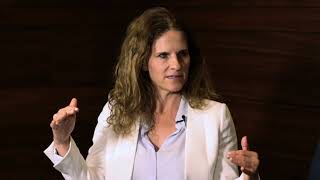
Lihi Segal, CEO of DayTwo, explains how gut bacteria affect blood sugar differently in each person. A Weizmann study of 1,000 people found huge variation in glucose spikes from the same foods. DayTwo uses stool sequencing and machine learning to score meals for you on a 0-9.9 scale, helping prevent diabetes and manage weight.
Questions this video answers
About 1,000 participants were measured for a week; the published analysis was based on ~800 (200 came after cutoff).
One week.
Full shotgun (deep) sequencing down to the gene level.
0 to 9.9 (9.9 best, 0 worst).
Chapters
Hello and welcome back to the Big Bold Health Podcast. I'm your host, James Maskell. I'm here with Dr. Jeffrey Bland and we are here today with Lee Siegel. She is the co founder of Day two. And Jeff, we've been making health personal here for quite a few episodes, but I don't think we've ever made it quite as personal as we're about to today.
Yeah, I think that's really right, you know, because we're going to be talking about an area that I don't know and families is always kind of put off to the side. Bathroom talk, something around the microbiome and stools. But I think we're going to find this extraordinarily germane and right in the center of the court related to personal health. So hang with us and you'll see where this all pays dividends through this discussion.
Well, we are here, you probably hear in the background. We are live after a really lively conference here at the Personalized Lifestyle Medicine Institute. And Lee, I mean, it's been amazing to hear a little bit about the work that you're doing. You know, in this world of microbiome testing. There's been a lot of fanfare, but I understand, you know, from what I saw today that your company is taking a slightly different approach in what it means to make a real impact in personalized health. So as a lawyer and someone who's been involved in a lot of different things, why this and why now?
Well, this and now because we are bringing front and center groundbreaking science that was delivered that was developed in Israel and was initiated by the two scientists in the Weiz One Institute, which is for those who don't know, like the MIT of the US leading research, well known worldwide. And they found an amazing way to harness the gut microbiome in a very actionable way for glycemic control.
So, you know, when I was first really introduced to the concept that underlies what you're doing, it came by my reading journals and I picked up my cell journal one day and I opened it up and here was a lead article. And it was this 800 person study. And my first, having been involved with many studies in nutrition and life in health over the years, I thought, Is this real? 800 people are being measured all this time with a controlled diet and looking at all these variables and getting this outcome that they can really measure this reproducibly. And the more I read the study, go through all the methods, the more I thought, wow, this is not only a groundbreaking study, but this is a total paradigm shifting way that people could actually harness information about their health in ways that had never been known before. So is that what kind of sucked you in?
Yeah, it's actually. It's really two things, right. That sucked me in. First was the notion that when we're looking at food and we're trying to understand if it's healthy, we're going to stop looking at the food and we're going to stop saying like, is this low fat? Is this high calories, this high fat as the measure of health? And we're going to start looking at the person. And this whole way of looking into the person and harnessing their information and then looking at the personalized response for that person really got me because I've been sitting in weight loss groups for 20 years and I've been hearing thousands of people, just not personally. I was sitting there as a participant and you can see people who are trying to do a very good job and they're following their diets and the recommendations, and they're not couch potatoes and they're not. It's not their fault. And for years I've been thinking there's a missing link here that we don't get. And we're setting people up for failure. Until now, when we're not looking at them and tailoring their food to what they need to be eating, we're just setting them up for failure with generalized recommendations. And when you're looking specifically at blood glucose, we're driving people faster into the disease that we're trying to get them off or to avoid. So that was a really big thing for me, the whole nutrition side. And the second thing was the gut microbiome. Right. Which is a new frontier in medicine. And they were able to harness it in such a unique way in a responsible way that I think other people are not doing it the same way. They took the approach of building a machine learning algorithm, of looking into big data as the new frontier in medicine. Not looking for causality links, but really looking at a black box that's using a predictive method. And I think it's much more responsible to use the microbiome in such a way today than in any other way.
I think we all were just blown away at this meeting that James was just mentioning that we've all attended. This is on personalized nutrition. And it was mostly nearly 400 health practitioners learning about how to harness these new technologies. And we were all 400 or so people blown away by your vision as well as your communication of this model. Because I think there are so many people, and I'm thinking now even practitioners who are treating patients that are so frustrated because they've tried to do the right thing, they've tried to give the right guidance, they've tried to help people to find, find paths to good health and own their own health. Only for the person to be lack of success and frustrated and then you have disillusionment and it's a horrible feeling when you provided your best service and it doesn't end up producing a positive outcome. So your model, not it's more your model, your approach is that I want to go well beyond model because the scientists now with all this diligence has really proven the model is really a paradigm shifting opportunity for people to own their own health in ways that was never possible before.
Right, Yeah, I totally agree with that. And having that provider in the middle is really helping us bring this in a more efficient way. Not just throwing an app at someone, which I believe is difficult to be able to get the science across, to be able to get the behavioral change. And, and when you're looking to tie that into people who treat patients, and now we're providing a tool with professional tools for them, with an app for the patient, with communication and a remote care platform that really looks at this whole thing as something that's just wider than just digital therapeutics with an app. And I think that's where this value proposition becomes very strong as well. Because not only are we looking at it from the personalized medicine aspect, but the provider is actually adding all that layer of actually sitting with that person and understanding the habits and what they need and if they have additional comorbidities that need to be taken care of. And that all just became very strong.
So James, you're not a practitioner, so this might have been your first exposure to this whole concept in more detail. You heard. So what was your takeaway kind of as more of a health conscious, well informed consumer?
Well, I think one of the things you said there at the beginning that was super interesting is just the sort of the hope cycle that people go through where they go and try something new and then it either doesn't work or does work. And then ultimately the frustration that comes with sort of trying to do it right but it not working out. And I think it's super exciting to know that we can drill down for everyone to have their own experience. I'd be interested to know, just as someone who said, who was in those groups for that long and then over the last five years Cataloguing all of this science. Were there things that came up to you that were surprising?
Oh, of course I was. You know, I ate a certain diet for 20 years. And then when I actually was able to do. To participate in the original Weizmann trial as part of the due diligence on whether to transfer this and found the company around it, and I made it, I think it was the number 1000, by the way. The science was on. The trial was on 1,000 people that were measured for a week with a continuous glucose monitor. And everything you mentioned, it was published based on 800, because the 200 just came after the cutoff date. And then I participated in that. And I got my report based on the continuous glucose monitor. Everything that I was eating was spiking my blood glucose levels. And it was shocking because I was on a healthy diet. I had my golden weight for years already. But as maintenance go, you have to follow the program in order to continue. And I used to eat in intervals of every two to three hours. I just became famished. I was so hungry that I had to plan all my meals going forward. This is the part of. Of the program. And when I got the continuous glucose monitor report, I could understand why I was spiking and going down. Spiking and going down. Okay? And I'm talking about eating a breakfast that has yogurt and bran flakes and an apple. I'm not talking about, you know, a stack of pancakes, and I'm talking about vegetable salad. Right? I'm from Israel, Tel Aviv. We eat so many, you know, healthy vegetables. My vegetable salad was my number one spiking food. Now, at that point. And my sandwiches were all wrong. Now, at that point, there was nothing I could do about it except look at my report, my CGM report, and say, all right, what am I supposed to do now? Stop eating vegetables? Not eat yogurt and brown flakes in the morning. This is like generalized healthy information. And what I did was say, you have to get the company founded. You have to run as fast as you can to get your app up, and then the algorithm will allow you to tailor your meals. And that's exactly what happened. Product commercialized within a year. I started tweaking my meals. Very small changes we don't believe.
What does it look like now?
What's breakfast? Exactly. So now breakfast consists of a certain type of yogurt that has a lot more protein in it. And I still eat the bran flakes. I do not want to take out my carbs. The beauty of this program is that it allows you to continue to eat carbs. A keto, I want to say, is a no brainer. Take out your carbs, flatten your glucose, lose weight. Only problem is you can't live that way. It sucks the joy out of living. For me and I think for many people, we want to continue eating. And so I now combine it differently. I combine it with a certain amount of walnuts and I combine it with a certain amount of yogurt. And it's all about the combination. And those are personalized. The whole basis of this is what they found in all that data is that you and I are different. You eat the piece of bread, I eat exactly the same piece of bread. We will respond in our blood sugar levels differently. And then we tailor that based on the algorithm that predicts for you. And then when I did that, I just went through very small changes. I changed my vegetable salad, I changed my sandwiches, and then I went from a place that you could set your watch according to my two, three hour intervals. People on the company knew this. I would have my breakfast and then somewhere around 11, I would be so hungry, I would say, okay, it's 11. I didn't even have to look at the clock. And then when I started doing the day two version of what I was eating, it became, when did I last eat? I did not ask that question for 20 years. All of a sudden I was like, hey, I'm not hungry. I lost the craving, I lost the hunger. I got the balanced feeling that you get when you take out your carbs. Except I was eating a lot of carbs, just eating them. And my personalized recommendation combination.
Okay, just a sec. Just like, I think we need to go. Because now people are probably thinking as they're listening to this, this sounds magic. This sounds like what's under the hat? You know, what is this? I think you need to describe a.
Little bit the program.
What is the. What is the program?
Okay, sure. So what we do is you come, whether it's through your provider or you go to daytwo.com and you can order this on a direct to consumer basis, or you get it through your employer, or you get it through your health plan. Any way you get it at the end of the day, you get a kit and you take that home and you take a stool sample. We need to get your gut microbiome. And so it's a very simple way. It's a very small amount. There's a stabilizer in there and you mail it back. You just literally drop it into any USPS or whatever. And then what we do is we have a sequencing process, right? We're looking at the DNA of your bacteria, trying to get a list, a comprehensive list of what's in your gut all the way down to the gene level. So it's called full shotgun. It's very deep sequencing. And we use that together with a lot of other information that we're collecting, like your medical history, your age, your bmi, anthropometrics, anything you can tell us about your sleeping habits and stress levels and exercise. We're asking for blood tests, and those need to be like standard tests over the last six months that you've done. And then we just take all that information, we run it through the machine learning algorithm, and then we give you the access through an app. So you get an app with recommendations on breakfast, lunch, dinner, snacks. You can freely search and build any meal you want, Right. I can say, tonight I'm going to eat broccoli and chicken and have a glass of wine and eat some rice and a dessert. And it will score 0 to 9.9, 9.9 being the best, 0 being the worst. And we will teach you how to combine. If you're now searching for an apple and you get a bad score on an apple, then you will be able to learn how to combine that apple. Because it's all about the combinations now. And those are also personalized. Okay. And then that gets followed up with a dietitian call or your physician giving you support building your meals. We have professional tools for the practitioner, if there's a practitioner involved, that can push meals into your app. Right. Pre preparing them for you and helping you onboard. That's what we're doing.
I grew up in a natural health family, Jeff, and there was a poster on the wall of food combining for the 1970s. We've come a long way, baby.
We have come a long way. Yeah. When I'm hearing this and I'm thinking of my own family history now, I have a dear sister who is absolutely devotee committed. In fact, she was one of our podcast interviewees because she's a woman of significance, at least in my life and I think in many others. And so she is a absolute athlete, 70 years of age, still snowboarding, still doing all sorts of stuff, and a remarkable person on All Effects Outback. Person, person, backpacker, hiker, this and that. And so she said, jeff, you know, if there's one thing I can't. Oh. And she's been on every potential diet and she's like, the most rigorous, disciplined person you can ever imagine. And so she said, you know, there's one thing that's really bothered me, and that is there's this, like, belly fat that I just can't seem to get rid of. I mean, she's very lean and fit, but she is really bugging me, this belly fat. And she said, I went on the Day 2 program and it's gone. But she said, I never knew. That was like the missing link. So I think there's a lot of magic in this information that helps a person, as you said, Lee, stabilize. I mean, blood sugar is kind of the measure of a whole process that's going on in your body with insulin and other hormones that are regulating all sorts of things, not just blood sugar.
I totally agree. When you look at the population, right, we have to sit in the company and say, okay, what we're doing is balancing blood sugar levels, but who's this right for? Like, what are the applications? What's the go to market? Who are we going to address this to? And when we dove, we dived into who this is good for. We found that it was basically good for everyone, right? It's healthy people who want to prevent disease because spiking your blood sugar level is a risk factor for almost all the metabolic disease, for cancer, for overall mortality. These are trials that were done by others that we are looking at. And of course, everybody that has prediabetes or diabetes, that's a really direct link of we help you balance your blood sugar levels. They say, oh, this is great. This is what we need. It's great for weight loss. It helps you lose weight. It's not the only metric where you have to watch your calories. There's no magic. You can't eat ice cream all day just because. Because we gave you a good score on ice cream. So it's also difficult a little because people tend to think it's magic and take it a little bit the wrong way. But if you view this as something that's helping you get the right combination, get your cravings and hungers and hormones and maybe things we don't even understand yet. And then there's the professional athletes that are all over this. We have the Olympic team in Israel on this program. We have NBA employers on this program because it increases your performance and energy. So it's all over. We did decide to focus on people with prediabetes and diabetes in the U.S.
It'S about 25% of the population, right?
Well, even more than that, I would say well, those who know about it at least. Right. A lot of people with prediabetes don't know. And we're looking at other diseases as well because now the platform on the microbiome side gives us so much opportunity to research for future pipelines of products. One great example is IBS is irritable bowel syndrome. We've been hearing from customers who are on this program that it's been, they're doing the program and they're helping their symptoms for bloating and diarrhea and a lot of discomfort that's been going away. So now we research that because we don't want to say that just based on anecdotal information.
Well, I'm so excited about what you're saying because James and I in an earlier podcast did a little review of wearable devices and biotechnology biometrics and how this information was going to help people to see their health in different ways. And I was describing in that particular podcast having worn a continuous glucose monitoring device for about three months and how important it was for me, a guy who is a biochemist and done work for more than 30 years of my own biochemistry. And here I'm learning all sorts of things because I'm getting this information in real time and recognizing that things that I never really fully understood on a real time basis were so important. But the difficulty of continuous glucose monitoring is you're putting a device on your, on your body and you're wearing it. And if you in the United States, unless you have a physician prescribing it, is prescribing it, and you've got a clinical condition like diabetes, you're probably not going to have access to it. So here is a much more effective way for a person to get into that information from a much more simple way of entering.
We actually call it like a pre gm, right. So you could use a continuous glucose monitor as I did in the original trial, but then you get your vegetables spiking salad, right? The blood spiking vegetable salad results. And then what are you supposed to do? You can start your trial and error. Right? Add this, check your monitor. Add another thing, check your monitor. But there's no, I call it the noise cancellation that machine learning does for you, right. Maybe it's your stress levels that were different. The blood glucose monitor is too difficult to do it on your own. It gives a lot of information not.
To, that's a lot of non food information.
But when you have your app, all you have to do is just search it and you get it in advance. You don't have to actually go through it, spike it, see it on the monitor, and then start adjusting it. So the pre GM concept is what we love about this.
You're obviously a CEO of the company. You are a co founder of the company. You are a person who has a personality that you bring into the company's Persona just by your presence and your experience. But you're also a mother of three children. And I think there are a lot of women who are watching our podcast who are, you know, multiple purveyors of all sorts of things in their world. They're super women, they're professionals, they're mothers, they're caregivers, they have parents, they, they're tending, they, they're the health providers. I mean the list goes on and on and on. So how about for you, how does that all work out? Help us?
Yeah, well, it's. I am a mother first and first and foremost. I have three amazing kids. I actually have three step kids from my husband's previous marriage, so I actually have six.
We call that the Brady Bunch.
I know, right? I grew up on the Brady Bunch, so I know that one. They're older, but it's a great relationship. So for my three boys it's always been this way. So I was always a career woman. I have a great partner who of course pulls his weight. It's not that I'm managing him, he's a father and a full time father. He's also a serial entrepreneur, so he's juggling like four startups, I'm only juggling one. And the way it works is by just working for me at least three shifts a day. So you know, I have the first shift at work and that takes me like 4 or 5pm and then I go home a few times a week and I'm with them until I put them to bed. And then since this is Israel, but I am covering the U.S. i always work until like 12am or 1am 12. You know, I'm not supposed to say that I don't sleep enough. I know all the sessions today and sleep are kind of screwing with my model, but I just used to work for more than one time zone company as I call it. And then I can always come back and work with the US in the evenings and I don't have to give anything up and that's the way I juggle it. And when I come abroad and I fly over a lot, they understand it. I think a happy mother is a fulfilled mother. I think that you have you can do more than one thing. It's all about how you manage, right? What your managerial experience is, how you delegate, what you focus on. And for me, it's just working, you know? And I think another part of this is where how much experience do you get before you actually have kids? Right? So I had my firstborn when I was 32, maybe even 33. And until that point, I was a career woman. And I had no distractions. I just worked and really got into a place. I was already cfo. And so that from there, once you're in that more managerial position, it's quite easy to just add the kids on.
Well, I think it's not easy. That's easy for you to say it's easy, but I know having lived through kids and why that it's not easy. So I think we have a great admiration and respect for you, and I think it's a very great role model for a lot of our viewers who are really managing and balancing all sorts of things and trying to find out, you know, there's no, like, magic recipe that's the perfect thing for every person. But it's again, like day two with blood sugar management. You know, there are certain tools and certain insights that people have that can really be helpful.
So it's all. It's just a balancing act all the time and understanding that there is room for everything if you manage your time right and if you focus on the things that matter and not on the things that are less important, well, you're.
Doing something very important right now. I think day two, not to diminish the children, they're very important. But day two is really important. It's going to be a changer of lives and quality of health for many, many millions of people as this gains more traction. And I think we're really excited about learning more of what you're all up to. And, you know, we're fully invested because we're big, bold health, and this is a big, bold idea.
Well, thank you so much.
It's definitely big. It's definitely bold. Thank you for being here as part of the podcast and very excited to share. We'll have more information in the show, notes about how you can get involved with day two. But in the meantime, thanks so much for sharing. If you do know someone who has issues with blood sugar handling, why not send them over this podcast? They can find out a little bit more about themselves. But in the meantime, I've been your host, James Maskill, Dr. Jeffrey Bland. We've been here with David hu. This is the Big Bold Health podcast. We'll see you next time.









