The pioneer farmers behind Himalayan Tartary Buckwheat | Sam & Lucia Beer on Big Bold Immunity #29
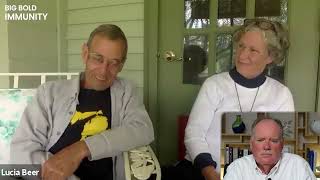
This content was created by Jeffrey Bland, PHD. This content was uploaded by Jeffrey Bland, PHD. This is a YouTube video titled "The pioneer farmers behind Himalayan Tartary Buckwheat | Sam & Lucia Beer on Big Bold Immunity #29" featuring a conversation recorded on November 8, 2021, with Jeffrey Bland, PHD, Sam Beer, and Lucia Beer. The discussion focuses on the agricultural and health benefits of Himalayan Tartary Buckwheat, the challenges and opportunities in farming, and the connection between soil health and human health. The Beers share their experiences as pioneer farmers and their efforts to promote this crop in the United States.
Questions this video answers
November 8, 2021
Ordinarily planted July 1
50–100 grams per day (approx. 3–4 ounces); target ~100 grams/day
About 3,500 years
Dr. Emily Reese
Chapters
I think, well, the discovery of Tardy Buckwheat's nutrient capability course is something unto itself. But I really attribute the movement toward healthier agricultural products to our consumers. They have demanded farmers markets, they have demanded organic agriculture, they have demanded better products.
Hi, I'm Dr. Jeff Bland and I'm here for the Big Bold Health podcast. As you know, we're exploring the impact of immunity in this living that we are going through now, where the planet's immune system is connected to the plant's immune system, which is connected to our personal immune systems. It's a co immunity adventure that we're all engaged in and we're very pleased at this episode to go right to the core of where this starts. And that's the interface of our soil with our plants, with our food, with our personal immune system. And who better to do this than Sam and Lucia Beer, the pioneer farmers of Himalayan Tartery Buckwheat, who are going to tell us about the family farm. They're going to tell us about this remarkable crop, Himalayan Tartery Buckwheat, and they're going to discuss how it influences then our immune system through the unique genes of this ancient food crop 3,500 years in the food supply. Himalayan Tartary Buckwheat. Well, you know, sometimes in life we have a chance to do things that we never would expected, that open up all sorts of new avenues of learning and all sorts of new avenues of opportunity and really new ways of redefining yourself in the context of people that you are so fortunate to have met and learned from. And that's the context of this discussion that I feel very privileged to have with Sam and Lucia Beer, individuals that I give credit to my colleague Trish Urie for actually introducing me to. Trish actually found the two of them farmers in Angelica, New York, through her website, sleuthing. And that has led now into, for me personally, a couple of years of extraordinary learning and gracious kind of connection with two really remarkable people and their families. Who are the people that we found were the leaders in the United States farming of what I call Himalayan Tartary Buckwheat. I guess you could call it Tartary Buckwheat, but I think there's something about its 3,500 year history back to the Himalayan Tartar region of China. And they were the individuals that started to bring this crop back, actually, which was a crop that our colonial ancestors actually had brought over from Europe, but had been lost over time for probably a variety of reasons that we could go into. But I Wanted to stop and just take a deep breath because these are individuals that have been in the farming industries for many decades. Lucia being a nurse, so from the health perspective, and Sam being an ag researcher on an ag science background at Cornell University, as well as a farmer and moving around the country and doing different things all the way from dairy to, to food crops, plant crops, and ultimately now landing on this tartery buckwheat, what I'm considering going to be a revolution, it's going to be a revolution in the United States. And I predict that this will be on the top of mind of any health conscious consumer over the years to come. And so we owe great gratitude to the Beers for getting us started down this road as colleagues with the nature of Himalayan tartery buckwheat agriculture, regenerative and organic, and things that we'll learn about this crop that probably have never been known before. As we deep drill into both its production and ultimately its extraordinary nutrition value. It has characteristics that I think as a food crop are really second to none. The more I learn about it, the more impressed I am. The nature put into this germplasm these characteristics that deliver to humans these influences on their immune system. So, Sam and Lucia, thank you for, for being at the big bold health podcast threshold. And so let me just start off as farmers. What have you seen over the years, over the decades of farming? Do we still have family farms? Are there still room for people like you to survive in this mega farming industry? And what's been your experience watching this industry change over the years?
I think what surprised me is the how constant the trajectory of agriculture has been since we moved here in 1975 and started a little dairy farm. There's just been constant consolidation. Operations have gotten bigger and more sophisticated and more heavily capitalized. I was thinking recalling that in one of those early years, I saw a reference to the fact that the average job in the US required I think, about $60,000 of capitalization. And our startup capitalization on the farm was a bit more than that, not a lot more than that. Of course, it was a bit more than a one person job. It was about a two and a half people job initially and yet was within a few years. We had become marginal. We were too small to continue viably and that trajectory continues. I think whether an operation is a family operation or a corporate operation, if it's growing commodities at a sustainable level and with some profitability, there's millions of dollars of capital behind it. And that is certainly a daunting prospect to Anyone who wants to get into farming.
So Lucia, as a person who comes up through the hillside and I'm sure has seen some of the value add possibilities of bringing certain nutrition products into the health community. I know you and Sam have done a lot of consumer testing with different farmers markets and interacted with people to see what their persuasions are and how they see health. How do you see what you're doing in farming connected into the health system and giving value add to farmers?
Well, I think this kind of ties into the capitalization issue that Sam was just mentioning because it seems like the young people who are entering into farming now are not so much crop farming in Kansas or dairy farming in California, but are growing vegetables. This can be done on a smaller scale with less capitalization, and it produces, I think, more of a health oriented type of agricultural interest. And it also produces something that farming has lost, and that's community. I know that's one of the things we wanted to speak of here today. But the kind of farming that goes on with big farms, heavily capitalized farms, even smaller farms, who are mainly crop oriented, field crop oriented families, no longer get together and share expensive machinery the way they used to 100 years ago. And the kids and the women would gather and really make it a party when somebody's wheat had to be threshed. I mean, that just doesn't exist anymore, of course, but we don't do much in tandem with other farmers at all, except for one or two who happen to live near us and that we're friends with. But I think the move toward young people entering agriculture in a small way and concentrating on organic vegetables is very much appreciated by their clientele and is great for the agricultural movement in general in this country.
So I know you're sitting on your front porch here and we've had the pleasure of visiting you in your extraordinary home there. And you know, you raise your children in this community that you've been in for many years, and they've gone out and done their own things. What impact did your lifestyle have being on the land in agriculture? How do you think on them? Because they're not all in farming now as they've gone and become adults. So as quality of life issue, how would you see all this fitting together?
Well, they sure all like to come back here. That may be because I do most of the cooking when they're here, but I think it's affected all their lives. They all garden, even in small little plots in downtown Chicago, small plots wherever they have them. But they do continue to work ground wherever they are. And our oldest daughter is writing a history of Angelica Schuyler, church sister in law of Alexander Hamilton, for whom our town is named. So she's very much involved in the history of this community, not so much with regard to agriculture, although that's an interesting aspect of what went on here 200 years ago. But, yeah, it's had an enduring effect on all of our kids and grandchildren, who, some of whom are here right now, hopefully staying quiet, napping, but love to work in the garden and cook, and everything they can get their hands on has to do with the farm.
That's exciting. Sam, you wanted to say. Say something to that.
Yeah.
And the other. The other piece of that is a real. A real interest in food, in the products of agriculture. I mean, they. They are all cooks, all married to cooks, and, you know, careful consumers, careful cooks. Food is important to all of them. And they've raised some great eaters. And even I laugh because our granddaughters, who sometimes, you know, have little acts of resistance at mealtime when they're with Lucia in the garden, they'll eat anything that comes out of the dirt, sometimes washed, sometimes not so washed. But there's a real awareness of where the food comes from and an appreciation of what goes into getting it to the plate.
Well, it sounds like it's also good for their microbiome. This is this whole thing that we're learning now right about this. A little bit of dirt is not so bad in terms of being. Yeah.
So I'm not sure they know the word, but they have.
So, Sam, when I think back of the joys that I've had personally since we first met, in learning from the two of you and your colleagues, one of the things that struck me was your ability to go out and to find some other of your colleagues in the upstate New York area that might be willing to commit some of their sacred land, they're organically certified land, to this experiment called the Himalayan Tartery Buckwheat. How did that conversation go? I mean, this is always when you start something new, it's always fraught with uncertainty. So how'd the conversations go as you started to build this cooperation with other growers that we now enjoy?
Well, like most of the world, the agricultural world works on relationships, even of people you rarely see or never see.
But.
I started by having names of mutual friends, and. That's, you know, that got me a listen. And, you know, I think farmers fall largely into two categories. Maybe all people do. There are some people who are just Stick with what has worked in the past. They are in terms of innovation, they're conservative. And then there are people who are just welcome to something new, maybe even a little infatuated by the next big thing. And Rodney Graham and Tor Eschner, the two fellows I approached first, Rodney through a friend of mine who was a childhood friend of his, and then tore through Rodney and they both, you know, they've seen a lot of crops come and grow. They're much more experienced farmers than we are. Grown a variety of grains, beans, whatnot. And the idea of something new appealed to both of them.
Yeah, I've been really impressed with the willingness for a collaborative effort to do something new, something different and to give it a good run. And, you know, we've got this new experiment going on with the inoculants in the soil to see if we can improve soil health, to improve the quality of the final product of Himalayan tartery, buckwheat. So it takes a unique set of personality characteristics to engage in this type of work. And I feel very privileged that you've been the ambassador to introduce us into quite a community of individuals, including the Trumansburg Mill, which has its own unique personality and kind of blends itself nicely into our whole theme of trying to create value within family farms and to do something that has novel benefit across not only the consumers, but the people that are producing the product. So it's really neat to watch this cooperation develop to become a real thing. Which then leads me into a question concerning soil health because, you know, there's. The crops are only as good as the soil in which they're growing. And I just wonder, you know, is this a topic of conversation or is this a theme of interest? It seems it is among these individuals that you have chosen to collaborate with. And I'm not sure if that's a general theme at all farmers or just maybe some subset that have a deeper connection into the products that they're producing.
It is, I mean, first of all, this has been a great experience for us because, you know, these were farmers who we probably never would have met except through this crop, through Targary Buckwheat. So it's, I've said many times over the last couple of years, we've learned more about farming now than we ever did in the decades before when. Well, in our early milking days, of course, we were learning intensively from other farmers. But over many of the decades since, we were a part time and very solo kind of operation. So we've enjoyed these contacts for sure. And in the organic community, there is certainly a lot of attention to soil health. And there's also increased attention within the conventional farming community. And when we started out, a soil test was strictly nutrient analysis. You know, you got back results that told you essentially how much nitrogen, potassium or phosphorus you could wring out of the soil in your field. And that was considered to be almost the entire use of the soil. You know, it was a kind of an inertia medium that helped the plant, that on which the plant could stand, and it provided macronutrients. And the more sophisticated farmers looked at some micronutrients. Even conventional farmers have learned that the soil is more complex and has to be analyze over a broader range of features in order to wring yield out of it.
But then.
The methods of farming are pretty much of the same mindset as they were, which is, you know, you have better equipment, better crop germplasm and better knowledge to, you know, use the soil that you have. You look at it over a broader range of parameters, but essentially you attack it with chemicals and implements and information.
Yeah. And I think that this attitudinal change, in which the soil is a sacrosanct ecosystem that needs proper care, just as we would any community of living organisms, is a really major frame shifting concept. And Lucia, I would imagine when you speak to consumers in your experience with the tartery buckwheat, that this concept of soil health or health of the ecosystem probably comes into some of their philosophy. I would imagine, given the kind of consumer that would probably be interested, honestly, I think.
Well, the discovery of tardy buckwheat's nutrient capability, of course, is something unto itself. But I really attribute the movement toward healthier agricultural products to our consumers. They have demanded farmers markets, they have demanded organic agriculture, they have demanded better products. Even an area like this, that's pretty. This is a pretty poverty stricken area. People turn out for the farmers markets, they're buying organic at the grocery stores. There's really a demand that I think we can thank our own consumers for in a big way. And we do. There's a movement in our area, and I imagine most places where to know your farmer, not every farm can be certified organic, even though they may be organic, because certification is a big deal. But a lot of farmers, even in cities, even when our daughter was in Washington, the farmers at the farmers market would say, I'm not certified. If you want to see how I do stuff, come out to the farm in Virginia and I'll show you the know youw farmer Movement is important and for health for all of us. And I really thank our consumers, our thoughtful consumers, who I think are the ones who are going to attach themselves to products like Himalayan Tartary buckwheat and make it important and make it go.
Thank you. Well, that's certainly what we've experienced so far. I mean, we're early on in this endeavor, but certainly so far that's what we're learning from the people that are interested in what we're doing as Big Bold health. And I was really again so impressed with Sam and Tor's advocacy as it relate to what we wanted to do to study soil health and get Dr. Emily Reese as a soil scientist to be involved. She's a very impressive woman who brings a wide variety of knowledge and background. And when we first had the chance to speak with her, you know, she said, I'm the soil steward. And I thought, boy, that's exactly the kind of person we want to have in helping us to build our system. And now with this research that's going on with the field trial of the different inoculants, we'll see what different things can do to improve soil health and improve plant health and improve yield and phytochemical levels. And I'm keeping my fingers crossed that we're going to be able to measure these differences in the outcome of this research to show that not only is it philosophically and I guess culturally good to worry about the soil, it also delivers a higher quality product. A lot of people say, well, you can't really detect the difference between organic and non organic products. Well, here's a place where we may be able to actually quantify the difference through the analysis of the various portfolio of phytochemicals that are found in this remarkable product. So the genes of the tartery buckwheat plant are just waiting to be given the right information to create all sorts of new things that maybe the right kind of soil will help us to realize. So I want to thank you both for the connection into Dr. Reiss and, and the studies that we're doing now on Thor's land this year to see if we can't take it to the next step.
That's great.
I think there's several next steps.
I think.
There'S a whole world going on that's barely scratched. But there is also, if not so much, in the United States, worldwide, there is a large community of scientists working on Targary buckwheat. And there's now a lot of genomic information about the species. So, you know, all kinds of agronomic experiments, experiments in the field can be tied to knowledge about the genetics and they call the proteomics proteanomics of the species. It's going to be fascinating and it's going to be decades of learning, really.
So you said something there that I wanted to explore with you because you're a remarkable personality for me in the farming community because of the very intellectually high level under which you think about your work. And, you know, I think it's maybe a rarity to have someone who has the science interest and background you have, coupled with the experience in the field in actually growing and producing crops. So one of the things that I wanted people to understand is that when we talk about these two types of buckwheat, common buckwheat, esculatum, and then this other form, this Tartaricum, that they are both members of the same family, by the way. They're not grains, they're fruit seeds. So they're not in the grain family, the cereal family. But their gene homology is very uniquely different in terms of the germplasm. And there's not just one tartary buckwheat. I think this is an important thing for people to understand because they might think, well, that's all tartery. Buckwheats are the same, but there are different varieties of Tartaricum, and we have one specific variety, thanks to you. Your seed was unique. That's the one that we're developing on all these fields that are producing our product. But there are many, many others that are out there with varying different characteristics. There is a lot of homology, obviously, of the genes, but they're not identical. And so I think it's really interesting when you look at the difference between common buckwheat, Aesculatum, the genes in Aesculatum, and that in Tautaricum, in that the genes that occupy a lot of the genome in Tetaricum are much more enriched in genes that code for the production of phytochemicals. So then it raises an interesting philosophical question. Well, why. Why did there was this divergence in the evolution of these two types of buckwheat? I even hate to say the name Buckwheat, because when I say buckwheat for a lot of people, they think it's wheat. I don't know how it ever got stuck with that name. But anyway, of these two, two species, and so we start to say there's a gene diversification. And so something around Tatarricum led It to have a lot more of its genes occupied to produce these array. Nearly 100 different phytochemicals that have been identified. Do you have any kind of philosophical idea as to why there was this higher level of those genes in that plant?
It's.
Evolution is rarely optimal. There's a lot of happenstance. And often happenstance includes the gene pool from which a species arises, which can be very small. And you know, then the species works with a fairly limited array of alleles or genes from which to diversify. And I don't know, I'm waiting to have the time to read more of the information that's being teased apart. I did read not long ago that even tartaracum, even Tartary buckwheat apparently had from a wild species. There were two domestication events in different places and they ended up kind of going off in different directions as they traveled around the globe. And they didn't diverge enough to become separate species. They could be, can be, could be, can be interbred. And so, you know, potentially each one can be used to enrich the other. But you know, it was happenstance when some small community decided to domesticate a plant, a weed that lived in its fields or in its waste places around its buildings and decided to actually make use of it and husband it. And then the species from that starting point, you know, had whatever resources, you know, came with it.
Fortunately, the deer don't know the difference. Have a real problem with deer eating your crops. So Sam plants common buckwheat around the outside of a field and tartary buckwheat in the middle. And the deer can eat all the common buckwheat they like, but they don't seem to understand that the good stuff is in the middle of.
That's good, that's good. Oh boy. Well, you know, there's another feature that I wanted you to talk about because I think it's another part of the unique personality of Tatarchum and that's the fact that it's a self pollinator versus the common buckwheat being an insect pollinated. And that is a remarkable difference I think, in how its genes work in terms of its reproduction. But also it speaks to the preservation of its germplasm because self pollinators are kind of incestuous. Right. Versus insect pollinators that kind of get the luck of the draw. So it's kind of retained its genes very privileged over the years. Maybe you want to comment on that.
Yeah, it's. I can't think back far Enough to remember what I once knew. But a lot of domesticated species were self pollinated or even be move towards self pollination during the domestication. And in fact, as you mentioned, there is an advantage in that once you get a particularly happy combination of genes, they tend to stay together. Whereas in common buckwheat, you, your field may have some wonderful genes, but they're dispersed among a lot of individuals. And pollinations being rather random events, the lucky combinations come together in an individual and then in the next generation are dispersed again. High levels of heterogeneity and, and high levels of heterozygosity. In the scientific parlance, which we presume in tartery buckwheat being heavily inbred, you have high levels of homozygosity, high levels where both alleles in the plant are identical.
Yeah, I think this is so important.
Our beekeeper friends don't do not like the self pollenization of tartary buckwheat. They want to put, they all come and say, oh, we want to put hives on your land for the buckwheat.
Well, I think that for me, and this was one of the things that really caught my fancy when I found this difference between the two forms of buckwheat, the common buckwheat being insect pollinated and the tartary buckwheat being self pollinated. Because if in fact there is some reason for this high degree of its germplasm being committed to forming these phytochemicals, and these phytochemicals are known to be, I would call them, immune anti stress factors for the plant. They're part of the plant's immune system. And this plant was historically found in very hostile portions of the globe where it was growing and it didn't require fertilizers and it didn't require irrigation. It tended to hang on tough in very hostile environments, preserving that toughness in its genes and then passing on those characteristics to humans in the food with these phytochemicals seemed like a remarkable learning opportunity for us as humans if we're looking for something that is immune, immune potentiating. And so that's one of the things that really struck me very early on when I looked at the literature, like talking about network pharmacology of Himalayan tartary buckwheat. What is network pharmacology? Well, if you look at its effects on human health, its health effects are in lipid management and glucose management and inflammation management. What do they share in common? They share in common some immunological influence on Human health, which came from an immunological powerhouse called the tartary buckwheat plant that's been preserved for eons by being a self pollinator. So there's a story here that sounds really quite remarkable to me in why this crop should really be honored and brought back into American food, particularly in a time where the immune system is under such insult. And you know, I just learned yesterday in a meeting I had with a colleague who has been surveying health of American average Americans. In this case, it was a study they've been doing with women 30 to 45 years of age and over the year of COVID What this group found through analyzing literally thousands of blood tests of women, these women in that age group that were presumably healthy, not diseased, they found that their level of an inflammatory biomarker called high sensitivity CRP went from only 30% of women showing positive levels above acceptable range to where the same age group of women this last year, 90% of them had elevated HSCRP. So we are in a state of chronic inflammation, chronic immune imbalance. Right now. If you take that data, maybe it's, you know, needs more replication and big data set. But at least it informs us that something's going on with regard to the immune system of individuals that have been weathering the storm of COVID It may be more than just the infection with SARS2 virus. It may be the whole psychosocial stress factors and all the things in being, you know, confined at home. And there's many, many variables that we've had to work with, all of which are impacting the immune system. So this may be a time where immune strengthening or immune modulating food becomes really, really important for the health of our country. So that's just another part of the story.
So I think intriguing, a big and intriguing part.
Yeah, I think so. So Lucia, you know, you've talked to so many people at roadside stands and your recipes and use of tartery bucket. What kind of things do people say either before they try it or after they try it in terms of feedback to you? Because it has its unique flavor profile.
It does indeed. All our friends use it and have been from the get go. I think that its attributes in terms of cooking are such that it outweighs any negatives. And really the negatives are mostly mitigated by cooking. Anyway, I am a competent cook, I'm not a baker, but tartery buckwheat flour is light and I have success baking with it and use it for all pie crusts. Our gluten free Friends are very grateful to have a product like this on hand. But for cakes and pie crusts and all thickening, I use it for. And so do my friends. And the thing we like to do best is I've given everybody in our circle a little glass jar like you would put parmesan cheese in, like you would have in a restaurant. And they fill it with the, the tardy buckwheat, particularly the brand, but also the hammer milled product that the Big Bold Health is selling. And keep it right by the stove and just throw a little in everything. It's very easy to use that way and they like it that way. It's convenient.
Well, thank you. That's a really great news to use. That's a real good insight because I think for a lot of people it's like, well, gee, I'm not really a baker and I'm not. I love what you this could do for me, but I don't know exactly how I could get it into my daily regime. So that's a good starter tool. That's really good. I know I use it personally. Again, I do do some things in the kitchen, but I would not want to fashion myself by any way a chef. But I started to put it in like on toast, I put it in peanut butter, I put it on and put it in beverages. I have it in soup, I've used it in sauces. So, you know, as you say, you can start slipping it into all sorts of things. And it's interesting, the clinical work that's been done on it shows that you get a pretty good measurable effect on human physiology if you get into the range of 100 grams a day. So anywhere between 50 and 100 grams, which is like 3 ounces, 3 to 4 ounces, is going to have some health benefits. So I think there are ways we can conveniently start using this in creative ways. And of course, our food lab group, Michelle and Barb and Arthur are working collaboratively to try to put as many convenient, good tasting recipes together as possible. And we have a whole cadre now of influencer chefs that are competing for the best tartary buckwheat recipes. So it's really been fun to watch that happening on social media. So let me, given that we've stolen a lot of your time here, let me kind of bring this maybe to close. So as we've started down this adventure, one of my goals was to form a full circle of advantages. Some people call this the win win cycle, so that everyone in the value chain wins the Farmer wins, the producer of product wins, the consumer product wins, the culture wins, the ecosystem wins. And so we tried very hard to think of ourselves as Big Bolt Health as a high tech company in that we think we know quite a bit about phytochemistries and about physiology and about immune system function. So that's kind of the high tech side. But we also like to think of ourselves as high touch and eco friendly, that we're really trying to bring this full circle so that they come in in cooperation with one another. Because sometimes science is seen as off putting and it's not friendly and it's not friends to the earth because some people feel that science takes us away from our heritage. And what we're trying to think of is how do we build a consistent story that science gives you opportunity to know in different ways so you can do a better job in being a steward of the planet and being social responsible. The last part of the story really relates, or maybe it's the first part of the story actually relates to can we make this a value added crop such that farmers can actually make a living growing it? So do you from your experience feel that we're moving in that direction, that this be the encouragement to the farmer to take this on would make their experiment with this ultimately profitable enough to be worthy of their time and energy?
That is a really intriguing question because I decided fairly early on in our farming career that we couldn't succeed as commodity farmers regardless of what commodity we chose. We just, we didn't have the comfort with the level of financial risks that it took to go down that route. I mean, you could envision a point at which tartery buckwheat is another commodity. You know, that instead of tens or hundreds of acres, it's planted on thousands of acres or tens of thousands of acres and follows the path of, you know, corn and soybeans and wheat. But it has certainly started off on a different path. And that has been at this point largely a reflection of the ambitions you just stated that Big Bold Health wants to make it something that works for farmers. And so it's kind of the culture.
That.
Grows up around it, you know, where the money comes from and how the money talks.
And.
You know, it's a great start. You know, the farmers that grew last year were, you know, they barely finished harvesting the crop and they were ready to go again.
And.
It'S.
And.
You know, both the miller and the other farmers have, you know, and we have made substantial financial outlays to make it work. So it's not just kind of a kind of minimal commitment. It's been a good commitment on the part of everybody that I think, you know, they felt that they were meeting a big commitment that they saw from big, bold health. So it to be, you know, to be realistic, you'd have to say, well, how can you know, this is swimming against the current.
And.
Whether that succeeds or not, I don't know. But it's sure worth a try.
Thank you. Well, I can tell you with deep authenticity and sincerity how much we appreciate both the two of you and your colleagues that have been involved with this experiment. I can assure you we're doing all we can on our end to make this experiment a success. Lucia, how about you? I know you have your lens that you watching this and participating in it. What kind of.
Well, I see with regard to the last question is that I think it's a good crop for new farmers, but also for farmers who are already engaged in crop farming in different ways because buckwheat and tartery buckwheat are planted later than most major crops this year, of course, we've had such a rainy season here, though I know half the country listening to this will find that amazing. We have been drowned out. And some of our Tartery buckwheat to this day is not planted because we've had torrential downpours so frequently that it prevented normal planting. But it is planted ordinarily, July 1, and things like oats and other grains and go in early, and then corn, soybeans go in, you know, May and June and this. So there's a. There's a gap where farmers can find some space for buckwheat and especially target buckwheat.
So culturally, this is kind of a life dream for me. You know, I started started off as a professor in 1970 at the University with a dual appointment in chemistry and environmental science. It was Earth Year and the university decided they wanted to have an environmental science program. So they wanted to hire a young member of the faculty that could steward their environmental science program and be involved with teaching chemistry. I was an organic chemist. That was a great education for me. I spent 13 years as this professor role and built a fairly substantial environmental science program at the University of Puget Sound. We produced some really great graduates that have gone on to do wonderful things over the decades. But it was a very big education for me and my kind of goal all these many decades. So that's. Gee whiz, that's 50 years, isn't it? 1970-220 my goal was to ultimately bring these things together into a harmonized loop of understanding in which stewardship of the environment was directly connected to stewardship of health, because health of the environment and health of the individual were intimately and intricately connected. And this Himalayan Tartary buckwheat project is kind of the materialization of that long standing goal. I just wanted to you tell you how much I appreciate your friendship and your colleagueship in this experiment. We're going to make this work. And I don't ever expect this to be wheat, corn or oats or soybeans, but I expect it to be a health giving crop that regenerates the land, regenerates lives and keeps the spirit alive for the family farm, and connects high science with high eco sensibilities. And if I can collaborate with you in making that a legacy, it will be work well done. So I just want to thank you so much.
Congratulations on all that work you've done.
Well, it's a collaboration, you know, as we've acknowledged, it takes a team to move this thing forward. So thank you very, very much. And we will hope that all the seed get into the soil here and that the rains will allow that to happen and we'll produce our 2021 harvest and be off to the 2022 year. So thank you very, very much.
Well, it's been a pleasure, Jeff, really, truly.
Yeah.
Okay. Be well. I will let you get to the day. Thank you.
Thank you.
Bye bye.
Bye bye.









