The Revolutionary Act of Living a Healthy Life with Pilar Gerasimo | Big Bold Health Podcast Ep 19
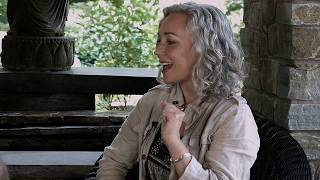
Interview (recorded Jan 17, 2020) between Jeffrey Bland, PhD and Pilar Gerasimo exploring how to live healthily within an unhealthy modern culture. Gerasimo frames healthy living as a continuous, experimental "living experiment" and as socially deviant behavior ("healthy deviance") given cultural norms that undermine health. She presents several population statistics to argue the scope of the problem, argues for amplified awareness of bodily signals, preemptive repair (sleep, ultradian breaks, timing biology), and critiques reductionist appeals to willpower. Bland and Gerasimo situate functional medicine as a way of thinking about life systems rather than only a set of protocols.
Questions this video answers
January 17, 2020.
50% or more.
Approximately 68–70% (depending on source cited).
80%.
2.7% (i.e., 97.3% are not practicing all four).
Chapters
Well, welcome to the Big Bold Health podcast. Oh, boy, am I excited. You know, I have the privilege as the kind of moderator, member of the James Maskill Jeff Gland team to entertain and learn from some of the most remarkable people in areas that we're really pushing the envelope in the development of the new society. What will this new world look like that's emerging, and how will it really transform people's lives? And hopefully, how will it add value to people's lives as we move through this next year of human cultural evolution? And so today, I'm very, very fortunate to have Pilar Gerasimo, who is just a remarkable force of nature, as you'll learn in a moment. You know, I'm holding on a printed page a resume. And I think most of us recognize it when we look at resumes, those of us that have had to interview for new employees or something, or even writing our own resume. And then we look at it, we say, does this express what that person is all about? These kind of pieces of ink on a piece of paper? I mean, these are impressive pieces of ink on paper, I can tell you, as it relates to your background, you know, starting at Mills College with your graduate there, and then moving on into all of your work now, Huffington Post, and of course, this whole thing I want to talk to you about with regard to healthy living and your advocacy in healthy living. And you're being the founder, founding editor of Experience Life magazine, which has grown up to be one of the principal kind of forecasting of where society is going in terms of healthy living magazines. And your leadership and your art kind of radiates through the pages of that magazine and its format and kind of the legacy that those issues from the start have served as kind of guidance principles for many of the people in our industry. So these are words on page, but then there is Pilar Gerasimo, who is bigger than the words on page. So welcome to the big Bold Health podcast. And I think my first question is, you know, because it says so much about you, and what we might want to get into is you're involved in this living experiment, a living experiment project. I mean, talk about big and bold and a big mouthful. Could you kind of maybe tell how did you get to the Living Experiment? How did this journey that you're on kind of lead you to this point?
Oh, thanks so much. First of all, I'm so honored to be here with you. And what an amazing thing to be showing up and actually getting a chance to talk with you one on one after years of Encountering you at IFM conferences and other big events. It's just a real pleasure to be here. So thanks for that.
Thank you.
And yeah, you know, Living Experiment is the title of the podcast that I co host with Dallas Hartwig, who's co founder of the Whole30. A lot of people know his work, Whole30. And it starts with food. He's a big multi New York Times best selling author. But both of us feel like in all of the work that we've done, we keep running up against the same issues and challenges, which is for people who are choosing to be healthy in an unhealthy world, mostly we're having to figure it out as we go along. There is no map for how to do this thing. And ultimately we are all living in a world with challenges that have never existed before. Technological, digital, environmental. Literally no other humans in the history of humanity, 2.5 million years of human development, have ever lived in anything even close to the circumstances we find ourselves in now. So we can talk more about that, what that means, that evolutionary mismatch, but it's also a psychic mismatch. It's a cultural mismatch. It's an energetic mismatch. So how do you do this thing called being a healthy person in an unhealthy world? You figure it out and it is an experiment. You are a living experiment as a choosing to be healthy person, working it out. But it requires constant experimentation on a day by day basis. And we wanted to honor that and really acknowledge that from nutrition and movement and sleep and social connection and relating to technology and dealing with environmental challenges, every single part of it is an untested, unmapped journey.
Now there was a riff that was beautiful. I think we could just pause for a moment, get our cerebral neurons re energized. There was so much content in what you just said. So let me just make a touchstone to it with your book, which is coming out, which I think plays so beautifully off of this theme with the healthy Deviant. Healthy deviance concept. Could you kind of help us understand how those fit together?
Oh yeah.
Well.
And I want to say too, the book, you get a major shout out in a couple places in this book because the whole idea of the disease delusion and the tyranny of the diagnosis really figures into this book. So the book, the Healthy Deviant subtitle is A Rule Breaker's Guide to Being Healthy in an Unhealthy comes out in January. But I've been working on it for five years and I started working on it when I left Huffington Post and our Mutual good friend Dr. Mark Hyman and I are having a conversation about this. And it evolved out of some other work that I did with Experience, Life magazine and Lifetime Fitness called Revolutionary act. And about 2010, I think I originally wrote a piece called Being Healthy is a Revolutionary Act. And I wrote a manifesto for thriving in a mixed up world. And what a connection happened there that I could not have predicted. We created a mobile app that about 200,000 people downloaded really quite quickly. And even though we didn't promote any of these ideas very aggressively, they found a connection with a bunch of people who were like, hey, yeah, that's me. I'm being a revolutionary. Thank you for naming it something. And over the course of time, I guess the idea that being healthy is a revolutionary act evolved for me into a clarity that is actually a socially deviant act. It isn't just a one time revolution like, yay me, I'm gonna go be healthy now. It's like every day you're working against the constructs and norms and expectations of the society that keeps producing more and more unhealthy people. If I may, I'd love to just share some statistics with you that blow a lot of people's minds, and they blew mine when I originally discovered them. Piece by piece.
I would love it, but I want to look right into the camera and say, does this sound like Big bold Health? I think we just put an announcement at a very, very interesting set of lights on Big bold Health. Now please go.
This doesn't surprise me. And I think that this is the case that a lot of people are thinking this way. And I don't pretend that I made this up. I think most of us who are observing closely what is happening around us in the healthcare system, in our schools, in our workplaces, are starting to feel like it's going to take a very bold initiative. Not some incremental, slight twisting of a dial, but a dramatic departure from the way we're living and relating and planning our future to make this thing work. So the statistics, and I think that these are reflected in a lot of the work that functional medicine is doing right now is addressing these underlying issues. Currently in our culture. In the US, 50% or more of US adults have been diagnosed with at least one chronic illness. And many, of course, have been diagnosed with more because they tend to go in groups, right? You get an inflammatory cascade that causes type 2 diabetes and heart disease and cancer, and maybe you have digestive problems and you have depression. So 50% of US adults diagnosed with at least one and many people haven't been diagnosed yet also, but still are very ill. So consider it's probably more 68 to 70% of people, depending on which statistic you want to believe, are currently overweight or obese. 80% of US adults are suffering from some kind of mental or emotional disorder or condition, something other than flourishing. So 80% of people not thriving, not flourishing mentally and emotionally, and it gets worse. This is incredible to me. 97.3% of US adults, this is according to research in the Mayo Clinic proceedings, not some crazy thing I made up. 97.3% of US adults are not practicing even the foremost basic health sustaining behaviors. And they included in their research things like a reasonably healthy diet. Keeping in mind that the reasonably healthy diet was according to the USDA nutrition guidelines, which I think you and I can agree is not that great of a standard, they included a reasonable amount of exercise, like 30 minutes a day, five days a week, not smoking, and having a reasonably healthy body fat composition, which I would say is not really a habit. It's sort of the outcome of healthy habits. But when they counted those four things, 2.7% of US adults are managing to do all four single digit percentage. Now keep this in mind. They only counted four things. There's three really, really important things they didn't count. And that is like sleep, stress management and social connection. And you're familiar with this research that suggests a lot of the things that they didn't count, like sleep in particular, can be more impactful than the things that they did count. It can actually be more important that you get sleep than that you don't smoke, for example. So you think about, okay, a single digit percentage of the US population is doing the four things I did count. How many do you think are likely doing those four plus the other three. And I argue there's no I don' believe it can be more than 1%. And in that context of a culture that is making it so difficult to be healthy and happy, that 97.5% of people or so aren't pulling it off. What kind of society does that? I mean, the only answer is it's a sick society. So healthy deviance is basically this idea that we should acknowledge that it is a socially deviant set of behaviors that are required to be healthy happy for the long haul. And maybe we can start addressing it a as social challenge rather than just a personal one where I have a disease, I have a disorder, I have a condition. We are all suffering from this incredible array of challenges that can't just be addressed at the individual level.
Well, I think you have just so beautifully encapsulated the essence of what we're trying to get across in big bold health. And I think that I don't want to kind of tease this apart too much because you've constructed such a beautiful model that we can all understand. But some of the things that you were talking about are metrics that relate to effect and some are related to cause. And so the question then comes down to can we tease this apart? If we look at this network that gives rise to these conditions that we call ill health, can we tease it apart to look where the critical points are, like the acupuncture points that would create an outcome that would then treat the effects. Because something like sleep, you can say sleep causes problems, but sleep is. The lack of sleep is a result of other things that are upstream. So what's upstream and what's downstream and where do we want to put our attention? Because sometimes it's almost overwhelming for a person to say, gee whiz, I don't know if I can address all seven of those things, but if we can find maybe one that then affects the other six.
Yes, that's exactly right. Yeah. And I think that that's the trick. In the book I talk about kind of it being a whack a mole game. You address one issue only to find something else popping up. And I think if we really draw it all the way back to the true root caus causes of our ill health, it is this. The entire way we are living is producing a set of problems. So ultimately, I think it starts with amplified awareness. I call it. There are like three non conformist competencies I call them. And the first I say it's amplified awareness because we live in a culture that also depletes your awareness by distracting and overwhelming your sensory perception and encourages you to put your attention outside rather than on what's actually going on with your body. So we ignore our symptoms, we ignore our dis ease, and they become a kind of increasing array of calls for help from a very upset body. In the book, I don't know if I can swear on this, but oh yes, okay, there's free speech on.
Exactly right.
Well, I call it pissed off body syndrome that, you know, your body mind may throw up a rash, which I get every time I go to New York City right now because it's a stressful place for me. For you, it might be a digestive problem for Someone else, it might be insomnia. And the experience of a pissed off body is there to tell you. And you know this, I've learned a lot of this from you. It's like a signal that your body is under strain and stress. If you don't even notice until the late stages of that distress signal that your body is upset, you were going to have a much harder time noticing what were the triggers for that particular distress call and what sets you up? What are the mediators, the antecedents, the things that were coming along from the beginning. And you know, for a lot of people, things like trauma, for example, that started out from early, like adverse childhood events, or from prejudice and discrimination, or violent experiences that they had set them up decades ago for the problems that they're having now. But again, in our culture, we just assume everything is diet and exercise, and that gets hammered and hammered and hammered. And I talk in my book too about the idea that it really sets people up for an experience of first the culture sets them up to be ill, then the culture presents them with a bunch of solutions, you know, symptom suppressing drugs and these diet and exercise interventions. And they keep trying one thing after another for this increasing set of whack a mole symptoms. And pretty soon now they have the side effects from these drugs and these procedures. So I argue that you begin with amplified awareness as a just accepting that it isn't going to be probably an instant simple solution like the ones that we've been marketed to believe that they can have. What's actually going on and when are you triggered and how does it get worse and how does it get better when you do or don't do the things that you've chosen to do to take care of yourself? What is getting in the way? Sometimes it's environmental, it's other people, it's your schedule. And I think we live in a culture that wants to make it about willpower. And I really don't think that that's serving us very well just insisting that if only you had more willpower, you could be a healthy person. I don't think it works that way. So I started with amplified awareness. The second thing I really recommend is focusing on preemptive repair for all of these things. So sleep is really important because it's when of course, your body repairs itself. But also these mini breaks throughout the day, I call them ultradian rhythm breaks. And they're really a lot of the stuff that we've learned about the chronological, the chrono genes, basically these timing genes in our body. I think that those kinds of interventions of taking more breaks, being able to notice more and then being willing to learn about how your body works. And this is the thing I love about the stuff that you teach your book. The disease Delusion, I think, makes it really clear for people who want to understand how their body works and when it doesn't work, why it's breaking down. I believe that this is a really steep learning curve for a lot of people, but it doesn't have to be out of reach. I think we can learn how our bodies work, what creates health, what degrades health, and become more masterful in giving our bodies what they need. But the idea that it's one intervention or one diet or one workout or one quick trick or a list of little listicle things, I think is a disservice to people. It's really about learning how to be in agreement with your DNA and with the programming of your body in the context of a culture. That doesn't explain how to do that.
Oh, here. APPLAUSE I can hear it ringing in the background. Hear that audience of thousands behind us. Yeah. Wow. So there's so many things that you. The content that you're delivering here, per word is huge, but a couple that I want to go back and re explore. The first is the term willpower. I think that that is a very interesting term that I have spent quite a bit of time trying to understand. What do we mean? It's like the word instinct, right? What are these things? Are these biological imperatives? So we say will power, is it ingrained? It's like it's somewhere on the genotype that we carry with the alleles from our mother and father that we have or don't have certain willpower genes, or is really there something inherent that relates to the power to be willful, meaning to be deterministic and have our locus of control. So if we kind of turn this around and say, what would steal the power that doesn't allow us to exercise locus of control? Then we start to say, well, now, just a second. Power is a form of energy over time, and energy comes from all sorts of things, right? We know psychic energy, emotional energy, but we know metabolic energy. So there's different forms of energy and mobilizing that energy in short bursts then becomes power and power to then engage in the will to be in control. So when you put this into kind of a storybook form, then you might start going upstream saying, well, what steals my energy that prevents me from having the power to be Willful, right?
Exactly.
It could be a cultural or it could be a nutritional or it could be a sedentary lifestyle. So now you start to personalize that question because not everybody loses their willpower, I believe, for the same reason.
Totally agree, absolutely. I talk about in the book a big section about the problem with willpower and I've actually created some really fun charts. I'd be happy to share if you want to give people a glimpse into them, about how what we call willpower gets depleted and created. And I often really think it comes down to what I call mojo, like how much energy, vitality, resilience, awareness can you bring to bear and deploy in any given situation at any given time of day. And what I think a lot of people have noticed is this phenomenon that they call the ego depletion in a lot of the willpower literature and the research. And it's not the ego like, oh, you have such a big ego. It's the part of you that can it do determine consciously what you're going to do or not do. And we know it gets depleted not just over time during the course of the day, but that it gets depleted by stress and it gets depleted by effort. And what's really interesting to me is that a lot of what we tell people they have to do, like restrain themselves around dietary choices, actually depletes their cognitive capacity in a way that depletes their perceived and available willpower. So I think it's funny because, okay, we live in a culture first of all, where from the moment you wake up, you're blasted with the stuff from your phone and your television and the media and signs and traffic and all of the day comes at you from the moment you start out. And then we tell people, look, a thousand unhealthy choices to choose from. Pick your unhealthy choice because they're all really available and easy what I call the unhealthy default choice. Then we ask them to restrain themselves from making those decisions and say, what you should eat? Is this, that or the other thing? So now people are hit with three different levels of depletion. And then by the time they're partway through their day, they are starting to feel really run down and exhausted. We don't let people take breaks at work, we don't encourage them to. Typically by the time afternoon rolls around, people are at their all time lowest experience of what we call willpower. And then what do we do? You know, we either send them out to happy hour or at the very end of a long day, we send them home. And typically people just fall apart. And even if they were good, you know, on their diet or whatever it was, they no longer have available resources. So I think the idea that willpower is some kind of a moral advantage that something that you get or you build or you deserve to have, I think it's really just a matter of vitality and autonomy. Right. So can I ask you a question about this? Because I think this is one of those pieces of functional medicine that gets really tough for people. And I'm excited, I have to say, I'm super excited. I get to interview you when we're done here over the Living Experiment podcast. But one of the resistances that a lot of people have to functional medicine protocols is that they take so much what we call willpower. Like I'm supposed to follow this thing and take these supplements and it's just too hard. And part of it is that we layer that protocol on top of already really busy lives in people who are already depleted energetically, people who are not able to bring to bear the full measure of their attention to their own self care. And then. And they like, well, it didn't work for me. It was just too hard. It's impossible. I can't possibly do that. And they go back and get on symptom suppressing drugs because it's just easier. I think part of what I see working when functional prescriptions or functional protocols or functional approaches work for people is a willingness of practitioners and their teams to address these underlying issues of stress and time, poverty and depletion. Do you think that that's coming along and coming up more in some of the functional medicine stuff, as opposed to just the science of how this works.
Yeah. So. Oh boy, oh boy. You've just crossed over a very interesting bridge. I don't want this to be the bridge to the River Styx, but this is a very, very interesting opening to what I think is a very substantive conversation. So I'm going to try to make my response hopefully sound biteish and understandable. I believe personally now I'm sounding like a disruptive innovator and kind of alien to my own concept of functional medicine. I think that functional medicine is misunderstood often when it's practiced and thinking it's a series of therapies, it's a series of protocols, it's really a way of thinking and if you can get to that, if you get a person to understand that there's a way of thinking about their relationship to the planet and their genes and how it interfaces with their environment and their lifestyle choices, that conscious thing that can live with them 24 hours a day and become part of the way that their Franny and Zoe Salinger book of Living with each Heartbeat occurs, then the protocols are not as important as the experience of how they're approaching life, which is what you are all about in the way that you're developing your model. And that, to me is where we ought to be spending more of our time is to really. And let me go back to Celia, the father of stress. You were talking about stress, and I think it's a very important question. And stress is actually an agnostic term. It really is not a value term. It doesn't mean good or bad. It just means the ability of an organism to respond to a change in the environment. Right. So it could be a positive change or it could be a negative change. We've often contextualized it to be a negative change because of the kinds of things our environment you're describing, which produce a negative response to the body, as if it has to bolster its defense against threat. And so if we start looking at what Selye actually said, he wrote another book that was not as well read, but I thought was extraordinarily insightful, called Altruistic Egoism. And in this book he said that our ego should be very strong, but if they're focused on altruistic outcomes which go outside of our own individual kind of selfish needs to that of the broader community. So our egos empower greater good in the community that then pays back to improve our stress resilience. And so the construct is it stresses often because we're too far working on our own ego at a selfish level, without this kind of sense of giving it over to the bigger system. So that then connects to me to what you were saying earlier, that a perspective as to how we live in the planet, how we have grace with nature, how we see our relationships with other living things, and how that then becomes part of a bigger part of our principle of living, that is a functional life that then relates to a system of outcome that produces health and not dis ease.
That's such a more integrated, organic, holistic way of thinking about health. And that's the only way that it really works. It's interesting too, you know, in talking about healthy deviants, one of the things that I focus on is that the difficulty of being a lone person, trying to do this in the context of a culture or a family or a business where everyone is walking the other way and where Your doctor may be telling you there is no way that your approach, this crazy lifestyle focused, personalized approach is gonna work. Just get with the program and do what everybody does and take this prescription that in itself is so depleting. And so it's stressful, not in a good way. You don't get that sense of like, hey, we're in this together. We're all on the same team. We're gonna be trying to, to get healthy together. Humans in the 2.5 million years that we came up as hunter gatherers, never had that experience. I mean, it was always in our shared best interest to be healthy and happy together. Like, if one person was under strain and stress, it became the motivation for a whole bunch of people to get behind solving that problem. And so stress was often the instigator or the catalyst for an improvement as opposed to the beginning of a downward spiral that it is for many folks. Now, where we live in a society where the majority of people, because most people are depleted and somewhat inflamed and somewhat ill, if any one person needs a little more help because they're suddenly in a crisis of illness, there isn't a lot of additional resources to go around within their group setting. So the stress is experienced by the one person and then it's experienced by all the people around them who don't have enough to share or don't have enough bandwidth to think about changing anything about their daily lives. And then you have a group experience of stress where the family, the business unit, the organization, the cult, the whole society, or the healthcare system, or our economy all starts kind of drifting downward. But I want to bring it back to the individual because even though we can look at that bigger picture and see it clearly, it's very difficult to feel empowered and intervening at that level. And so one of the points that I like to make about healthy deviants is you can begin, you can begin making change in your own life by shifting this mindset and recognizing. It's like that scene in The Matrix, the 1999 film with Keanu Reeves, where Morpheus kind of offers him the two pills. The red pill and the green are the blue pill. And I think we all have that choice. We can take a kind of bitter wake up bill and go like, man, we just woke up in the middle of this weird parasitic energy and vitality sapping life thing. Or we can just stay asleep and kind of go with the program. And it might seem normal, but it's really quite soul sucking. And so even though waking up can be man. It feels initially like me against the world. You start to find other healthy deviants, that crew of people that are walking around disrupting the system. And I feel like the work that you've done, the work Institute for Functional Medicine has done, the work that Big Bold Health is now embracing, is elevating this effort to something beyond just that individual overcoming a series of stresses and making it feel like a more shared movement and an experience that we can take on together. I think we can handle it much better when we recognize we're not alone in it.
So can you see why I love Pilar Gerasimo? And I look at my T shirt and it says health is personal. And I think we have just been talking about that in big and bold language. So thank you, Pilar. What a marvelous discussion. We could go on for hours. And we will, but I need to, for all of you, I hope you've gotten a snippet of the magic that's involved with this moving. Thank you so much.
It was lovely.









