What is Disease? | Big Bold Health Podcast Ep 3
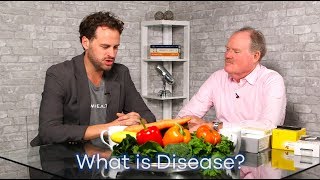
This podcast episode (James Maskell with Dr. Jeffrey Bland) critiques conventional disease-based medicine and promotes a shift toward health-centered, personalized care. Bland argues 'The Disease Delusion'—that genes do not determine destiny but function, which is shaped by lifestyle and environment. He contrasts diagnosis (backward-looking disease labels) with functional/prognostic measures, and gives examples of consumer-facing technologies (continuous glucose monitors like Freestyle Libre/Dexcom, heart-rate/HRV monitors, Oura ring) and apps (Neutrino) that enable individualized feedback and behavior change. The episode discusses implications for healthcare, insurance, and societal transformation.
Chapters
Foreign.
Hello and welcome back to the Big Bold Health Podcast. We are making Health Personal in a World of Disease. I'm back here with my co host, Dr. Jeffrey Bland.
Welcome, Doc. Wonderful to be back on this topic. Thank you.
So we're going to talk a little bit about disease today and I have in front of me what I used to refer to as the pinnacle of your career. Now, obviously it's the Big Bold Health podcast because that's clearly the best thing ever. But this is the disease delusion by Dr. Jeffrey Bland. And it was really the first book that I read of yours that sort of gave me a context of what you were all about. The Disease Delusion is a punchy title. I'm a big fan of punchy titles as a Brit as well. So tell me a little bit about who came up with this title.
Yeah, so, you know, I, after I got the concept of the book, I shared this thought of this title with my publicist and then later the publisher, and they thought, well, no, that's really. It seems like it's too contradictory. There are diseases and, and this is kind of like an oxymoron. And I said that that's true, it is, because, yes, there are diseases, but we're delusional about where they came from and how they have manifest themselves over time. What we call a disease today is very different than that same set of symptoms would have been called maybe years before. And in fact, a good friend and colleague, Dr. Robert Sapolsky, who is a neuroendocrinologist of world fame at Stanford, wrote a book called why Zebras Don't Get Ulcers and another book called the Trouble With Testosterone, in which he was talking about stress and its influence on our health. And he made a very interesting comment in that book. He said, do you realize that the way people feel crummy over time stays the same? They might even say, I got a headache or I got shoulder pain or I got a stomach pain or I've got bleeding or whatever it might be. So that crumminess stays the same. But what we call it over time has changed. So the convention of disease changes. The concept of what's happening in our body stays the same. So why then do we call the book the Disease Delusion? Because I want people to get away from the feeling that if they get a disease that it's somehow a consequence of them having some flaw or some. They got the bad luck of the draw with their genes. They didn't even fill in an application card. They just got whatever their parents gave them. And woe is them if their father had heart disease or their mother had breast cancer or whatever it might be, because that was their lot in life. And what I want people to recognize is, no, that's a delusional concept that does not really match up with what we now recognize, that our genes don't give us diseases, our genes give us our function. And our function is related to how our genes are influenced by our lifestyle, how we eat, how we live, how we think in our environment. And therefore, if we really want to push back and look at health, not disease, we need to take charge of the things that are modifiable, which are not whether we're taking a drug or not. It's how we're living.
Yeah, it's so interesting because this exact topic gets to the crux of the big Bold Health podcast in my mind is that we're talking about health through a lens of disease and therefore get all scrambled as to what the concepts are. Can you go into, like, give some examples of things that you've heard in the past, even words that are used that. That are contradictory in the. Through this lens?
Yeah, I think it is very interesting, James, when you start, even in our field of health promotion and disease prevention, people will often talk about what is the diagnosis when they have a certain test done. What is the diagnosis? Once you use the word diagnosis, you're not looking at where you're going, you look at where you've been. A diagnostic test tells you if you're diseased, it doesn't tell you how you're functioning going forward. That would be a prognostic test. Right. It's forward looking. So what we need to start changing is our language about how we see ourselves as it relates to our health, not our disease. And I've often thought, you know, people say, well, I want to prevent disease. Well, the only way you can really measure prevention of disease is how you're functioning in the moment. Do you feel well? Do you have ability to do the things that you want to do? Are you thinking clearly? Do you wake up feeling vitalized in the morning? Are you able to carry out the work that you want to do? Do you enjoy life? Are you feeling the community of support? Do you feel like your life is pur. Purposeful? Those are aspects of health, not do you carry a risk factor to a disease? So I think that we are really reframing in the big Bold Health the whole construct of let's stand up for a different standard, not skirting around the edges of Life, hoping our number doesn't get pulled so we don't get a disease, but our advocacy as individuals who can be bright lights of good health by just standing tall in the area of our lifestyle, doing the things our genes need us to do to be an optimal function.
It's so interesting you say that because I've literally spent most of the last year trying to convince people that there could be a different way of managing disease risk. Right. And traditionally that's been done by insurance. I think that cost sharing is an interesting way of doing it. But it is interesting how even people who are schooled in health creation, the mindset always goes towards fear and risk.
That's right. Why?
Why is that such a hard concept to just get away from?
I think there are a couple of reasons for that, One of which is when you are diseased, there are rules that have been set up within the medical system to give you a name that you can wear and you can tell people, well, I feel badly because I have type 2 diabetes. And now you suddenly wear something that you can define clearly. It also leads to a triggering of a series of events that lead to reimbursement for services. That's called the insurance plan. It also leads you into the disease care system. It's a library card that gets you into the disease care system, and you now become part of a club. Right? And that club is that you're flawed, you're injured, you're not perfect, and you are a victim looking for a rescue. When you're in a victim for a rescue, you're. You're. Then you either feel like, well, I'm in a class of other people who are victims that are looking for rescue, or you say, you know, I don't really want to be a victim. I want to be in charge and I want to be an advocate for myself. Which then takes you out into another place, which is really this health promotion concept. It's not just like skirting around the edges and being a victim and hoping somebody, when you're on bended knees, will give you the right prescription. And in fact, as we've talked about, you and I, this whole concept of a prescription pill solution to a problem has a very significant limiting effect. We know, because if you examine any disease and treatment by the drug that's approved for that disease, what do you find in a class of people that had that disease? It may only find that one of every 15 people with that disease or really has a positive response to that drug, even though it's approved by the Food and Drug Administration. When you actually look at the data, you don't find very strong support for high success rates.
So two years ago, I went to a conference that you put on, and there was a guy called Dr. Leroy Hood, who is from this area. He put up that slide, and it showed exactly what you're talking about, which is for the most common drugs. I think it's the most 10 used drugs. How many people does it not work for? For the people that it. And I took a picture of that slide, and I show that picture to a lot of people, because I don't think people really have an idea that this is happening right when they. That that's the way it is. And when it was, it was there in yellow and blue, not in black and white, but clearly in yellow and blue. For every yellow person, there's five blue people, or 10 people, in some cases, 24 blue people, who it doesn't work for. It's, it's. It's a shocking revelation to most people.
Okay, so now the question is, I'll come back to you. Why is that? And that's why I called the book the Disease Delusion, because it's assumed that everybody with that disease has the same thing going on. So that one pill will work for all. It's a class effect, right?
Yeah.
But actually, now it's been found out that if you examine 100 type 2 diabetics, you have 100 variations on a theme. It's not just one disease. It's multifaceted. Why is it that there are 14 different drugs approved now for type 2 diabetes? If it was one disease, one pill should work, shouldn't it? So what we're saying is that we are all individual in the way that we respond to our lifestyles, our environments, our diets. And if we can turn this thing around from looking ourselves as a part of a class A group to looking us as individuals. That's why personalization is the age of the 21st century.
You know, what it makes me think of is, you know, probably one of the areas that we're both involved in that is the most exciting in terms of, like, big, bold health, is the reversal of mild cognitive impairment and Alzheimer's. And it's like that disease is just like type 2 diabetes. That is just like all of these diseases where different things work for different people, because the etiology, the cause of what's causing this disease is different in different people. And if you don't treat the cause, then you never get to the solution. I mean, I think it's, it's, it's an ingrainedness. There's certainly like a deference to authority where it's like, oh, well, I'm not trained as a physician. I don't know anything about, about this, this person knows. I'm just going to do what they say. That's kind of the shift that's happening too, right? Is that there's a shift from the doctor is the one with the bag of tricks to the patient actually with the one, the incredible bag of tricks that, that, you know, that we all have inside of us.
So here it comes. Now we're on the intersection to the paradigm revolution. This is the big bold health right now you just stated because for the first time in human history, the first time in human history, we are developing and have access fairly inexpensively to tools to understand our bodies in ways that even no physician ever understood. I just brought a few of those tools as an example that demonstrate how we are developing a logical understanding of our bodies in ways that people never had access to.
Well, let's start with this one. And for those of you who are listening at home, I am pulling out a freestyle Libra. So this is a continuous blood sugar monitor. Tell us about, about how this thing does what you just said.
Yeah, yeah. So that is actually, one of two different systems. Here's a, another one I would show you. This is called the Dexcom. So these are now available. You can buy them over the Internet. They're devices that go onto your skin that are measuring continuously your blood sugar level. Now, why is that of any interest?
Think it's not disease.
Exactly, it's not disease. So think of the way that we have known about our blood glucose or blood sugar levels historically, we go to the doctor. Whatever your routine frequency of having your blood test done, if they think that you're in a certain category, they will give you what's called a blood panel. In that blood panel is blood sugar, blood glucose. That's one of the things. And it's measured one time, maybe once a year. Most people probably don't even go to the doctor once a year. And it's measured after you've been fasting under whatever conditions preceded that. Maybe you were on vacation before, maybe you had a party the night before. Maybe. I mean, it could be all.
Maybe I had a secret ice cream on the way to the doctors.
Well, hopefully not, because you should be fasting. But the bottom line is you have one data point.
Yeah.
From which you're making a decision. Do you have the disease diabetes or not. Okay, now the second. Hold that for a moment. What would happen if you had 100 measurements of your blood sugar over day that were related to everything you were doing, how you're eating, thinking, moving, how you were drinking your fluids, how you were under stress. And you could, with all those measurements throughout the whole day, see, like the mountain ranges of how your blood sugar was going up and down relative to your lifestyle. And you would start to see, oh, my word, I never recognize it when I had an argument with my child that my blood sugar went into the diabetic range. I never recognized it when I had work stress, that my blood sugar was so low that I was in hypoglycemia. I never. You know, this is, this is a knowledge of yourself that no doctor has ever had in the history of medicine.
It's so interesting you give those lifestyle examples because I know people who have worn these. Right. Because we're all in this world. And the, the feedback that they give to me is that they, even though they know themselves and they've lived in their own body, they had no idea.
Yes.
So, you know, they thought it would be one food, but it was another food. They thought that it would be just food, but then if they go for a walk after the food, it goes away.
Yes.
But what's been really interesting is I know people who are literally obsessed with food, like with their whole career. They're educating on it, they're teaching on it.
That's it.
And yet food is not the biggest mover for them. It's the stress and it's the family stuff, the things that get in the moment. And to have that data all the time is super interesting because as you said, when you go to that doctor one time, you have no idea of the context of where they've just been. They've probably just driven there in traffic.
So the doctor is going to tell you you're healthy because you don't have diabetes. So it's the absence of disease. The continuous blood sugar monitoring is going to tell you how you're functioning, which is related to your health. One is disease, one is health. Now, let me give you my own example. This was an aha for me. Now, I've been measuring my blood sugar. I'm a registered clinical biochemist, so I've been measuring it for over 45 years routinely. And I'm not diabetic. I have, you know, healthy blood sugar. But when I started doing continuous blood sugar monitoring, what did I find? I found that my highest level of blood sugar was occurring at 5 o' clock in the morning. Now I don't eat at 5 o' clock in the morning. I'm waking up at 5 o' clock in the morning. Where does my blood sugar come from if I'm not eating at, you know, early in the morning? It comes from the fact that my sugar, which has been stored in my body as glycogen, is being released in preparation for the day because my nervous system is already revving up to get ready for the day. Right? So my blood sugar goes up to a, the highest level throughout the whole of the day is at five to six o'clock in the morning. Now what does that tell me about my nervous system? It says I'm a hot reactor. Well, I know that from my personality, but it duplicates that by saying I'm a person who takes environmental stimuli and translates it into function very rapidly. Which means I better be careful. Because that can either be a skill or a liability. It can turn you on to be very productive, but it can also burn you out. So you start learning something about yourself that you never knew by just taking one blood sugar measurement a year on your blood test.
Well, let me go further into that because I want to talk about the financial implications of just this knowledge that you've shared. You know, it seems to me that as the, as the, as the medical system or as this health creation structure shifts from disease care to health, there's no professional that can ever know you as well as you know yourself with this kind of information. And the externalization of the responsibility is the most costly thing that we may have ever done as a species.
Yes, yes. And so how do we make this user friendly? Because we don't want to convert everybody into a quantified human, which they have to become an expert and take postgraduate training and how to measure themselves. But we now have, as you know, thanks to the cloud, we have ways of taking all this data that comes out of continuous blood sugar, monitoring our pulse, our sleep cycles, and sending it up to an information base in the cloud that can be analyzed and sent back to us on our smart devices, saying, here's an interpretation of what you've just learned about yourself over the last 24 hours. Let me give you an example. Here's another little tool that I've been using that I think is really important. This is one of many. That's a heart rate variability monitor. So it, it straps on, it's another monitor that can go around so it can measure your, not only your heart rate, but it measures the Kind of ekg, pin, electrochemical potential of your heart that tells you about the variability of your heart rhythm. Now, it turns out the variability of your heart rhythm is very closely related to your overall health patterns. If you have a very rigid heart rhythm, you don't have this fine structure of variability. It means you're not really very as fit, you don't have as much resiliency. And you can change your heart rate variability by appropriate training, personalized intervention. I don't mean just exercise training, I mean stress management, I mean diet, I mean proper sleep. You can change your heart rate variability so that the combination of your continuous blood sugar monitoring your heart rate variability. Now what are you becoming? You're becoming the master of your own body by knowledge. This is where we're heading right now. This is a revolution in health care, not disease care in healthcare. The doctor who's strictly focused on disease care, this is just a distraction to them because they don't even know what to do with this information.
Expecting a doctor to interpret the information from your wearable is not a plan, right? This is not the way things are going because these two things don't, don't interact. I wore an aura ring this summer for the summer. And the thing that I learned was that there were things, the way that I interpreted my own health that were qualitative enough that I didn't really know what was going on. So what I found is that, you know, how do you sleep? So the OURA ring mentions, measures the heart rate variability, but also sleep. And what I know about myself is that I sleep well, quote unquote, in that when it's time to go to sleep, I go to sleep. When it's time to wake up, I wake up. And nothing else really too dramatic happens in the meantime, right? And so I'm a good sleeper. When I put on the OURA ring, what I realized is that although those two things were true and in those ways, my scoring was good, my level of deep sleep, the percentage of sleep that was actually seriously restful was very low. And so how would I ever have known that? Right? There's no way that I could know that. And so by having this information, it actually led me to change some behavior. Like, oh yeah, everyone was right. I probably shouldn't be looking at my phone last thing at night, don't have the phone in the bedroom, Deep sleep percentage goes up. There's no way that I would have known that just with understanding my own, my own physiology and understanding myself. But this external device kind of helped me to really understand myself better, to be able to self regulate. And I think that's sort of like the difference of where we're going to where we've been is that one, I'm in charge, two, I'm learning things about myself that are important for me and me only. And three, that there's no medicalization at all.
Well, these are revolutionary concepts. Let's use a very simple one that you and I are familiar with. I think most people are. And that's heart rate, not heart rate variability, just heart rate, resting heart rate, how many beats per minute, which you can measure on your pulse or have a device to do it. There are a lot of new smart devices that will do that. So what does that have to do with anything of your function? It doesn't tell you if you're diseased, but it does tell you how your cardiovascular heart and blood system are functioning, your arteries. Elevated heart rate is one of the great predictors of later stage problems. Not just heart disease, but other problems that relate to age related disease. So what can you do to influence your resting heart rate? Let me give you an example. When I was doing this, mine Normally runs around 56 beats per minute. That's my normal resting heartbeat. When I went to Hawaii and I had my device on and I went on vacation, I went surfing every day with my buddies and I was living, you know, this kind of like relaxed environment, my mean average resting heart rate went to 46 beats per minute, 10 beats less, or nearly a 25% reduction in my cardiovascular heart rate. So what does that mean? That means I put functional reserve. I learned that stress management for me was a very powerful feature of what I should be focusing on. If I want to personalize my health program. Not my disease program, my health program. You put that together with the fact that my blood sugar is highest at 5 in the morning because I'm a hot reactor. So what's that telling me about myself? It's interrogating and leading to knowledge. And knowledge is power, knowledge is control. And now we become self efficacious. What does that mean? We become in control. We become the master of our own universe. We're not dependent on others to tell us whether we're sick and need a pill. We are controlling our function, which is the most dramatically important thing that we'll ever own is our function over the course of living.
Let me take this out five or ten years, right? Because this shift is happening right now, right? This thing, this freestyle libra, this has to be, you have to buy it Online because you need a prescription. But I know there's going to be ones that are going to come out for the consumer. Let's talk about what the health system looks like in 2025. Right. Seven years down the road. Six, seven years down the road. What does that look like as far as. Because what I see is, is you have all of this data about yourself. You're, you're not connected to the medical system. All of this information is coming in, I imagine some sort of like Alexa type of thing in your house where you have a readout of all these numbers. And it's not just continuous blood glucose. There's all these other things that are being. And potentially a meal is being created that is to get you back to homeostasis. It's reminding you of your stress management routine. It's about time to go on a holiday to Hawaii. You're overdue. Give us a picture of what that looks like. Because I think, I think a lot of people need to get their head around where this is going to understand where it is now.
Yeah, well, I don't even think we need to go out to 2025 to see where it's going. Let me give an example of perfectly in line of what you're talking about. The company Neutrino was just acquired by Medtronic. By Medtronic. Now why Medtronic? Medtronic is a company that makes pacemakers and develops cardiovascular resuscitation equipment. Why would they be interested in Neutrino? Neutrino is an app that has over 15,000 food compositions that are built into that app that tie directly to, to the control of blood sugar. And the Neutrino app is tied to your continuous blood sugar monitoring device.
Wow.
And it will tell you exactly. You can take a picture of your foods in the restaurant or at the grocery store or wherever in the home and it will tell you whether that food is feeding into your Libra so that it controls your blood sugar correctly. Do you get where we're going?
Building blocks of what we talked about?
Exactly right. So the person takes their smart device, they hold it up in front of their plate of food, take a photograph, Neutrino. Then the app analyzes and says, you know, really, that's too much potatoes on your diet for your blood sugar. You're going to have way more high blood sugar than you really wanted. Therefore you need to cut that down and replace it with this. It becomes your in home coach and being your expert to analyze your information and personalize it. We are moving right now into an era of personalization. Remember that we have been through nearly six decades of the concept that you are part of a group. You are a statistical number in a population of people that could be defined as any other person in your group. And now what we are recognizing is the differences among people in a group is greater than the difference among groups.
Isn't that a incredible lesson for humanity?
And let me take it to another level. In the New England Journal of Medicine, presumably one of the top medical journals, just this last year, was an article entitled the End of Race. The End of Race. Now, what was that article all about? The article was about the fact that in medicine we segment out different therapies for people with their different ethnicities. So a certain ethnicity might have a different dose of a certain drug or a different kind of drug based upon their race. And what they've now found out from genomic testing is that the variation among differences within a specific race is greater again than the difference in the average among the races. So there really is no such thing as race. We might say it well, that person has a different skin color, eye color, hair color or something. But at the physiological level, we're all uniquely different. We're homogenized in our end and we're different.
So 13 years ago, I came and worked in this world because I felt like health was going to be a transformational topic that might help to deal with some of the big issues of our time as a race. And can you just see what you just said there is incredible because makes me feel like I came in the right place at the right time. Because ultimately we are dealing with much bigger issues than the cost of chronic disease, even though that might be the biggest and most vexing problem. And it's super exciting to see that this shift from disease care to health care might have a knock on effect, will have a knock on effect that will permeate all of these different areas that look like really unsolvable problems. We have a lot of really unsolvable political, economic, ecological problems. And my feeling is, and my sort of gut instinct that my microbes have been, you know, alerting me to is that this transformation that we're cataloging in the big bold health podcast from disease care to healthcare is a catalyst for the transformation of human consciousness.
Absolutely. I, I think not. Maybe the transformation as much it is the manifestation of this transformation. So this to me is the reason for being. It's why the big bold podcasts exist. Health is a very intimate thing. We all concerned about it, but it's an entry point into self discovery and to creating the human that we all want to be.
Well, I'm excited for the next few episodes. I think this is going to be a great journey. I'm so thankful to have this opportunity to look at all these tech gizmos and to spend this time with you and to really be charting this. Charting this journey. Thanks so much, everyone for watching and listening at home. It's been a pleasure to be here on the big bold health podcast with you, Dr.
Bland.
I'm James Maskell and we'll see you next.









