Your Health Starts with Your Story: Meet Dr. Sara Gottfried | Big Bold Health Podcast Episode 23
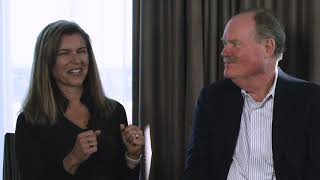
Podcast interview (April 2020) with Dr. Sara Gottfried on women's health and personalized medicine. Dr. Gottfried describes her path from bioengineering to Harvard Medical School motivated by her grandmother's Alzheimer's, highlights large research and knowledge gaps in women's health, and shares personal clinical experiences (genomic risk for cancer leading to prophylactic mastectomy; subsequent SIBO diagnosis, anxiety and ~15 lb weight gain after antibiotics; a 2015 traumatic brain injury episode). The discussion covers sex and gender physiological differences, historical failures in women's health research (e.g., Premarin, Women's Health Initiative context), and Dr. Gottfried's future focuses: female-tailored research (e.g., ketogenic diet modifications), education, and media advocacy.
Chapters
Hello and welcome back to the Big Bold Health podcast. We are charting a new world of health independent of disease with my co host, Dr. Jeffrey Bland. Doc, it's great to be back here with you.
Likewise. Thanks, Jim.
So when we decided to interview female leaders transforming health, Jeff and I made a list and Dr. Sarah Gottfried was right on the top of that list. And unlike all the other people that were on the list, this is the first time we met. So I'm really happy and honored to be with you both here. Dr. Godfrey is a best selling author, is a researcher, physician, and doc, you've been dedicated the last two decades to educating and really transforming women's health.
Can I say something quickly? Yeah. I don't want to break the continuity, but Dr. Gottfried also is a remarkable person in terms of her educational background. That tells you something about her and her perspective, not only having had her medical degree at Harvard Med School, but having a degree in engineering and the whole nature of bioengineering at mit. So, you know, she's got the highly developed left and right hemisphere of her brain. This is a very unique talent that she brings into her worldview, her practice, her advocacy. And there are very few people in the world that I would select to want to have as a quintessential example of women's health and women's health advocacy other than Dr. Gottfried. She's a remarkable person.
Thank you.
Well, you said it better than I. So, Dr. Godfrey, to the question, what was it that really got you fired up to make an impact in where you have so far and where you're going in the future?
Well, it didn't start with women's health. It actually started with a grandmother who was diagnosed with Alzheimer's disease. And at the time, I was getting a PhD in bioengineering, and I just realized that the medical system had completely failed her. And so while I was working on the vascular, the angiogenic response in cancer, at the time, I realized I could have so much more of an impact if I went to medical school. So I dropped out of the PhD program and applied, got into the Harvard program. And that's where I started to realize that there's a massive gap, research gap when it comes to women's health. And there's various threads in our historical framework for that. In some ways, I think that's less relevant. What matters is the future. So what I realized also is that the research gap has led to a massive knowledge gap. So my ambition, my big bold hope is to close that gap.
So I would say from My observation of what you're doing is you're making positive progress in achieving that objective. You are an opinion leader who's stopping people's talk so they can listen to what you're saying. And you're educating by example, which is the most useful way of educating. We can get learn in different ways. Part of it is in our head, part of it is in our heart. And the best is when we combine those two and you do them well, those both, that combination. So maybe you could just quickly share a little of your own personal experience, because I think that helps to contextualize your advocacy and your position.
Sure, sure. Well, let's go back to my grandmother. So we know that women are diagnosed with Alzheimer's disease at twice the rate of men. We don't understand why. We don't understand. Is it hormonal? Is it gender differences? Is it differences in brain structure? And so that's what initially got me motivated. But the more that I learned about women's health and these gaps with men's health, the more that I realized it's not confined to Alzheimer's disease. Of course it relates to anxiety, depression, autoimmune disease. There are so many conditions that women face at a much higher rate than men, and we have no idea why that is. So in terms of personal story, it sounds like you have something in mind, Jeff. You know, a lot of what motivated me, especially toward precision and personalized medicine, was listening to your tapes going back to the 1990s.
Oh, my word.
And hearing about this, you have this level of scholarship when it comes to understanding the human body, understanding signaling pathways. That made so much sense to me, and it really married my love of engineering and kind of the engineering mind that I have with an approach to medicine that was heterosexual and shoulders above what I was even learning at Harvard Medical School. So that's what really got me motivated. And from a personal perspective, I joke sometimes that I've had every hormonal problem that a woman can possibly have short of menopause. And so I've had sort of one issue after another. I didn't have difficulty getting pregnant, but once I was postpartum, I had postpartum depression. I couldn't lose the baby weight, which I think happens to so. So many women. They gain 20 pounds with their first baby, they have another baby, they gain another 20 pounds, and before they know it, they have metabolic dysregulation. And that's at the root of so many of the conditions that we're talking about. So I would say my Personal challenges have led me to the next step in terms of helping women understand their bodies, get informed about their function, and get empowered about how to step into action.
Yeah. And you've done that so remarkably. And I think part of that impact you have is your openness and truthfulness. And there is a sense that this person is speaking a central truth. There is no kind of peripheral garbage here. This is a core truth. How have you gotten yourself comfortable to be able to create that truth? Saying identity in a marketplace, it often tries to channel us into some kind of Persona.
Great question. I think one of the things that I encountered in conventional medicine is that you don't share your story. You stay focused on the patient's story. And I think that's really important. But I also really believe in Brene Brown, who talks about vulnerability as the path to wholeheartedness. And I would even say that vulnerability, kind of sharing your vulnerability along with credibility is a key to helping people realize their own vulnerability and then to start to change their behaviors in the direction of better function, better outcomes, better health. So the most recent challenge that I went through was I diagnosed myself based on genomic testing with a gene that puts me at about a 3.5x increased risk of breast cancer and a 2x increased risk of colon cancer. I made the decision after trying to modulate my estrogen pathways to have a prophylactic mastectomy. I went through that procedure, but here's what was surprising. I took a month of antibiotics for the first time in my life. And after I finished that month of antibiotics, and I turned this into an N of one study, if you want to hear more about that. I felt anxiety for the first time in my life. And I also gained weight. I gained about 15 pounds without changing what I was eating. So remarkable change in the signaling pathways in my body ended up getting diagnosed with small intestinal bacterial overgrowth. And that set me upon this path of really looking at, okay, the gut brain axis. It really came alive for me in a way that it wasn't as relevant before. So that's an example of kind of my most recent personal challenges, which I see not as a victim, but as, okay, this is the next step in my path. Something that was previously unknown to me or not known well enough that I need to understand better. Because if I struggle with it, if I struggle with anxiety and with insulin resistance as a result of what's happening in my gut, microbes, certainly other people are going through that too. Not just women, but men, too.
Yeah. Can I just. I'm Going to turn this back to you, but I just want to take just a half a moment to honor you, because what you just said is not easy to say. It's even maybe more difficult to go through. And then it's more complicated to try to understand and then communicate. And what you did in that sound bite is truly courageous. And I think it's what then creates in other people the opportunity for them to be courageous about their health. And when we talk about big bold health, the reason we chose Big bold is I think it requires us to step up and be more bold about our health. We often feel that we're a victim and we have no control. And woe is us if we got bad genes or the bad luck in life and we just kind of got thrust into this condition of not feeling well and there's nothing we can do to step up and be bold. To be the advocate of ownership of our health, to create this new we or new us is really quite a remarkable, courageous thing to do. And your advocacy can help spawn many other individuals to take that step. So thank you.
Thank you.
It's huge. So, James, I'm sorry, I interrupted.
Well, you have multiple New York Times bestselling book, and each one kind of evolves into the next one. And obviously you have your own experience, you have the research that that evolves, and then you have obviously patient care. What were some things that led to this latest book and things that you felt that you wanted to share that you hadn't shared up until now?
Well, there were a number of things. Certainly this experience with sibo, small intestinal bacterial overgrowth, was huge. And I had another epiphany. You could even say I got hit over the head with another epiphany, which was in 2015. I was with a group of clinicians. We were filming a TV show in San Diego, and we went all day long not eating and drinking and taking care of our bodies. And I fainted at the end of this. We were standing in the kitchen trying to figure out what to eat for dinner at 10 o' clock at night. So I think what happened was probably low blood sugar. I fell, hit my head pretty hard. And when I hit my head, I had what looked like convulsions. And at that point, some of the doctors in the room called 911. So I had this experience of a traumatic brain injury that also got me to realize the essential nature of the integrity of the gut lining, the essential nature of the integrity of the blood brain barrier, and how I was disrupting it right and left and I had no idea. So I decided I wanted to write a book about it because I realized something. So many of the conditions that I see in my practice, anxiety, depression, addiction, weight gain, early memory loss, brain fog, all of these things are related to that gut brain axis. It's related to other things as well. The immune system is part of that axis. But that was what really motivated me to say, okay, even if you don't have gut symptoms, you might have an issue with your gut brain axis, because that's what happened to me.
And how do you translate that into sort of actionable information for the reader?
Well, I think there's many ways to translate it, I think. And this, I would say, is my most sacred obligation to try to make really complex scientific information understandable, relatable and actionable. So I don't think you can start with the microbiome. I mean, I love to start there. I know Jeff loves to start there. You probably love to start there too. But for most people going about their busy days, the microbiome is not so relevant yet. We could make an argument that maybe it should be. But I think the way you start is what are your pain points? What are you suffering with? So I know from quantified analyses that I did in my own practice that my patients struggle with mood, stress, weight gain, sex drive, although they like to lose weight first before they deal with sex drive. And so I know what the pain points are and I know that there's proven ways to solve those pain points. So my books frame up against those particular pain points, pain points you mentioned earlier.
The research doesn't really reflect for women what's really going on. There's some gaps there. What is unique about the female physiology that lends itself to these chronic illnesses?
Can I jump in there? Because I think that's a great question and I want to put addendum to your question. I had the privilege many years ago of meeting Bernadette Healy and that was a life changing experience for me. Unfortunately, she's not with us any longer, but her advocacy still lives on very, very strongly. And being the first kind of female strong woman's advocate at nih, really got the whole nature of research to be changed. And when I bring this topic up today with my colleagues, a lot of them are male research or clinicians. And I say, do you realize that the approval of drugs starting off in early stage, which are animal trials, are all done on male animals, not even getting to clinical studies in humans yet. We're just on the Basic first level development, kind of your basic science that they're done on male animals. And the reason for it is that it's presumed within basic research that female physiology is too complex. It confuses, it's a wild card. And when I heard that, I mean it was like a two by four alongside of my head. I thought, what? Because it's complex, we go to only using male animals and then we eventually go to a drug that's going to be used in females and males only with male subjects in clinical trials. There is just like no way you can even begin to rationalize this. So having met Dr. Healy and Senior advocacy for the Women's Health Initiative and that first big research cohort that the results are still come forthcoming today, it was a wild card that changed. It wasn't a wild card. I mean it was the agent of change that changed the whole domain. So your advocacy I see as a extension of Dr. Healy's advocacy.
Well, thank you. And I'm a huge admirer of Bernadette Healy as well. So she, I think she really got us to turn left finally at the nih. And she is responsible for the Women's Health Initiative, which was the first, it wasn't the first randomized trial, but it was the first randomized trial looking at hormone therapy in women for primary prevention of a number of different outcomes. And it ended up showing that hormone therapy, at least conjugated equine estrogen and medroxyprogesterone acetate were dangerous and provocative in many situations. And we got a lot more clarity about outcomes. But let's go back to the 60 years before that where we had premarin conjugated equine estrogen as the number one prescription without ever bothering to do a randomized trial until the hers trial in 1999. So I am so grateful for her and the way that she has helped us understand the role of hormone therapy as well as beyond. And you're right, I mean, I remember coming to your Thought Leader consortium many years ago and talking about how it was presumed even back in the 1930s with Walter Cannon in his work on the fight flight response. It was presumed in his work on men that the same applies to women. And in women it's more complex. Women tend to fight flight freeze. They've got this freeze component. They also rise above stress by going into tend and befriend. And that wasn't discovered until the 1990s by UCLA professor Shelly Taylor. So what are some of the differences? There's that difference in stress response there's hormonal signaling differences, the major ones being estrogen as the master regulator in women, testosterone in men. We know that there's various neurotransmitter differences, such as with the oxytocin pathway. You have to hug a man three times as long to get oxytocin to spike. So there's a number of different differences. If you look at the brain, for instance, and I'm a little cautious about saying this because I'm from San Francisco, and we're not quite as binary about sex and gender now. But if a radiologist looks at a brain image, an MRI or a CT scan of a brain, they can tell with 85% certainty whether it's a male or female brain. Some of those differences include the hippocampus, which is the seat of memory consolidation and emotional regulation. It's larger in the female, at least up until a certain point, probably the 40s. The amygdala, which is the part of the limbic system where you search for threat in the environment, is larger in the male. There's other differences as well, but those are some of the key physiological differences. And then, of course, there's sex differences, which are biological. And then there's gender differences, such as more responsibility for caretaking, taking care of aging parents, societal and other cultural differences. I was just reading a paper this morning about triathlon enthusiasts, and we now know that women participate in triathlons worldwide at about a 25 to 40% rate, which is higher than ever before. And the difference physiologically, in terms of outcomes such as how fast you can run in an Ironman distance triathlon, is only 7% between men and women. So women are catching up in many ways. And I don't want to talk about this in kind of a one up, one down way, because I don't think that's very fruitful. I think what's helpful is to understand these sex and gender differences so that all of our health can improve.
Yeah, I think that's beautifully, beautifully stated. If I can just bring up a note of history. And I know I tend to now wax back maybe before people want to even think about this, but we love.
It when you do.
Maybe let me try it on and then you can tell me. So. I had a chance in my younger years to meet General by the name Dr. Robert Wood Wilson. And he was the author of a book called Feminine Forever, which in the 60s sold, I think, several million copies. And I had met him, and I have to say, quite honestly, the first time I met him, I was really put off by him. Of course, I was a younger guy, he was kind of a senior guy. He was given credit for being the discoverer of Premarin. And it's a positive effect on women's health and mood. And he had kind of a golden reputation at the time, but I found him to be personally off putting, quite honestly, and kind of self absorbed. But the bottom line is when I finally read Feminine Forever, I was disgusted. I mean, I really couldn't believe it that this book had sold to so many women. And I believe it was probably out of a fear based thing because it used terms, and I'm quoting now, this is not being made up, that women who did not manage their hormones at menopause would be suffering from bovine passivity. That term is in the book bovine passivity. And that men would have all the reasons to seek out other relationships from that of their wife if they were to be suffering from bovine passivity. I don't even need to go farther than to just talk about the social and psychological angst I had when I was reading this to think of how that contextualized the setting and stage of what became the number one prescribed drug for some period of time for the alleviation of symptoms that would keep women from losing relationships or feeling full and productive about themselves. So this legacy of not even medicine, of psychopathology is, is so deeply rooted. And when I see people like yourself that is advocating this kind of equality and opportunity now, having granddaughters, never had sons. Not only had sons, but now I have granddaughters, I really see this as a tremendous period of positive change.
So thank you, thank you, thank you. I appreciate that. I read Robert Wilson's book as well and was horrified. But I also would say it's a product of its time.
It was.
And it's hard to judge it with some sort of today's sensibilities. But yes, I remember the bovine passivity. And it was, you know, taking hormone therapy was really framed as save your marriage, you know, don't be a castrated female that drives your husband away. So as you described, very fear based. And you know, I hope now that women can approach decision making about their health, whether that's hormone therapy or what to do about polycystic ovarian syndrome or endometriosis or even just how to function better as we get older and extend the health span. I hope that they make their decisions from a place of empowerment with their clinicians in a collaborative partnership, and not from this place of fear, which I think is unfortunately the foundation of conventional medicine.
Well, just to. If Jeff's the past guy, then I'm the future guy. So if we're 30 years in the future and we're looking back on, let's say, the last 10 years, years, @ the moment that it became clear that chronic disease should be built on exactly what you just shared and not the way that it had gone before, that coincides with your work. Isn't it amazing to think that it was women going to see doctors who practice differently that actually facilitated the whole evolution? Because if you look at 75% of functional medicine patients are women, 75% of functional medicine doctors are women. And that's women at a certain point, just being like, no more. This is not working for us. And that journey and the learnings that happened in this community at this time sent us forward into this big, bold future. What do you think of that.
Jeff? I'm right on target with you and I think that's our advocacy. That's why we're here. That's why we're doing this. That's why we're so fortunate to have Dr.
Gottfried. It'll be 103 when we do that review. So I'm looking forward to.
That. I hope it won't be that far in the future. So as you move now into this next phase with your new book and the advocacy that it will bring and doing the book tour and all those kind of things, where do you see your trajectory going as a person who is in this universe, as a leader, as an agent of.
Change? Well, a few places, I would say, certainly research. I've got a research project that I'm working on right now looking at women in the ketogenic diet. Because I believe, based on my experience clinically, that men do much better on a ketogenic diet than women do. Women have, half of them have menstrual irregularity. They have thyroid and adrenal dysfunction. And so I want to figure out how do we make the ketogenic diet modified for women and much more effective? Because I think it is one of the strategies, not one size fits all, not for everyone, that can really help with metabolic dysfunction. So I would say research is one thread. Another thread is education. And I really believe that Nelson Mandela quote that education is the weapon that we have to change these injustices and struggles that we have. And even broader than education is media. So I really believe that we are in an intention based economy. I think economics have really changed over the past few decades. We're heading toward an exponential global future. And we have to be really smart, really wise, and also circumspect and responsible about the media that we produce. That's why I love your podcast. I think it's really essential that we've got impeccable content that we're sharing with the world, with the 75% of women who are part of this functional, personalized lifestyle medicine movement. But for men as well, you know, I don't mean to leave men out of the equation. We need.
Everybody. And I think what we're seeing now is there is some harmonization and if we can unify this energy in such a way it promotes positive harmonic oscillation, we can create global change. And I think that it's not going to probably come from the top down. It's going to come as you so well educated from the bottom up of people just basically saying we're going to be big and bold about our health or our children's health or our family's health or our neighbors health or our global health. Knowing that a healthy planet is a healthy person and vice versa, all of that resonance can create extraordinary positive changes. So you are a strong member of our leadership community that we're privileged to have. And thank you for sharing who you are and what you are and where you're going. Really.
Exciting. Thank you so.
Much. Thank you so.
Much. Well, on that big bold bombshell, well finish off today. We've been here with Dr. Sarah Gottfried. You can find out more about her work. We'll have links to the latest book in the notes, but thanks. I'm your host, James Master, here with Dr. Jeffrey Bland. Thanks so much for tuning in to the big bold health podcast and we'll see you next.









