Exercise Motivation with Visualization #podcast #brainhealth #mentalhealth
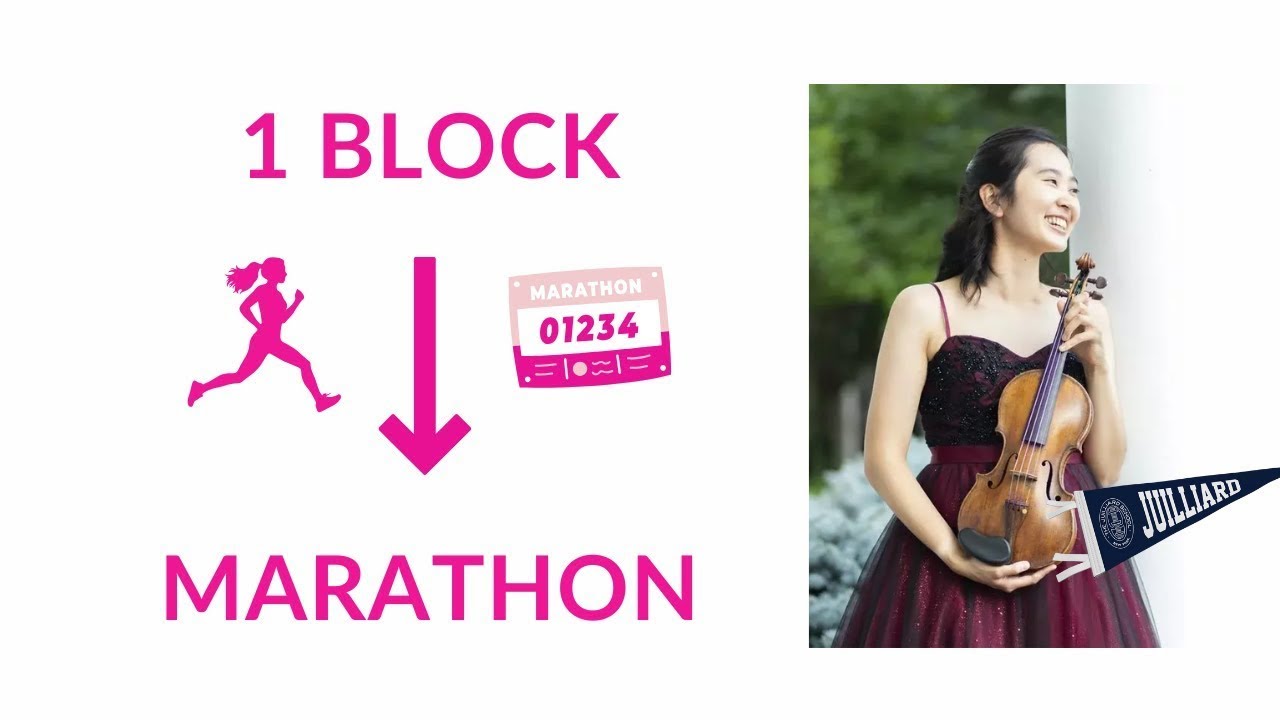
A former teacher reconnects with student Noelle Naito, a Juilliard violinist and marathon runner, to trace how habits built in middle school shaped her brain and performance. They cover her daily practices: 5-minute meditation, running 3 to 9 miles, weight training, and the "Let Them" reframing mantra that reduced her anxiety and sharpened her stage presence.
Chapters
feel— I mean, there'll be one day of dip where I just feel like doing nothing, but then just doing physical activity makes me feel so much better. And I think it's just because you release all your stress by running, or like even weightlifting. If you lift like heavy weights, it challenges your brain too, but it also releases all that stress you have.
This is such a dream conversation for me because I met you 10 years ago when you were in middle school.
Yeah.
And to be able to have this like longitudinal study 10 years later, your brain has absorbed these habits of self-care and of understanding deeply that when you take care of yourself, you're saving yourself time. Hi and welcome back to the Mind Body Space podcast, where we explore the neuroscience of thriving. Today's guest is really special to me because she's actually a former student of mine. My students are growing up, and as a young adult, she is now embodying the kind of resilience and self-mastery that we love to talk about on this podcast. Noelle Naito is not only a Juilliard-trained violinist, she's also a marathoner, a mindfulness practitioner, and a deeply thoughtful human with a great sense of humor. Noelle is so special to me because she was one of my first students that I coached one-on-one, and back then she was just a middle school kid. If you listen to my podcasts or if you understand neuroscience of the developing brain, middle school is one of the best times to reach these kids and to teach them about their brain because their brains are rapidly changing at that time. They can really develop great habits or unfortunately bad habits. So I love teaching middle school students about their brain and to help them really set the habits that will set 'em up for a lifetime of resiliency. This is so special because it is now 10 years later and Noelle is here to share with us some of the learnings that she took from way back. And how it has a profound effect on her life even now. Noelle is an award-winning violinist who studied at the prestigious Cleveland Institute of Music, where she received the Anna Tringas Award for Violin. Her instrument is a 1662 Andrea Guarneri, graciously loaned by the Ryuji Ueno Foundation. So sit back and enjoy this conversation with Noelle Naito. Hi, Noelle!
Hi!
I'm so excited to see you!
I'm excited!
You know what I realized?
What?
We met in person briefly. Yeah, we never really—
I know, I think we had like 2 private sessions in Juilliard.
Most of the time we were online, the whole time.
I know.
So how are you, Noelle? You've grown up.
I've been all right. I graduated.
Congratulations.
Oh, I'm going to France next week for a music festival in Fontainebleau. I'm going back to New York City again because I have to drop off my instrument and get it cleaned and fixed before I leave.
Oh, you still have your instrument being taken care of in New York City?
Yeah, I had a different instrument, but I have a loan instrument. I've been using it for 2 years now, so— oh, it's an André Guarnieri, so it's a 1662.
Does it feel different?
I think definitely the sound is so different than my previous instrument, but I also just got a new bow and that has been life-changing in a way because I didn't realize how much the bow can really affect the instrument and how you play. So yeah, it's really nice.
It's like two different instruments. For people who don't know classical music, it's like the violin and the bow are almost like two different instruments. Yeah, for sure. To play an instrument from the 1600s, that's wild because It has such a history, right? So tell me, did any famous person play it? Like, it must have been played in the courts of royalty, for example, because that's what they had it for in the past.
I know, actually, maybe I should ask them, give you the details.
But as I remember, the older the instrument, less it carries sound, right? Because it was made for smaller rooms. It wasn't made for like huge halls and things like that.
Is that correct? I personally think that the sound is much more warmer, but I feel like that kind of tone and color just like is so much different than modern instruments, in my opinion. But in terms of projection, I think it projects pretty well.
And well, congratulations for getting such an incredible instrument.
Thank you. Yeah, it's been a journey. I've known this patron for quite a while, and he kind of saw my playing one time at a concert, and he was like, well, let's see if this instrument works with you.
He was like, oh, I have this violin from the 1600s.
Yeah, exactly.
That's pretty amazing. Yeah, some people who are listening to this might not know, but if you're a talented musician, sometimes you can win an award where you get a historical instrument that is loaned to you. Or like you said, you can even get a patron who maybe owns something very special and then they loan it to you for a while, right?
Yeah, so I was very lucky.
Yes, congratulations, and you have to take care of it, right? Yeah, you know Yo-Yo Ma, right? He's famous cellist. So he went to Juilliard also. And interestingly enough, I was living in an apartment in New York City. My husband and I just got married and we were renting from a doctor. And we knew he played the piano because it was a very small apartment and he just had this giant grand piano in it. So one day he invited us to the Harvard Club where he was going to perform Gershwin. He was incredible. It was unbelievable, like the caliber of performance. And he's a doctor. He's a psychiatrist, Richard Kogan. He's still a psychiatrist. Anyway, so it turned out that he was roommates with Yo-Yo Ma at Harvard. Oh wow. They were in a chamber group together. Richard developed neuropathy from, I think, all the piano playing actually, so he couldn't become a professional musician. That's why he went to medical school and became a psychiatrist. But he still plays Gershwin sometimes in the city. And why am I telling you this story?
It was about the instrument with Yo-Yo Ma.
Yes, I'm telling you this because I read in the newspaper once that Yo-Yo Ma left his Stradivarius in the back of a cab because he forgot. He just walked out of the cab, and then thank God they found it, right? And they returned it.
Yeah.
But then I later, like, I read in the newspaper that my old landlord Richard Cogan, who was Yo-Yo Ma's roommate, he left his child in the back seat of a cab in New York City.
Oh my—
of a New York City taxi cab. Thank goodness, you know, the guy noticed and he drove back. And when he drove back with the kid, like, they hadn't even really noticed that she was gone because he was coming back from a vacation and it was super late and I think they were just super tired and they have 3 kids and so the third one was sleeping and they both thought the other one had like home alone. So Noelle, thank you so much for being here and I'm so excited to reunite with you. We have to see each other in person when you're back.
Absolutely.
When I first met you, you're in middle school, right? Yeah, that's when I started coaching you.
I think 8th grade or something, like I was transitioning to high school I think at that time.
And it was so funny because when we caught up on Instagram, you told me that you'd run a marathon and I was so excited for you because when we started working together, I remember you were an amazing student. You're so disciplined. And I had just started doing log sheets with my students back then. Remember the tracker that I had and I had you fill out every day? Like, yeah, because if you're gonna create a new habit, you have to do it consistently, right?
Yep.
And I have to tell you, you were one of the masters of being able to be disciplined and consistent. I know you didn't think so, but you seriously were amazingly talented at being disciplined, which is huge. Oh, wow. And I remember when we started, you didn't exercise at all. And right.
Yeah.
I convinced, I convinced you, but I convinced you to go outside every day and to run just down the block.
Yeah.
Do you remember that?
I—
so you, you were like, okay, I can run down to the end of the block and come back. Remember that? Yeah. And look at you now. You're running marathons. And honestly, I was so happy that your mom had me work with you at that age because that is the age when— you know all this now because you took so many classes with me.
Yeah.
But you know that that's the age when your brain is rapidly changing and you are learning new habits. And you're learning them fast and hard, and it could be bad habits or good habits. You're going to pick them up in middle school.
Oh yeah.
And that's going to stay with you for a long time.
I mean, as a child, I did ballet and taekwondo, and it was a really good exercise. My parents encouraged us to do physical activity. The one thing is that with running, I mean, as a child, I was just not really good at it. You know, we have these yearly mile race, and I always been like last place. Running was just not my thing at all. And then eventually I quit ballet and taekwondo. I wanted to really focus on violin, just to really devote myself. But now thinking back, I totally regret it. I should have kept taekwondo.
You could still do it.
I still remember the very basic white belt form. I still remember every move, and that was just so funny.
It's hardwired in there. I encourage you to go back. So you started running when we started working together, because mainly I also wanted you to get outside because you were like, oh yeah, performance anxiety. And I wanted you to get outside into the sunlight, right?
Yeah, for sure. Also, I was— I also became homeschooled during high school, like starting from 9th grade. So I was just home 24/7 and I had no friends. Now I have really a lot of friends now.
Well, you had friends, but you had to go out, like there's certain days where you went and did school with your friends and stuff like that. I remember.
Yeah, I mean, the thing is that I basically lost a lot of contact with friends too, and that's when you encouraged me to see friends as well.
I listened to this guy today, Andrew Wilkinson. He's a famous entrepreneur. He's the author of Never Enough: From Barista to Billionaire. He was talking about incorporating meeting new people into his yearly plans. So he actually hosts fun parties where he invites people who he thinks is interesting.
Yeah.
And so he keeps meeting new people. So I love that you said that, reaching out to people and finding people who have similar interests. I think that's the most important thing. Yeah, for sure. So like if you're running, joining those runners clubs, right?
Yeah. I'm gonna try to find something.
You'll probably meet your husband in a runners club. You're gonna come back in 5 years and tell me I was right.
I always stuff like that. Oh, for sure. And then you encouraged me, hey, you should get out the sun. And I was like, are you serious?
I have to practice 24 hours a day. I can't go outside.
I was that kind of person. I was like, you know what? I'm homeschooled, I'm gonna practice, I'm gonna grind in. Try to be the best at something.
Yeah, you're really serious. You're so serious at everything.
I was so serious. And then when I started running, I was like, oh, this is not bad. And then eventually, you know, my goal was to run around the neighborhood, like not stopping. And that was about 3 miles. And then I gradually did like 5 miles, like starting from 10th or 11th grade. I was into that exercising and that really helped me so much.
Tell us how it helped you mentally, physically.
Yeah, I think just mentally, You know, just clears my mind and also just really meditative as well. Because when you run, you just don't think about anything and you just kind of stay present in the moment, appreciating nature.
You're getting vitamin D. The brain-derived neurotrophic factors. And you knew that when you exercise, your brain gets stronger.
Mm-hmm.
New connections and increased brain cell growth. So you were an amazing student and I'm so happy and proud of you that you continued the journey of running that you started when we started working together and And not only are you reaping the benefits, but you're taking it a step further and actually had a goal of going to do a marathon. And so how would you recommend somebody starts? You know, a lot of students who are high achievers and really stressed out and their work comes before their health. And you and I really worked on all different aspects of your lifestyle just so that you could be at your peak performance because that's what you wanted in the end. But once you understood the science. We were able to have you start meditating. We had you running outside or doing exercises. We had you making social connections. We talked about the food you were eating.
Yeah.
How did that affect you at that time going forward as far as your peak performance?
So for meditation, I definitely will recommend starting the day waking up, like, just do 5 minutes. Because a lot of people like, oh, I'm gonna do 30 minutes of this, 30 minutes of that, longer than they can handle at first.
Yes.
So just start with 5 minutes when you wake up. I try to do it during the day as well, like whenever there's a moment where I feel stressed, I just stop. Good for you.
Yeah, I remember you were awesome at visualization. I remember teaching you going to performances or auditions, and I had you sitting in the green room or wherever you were warming up, and you were an expert at it by the time we were through, right?
Yeah, I still do that. Even the day before a performance, I go work out, and I— even for a concerto that's like 40 minutes long, I run and I really think about like how I'm going to play on stage and really kind of visualize that. So it's tough, but it really helped me so much.
It's worth it.
It's worth it. Even 5 minutes of just meditating It really helps a lot. And also when you're in a stressful situation, like there's this one time where I was about to have an anxiety attack because I was just really stressed. I was in a chamber group, so I politely asked them if I can go to another room and I took like 5 deep breaths and that changed me. Like I was like, oh my gosh, I'm okay, I'm fine, let's do it.
That's amazing. I love that story. Even a few deep breaths can reset your nervous system.
For sure.
And I remember what you said about being a grinder is something so important to address because we do know a lot of people who like to grind or want to grind and do their best at everything they're doing, but oftentimes our own self-care goes to the wayside and we think that it might be a waste of time.
Oh, for sure, right?
Yeah, and I do that too, but I feel like you really grasped it.
Yeah, for me, I still work out every day. I try to do like physical activity no matter what. If I'm busy, I always commit myself to do at least an hour physical activity Even after each meal, I try to walk outside for 10 minutes because that helps with digestion. I love that.
This is such a dream conversation for me because I met you 10 years ago when you were in middle school. Yeah. And to be able to have this like longitudinal study— and equal— I know, n equals Noelle, n equals 1, 1 person— but this longitudinal follow-up 10 years later, your brain has absorbed these habits of self-care and of understanding deeply that when you take care of yourself, you're saving yourself time. We used to talk about how if you take out the time to meditate, if you take out the time to exercise, if you take out the time to like be with your friends, because sometimes you didn't want to hang out with your friends because you, you want to do work. And I was like, but this is going to save you mental anxiety, it's going to prevent a lot of issues. So it's basically saving you time in the end.
Well, saving time and, you know, you could, you live longer too. I think it's so important because you develop all these habits, but these habits are going to last you for a lifetime.
And when you're a middle schooler, as you're a perfect example, it really is hardwired into your brain, just like you're talking about the taekwondo moves that you remember.
Oh, for sure.
And so like, even when you're stressed now, you're able to fit in that workout.
Oh yeah, for sure. I mean, when I have those stressful moments, instead of just sitting down and just feeling like crap, I'm just like, okay, let me just run. Because that's what happens for me, like, especially in competitions. There's times where I didn't get in, or like I get bounced out round, and I just feel— I mean, there'll be one day of dip where I just feel like doing nothing, but then, you know, I think just doing physical activity makes me feel so much better. And I think it's just because you release all your stress by running, or like even weightlifting. If you lift like heavy weights, it challenges your brain too, but it also like release all that stress you have.
Weightlifting can lift your mood and your confidence levels, and also it actually releases testosterone, which women also have testosterone. As far as running aerobically, that increases endorphins, so you get like feel-good hormones in your body. So you would recommend starting small with meditation, like 5 minutes in the morning, and stressful situations. And do you have a specific time you do your exercise every day, or do you switch it up? Are you flexible around it?
I definitely try to do it in the morning because the morning is the best way to just start your day. And throughout my college life, before classes started, I woke up at 6 AM, went to the gym at 6:30 in the morning right when it opened, and I did an hour, and then eat breakfast, practice, then go to classes. And I think that just helps me because if I just wait until the end of the day, I'm tired and I'm just like, I don't want to do it.
And it's set the tone for the day.
Sure.
Yeah, amazing. I signed up for this thing called Solid Core. Have you been there?
No.
Oh, you gotta try it.
I'll try.
All right, so you're gonna try it and then you're gonna come back and report to me. It's such a commitment. So I signed up for 6 AM classes every single day. That's the earliest class they have. And if you don't show up, they charge you $40. So I actually show up for this class. Also, they're so smart because they actually work different sets of muscles every day, and it just makes so much sense. They have like 2-week trials, so try that.
Okay, I'll definitely play with it.
Yeah, so that's a great way to start. But you've been doing this since middle school, now it's a part of your life.
I started like seriously running during the pandemic. We had a state park back in Maryland and I never used it. Me and my dad, we just started running in the woods and we did like a 5-mile loop. And ever since that, I started building up and I'll say like 8 or 9 miles. I almost did that every day and it was a lot. I don't know how I did it.
Did you use a method? I love this app, it's called 5K.
I use the Nike Training Club.
Oh, Nike's good too. So this is the 5K app and it mixes it up for you and it's a very simple app and I just love it. I use it all the time. So that's a great one if you ever want to train. I love what you said about discovering new places because you started to move. So physically moving in your environment, you can actually find new things to do, new places to go.
Yeah.
And you found this whole new park. I spent this year in Cambridge. You know that, right? Oh, yeah.
I saw you go master's degree.
Yeah, I got a master's degree in education at Harvard. I signed up for this yoga class, yoga studio. It's called Down Under Yoga. They had studios in every neighborhood of Boston. So I went to every studio and I got to explore all the neighborhoods in Cambridge.
I also did that with my marathon training. I went to different places because I was auditioning. For example, I went to Los Angeles and the day before my audition I had to do a 14-mile run and I found this route. I saw the Hollywood sign. I went to really nice rich neighborhoods, different places, and that was probably my favorite part about marathon training. Was that I got to run in different places.
Awesome. Yeah, so this is such a cool thing that we've touched upon, literally moving through space. This friend who used to babysit my kids, her dad was from Switzerland, and he would come visit her. He would just start walking and running anywhere, and he would just go for a 6 to 7 hour walk.
Oh wow.
So he would come visit New York, and he would basically say, okay, I'm going for a walk, and come back 6, 7 hours later. Wow. So let's talk about some of the other skills that you learned. So we did meditation, we did physical exercise, especially going outside to get sunlight so that you can get better sleep and set your circadian rhythm. We talked about that. We did a lot of like cognitive shifting frameworks.
Yes.
So we used to take like a situation you might have and then we would shift your perspective about that same situation. Remember? So something might happen and you would, you might be able to take a negative spin on it. Let's say your friend forgot to say hello to you in the hallway and you think, oh, she's mad at me versus Oh, I wonder what's going on in her day that she didn't see me. So remember perspective taking? You can choose two different ways. Yeah. And I know we used that specific example even, and we talked about roller coasters. Like, you know, some people see a roller coaster and they're sweaty and their heart rate goes up, but they're excited. And then other people see a roller coaster and their heart rate goes up, they're sweaty, and they're like, oh my God, I hate roller coasters. It makes me so scared. I'm panicking. So remember, you could take those two different perspectives, and you were really good at that. You got very good at that. So how do you still use that in your day-to-day life?
I think one of the things was that I was assuming a lot of things. A lot of times I would assume like, oh, why this person doesn't like me or is not responding, and then making my own judgment or making my own assumption. And when that happens, I tell myself Well, I don't know what they're doing. And also, first of all, I can't even control what their actions are because that's—
and also you have no idea what's going on in their lives. Exactly.
I also been listening to the Let Them theory.
Oh yeah, let them.
Yeah, just let them.
I love Mel Robbins because she just gives you like the simplest little mantra, like, let them. And then it triggers a whole different perspective in your head.
Yeah, right. Just let them.
So like those two magical words. I'm pretty sure I recommended this book to you too, but How to Win Friends and Influence People by Dale Carnegie.
Yeah.
Yes, yes, it's a classic. And it's basically— it's not nefarious. It's not like you're influencing people in a weird way. It's really about this whole thing we're talking about, understanding that most people are thinking about themselves and not really about you. So most of the time it has nothing to do with you. You just never know who you're sitting next to and what happened to them. This is such a great catch-up, but Let's do— let's leave the audience with a few little things that you do throughout your day. So you, first thing in the morning, you're meditating for 5 minutes, then you're going to the gym or outside running. And then like throughout the day, you try to take those deep breaths whenever you notice your internal state is like shifting, or if you're anxious or something like that. And then you try to use the let them theory. We also learned about cognitive distortions. So like mind reading, jumping to conclusions, all of those things.
Oh yeah, I remember that, jumping to conclusions. You give me that whole chart sheet.
Yeah, we're always jumping to conclusions. You gotta reel yourself back, take a deep breath, and figure out like, oh, what could be happening to that person in this moment that I would have no idea of knowing, right?
Gratitude is one of the other things I'm starting to incorporate because every day when you live, it's just a blessing. And so I kind of—
it is—
kind of tell myself, you know, I am so lucky I have two feet, two legs. I'm lucky that I'm able to eat this delicious food.
You have resources. Yeah, we had the little sheet you used to have to put in a gratitude thing. I still have spreadsheet.
Oh my God, that is so crazy.
Thank you so much for spending this time with me. Your brain, to see it 10 years after we worked together, it's such a treat for me.
Oh, thank you so much for having me.
I mean, 10 years I've been doing this now. I had you as one of my earlier students.
How are things going with you? Do you have a lot of students now?
I am doing less and less one-on-one coaching and more and more actual courses that you can take, like digital courses. It's a subscription, so you get 52 weeks of little videos, one a week, so you can implement it every week. And if you want extra coaching on top of that, I can do that. But I take very few students now.
Wow.
To work one-on-one with.
Wow.
But I was so lucky to have had you when I was doing more one-on-ones.
I feel a lot more confident on stage and using all your tricks and all your stuff. It's been such a transformative experience for me.
Well, I want to hand it to you because it's been 10 years and you're still using these skills. A lot of times parents want to know, like, how is this going to manifest? How is this going to change them? And I say, you'll see in like even 5 years, 10 years, 15 years down the road, you're going to see the benefits of what she's learning now. And there you are, you're still doing it, and you're doing even better than me. I never ran a marathon, nor do I want to.
I don't know how I did. I didn't do it.
But if you want to do a 5K, I'm down. Yeah, I mean, 5K, I want to do a 5K. You're such an amazing young woman, and to know that that these skills are ingrained in your brain. That's such music to my ears, and you're a musician, so that's a pun. Or is that a pun? You have such a great sense of humor too, and we used to work on that too, like trying to laugh every day, right? You trained your brain, Noel, and you're continuing to train it. You don't need me anymore. You can keep doing this. Continue to train yourself. Train your own brain. Of course. I'm so excited to see you. Thank Thank you so much, Noel. Thank you so much for listening. You can find Noel on Instagram at @nnaito. Please share this episode with a parent, a teacher, or a young person who needs a little encouragement or are curious about their brains. Rate us and subscribe, and check out our Digital Brain Builder subscription courses for curious, creative, high-performing kids at mindbodyspace.com.
More from Juna


How to Switch From Practice Mode to Live Stage Performance | Juilliard #Shorts







Don't Ignore Symptoms and How to Cope With A Diagnosis : With Harvard Psychologist Ellen O'Donnell

3 Habits To Prevent Acid Reflux — Dr. Peter Belafsky MD PHD Director of Voice & Swallowing
