Feel like changing career paths? You're not alone.
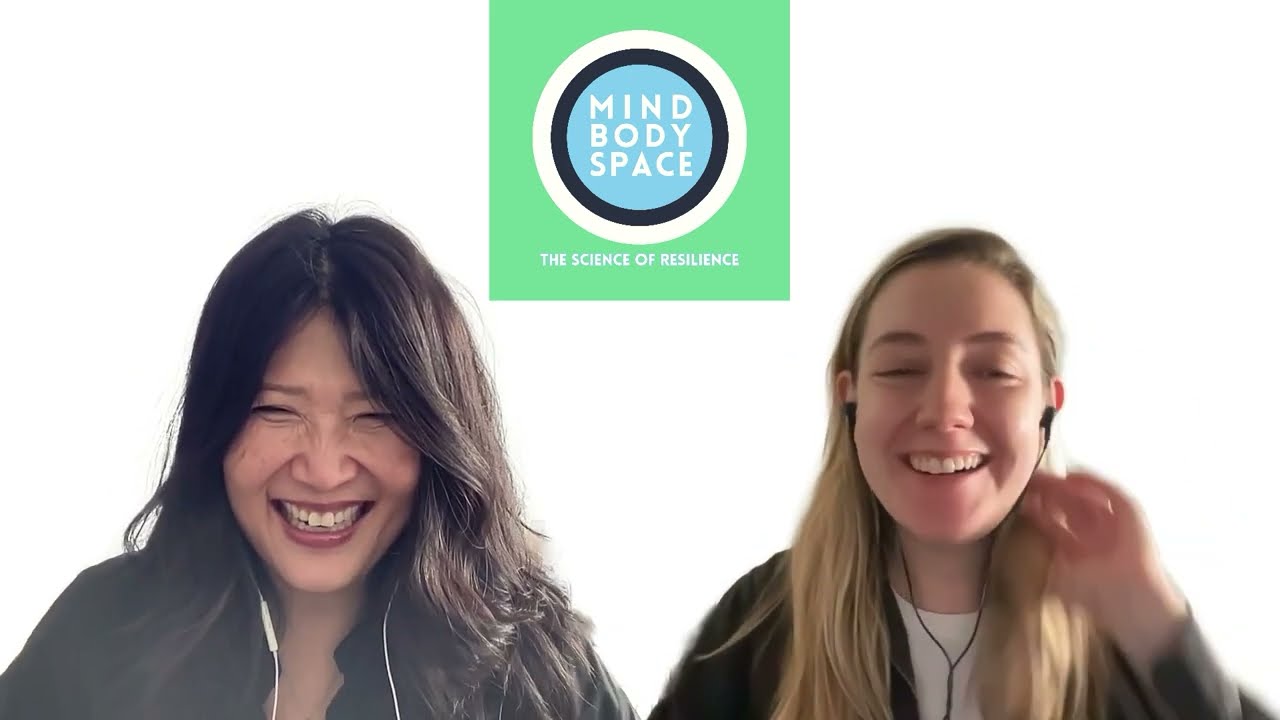
Isabel Hagen, a Juilliard-trained violist, became a stand-up comedian after a wrist injury sidelined her music. She describes comedy writing as iterative, testing jokes on stage and refining them through rhythm and timing, and made a semi-autobiographical film called On a String from a YouTube series.
Chapters
Skills are transferable, so it's never— nothing you've done is a waste of time because it all leads up to who you are now and how equipped you are now for this new thing. The biggest thing I would say is that it's going to hurt. It's going to be hard, and you just have to accept that it's going to feel like you're pushing a boulder up a mountain for a little bit.
Welcome to the Mind Body Space Podcast, where you can boost your resilience just by listening. We're here to help you reduce stress at the cellular level, enhance focus, and achieve peak performance for you and your kids. Hi, I'm Dr. Juna Bobby MD. I'm a mom, a board-certified physician, certified expert in mind-body medicine, and a Harvard-trained educator. Join me as I explore fascinating insights on evidence-based strategies to unlock your best life. Today, I'm so excited to introduce to you a truly unique talent in the world of comedy and music, Isabel Hagen. Isabel Hagen is a standup comedian with a twist. She's also a classically trained violist at the Juilliard School, after which Isabel's path took an unexpected turn when she discovered her passion for comedy. She gave an incredibly inspiring speech at the Juilliard Pre-College graduation last year where I met her backstage, and her story of resilience through comedy is so interesting to me cuz I've always been a comedy fan. And I'm really excited to have her here tonight. She's been featured twice on The Tonight Show with Jimmy Fallon, and not only did she do performance standup, but she showcased her viola skills. I hope you enjoy my conversation with Isabel as much as I did. Thank you so much for being here. I know you're probably a very busy comedian, right?
I'm a like semi-busy comedian. I'm a busy person.
Okay, so Isabel, I already introduced you. Okay. So as the amazing comedian, violist turned comedian, and of course the question from everyone is what inspired you to go from classical viola to comedy, standup comedy, no less?
Yeah, I always loved standup comedy and I always said in another life I would do it.
Uh-huh.
But as musicians know if you start a classical instrument and get serious on it, you've been doing it for pretty much your whole life most of the time. So the idea of doing anything else besides viola was, felt really wild to me. And so I would just say, oh, in another life I'd be a comedian. And then I just kept watching more and more standup and just, I don't know, it just seemed like the most fun thing to do in the world. And I would see these comedians and it felt like magic. Watching what they would do. And then I got a repetitive stress injury in my wrist in my master's degree, and it wasn't even that serious. I just had to take 2 months off from playing, but that's a lot when you're in music school. So I—
in the middle of your degree?
Yeah.
Yeah.
It was serious, but I don't wanna make it seem like it was this horror trauma, but I used the time off just to start checking out some open mics, right? I think I only went to a couple.
Oh wow.
And I knew I liked it. Uh-huh. And I put that in my back pocket and then as soon as I graduated, I just was like, I wanna go do more open mics. And I just kept going and meeting people and learning how to do it on the fly from other, like just watching other people. Oh, everyone goes to at least one or two open mics every night and you get up and you tell the same jokes and you tweak them a little each night and you just learn by doing. Comedy is really a doer's art. Just go do it and fail until you stop failing.
That's amazing. I was gonna ask you like, how did you even get started writing jokes? But it sounds like you learned by doing.
Yeah. I had some ideas. You watch comedy, so you think you know how to write a joke.
Yeah.
And then you realize it doesn't work because it has to be so specifically in your voice for it really to work.
Oh, is that right?
Yeah. So it takes a while. Sometimes everyone has a different pace and I think if you're doing more like one-liners, set up punch jokes, those can be easier to get to work sooner. But if you're trying to build like opinions about things and a more conversational style on stage, it just takes a really long time. It's something I feel like I'm still developing and will always be developing and, and changing as I change.
That's so interesting. I just, Uh, got through this class called Brave Talk. I went back to school this year.
Oh, I didn't know that.
I didn't. So I went back to get my master's in education and I'm spending the year up here in Cambridge at Harvard.
Oh wow.
And I took this class cuz I wanna learn how to speak in public. I, I speak in public all the time, but I never feel comfortable. I don't know if you can relate to that.
Yeah.
So I took this class and the whole time they made us do speeches constantly and I really feel like I changed over these 3 official speeches we had to give. I've never really spoken in front of an audience without notes, so that was the first time. And I know you probably, as a standup, you'd never have notes really.
Mm-hmm.
And yeah, it was an incredible experience. So I understand what you're saying about learning how to create that storyline that's yours. It really takes a lot of reflection, a lot of talking, and a lot of talking to other people. Actually.
Yeah. And when you're trying to get a specific response, which a comedian is always trying to get laughter pretty much. Yes. And it's almost a, a code you have to crack. What version of my authentic self is the funniest version? Cuz we all have different kind of parts to ourselves, right?
Yes.
Mm-hmm. So I found that the sort of earlier on in my doing comedy, I found that the, the angrier I seemed. Somehow the funnier it was, I think, cuz I seemed like this sort of innocent little girl or something. So the fact that I was this like angry person, it just really worked for me.
But you're angry is funny because you're like so deadpan.
Yeah. There's deadpan in it too. Yeah.
Yeah. Like I don't feel like you're really angry. It's just so hilarious cuz, oh yeah.
Well, thank you. But yeah, that's really, so what were there, were there still like certain techniques they had you do when you were in the class that Like, or what were some of the exercises for getting comfortable speaking or?
Mainly throwing you in the water. Yeah. Just, but also they gave us instant feedback. So whoever was in the classroom would give you feedback, all your peers, and then the TF and the professor, and they would go into it in detail. Like they would nitpick down to the littlest thing, right? Which I really appreciated. They didn't gloss over any little point.
Right.
So that was helpful.
Yeah.
Once you got over that kind of nervousness that they were gonna pick you apart.
Right.
But it was so helpful.
Yeah.
And even it was the same topics that I talked about for the past 10 years and it still felt different trying to spin it.
Right.
But I'm wondering like, who were your comedians that you watched? 'Cause I have a secret. I wanna be a comedian someday. Maybe not like you professionally, but I I definitely love making people laugh. And in fact, in the last speech today, I had people laughing about the topic of death.
Hmm.
So that was pretty good, right?
Yes. If you can get people to laugh about death, then you are a comedian.
Oh, thank you. Oh my God.
That's so great. Getting people to laugh at dark topics is my favorite thing. I don't always do it, but I love when other people do it.
But who did you watch? Were you a fan of Seinfeld or Larry David or—
Yeah, I watched Seinfeld, I think in terms of standup, George Carlin was the one that really spoke to me with my brother who—
hello, Oliver.
He would watch a lot of comedy. He got really into George Carlin for a while and he obs— he gets into one thing and obsesses over it. So there was a time when there was just always George Carlin clips going on and I would just watch over his shoulder and be like, that's just so amazing. And also early Dave Chappelle, he would rent DVDs of Chappelle's old specials and stuff and all of that I thought was so good. And just—
what did you love about Kurland? Cuz I love Kurland and for a little while I didn't like him as much anymore, but recently I've watched some more and I'm like, he is right about everything that's happening. Like that bit about plastic and how we—
which, what's that?
We're on Earth to invent plastic.
Like humans were created so we can make plastic and Yeah, I just loved, yeah, it was the perfect combination for me, which is I'm laughing and also my mind is expanding. Mm-hmm. And that was what I wanted to, I don't think that's ultimately what, I don't know if my comedy is even doing that these days, but that was the initial thing that I was so drawn to was this kind of like philosopher comedian where I'm laughing, but I'm also having a thought that I both had before but never really articulated. And now I'm seeing it in this whole new way. And that's my favorite thing.
Awesome. Do you and Oliver have comedic interactions? Is that, or you just watch together?
Funny. Oh, we definitely have a lot of like jokes and recurring things that we laugh at together for sure. Uh-huh. He was always very goofy growing up and so was I in a different way, but, but he stayed in music.
He's a conductor.
Yeah. Mm-hmm. Yeah.
And what did he think when you were like, I think I'm gonna quit? I mean, have you quit viola or?
Not at all. I joke that I'm always trying to quit, but it's, first of all, I play in my act, so I'll never fully quit.
I'll never not. I have to say you're the best violist comedian out there.
Thank you so much. Of all the, I know I'm just another violinst comedian, but I'll never, I'll never stop playing.
Do you practice like you used to practice?
No, no, no. I just practice how my true viola is right here. I play, I still do gigs if things are with people, musicians I like playing with, or it's something that's when I wouldn't be working anyway and I wanna make some extra money or I, I still totally like playing. I, I just think having it be my only thing is hard for me because it doesn't, there's a part of my brain it doesn't use.
And you stand outside the comedy club and do a little viola if you have extra time for money.
No, I know. No, I should, I should. Oh, this would be good advertising for me.
Yes. So you're watching all these comedians on TV, you get injured and you have these 2 months off and that's all you wanted to do. You wanted to go to comedy clubs. And what made you get up in that open mic? And does that being up on stage with open mic, trying to make people laugh, how does that compare to being a classical violist? There's like a different kind of audience, right?
Yeah, it's just a more relaxed setting. The thing that I appreciate so much about comedy that I sometimes was missing with music was I think a lot of musicians can take for granted like how cool what we do is and how much it affects people in a positive way. When we just think about, oh, I missed that note, or I was outta tune, or I was nervous. Really, there's a whole audience of people who are probably just really enjoying what you're doing. And with comedy, it's just much more in the moment. You're getting the audience feedback right away. So when people are loving it, like it, you can't ignore the joy you're giving to people. And then on top of that, bringing the viola into a comedy club where a lot of people have never even seen a string instrument in person, cuz people come up to me after and they're like, I've never seen that before. It just really puts it in perspective for me that what are we worrying about? We're just here to provide something for people. I would say now music, I, I try to harness that feeling as well, but when I first started, I, I just felt a little more present doing comedy and I was going back to the basics of what being a performer is.
So you love that instant feedback, right? Whether or not they laugh. Yeah.
I don't always love it, but I appreciate it.
Right. Cuz classical music, everybody's really quiet and you're expected to be very quiet.
Yeah.
And you're not even allowed to clap until the very end.
Yeah. It's just, I feel like We don't breathe. I feel like the audience isn't breathing, the performers aren't breathing, everyone's just holding their breath. Obviously there are plenty of performances where it doesn't work that way. You know, I think the goal is for people to breathe. But in a lot of my performance experiences with music, it's felt very— cliché, but uptight. I'm someone who's so anxiety-prone.
Uh-huh.
And such an overthinker that I just really love getting to show up in a hoodie and of just not having to like stress about tiny little— obviously I'm very into my craft still and like the details of it, but it's less obsessing and more just being there thinking about it and working on it.
And I just wanted to wear a sweatsuit.
I wanted to wear a sweatsuit, not an evening gown. I really just did this to stop having to wear a dress.
How did those days at Juilliard influence you? So you went pre-college and for your, for college and master's?
Mm-hmm. All three.
Wow. How old were you when you got to Juilliard?
13.
And before that you were playing for—
since I was 5.
Okay. Let's see, with my kids, my daughter started when she was like 3 or 4.
Okay. Yeah.
With violin.
Wow.
It's so small.
I started on a tiny violin and then I switched to viola when I was 10.
And so when you went to Juilliard and you were talking about your identity and how being a musician was basically your entire identity, right?
Mm-hmm.
So how did you separate yourself from that? Was that painful to say, I'm not gonna be a violist anymore? Is that somewhat like your, your life was all around that?
It didn't feel painful in the moment. I think it felt just really liberating, honestly. There have been some times where I've looked back and I was watching an old video from one of my recitals and I was like, man, I was really good. I used to practice, like I got, I'm still like a good player, but I was at the top of my game cuz it was like the time I had been practicing the most and playing very difficult repertoire. And I was watching and I was like, Yeah, like it just, I felt a little sad. Like just 'cause I, even though again, I still play, I don't play in that kind of way anymore. And I do feel like I've given a bit of that up. So there was like a bittersweetness to it, but not in the moment. In the moment I was just so ready for a change. I think I had dealt with so much performance anxiety and just negative feelings about myself that it felt really exciting.
That's interesting. So when do you think that performance anxiety started? Like in your teens? Cuz that's usually when it starts, right? You become aware of yourself on stage.
Yeah, I think I always had it a little, even when I was a child would get like shaky bow during the performances and be coming out. But it just got worse and worse as I became more of a conscious or self-conscious teen and young adult.
Did you ever learn about performance psychology at the time? Like how do we frame and how to maybe manage your nervous system? Cuz that's what I teach now.
Yeah.
At the Julliard Pre-College.
Yeah. I read that book, The Inner Game of Tennis. It was a little too late, I think, just in terms of my college auditions were happening and the performance anxiety just doubled. So I would just some, just ended up taking beta blockers to help with the shaking, which I don't feel like I need— that's something to feel ashamed of.
It's just something a lot of people, it's very, yeah, I've heard that they used to call them beta blocker. I think everybody who was in classical music used to take them even as teens. And then I think as of late it's not used as much, but I've definitely heard all the classical music students that I know have told me that they, not all of them, but most of them, it's not uncommon.
No, I was also aware that it was a bandaid to a larger issue. And then in school I took Noah Kagayama's class, what you teach in Pre-College, he was teaching.
I teach more of the science part and lifestyle medicine, like how you're even maybe what you're eating might affect your thoughts or how you're sleeping might affect your emotions. Like all of the pillars of lifestyle medicine, exercise, avoiding toxins, relationships with other people. Of course, relaxation response, which has to do with meditation and being able to tap into your nervous system. But I know Noah, he was a violinist, so he took this from the musician side.
Yeah. Wow. I really wanna take your class.
We'll send it to you. But for sure.
Yeah. But Noah's class was really helpful. That was in my master's. Again, I think I had already departed in my mind, like to doing other things, but I definitely, I think with anything you can get a lot from that kind of work, but you really have to devote a lot of focus and energy to it for it to actually, if you want a quick fix or, oh, you think about performance skills and sports psychology, but it, it really takes an immense amount of focus to put those into practice. 'Cause I've gone down that road a little bit and it, it works, but it's all-consuming for me.
Yeah. And especially if you learn it later in life. That's why I'm trying to get to the kids earlier and earlier.
Absolutely.
Just so, because more like automatically brushing your teeth.
Right.
But I wonder if you didn't feel that performance anxiety and a lot of people have performance anxiety. It comes with the performance. If you're a performer, you have performance anxiety. So I'm wondering how much of that, if you could go back, what would you tell yourself? And was, would there be any way to alleviate that? Or do you think that it was just a mismatch of personality?
Yeah, that's a good question. Part of it, I think, I do think I have a lot faster heart rate than a lot of people. I, I think I just have like shaky tendencies. Uh-huh. Like a physical response. I don't know. It's just how I'm wired. So it could be slightly a mismatch because with comedy, my hands shake all the time and it doesn't better. And then by the time I get the viola out, I've been on stage for 20, 40 minutes. I'm like, I'm there. It's, it's fine. I'm not as—
and they're also not expecting you to go through a whole concerto.
Yeah. I play things that I know I can just nail and it's all very okay. But if I were like really trying to just be a violist, I think I would just practice performing more because I feel like we underestimate Besides methods that you're teaching and the whole like wellness and everything that's all connected, which it totally is.
Mm-hmm.
On top of that, I think we underestimate just that performing is something you also need to practice. Absolutely. And a lot of people forget that's something like even just putting on a, a recorder just to get some pressure on you while you play through. I would've just gotten myself to perform. Like every day in some way, whether it's—
that's an awesome point.
And I, yeah, I would have done that way earlier because I didn't. And then it would all lead up to this one performance, like once in one semester.
That is an amazing— because when you said you started doing comedy, your first thing was that you would go to open mics, and you said twice a night, which I find— couldn't believe that's how you guys do it.
Yeah, because we can't really practice, you write by yourself, but You don't really practice not on a stage because the audience is like your instrument. Exactly. Wow. Okay.
So imagine if we had open mic night for all the classical musician kids and they could just come up on stage and just play every single night, twice a night. I remember when my son was 10 years old and he was about to give his first solo performance with an orchestra. His coach told him to play for everybody and anyone. And even when our mailman stopped by or our neighbor, we let 'em in and said, do you wanna listen to Max play a concerto? And they're like, oh, And they would stand there and we got Max to take the bow and do everything and go through all of that. And I remember his coach saying, you wanna be able to do it in your sleep.
Mm-hmm.
If somebody woke you up in the middle of the night, we want you to be able to play this concerto.
Yeah.
And that really helped a lot.
Oh yeah. I love that. Getting the mailman to come in.
Yeah.
So great.
And neighbors, anybody picking up their child from a playdate had to come in and listen to him play.
That's what you have to do.
I don't think he, he wanted to, he also didn't feel like it was that fit.
Mm-hmm.
Like you're talking about. So I think there is that personality fit or the ability to really get into your piece as a classical musician on stage and that sort of pressure, that kind of silence of the audience. Mm-hmm. I think it takes, it has to be a personality match too.
Yeah. Cuz I have colleagues who don't seem to struggle with performance anxiety ever. They're just like, I don't know, I was a little nervous, but you just do it. And I'm like, they go into a trance kind of thing. Yeah. I've always been very, uh, envious of those people.
But, but, but I love that comedy, your hands are still shaking sometimes. And has it gotten better with all that practice on stage?
It's hard to say because I do so many low stakes performances with comedy all the time.
Oh, so, okay.
Usually with that it's just Not at all. But then I'll occasionally do things where I, someone in the audience is important, I wanna impress them, or a TV taping, and then I am shaking a little bit.
You've been on Jimmy Fallon, right?
Mm-hmm. And I was really nervous, but the thing is also I knew once I got out there and I got the first laugh, it felt like every other show I've ever done. So it was like, oh, I was nervous until it was just the show and then it's, oh, I've done this a million times. Juna Bobby MD.
You were great on it, by the way.
Oh, thank you.
I loved it. It was awesome. I couldn't tell that you were nervous. That's good because like today I, I also gave a speech and I felt nervous, but nobody could tell.
Mm-hmm.
So sometimes it's just we can hear things in our voices that other people can't.
Yeah. And I think it's, that's part of it too, is not giving the nerves that much attention, like kind of noticing them in a more mindful, detached way.
Mm-hmm.
Which I've been able to do with comedy less than with, more than with Viola, where it's, yeah, my hands are shaking, but I'm not even gonna think about it. And like, here I have stuff to do. Like I have other things.
Well, because you also enjoy it, it sounds like.
I love it.
Do you make yourself laugh?
I do.
Is that what I, so if you're making yourself laugh, does that always translate to making the audience laugh or do you have to tweak it?
Sometimes I'll, cuz a lot of times when I write jokes, I'll say them out loud. I'll talk to myself because that's the best way to get the phrasing that's natural. Mm-hmm. Sometimes I'll say something and then I just start laughing, but that doesn't always mean it's gonna get a laugh on stage. And then a lot of times I make myself laugh, like not with comedy related stuff, but just in life. Like I'm kind of a very easily delighted person. Oh, like I, I just come goofy and like my husband will just hear me laugh about something. I'll just be in the next room laughing about something random.
Just like an observer.
Yeah.
Find things funny and amusing.
Yeah, exactly.
And you wanna share it with people.
Yeah.
So tell us your process. How do you get the material? And now, and congratulations, you got married, right?
I did. Yeah.
I saw it on your Instagram. Congrats.
Thank you.
That's so sweet.
Yeah.
And now is he gonna be part of your bit? Is he, do you have a contract before you marry? Gonna be in any of your jokes?
He's already been in my bits. From, it's funny cuz I have, the jokes don't always line up with where I am in life because there's a lag. So there are even jokes where I talk about a guy or a relationship, but there were jokes I came up with before I even met him. So it's like, oh, it's not always actually about him. Uh-huh. But now cuz we've been together for a number of years now, it's starting to only be about him because uh-oh, there's no words.
I never wanna put anyone down or I, I, So you're not a mean comedian, you're just funny.
Well, I guess I put, I take little jabs at him, but it's never anything like actually specific or personal. I'm very like protective about the people in my life. Like I, I don't really like talking about them too much on podcast. Like I always keep details in where I, I hear some people that just say things about, yeah, people.
A good idea though, if you're gonna be married, cuz I've seen Ali Wong.
Oh yeah.
She's so funny, but I remember A few years back when she was talking about her husband a lot on stage and was like, oh, and then before you knew it, they're divorced.
I know.
It's a little, yeah, I think it's probably tough.
Tough. I'm not saying I wouldn't ever do, I'm not, who knows what, how it'll go, but in general, at least for now, I've been a little, everything is removed and more conceptual than actually about him. But until you run out of material. Until we run outta material and then sorry, buddy, it's all coming out. All the weird habits.
Yeah, I did notice that you are like an observational comedian. So you go about your day, what do you do? You get ideas in your head and you write it down. I've heard of Jerry Seinfeld doing that like chain link thing where he writes 3 jokes every single day and he puts an X on his calendar and that's how he got good at writing jokes. I don't know if that's—
Yeah.
One of the things that I use all the time in my classes when I'm trying to get kids to make new habits. Do you have a process, like a daily process?
No, not right now. It's, I have spurts and I think that's partly just because of the phase of life I'm in right now where I'm doing a lot of different things. I just made a movie, produced and directed and wrote, and I've just been wearing a lot of different hats.
Can you tell us about that?
Yeah, it's a movie about semi-autobiographical that I wrote about a violist. Named Isabel, and it's a dramedy and it's inspired by this web series I made on YouTube called Isabelist, but it's a feature film and it's much more high production value and it's got a real budget and production producers and things. And we're getting it, submitting it to festivals and hoping it'll have a little life and it's all up in the air right now, but it's called On a String.
Autistray.
That's been my main creative thing for the last 2 years besides being on the road as a comic. But because my life is in all these different places right now, I haven't as much as I want to settled into a writing routine. But that is something I aspire to. I write all the time. My process is elusive. A lot of it is just things just pop into my head. Something happens or I just have a thought. And I can just tell when it's something that is a j— worthy of making a joke about. And then I'll write a few things down and then I'll try it out. And then once I've said it on stage and recorded it, 'cause I record every set, that's when the real writing happens because I listen back, change it, say it again, record it, listen back, change. So it's, that's the real like honing of it where it gets funny. The initial like idea and writing it down without trying it. Is like the least exciting part cuz you're just like, all right, maybe this is something.
Well, and that's so interesting.
Yeah.
So there's so much work that goes on behind a joke. It sounds like, yes, it's like serious work.
Yeah. And then things will come up, like I'll have a joke that I can't get to work, so I scrap it and then a year later I bring it back and I change one word and all of a sudden it works. Like I just had this happen with two jokes. Than I did two nights ago where I finally was thinking about them and I was like, oh, what if I said this instead? Like a tiny little, or even just the cadence. And now it's great.
Whereas, can you tell us one of those jokes?
Let me think if I can. Okay. The one I'm thinking of, I don't wanna say, but, and there was another one. Oh, okay. This was a, a tiny tweet, but this is a joke that I actually have posted recently. It was about getting proposed to in a cabin in the woods. By my fiancé, by my husband. And I say, he's by my fiancé, by my murder, we are proposed. And I was like, fine. And for some reason I started saying, either way, my life is over. And that gets a way bigger laugh.
Interesting.
And it's not even like it's necessarily funnier, like one-on-one, but for some reason it's just quicker. It's a little more self-deprecating. It's a little more sad. Like my life is over.
Rather than say the first one again.
What was the first one? Either way, life's about to be over.
So maybe it's like a rhythmic thing.
It's totally rhythm. Getting to the punch quicker. Sometimes you can't even say why, but some, so things like that.
Amazing. I love it. It's, it's about words and how you mash those words up.
Yeah.
All right. So how long have you been doing this comedy thing?
9 years. Yes. Wow.
So you're in it.
Yeah.
To stay. That's awesome. And I love that you made this movie. And I have one more memory question.
Yeah. For you.
So when you're doing a set, like how long is it usually? 5 minutes, 10 minutes?
If I'm headlining, it's an hour.
Oh my gosh.
I use the viola and it's a whole show. Oh. But every night when I go out, it's usually like 10 to 15 minutes on a lineup of other comedians.
So when you're doing that hour-long show, how do you keep things straight in your head? Like how do you move from one thing to the other? Do you have images of each bit or? Memorize?
I have keywords for each joke. And so before the set, I write out all the keywords in the order I want them. Okay. And then most jokes have like a natural joke that always comes after them. So it's like chunks that I'm remembering.
Uh-huh.
And then like swapping one thing out. And it's really about the transition. Oh, this joke just naturally, I'm talking about being in a relationship, so that naturally transitions to this joke. About relation, another joke about relationships, and then, okay, that joke talks about farting and then that joke is about having to go to the bathroom. It's like the transitions help. But yeah, it's funny how it all just stays in there cuz you're saying them, you say these jokes all so many times. So as long as you remember the keywords, it's like muscle memory.
Wild. All right. And do you ever put 'em on the cards and move them around and see how they might fit or it just. You have a set ready.
Yeah, I've done that when I was creating like a longer solo show that I wanted to have a theme of. I was building it more, but yeah, so sometimes that can help just seeing everything in front of you, but being able to move it.
Very cool. So when are you out my way in New York? Actually, I'm in Cambridge now. Are you going to Boston at all?
I need to come to Boston. Um, my next New York show is on October 24th. National Sawdust. I'm doing like a music comedy variety show kind of thing with some— oh, cool— colleagues. Yeah.
Is that a weekend?
It's a Thursday.
I'm gonna make it.
Oh yeah, I love that.
Yeah, I have class. Oh yeah, all day Thursday, but I'm gonna try to see if I can make it. And tell us anything else you're doing, and we're gonna look out for this movie you're doing. Yeah, which is incredible. That's a lot. That's a whole job.
Yeah, it's a lot, but I love it. So I, I wrote it, directed, and starred in it, which I wouldn't recommend anyone do, but I did.
That's wild.
Yeah.
And you played your own Viola.
Yep. I had a lot of help from other people though, and there's a big cast in it. My brother Oliver is in it.
And how did that project start?
Well, I made this web series and then I wanted to make a half-hour scripted show.
It went a little viral, right?
I don't know if it went viral. I think a lot of musicians saw it. I think people know about it in our little world. Yeah. And then I wanted to make like a, a bigger scale TV version of it. And then over COVID I was like, if I made it a movie, I could definitely just make it myself. I know I could produce like a TV show. You need a network and seasons and a team of writers, but a movie, I'll just write it and then I'll just produce it and make it.
And that's amazing.
Proved to be a lot more difficult than what I, how I made it. And it kind of ruined my life. And like, I had to raise an incredible amount of money and like, whatever, the mess.
But it—
but you did it. But I did it. Yeah.
I love your energy cuz you're just like, I'll just do it. And I feel like that's how you left classical music too. I'll just leave classical music.
Yes.
Do you have any advice for people who wanna do that kind of pivot but feel like so pulled? It's that sense of having put into something for so much time.
Oh, like all the time you spent on one thing.
Yeah. Like you, you poured all this time and I remember the one thing you you said at the Juilliard graduation, which I loved, and you said skills are transferable. Would you give our audience a little bit of tips on if they ever want to pivot?
Yeah, skills are transferable. So it's never— nothing you've done is a waste of time because it all leads up to who you are now and how equipped you are now for this new thing. The biggest thing I would say is that it's going to hurt. It's gonna be hard, and you just have to accept and it's gonna feel like you're pushing a boulder up a mountain for a little bit.
Uh-huh.
But if you can do that and you can get through it, then you can do anything. And I would say just go for it and see what it feels like. And you'll know quickly if it's something that excites you enough that you're willing to keep pushing the boulder up, or actually I, it's not worth pushing this boulder up. Either one is fine. You should never feel like ashamed cuz you actually don't wanna do something. Mm-hmm. But just go for it as soon and as extreme as possible to see if you like it. And see if you're willing to deal with the— everything you do comes with different sets of pains and struggles.
Everything has pain. Yeah.
Everything. So it's just finding the pain you can most tolerate and maybe enjoy and enjoy. Yeah. And then eventually it's not gonna always be like that, but starting something new is always gonna feel like this, especially when you're so good at one thing. Sort of.
Yeah. That's the problem. When you feel like you're so talented and you've put in so much work into one thing, how do you pivot eventually? Yeah, but it sounds like you just listen to yourself.
Yeah. And, but think about it, if you're that good at one thing, you can get that good at something else. Probably. Mm-hmm. Think how much, think like the potential is vast.
And you probably are using some of your creativity skills from all the years of music to doing what you're doing now.
Yeah, it's all like the same sort of voice and drive. It's just using it in different ways. And yeah, I just never, I don't believe in anything being like a waste of time. I don't really think we can waste time, cuz it's like you are just where you are, who you are, and anything you would've done differently would make a different you.
No, that's very wise. That's something I have to remind myself all the time cuz even now going back to school, I'm like, sometimes I'm like, what am I doing? I'm like half these people are half my age, not half, but younger. But you know, that's the little bit of it and everything else feels right. So yeah, that's why I'm doing what I'm doing and I'm so excited for you that you made this pivot into something that you just love so much.
Oh, thank you. I'm so excited for you that you're back at school and that's very, that's very exciting.
I'm actually creating a product that's gonna help kids sit still and have neuro-literacy, so understand their brain and their nervous system.
Wow. That's really great. I wanna hear more about that.
I'll just make it, but it's gonna probably be hell, but a great hell. Yes. Yes.
Fun.
Anyway, thank you so much. Do you have any parting words or wisdom or any tips or jokes or?
Just take it easy on yourself and keep at it.
Thank you, Isabel.
Thank you, Juna. It's so good to talk to you.
Thank you for being here. It was great to talk to you. Thank you so much. Yeah.
Thanks for having me.
Thank you for joining me on the Mind Body Space Podcast. Subscribe, share, and review, and soon you'll have more Zen people around you. Get our newsletter to get special tips and discounts on our new courses and our new upcoming Zenbidi plush that helps you and your child train your brain to fight stress at the cellular level while having fun together. Until next time, this is Dr. Juna Bobby MD wishing you and your family wellness.
More from Juna


How to Switch From Practice Mode to Live Stage Performance | Juilliard #Shorts







Don't Ignore Symptoms and How to Cope With A Diagnosis : With Harvard Psychologist Ellen O'Donnell

3 Habits To Prevent Acid Reflux — Dr. Peter Belafsky MD PHD Director of Voice & Swallowing
