Dr. Juna Bobby returned to Harvard and MIT in her 50s after her kids left home, using novel experiences to build cognitive reserve against aging. She explains how continuous learning reshapes the brain, then introduces neuroscience products designed to teach kids and parents to talk about brain health together.
Chapters
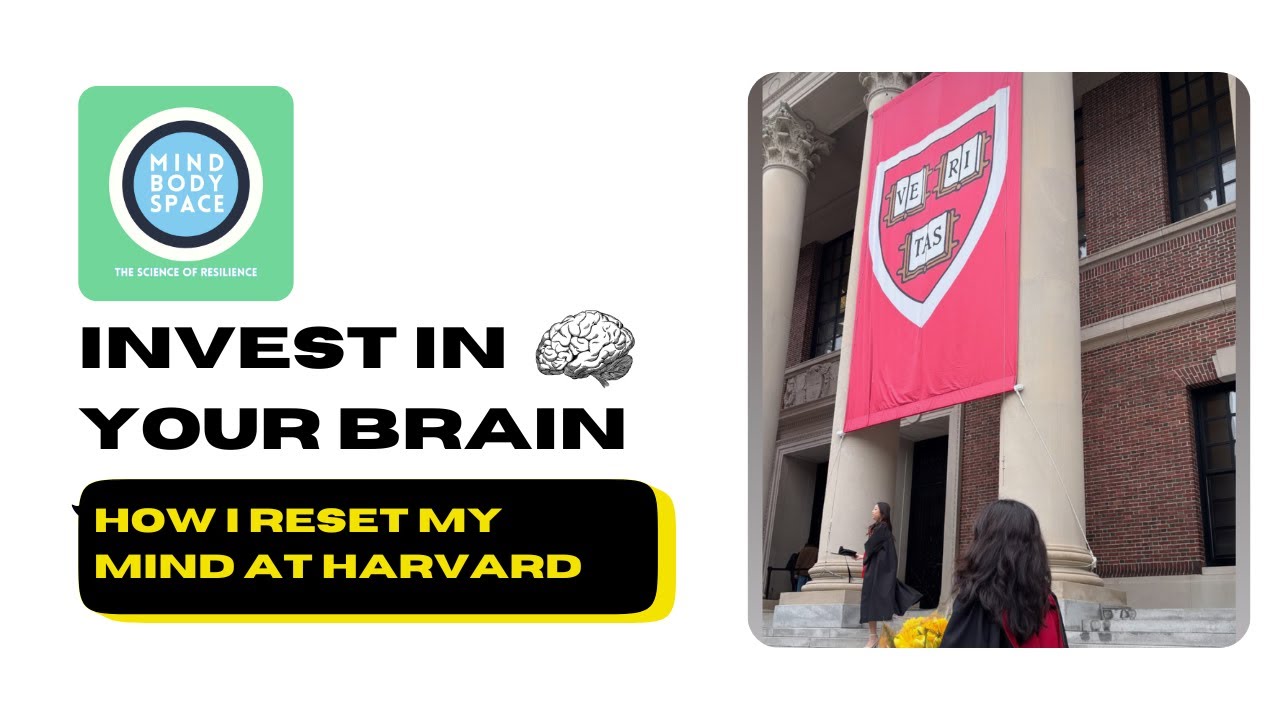
Hi there, welcome back to the Mind Body Space podcast. I'm Dr. Juna Bobby MD, and this is where we explore how to raise resilient, curious, emotionally grounded kids and how we as parents can grow right alongside with them. Today I want to share something deeply personal— why I went back to Harvard much later in life to get yet another degree, not because I had to, but because I knew that I really needed to reset my brain. You see, I'm empty nesting now, and after years of clinical work as a board-certified radiologist and mainly. After years of practice, I realized that I didn't have forever with my kids, and I decided to go part-time and really focus on enjoying every single minute with my kids. But now they're gone, and I'm empty nesting. So after 2 years at home trying to work from home and just getting my stuff back together, after 22 years of not really putting myself first, I realized that I needed a major reset for my brain. So it wasn't really only about going back to school, but it was also shifting everything, you know, my environment, my input, the people surrounding me, my habits, because when your space changes, your brain changes. And I can vouch for that. I know that this year transformed my brain and gave me a hard reset. So neuroscience has this powerful term that you've probably heard of already. It's called experience-dependent neuroplasticity. It literally means that your brain changes and is kind of plastic and rewires based on what you're exposed to. The conversations you have, the books you read, the streets you walk on, they're all shaping your mind. So I made a big move. I went to Cambridge, Boston for a year, and I walked around Harvard Yard. I sat in on Harvard Business School conferences. I took classes at my home school, Harvard Graduate School of Education, and cross-registered for all of spring semester at MIT Sloan Business School. I met people I would've never met had I stayed in my comfort zone. Most of them half my age. And one of those people was Jasmine Hamdani. If you haven't listened to the last episode with Jasmine, she is a woman in STEM and an engineer at Oura. Yes, the super cool, super chic Oura ring. Jasmine reversed her heart age just by using data from the Oura ring. So if you haven't heard it already, go to mindbodyspace.com/podcast and you'll find the full episode there. Now let's go back to how we can change our brain. I wanna talk to you about how learning protects our brain. Research shows that the more complex, novel, and socially rich our experiences are, especially in our younger years and even in midlife, the more protected our brain can become. Researchers have shown that people with higher cognitive reserve, that's mental enrichment, meaning a lot of learning, a lot of life experiences, had significantly lower rates of cognitive decline. So one theory is that you have so much knowledge and so much experience that even if you lose some memory, even if you have some cognitive decline, which might come along with aging, it really doesn't impede your life. So literally pack everything into your brain as much as you can. So I went back to Harvard 'cause I wanted to work on my business. I wanted to take entrepreneurial courses, and I wanted to know what was going on with AI at MIT and Harvard. So not only did I find all those things, I was able to also enrich my neural pathways, making my mind and brain more resilient for hopefully many more years ahead of me. I named this episode "Your Space Matters" because it really does. Where you spend your time, what you're doing, what you're consuming on TV or on your phone or even this podcast, who you talk to, that's not just lifestyle. It's actually creating your brain structure. I'm not going to lie, the year had a lot of tough ups and downs, and change is hard, but the brain loves it. So if I can do this in my 50s, imagine what you can do or your kids can do if we can give them the tools to understand their own minds. That's what Brain Builder and Brain Boss is all about. It's a subscription series that I've been working on all year at Harvard and MIT for families to create a language of brain talk. And parents and kids can talk to each other about their stress, their habits, and how to build emotional and physical strength. Through your daily choices. I wanted to give families a language that they can use to decrease the drama and increase resilience. So I'm continuing to build the tools, and for that, Brain Bun, the adorable plush doll, was born. Brain Bun teaches kids and families alike to have this language of neuro-literacy and brain talk that you can use in everyday life that decreases drama and increases physical and mental resilience. Look out for Brain Bun and Friends coming up in a new YouTube channel launching in August. It's for preschool kids, and I'm going to have a subscription series for families. We also have one of the friends here, um, meet Zen Cloud here, and you can get on the waitlist for both Brain Bun and Zen Cloud. They will be launching in late fall, early winter of 2025. To bring brain talk to families and kids is not only my passion, but it's my purpose. And we're building tools that we all wish existed when we were growing up. Brain talk should be a normal everyday language in everyone's homes. Kids should know about their brains and about neuroplasticity and how to not only build on their brains, but to become the boss of their brains. Everyone needs access to the advances in neuroscience over the last few decades. It could help us change our brain and change the habits that are the foundation of cellular resilience. I'm really excited about our weekly subscription content, which will be launching late July, August. If you are one of the early founders, thank you for supporting us. You can get on the waitlist for the official launch. We have Brain Builders for little kids, Brain Boss for tweens, and Plan to Soar for high school and up. And remember, it's not fluff. It's educational neuroscience for the modern family. Head on over to mindbodyspace.com. /2025waitlist. Subscribe and share this YouTube channel and our podcast on Spotify or wherever you get it to spread the word. A final word on reinventing yourself. If you've ever felt stuck, numb, or uninspired, and if you're human, you've been there, it's not too late. Your brain is waiting for something new. You don't have to move to Cambridge or go back to school. You just have to say yes to novelty, to learning, to reaching out to people and places. Next episode, I'll be talking to Dr. Jenny Wu. She's a Harvard-trained educator, a mom, and an entrepreneur. She's most famous for her emotional intelligence cards, which are bite-sized tools and games that have brought in over $1 million in revenue. She's gonna share everything that she knows about being a mom and starting new businesses. I got so much outta that conversation. I can't wait to see you there next week. Go on over to mindbodyspace.com/podcast and sign up for the podcast newsletter so you won't miss any new episodes. In the meantime, take a walk down a different street, pick up a book on a topic you've never explored. Just listening to this podcast is already changing the way your brain is wired and what you think you are capable of. Ask your kids today what their brain is doing and bring the brain into everyday conversation. And until next time, remember that your brain matters and that your mind, body, and space is all interacting with your brain and changing it for the better or worse. So why not choose better? And you being here listening to this is already choosing better. Until next time, I'm Dr. Juna Bobby MD, wishing you and your family wellness from the Mind Body Space podcast.